Browsed by
Category: Books

For Want of a Nail… Jack Campbell on The Lost Fleet: Beyond the Frontier: Guardian
For Want of a Nail… Jack Campbell on The Lost Fleet: Beyond the Frontier: Guardian

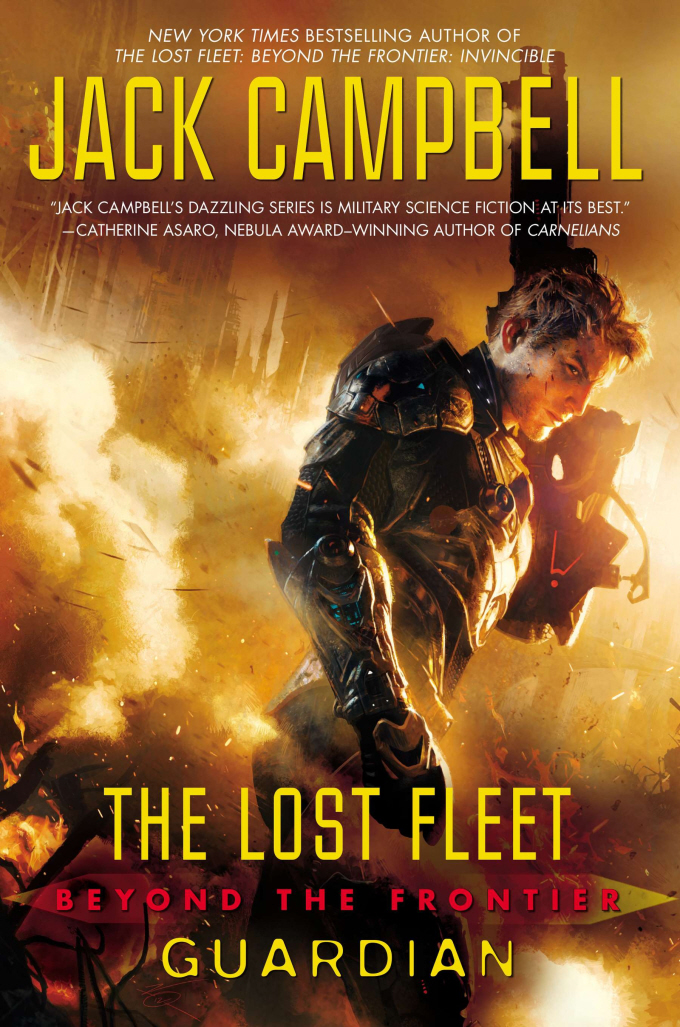
The_Lost_Fleet_Beyond_the_Frontier_GuardianThere’s an old poem in which the lack of a nail in a horseshoe causes the loss of a battle and a kingdom. The poem is usually seen as a proverb about how small things can cause major outcomes. But it also contains an important lesson for storytellers. In SF and fantasy, we create worlds that can include anything that we want them to have. That can produce cool stories, or it can create traps that ruin stories.

What is any story about? A problem. Whether it is one ring that has to be destroyed or a love triangle that threatens a kingdom or an invasion by aliens who really don’t like humans, the problem drives the story. The characters have to figure out how to solve that problem, which might require a lot of walking down the yellow brick road, the occasional detour, and numerous dangers, threats and other opportunities to excel.

As characters face all of the obstacles in their path, the writer faces the trap. Because, you know, if your hero only had a nail right now, that horseshoe would stay on, the battle would be won for certain and the kingdom saved. If your spaceship only had a means to counter that alien weapon, maybe by recalibrating the frequencies on the thingamajig, then the aliens would be defeated just like that.  Or if someone invents just what they need just when they need it, or someone finds a bottle with a magic genie inside, or God decides to intervene…

There’s a phrase for that trap. Deus ex machina (literally “god from the machine”). Ancient playwrights came up with the idea when they couldn’t figure out how to fix their plots.

No predicament is impossible when a god can step in. Got a dilemma that you can’t resolve? The Deus appears and fixes everything. The horseshoe has the nail. The thingamajig can destroy all of the aliens. It’s all happily-ever-after.

And readers are left feeling cheated. Where was the conflict? Where were the tough decisions? The sacrifices, the drama, the pain that we all know from real life are required to fix serious problems? The truth is that easy solutions make for bad stories.
Read More Read More

New Treasures: Firebrand by Gillian Philip

New Treasures: Firebrand by Gillian Philip

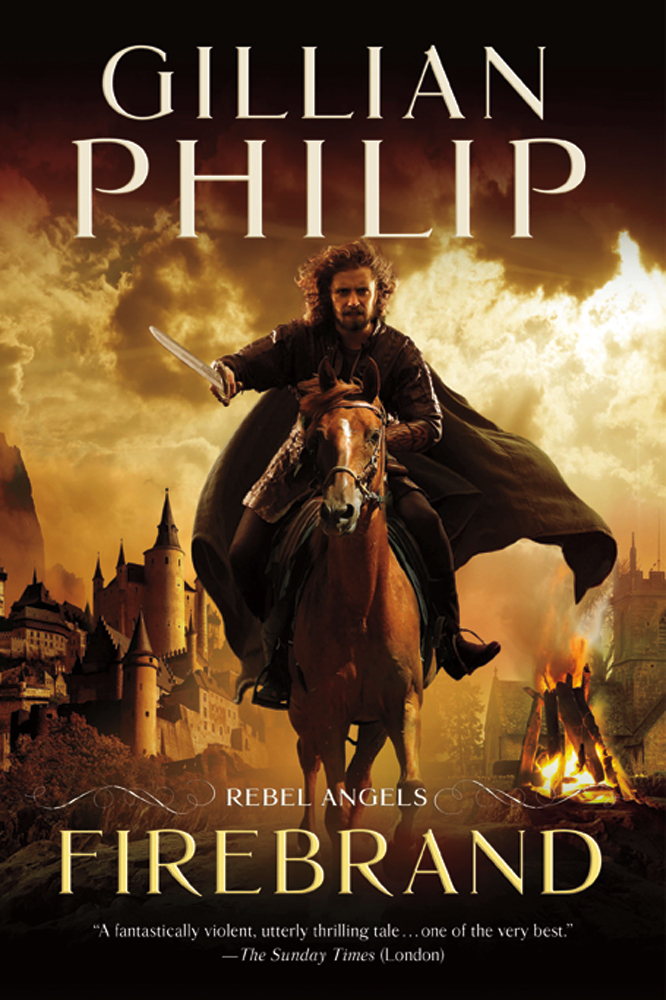
Firebrand Gillian PhilipHere in the U.S., Gillian Philip is known primarily for her Carnegie Medal–nominated contemporary novel, Crossing the Line, and the YA dystopian title, Bad Faith. In the UK however, she’s also known for her popular YA fantasy series, Rebel Angels, which the Sunday Times of London called “The best fantasy of 2010.”

Filled with twisted court intrigue — and even more twisted monsters from the realm of faery — Firebrand seems like exactly the kind of fast-paced adventure Black Gate readers are interested in.

Now Tor has brought the first volume, Firebrand, into print on this side of the pond, in a handsome hardcover edition with a new cover by Steve Stone.

At the end of the sixteenth century, religious upheaval brings fear, superstition, and doubt to the lives of mortals. Yet unbeknownst to them, another world lies just beyond the Veil: the realm of the Sithe, a fierce and beautiful people for whom a full-mortal life is but the blink of an eye. The Veil protects and hides their world… but it is fraying at the edges, and not all think it should be repaired.

Discarded by his mother and ignored by his father, sixteen-year-old Seth MacGregor has grown up half wild in his father’s fortress, with only his idolized older brother, Conal, for family. When Conal quarrels with the Sithe queen and is forced into exile in the full-mortal world, Seth volunteers to go with him.

But life beyond the Veil is even more dangerous than they expected, and Seth and Conal soon find themselves embroiled in a witch-hunt—in which they are the quarry. Trapped between the queen’s machinations at home and the superstitious violence of the otherworld, Seth must act before both of them are fed to the witch-hunters’ fires…

The second and third volumes, Bloodstone and Wolfsbane, are already in print in the UK. Interestingly, while all three books are marketed as YA there, Tor has mainstreamed them here in the US. It’s an interesting switch, and I’m curious to see how the market reacts.

Firebrand was published by Tor Books on February 19. It is 365 pages, priced at $24.99 in hardcover and $11.99 for the digital edition.

Self-Published Book Review: Avarice by Annie Bellet

Self-Published Book Review: Avarice by Annie Bellet

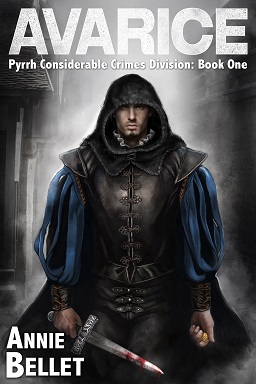
AvariceWe’ve been told that we can’t judge a book by its cover, yet we do it all the time. A good cover can catch our eye and attract our interest. The art and title alone can usually tell us whether it’s gritty sword and sorcery, epic fantasy, or paranormal romance. The cover tells us more about the setting and mood of the story than even the jacket copy, and continues to influence us even after we start reading.

And unfortunately, self-published authors usually lack the budget and the specialized skills to do a great cover. Often, self-published covers look amateurish. Some authors decide to forgo a cover altogether, deciding that it’s better to have no cover than a bad cover (my wife takes this approach). This month’s novel, Avarice by Annie Bellet, is a notable exception. It’s not just that the cover is beautiful in itself, it’s that it instantly tells you what the story is about. Between the illustration and the title of the series (Pyrrh Considerable Crimes Division) an experienced reader of genre fiction has a pretty good idea what this book is about. I’ll give you a moment to guess before I reveal the answer below the fold.

Read More Read More

New Treasures: Bronze Gods, by A.A. Aguirre

New Treasures: Bronze Gods, by A.A. Aguirre

Bronze GodsAnn Aguire is a very, very busy woman.

In the last five years alone she’s written six novels in the Sirantha Jax science fiction adventure series (Grimspace, Wanderlust, and four others); five Corine Solomon urban fantasies (beginning with Blue Diablo and Hell Fire); the YA post-apocalyptic dystopian Razorland trilogy (Enclave, Outpost, Horde); the paranormal romantic suspense Skin series (written as Ava Gray; four volumes beginning with Skin Game); the apocalyptic romance Dark Age Dawning (three so far, co-written with Carrie Lofty, under the name Ellen Connor); and the upcoming dark SF series The Dred Chronicles (starting with Perdition, scheduled for release in August).

That’s 22 novels since 2008. Allow me to express my sincere admiration, with a heartfelt WOW.

Now, you’d think someone with six series on the go already wouldn’t feel particularly pressured to launch a new sequence of steampunk noir fantasy novels. But apparently, you’d be wrong.

The Apparatus Infernum novels are co-written with her husband Andres Aguirre, and released under the name A.A. Aguirre. They sound like an appealing mix of steampunk and mystery.

Here’s the back cover copy for Bronze Gods, the first volume.

Read More Read More

Are We Looking for a Hero?

Are We Looking for a Hero?

DrWhoThe other day, an issue of Entertainment Weekly arrived in my mailbox. Doctor Who was on the cover. Let me repeat that, because it’s significant.  Entertainment Weekly had Doctor Who on the cover. What’s next? Good Housekeeping? Vogue? The New York Times Literary Supplement?

And there’s more. Out of the last fifteen covers, six featured genre work: the new Superman movie, Game of Thrones, World War Z, Oz the Great and Powerful, and Catching Fire. Counting the Doctor, that’s seven genre covers out of sixteen. And each with a feature article, of course.

Where am I going with this? Well, I don’t know about you, but I’m old enough to remember when it would have been UNHEARD OF for any genre work to appear on the cover or front page of any widely or popularly-read entertainment information vehicle. No newspapers, no magazines, no book or movie review sections. Zip. Zilch. Nada.


Read More Read More

Vintage Treasures: An Earth Man on Venus by Ralph Milne Farley

Vintage Treasures: An Earth Man on Venus by Ralph Milne Farley

An Earth Man on VenusRalph Milne Farley was a pen name for Roger Sherman Hoar, a state senator and assistant Attorney General for the state of Massachusetts. Why a state senator wouldn’t proudly lay claim to a novel featuring a man and woman in underwear on the cover is beyond me, but some people just humbly shy away from fame, I guess.

Or maybe it’s the antennae growing out of her head. It’s hard to be sure.

Whatever the case, An Earthman on Venus was originally published (as The Radio Man) in that grand old lady of the pulps, Argosy, in 1924. It was immediately popular, and reprinted many times, starting in Famous Fantastic Mysteries (1939) and then in hardcover from Fantasy Publishing in 1948.

The version of interest to us is the 1950 Avon paperback, pictured at left. Primarily because it’s a prime early example of underwear chic, but also because it was the first true mass market edition.

Legendary editor Donald A. Wollheim — who would later found DAW Books — was at the helm at Avon at the time, and he had an eye for pulp fiction that would play well in paperback. While he was at Avon, he made A. Merritt, H. P. Lovecraft, and C. S. Lewis’s Silent Planet space trilogy available in mass market for the first time, bringing those authors — and many others — a wide audience.

The Radio Man isn’t particularly well-remembered today, but it’s an important part of the history of our genre nonetheless. Not just because of it has giant ants and antenna girls on the cover… well, mostly that. But it was also one of the first sword-and-planet adventures, and it was successful enough to spawn no less than seven sequels over the next three decades, starting with The Radio Beasts (1925) and including The Radio Planet (1926), The Radio Flyers (1929), The Radio Menace (1930), The Radio Gun-Runners (1930), The Radio War (1932) and The Radio Minds of Mars (1955).

Now I don’t know about you, but I thought the sequel was invented with The Godfather, Part II. Evidence that fantasy writers were doing that kind of thing half a century before Francis Ford Coppola thought of it fills me with pride. And a powerful compulsion to buy blue lingerie for Alice, but let’s not get in to that.

Read More Read More

The Top 50 Black Gate Blog Posts in March

The Top 50 Black Gate Blog Posts in March

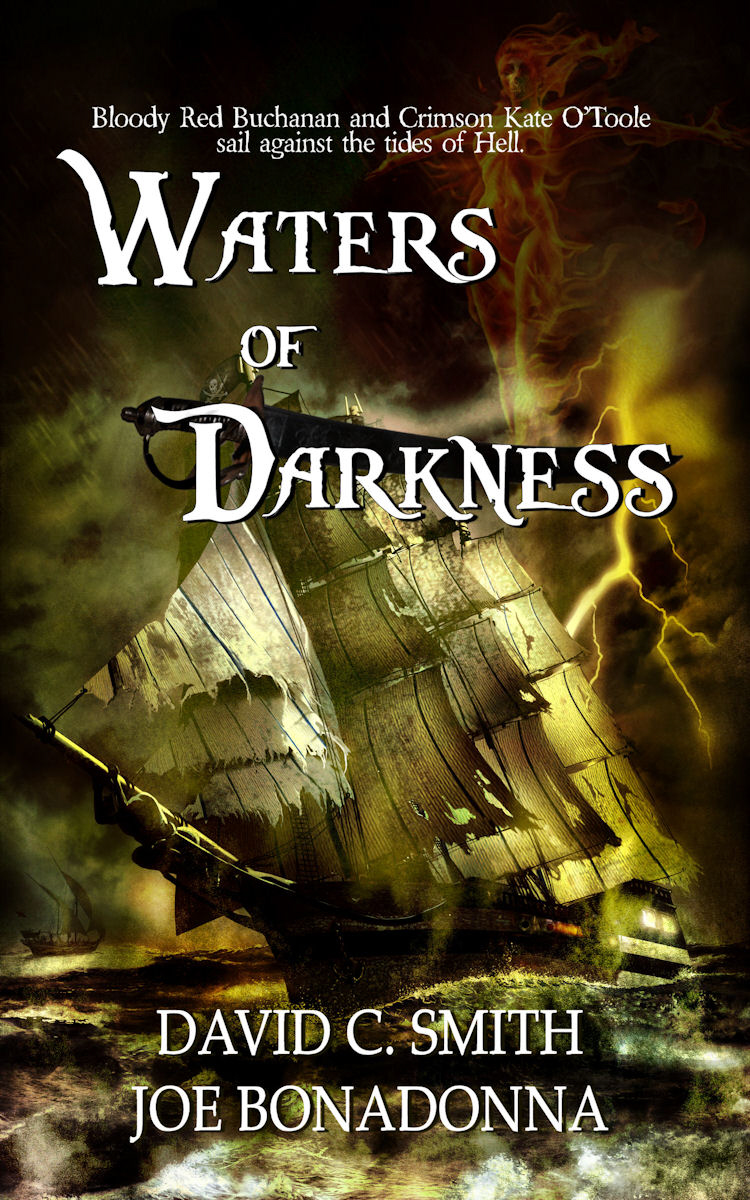
Waters of DarknessI think we’ve finally deciphered what it is that Black Gate readers truly want: great fantasy novels, with lots of action and an enchanting cast of characters.

And pirates.

That would certainly explain how the brief announcement of David C. Smith and Joe Bonadonna’s first collaboration, Waters of Darkness, vaulted to the top of our traffic stats and stayed there for the entire month of March — edging out Emily Mah’s Ellen Datlow interview, Sean McLachlan’s examination of one of the greatest miniature battles of history, Violette Malan’s look at swearing in fantasy, and Matha Well’s thoughtful look at how her novel The Clouds Roads fits the Sword & Sorcery sub-genre.

There are plenty of surprises — and lots of great reading — in the Top 50 Black Gate posts in March. The complete list follows. Enjoy — and stay tuned for more posts about pirates. We know a good thing when we see one.

  1. Damnation Books releases Waters of Darkness by David C. Smith and Joe Bonadonna
  2. Ellen Datlow on Hating one of my Questions…
  3. The Battle of the Three Kings, 1578, in Miniature
  4. My Characters Don’t give a Damn
  5. How well does The Cloud Roads fit as Sword and Sorcery?
  6. Sorry, can you say that again?
  7. Adventure on Film: Why Hollywood gets it Wrong
  8. Weird of Oz considers Postbuffyism
  9. On the one year Anniversary of John Carter, Let’s Look Forward to a New Tarzan Movie
  10. The battle of Tondibi, 1591, in Miniature


  11. Read More Read More

The Book of Horrible Stories by Sheila C. Johnson

The Book of Horrible Stories by Sheila C. Johnson

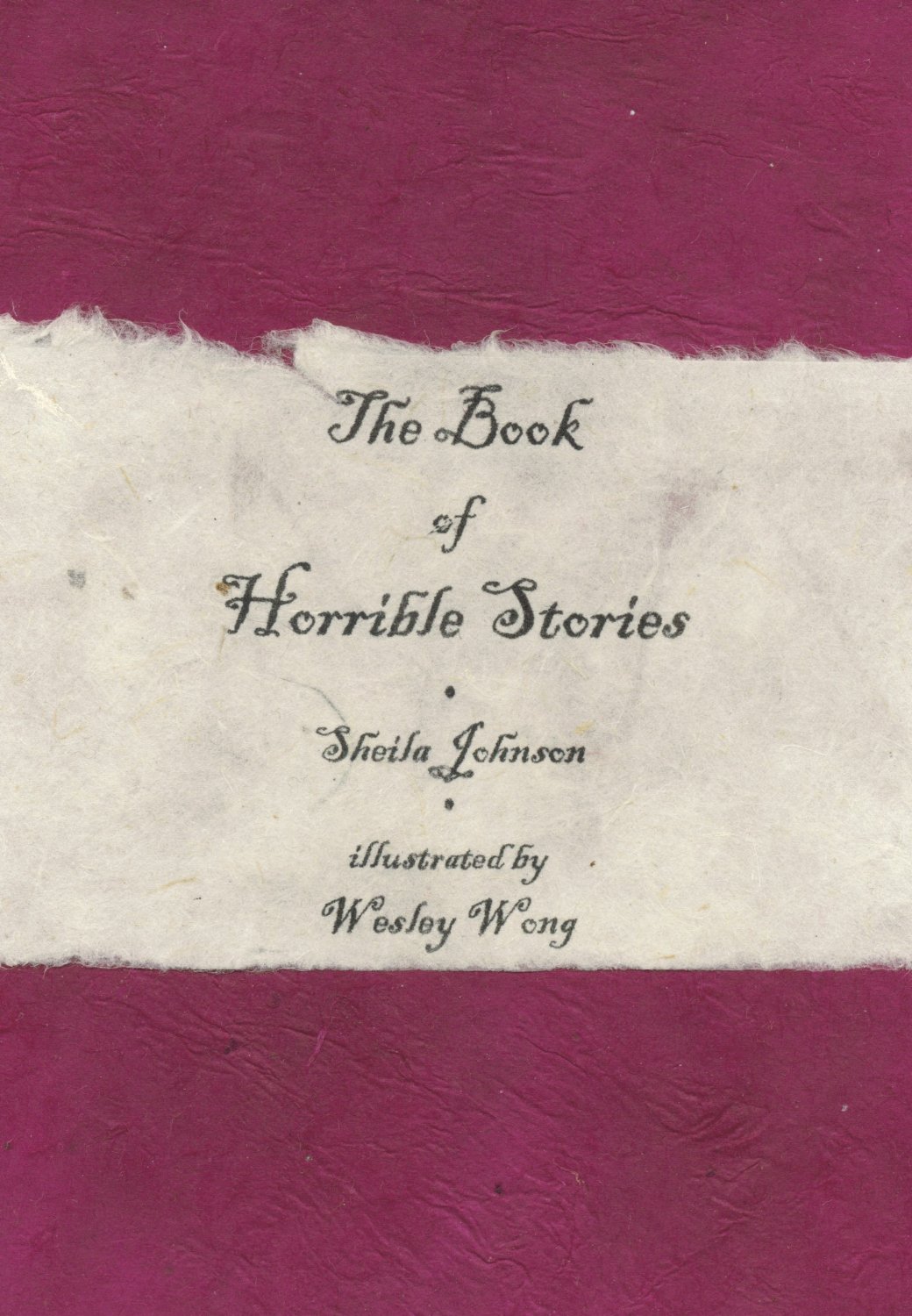
The Book of Horrible Stories by Sheila C JohnsonThe first thing we can tell about Sheila Johnson, before we even open this book, is that she has no fear of jinxing herself with a title like The Book of Horrible Stories. For a change, I was delighted to find that the work did not live up to the title.

Within are five (six, if you count the preface, which I do) short stories that explore the art of storytelling, the source of inspiration and how the tropes of horror are often metaphors for things even more horrifying. Beautiful and surreal, but never so vague that they lose the reader. “The Garden Witch and the Boy” sets the tone with a tale of childhood guilt and nightmares. (And when are guilt and nightmares more intense than in childhood?) “The Tree in the Field” starts with a quirky, surreal premise and takes it further than expected. “An Interlude” is Johnson’s answer to that eternal question asked of writers: “Where do you get your ideas?” (It follows up with the question no one asks: “What happens if you ignore those ideas?”) “Mrs. Ambrose and the Conversational Shimmer” is my favorite of the bunch, a ghost story of sorts and a zombie story of sorts, that delves into themes more disturbing than gruesome. The collection is capped by the story that gave the collection its name: “The Book of Horrible Stories,” a love letter to the horror genre itself and to every child who discovers it.

The collection is beautifully illustrated by Wesley Wong and available for $12.00 on Sheila Johnson’s web site. If money’s tight, you can get the Kindle version for a measly 99 cents. This one goes on the shelf between Neil Gaiman and Kelly Link (and not just because that’s where it happens to fall in the alphabet).

Seriously. Ninety-nine cents. Go. Buy.

New Treasures: Pandemomium, by Warren Fahy

New Treasures: Pandemomium, by Warren Fahy

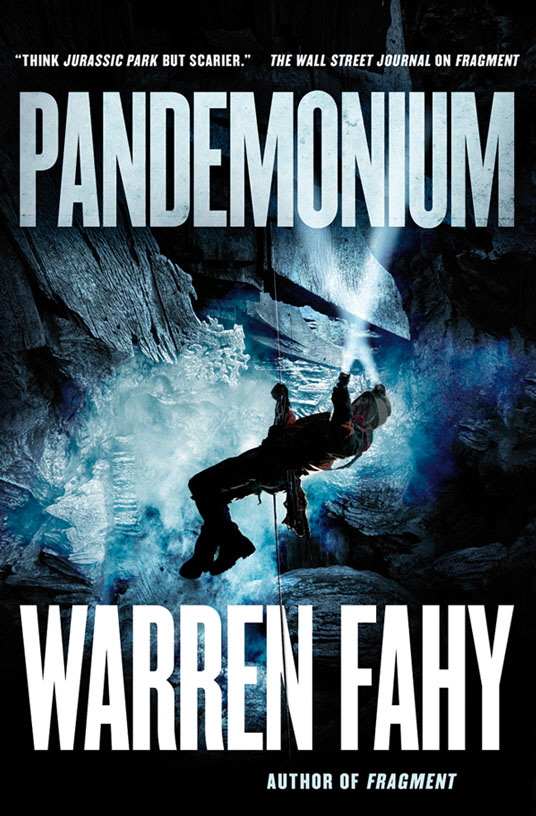
Pandemonium Warren FahyIn 2009, Warren Fahy released Fragment on an unsuspecting world.

An unassuming paperback about the cast and crew of a reality show on a long-range research vessel in the South Pacific, who receive a distress call from the mysterious Henders Island, Fragment wasn’t just a great modern adventure tale. It was also an over-the-top monster thriller, a glimpse at how life on Earth might have looked if evolution had taken a very different turn half a billion years ago. Henders Island proved to be a fragment of a lost continent, packed with the kind of creatures that could wipe out our fragile ecosystem.

Since the release of Fragment, fans have been waiting for Fahy’s next monster-laden follow up, and it has finally arrived in the form of Pandemomium, a new hardcover from Tor.

Deep beneath the Ural Mountains, in an underground city carved out by slave labor during the darkest hours of the Cold War, ancient caverns hold exotic and dangerous life-forms that have evolved in isolation for countless millennia. Cut off from the surface world, an entire ecosystem of bizarre subterranean species has survived undetected — until now.

Biologists Nell and Geoffrey Binswanger barely survived their last encounter with terrifying, invasive creatures that threatened to engulf the planet. They think the danger is over until a ruthless Russian tycoon lures them to his underground metropolis, where they find themselves confronted by a vicious menagerie of biological horrors from their past — and by entirely new breeds of voracious predators. Now they’re rising up from the bowels of the Earth to consume the world as we know it.

Yup, that sounds pretty much like what I was waiting for. Pandemomium was published by Tor Books on February 28. It is 306 pages (with 11 extra pages of maps and illustrations of monster innards), priced at $24.99 in hardcover and $11.99 for the digital edition.

Read Last Year’s Best Online Reviews, Essays and Commentary in Speculative Fiction 2012

Read Last Year’s Best Online Reviews, Essays and Commentary in Speculative Fiction 2012

Speculative Fiction 2012It’s no surprise that some of the best and most insightful writing in 2012 took place on blogs.

Blogging — with its immediacy and ease of public access — has attracted some of the most gifted writers we have, and fantasy and SF readers are increasingly turning to the blogs and writers they trust for news and opinion. For the latest evidence, look no further than Speculative Fiction 2012, a new collection of the very best online reviews, essays, and commentary from Jurassic London press.

Speculative Fiction 2012 gathers over fifty of the best articles published last year, from the top tier of bloggers and authors in science fiction and fantasy. The contributor list includes some of the most acclaimed writers in the field, folks like Christopher Priest, N. K. Jemisin, Joe Abercrombie, Daniel Abraham, Elizabeth Bear, Myke Cole, Kate Elliott, Niall Alexander, Rose Lemberg, Kameron Hurley, Adam Roberts, Tansy Rayner Roberts, Sam Sykes, and Lavie Tidhar.

I’m very pleased to say that it also includes one of our own: Matthew David Surridge, whose February 2012 Black Gate article “Tolkien and Attila” is in the Table of Contents. Here’s what Matthew tells us:

This is out now, and has one of my Black Gate articles in it — to paraphrase the Amazon blurb, a look at what Tolkien learned from Attila the Hun. Happy to have a piece of mine in a very strong line-up! And worth noting: proceeds from the sale of the book go to a charity promoting international literacy and education.

You can read the announcement, including the complete list of contributors, here, and Matthew’s original article is here.

Speculative Fiction 2012 was edited by Justin Landon and Jared Shurin, with a foreword by Mur Lafferty. It published on April 23, 2013 by Jurassic London. It is 380 pages in paperback, priced at $11.99. There is no digital edition.