Browsed by
Category: Books

A Satisfying Conclusion to Feyre Archeron’s Story: A Court of Wings and Ruin by Sarah J. Maas
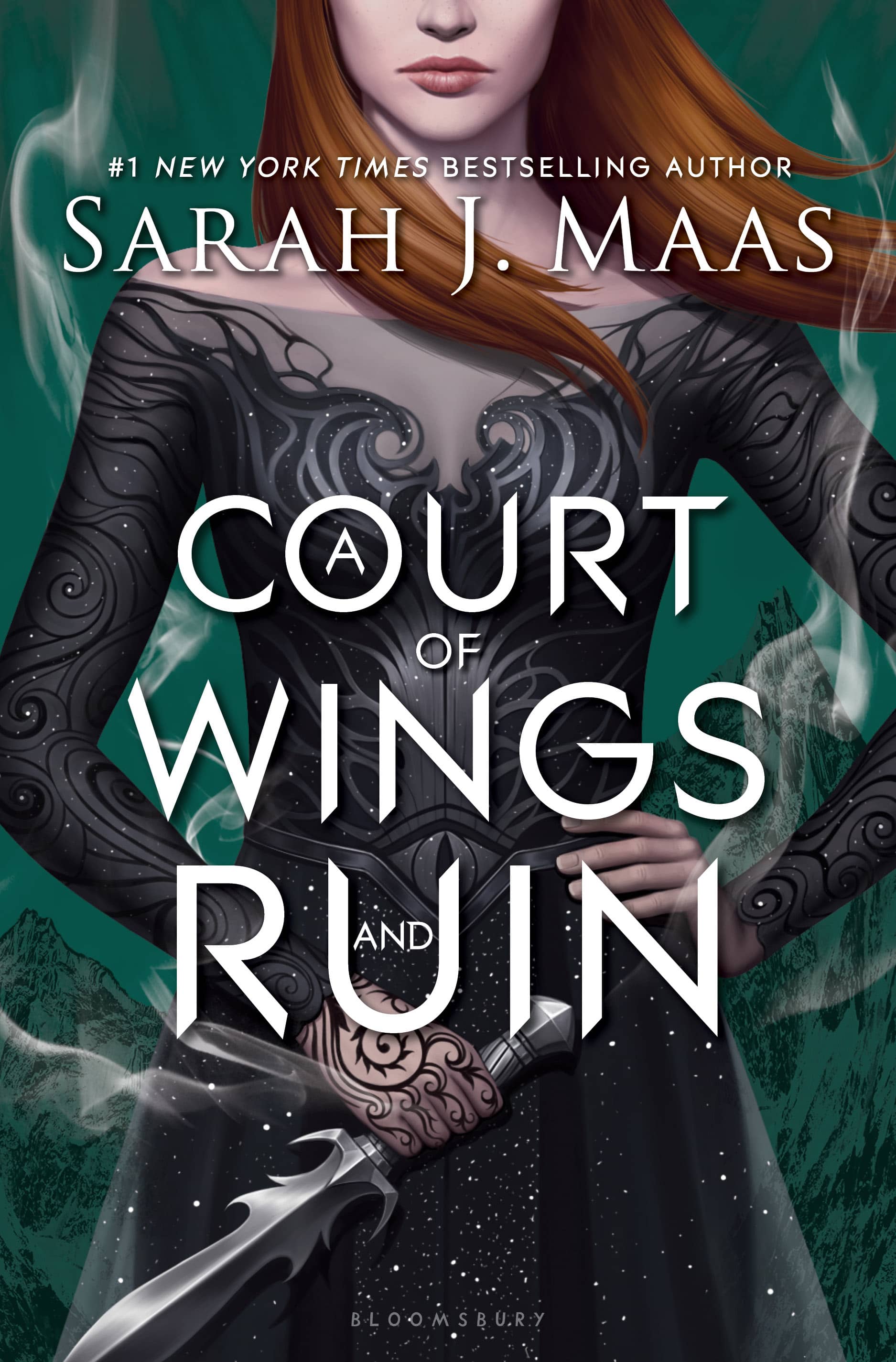
A Satisfying Conclusion to Feyre Archeron’s Story: A Court of Wings and Ruin by Sarah J. Maas

A Court of Wings and Ruin by Sarah J. Maas-smallA Court of Wings and Ruin
A Court of Thorns and Roses, Book 3
Sarah J. Maas
Bloomsbury USA Childrens (720 pages, $18.99 hardcover/$12.99 digital, May 2, 2017)

According to GoodReads voters, Sarah J. Maas’s A Court of Wings and Ruin (known as ACOWAR to YA readers) was the most hotly anticipated 2017 YA release of any genre. The third volume in a series that was launched by New York Times bestseller A Court of Thorns and Roses and propelled to the #1 slot by its sequel, A Court of Mist and Fury, ACOWAR seemed poised to dominate the YA hardcover market after its publication on May 2nd. But even after promising sales in its first few weeks, the book has not cleared the same high bars as its predecessors.

ACOWAR delivers a satisfying conclusion to Feyre Archeron’s story. A classic high fantasy, it’s got vicious faeries, spiteful queens, hot lords, and – ahem – plenty of graphic sex. So what went wrong?

The book gets off to a promising start. Feyre has gone undercover in the Spring Court, ruled by her abusive ex Tamlin, who allied with the evil King of Hybern to wrench her away from her true love, Rhysand. She must hide her true emotions, her magical powers, and her standing as High Lady of the Night Court in order to lull Tamlin into underestimating her. The pace is quick during these early chapters, as readers enjoy Feyre’s stratagems to undermine Tamlin’s court from within. Likewise, we spin through the pages as she makes her escape, longing to reunite her with her mate.

But when that happens much sooner and more easily than expected, the plot shifts focus to defeating Hybern, who wants to enslave humanity. Since the relationships (called “ships” in the YA world) among Feyre, Rhys and Tamlin served as the engine that drove the previous two tomes, ACOWAR’s momentum slows when these issues seem resolved. If you do keep reading, however, the last third of the book will reward you with lots of action and a twist that brings tears to the eyes.
Read More Read More

Self-published Book Review: The Emerald Blade by Steven Kelliher

Self-published Book Review: The Emerald Blade by Steven Kelliher

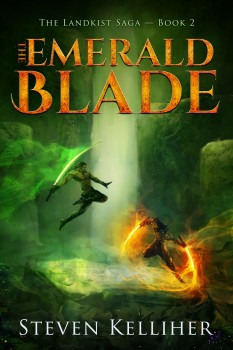
The Emerald Blade Cover

I may miss the next month or so, due to the Mysterion Kickstarter and a workshop I’m attending, but please keep sending me books to review, and I’ll get to them soon — see the instructions here.

Steven Kelliher’s The Emerald Blade is a sequel to his novel The Valley of Embers, which I reviewed at Black Gate last year. It follows the fire-wielding Ember Kole, and Linn, who inherited the air-wielding abilities of the White Crest. After defeating the White Crest, they set out to pursue T’alon Rane, the corrupted King of the Embers, whom they hope will lead them to the Eastern Dark, the Sage who is bringing the Dark Kind of the World Apart to their world.

They are joined by two fellow Embers, Misha and Jenk, and the massively strong Rockbled Baas. Both Embers and Rockbled are Landkist, gifted power by the lands in which they live, as opposed to the Sages, who take power from the land. Kole’s and Linn’s expedition travels to the Emerald Road, a rainforest where massive trees form multiple layers of canopy atop one another, and traveling along the Road involves moving from layer to layer. There they discover that the Sage Balon Rael has come to the Emerald Road, seeking the Emerald Blade, the name for both a man and the weapon he wields, a weapon that’s all that remains of the Emerald Sage.

T’alon Rane seeks both the Emerald Blade and the death of Balon Rael, on the orders of the Eastern Dark, but to achieve his goals, he temporarily allies himself with Balon Rael while looking for an opportunity to betray him. Meanwhile, Kole and Linn and their group ally themselves with the Emerald Blade. Similar to the first book, shifting alliances and tenuous loyalties make the action unpredictable, as the sides realign constantly right up to the end.

Read More Read More

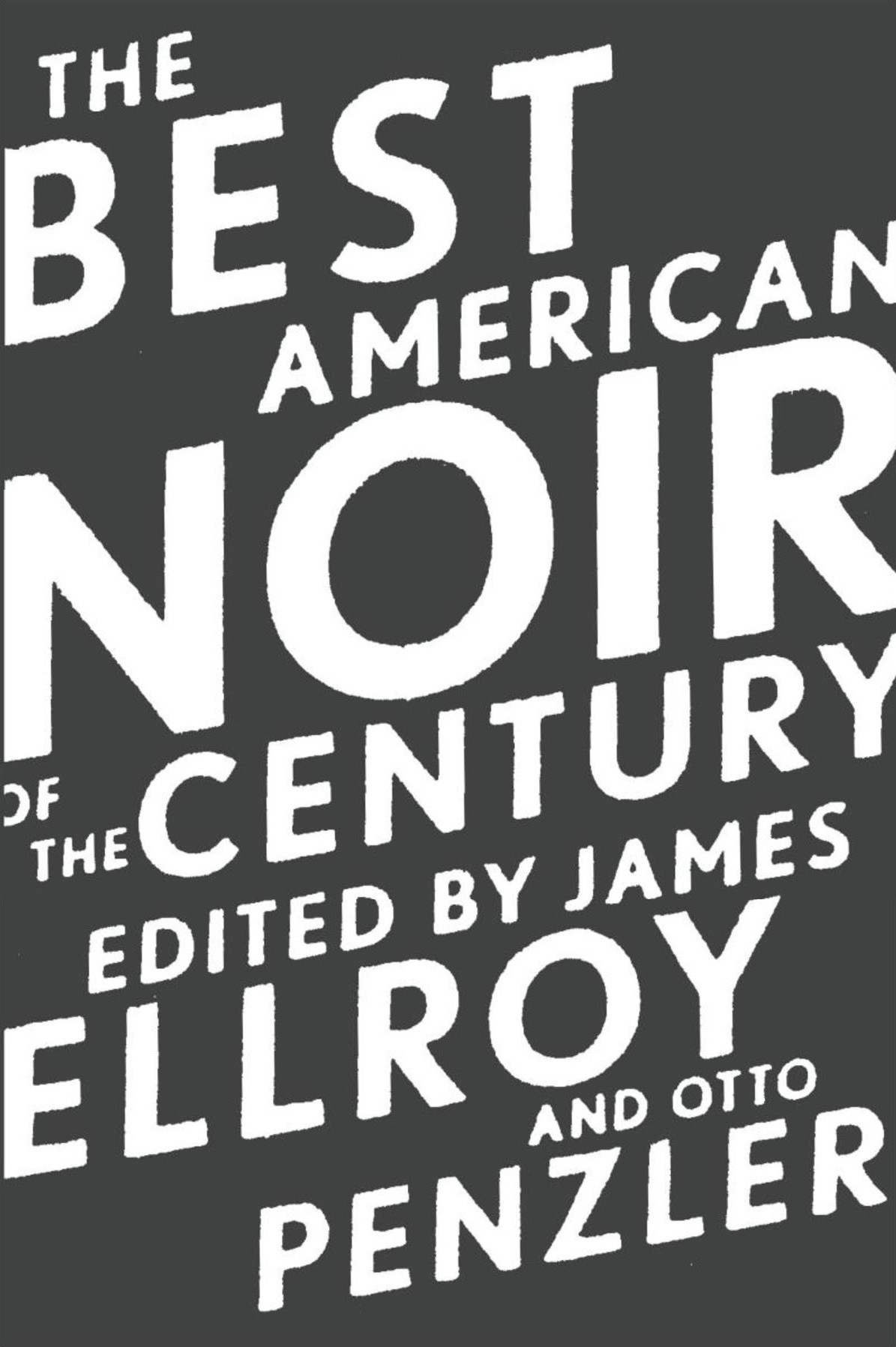
A Glimpse of the Secret Pervert Republic: The Best American Noir of the Century, edited by James Ellroy and Otto Penzler

A Glimpse of the Secret Pervert Republic: The Best American Noir of the Century, edited by James Ellroy and Otto Penzler

The Best American Noir of the Century small The Best American Noir of the Century back-small

I’ve recently been enjoying the massive 2011 anthology The Best American Noir of the Century, which isn’t science fiction or fantasy, but which does showcase a lot of highly regarded SF and fantasy writers, including Charles Beaumont, Cornell Woolrich, Harlan Ellison, David Morrell, and others.

The first question I had when I set set eyes on this book was “Which century are they talking about?” Turns out it’s neither the 20th nor the 21st… it’s the last hundred years, give or take. The book includes 39 stories arranged chronologically by publication date, starting with Tod Robbins “Spurs,” which first appeared in Munsey’s Magazine in February 1923, and ending with Lorenzo Carcaterra’s “Missing the Morning Bus,” from Penzler’s 2007 anthology of poker stories, Dead Man’s Hand.

Penzler gives a nice overview of the history of noir fiction in his Foreword, but it’s Ellroy’s introduction, in which he claims that American noir describes “the demography of a Secret Pervert Republic” that I found especially entertaining. Here’s a few snippets.

Read More Read More

Future Treasures: The New Voices of Fantasy, edited by Peter S. Beagle and Jacob Weisman

Future Treasures: The New Voices of Fantasy, edited by Peter S. Beagle and Jacob Weisman

The New Voices of Fantasy-smallAside from the usual crop of Best of the Year books, I’ve been disappointed with this year’s reprint anthologies. So I’m intrigued and hopeful about The New Voices of Fantasy, a very promising reprint anthology with a Table of Contents that reads like a Who’s Who of the best new voices in the genre — including Amal El-Mohtar, Sofia Samatar, Sarah Pinsker, Max Gladstone, Hannu Rajaniemi, Maria Dahvana Headley, Ursula Vernon, and many others. Kirkus Reviews calls it “Stellar… proves not only that fantasy is alive and well, but that it will be for years to come.”

The contents include Alyssa Wong’s Nebula and World Fantasy Award winner “Hungry Daughters of Starving Mothers,” Ursula Vernon’s Nebula Award winner “Jackalope Wives,” and Usman T. Malik’s British Fantasy Award Award winner “The Pauper Prince and the Eucalyptus Jinn.” It also contains an original story by Eugene Fischer. Here’s the description.

What would you do if a tornado wanted you to be its Valentine? Or if a haunted spacesuit banged on your door? When is the ideal time to turn into a tiger? Would you post a supernatural portal on Craigslist?

In these nineteen stories, the enfants terribles of fantasy have arrived. The New Voices of Fantasy captures some of the fastest-rising talents of the last five years, including Sofia Samatar, Maria Dahvana Headley, Max Gladstone, Alyssa Wong, Usman T. Malik, Brooke Bolander, E. Lily Yu, Ben Loory, Ursula Vernon, and more. Their tales were hand-picked by the legendary Peter S. Beagle (The Last Unicorn) and genre expert Jacob Weisman (The Treasury of the Fantastic).

So go ahead and join the Communist revolution of the honeybees. The new kids got your back.

Here’s the complete Table of Contents.

Read More Read More

Urban Fantasies and Robot Westerns: The Novels of C. Robert Cargill

Urban Fantasies and Robot Westerns: The Novels of C. Robert Cargill

Dreams and Shadows Robert Cargill-small Queen of the Dark Things-small Sea of Rust-small

In the wider world, C. Robert Cargill is probably best known for his Nebula-nominated script for the movie version of Doctor Strange, and for the uber-creepy Sinister (brrrr). But around these parts, he’s known for his pair of novels about the Austin wizard Colby: his debut Dreams and Shadows (2013) and the sequel Queen of the Dark Things (2014). In her Tor.com review, Emily Nordling said, “Dark, comedic, and unsettling, Dreams and Shadows is everything an urban fantasy sets out to be.” I bought both books last year and put them near the top of my to-be-read pile.

But now along comes his third novel, Sea of Rust, a robot western set in a post-apocalyptic landscape in which humans have been wiped out in a machine uprising. This doesn’t just one threaten to replace his previous two in my TBR pile; it’s likely it will move right to the top. It arrives in hardcover from Harper Voyager on September 5.

Read More Read More

The Strategy Behind Disabled Stories: The What, Why, and How (but Mostly How) of Disabled People Destroy Science Fiction

The Strategy Behind Disabled Stories: The What, Why, and How (but Mostly How) of Disabled People Destroy Science Fiction

Disabled People Destroy Science Fiction-small

When I started writing this article my face was spotted with burst blood cells. Earlier in the day I’d had one of my violent convulsive episodes. I was exhausted and aching but I meant to write, because it felt appropriate, topical. I’m here, after all, to write about Uncanny Magazine’s Disabled People Destroy Science Fiction issue.

But I couldn’t muster the energy for more than a few lines. I lacked the spoons.

The project description goes like this: Disabled People Destroy Science Fiction is a continuation of the Destroy series in which we, disabled members of the science fiction community, will put ourselves where we belong: at the center of the story. Often, disabled people are an afterthought, a punchline, or simply forgotten in the face of new horizons, scientific discovery, or magical invention. We intend to destroy ableism and bring forth voices, narratives, and truths most important to disabled writers, editors, and creators with this special issue.

Read More Read More

Dune by Frank Herbert

Dune by Frank Herbert

oie_3171159srWv2GrQIt’s been called the greatest science fiction novel of all time. Maybe, maybe not, but it’s one of the best I’ve ever read. Published all the way back in 1965, it’s the best-selling science fiction novel of all time. The first half of Dune made its debut as “Dune World,” starting in the December 1963 Analog. The second half, “The Prophet of Dune,” began in the January 1965 issue.

I read Dune for the first time in 1981, at the age of 14. From the very first pages I was hooked.  I was house sitting for my grandfather, and the only things I had to do were let the dog out and feed her and myself, and that meant I barely put the book down all day. Like Dune’s hero, Paul Atreides, I was wondering what the heck is a gom jabbar? Who are the Bene Gesserit? What is melange? My dad’s paperback, at 544 pages, is one of the longest books I’ve read in a single day (beat only by Terry Brooks’ The Sword of Shannara).

I’m not sure what triggered it, but something called out from the depths telling me it was time to reread Dune again. The last time (which was the fourth time) I read it was nearly 20 years ago. A friend wanted to get into science fiction, so a few of us started rereading the classics and tossing them his way. Among the books I revisited were Asimov’s Foundation Trilogy and The Gods Themselves, Clarke’s Rendezvous With Rama, Heinlein’s Orphans of the Sky, and Herbert’s Dune.

Read More Read More

New Treasures: The Punch Escrow by Tal M. Klein

New Treasures: The Punch Escrow by Tal M. Klein

The Punch Escrow-smallThe Punch Escrow is Tal M. Klein’s debut novel, but it’s getting a lot more attention than most first novels get. It won the reader-voted Geek & Sundry Hard Science Contest last year, and the Barnes & Noble Sci-Fi & Fantasy Blog called it “the smartest sci-fi thriller of the summer.” And Kirkus says “It’s hard to say enough good things about this hard-science future thriller with humor and heart ― an excellent debut.”

It arrived last week in trade paperback from Inkshares. Here’s the description.

It’s the year 2147. Advancements in nanotechnology have enabled us to control aging. We’ve genetically engineered mosquitoes to feast on carbon fumes instead of blood, ending air pollution. And teleportation has become the ideal mode of transportation, offered exclusively by International Transport ― the world’s most powerful corporation, in a world controlled by corporations.

Joel Byram spends his days training artificial-intelligence engines to act more human and trying to salvage his deteriorating marriage. He’s pretty much an everyday twenty-second century guy with everyday problems ― until he’s accidentally duplicated while teleporting.

Now Joel must outsmart the shadowy organization that controls teleportation, outrun the religious sect out to destroy it, and find a way to get back to the woman he loves in a world that now has two of him.

Read an excerpt at Tor.com.

The Punch Escrow was published by Inkshares on July 25, 2017. It is 356 pages, priced at $14.99 in trade paperback and $7.99 in digital formats. The cover was designed by M.S. Corley.

See all our recent New Treasures here.

The Hilarity of the Strange: The Man Underneath: The Collected Short Fiction of R. A. Lafferty, Volume 3

The Hilarity of the Strange: The Man Underneath: The Collected Short Fiction of R. A. Lafferty, Volume 3

The Man Underneath The Collected Short Fiction of R. A. Lafferty Volume 3-smallThe Man Underneath: The Collected Short Fiction, Volume Three
Centipede Press (368 pages, $100 deluxe hardcover, April 5, 2016)

He laid down a road paved with bright, deadpan madness for us to walk, mouths agape and eyes wide with wonder and trepidation.
– from the introduction by Bud Webster

Let’s talk about R. A. Lafferty. You may have heard of him before: a wild, raggedy old man from Tulsa, Oklahoma, whose work showed up in magazines and the pulps from the sixties to the eighties, who ranged through conventions for a while (according to legends always polite and often drunk), and whose writings rode the New Wave through its crest and recession.

Lafferty had a style that was utterly unique and impossible to imitate. (People have tried.) His short stories were difficult to categorize, and his novels were nearly impossible to read. Nowadays his work is largely out of print and hard to find. His short fiction is scattered across a hundred shores of old magazines, obscure chap-books, and out of print collections. A few of the more well-known ones, like “Narrow Valley,” turn up now and again in anthologies, but the majority are lost, and so one of the strangest, strongest, most distinctive voices from speculative American fiction comes through, if at all, garbled and faint and haunting.

All of this has changed with the publication by Centipede Press of the Collected Short Fiction of R. A. Lafferty, an ongoing series of gorgeous small press books of which the third volume is out and the fourth is on the way. When I say gorgeous, I mean well-designed hardcovers with cloth ribbon and a price point for serious collectors or for library purchase. (Making friends with librarians is my strategy for getting ahold of books like these.) But each volume succeeds in capturing and displaying the varied short stories of Lafferty, splaying them out on the page like a bizarre and beautiful Lepidoptera collection. Lafferty is most alive in his stories, and the random structure of each collection, which are not organized by chronological or any other logical arrangement, means you can step into a good representation of his work with any volume.

Read More Read More

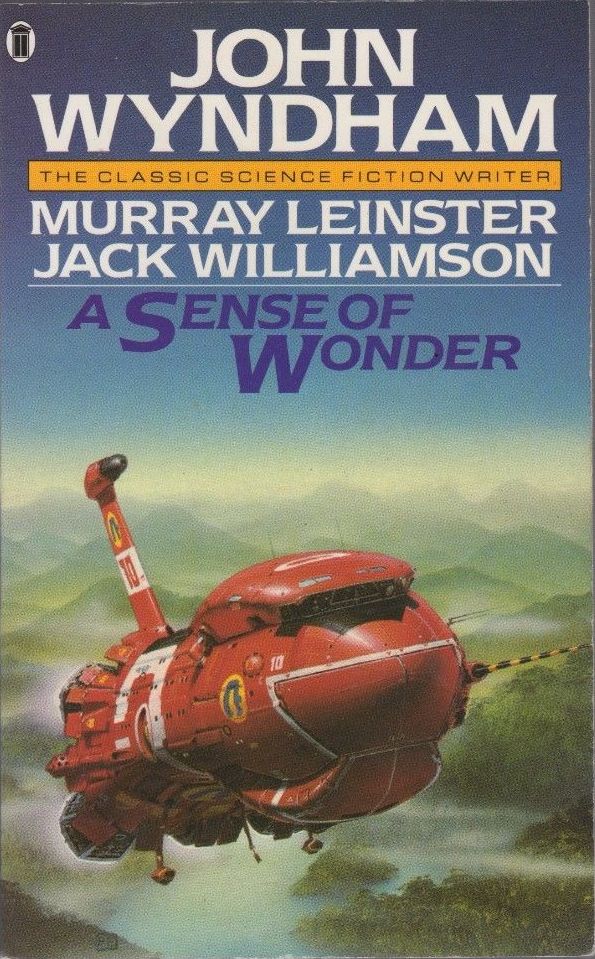
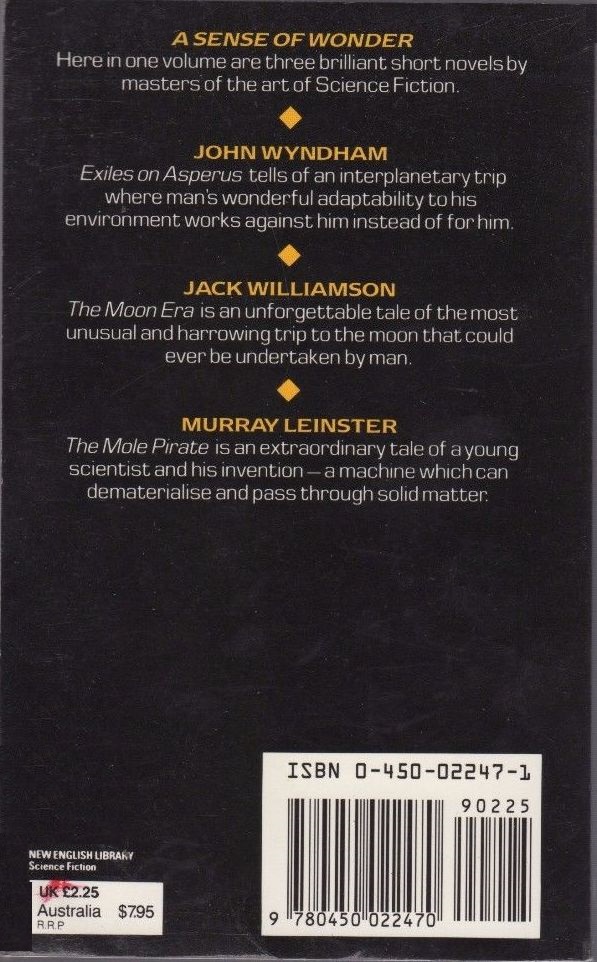
Vintage Treasures: A Sense of Wonder, edited by Sam Moskowitz

Vintage Treasures: A Sense of Wonder, edited by Sam Moskowitz

A Sense of Wonder John Wyndham-small A Sense of Wonder John Wyndham-back-small

Here’s a great example of the kind of book I miss most in today’s market: A Sense of Wonder, a three-novella anthology published in 1967, and reprinted in paperback multiple times in the UK by New English Library.

Why do I miss it? Because it collects three classic pulp tales from three famous pulp authors, and it introduced new readers to the great writers of the pulps in a handsome and inexpensive format. It’s exactly the kind of impulse purchase I would have snatched off the racks in 1987, the year the edition above was released.

Mass market anthologies are virtually gone from today’s shelves — and especially anthologies that showcase authors like John Wyndham, Murray Leinster, and Jack Williamson.

Read More Read More