Browsed by
Category: Books

New Treasures: New Fears, edited by Mark Morris
New Treasures: New Fears, edited by Mark Morris

New Fears Mark Morris-small

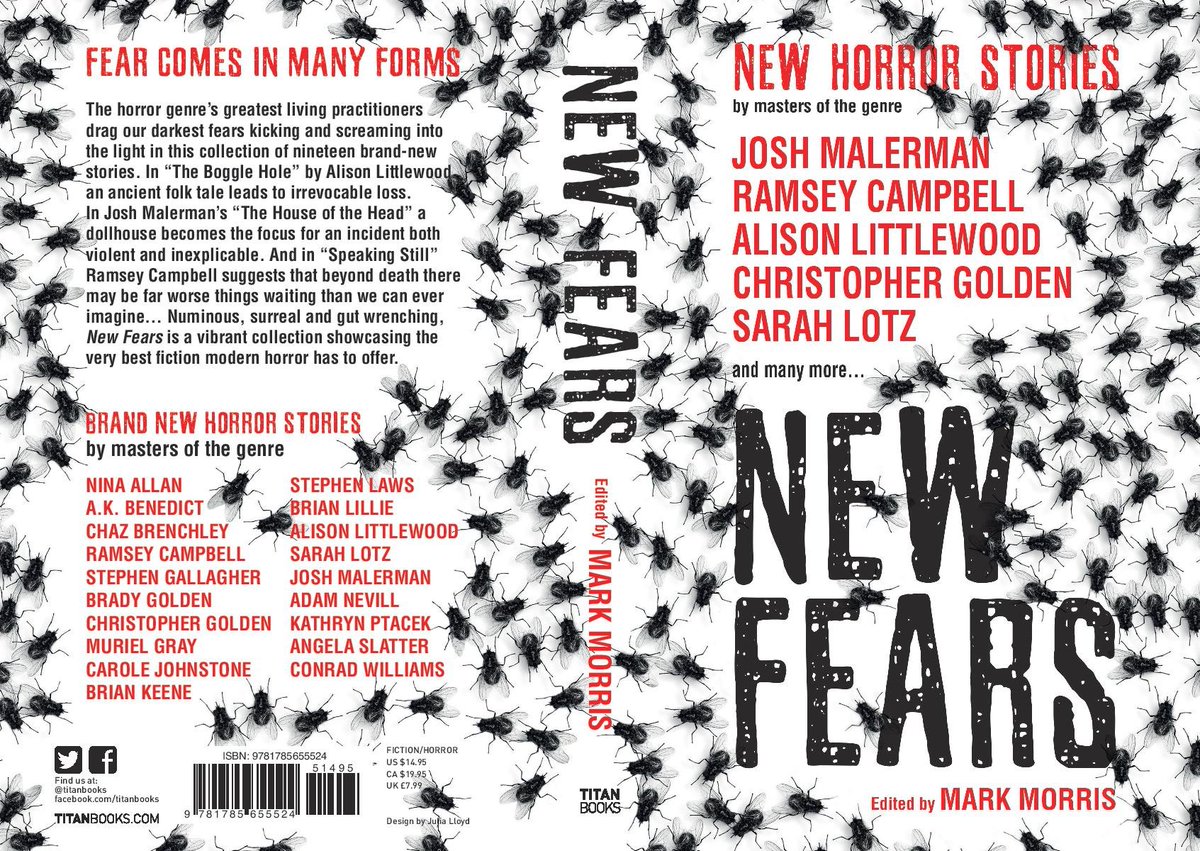
This delightful treasure showed up unbidden in my mailbox this week. It’s advertised as the first of a new series of original horror anthologies, which would be a major addition to the field. Editor Mark Morris (Toady, Vampire Circus, and The Society of Blood) gave the scoop to Ginger Nuts of Horror earlier this year.

Having grown up reading the Pan and Fontana Books of Horror and Ghost Stories, plus numerous other anthologies edited by the likes of Peter Haining, Michel Parry, Richard Davis and Mary Danby, it has always been one of my keenest ambitions to edit an annual – and hopefully long-running – non-themed horror anthology of new, never-before-published stories for the mass market.

Now, thanks to Titan Books, I’ve finally got that chance. I’ve signed an initial contract for two volumes of New Fears, with hopefully more to come in the future… In the first volume you’ll find stories which explore ancient myths in new and innovative ways, stories of human evil, stories of unnamed and ambiguous terrors, and stories where the numinous and the inexplicable intrude upon what we perceive to be reality in unexpected ways. You’ll find humor, and hope, and grief, and sadness, and regret, and impenetrable darkness. You’ll find stories that surprise you, unsettle you and shock you. But most of all, you’ll find stories that grab you and draw you in and compel you to keep turning the pages.

New Fears contains brand new fiction from Adam Nevill, Ramsey Campbell, Angela Slatter, Nina Allan, Chaz Brenchley, Kathryn Ptacek, Christopher Golden, Alison Littlewood, and many others. See more details here.

Here’s the complete TOC.
Read More Read More

Making it on the American Grub Street: Hired Pens, Professional Writers in America’s Golden Age of Print

Making it on the American Grub Street: Hired Pens, Professional Writers in America’s Golden Age of Print

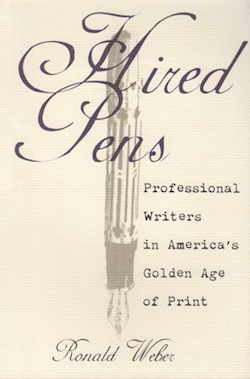
0821412043Last month I posted here about Researching the Habits of Highly Prolific Authors for a book I’m working on. Black Gate reader John Hocking kindly suggested in the comments section that I read Hired Pens: Professional Writers in America’s Golden Age of Print, by Ronald Weber. I took him up on his advice and I’m sure glad I did.

This book looks at the careers of writing and editing from the nation’s earliest days until the end of World War Two. Weber shows us a parade of successful writers and editors — many well-known to this day, many more now forgotten — who found success in the ever-changing market for American popular periodicals.

Until the middle of the 19th century, American writers were hampered by the lack of international copyright laws. Newspaper and magazine editors filched English publications for free and saw no reason to pay homegrown talent. As the population grew and both American and British writers managed to get their governments to set up legal barriers to such theft, the market for American writing blossomed.

These writers certainly didn’t waste their time moaning about their lack of inspiration and hoping the muse would visit them. As prolific and successful Western writer Zane Grey said in a letter to a friend:

This morning I had no desire to write, no call, no inspiration, no confidence, no joy. I had to force myself. But when I mastered the vacillation and dread, and had done a day’s work — what a change of feelings. I had a rush of sweet sensations.

This is a common thread throughout the book. In example after example, we are shown that writer’s block is a myth and that writers should not — indeed, must not — sit around all day twiddling their thumbs. These writers worked hard.

Read More Read More

Future Treasures: Quillifer by Walter Jon Williams

Future Treasures: Quillifer by Walter Jon Williams

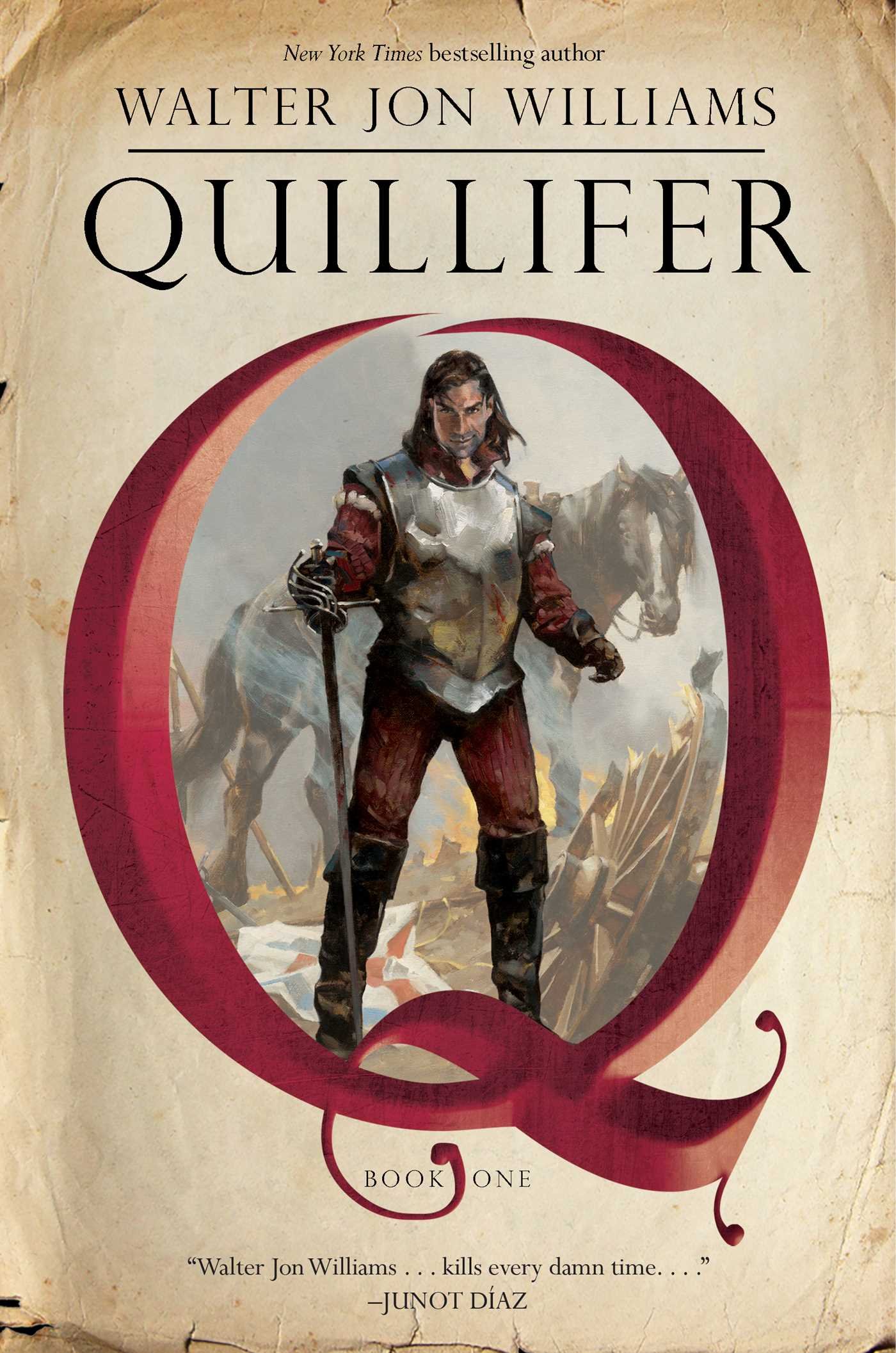
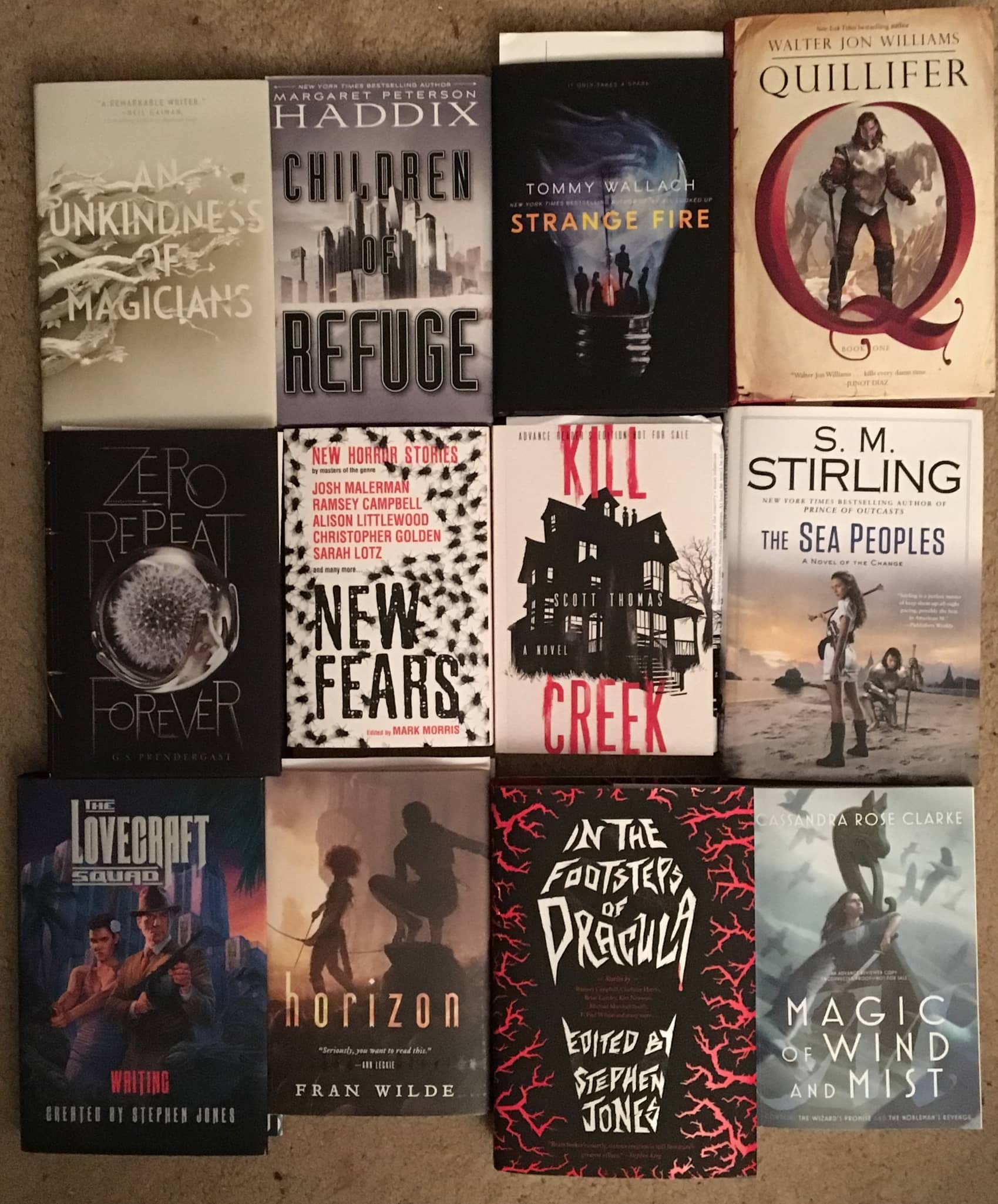
Quillifer-smallIt’s been a good week for review copies here at Black Gate (see some of the recent arrivals here). But the moment Quillifer arrived, I knew it was the most significant release of the current crop, by a pretty good margin.

Walter Jon Williams has had an extraordinary career, displaying an easy mastery of cyberpunk (Hardwired, Angel Station), military SF (Dread Empire’s Fall), SF police procedural (Days of Atonement), light-hearted fantasy (the Majistral series), space opera (Aristoi), contemporary disaster (The Rift), and even the Star Wars universe (The New Jedi Order: Destiny’s Way).

Quillifer, the tale of a young man forced to flee his beloved home and find his fortune among goddesses, pirates, war, and dragons, is his long-awaited foray into epic fantasy. It’s the first in an ambitious new series from one of the most respected authors in the genre.

Quillifer is young, serially in love, studying law, and living each day keenly aware that his beloved homeport of Ethlebight risks closure due to silting of the harbor. His concerns for the future become much more immediate when he returns from a summery assignation to find his city attacked by Aekoi pirates, leading to brigands in the streets and his family and friends in chains.

First, he has to survive the night. Then, he has to leave his home behind and venture forth into the wider world of Duisland, where he can find friends and allies to help avenge his losses and restore Ethlebight to glory. His determination will rock kingdoms, shatter the political structure of Duisland, and change the country forever.

Quillifer will be published by Saga Press on October 3, 2017. It is 530 pages, priced at $27.99 in hardcover and $7.99 for the digital edition. The cover is by Gregory Manchess. Learn more at Williams’ website, and read Emily Mah’s interview with the author (“Why UFOs Are Actually Made of Bread, and Other Little Known Facts”) here.

The Hammer and the Blade by Paul S. Kemp

The Hammer and the Blade by Paul S. Kemp

oie_19118350rehVg1zWith the hammer-wielding (sort of) priest Egil and the (not really) rogue Nix, Paul S. Kemp created his entry for the classic swords & sorcery duo contest. They made their debut in The Hammer and the Blade (2012).

We meet them media res as, in search of treasure, they prepare to penetrate the last defenses of an ancient tomb. Like characters in a classic buddy movie, they bicker and banter.

“You may have heard but you didn’t reply, so let me restate. Are you acquainted with a door I couldn’t open? I press the question only to illustrate your softheadedness, as demonstrated by a faulty memory. It’s important you understand your limits.”

Egil tossed the sliver to the ground, tore a strip of cloth from his shirt, and pressed it to his leg wound. “There was that time in the Well of Farrago–”

Nix shook his head emphatically. “That was not a door.”

Egil looked up, thick eyebrows raised. “It had hinges, a handle. It opened and closed. How can you say–”

“It was a hatch.”

“A hatch?”

“Of course it was a hatch, and only a fool priest of the Momentary God would confuse a door with a hatch. A hatch is a different thing from a door. A hatch is troublesome. You see? Does having an eye inked on your head make your other two blind, or otherwise detrimentally affect your cognition?”

“Well enough,” Egil said at last. “It was a hatch.”

“Now you’re mocking me? I hear mockery.”

Read More Read More

Superheroes, a Wise-Cracking Demon, and Warrior Dinosaurs: To Hell and Back by Matthew Hughes

Superheroes, a Wise-Cracking Demon, and Warrior Dinosaurs: To Hell and Back by Matthew Hughes

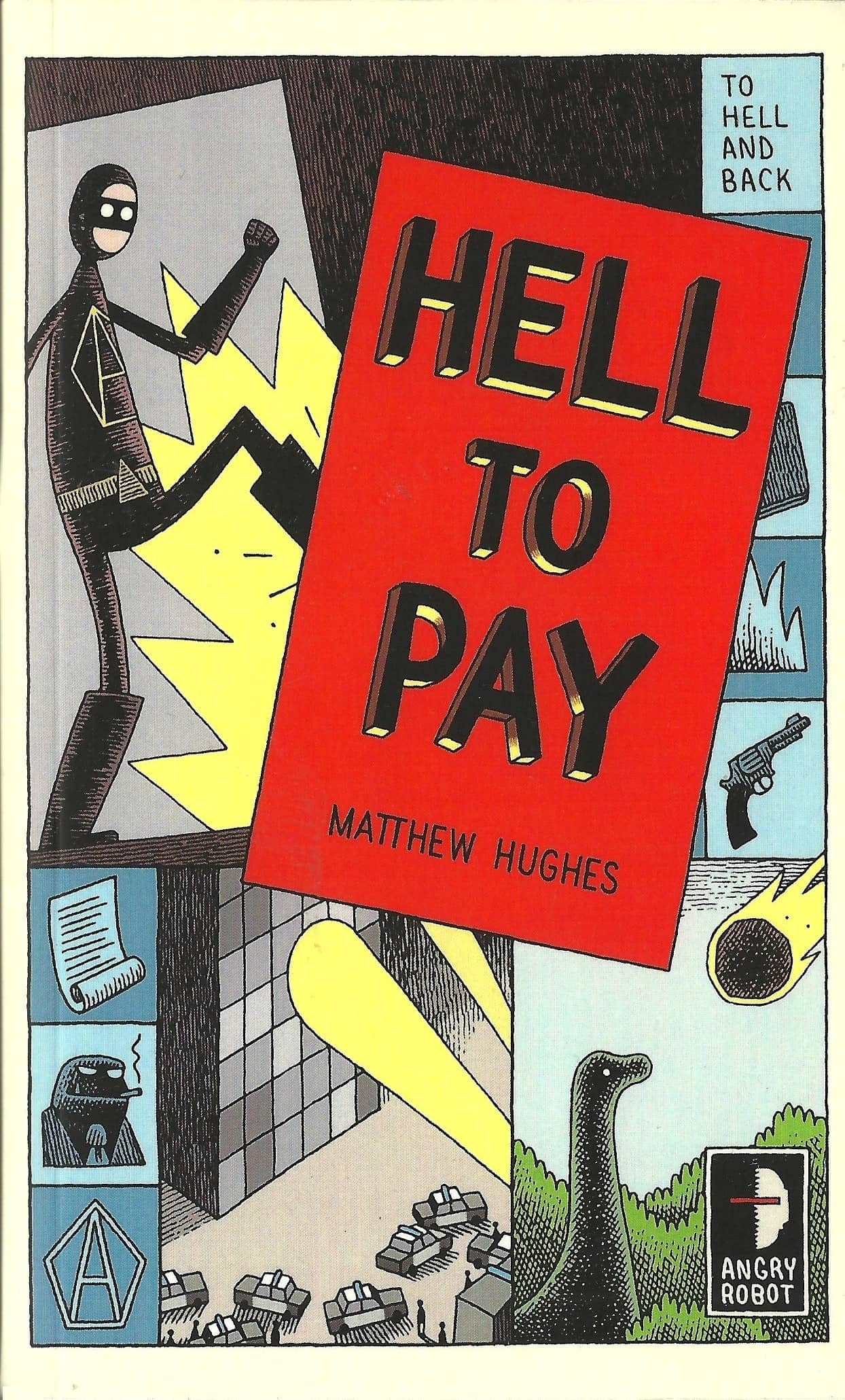
The Damned Busters Matthew Hughes-small Costume Not Included Matthew Hughes-small Hell to Pay Matthew Hughes-small

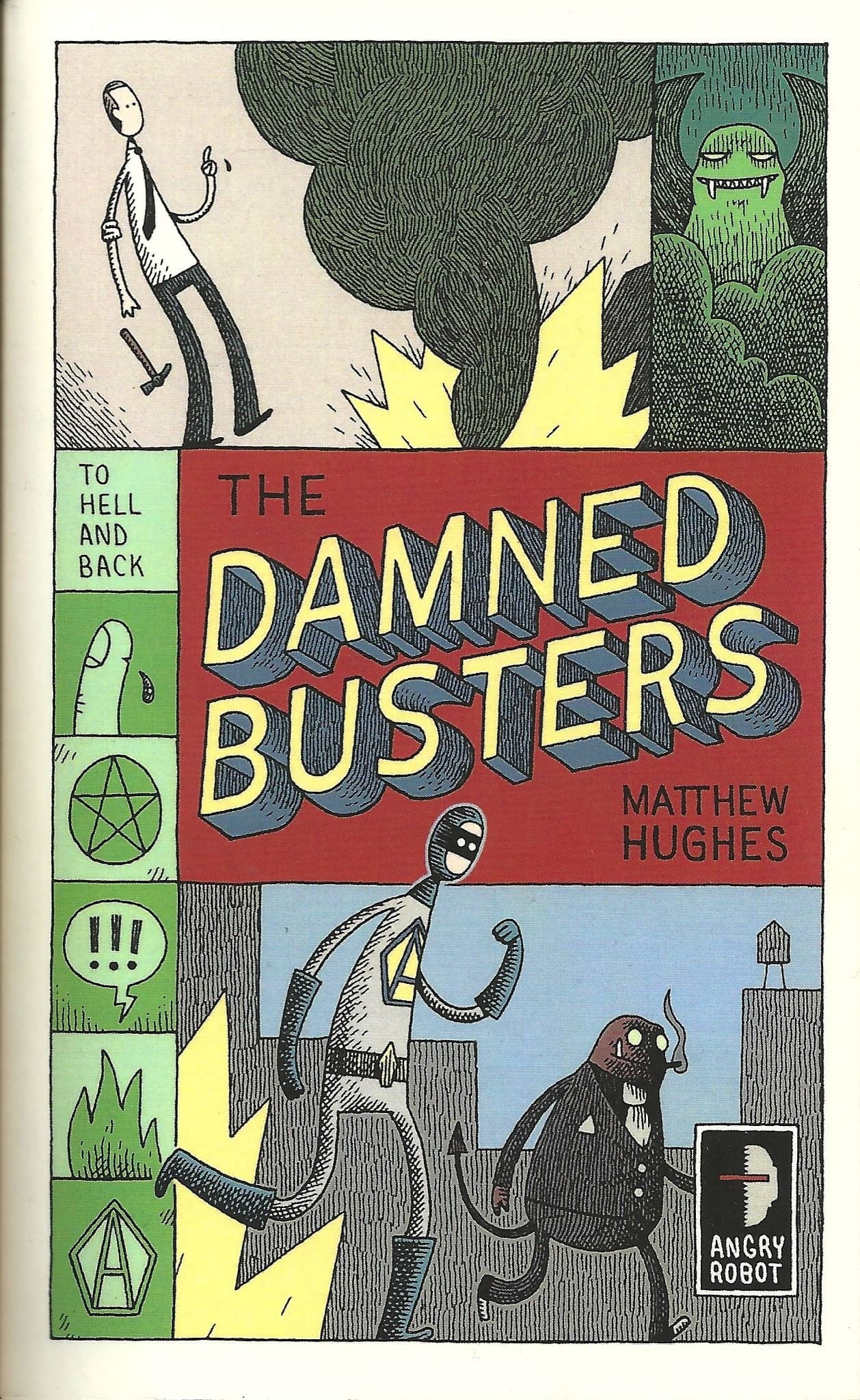
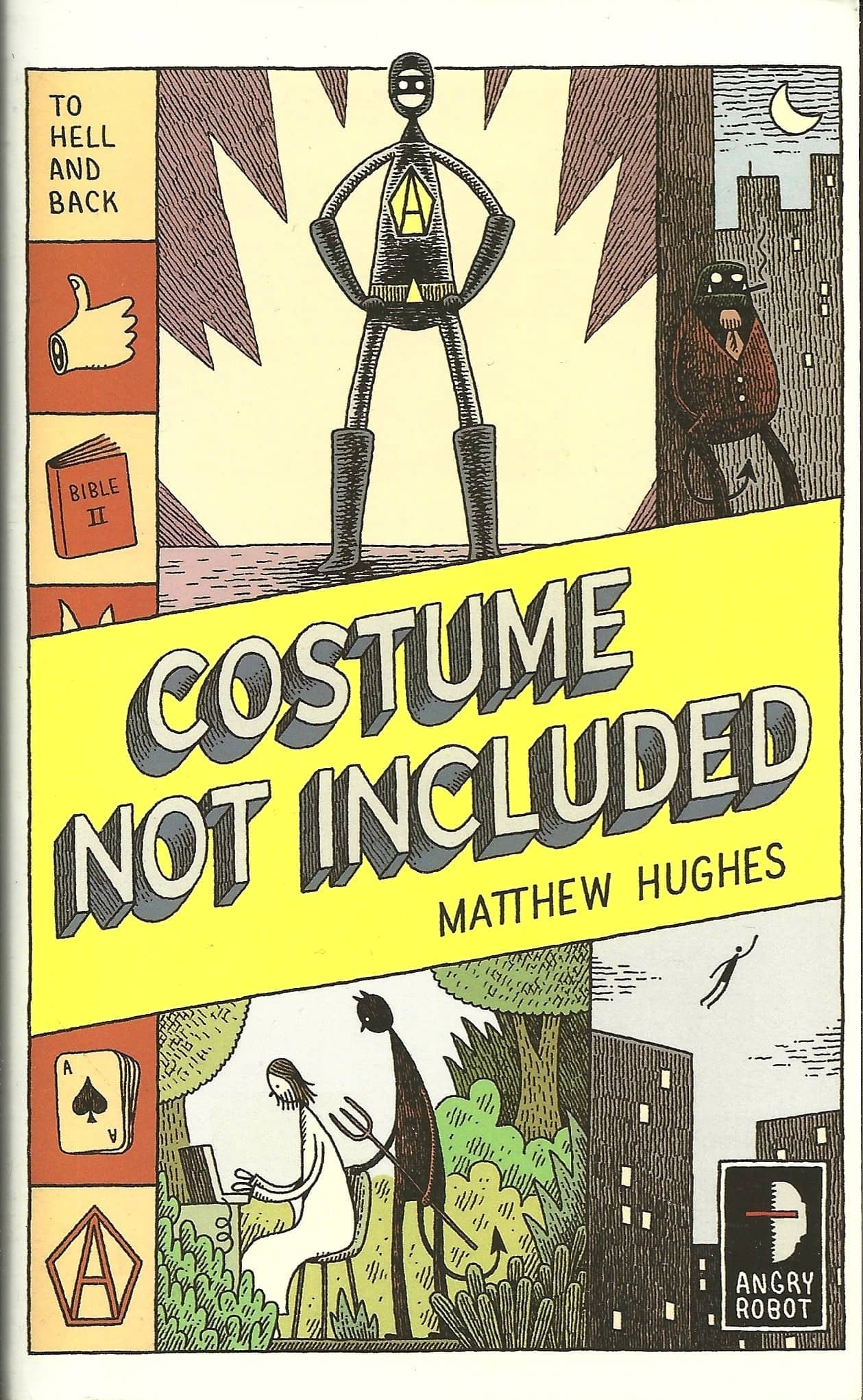
I consider Canadian author Matthew Hughes to be one of the most gifted short stories writers at work today. Much of his output — including his two book Gullible’s Travels series, his 2004 novel Black Brillion, and his Tales of Henghis Hapthorn (Majestrum, The Spiral Labyrinth, and Hespira) — is set in his Archonate Universe, which is profoundly influenced by Jack Vance. John DeNardo says “His Archonate universe is a wonderfully compelling far future that mixes fantasy and science fiction.”

But Hughes is also responsible for a quirky superhero trilogy published as paperback originals by Angry Robot between 2011 and 2013, back before the publisher had the reach and acclaim it enjoys today. As a result, the series didn’t get the exposure I think it deserved… a shame, since I think the topic is quite timely, and Hughes’ comic gifts make him almost uniquely suited for the material. If you’re a fan of superheroes, To Hell and Back is a series that deserves your attention.

Read More Read More

New Treasures: The Raft by Fred Strydom

New Treasures: The Raft by Fred Strydom

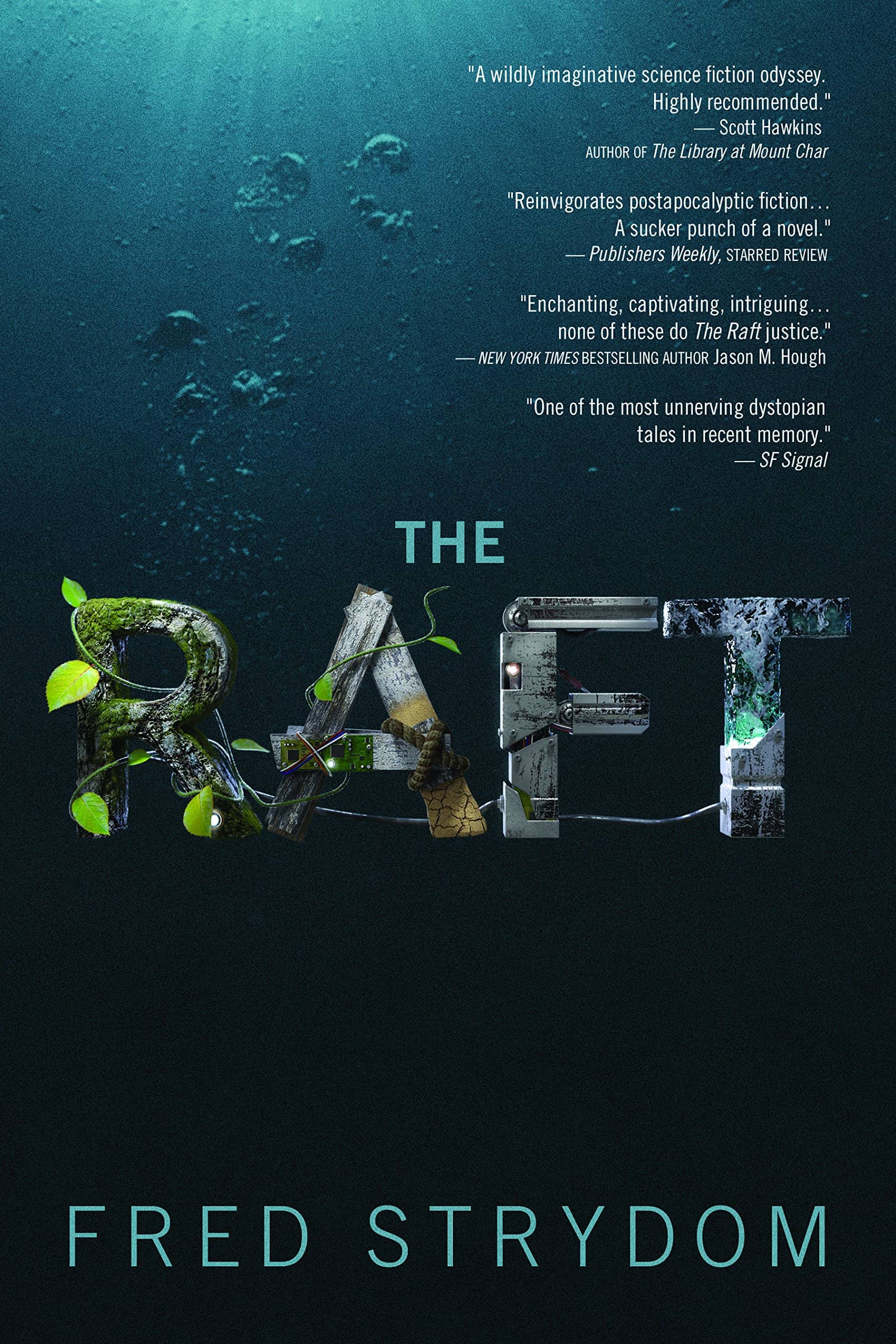
The Raft Fred Strydom-smallFred Strydom’s debut novel The Raft was published in hardcover last year, and the B&N Sci-Fi & Fantasy Blog called it “One of the sharpest premises in 2016… a must-read.” In a starred review, Publishers Weekly said “Strydom’s debut subverts postapocalyptic fiction… [it] reinvigorates the genre with a suspenseful concept and intimately realized characters. A sucker punch of a novel.”

I never saw the hardcover, but the trade paperback reprint from Talos caught my eye at the bookstore last week. Have a look.

“The day every person on earth lost his and her memory was not a day at all. In people’s minds there was no actual event . . . and thus it could be followed by no period of shock or mourning. There could be no catharsis. Everyone was simply reset to zero.”

On Day Zero, the collapse of civilization was as instantaneous as it was inevitable. A mysterious and oppressive movement rose to power in the aftermath, forcing people into isolated communes run like regimes. Kayle Jenner finds himself trapped on a remote beach and all that remains of his life before is the vague and haunting vision of his son.

Kayle finally escapes, only to find a broken world being put back together in strange ways. As more memories from his past life begin returning, the people he meets wandering the face of a scorched earth — some reluctant allies, others dangerous enemies — begin to paint a terrifying picture. In his relentless search for his son, Kayle will discover more than just his lost past. He will discover the truth behind Day Zero — a truth that makes both fools and gods of men.

The Raft was published in hardcover by Talos Press on May 3, 2016, and reprinted in trade paperback on May 16, 2017. It is 432 pages, priced at $15.99 in trade paperback and $25.99 for the digital edition. Read a brief excerpt at Books Live.

What to Read after The Handmaid’s Tale: Brave New Girl by Rachel Vincent

What to Read after The Handmaid’s Tale: Brave New Girl by Rachel Vincent

Brave New Girl CoverWhat should you read after Margaret Atwood’s The Handmaid’s Tale? Rachel Vincent’s Brave New Girl.

First-person narration in the present tense plunges readers into the surreal world of Dahlia 16. Raised in a training facility with 4,999 identical sisters, Dahlia doesn’t realize she’s a clone. All she knows is that she should be like her identicals, happily and unquestioningly serving her home city without distinction.

At least, that’s what she’s supposed to do. Dahlia figures she must be defective since she takes pride in being at the top of her class, and arrogance isn’t permissible in a laborer. Worse, she’s started breaking the rules. Stuck in a broken elevator with Trigger 17, a handsome teenage soldier, she actually talks to him. And now she can’t stop thinking about him…

Clearly there’s something wrong with her. If the authorities discover her secret, they’ll liquidate the genome, slaying the entire cohort of 5,000 girls. Meanwhile, Trigger 17 makes himself even more difficult to forget by leaving her forbidden gifts. He must be flawed, himself, to behave so recklessly.

If you’re hearing echoes of Aldous Huxley in Vincent’s title, it’s for good reason. Brave New Girl is a high-concept YA dystopia. Although it features clones with bar codes tattooed on their wrists and renegade geneticists, file it under speculative rather than science fiction. (On GoodReads, the author herself describes the genre as “sci-fi lite.”) Most of the reading pleasure comes from figuring out how this world works right along with the protagonist, whose learning curve drives the story. A paragon of “show, don’t tell,” the narrative is filtered through Dahlia’s perspective. This generates moments of cognitive dissonance when the reader understands what’s going on better than Dahlia herself and vice versa. If you’re a hard-core sci fi reader who prefers fictional worlds to make sense right from the beginning, then this novel will likely frustrate you. Even after the volume has finished, many explanatory details remain missing, held in reserve for future books.

Read More Read More

Good Old-fashioned Military Science Fiction: The Icarus Corps by Zachary Brown

Good Old-fashioned Military Science Fiction: The Icarus Corps by Zachary Brown

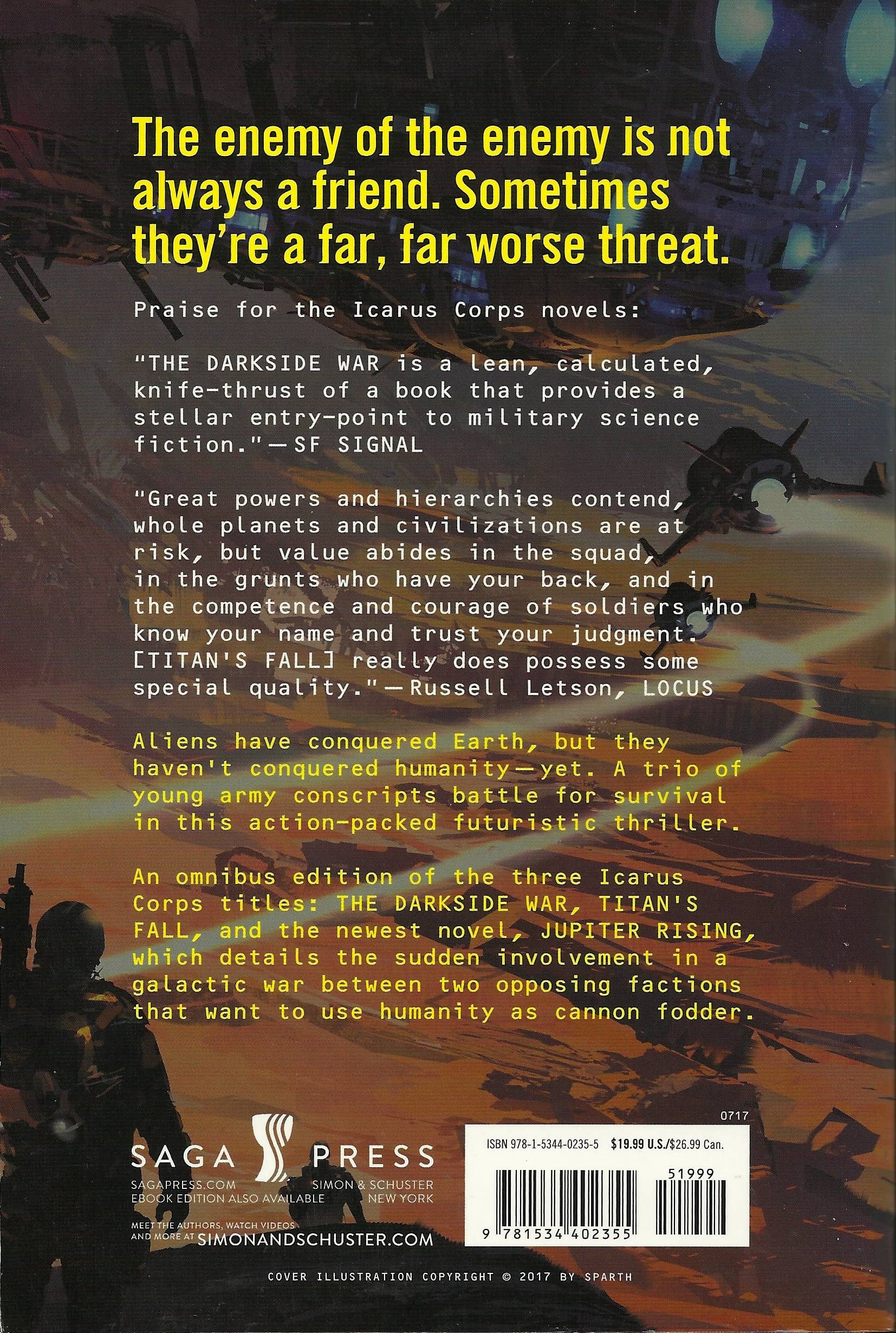
The Icarus Corps-back-small The Icarus Corps-small

I love omnibus editions. It’s not just their convenience, the joy of having an entire trilogy packed into one hefty volume. I think it’s just as much the celebratory aspect. It’s like, Holy crap, we made it. The series is finished. Forget we charged you for the first two; look, here’s the whole damn thing in one volume. You’re welcome.

In the case of The Icarus Corps, the trade paperback containing a complete military science fiction trilogy by Zachary Brown, that’s actually more or less accurate, as the third book, Jupiter Rising, was never even published in paperback. If you enjoyed the first two, and don’t have an e-reader, this is your only option.

Still, it ain’t a bad option, all things considered. I bought the first book, The Darkside War, and I was still delighted to stumble on the omnibus edition of all three novels at Barnes & Noble last week, and I snapped it up immediately.

Read More Read More

What do George Lucas, Michael Jackson, and Harry Houdini Have in Common? It Combines Reading and Obsession

What do George Lucas, Michael Jackson, and Harry Houdini Have in Common? It Combines Reading and Obsession

KARL LAGERFELD books-small

I’ve recently discovered the website Literary Hub. Their recent articles include 7 Writers Who Were Also Editors, Fake News and the Rise of Fascism in the 20s, and their entirely cool Most Talked About Books feature (which this week includes John Le Carre and N.K. Jemison).

But my favorite article in their archives is Emily Temple’s piece on 10 Famous Book Hoarders, which includes photos of the libraries of George Lucas, Ernest Hemingway, William Randolph Hearst, Thomas Jefferson, and fashion icon Karl Lagerfeld (300,000 volumes!)

I’m a fairly compulsive book collector myself, though not on the scale of famous genre collectors like David Hartwell, Bob Weinberg, and Frank Robinson. My house doesn’t look anything like the pictures in Temple’s article (it looks more like this). Still, it’s good to see evidence of well adjusted individuals with the same peculiar obsession as myself. Check out the complete article here.

Rock Stars, Bloggers, and Hidden Magic: The Wind in His Heart by Charles de Lint

Rock Stars, Bloggers, and Hidden Magic: The Wind in His Heart by Charles de Lint

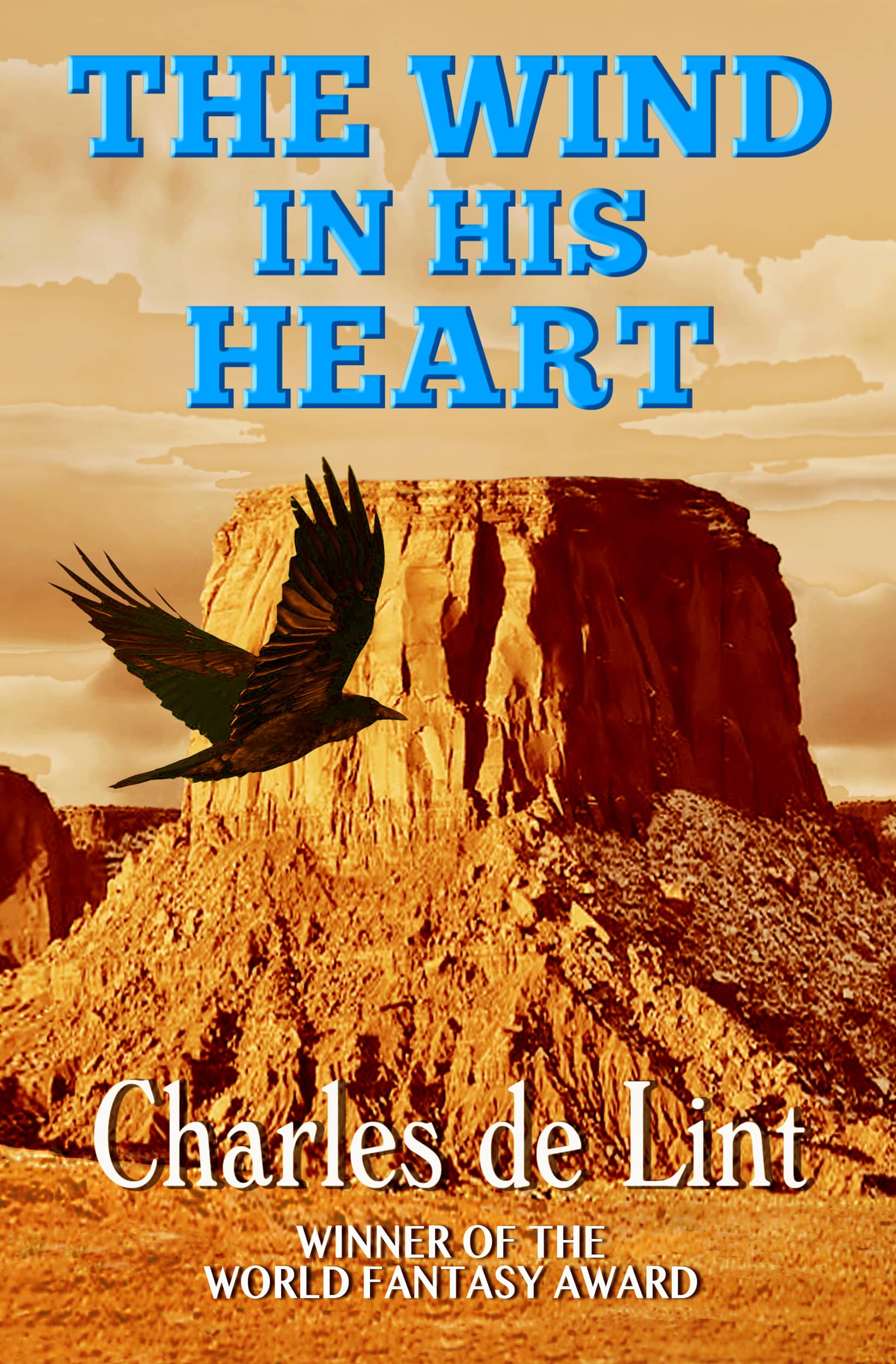
The Wind in His Heart Charles de Lint-smallI met Charles de Lint when he was an unpublished author in the early 80s. We both hung out at the best bookstore in town, the much-missed House of Speculative Fiction in downtown Ottawa. There was a big fuss about his first novel, The Riddle of The Wren (1984), plucked out of the slush at Ace Books by legendary editor Terri Windling, but it was the bestselling Moonheart (Ace, 1984) that made us realize that Charles wasn’t just a local boy who done good — he was a major artist embarking on an extraordinary career.

71 books later, Charles is one of the most revered writers in fantasy. He’s been enormously kind to us over the years, even contributing a terrific story to the very first issue of Black Gate.  I asked Charles to tell us a bit about his latest book, and he was generous enough to send me this yesterday.

I’m excited to get back to writing for adults. It took me three years to write my new novel, The Wind in His Heart, pretty much double the time I’d normally take to complete a book, but this 545-page story was tricky to put together. It’s about a young man who works at a trading post and is the sole supporter in his family yet longs to go and explore the world; a rock star hiding from fame out in the desert; a teenage girl from an abusive family who gets tossed out of her dad’s car in the middle of the desert, and a blogger trying to come to terms with the suicide of her best friend. The story is about how their lives collide, and how they deal with their past and future. Many of my readers have been asking if it’s a Newford book, and the short answer is no, but it does have some Newford threads and connections.

This is a major new novel from one of the most important writers at work today. When word broke in our offices that it was arriving this month, there was frenzy to settle who would have the privilege of reading it first (Zeta Moore won; she’ll be reviewing it for us in a few weeks.)

The Wind in His Heart will be published by Triskell Press on September 19, 2017. It is 545 pages, priced at $7.99 for the digital edition. Read an excerpt in the Autumn issue of Faerie Magazine, and learn more at Charles’ website. And check out all our coverage of his previous books here.