Browsed by
Category: Books

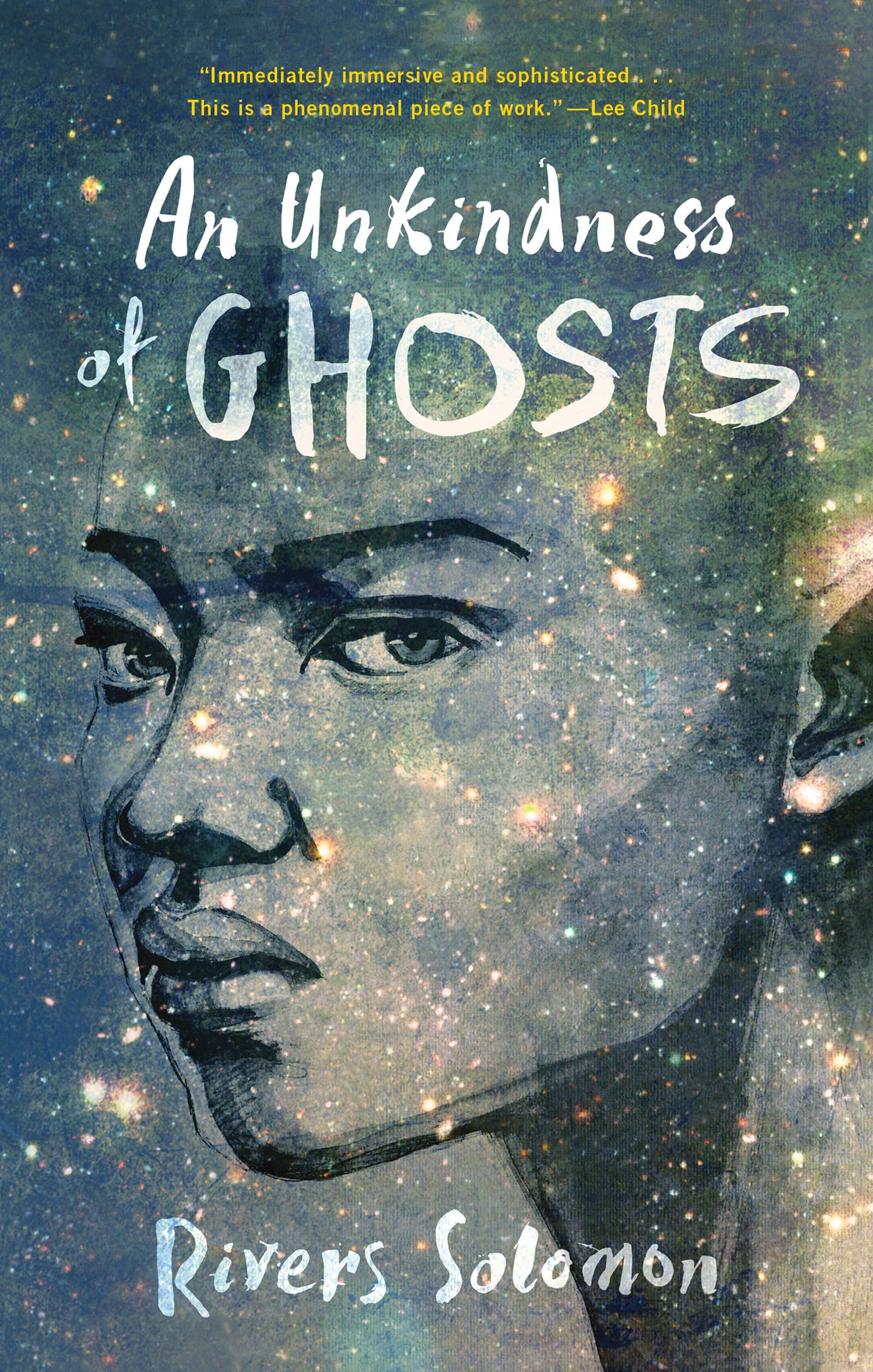
New Treasures: An Unkindness of Ghosts by Rivers Solomon
New Treasures: An Unkindness of Ghosts by Rivers Solomon

An Unkindness of Ghosts-smallAh, the new year. When a reader’s mind naturally turns to new authors. Who will have the big breakout debut novel of 2018? Who will come out of nowhere to be the new John Scalzi, Mary Robinette Kowal, or George R.R. Martin? Place your bets!

I’m not much of a betting man, but if I were, I’d pay close attention to the end-of-the-year buzz from the major media outlets. This is where careers are made and broken. And for the last month I’ve been hearing a whole lot about Rivers Solomon’s debut science fiction novel An Unkindness of Ghosts, the tale of slum-dwellers on a generation starship.

It made several Best of the Year lists, including The Guardian‘s Best Science Fiction and Fantasy Books of 2017, Publishers Weekly‘s Best Science Fiction/Fantasy Books of 2017, Library Journal‘s Best Science Fiction/Fantasy Books of 2017, and it was an NPR Book Concierge Best Book of 2017. PW called it “Stunning… a raw distillation of slavery, feudalism, prison, and religion that kicks like rotgut moonshine.” If I were a betting man, I might place a big bet on Rivers Solomon.

Aster has little to offer folks in the way of rebuttal when they call her ogre and freak. She’s used to the names; she only wishes there was more truth to them. If she were truly a monster, she’d be powerful enough to tear down the walls around her until nothing remains of her world.

Aster lives in the lowdeck slums of the HSS Matilda, a space vessel organized much like the antebellum South. For generations, Matilda has ferried the last of humanity to a mythical Promised Land. On its way, the ship’s leaders have imposed harsh moral restrictions and deep indignities on dark-skinned sharecroppers like Aster. Embroiled in a grudge with a brutal overseer, Aster learns there may be a way to improve her lot — if she’s willing to sow the seeds of civil war.

An Unkindness of Ghosts was published by Akashic Books on October 3, 2017. It is 340 pages, priced at $15.95 in trade paperback and $15.99 for the digital version. Read an excerpt at The Rumpus.
Birthday Reviews: Jack Womack’s “Audience”

Birthday Reviews: Jack Womack’s “Audience”

The Horns of ElflandJack Womack was born on January 8, 1956. His novel Elvissey, the fifth book in his six-book Dryco series, received the Philip K. Dick Award in 1994, tying with John M. Ford’s Growing Up Weightless. Womack has also worked in New York as a publicist in the publishing industry.

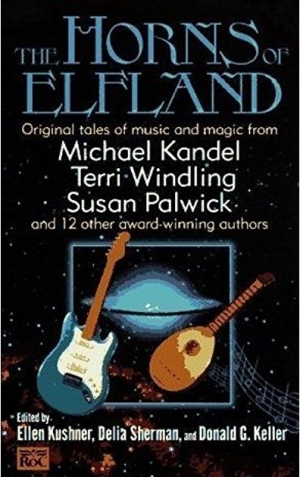
“Audience” was written for the anthology The Horns of Elfland, edited by Ellen Kushner, Delia Sherman, and Donald G. Keller. It was reprinted in Ellen Datlow & Terri Windling’s The Year’s Best Fantasy and Horror: Eleventh Annual Edition the next year and again in 2001 by Mike Ashley in The Mammoth Book of Fantasy. The story was nominated for the World Fantasy Award.

“Audience” was originally written for an anthology about music and Womack took that idea and decided to explore the importance and ephemeral nature of sound. His character tries to seek out smaller museums when traveling, avoiding the large, well-known places like the Louvre in favor of out of the way places which offer unknown exhibits. One of these museums is the Hall of Lost Sounds, which contains small rooms which allow visitors to hear collected sounds which no longer can be heard in their natural place.

Just as Proust noted how smells can trigger memories, Womack uses sounds to do the same thing. His curator gives a tour of the museum, commenting on where in his own life each of the lost sounds come from. The story also points out that sounds can change over time. A person’s voice as a teenager sounds different from their voice as an adult, and without recordings, completely vanishes. Even with recordings, the way a person hears their own voice can never be recaptured.

“Audience” is less a story and more a slice of life rumination which teaches the reader to examine their senses and memories in new ways.

Read More Read More

Reading 2000AD’s The ABC Warriors for the First Time

Reading 2000AD’s The ABC Warriors for the First Time

The ABC Warriors-1-small

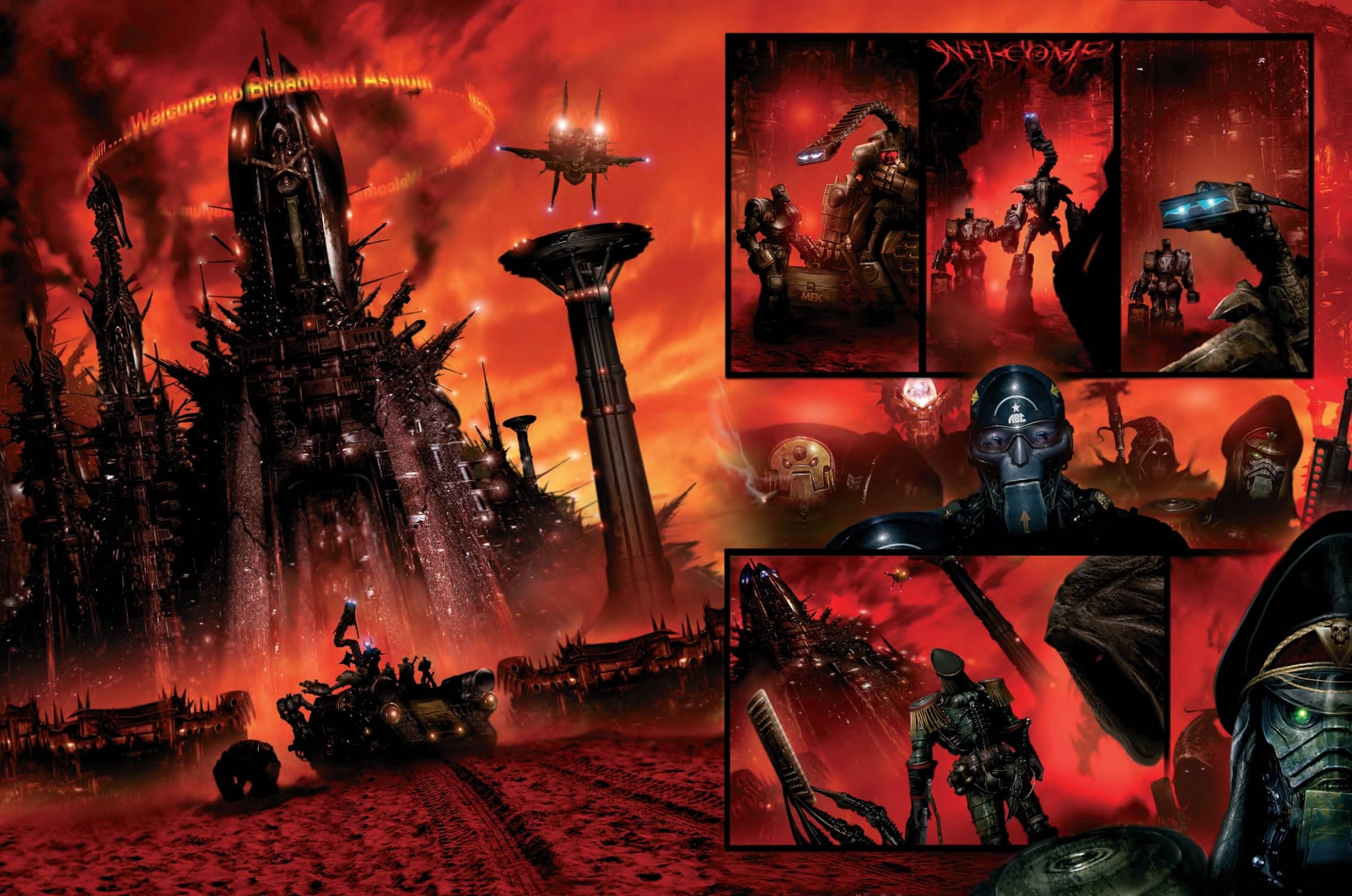
I’ve been reading 2000AD for a bit now, and listening to the 2000AD podcast by the Molcher-Droid, so I’ve heard a lot about The ABC Warriors, but didn’t know anything about them. In fact, from the name alone, my first thought was that canned pasta Alphaghettis that my mother used to have in the pantry for when she was working and we had to make our own lunch. Little could I have guessed that ABC stands for the Atomic, Biological and Chemical parts of warfare, and the robots who fight in those kinds of wars.

As one of the comics bloggers for Black Gate, I recently got my hands on an advanced pdf of the fourth volume of The ABC Warriors. For clarity and disclosure, the publisher 2000AD is owned by the same horse-riding video game designers who own Solaris Books (my publisher), but I don’t get any bonuses or consideration if I review their comics. I just like comic books (as you can tell from my post history). So, I wouldn’t have reviewed this if I didn’t actually like it.

Read More Read More

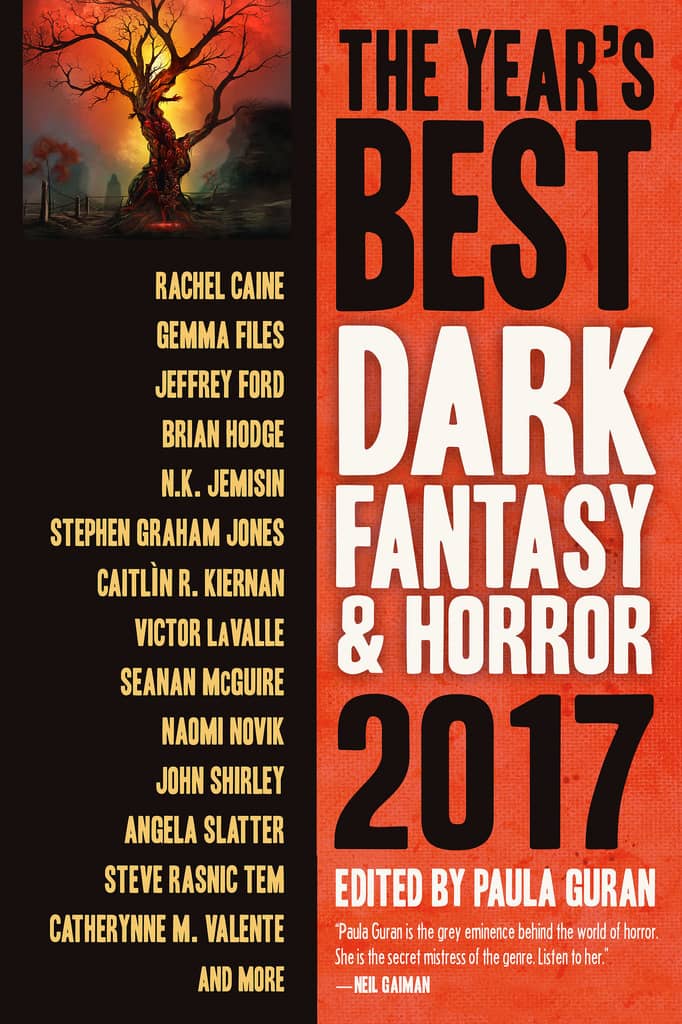
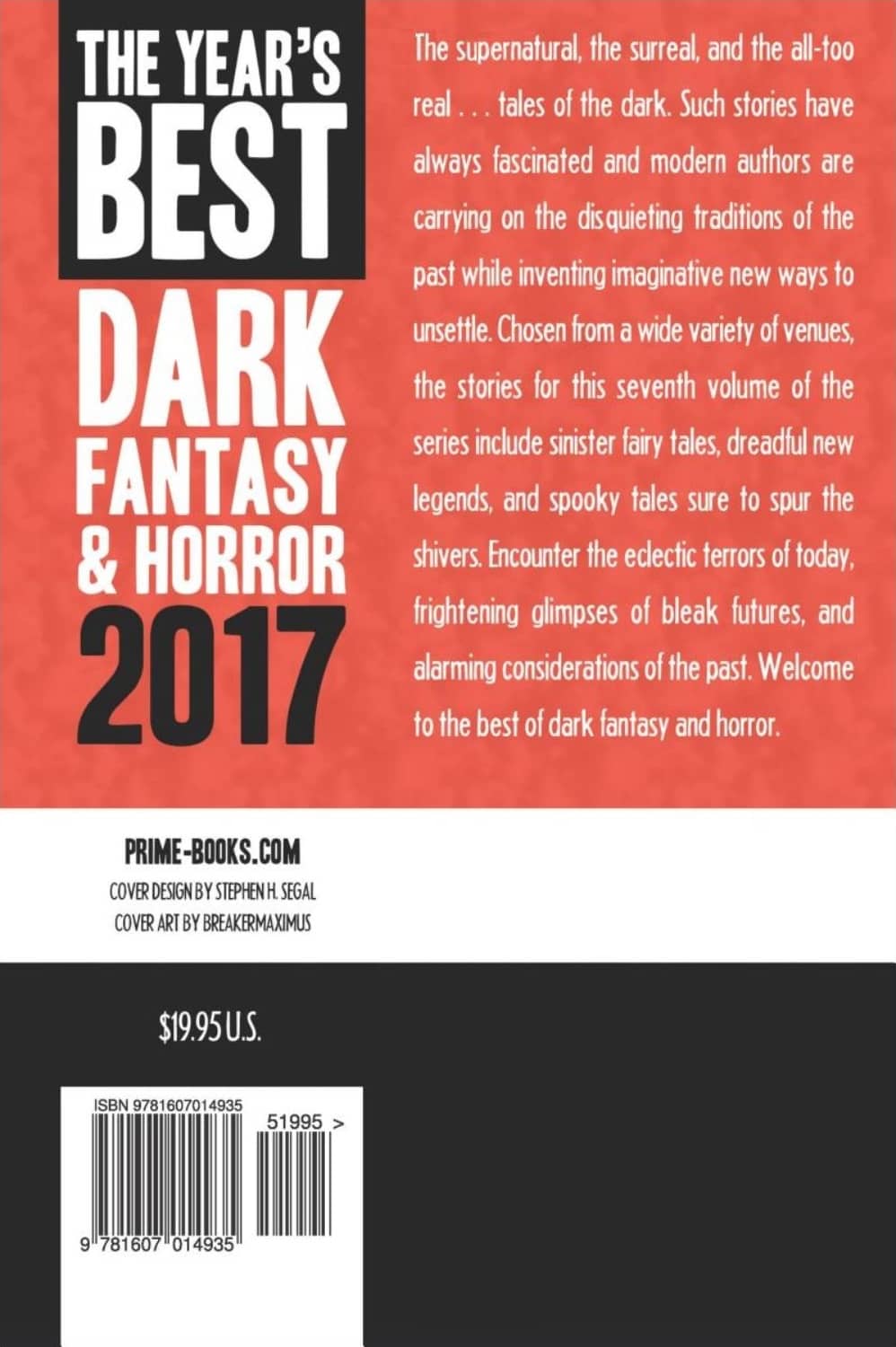
Sinister Fairy Tales & Dreadful New Legends: The Year’s Best Dark Fantasy & Horror 2017, edited by Paula Guran

Sinister Fairy Tales & Dreadful New Legends: The Year’s Best Dark Fantasy & Horror 2017, edited by Paula Guran

The Year’s Best Dark Fantasy & Horror 2017-small The Year’s Best Dark Fantasy & Horror 2017-back-small

I’m not sure what’s up with Prime Books, one of my favorite small press publishers, but I heard they had some production difficulties in 2017, and as a result their schedule was reduced and many titles were delayed by several months. Rich Horton’s Year’s Best Science Fiction & Fantasy 2017, expected in June, didn’t arrive until late fall, and Sheila Williams’s Asimov’s Science Fiction Magazine: A Decade of Hugo & Nebula Award Winning Stories, 2005-2015, scheduled for last November, hasn’t shown up at all.

Whenever small press publishers experience publishing delays, I fret about them. Delays never help a book. Paula Guran’s The Year’s Best Dark Fantasy and Horror 2017, due in July, was delayed until December, and I hope it doesn’t get lost in the end-of-the-year crush. It’s a terrific volume, and well worth a look. Why not pick up a copy and help a small press that could use your support?

This is the 8th volume, and it comes packed with fabulous tales — including Amal El-Mohtar’s Hugo, Nebula, and Locus Award-winning story “Season of Glass and Iron,” Victor LaValle’s Bram Stoker and World Fantasy Award nominated novella The Ballad of Black Tom, Brooke Bolander’s World Fantasy Award nominee “Our Talons Can Crush Galaxies,” and stories by Aliette de Bodard, Jeffrey Ford, Max Gladstone, Kat Howard, N. K. Jemisin, Stephen Graham Jones, Marc Laidlaw, Seanan McGuire, Rachael Swirsky, Steve Rasnic Tem, Catherynne M. Valente, Michael Wehunt, Fran Wilde, Alyssa Wong, and many others. Here’s the complete table of contents.

Read More Read More

Birthday Reviews: Tananarive Due’s “Suffer the Little Children”

Birthday Reviews: Tananarive Due’s “Suffer the Little Children”

Cover by Jason Vita
Cover by Jason Vita

Most days in 2018, I’ll be selecting an author whose birthday is celebrated on that date and reviewing a speculative fiction story written by that author. 

Tananarive Due was born on January 5, 1966. Her Ghost Summer: Stories received the British Fantasy Award for Best collection in 2016 and the title story previously won the Kindred Award from the Carl Brandon Society. Due received a Lifetime Achievement Award from the Congressional Black Caucus Foundation in 2013. Due is married to fellow author Steven Barnes.

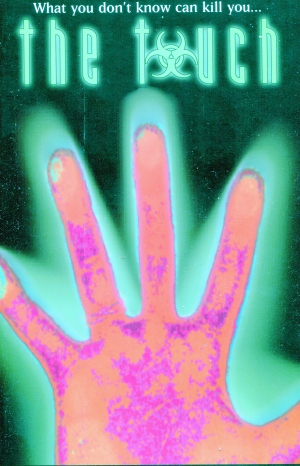
“Suffer the Little Children” was originally published in The Touch, a shared world anthology of short stories by various author set in a world suffering from Depriver Syndrome and created by Steven-Eliot Altman. It has never been reprinted.

Steven-Eliot Altman created the idea of Depriver Syndrome and introduced it in the anthology The Touch: Epidemic of the Millennium published in 2000, inviting several authors to write stories set in a world in which a person’s touch could deprive someone of one of their senses. Altman went on to publisher a novel, Deprivers, set in the same world.

Tananarive Due’s contribution to the anthology is the short story “Suffer the Children,” in which Laurel returns home from a shopping trip to discover that her house has been taken over by a group of children. As she tries to figure out what is happening, one of the children touches her and Laurel loses her sight. The children lock her into a room with her granddaughter, Gwen, who was blinded by the Deprivers before Laurel arrived home.

Read More Read More

Birthday Reviews: Ramsey Campbell’s “No End of Fun”

Birthday Reviews: Ramsey Campbell’s “No End of Fun”

Most days in 2018, I’ll be selecting an author whose birthday is celebrated on that date and reviewing a speculative fiction story written by that author. 

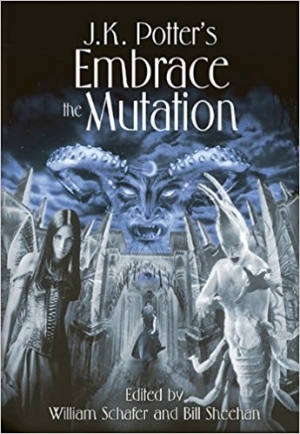
Cover by J.K. Potter

Ramsey Campbell was born on January 4, 1946 in Liverpool. His story “The Chimney” won a World Fantasy Award in 1978 and two years later he won again with his story “Mackintosh Willy.” Additional World Fantasy Awards came for Best New Horror, which he edited with Stephen Jones, and the collection Alone with the Horrors, which also won a Bram Stoker Award. His essay collection Ramsey Campbell: Probably also won a Bram Stoker Award. He has won the British Fantasy Award twelve times, more than anyone other than Stephen Jones.

Campbell’s first published story was “The Church in High Street” (1962), which I included in my 2003 anthology Horrible Beginnings, which reprinted the first stories by various horror authors. His story “No End of Fun” was originally published in J. K. Potter’s Embrace the Mutation, edited by William Schafer and Bill Sheehan and published by Subterranean Press in 2002. Campbell also included it in his collection Told by the Dead the next year and it was selected by Ellen Datlow and Terri Windling to appear in their annual The Year’s Best Fantasy and Horror.

Ramsey Campbell’s “No End of Fun” probably had a dated feel, at least to American readers, when it was first published. It tells the story of Lionel, who is visiting the boarding house run by his cousin Dorothy’s daughter, Carol, for the first time since Dorothy’s funeral. The story follows Lionel’s attempts to connect to Carol’s thirteen year old daughter, Helen, who sees his visit as a chance to escape the drudgery of helping her single mother run the boarding house as well as a chance to spend time with the boyfriend her mother has forbidden her to be with. Lionel attempts to take her to a carnival, only to watch her run off to go on rides with her boyfriend while he tries to win her a prize. The next night, he winds up going to the theatre alone, giving her instructions to meet him when the show is over so they can return to the boarding house together.

Although his cousin Dorothy is not the focus of his attention during the trip, her presence is never far from his mind. He is staying in her room and occasionally sees her image in an old mirror located in the room. Lionel notes that Helen resembles Dorothy in ways Carol never did.

Read More Read More

Christmas for the Paperback Collector

Christmas for the Paperback Collector

$18 eBay lot 65 novels Nov 14-small

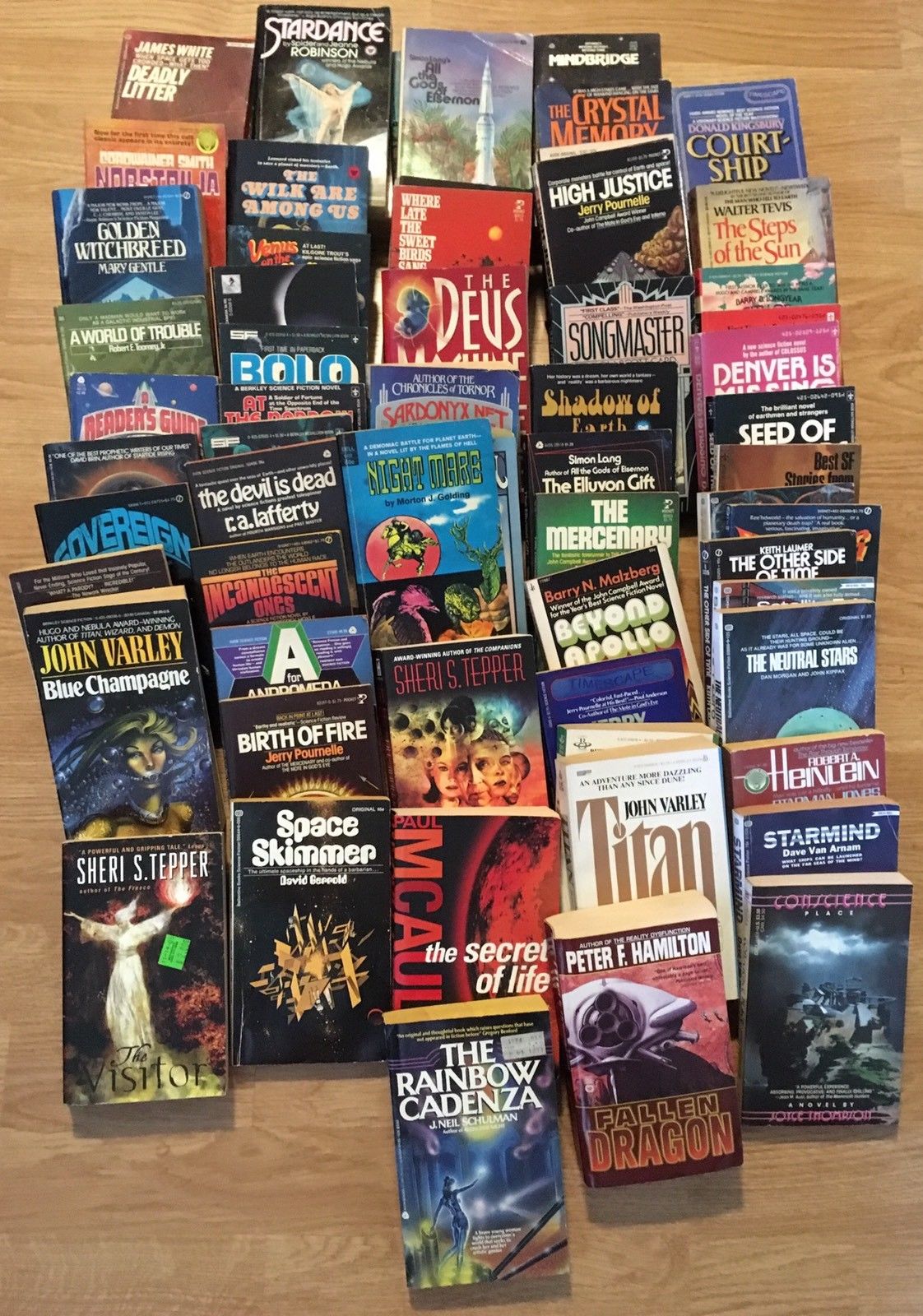
Back in October I was doing an innocent eBay search on R.A. Lafferty, and I stumbled on the lot of vintage science fiction paperbacks above. 65 titles from the 60s, 70s, and 80s, in what looked like pretty good shape, for the Buy-It-Now price of $18.

Well, this was a pickle. The way the books were laid out I couldn’t even see them all, which was annoying. And the vast majority of the ones I could see, I had already.

On the other hand, 65 books, 18 bucks, that’s…. what, like a quarter per book? At that price, it’d be well worth it just to upgrade my existing copies with ones in better shape. And there were a handful of tantalizing titles I didn’t have, like The Rainbow Cadenza by J. Neil Schulman, The Crystal Memory by Stephen Leigh, Conscience Place by Joyce Thompson, and The Steps of the Sun by Walter Tevis. Plus that Lafferty paperback, The Devil is Dead. And y’know, it was true that I couldn’t see all the covers, so who knew what treasures were lurking in all that jumble?

In the end, it was just too tempting. I pulled the trigger on the auction, shelled out the $18 (plus shipping), and waited impatiently to find out exactly what I’d bought.

Read More Read More

New Treasures: Renegades by Marissa Meyer

New Treasures: Renegades by Marissa Meyer

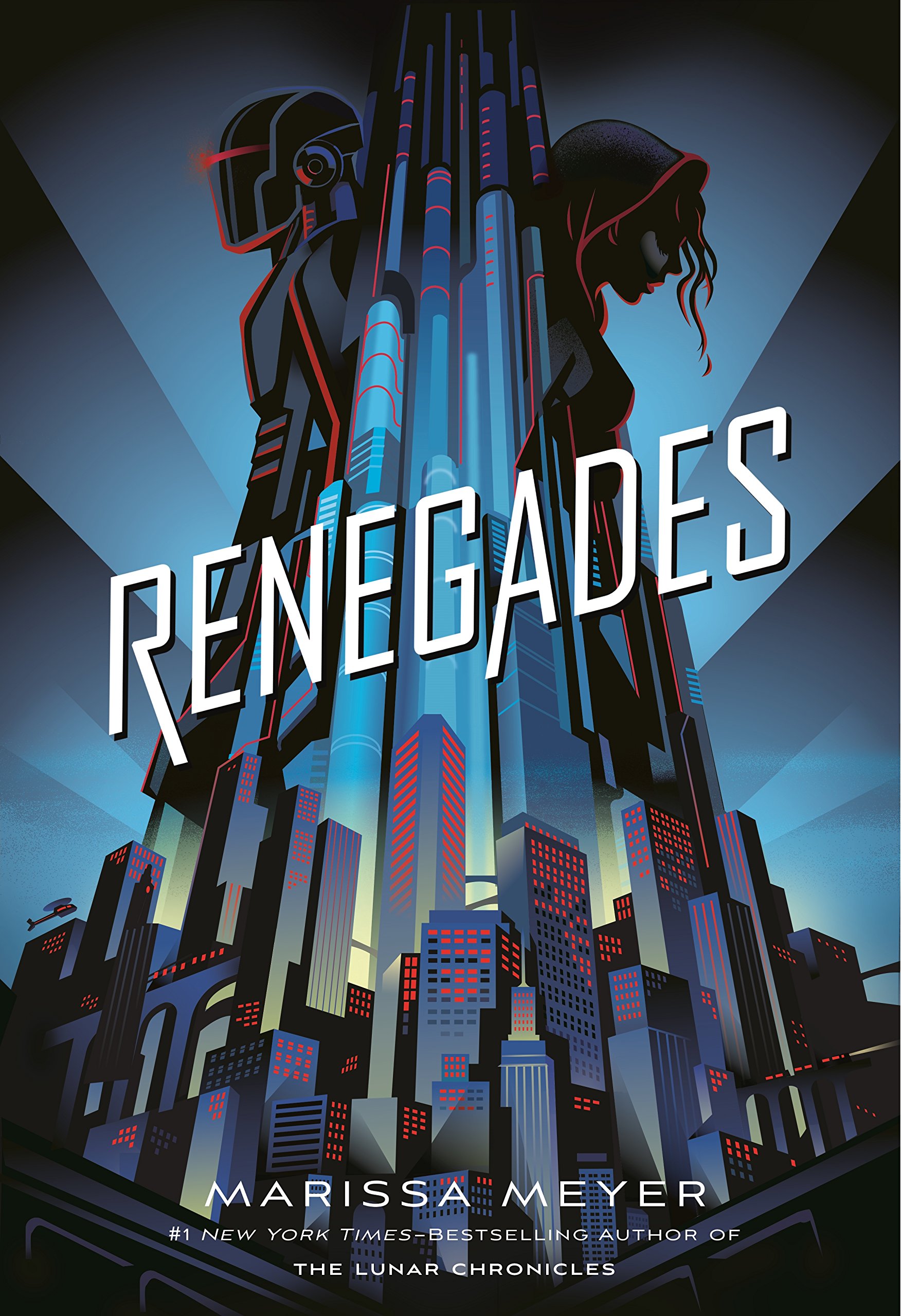
Renegades Marissa Meyer-smallMarissa Meyer is the bestselling author of the Lunar Chronicles (Cinder, Scarlet, Cress, Fairest, Winter). Her latest is a teen superhero saga that has hit the New York Times bestseller list — an unusual feat. Superhero novels are definitely popular these days, but there aren’t many that have hit bestseller lists. Might be worth a look.

Secret Identities.
Extraordinary Powers.
She wants vengeance. He wants justice.

The Renegades are a syndicate of prodigies ― humans with extraordinary abilities ― who emerged from the ruins of a crumbled society and established peace and order where chaos reigned. As champions of justice, they remain a symbol of hope and courage to everyone… except the villains they once overthrew.

Nova has a reason to hate the Renegades, and she is on a mission for vengeance. As she gets closer to her target, she meets Adrian, a Renegade boy who believes in justice ― and in Nova. But Nova’s allegiance is to the villains who have the power to end them both.

If you’re in the market for quality superhero fiction, we also recommend checking out Matthew Hughes To Hell and Back trilogy, Carrie Vaughn’s After the Golden Age, and of course George R.R. Martin’s Wild Cards.

Renegades was published by Feiwel & Friends on November 7, 2017. It is 576 pages, priced at $19.99 in hardcover and $9.99 for the digital edition.

Grimmer Than Grim: The Children of Húrin by J.R.R. Tolkien

Grimmer Than Grim: The Children of Húrin by J.R.R. Tolkien

…since you are my son and the days are grim, I will not speak softly: you may die on that road.

Morwen to her son Húrin

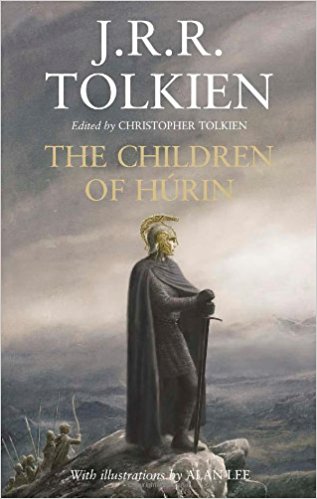
41lJZHCn54L._SX315_BO1,204,203,200_One of the most significant elements of J.R.R. Tolkien’s The Lord of the Rings — and missing from Peter Jackson’s misdirected films — is the almost suffocating atmosphere of great melancholy over a lost, better world; lost due to pride and jealousy. Even in the The Hobbit, a book aimed more at children than adults, it pervades the story, one that depicts the actions of pitiably small individuals against a world that, outside the green confines of Bilbo’s Shire, is dangerous and long bereft of the comforts and protections of civilization and order. It rises in The Lord of the Rings from a mournful undercurrent to a major theme. The characters cross a landscape littered with the ruins and remnants, such as the remains of Amon Sul and the titanic Argonath, of a nearly forgotten past. The once mighty elf realms, even Lothlorien, are reduced to dying shadows of what they were. The towering city of Minas Tirith is crumbling and half-empty.

It’s in the under-read The Silmarillion, Tolkien’s complex sequence of Middle-earth myths and legends, that he fully explores the litany of misbegotten oaths, pride-blinded decisions, betrayals, murders, rapes, and invasions that led to the downfall and destruction of the old world. And between two tales, those of the war of the house of Fëanor and Morgoth and the sinking of Númenor, we learn of the ruination directly underlying the events chronicled in The Lord of the Rings.

One of the worst tragedies told in The Silmarillion is that of doom laid on the family of Húrin Thalion, and specifically the fate of his son Túrin Turambar and daughter Niënor Níniel. Inspired by the Finnish story of Kullervo (a story Tolkien turned his own hand to, released in 2015 and discussed here), Túrin’s fate mimics his but is tied to a greater story that concerns not just his own family but all Middle-earth.

The Children of Húrin (2007) is a standalone expansion of that story, and takes place in the final stages of Morgoth’s (essentially Satan’s) war on the Elves and their human allies. Following their great defeat in the battle of the Dagor Bragollach, the Battle of Sudden Fire, the elves and their allies have spent twenty years rebuilding their forces in order to launch a direct attack on Morgoth’s great fortress, Angband. It is during these preparations that the book opens.

As he readies himself for a battle he has doubts about, Húrin tells his wife, Morwen, that should the Enemy prevail, their son Túrin should be sent to safety in the elven kingdom of Doriath. Húrin’s worries prove well-grounded, and even more disastrously than in the previous battle, the Elves and their allied forces are destroyed. This second great battle is called the Nirnaeth Arnoediad, the Battle of Unnumbered Tears. Most of the generals are killed, and the few survivors are driven into hiding as their lands are overrun by orcs and men allied to Morgoth.

Read More Read More

Future Treasures: Mission to Methone by Les Johnson

Future Treasures: Mission to Methone by Les Johnson

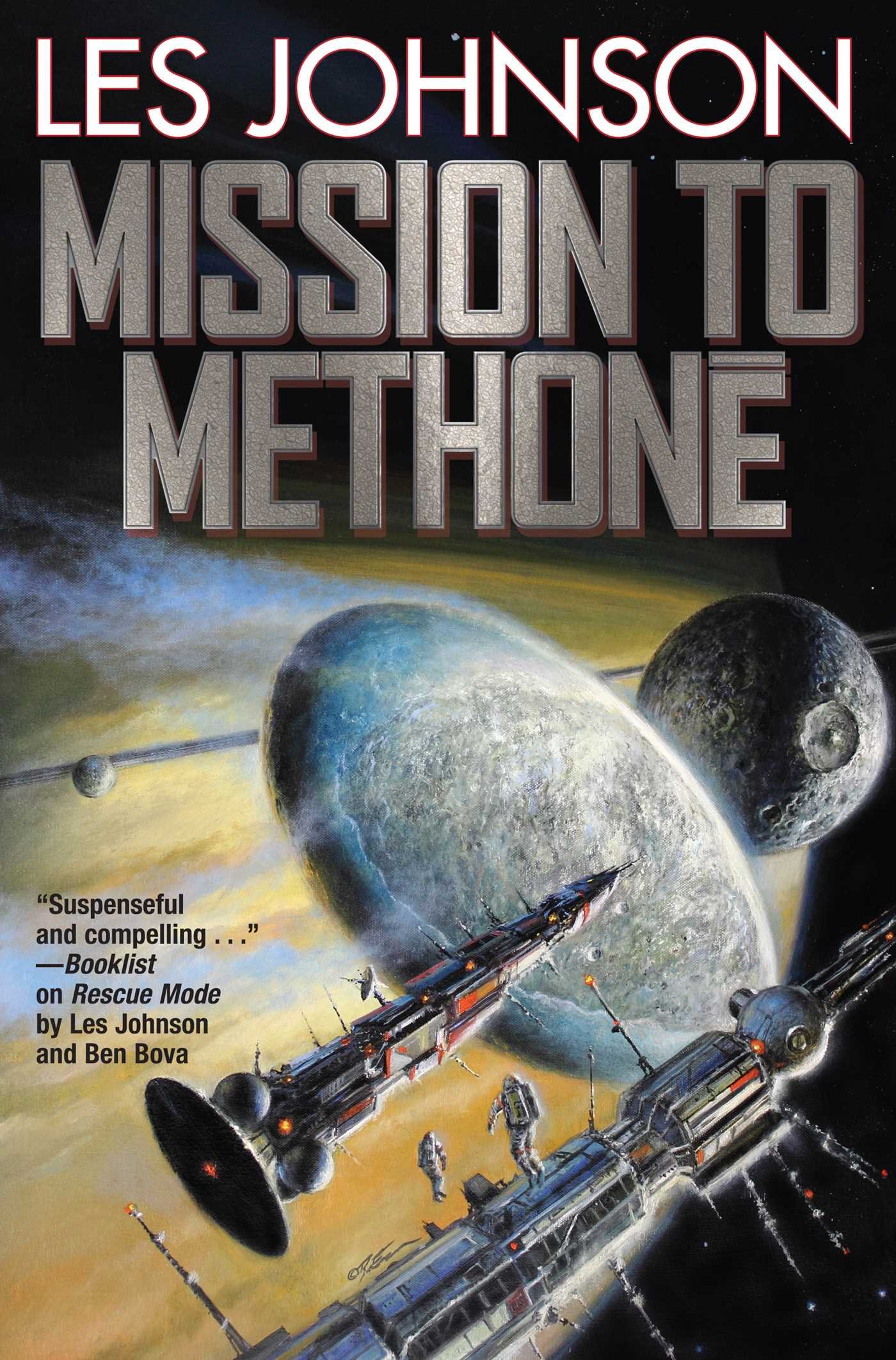
Mission to Methone-smallLes Johnson is the co-author (with Travis S. Taylor) of Back to the Moon (2010), and (with Ben Bova) of Rescue Mode (2014). He also co-edited Going Interstellar (2012) with Jack McDevitt.

His first standalone novel is Mission to Methone, the tale of a vast and ancient galactic war, a derelict spaceship hiding in our solar system, and an artificial intelligence that has been concealing the existence of mankind. It appears humanity is not alone in the universe. Far across the galaxy, a war is raging between advanced alien races, and it’s about to be brought to our doorstep.

The year is 2065 and an accidental encounter in space leads to the discovery that we are not alone in the universe — and that our continued existence as a species may be in jeopardy.

Chris Holt, working in his office at the Space Resources Corporation, discovers that one of the asteroids he is surveying for mining is actually not an asteroid at all but a derelict spaceship. The word gets out and soon the world’s powers are competing to explore and claim for themselves the secrets that it holds.

What they don’t know is that across the galaxy, a war has been underway for millennia. A war between alien civilizations that have very different ideas about what should be done about emerging spacefaring civilizations like our own. The artificial intelligence resident in the derelict Holt discovered has been in our solar system since before the dawn of human civilization, watching, waiting and keeping quiet lest the interstellar war return and wipe out the sentient race that now resides there — humanity.

And that war might soon be again coming to our front door. The truth can only be discovered on Methone, a tiny, egg-shaped moon of the planet Saturn. Who will get there first? And will it be in time?

Mission to Methone will be published by Baen Books on February 6, 2018. It is 304 pages, priced at $16 in trade paperback. The cover is by Bob Eggleton. Read the first ten chapters at the Baen website.