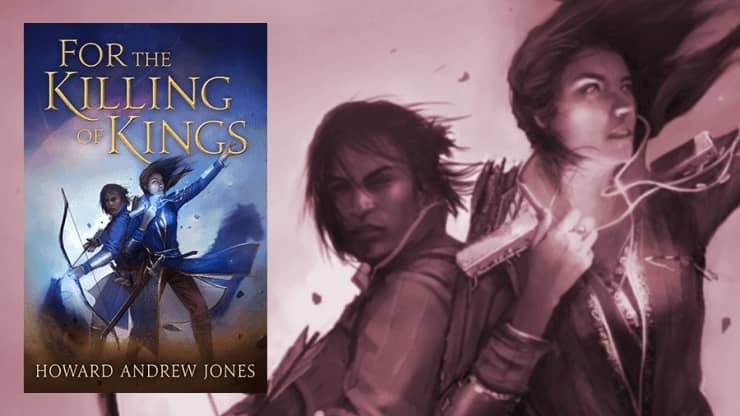
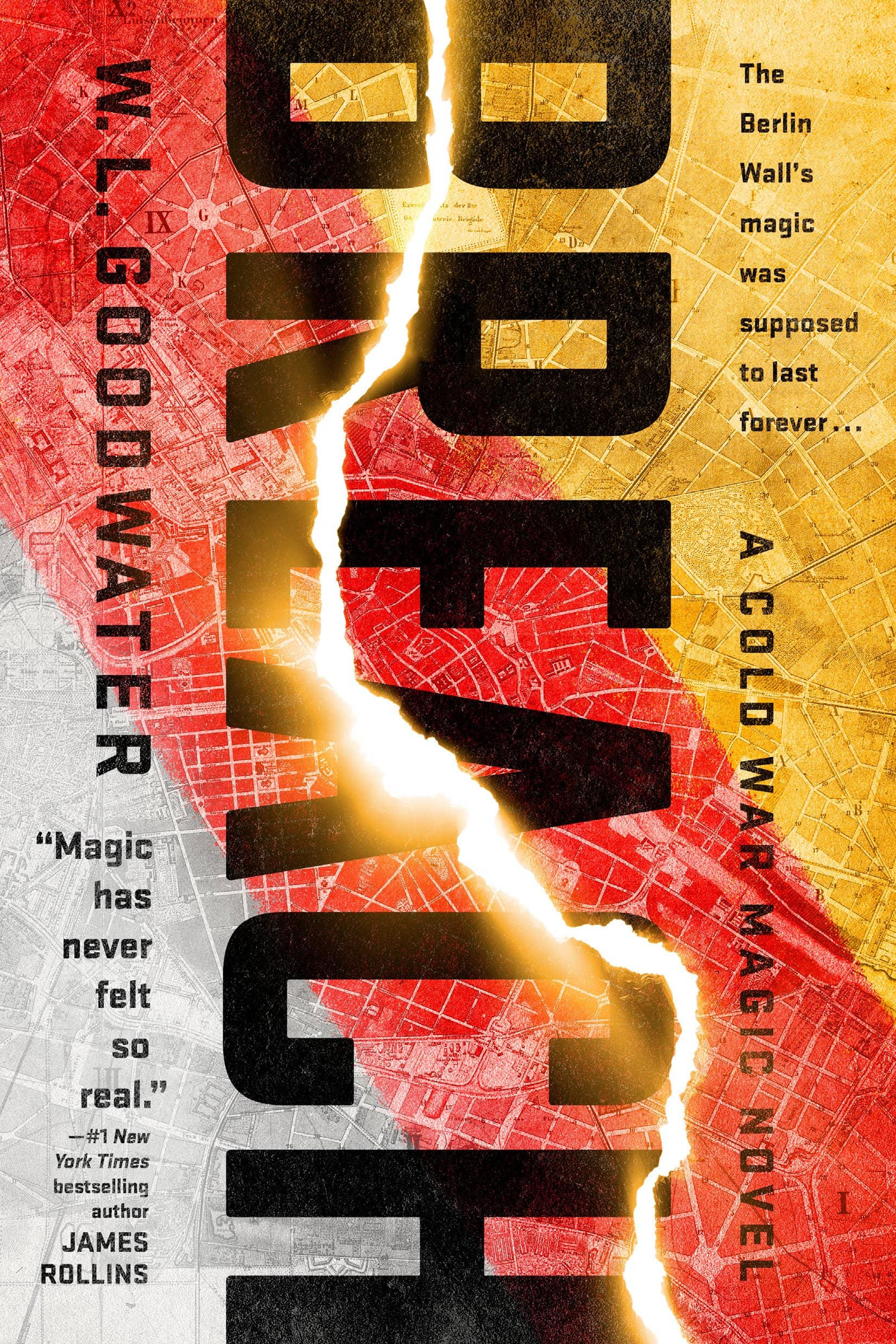
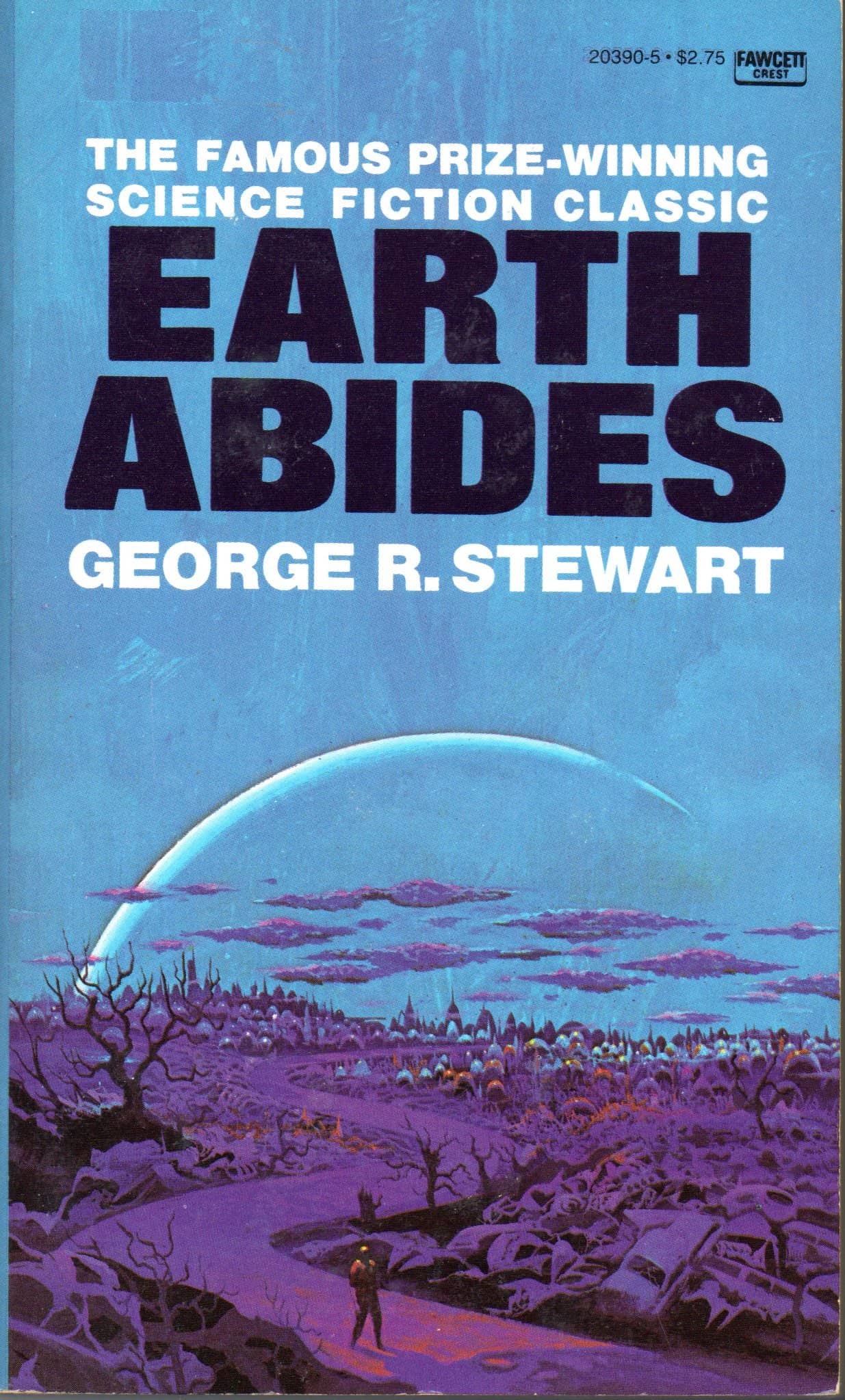
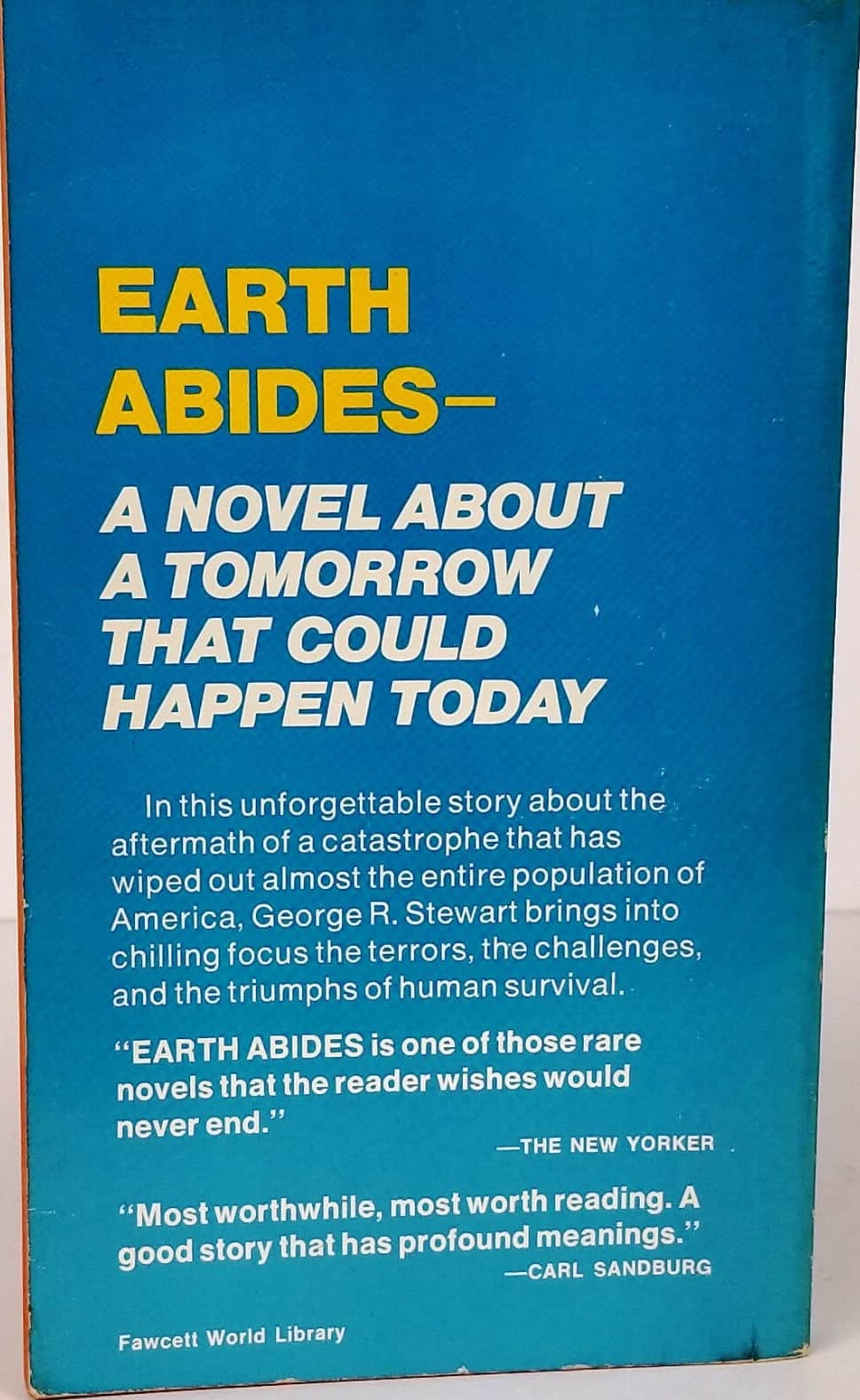
I’m off work for the holidays. Sixteen long days of Christmas food and home improvement tasks. It’s my longest break of the year, and also the time when I can get a little more ambitious with my reading.
You know what that means. It means I procrastinate big reading projects until the end of the year. And here at the end of 2018 I find myself with several large stacks of unfinished fat fantasies, trilogies, and longer series.
Well, they’re all going to have to wait. Because I want to start with Tom Toner’s Amaranthine Spectrum, an ambitious trilogy set in the far-distant 147th Century (How ambitious? The third volume has a 19-page glossary). The series just concluded with The Tropic of Eternity, published by Night Shade in August, and it has been one of the most acclaimed space operas on the market. Tor.com called “Among the most significant works of science fiction released in recent years,” and Locus proclaimed it “Marvelous…. a space opera of surpassing gracefulness, depth, complexity, and well, all-round weirdness.”
Here’s the description for the third volume, and all the publishing details. Now don’t bother me, I’m headed to my big green chair with some hot chocolate and a warm lap cat.
P.D. (Patricia Diana Joy Anne) Cacek was born on December 22, 1951.
Cacek won the Bram Stoker Award for Superior Achievement in Short Fiction in 1996 for her story “Metalica” and the World Fantasy Award for Best Short Fiction in 1998 for the story “Dust Motes.” She has been nominated for the Stoker five additional times as well as for the International Horror Guild Award.
“A Book, By Its Cover” was published in Greg Ketter’s anthology Shelf Life: Fantastic Stories Celebrating Bookstores in 2002. David G. Hartwell and Kathryn G. Cramer selected it for inclusion in their collection Year’s Best Fantasy 3 the following year. It has not, otherwise, been reprinted.
Cacek has set “A Book, By Its Cover” in February 1939, three months after November 9 when Nazi Sturmabteilungen moved through Jewish areas to destroy buildings and arrest men, a night that became known as Kristallnacht. On that night, young Yavin Landauer watched his grandfather’s tailor shop burn after the Nazis killed him and saw one of his former friends, now a member of the SA, burning the books that they used to read together in Reb Shendelman’s shop. The Nazis spared Shendelman because they were amused that the old man would be more concerned over the burning of books than the deaths of his neighbors.
When the story opens, Yavin is disgusted with Shendelman for the very reason the Germans let him live. Living in the remains of his grandfather’s shop and scrounging food where he can, he notices a man visiting Shendelman each day. On each visit, the man brings a child to Shendelman’s shop and leaves the child there, walking away with a package traded for the child. Yavin decides to confront Shendelman for his disgusting crimes of trafficking in children.
The confrontation doesn’t go as Yavin expects, with Shendelman welcoming the young boy into his empty shop and feeding him soup, the first time Yavin has felt full since before Kristallnacht. Shendelman tells him a fairy tale about his own activities, one that Yavin can’t believe until he receives some proof, but even then he is skeptical. Their discussion takes a darker turn when Yavin’s friend, Karl, who is now with the SA, decides to pay a visit and finish the job started in November.
When I first saw Edward Lazellari’s Awakenings back in 2011, I was struck by Chris McGrath’s cover. I’d never seen anything quite like it. Featuring a creepy-eyed dude in a hoodie and a square-jawed street cop, it looked like a cross between dark fantasy and a modern police procedural. Maybe? It sure made me pick up a copy, anyway, and the name Edward Lazellari stuck in my mind.
That doesn’t mean I’m top of things, of course. When I received a review copy of Blood of Ten Chiefs from Tor last week, it took a few days for me to realize it was part of the same series. In fact, I didn’t even knew it was a series. Probably because I missed the second book, The Lost Prince, released in 2013.
All three are part of what’s now being called the Guardians of Aandor. Without getting into specifics (because I’m too lazy to read all three book blurbs), a cop and a photographer who don’t know each other get stalked by interdimensional beings, find out they’re from an alternate reality with castles and knights and stuff, who came across to our world to hide an infant royal, but ended up with lost memories and no knowledge of the current whereabouts of the young prince. The first novel earned praise from fantasy master Glen Cook (“Read Awakenings and get in on the ground floor with a great new writer,”) and Library Journal (“Urban fantasy reminiscent of Jim Butcher in a hard knocks action tale,”) but I dunno, I think they had me with McGrath’s cover. I dug Awakenings out of limbo in the basement, and hope to settle down with it this weekend.
Here’s the back covers of the first two books, because they’ll do a better job explaining all this than I’m doing right now.
Nalo Hopkinson was born on December 20, 1960 in Kingston, Jamaica.
Hopkinson’s first novel, Brown Girl in the Ring, won the first Warner Aspect First Novel Contest in 1997 and led to its publication. In 1999 Hopkinson won the John W. Campbell Award for Best New Writer. She won the World Fantasy Award for her collection Skin Folk and she shared the British Fantasy Award for co-editing the anthology People of Colo(u)r Destroy Science Fiction with Krisitne Ong Muslim. Hopkinson’s novel Sister Mine won the Andre Norton Award in 2015. She shared the Aurora Award for co-editing the anthology Tesseracts Nine with Geoff Ryman and won her own Aurora Award for the novel The New Moon’s Arms. Her novel The Chaos won a Copper Cylinder Award and she won a Gaylactic Spectrum Award for The Salt Roads. She has won the Sunburst Award twice, for the collection Skin Folk and the novel The New Moon’s Arms. She has collaborated on fiction with Nisi Shawl and his co-edited anthologies and magazines with Kristine Ong Muslim, Geoff Ryman, and Uppinder Mehan.
“Whose Upward Flight I Love” was originally published in Dark Planet Webzine in 2000, edited by Lucy A. Snyder. Hopkinson included it in her collection Skin Folk the following year as well as her late collection Falling in Love with Hominids in 2015. It was reprinted in the magazine Cicada in March of 2017.
Hopkinson writes about a crew whose job it is to secure trees planted in a public park against a wind storm. Their task seems prosaic enough and they work even as the wind threatens to uproot the trees, to the extent that one of the women has to catch an uprooted tree before it flies away. Despite her efforts, all she winds up with is a root, which she tosses to the ground.
As the crew members work, they call to each other, continuing conversations about their lives. The woman has a long-time relationship with Derek, which has its ups and downs and she is sharing the latest information about their lives with her crewmate to pass the time while they do their work to protect the trees. Everything is completely normal and there is nothing that sets this particularly day’s work apart from any other day.
Decisions, and actions, have consequences, even if they can’t be foreseen. Consequences also often can’t be traced back to the decision that caused them. The crewmember catching the tree and then dropping the root on the ground is one of those. While she and her crewmates are finishing their task, the dropped root begins to move on its own.
When Molly Tanzer’s novel Creatures of Will and Temper was published last year, I confidently predicted that it would be huge.
Molly Tanzer’s Creatures of Will and Temper looks like a breakout book. It’s got all the classic elements — fabulous setting, swordplay, and the supernatural — while also being totally original. And there’s no doubt in my mind that Molly is poised for a break-out. Her first novel Vermilion received rave reviews (“A splendid page-turner of a Weird West adventure… hugely entertaining” — Publishers Weekly), and her most recent book was the anthology Swords vs Cthulhu, co-edited with Jesse Bullington. How cool is that?
I’m pleased to see that the book was very warmly received — it was nominated for the Locus Award for Best Fantasy Novel, and critics praised it widely. Jeff VanderMeer said it was “A delightful, dark, and entertaining romp,” and Outlander author Diana Gabaldon called it “An artful, witty, Oscar Wilde pastiche with the heart of a paranormal thriller.”
Molly’s follow up, Creatures of Want & Ruin, arrived from John Joseph Adams Books last month, and was selected as a Barnes & Noble Best Science Fiction Fantasy Book of November 2018. Tor.com‘s Liz Bourke calls it “A measured, atmospheric novel, with compelling characters and a deeply disturbing undercurrent of horror,” and the B&N Sci-Fi Blogsays “Molly Tanzer does it all; from her debut novel, named best book of 2015 by i09, to the “thoughtful erotica” she edits at her magazine, Congress, she’s proven to be one of the most distinct voices in contemporary SFF.”
Moorcock’s novella “Behold the Man” won the Nebula Award in 1968. He has won the British Fantasy Award six times, for the novels The Knight of the Swords, The King of the Swords, The Sword and the Stallion, and The Hollow Lands, as well as for the short story “The Jade Man’s Eyes.” He won a special committee award from them in 1993. In 1979 he won the World Fantasy Award and the John W. Campbell Memorial Award for his novel Gloriana. His Elric saga won the Seiun Award in 1986. Moorcock received Lifetime Achievement Awards from the World Fantasy Con in 2000, the Prix Utopia in 2004, and the Bram Stoker Awards in 2005. In 2002 he was inducted into the Science Fiction Hall of Fame and was named a Grand Master by SFWA in 2008. Moorcock was guest of honor at the 2nd World Fantasy Con, held in New York in 1976 and at LoneStarCon 2, the 55th Worldcon, held in San Antonio, Texas in 1997.
“The Frozen Cardinal” originally appeared in the anthology Other Edens, edited by Robert Holdstock and Christopher Evans, in 1987. Moorcock included it in his collection Casablanca in 1989 and in 1993, it was included in the Moorcock collection Earl Aubec and Other Stories. Ann and Jeff VanderMeer selected the story for The Big Book of Science Fiction: The Ultimate Collection in 2016. In 1990 the story was translated into French to appear in the anthology Universe 1990, edited by Pierre K. Rey.
While Moorcock may be best known for his epic fantasy about the Eternal Champion or his Jerry Cornelius novels, he has also written a significant amount of straight science fiction. “The Frozen Cardinal” is set in the polar regions of the distant planet Moldavia and takes the form of several private communiques sent back to Earth by a member of the first exploration team to the area of the planet, which is just beginning to come out of an ice age.
Moorcock manages to present his trip to a distant world as a tedious expedition. His narrator, as well as the entire crew, is just focused on the next tasks they must accomplish, most of which are the repetitive crossing of vast chasms, a dangerous activity, but one that has become routine as they use the same process at each crevice. Their monotony is broken when they discover a figure embedded in the ice on the side of one of the crevices and determine that it is a Roman Catholic Cardinal.
Jack L. Chalker was born on December 17, 1944 and died on February 11, 2005.
Although Chalker may be best known for his Well of Souls series of novels, his only Hugo Award nominations were for his amateur magazine, Mirage, in 1963 and his non-fiction book The Science Fantasy Publishers: A Critical and Bibliographic History: Third Edition, co-written with Mark Owings. The book also won the Readercon Award in 1992. Chalker was a two-time nominee for the John W. Campbell Award for Best New Writer. In 1980 he received the Skylark Award from NESFA, and in 2005 he posthumously received the Phoenix Award from DeepSouthCon.
Chalker wrote “Now Falls the Cold, Cold Night” for Mike Resnick’s 1992 anthology Alternate Presidents. The story has never been reprinted. It was his last published piece of short fiction, although Chalker continued to publish novels and non-fiction.
Set in a rooming house in Albany, New York, “Now Falls the Cold, Cold Night” takes place in a world in which following James Buchanan’s death during the election of 1856, Millard Fillmore is able to capture a second term on the Know-Nothing ticket. Fully embracing his anti-immigration stance, Fillmore is in thrall to the Southerners who helped elect him and promotes pro-slavery policies, including the enforcement of the Fugitive Slave Act passed during his first term in 1850. His policies have caused unrest in New England, resulting in a second Boston Massacre when troops opened fire on citizens trying to stop a runaway slave from being taken back to the South.
The rooming house is a collection of men who have business with the New York state legislature, although one of them, Mr. Green, keeps to himself, leading another, Mr. Morgan, to question his purpose. The two play a cat and mouse game revealing that they actually have been aware of each other for quite some time. While both claim, like all the men in the rooming house, to oppose Fillmore’s agenda, they have very different methods of fighting for what they believe is right.
“Probably the last book you’ll need to buy on the subject of Alternative Archaeology”
Funny story about Mayan gifs glyphs.
Monumentally screwed-up Mayan Rosetta Stone
Before the 1860s, Mayan glyphs were an untranslated Rorschach Test for those who wanted to find lost worlds — spiritual or physical — in pre-Columbian Mesoamerica: “Weird swirly writing style, therefore Egyptians from Atlantis who understood the Secrets of the Universe.”
Then Charles Étienne Brasseur de Bourbourg discovered a 16th-century document in a Spanish archive. It seems Spanish government officials were presumed corrupt until proven otherwise, so had to lodge a defence of their actions in office. For some reason, Diego de Landa, Archbishop of Yucatan included a bilingual alphabet in his.
The Mayan Rossetta Stone!
Brasseur rushed off to translate the Madrid Codex — a compilation of Mayan writings that had somehow survived the bonfires of the Inquisition.
Unfortunately, he didn’t realise that the Archbishop had monumentally screwed up, presumably because he was doing the Western thing of TALKING VERY LOUDLY TO THE NATIVES.
So when he said, “How do you write H?” he got back the Mayan for glyphs for… yes, you’ve guessed it, “Ah-che”. We can guess that “K” would have come back as “K-Ay” and so on. This just like in Terry Pratchett’s The Color of Magic where the places are all called things like “Big Tree” and “Your Finger You Fool,” and in Bonny Scotland where the government maps have a superfluity of “Black Lakes.”
De Brasseur heroically wrung a translation out of the Codex and was delighted to find evidence for the fiery destruction of Atlantis and the diffusion of high culture to the Americas from the West: this was a scholar whose mindscape was populated by Phoenicians in Brazil, Mayas at the Temple of Solomon, hidden meanings in colonial documents, and establishment conspiracies to cover up the quality (!) of pre-Hispanic craftsmanship.
Art and Arcana is a massive book that satisfies a strong sense of nostalgia for those who played Dungeons and Dragons in the 1970s and 80s, as well furnishing a history of the game and, to a lesser extent, the people and companies behind it. Focused primarily on the artwork that has helped define the game from its earliest days, authors Michael and Sam Witwer, Kyle Newman, and Jon Peterson have provided a beautiful look at the game’s first forty-five years, with an emphasis on the first few editions.
Even the endpages of this 440 page book indicate what is sandwiched between them. The opening pages show a map of the Village of Hommlet from the classic T-1 dungeon, while the closing pages are a reproduction of a classic piece of Erol Otis’s artwork from Deities and Demigods. A foreword by Joe Manganiello points out that “in [the 1980s], Dungeons and Dragons wasn’t cool.” As someone who began playing the game in 1980 (in Glenview, where the Witwers were from, although I didn’t know them), Manganiello’s comment is an understatement. At the time, the concept that stars like Manganiello and Sam Witwer would be involved with a book about Dungeons and Dragons would have been mind-boggling, as would the idea that the host of a late night talk show like Stephen Colbert would admit to playing it, or that people could make a living as a Dungeon Master and charge people to watch their games.
Bull’s novel Bone Dance was nominated for the Hugo, the Nebula, the World Fantasy, and the Philip K. Dick Awards. Her novel War for the Oaks was nominated for the Compton Crook Stephen Tall Memorial, the Geffen, the Mythopoeic, and the William L. Crawford – IAFA Fantasy Awards. She received a second Nebula nomination for the story “Silver of Gold,” a second Mythopoeic nomination for The Princess and the Lord of Night and additional World Fantasy nominations for Liavek: The Players of Luck and Territory. She is married to Will Shetterly, with whom she has collaborated on fiction and as an editor. She has also collaborated with Steven Brust, Elizabeth Bear, and Leah Bobet.
“A Bird That Whistles” appeared in the anthology Hidden Turnings, edited by Diana Wynne Jones in 1989. Ellen Datlow and Terri Windling selected it for inclusion in The Year’s Best Fantasy and Horror: Third Annual Collection. The story was reprinted in the Shetterly/Bull collection Double Feature, published by NESFA in 1994. In 2004 Patrick Nielsen Hayden included the story in his anthology New Magics: An Anthology of Today’s Fantasy. The story also appeared in the 2011 book The Urban Fantasy Anthology, edited by Peter S. Beagle and Joe R. Lansdale. In 1994, Alice Bellagamba translated it into Italian for the anthology Miti fiabe & guerrieri and the story was also translated for the French anthology Traverses in 2002.
John Deacon is a 17 year old banjo player who is starting to appear at open mic nights at Chicago’s Orpheus Coffeeshop. Deacon is not a very strong performer and lacks confidence, yet he is willing to get on stage. At the same time, he has developed a crush on Orpheus waitress Lisa Amundsen. One day, while waiting for his name to be called up, he strikes up a conversation with Willy Silver, a dulcimer player. Silver proves not only to be willing to mentor Deacon and teach him new methods of playing his banjo, but also a rival for Lisa’s affection, although Lisa has never shown more than a friendly inclination toward Deacon and he’s too shy to act on his infatuation.
Set in the 1970s, the story has a background of the unrest against the Vietnam War and comes to head during a march against the war when Deacon is attacked in the Orpheus’ parking lot. Knocked down and bleeding, he is waiting for a continued attack that never comes. Looking up, he finds Silver looking fearsome with red lights in his eyes and his attackers fleeing. After giving Deacon advice, Silver disappears, having protected and nurtured the young musician. In return Deacon gave Silver some questions to think over.