Browsed by
Category: Books

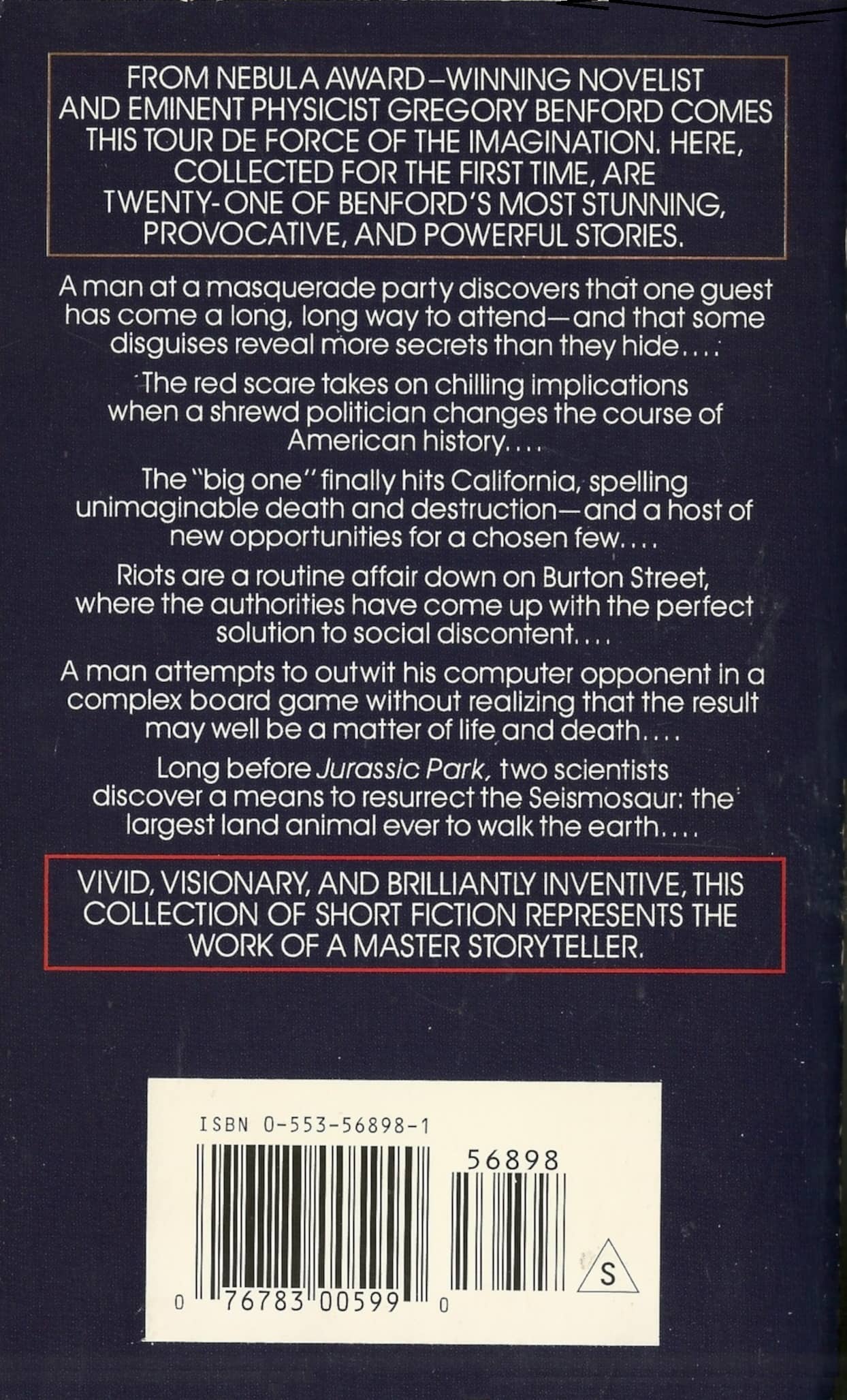
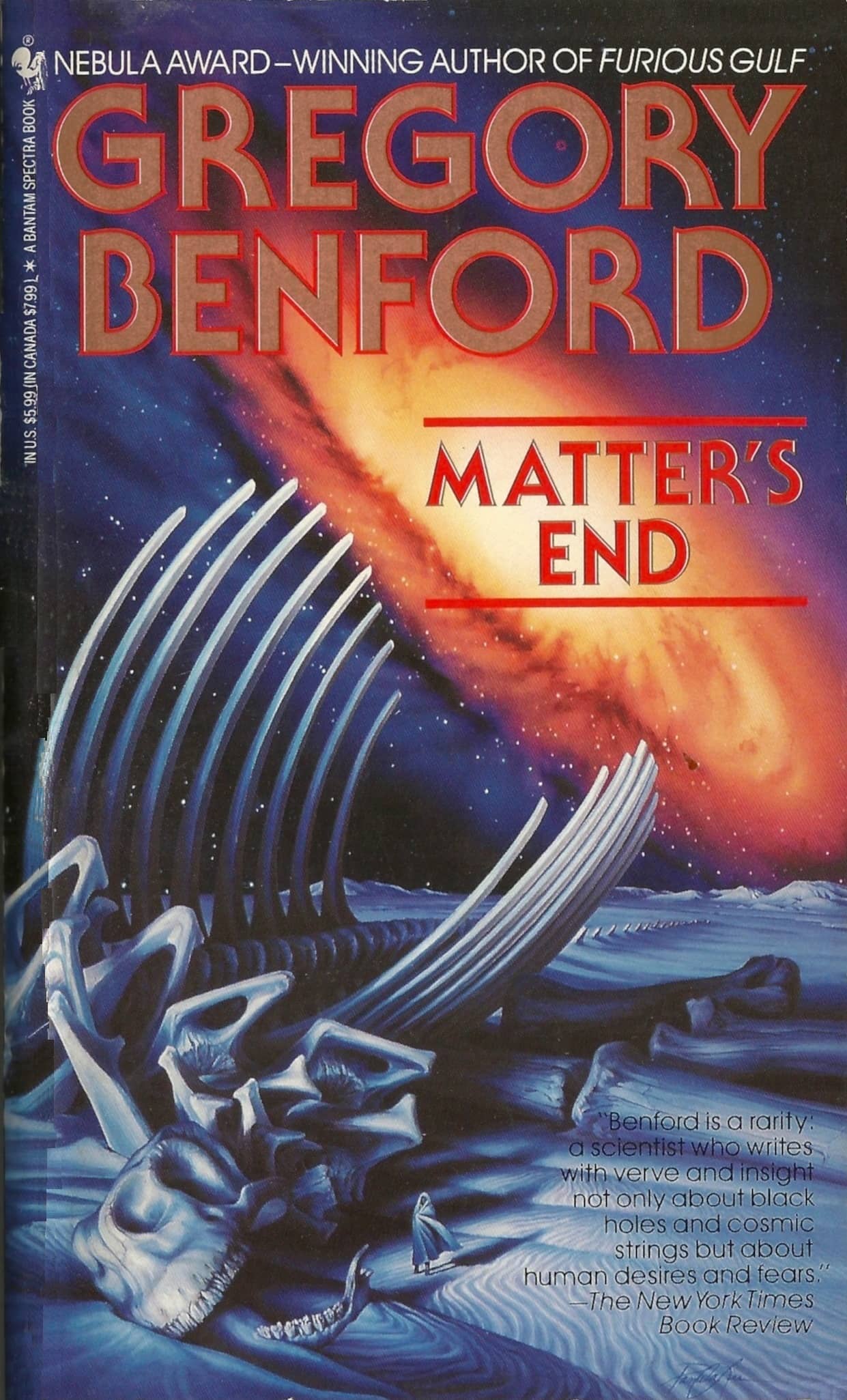
Vintage Treasures: Matter’s End by Gregory Benford
Vintage Treasures: Matter’s End by Gregory Benford

Matter's End-small Matter's End-back-small

Matter’s End (Bantam Spectra, 1995). Cover by Pamela Lee

Gregory Benford began his writing career with the story “Stand-In” in the June 1965 issue of The Magazine of Fantasy and Science Fiction. He was nominated for a Nebula Award for his first novel In the Ocean of Night (1976), and won it in 1980 for Timescape. Since then he’s focused chiefly on novels, most famously the six-volume Galactic Center Saga.

But he first built his reputation on short fiction, and he’s returned to it again and again over the course of a 50-year career. His short fiction has been nominated for four Hugo Awards (for two short stories and two novellas), and many Nebula Awards. He’s produced more than half a dozen collections, including In Alien Flesh (1986), Worlds Vast and Various (2000), Immersion and Other Short Novels (2002), and The Best of Gregory Benford (2015).

His second collection was Matter’s End, published by Bantam Spectra in 1995. It contains 21 stories, including “Stand-In,” the Nebula-nominated title story, an original novelette, “Sleepstory,” and one original short story, “Side Effect.” It came in third for the Locus Award for Best Collection in 1995, and was quickly reprinted in hardcover (by The Easton Press in 1995, and by Gollancz in 1996), and in paperback in the UK by Vista in 1997.

To be truthful, I haven’t followed Benford’s novel career much. But his short fiction is a different story. I found a copy of Matter’s End in a collection I purchased recently, and I’ve very curious about it. Here’s the complete Table of Contents.
Read More Read More

The Golden Age of Science Fiction: The Hitchhikers’ Guide to the Galaxy, by Douglas Adams

The Golden Age of Science Fiction: The Hitchhikers’ Guide to the Galaxy, by Douglas Adams

Cover by Ian Wright
Cover by Ian Wright

Cover by Peter Cross

The "42 Puzzle" cover
The “42 Puzzle” cover

The Ditmar Awards are named for Australian fan Martin James Ditmar Jenssen. Founded in 1969 as an award to be given by the Australian National Convention, during a discussion about the name for the award, Jenssen offered to pay for the award if it were named the Ditmar. His name was accepted and he wound up paying for the award for more years than he had planned. Ditmar would eventually win the Ditmar Award for best fan artist twice, once in 2002 and again in 2010. Primarily an Australian Award, for most years from 1969 to 1989, an award was presented for International Fiction. The International Fiction Award was one of the Ditmar’s original awards and the first one was won by Thomas M. Disch for Camp Concentration. In 1980, the Ditmar Award for International Fiction was presented to Douglas Adams for The Hitchhiker’s Guide to the Galaxy at Swancon 5, held in Perth. The last time the award was presented was in 1989 to Orson Scott Card for the novel Seventh Son. On two occasions, in 1971 and 1984, no award was presented.

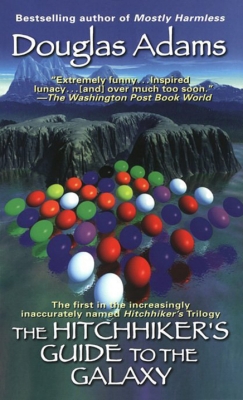
I bought my first copy of The Hitchhiker’s Guide to the Galaxy at a small independent bookstore that, amazingly enough, still exists forty years later. When I bought the book, I had already heard the radio series and knew what to expect. Of course, the novel and the radio series are in no way the same thing.  Adams was able to flesh things out a little more in the book and could add descriptive passages that weren’t possible in the radio show. In addition, jokes that had been in the radio series were dropped if Adams felt they didn’t quite work.

Read More Read More

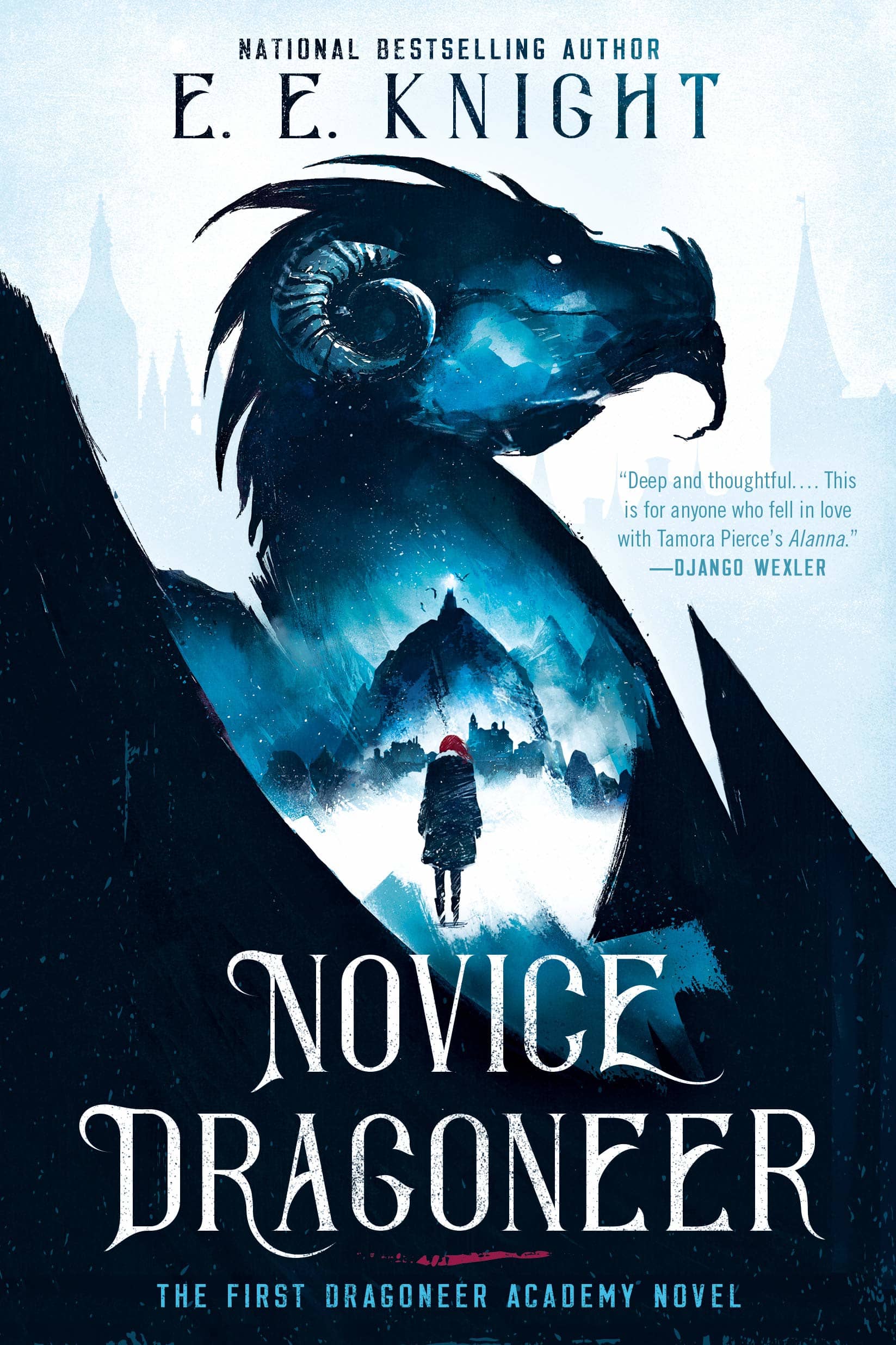
Future Treasures: Novice Dragoneer by E.E. Knight

Future Treasures: Novice Dragoneer by E.E. Knight

Novice Dragoneer-smallI’m a huge fan of E.E. Knight. For one thing, he hosts the best board game nights I’ve ever seen. His Heroscape sessions, held annually in Chicago after the Windy City Pulp and Paper show for many years, were the stuff of legend. As he noted in one of his epic post-game Action Reports, they featured “Mohicans and British infantry and lizard men battling dinosaurs, giant spiders, dragons, and Atlantean robots in a jungle-choked ruin.” Don’t ask me to describe them, but they were life-changing.

He’s also a damn fine writer. You’re probably familiar with his 11-volume Vampire Earth series, which opened with Way of the Wolf, or his six-volume Age of Fire series. He’s also an occasional blogger here at Black Gate. And I was very proud to publish his Blue Pilgrim tale “The Terror in the Vale,” one of the very best stories in our Black Gate Online Fiction library (and reprint the first, “That of the Pit,” which first appeared in the underrated anthology Lords of Swords).

So naturally I was very excited to hear that he has a new novel arriving next month, the tale of an impoverished girl who enters into a military order of dragonriders. And if the buzz already building around Novice Dragoneer is any indication, it’s the beginning of a major new fantasy series. I asked Eric if he could tell us a little about it, and he graciously shared the following.

I’m very much looking forward to readers, both long-time and new, meeting our novice Ileth. She’s a little bit of each of my three kids spun around my own experiences at that age. I’ve even worked my first job, which I took on at twelve, into the story (although I was dealing with dog poop rather than dragon waste). I’ve been on a bit of a break from writing raising those three, so I’m excited to find out if I have any game left.

Here’s the publisher’s description.

Read More Read More

New Treasures: Salvaged by Madeleine Roux

New Treasures: Salvaged by Madeleine Roux

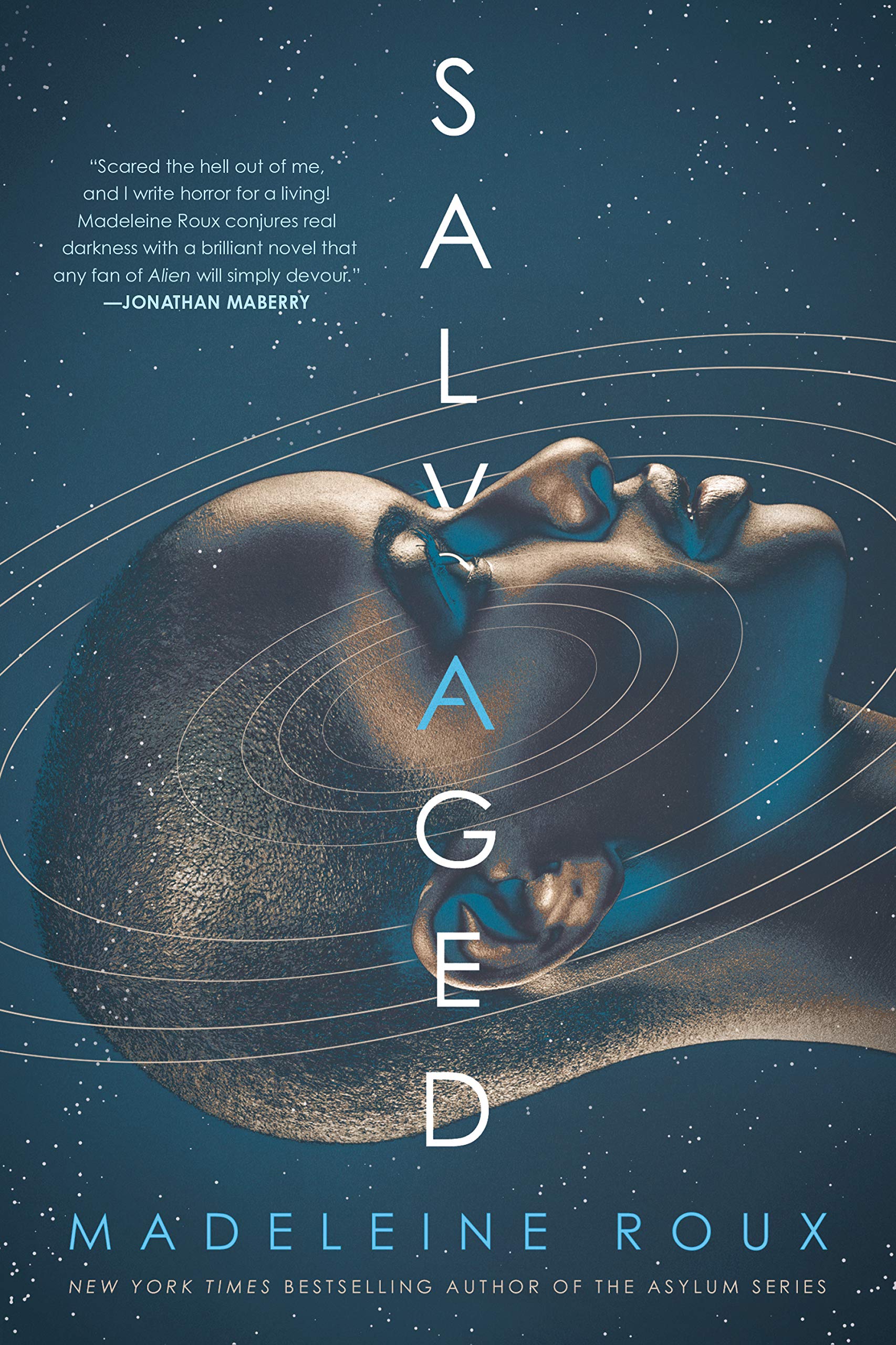
Salvaged Madeleine Roux-smallWhen you’ve been reading and reviewing long enough, you grow a little numb to book blurbs. At least, I thought you did. But that was before I came across Madeleine Roux’s new science fiction-horror novel Salvaged, which has blurbs that didn’t just get my attention. They grabbed me by my collar and made me spill latte all over my shirt.

Christopher Golden calls the book “A breathless, claustrophobic twist on the SF thriller, full of deep space dread, conspiracies, and malevolent alien spores… This is the Alien we need right now.” And Seanan McGuire says it’s “The prose equivalent of playing a survival horror game… Beautifully written.” And Jonathan Maberry raves “Salvaged scared the hell out of me, and I write horror for a living! … a brilliant novel that any fan of Alien will simply devour. Brava!”

See what I mean? Anything with ” deep space dread, conspiracies, and malevolent alien spores” and which draws multiple comparisons to Alien definitely deserves my attention. Here’s an excerpt from the starred review at Publisher’s Weekly.

In a spacefaring future, Rosalyn Devar is a xenobiologist who takes a job as a salvager — janitor of dead space crews — to get away from her father, his business, and the man who hurt her. When caught drinking on the job, she’s given one more chance: clean up the Brigantine, a research ship whose crew is dead. But they aren’t. Aboard the Brigantine, she meets Edison Aries, the captain, and his undead crew. They are infected with a mysterious fungus, Foxfire, that has taken root in their minds, convincing them that it is their mother and that Rosalyn needs to join them. Stranded aboard the Brigantine, Rosalyn and Edison try to outwit the other crew members and Mother, while looking for a way to stop Foxfire from spreading.. This entertaining, deeply disturbing, and clever story hits all the right notes for those who like a little horror with their SF.

Salvaged was published by Ace Books on October 15, 2019. It is 368 pages, priced at $16 in trade paperback and $9.99 in digital formats. The cover was designed by Faceout Studio/Jeff Miller.

See all our recent New Treasures here.

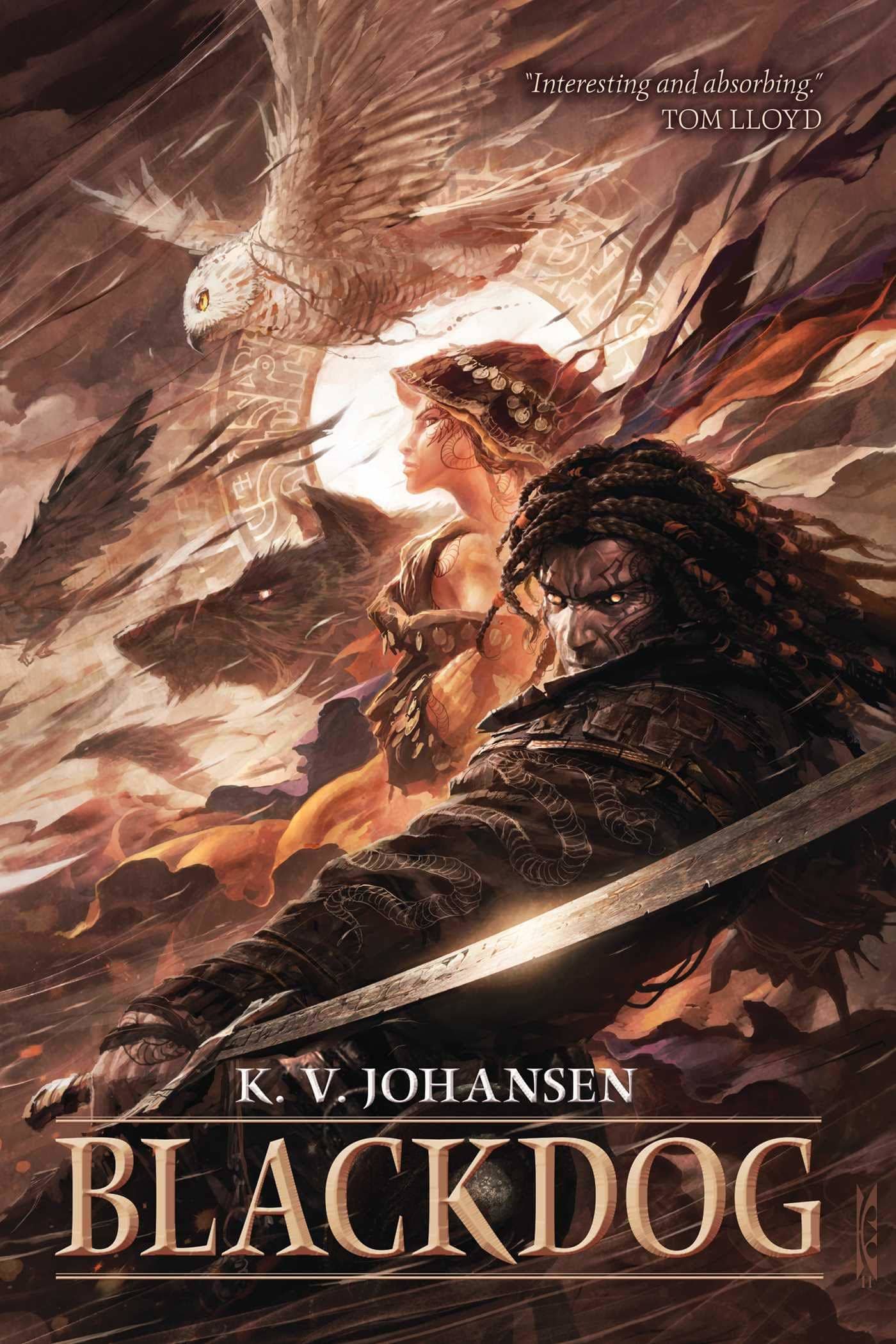
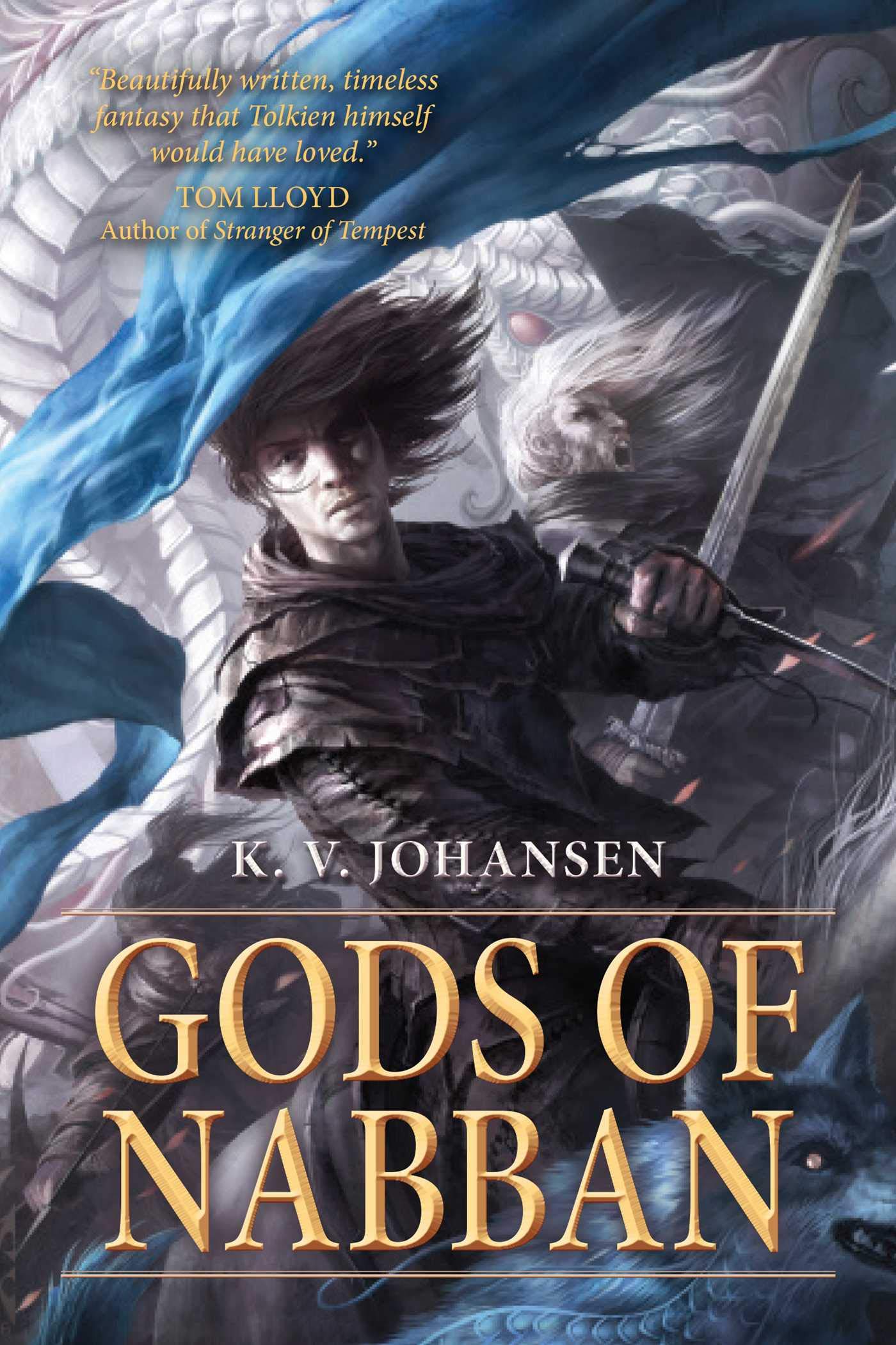
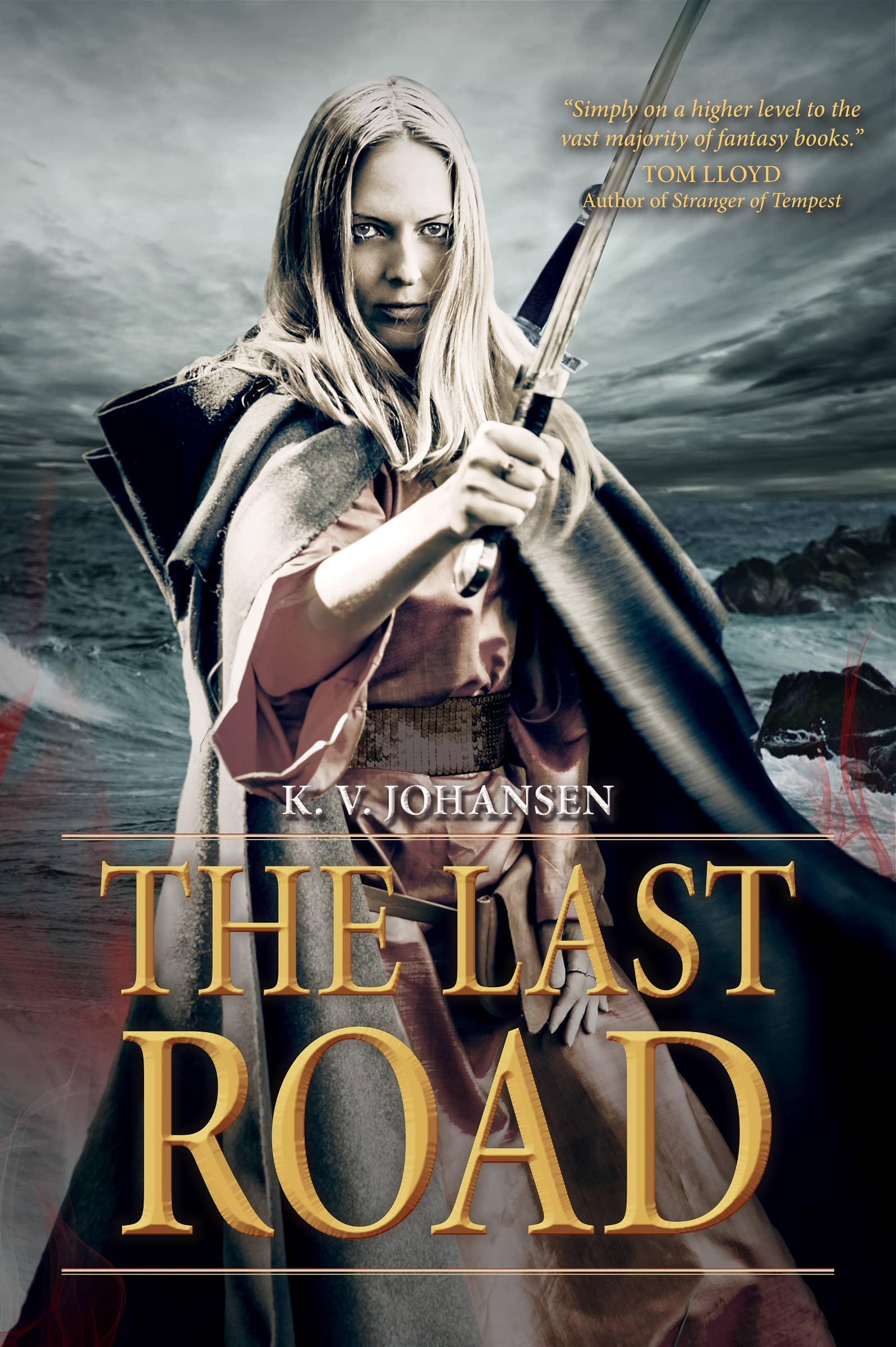
New Roads are Unfolding: The Last Road by K. V. Johansen

New Roads are Unfolding: The Last Road by K. V. Johansen

Blackdog-small Gods of Nabban-small The Last Road-small

Cover art by Raymond Swanland (Blackdog, Gods of Nabban) and Jennifer Do (The Last Road)

The Last Road is the fifth and final book of Gods of the Caravan Road, a silk road fantasy full of gods, goddesses, demons, devils, wizards, and caravaneers. (Also camels.) Chronologically, the story begins with “The Storyteller,” which was published in Andromeda Spaceways quite a long time ago. You can find it now in my collection The Storyteller and Other Tales. I had Blackdog, the first novel, mostly written when I wrote “The Storyteller.” I’ve never been good at beginning at the beginning. I find that starting a story always raises questions about how it got to that point and I want to look backwards as well as forwards. In “The Storyteller,” the devil Moth — one of seven wizards who “in the days of the first kings in the north” bonded themselves with the souls of seven devils — is freed from her prison/grave and joins forces with the half-demon wer-bear Mikki to hunt for the devil Heuslar Ogada.

In Blackdog, a caravan-guard, Holla-Sayan, is possessed by the shapeshifting Blackdog, the obsessively protective, sometimes savage, guardian spirit bound to the goddess Attalissa, who must flee her homeland incarnated as a powerless child when her town is captured by a wizard warlord whom she believes intends to devour her. Holla takes her along as his daughter on the caravan road. Their story intersects with that of Moth, who has been set by the Old Great Gods to hunt and execute her fellow devils.

Marakand, which is published in two volumes as The Leopard and The Lady, is the story of the goddess-cursed assassin Ahjvar — who claims he died almost a century earlier — and his friend and would-be lover Ghu, as the city of Marakand rises in revolt against its goddess. With impressive bad luck, Holla-Sayan’s caravan comes to the city just in time for the civil war, and Moth and Mikki arrive on the trail of another devil.

Read More Read More

The Golden Age of Science Fiction: The Persistence of Vision, by John Varley

The Golden Age of Science Fiction: The Persistence of Vision, by John Varley

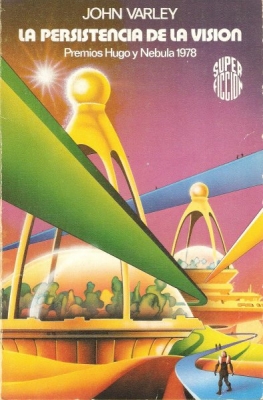
Cover by Jim Burns
Cover by Jim Burns

Cover by Selinas Blanch

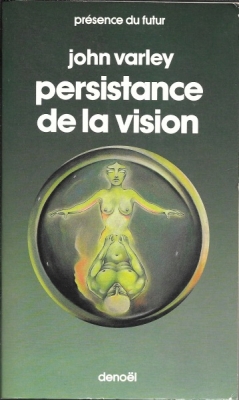
Cover by Stéphane Dumont

The Prix Apollo was founded in 1972 and presented in France for the best book published in French during the preceding year. The first winner was Roger Zelazny’s Isle of the Dead. The award was suspended following the presentation of the 1991 award. Only five times in the awards nineteen year history did it go to works originally published in French, including 1988, when it was presented to an entire series of 36 books written by Georges-Jean Arnaud. Although technically an award for a novel, in 1980, the award was given to John Varley’s collection The Persistence of Vision.

It isn’t entirely clear what the Prix Apollo was presented for. Varley’s debut collection, The Persistence of Vision was published by The Dial Press/James Wade in 1978 and contained nine short stories, published between 1975 and 1978. The collection wasn’t translated into French until 1979, which is why it was eligible for the Prix Apollo in 1980. However, the nine stories were published in two separate volumes in French. One volume, Dans le palais des rois martiens, contained five stories, including French translations of “The Phantom of Kansas,” “Air Raid,” “Retrograde Summer,” “The Black Hole Passes,” and the titular story, “In the Hall of the Martian Kings.” The second volume, Persistance de la vision, contained the remaining four stories, translations of “In the Bowl,” “Gotta Sing, Gotta Dance,” “Overdrawn at the Memory Bank,” and “the titular story, “The Persistence of Vision.” It is possible that the Prix Apollo was given for the complete text of the original anthology, but also conceivable that it was only given to the volume which bears the name in French.

Read More Read More

The Boxed Set of the Year: American Science Fiction: Eight Classic Novels of the 1960s edited by Gary K. Wolfe

The Boxed Set of the Year: American Science Fiction: Eight Classic Novels of the 1960s edited by Gary K. Wolfe

American Science Fiction Eight Classic Novels of the 1960s-small

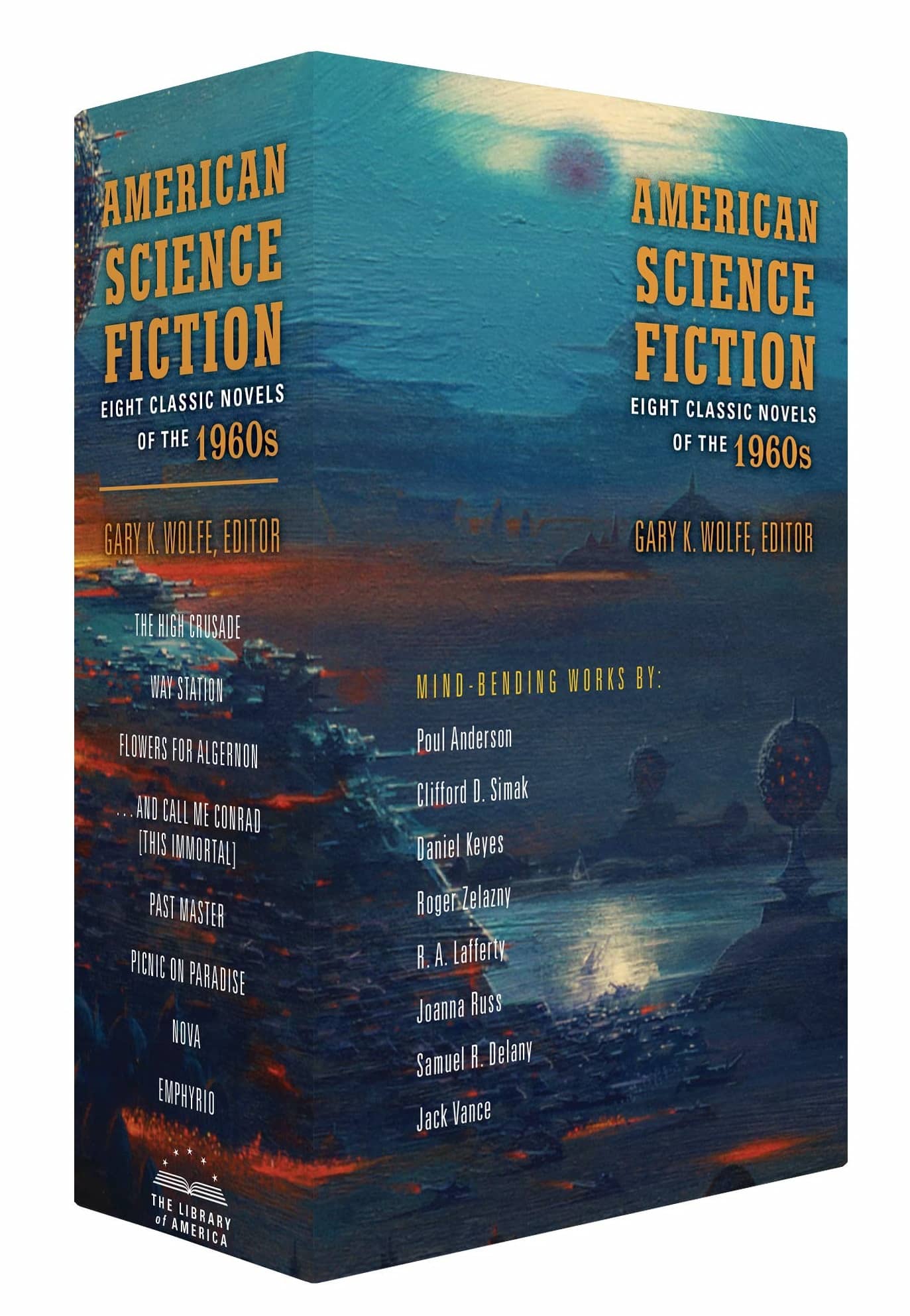
Cover by Paul Lehr

Gary K. Wolfe is one of my favorite Locus columnists. He also reviews science fiction for the Chicago Tribune and, with Jonathan Strahan, co-hosts the excellent Coode Street Podcast. But more and more these days I think of him as an editor. He edited the Philip Jose Farmer retrospective collection Up the Bright River (2011) and, even more significantly, American Science Fiction: Nine Classic Novels of the 1950s: A Library of America Boxed Set (2012), a massive 1,700-page, 2-volume omnibus collection of classic novels by Pohl & Kornbluth, Sturgeon, Brackett, Matheson, Heinlein, Bester, Blish, Budrys, and Leiber, all in gorgeous hardcover with acid-free paper, sewn binding, and full cloth covers.

So I was thrilled to hear that, seven long years later, Wolfe has fulfilled that promise of that first beautiful boxed set with a sequel: American Science Fiction: Eight Classic Novels of the 1960s. Like the first, it will be sold as two separate hardcovers, and also available in a handsome boxed set edition. It contains eight of the finest SF novels of the 60s:

The High Crusade, Poul Anderson (1960)
Way Station, Clifford D. Simak (1963)
Flowers for Algernon, Daniel Keyes (1966)
…And Call Me Conrad (This Immortal), Roger Zelazny (1966)
Past Master, R. A. Lafferty (1968)
Picnic on Paradise, Joanna Russ (1968)
Nova, Samuel R. Delany (1968)
Emphyrio, Jack Vance (1969)

The whole package comes wrapped up in a boxed set featuring artwork from the brilliant Paul Lehr. It will be in bookstores on November 5th — and is available now at $15 below retail if you order direct from Library of America.

Read More Read More

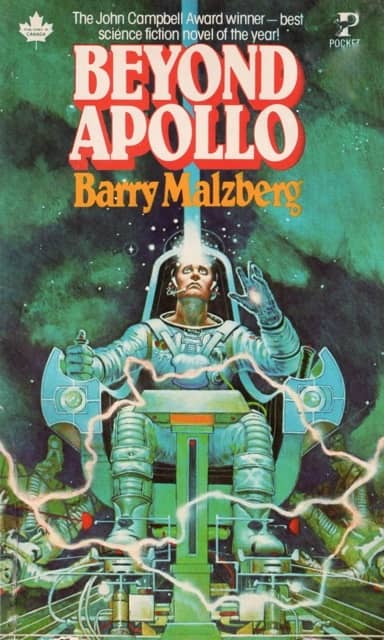
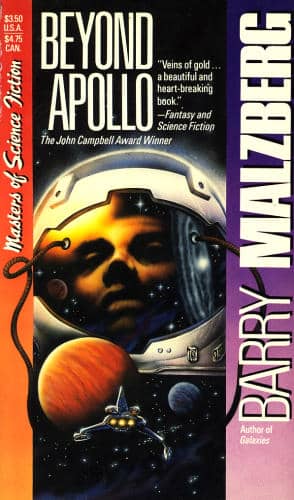
The Golden Age of Science Fiction: The 1973 John W. Campbell Memorial Award: Beyond Apollo, by Barry N. Malzberg (plus Special Award to Robert Silverberg for Dying Inside)

The Golden Age of Science Fiction: The 1973 John W. Campbell Memorial Award: Beyond Apollo, by Barry N. Malzberg (plus Special Award to Robert Silverberg for Dying Inside)

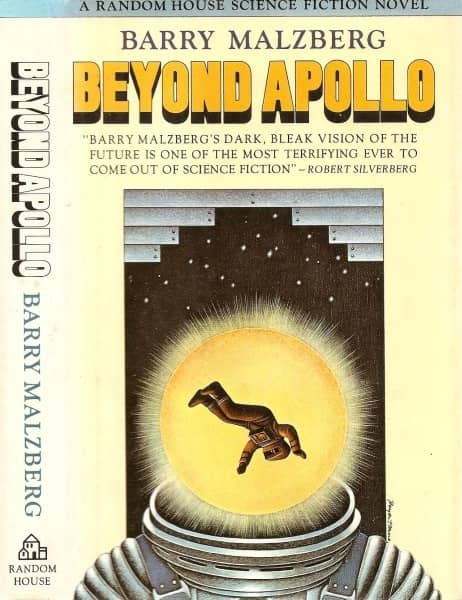
beyondapollofirsted-small Beyond Apollo Pocket-small Beyond Apollo Carol and Graf-big

Beyond Apollo (Random House, 1972, Pocket Books, 1979, Carrol & Graf, 1989). Covers by Roger Hane, Don Maitz, and unknown

Two separate awards were established in 1973 in memory of the profoundly influential long time editor of Astounding/Analog, John W. Campbell, Jr., who had died in 1971. We have already covered the John W. Campbell Award for Best New Writer (which has just been renamed the Astounding Award), which went to Jerry Pournelle.

The John W. Campbell Memorial Award is given for the Best Science Fiction Novel of the year. It is a juried award. It was first established by Harry Harrison and Brian W. Aldiss, to, well, let’s reproduce Harrison’s words:

When John died it was a blow to all of us. After the memorial service a number of his writers were talking, and out of the talk came the Astounding anthology, what has been called the last issue of the Campbell magazine. It was a good tribute to a good editor. There is another tribute I think of just as highly, the award for the best SF novel of the year presented in his name and memory. An award I am sure he would have loved because it instantly became involved in controversy when the first prizes was presented. How John enjoyed a good argument and a good fight! That this fight sprawled through the letter columns of Analog for some months would have cheered him even more.

The first award was presented at the Illinois Institute of Technology in Chicago. The jury for the first award consisted of Harrison, Aldiss, Thomas Clareson, Willis McNelly, and Leon Stover.

Read More Read More

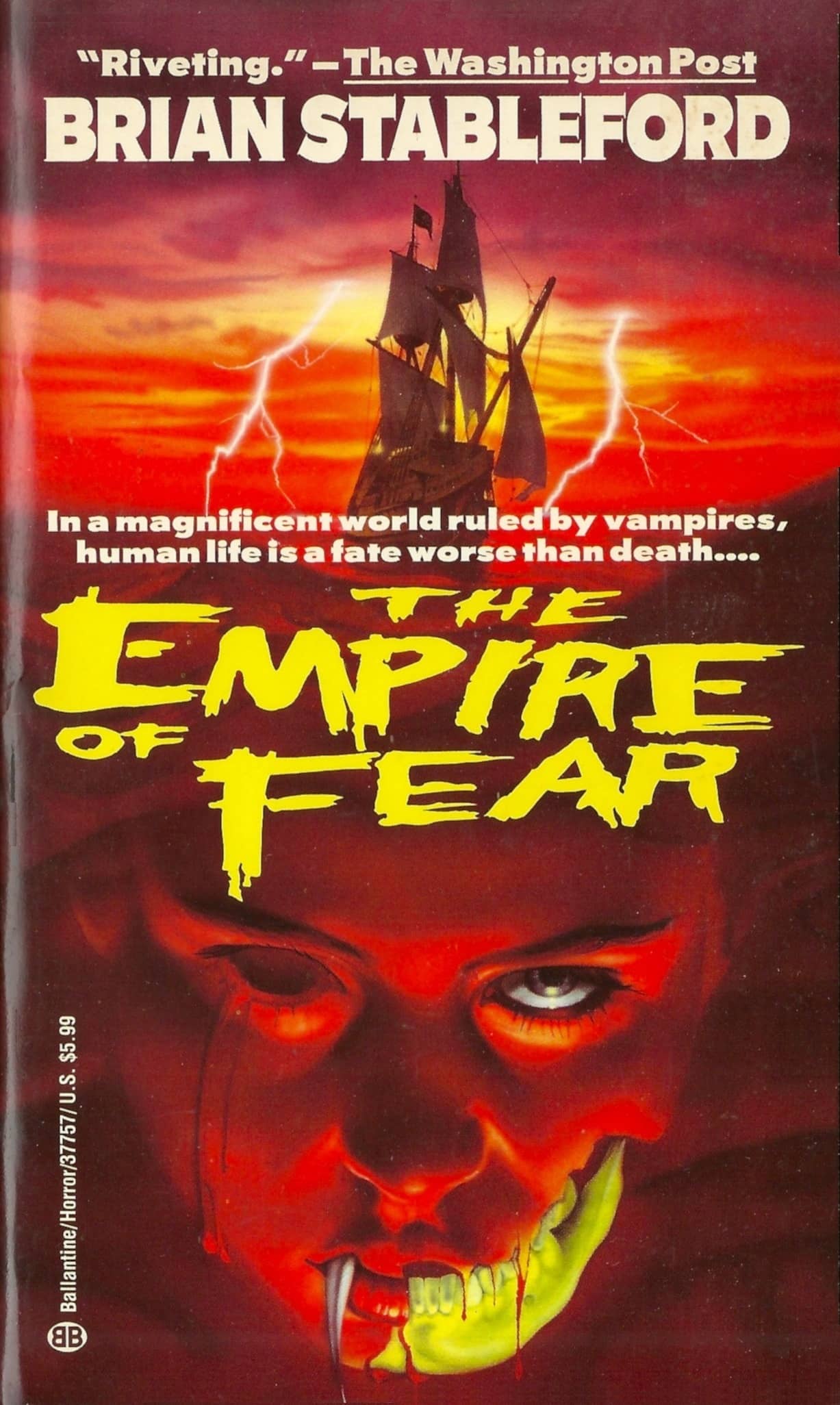
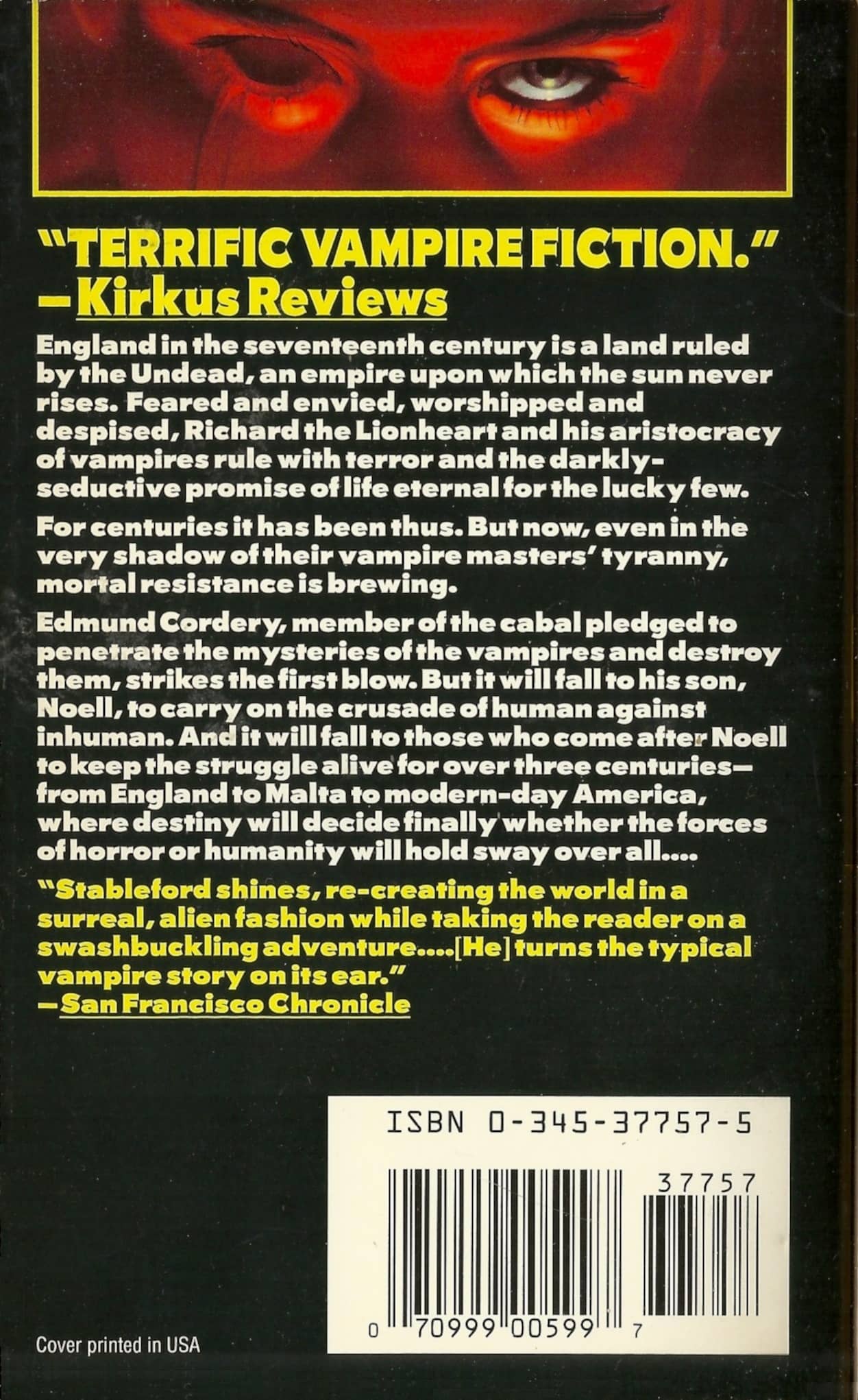
A Glorious Tapestry of Alternate History: The Empire of Fear by Brian Stableford

A Glorious Tapestry of Alternate History: The Empire of Fear by Brian Stableford

The Empire of Fear-small The Empire of Fear-back-small

British science fiction writer Brian Stableford has published more than 70 novels across a career spanning nearly five decades. His first novel was The Days of Glory (Ace, 1971), his most recent was The Tyranny of the Word (Black Coat Press, 2019), which appeared just last month. He’s produced a number of popular series, including six Hooded Swan science fiction novels, beginning with The Halcyon Drift (DAW 1972), six Daedalus Mission books, his famous werewolf trilogy (The Werewolves of London, The Angel of Pain, and The Carnival of Destruction), the Genesys trilogy, and the more recent six-volume Emortality series from Tor, beginning with Inherit the Earth (1998) and Architects of Emortality (September).

Back in 2013 I wrote a brief Vintage Treasures piece on his 1998 horror novel The Empire of Fear, and in the Comments section BG blogger Joe Bonadonna offered a splendid mini-review.

I read this one right after reading George R.R. Martin’s Fevre Dream, and these are 2 of my favorite vampire novels, because they are so much more than that. Empire of Fear is a glorious tapestry of alternate history a, “what mine have been,” had Van Helsing not slain Dracula. Beautifully written, with flesh-and blood characters, and quite well told. My only complaint — it’s too bloody short.

Joe’s comments stayed with me, and as I celebrate the spooky season by selecting classic horror novels to read in October, I picked up a copy to read this weekend.

Read More Read More

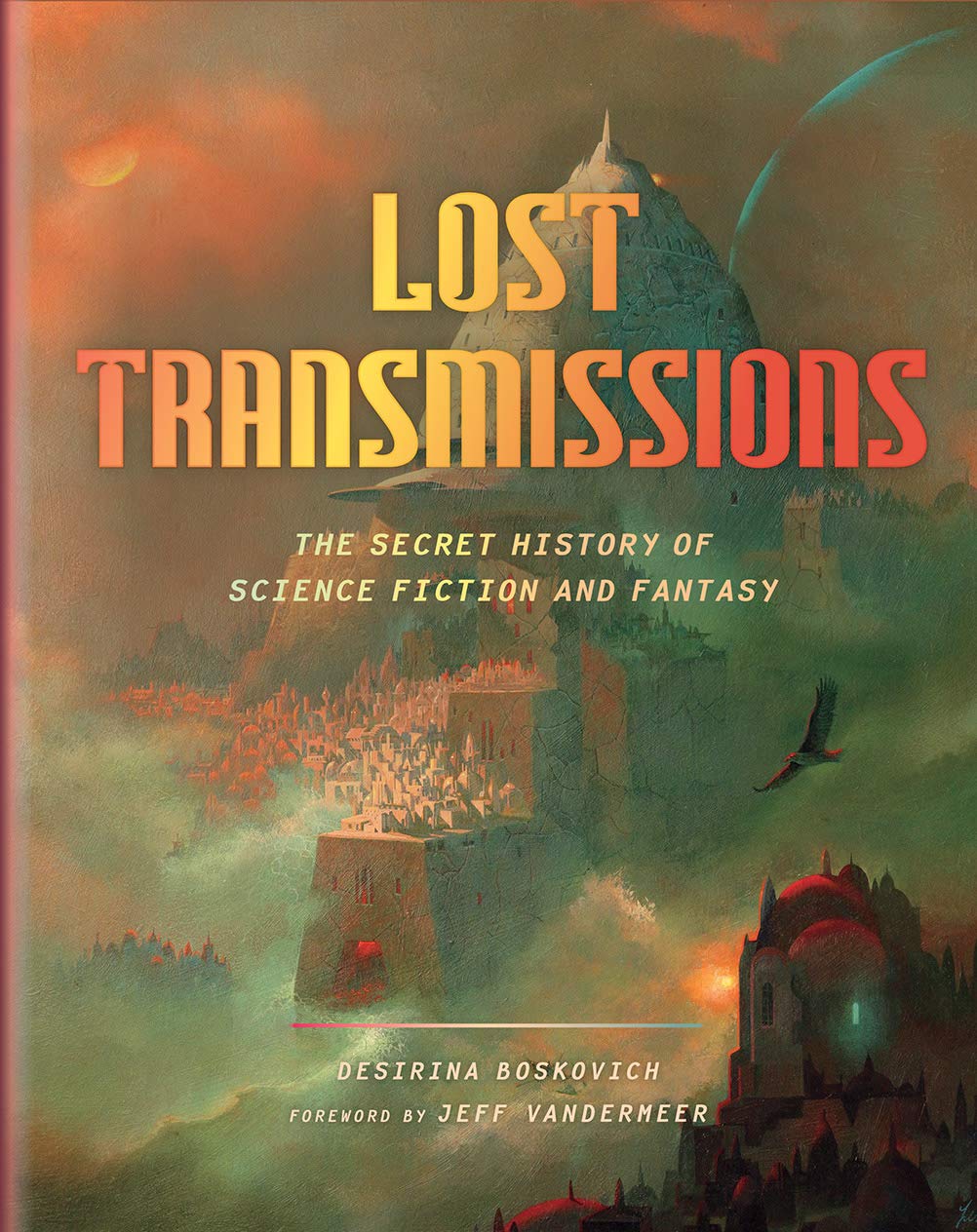
In 500 Words or Less: Lost Transmissions by Desirina Boskovich

In 500 Words or Less: Lost Transmissions by Desirina Boskovich

Lost Transmissions- The Secret History of Science Fiction and Fantasy-small Lost Transmissions- The Secret History of Science Fiction and Fantasy-back-small

Cover by Paul Lehr

Lost Transmissions: The Secret History of Science Fiction and Fantasy
By Desirina Boskovich
Abrams Image (304 pages, $29.99 hardcover, $13.99 eBook, September 10, 2019)

Did you know that Johannes Kepler wrote speculative fiction that got his mother imprisoned for witchcraft? Or that Weezer almost had an epic concept album to rival Pink Floyd and Rush? Or that Space Island One was even a thing?!

Maybe you did. We can’t quite use the excuse that an almost-thirty Millennial like myself obviously wouldn’t know a lot about the rich history of sci-fi and fantasy, however, since Lost Transmissions focuses on far more than the Golden Age. Desirina Boskovich has accumulated information on lesser-known SFF from across history, and I guarantee there are things in here you weren’t aware of. I had to tweet at Desirina while I was reading my ARC, for example, because the chapter “Speculative Music of the New Millennium” outlined artists and albums I’d never heard of, even though I should have grown up paying attention to them in the nineties and early 2000s. (My “To Listen” list doesn’t need to be any bigger, Desirina.)

My To-Read and To-Watch list doesn’t need to be any bigger, either, but too late now. After Charlie Jane Anders’ passionate and excited article about Space Island One, I’m determined to find a way to watch it, even though a DVD or streaming version doesn’t exist, apparently. Now that I’ve read the premise and background of Clair Noto’s The Tourist, I’m going to keep my fingers crossed for a Netflix or Amazon adaptation. I need to look into the Mellon Chronicles to explore Lord of the Rings fandom. I want to find a group of people to try Warhammer Fantasy Role-Play. And so on and so on and so on.

Read More Read More