Browsed by
Category: Blog Entry

Why I Read Old Science Fiction Stories? (Spoiler: For Entertainment)

Why I Read Old Science Fiction Stories? (Spoiler: For Entertainment)

dumarest-6
“Written by authors who mostly died before we were born”

What is wrong with us?

A gazillion SF&F books get published every month, and here we are reading books written by people who mostly died before we were born. And this is Science Fiction we’re talking about! Surely that’s the genre that riffs off the present to paint a plausible future, or at least an illuminating one? Why are we still reading the old stuff?

Is it because we’re wedded to some idea of “canon”? Probably not.

Sure, it’s interesting to visit the roots of a genre, but most of us want to be also entertained in our scarce leisure time. It’s why people who like theatre come back to Shakespeare for pleasure, but mostly approach Jonson and Marlow out of intellectual interest, and why I still dip into Malory’s pulpy Le Morte De Arthur, but not the ploddy Vulgate Cycle by some Medieval French guy(s?) I forget.

Similarly, aspiring authors are well-advised to see how their predecessors managed the… choreography of certain kinds of story: there’s no point in reinventing the wheel when past generations have left so many tried and tested examples just lying around. However, that presupposes that those wheels were proven in action, that they carried along stories that were entertaining.

And, yes, given how wide the field is, we’re more likely to find common ground talking about CL Moore than China Mieville: the best place to catch your mates is outside the pub, not in its murky depths. Even so, we want to be able to rant about books we loved and why… books that we found entertaining.

And there’s that word again: entertaining.

What does the old stuff have that the new doesn’t? After all, modern SF comes in meaty tomes of 100K words, generally has plausible extrapolation, and often takes us out of our comfort zone. How can 30K of often lightly characterized and emotionally distant narrative with not much contemporary significance compete with that?

Except, that’s the point,  I think.

Read More Read More

What I’m Watching: 2020

What I’m Watching: 2020

BG_TVBRiscoCountyEDITED
Campbell’s 2020 April Fools Day Joke

For a couple reasons (none of them good), 2020 has given me the opportunity to watch a lot of video. Of course, I could have done more writing, but we all make our choices… I revisited several favorites, and added a few new shows into the mix. So, let’s look at some of them.

The Adventures of Brisco County Jr.

This was my all-time favorite TV show for years; finally dropping to number two behind Justified. It was very hyped by Fox and aired back-to-back with the also new X-Files. For some reason, the network stuck it on Friday night, which was a death slot. It was canceled after only one season. Which is a TV tragedy.

A mix of Indiana Jones, Westerns, and sci-fi, it intentionally recreated the feel of the old Flash Gordon serials. Each episode had a cliffhanger going into commercial breaks. For most of its run, Brisco pursued the gang that killed his father, a famed lawman. And that was interwoven with a mysterious orb from the future. There were also a ton of in-gags on ‘The coming thing,’ such as blue jeans, drive-thru windows, Dunkin Donuts, and many more.

Bruce Campbell Jr. was perfectly cast, and the rest of the regulars, including Kelly Rutherford (who wonderfully channeled Lauren Bacall from To Have and Have Not), the terrific Julius Carry as rival bounty hunter Lord Bowler, and absent-minded professor John Astin. Honestly – there’s nothing about this show that I don’t like. They wrapped up the master plot late in the season, and they would have come up with something new for season two. But the ratings continued to drop, and rather than hang on, or give it a better time slot, Fox pulled the plug.

For years, I hoped their would be a reunion TV movie, which was ‘a thing’ back before streaming series came around. Then, Julius Carry sadly passed. I can’t imagine this show without him. But there’s almost nothing I don’t like about this show. There were a couple episodes that were a bit flat (including the two-part finale), but they’re still worth watching.

Read More Read More

19 Movies Looks at Mexican Horror Films of the 1950’s-1960’s

19 Movies Looks at Mexican Horror Films of the 1950’s-1960’s

El-Vampiro-small

The Mexican horror film is definitely an under-served genre when it comes to availability in the U.S. market. Many of these movies are hard to impossible to find subtitled (my preferred format) or even dubbed, which I usually find more problematical than subtitling. This is by no means a comprehensive list, but I thought it might be useful to briefly cover a few titles you might not be familiar with. The following films are grouped chronologically rather than by quality.

Read More Read More

Rogue Blades Author: For the Honor of the Ship

Rogue Blades Author: For the Honor of the Ship

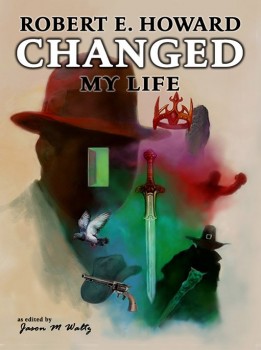
Howard changed my lifeThe following is an excerpt from Christopher Gruber’s essay for Robert E. Howard Changed My Life, an upcoming book from the Rogue Blades Foundation.

I don’t say this out loud often enough — particularly now that I am able to look back on the more significant moments of my life with some measure of honesty and clarity and pinpoint with extreme confidence each occasion I was forever transformed by someone or something — but perhaps that’s why I am writing this. To remember precisely the moment I decided to become the man I am and not merely the man I wanted to be. I’m talking of course about the kind of moments in one’s youth that are often overlooked when contemplating what we erroneously perceive to be the inescapably uninspiring story of our lives. The kind of moments that at first glance seem insignificant, accidental, or perhaps even incidental to the more nightmarish effluvium of our remembered personal failures which I suspect we all attach far more importance to than we should.

Since accepting this assignment I’ve rolled the slogan along my tongue often enough, testing and probing for any signs of illegitimacy, and found nothing but the bittersweet tang of personal truth. There’s an earnestness in what I am about to share with you that surprised me. Truth be told I very much enjoy saying it now in much the same way I genuinely enjoy saying I love my family and friends. There’s a natural sincerity to the declaration that is genuine and unpretentious. I might as well dive into the deep end of the pool of candor and just get on with it: Sailor Steve Costigan and Mike the Bulldog changed my life. There, that’s a load off and I don’t mean maybe. Lemme explain …

Read More Read More

Hercules: Hero and Victim, Part 2

Hercules: Hero and Victim, Part 2

Interior Illustration of Hercules, 1885 ed of Bulfinch's Age of Fable p199
Interior Illustration of Hercules from the 1885 edition of Bulfinch’s Age of Fable, p199 (archive.org)

Today I’m going to finish up my 2-part article on Hercules (Part 1 covered his origin, his “twelve labors”, and his growing wisdom). Once again, I will quote from Bulfinch’s Mythology (a series including The Age of Fable, or Stories of Gods and Heroes), by Thomas Bulfinch; God, Heroes and Men of Ancient Greece, by W.H.D. Rouse; and Mythology, by Edith Hamilton. For this second part, I’ve also sourced Sophocles’ Trachiniae and Ovid’s Metamorphoses Book IX.

As I mentioned in the previous post, I had the good fortune as a kid of seeing, in their first theatrical showings, Hercules (1958) and Hercules Unchained (1959), both starring former body-builder and Mr. America, Steve Reeves; as well as Ray Harryhausen’s classic, Jason and the Argonauts (1963), where an older Hercules was wonderfully portrayed by Nigel Green. These led me to my grade school library, where I borrowed and devoured every book on Greek and Roman mythology I could find. In high school and afterward, I discovered such books by such scholars as Edith Hamilton, Thomas Bulfinch, W.H.D. Rouse, Norma Lorre Goodrich, Michael Grant, Carl Fischer, and Sir Richard Burton. Thus, Hercules was my introduction to Greek Mythology, helped along by what my Dad knew and told me. Later, I became interested in Norse, Celtic, and other mythologies, which eventually led the way to Sword and Sorcery, and Heroic Fantasy.

This post will cover Hercules’ temper, tragedy, and passing.

Read More Read More

A (Black) Gat in the Hand: Johnny Angel (Raft)

A (Black) Gat in the Hand: Johnny Angel (Raft)

Raft_JohnnyAngelLobby1EDITED“You’re the second guy I’ve met within hours who seems to think a gat in the hand means a world by the tail.” – Phillip Marlowe in Raymond Chandler’s The Big Sleep

(Gat — Prohibition Era termsp for a gun. Shortened version of Gatling Gun)

This essay on Johnny Angel is not about the song sung by Shelly Fabares; though, I do like it. Instead, it’s a nautical noir starring George Raft, now at RKO after what can only be deemed a disappointing career at Warners. Of course, Raft can only blame himself for that, after passing on High Sierra, The Maltese Falcon, and Double Indemnity. You think his career wouldn’t have gone differently with those classics on his resume? However, he actually did make some solid movies at RKO in the mid-to-late forties, and this is one of them. THERE BE SPOILERS HERE! Look – I’m talking about a 75 year old movie here. If I ruin something for you; well, you had plenty of chances to see it before now. Okay?

Here, Raft plays Johnny Angel – a merchant ship captain who followed his father into the same career. His father has simply disappeared, along with his ship. Johnny takes offense at insinuations his father did something wrong, and is determined to find out what happened. Raft makes a decent civilian skipper, with a stiff walk. As always, he’s the toughest guy in the room, glowering at, and verbally berating, weaker characters. And of course, beating up the bad guys. You know what you’re getting in a Raft movie.

The female co-lead is the completely forgettable Signe Hasso (though she’s third-billed). She had a funny role in George Segal’s The Maltese Falcon spoof, The Black Bird. But I don’t think she brings anything to this movie at all. If this had been a Warners flick, Joan Blondell, or Ann Sheridan, or maybe even Sylvia Sidney, would have made this a better film. Her character, Paulette Girard, knows something about Johnny’s father’s disappearance, and she’s on the run.

However, it’s top-billed Claire Trevor who carries the female load. Trevor was a terrific actress and played a number of fine parts in hardboiled and noir films. She didn’t have much screen time as Baby Face Martin’s syphilitic, hooker ex-girlfriend, but she brought another layer of emotional depth to Bogart’s character, in Dead End. She had just shone opposite Dick Powell’s Philip Marlowe in Murder My Sweet, when she made Johnny Angel. And of course, she won an Oscar for Key Largo.

Read More Read More

Uncanny X-Men, Part 20: Iron Fist, Blame Canada, and Some Strike-Outs

Uncanny X-Men, Part 20: Iron Fist, Blame Canada, and Some Strike-Outs

screenshot_20200902__KSPaP

This Quixotic blog series of my reread of the Uncanny X-Men has gotten to twenty posts! When I started in December, I wasn’t sure how long I could do this, but it’s been a lot of fun! In this post, I’m going to go over two gems from 1977: the Canadian Invasion in Uncanny X-Men #109 and the dinner party gone bad in Iron Fist #15. Then I’m going to take a bit of a higher level look at a few swing-and-a-miss guest appearances and another issue where a fill-in art team mangled an issue.

You’ll recall that at the end of X-Men #108, the X-Men, along with Princess Lilandra, had just come home after Phoenix saved the universe. Except for their vacation-trap in issue #101 this is basically the first break the X-Men get since issue #98. #108 is the first issue in over a year that didn’t end with some kind of a cliffhanger!

Read More Read More

Board Game Review: The Captain Is Dead

Board Game Review: The Captain Is Dead

The-Captain-is-Dead-board-game-review (1)Anyone else feel like we’re living in a Golden Age of board games? Or have I just been playing more because of COVID? We’re spoiled. Gone are the days of cutting out your own cardboard counters and coloring in your own dice with a crayon.

What, none of you ever played Metagaming MicroGames? They were pretty great. I think Sticks and Stones was the first time I experienced a point-buy mechanic.

But enough GenX 80s nostalgia.

The latest in my personal quarantine parade of top-notch-in-every-respect board games is The Captain Is Dead from The Game Crafters (J.T. Smith and Joe Price) and AEG. I tried this game, originally developed on Kickstarter, with the kids the other night. Everyone had a raucous and exciting time. It’s one of those games you end up thinking about after the box is closed and put away. As a matter of fact, the kids are still talking about it two days later. It’s designed for 2-7 players, though after a couple sessions it seems to me there would be no effective difference if you wanted to solo play handling 2-7 crew yourself; no mechanics would need to be changed.

The premise is that you’re in a starship and have just suffered a massive, Wrath of Khan-style surprise attack from aliens out for a bit of the old ultra-violence. Multiple systems are down. Aliens are teleporting in to occupy the ship. The crew may be afflicted with strange disorders. But worst of all, the Captain is gone, crisped without so much as a “Kiss me, Hardy.”

You could say this game beings in medias res.

And if you don’t play tight and co-oppy, it’ll end there too.

You maneuver surviving officers and crewmen around the ship trying to restore function, with the overriding goal being getting the jump drive repaired so you can get the heck out of Dodge. And that’s the first of the many wonderful elements to this game, there are 18 characters to choose from, ranging from a fleet admiral down to a janitor (color-coded according to their role in the starship’s sub-systems, because cost-saving 60s TV production measures live on through the ages like military specs), each with unique abilities that I believe would combine to make this game highly replayable. There’s even an ensign, if for some reason you want the rest of your co-opers to constantly yell “Shut up, Wesley!” at you.

Read More Read More

Hercules: Hero and Victim, Part 1

Hercules: Hero and Victim, Part 1

Hercules 1958-small

One of the greatest and probably the most famous hero in Greek mythology is Heracles, whom the Romans called Hercules, the name I first heard, thanks to certain films, when I was a kid. Some scholars call him by his original Greek name, others by the Roman version. Forgive me if I bounce back and forth between the two.

A while back, I decided to revisit three films which had a great impact on me when I was a kid, especially since I had the good fortune of seeing all three at the theater, during their first run: Hercules (1958) and Hercules Unchained (1959), both starring former body-builder and Mr. America, Steve Reeves; and Ray Harryhausen’s classic, Jason and the Argonauts (1963), where Hercules was played by Nigel Green. These led me to my grade school library, where I borrowed and devoured every book on Greek and Roman mythology I could find. In high school and afterwards, I discovered such books as Edith Hamilton’s Mythology, Bulfinch’s Mythology, by Thomas Bulfinch, God, Heroes and Men of Ancient Greece, by W.H.D. Rouse, as well as those by Norma Lorre Goodrich, Michael Grant, Carl Fischer, and Sir Richard Burton — not to forget Homer, Euripides, Ovid, and so many others too numerous to name.

Those books and those films, including the pepla films of the 1960s, had quite an effect on me. And lest I forgot, three other films also played a major part in my life: Harryhausen’s The Seventh Voyage of Sinbad (1958), Stanley Kubrick’s Spartacus (1960), and Cecil B. DeMille’s Samson and Delilah (1949); incidentally, Steve Reeves was originally cast to play Samson, but then, as things in Hollywood often go, Victor Mature eventually secured the role.

Read More Read More

Rogue Blades Presents: Recalling a Fantasy Hero — Hanse Shadowspawn

Rogue Blades Presents: Recalling a Fantasy Hero — Hanse Shadowspawn

Thieves' World-Walter-VelezAs I’ve written before, my introduction to Sword and Sorcery literature came not through the more traditional routes of Robert E. Howard, Fritz Leiber, Michael Moorcock, etc. I first delved into Sword and Sorcery almost by accident about 1979 when at the age of nine I picked up a collection of fantasy short stories titled Thieves’ World, the first in what eventually would become a long series of anthologies and novels and even gaming-related material.

At that point in my young life I had discovered Tolkien, and I had read what was then the first of Terry Brooks’ Shannara books, but that was about the extent of my fantasy readings outside of comic books.

Thieves’ World opened my eyes to a much larger and somewhat darker potential for fantasy literature, one I had yet to envision at that time.

Yet my love for the series, and for Sword and Sorcery, would not come immediately upon opening the book. The introduction by series editor Robert Asprin proved interesting enough as did the first short story, “Sentences of Death” by John Brunner, and the following tales were also worthy reads.

Yet when I got to the fourth tale, “Shadowspawn” by Andrew Offutt, something … changed. Something opened within me.

This tale featured one Hanse Shadowspawn, a young, cocky thief who often wore bright garb by the day but dark garb by the night. And he also wore a dozen or so daggers about his body. Hanse showed himself to be a cocky, swaggering sort of fellow, though he also had a soft spot for those he loved.

Over the next forty or so years throughout multiple short stories and a few novels, Hanse Shadowspawn still remains one of my favorite fantasy characters. Despite his upbringing on the roughest streets of the city of Sanctuary, he became a friend to royalty, rescued a near-god from a fate worse than death, found love, grew old and learned his parentage consisted of … but that would be telling. I’ll try to leave more than a little mystery. Let’s just say, Hanse proved no mere thief, and he was the best at what he did for a reason, for several reasons.

Read More Read More