Candas Jane Dorsey and Black Wine
 Some time ago, at one book fair or another, I took a chance on a book I’d never heard of: Black Wine by Candas Jane Dorsey. I’m not sure why; I’d already had reasonable luck at the sale, as I recall, so I didn’t feel the need (as one sometimes does) to grab a book for the sake of coming away with something. I don’t normally buy books based on cover art, and in any case this cover was more stylish than striking, a black pattern on black. It may have been the mention on the cover that the book had won an award for Best First Fantasy Novel. Most likely, it was the puff quotes on the back, featuring praise from Elisabeth Vonarburg and Ursula Le Guin (who compared Dorsey to Gene Wolfe). At any rate, buy it I did, for whatever reason; and having finally gotten around to reading it, I’m happy I went for it. Black Wine is an excellent, excellent book.
Published in 1997, it not only won the IAFA/Crawford Award for Best First Fantasy Novel, but also the James Tiptree, Jr. Award, and the Aurora Award for Best Long Form Work in English by a Canadian Science Fiction or Fantasy Writer. Dorsey herself (I find from Wikipedia and the ISFD) is a poet and prose writer from Edmonton. She’s published one other novel, A Paradigm of Earth, along with two collections of short fiction, and has edited and co-edited a number of anthologies. She also co-wrote a novel called Hardwired Angel with Nora Abercrombie.
Black Wine is a tricky book to describe. It begins by presenting three different narratives in three consecutive chapters; those narratives then coil back and forth. It’s not too difficult to work out how they interlock, but it does require careful attention and (in my case) considerable flipping around to re-read earlier parts. Further, names are powerful in this book, sometimes seeming to be guarded like treasures; which makes keeping track of characters and their family relations a challenge — particularly as so many of those characters are mother and daughter, a recurring relationship that seems to shape the story: the dominant narrative, we eventually realise, is set off by a daughter’s quest for her mother, a mother gone missing as a result of her relationship with her own mother and (especially) her mother’s mother.
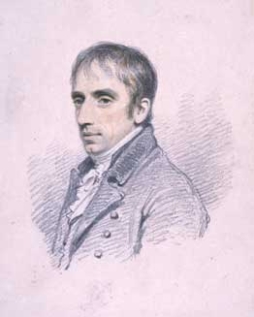 This post is part of an ongoing series about fantasy and the literary movement called Romanticism, specifically, English Romanticism in the late eighteenth and early nineteenth centuries. The series began with
 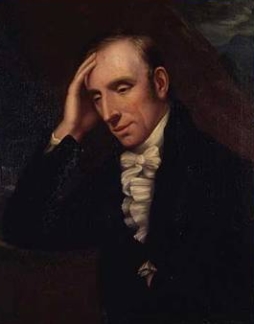 This post is part of an ongoing series about fantasy and the literary movement called Romanticism; specifically, English Romanticism in the late eighteenth and early nineteenth centuries. The series began with
 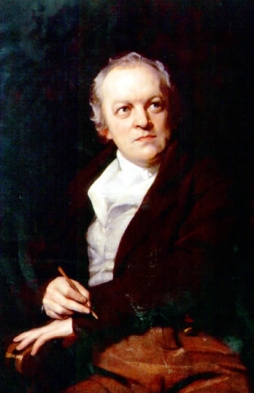 A few months ago, I started an irregular series of posts about Romanticism and fantasy. I wanted to talk about the significance of Romanticism, the literary movement of the late eighteenth and early nineteenth century, to the development of fantasy fiction. For a variety of reasons, I’d been distracted from continuing those posts for a while; I want to return to them now. The original inspiration for this series of posts came when
 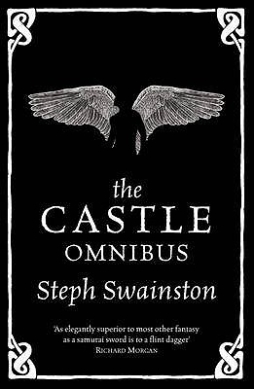 Almost exactly a year ago,
 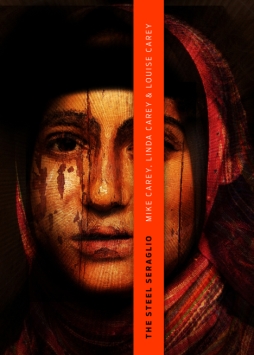 The Steel Seraglio
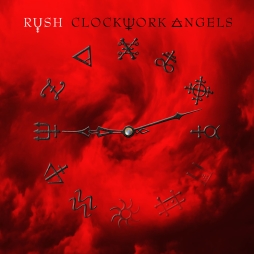 Today, July 1, is the one-hundred-and-forty-fifth anniversary of the date the
 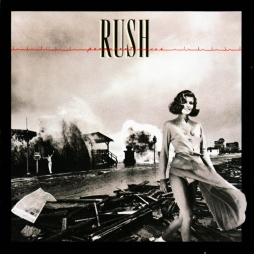 This is the second part of a look at Rush, whose new steampunk epic Clockwork Angels came out earlier this month. I think it’s a wonderful album, but to explain why it seemed to me worth looking at their earlier work — I looked at what they’ve accomplished as a band, and what drummer and lyricist Neil Peart has become as a writer. Last time, I looked at their records up through 1978’s Hemispheres; I therefore begin here in 1980, with the next album, Permanent Waves. (You can find that first post
 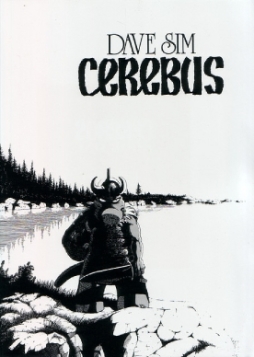 I’ve been writing a fair bit lately about Canadian fantastika, and I’ll be doing so again next week, looking at a trio of grand masters who’ve just released what may be one of the most accomplished works of their career. But there’s been a bit of news lately about another notorious Canadian fantasy epic, so I want to talk about that first.