Browsed by
Author: Matthew David Surridge

John Myers Myers, Silverlock, and the Commonwealth of Letters

John Myers Myers, Silverlock, and the Commonwealth of Letters

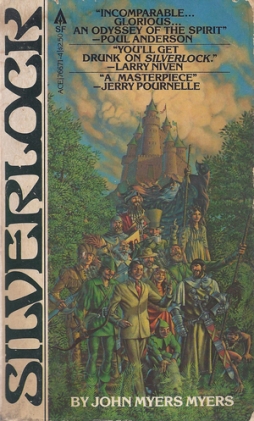
SilverlockIt’s been said that this is the age of the mash-up: of art formed from the fusion of other works of art. A film like The Avengers blends together characters from five other movies. Fan-fiction interrogates texts we thought we knew, crossing characters from one tale over into another. At an extreme, a work like Alan Moore’s League of Extraordinary Gentlemen imagines a world where every character derives from some other source, comes from some other story; imagines a world where all stories overlap and so make a strange collective setting. In fact, though, this is really nothing new. Crossovers, it has been said, date back to Homer writing of heroes coming together to fight the Trojan War. And League of Extraordinary Gentlemen-style mash-ups have precedents as well; I have not read Philip José Farmer’s Riverworld books, nor have I read John Kendrick Bangs’ Associated Shades novels, which date back to the 1890s, but I have read John Myers Myers’ 1949 novel Silverlock, and came away from it with a few thoughts.
Silverlock imagines a Commonwealth of Letters inhabited by the world’s great fictional characters. Into this Commonwealth comes one A. Clarence Shandon, gifted with a white streak in his hair from which he’s nicknamed ‘Silverlock.’ A former business student, Shandon’s completely ignorant of books and literature, so does not fully realise into what sort of land he has fallen: a land where every character, every name, comes from fiction or mythology. The book follows Shandon through the Commonwealth, as he is forced to learn and grow in the course of a three-part journey.

The book is greatly beloved by some. My copy has essays by Poul Anderson, Larry Niven, and Jerry Pournelle praising it to the skies. For myself, I enjoyed it, with reservations. It’s a fun book, but I couldn’t help but feel that Myers bit off more than he could chew — or, perhaps, that the idea was setting up greater expectations (as it were) than he or anybody could fulfill. Still, the book did seem to me to be worth writing about, because whether or not it’s wholly successful in itself, it raises a host of interesting questions about the nature of fictional characters, and how they work, and how we read them, and how these things may change in time.

Read More Read More

Gustav Meyrink’s Golem

Gustav Meyrink’s Golem

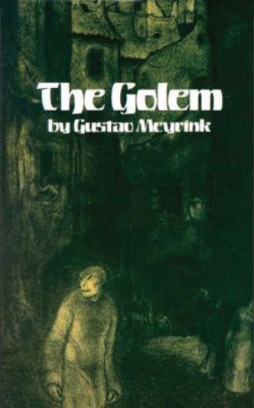
The GolemThe first thing I feel I have to say about Gustav Meyrink’s novel, The Golem, is that it’s intensely, thrillingly strange. Dreamlike, elliptical, informed by theosophical and occult symbols, it wrong-foots you; nothing in it develops the way you’d expect, not in terms of character or plot or imagery. And yet that strangeness feels almost like a side-effect, a byproduct of its insistence on its themes, on its vision, on its focus on the reality of Prague and on whatever it is that lies beyond that reality. Perhaps the strangest thing about the book, published in installments in 1913 and 14 and published as a whole in 1915, was that this odd esoteric horror story was also tremendously popular in its day.

It was Meyrink’s first novel. A banker with an interest in theosophy and the occult, apparently for a time a member of the Hermetic Order of the Golden Dawn, he turned to writing after being thrown in jail for using spiritual guidance for his investments. He published a number of short satirical fictions, and then The Golem, which made his fortune. More novels followed, dealing with similar metaphysical themes. He died in 1932. The Golem remains his best-known work, certainly in the English-speaking world (though often cited as the inspiration for Paul Wegener’s multiple Golem movies, there seems to be no direct conection between films and book). It’s been translated several times; I have the 1995 version by Mike Mitchell.

Written in the first person, the book follows a gem-engraver named Athanasius Pernath who lives in the Jewish Ghetto in Prague (but is apparently not himself Jewish). Pernath is suffering from a strange loss of memory; a woman who knows him begs him to hide her in his lodging, but he cannot recall who she is. Then a strange man presents him with an ancient book of Jewish mysticism, whose elaborate first letter needs to be repaired. Pernath accepts the task; but this is only a sub-plot, and much of the action involves following Pernath through interactions with an odd set of characters around him — a sinister junk-dealer named Wassertrum; his bitter enemy, the medical student Charousek; the saintly archivist of the Jewish Town Hall, Shemaiah Hillel; and Hillel’s lovely but unworldly daughter, Miriam. We follow Pernath also through dreams and visions, through his life among puppeteers and whores and slumming aristocrats and deaf-mutes.

Read More Read More

Candas Jane Dorsey and Black Wine

Candas Jane Dorsey and Black Wine

Black WineSome time ago, at one book fair or another, I took a chance on a book I’d never heard of: Black Wine by Candas Jane Dorsey. I’m not sure why; I’d already had reasonable luck at the sale, as I recall, so I didn’t feel the need (as one sometimes does) to grab a book for the sake of coming away with something. I don’t normally buy books based on cover art, and in any case this cover was more stylish than striking, a black pattern on black. It may have been the mention on the cover that the book had won an award for Best First Fantasy Novel. Most likely, it was the puff quotes on the back, featuring praise from Elisabeth Vonarburg and Ursula Le Guin (who compared Dorsey to Gene Wolfe). At any rate, buy it I did, for whatever reason; and having finally gotten around to reading it, I’m happy I went for it. Black Wine is an excellent, excellent book.

Published in 1997, it not only won the IAFA/Crawford Award for Best First Fantasy Novel, but also the James Tiptree, Jr. Award, and the Aurora Award for Best Long Form Work in English by a Canadian Science Fiction or Fantasy Writer. Dorsey herself (I find from Wikipedia and the ISFD) is a poet and prose writer from Edmonton. She’s published one other novel, A Paradigm of Earth, along with two collections of short fiction, and has edited and co-edited a number of anthologies. She also co-wrote a novel called Hardwired Angel with Nora Abercrombie.

Black Wine is a tricky book to describe. It begins by presenting three different narratives in three consecutive chapters; those narratives then coil back and forth. It’s not too difficult to work out how they interlock, but it does require careful attention and (in my case) considerable flipping around to re-read earlier parts. Further, names are powerful in this book, sometimes seeming to be guarded like treasures; which makes keeping track of characters and their family relations a challenge — particularly as so many of those characters are mother and daughter, a recurring relationship that seems to shape the story: the dominant narrative, we eventually realise, is set off by a daughter’s quest for her mother, a mother gone missing as a result of her relationship with her own mother and (especially) her mother’s mother.

Read More Read More

Romanticism and Fantasy: William Wordsworth, Part Two — The Prelude

Romanticism and Fantasy: William Wordsworth, Part Two — The Prelude

William WordsworthThis post is part of an ongoing series about fantasy and the literary movement called Romanticism, specifically, English Romanticism in the late eighteenth and early nineteenth centuries. The series began with this introductory post, continued with an overview of the neo-classical eighteenth century that the Romantics revolted against, considered the Romantic themes in English writing from 1760 to about 1790, then looked at elements of fantasy and Romanticism in France and Germany before returning to England to consider the Gothic. I wrote about the work of William Blake here, and last time I began a consideration of fantasy elements in the work of William Wordsworth.

As I said then, Wordsworth is not a writer with many overt fantastic elements in his major works. Still, I find there’s a fantastic feel that emerges from the use of certain structures and imagery. Comparing his work to the motifs of fantasy fiction in Clute and Grant’s Encyclopedia of Fantasy, I found parallels between his use of nature and the way “the Land” has been imagined in secondary-world fantasy. The notion of “thinning,” the fading of enchantment and meaning, seems to resonate with Wordsworth’s poetry as well.

Bearing all this in mind, I want to look here at perhaps Wordsworth’s greatest accomplishment, The Prelude, his epic poem on the growth of his own mind. Before doing that, though, I want to introduce some more concepts from the Encyclopedia of Fantasy, and then bring in some ideas from M.H. Abrams’ excellent critical study of Romanticism, Natural Supernaturalism. And with all that will come some ideas from J.R.R. Tolkien.

Read More Read More

Romanticism and Fantasy: William Wordsworth, Part One

Romanticism and Fantasy: William Wordsworth, Part One

William WordsworthThis post is part of an ongoing series about fantasy and the literary movement called Romanticism; specifically, English Romanticism in the late eighteenth and early nineteenth centuries. The series began with this introductory post, continued with an overview of the neo-classical eighteenth century the Romantics revolted against, considered the Romantic themes in English writing from 1760 to about 1790, then looked at elements of fantasy and Romanticism in France and Germany before returning to England to consider the Gothic. Last time, I looked closely at the work of William Blake. And in this post (and its sequel) I want to consider perhaps the least overtly fantastic of all major Romantic poets: William Wordsworth.

Like Blake, Wordsworth was concerned with the visionary nature of poetry, and with the character of his own poetic vision. Unlike Blake, he did not explore his vision through fantasy. He claimed to take as his subject the “simple produce of the common day,” and much of the newness of his verse came in the realism of his depiction of human personality, especially that of children and the poor — people who had for the most part not been looked at seriously in poetry up to that time. Nevertheless, I’ve always felt that there was something fantastic in Wordsworth’s verse. Some of that is a function of his preferred imagery. Some of that has to do with his themes.

Wordsworth is one of the great nature poets in the language — and in this makes a strong contrast to Blake, who felt that nature was significant only to the extent that it was transmuted by human imaginative vision. The interplay of vision and nature in Wordsworth is more complex, and accounts for some of the fascination of his work. I think that the way he works out that duality verges on the fantastic; how he deals with his material uses imagery and structures that would later become characteristic of what we think of as fantasy fiction. A critic named A.C. Bradley once wrote that “The road into Wordsworth’s mind must be through his strangeness and his paradoxes, and not round them.” I want, then, to explore here one of those paradoxes: how the depiction of nature and the everyday attains a sense of the fantastic.

Read More Read More

Romanticism and Fantasy: A Closer Look at William Blake

Romanticism and Fantasy: A Closer Look at William Blake

William BlakeA few months ago, I started an irregular series of posts about Romanticism and fantasy. I wanted to talk about the significance of Romanticism, the literary movement of the late eighteenth and early nineteenth century, to the development of fantasy fiction. For a variety of reasons, I’d been distracted from continuing those posts for a while; I want to return to them now. The original inspiration for this series of posts came when I tried writing a piece on William Blake, and realised there was more to be said about Blake’s time and contemporaries than fit into the one post. I’ve since realised that there’s more to be said about Blake himself than I put into the post I wrote, so I’ve decided to return to Romanticism with a longer look at Blake.

I want to begin by acknowledging a tremendously helpful comment I got on that first Blake post. I spent a fair amount of time in that post considering whether and how Blake should be regarded as a fantasist, and commenter RadiantAbyss pointed out that Blake fit naturally into early fantasy due to his concern with metaphysics. I think that’s a strong point, and something that applies (to a greater or lesser degree) to many of the other Romantic poets. I think it particularly applies to Blake, as I hope much of this post will show.

Before launching into another look at Blake, I want to quickly recap my posts in this series so far, and where I hope to be going with the whole thing. It’s my general contention that modern fantasy (along with science fiction and horror) are deeply linked with Romanticism. I think the writers of that time pioneered approaches and techniques to fantasy still in use today. I wrote an introduction to the series, then talked about the 18th-century background that gave rise to English Romanticism. Then I wrote about the emergence of the Romantic spirit in the late 18th century, starting with the poems of Ossian. I went on to talk about Romanticism and fantasy in France and in Germany before returning to England to discuss Gothic fiction. In those last two posts, I found myself talking about writers consciously trying to mix fantastic elements into a prose form that had been experimenting with greater realism; in other words, trying to find a balance between the real and the fantastic, trying to find a way to present fantasy with verisimilitude. That’s fairly directly relevant to modern prose fantasy, I think. But for this post, and the next two, I’ll be changing my tack slightly, and writing about major poets whose work seems to me to be particularly relevant not only to the genesis of fantasy fiction, but to the themes of fantasy as it is and has been written. And I’ll be starting with William Blake.

Read More Read More

Some Reflections on The Castle Omnibus

Some Reflections on The Castle Omnibus

The Castle OmnibusAlmost exactly a year ago, reports suggested that novelist Steph Swainston had chosen to quit writing. This seemed surprising, as Swainston had written four highly-regarded books, all set in a fantasy world where immortals led armies against giant insects: the Castle series. In fact, to judge by the actual interview Swainston gave, her choice seems to have been more nuanced. She felt that the demand for producing “a book a year” was excessive, and also that writing as a full-time occupation was psychologically stressful due both to the isolation needed by the writer and to the need to self-publicise on the Internet. She wasn’t necessarily ceasing to write, but electing to write at her own pace: “I’ve never said I won’t write again, just that if I do write another book, I’ll do it on my terms.”

So would more books from her be a good thing? Sure; more books are always good. To rephrase the question: are her books in particular good enough that it would be worth hoping for more of her work to be published? I think so, yes. I’ve read a collection of her first three books — The Castle Omnibus, which includes The Year of Our War, No Present Like Time, and The Modern World; I gather the fourth book, Above the Snowline, is a prequel to the other three — and I was impressed. I think she’s trying to do some very ambitious things in her fiction, and I’d like to see more of it.

I will also say that I think some of the ambitions of the books may not be fully realised. I found myself somehow skeptical as I read them; it wasn’t that I had difficulty accepting the world or the story, but that I was in some way on the outside of the tale. I find it difficult to articulate why that is, though. Looking around the web, I notice that reaction to her writing mostly seems divided between outright praise and responses vaguely similar to my own — a recognition that this is strong work, but … in some way lacking. My problem is that I can’t quite establish to my own satisfaction what the lack is that I feel. What I want to do here, then, is try to work out what it might be. I want to emphasise that I think these are very good books, and I do recommend them; if I seem to be hunting for a flaw, it’s because the writing here is strong enough that the problems are difficult to isolate.

Read More Read More

The Steel Seraglio: a Review

The Steel Seraglio: a Review

The Steel SeraglioThe Steel Seraglio
Mike, Linda, and Louise Carey
ChiZine Publications (424 pp, $15.95 US/$17.95 CAD, trade paperback)
Reviewed by Matthew Surridge

The Steel Seraglio is a fantasy novel by husband/wife/daughter trio Mike, Linda, and Louise Carey, put out by ChiZine Publications. There’s also a chapbook set in the same world (which you might be able to get if you order the book directly from ChiZine). It’s a story set in a pseudo-historical Arabia, in a desert of city-states ruled by sultans. When religious zealots stage a revolution in the city of Bessa, a chain of events is set in motion that results in the former Sultan’s former harem of 365 women banding together to take the city back, and installing their own enlightened rule. The book tells the story of the women, and the rise and fall of the city they make.

I thought it was a decent adventure novel with some nice touches; good enough, and the touches nice enough, that I wished it had been better — either a better adventure, or a better novel. I think the book narrowly fails to achieve all the grand effects that it aims for, mostly due to staging and logic that don’t feel entirely thought-through. And I think that what is most interesting about the book, specifically its narrative structure and use of narrative to establish character, is not particularly well-served by the epic adventure format. I also found I had some qualms about the setting, or at least how the setting was developed in the course of the story.

Read More Read More

Clockwork Angels III. Hope is What Remains to be Seen

Clockwork Angels III. Hope is What Remains to be Seen

Clockwork AngelsToday, July 1, is the one-hundred-and-forty-fifth anniversary of the date the British North America Act came into effect, which effectively established the modern country of Canada. We still celebrate that as our national holiday: Canada Day. So it’s only appropriate that I’m posting now about three men who have together been named as official Ambassadors of Music by the Canadian government, who have been made Officers of the Order of Canada, and who have as a group won the Governor General’s Performing Arts Award. I’m talking about Rush, and after two posts recapping their career (the first here, the second here), I’ll finally be writing about their new album, Clockwork Angels.

It’s a long album, over 66 minutes, and tells a single story. Although reminiscent of some of their older songs, not least due to lyricist Neil Peart’s use of themes and images that’ve clearly fascinated him for years, it’s also new ground for the band, who have never before created a fully-fledged concept album. Clockwork Angels is a steampunk epic in 12 songs, with accompanying passages of narrative prose that help to tie the story together. A novelization’s forthcoming in September by author Kevin J. Anderson, in collaboration with Peart.

To reiterate something I said in the first of these posts: this is a brilliant album. It’s lyrically and musically complex, constantly challenging, a treasure trove of ideas that’s impossible to assimilate in a single listen. The conceptual and narrative structure works, and lends the album a distinct feel — literally, a novelistic (and novel) sensibility. The relation of the songs, the recurrence of symbols that both resonate with the album’s story and derive from earlier in Peart’s career, gives Clockwork Angels significant thematic depth.

Read More Read More

Clockwork Angels II. Winding Like an Ancient River the Time is Now Again

Clockwork Angels II. Winding Like an Ancient River the Time is Now Again

Permanent WavesThis is the second part of a look at Rush, whose new steampunk epic Clockwork Angels came out earlier this month. I think it’s a wonderful album, but to explain why it seemed to me worth looking at their earlier work — I looked at what they’ve accomplished as a band, and what drummer and lyricist Neil Peart has become as a writer. Last time, I looked at their records up through 1978’s Hemispheres; I therefore begin here in 1980, with the next album, Permanent Waves. (You can find that first post here; the third post, looking closely at the new album, is here.)

Permanent Waves began a process of moving away from the extensive side-long epics of past albums toward more concise songs. In this the band may have been influenced by the contemporary music scene — the title of the album, in addition to being a reference to the last song of the album, also glances at New Wave. Peart originally planned a long song based on the medieval poem Sir Gawaine and the Green Knight, but at some point plans changed. The lyrics were scrapped, and the music adapted for what became the record’s longest song, “Natural Science.”

“Natural Science” is a three-part composition about the complexity of time and space. Some of the imagery verges on the science-fictional (the second part’s titled “Hyperspace”), but it’s not necessarily sf itself. Similarly, “Jacob’s Ladder,” which concludes side one, is a seven-minute-plus song that describes the sun emerging from clouds, filled with nature imagery by way of mythic or fantastic language. Again, though, not explicitly fantasy.

Read More Read More