Urban Areas: The City, by Stella Gemmell
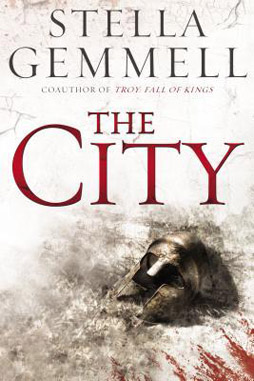 A little while ago, I stumbled on a book that seemed especially worth writing about here: The City, by Stella Gemmell. It’s Gemmell’s first solo novel; she also completed Troy: Fall of Kings, the last book by her late husband, David. David Gemmell was a widely-known heroic fantasy writer — those unfamiliar with his work can see his Wikipedia entry, a wiki dedicated to his books, an obituary from The Guardian, a retrospective of his life and career from this site, and a look back at his first novel, Legend. I’ve only read a couple of his works myself, his early novels Legend and Waylander, but knowing his background I found myself curious about The City.
It’s the story of a vast, unnamed city at the centre of a sprawling empire, engaged in an ongoing brutal war and ruled by a mysterious immortal. The novel begins with a disgraced general struggling to survive in the labyrinthine sewers that undergird the city, then begins moving freely through a large cast, most of whom are soldiers in the city’s army. It becomes clear that the Emperor’s a tyrant, who must be overthrown — but can any merely human conspiracy survive against his mysterious powers?
The fantasy element of the book’s fairly light, beyond the setting (which itself turns out to have its own secrets). The book’s main focus is on war, battle, and the experience of the individual soldier. It ably moves from plot strand to plot strand, character to character, and occasionally skips forward by years or months. It’s an intricately-plotted book, and I suspect benefits from being read in a short time. Luckily, the style’s clear and plain without being simplistic, driving the reader on quickly through a series of fights and betrayals.
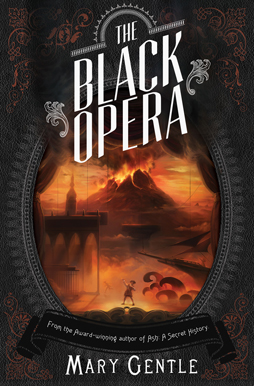 Two years ago, veteran author Mary Gentle’s most recent novel The Black Opera was published to mixed reviews. Some liked the book’s mix of alternate-history fantasy and comic-opera theatricality — as the sub-title has it, “a novel of Opera, Volcanoes, and the Mind of God.” Others,
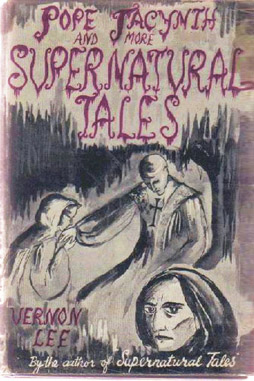
 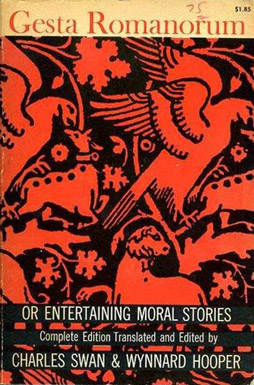 Somewhere in Europe, probably around the end of the 13th or the beginning of the 14th century, someone put together a book of tales. Likely this someone was a cleric who wanted to compile a manual to use in sermons and preaching. The texts were written in Latin and featured stories of all sorts: romances, travellers’ tales, fragments of Pliny and Herodotus and Aesop. A number were brief and didactic, if not prosaic, describing some uninteresting event or propounding a riddle a nearby wise man quickly answered with too pat an explanation — but others of the tales were filled with miracles and adventure and magic, with angels and saints and knights and dragons. Each was given a detailed moral, with every incident and character shown to have allegorical significance. Whether because it boasted wonder-stories, because it made those wonder-stories Christian parables, or both, the book quickly became immensely popular. This being well before the age of print, manuscripts proliferated, gaining and losing stories along the way.
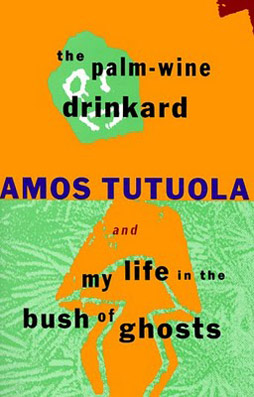 Amos Tutuola was born in Nigeria in 1920 to a Christian family. With six years of formal schooling, he served as a coppersmith with the Lagos-based arm of the Royal Air Force in World War Two, then worked at a number of of odd jobs. As he tells it, a government magazine he happened to read, with “very lovely portraits of the gods,” advertised books based on Yoruba legends. Tutuola remembered being praised as a storyteller in school and decided there was no reason he shouldn’t turn his hand to writing similar books. So he did. He completed his first book, The Palm-Wine Drinkard, in only a few days.
 With
With 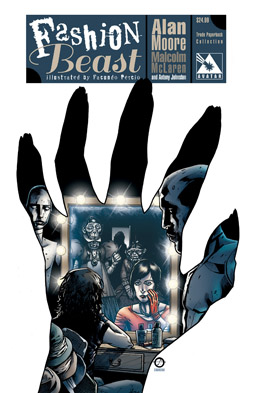 It seems like one of those creative pairings that could only happen in comics. Odd, then, that it was originally planned to be a film.
 February is
 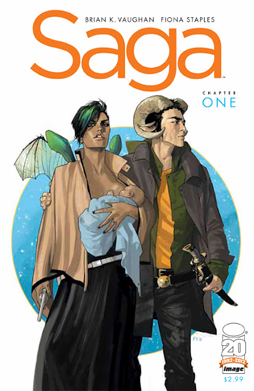 A few months ago, the 2013 Hugo Award for Best Graphic Story was given to Saga, Volume 1, the first trade paperback collection of the ongoing Saga comic book. Written by Brian K. Vaughan, with art by Fiona Staples (and lettering and design by the Fonografiks studio), the book deserved the win. It’s the first chapter in a promising story and manages to establish a simple and powerful basic situation for the main characters, while also creating a complex world, backstory, and array of subplots. If it sometimes seems overbroad, too accessible and glib, it also has a deep and original sense of history to its setting, and a design sense that makes that setting live.
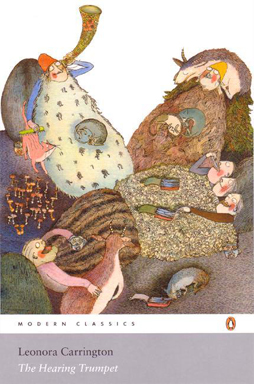 A little while ago, I followed a retweeted link to
 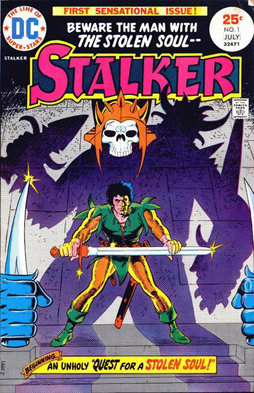 The first stop I made on my shopping expedition last Boxing Day was at my local neighbourhood comics store, which happens to be conveniently located two and a half blocks from my house. There, I found a deal in the back-issue bins: issues 1 to 4 of Stalker, a DC fantasy comic from the 70s. I’d vaguely heard of the title, but knew nothing about it. I thought I remembered hearing that it had good art, which I imagined perhaps meant work by somebody like Nestor Redondo or Ernie Chan. I was way off. In fact, the art was by the remarkable team of Steve Ditko and Wally Wood. As a result, it’s wonderful. And more than that: it’s truly weird fantasy art in every sense.