Fantasia 2018, Day 15: Blood and Black Lace
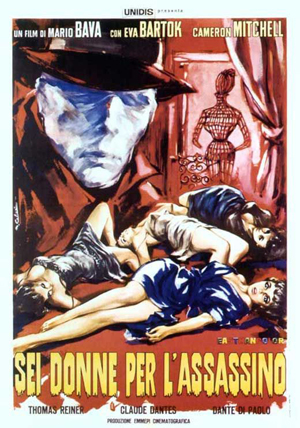 On the evening of Thursday, July 26, I made my way to the Cinémathèque Québécois, well east of the main Fantasia theatres, for a screening of a film classic. Fantasia was presenting Mario Bava’s classic 1964 horror-mystery film Blood and Black Lace (Sei donne per l’assassino). It’s one of the first giallo films, a genre of surreal thriller particularly identified with Italian directors. This was the original 88-minute Italian version, restored by Arrow Films for their recent blu-ray edition of the film.
First came a short written and directed by Frédéric Chalté, “Le otto dita della morte.” It’s a trailer for a never-made giallo film, and a fun four-minute run-through of the genre hallmarks. Full, rich colour; split-screen images; a gloved hand; it’s a clever homage to the giallo tradition. The soundtrack was I thought particularly strong.
Bava’s Blood and Black Lace has a script by Bava, Giuseppe Barilla, and Marcello Fondato concerning murders in and around a fashion house. The house, managed by the duo of Max Morlan (Cameron Mitchell) and his lover, the Countess Christina Como (Eva Bartok), is based in a rich old mansion and employs a number of beautiful models, one of whom, Isabella (Francesca Ungaro), is murdered by a killer in a featureless mask. Her diary comes to light, a key to the secrets of the fashion house, which involve abortions and blackmail and cocaine. More murders follow as characters scramble and conspire to get the diary. One character’s tortured. Meanwhile the police are helpless. It all ends in death and betrayal.
The plot’s complex, but not as strange as the movie’s reputation led me to expect. While intricate, it’s perfectly comprehensible, and even possible for a watcher to work out ahead of time. The biggest surprise is the lack of exploration of character — there are a lot of faces at the fashion house, but few show a detailed personality behind them before they end up dead. In this way the narrative of the movie comes to feel a little dreamlike; it’s not confusing, but the way characters are introduced and then disposed of is unusual. At less than an hour and a half, it moves quickly enough that it’s difficult to anchor oneself in any one character — it’s hard to find a traditional lead character here until the film’s over and we realise the killer’s motives.
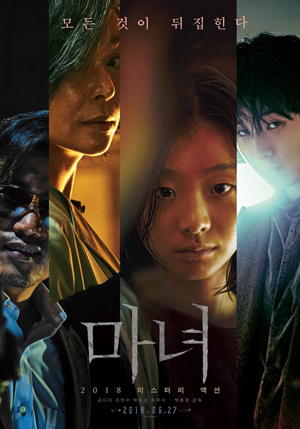 I had two movies on my schedule for Wednesday, July 25. The first was The Witch: Part 1. The Subversion, a Korean action movie with super-hero elements. The second was a German-language Swiss movie called Blue My Mind, about a teenager moving to a new school and finding herself undergoing a strange metamorphosis. Both films were about young women, and both leads had elements of the inhuman to them. But these things were expressed in very different ways.
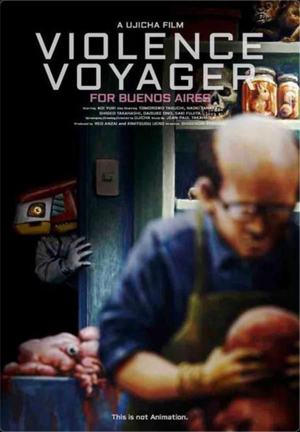 Late in the evening of Tuesday, July 24, I made my way to the J.A. De Sève Theatre for my one film of the day: Violence Voyager, an 83-minute animated feature by Japanese writer-director Ujicha. We follow an American schoolboy in Japan, Bobby (Aoi Yuki), as he and his friend explore some hills near his home. They find a strange, nearly-abandoned amusement park, but upon entering find themselves caught up in a terrible scheme. They and other children are captured, mutilated, mutated, and (in many cases) killed. Can Bobby free himself and others, and destroy the horrible place called Violence Voyager?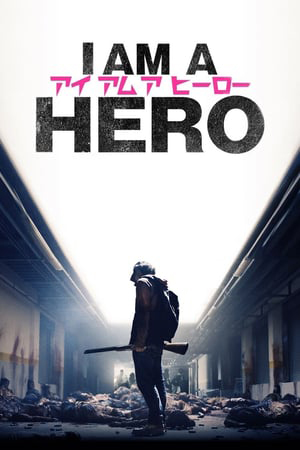
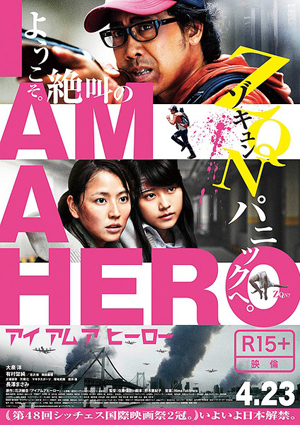 I had three consecutive movies I wanted to watch on July 23. All three came from director Shinsuke Sato, all three were live-action manga adaptations, and all three were followed by question-and-answer sessions with Sato (the first at the De Sève Theatre, the second two at the larger Hall). I’ll write up what he had to say about his films in a separate post tomorrow. Today, my impressions of the movies themselves: the zombie apocalypse thriller I Am a Hero, the supernatural epic Bleach, and the science-fictional super-hero movie Inuyashiki. Note that I have read precisely none of the original works these movies were based on, and can speak only to the films I saw.
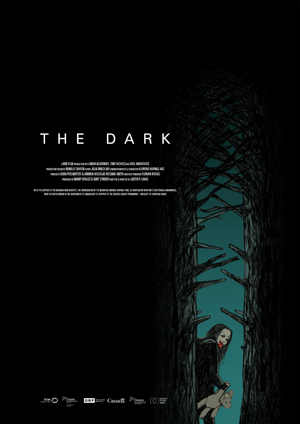 I had four movies on my schedule for Monday, July 23. Three of them were the work of one director. But before I got to those, I had an intriguing horror film at the J.A. De Sève Theatre to watch first: The Dark.
 I like to make out a rough schedule for Fantasia well ahead of time. But things always change. You hear things about movies as the festival goes on. What seems important a few days out seems less important in the moment. And then some choices are just hard to make. On Sunday July 22 I had one of those tough choices, which I’ll walk through here for the sake of recreating a bit of the subjective experience of Fantasia.
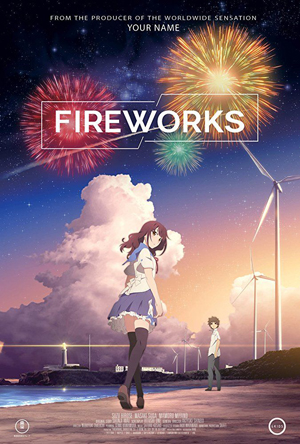 I knew Sunday, July 22, was going to be a long day for me at Fantasia. That was a good thing: it meant I’d be watching a lot of movies. At a certain point, I knew I’d have to make a choice about which ones I’d be seeing. But at least the first two were set in my mind, both playing at the Hall Theatre. The first was Fireworks, an anime tween love story with a time-twisting aspect. The second was Lôi Báo, a Vietnamese super-hero movie.
 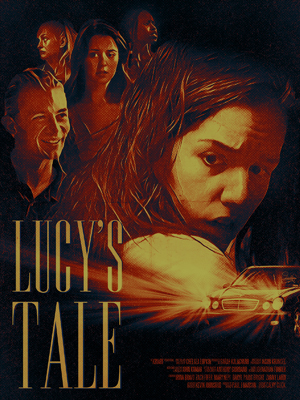 The third and last screening I saw on Saturday, July 21, was a selection of short films: the 2018 Born of Woman Showcase, presenting short genre works by women filmmakers. This year saw nine movies from eight countries.
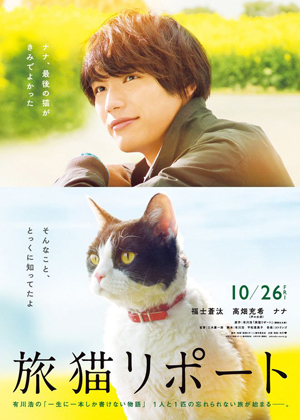 I had three screenings I planned to attend at Fantasia on Saturday, July 21. The last would be a showcase of short films, but the first two were features. The day would begin at the Hall Theatre with The Travelling Cat Chronicles, an adaptation of a Japanese novel about a cat and assorted humans. Then would come Da Hu Fa, a 3D animated film from China about a diminutive martial-arts master seeking a lost prince within a hidden valley.