Browsed by
Author: markrigney

Mark Rigney is the author of numerous plays, including Ten Red Kings and Acts of God (both from Playscripts, Inc.), as well as Bears, winner of the 2012 Panowski Playwriting Competition (during its off Broadway run, Theatre Mania called Bears “the best play of the year”). His short fiction appears in Witness, Ascent, Unlikely Story, Betwixt, The Best of the Bellevue Literary Review, Realms Of Fantasy, Lady Churchill’s Rosebud Wristlet, and Black Static, among many others. “The Skates,” a comic (and ghostly) novella, is now available as an ebook from Samhain Publishing, with two sequels forthcoming, “Sleeping Bear” (Feb. 2014) and the novel Check-Out Time (autumn, 2014). In non-fiction, Deaf Side Story: Deaf Sharks, Hearing Jets and a Classic American Musical (Gallaudet University Press) remains happily in print one decade on. Two collections of his stories are available through Amazon, Flights of Fantasy, and Reality Checks. His website is www.markrigney.net.
Adventure on Film: The Thief of Baghdad

Adventure on Film: The Thief of Baghdad

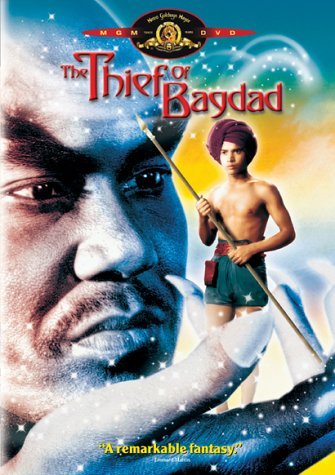
the-thief-of-baghdad-smallOn a recent Friday night, I sat down with my wife to watch The Thief of Baghdad (the definitive Korda/Powell version, from 1940). Thirty minutes later, my wife was fast asleep. When she woke up, she said, knowing I planned to mention the film to Black Gate’s readership, “What are you going to write about this?” Her notable lack of enthusiasm could, of course, be due to any number of factors, but only three reasonable alternatives present themselves: A) my wife is entirely lacking in taste; B) my wife has been replaced by a cantankerous alien entirely lacking in taste; C) this particular movie might well cause many a discerning viewer to harbor similar sentiments.

Let’s be clear: The Thief of Baghdad is one of the most universally acclaimed fantasy films ever made. Even my old (well-loved) copy of The Movie Guide gushes. “Perhaps the most splendid fantasy film ever made,” writes James Monaco and his various contributors, ending the review with “Film fantasy just doesn’t get much better than this.” Halliwell’s is equally enthusiastic, and they don’t like anything. Time Out raves. Coppola and Lucas cite it as a significant influence.

The story is crackerjack from start to finish. (Spoilers here: if you don’t want the plot, skip to the next paragraph.) Ahmed, the king deposed by Jaffar, his own Grand Vizier, falls in love with a princess whom no man can see, and of course vows to see her repeatedly. Ahmed is aided by Abu the thief, but of course Jaffar has designs on the very same princess. When Jaffar kidnaps her, Ahmed and Abu follow, but Jaffar conjures up a storm that separates our two heroes. In order to find Ahmed again, Abu must gain the reluctant help of a fifty-foot genie (the exceptional Rex Ingram), then steal the Eye of the World from a temple guarded by, among other things, a giant spider and giant octopi. Finally, with Ahmed captured and about to be beheaded, Abu swoops in on a flying carpet to save the day.

Given all this, how on earth did my wife (or some random alien) pass out?

The Thief of Baghdad has not aged gracefully. It’s essential viewing, yes, but only for buffs of either fantasy films or Old Guard Hollywood. The inconsistent special effects are the least of its problems; worse by far is what one might call presentational acting, but is in fact mostly just plain bad. Even Sabu, the Indian star who first made it big with Elephant Boy, is revealed to be a truly wooden performer. Conrad Veidt, as the cruel-as-an-adder Jaffar, comes off as a well-oiled villain, but he’s horribly miscast; he’s German through and through.

Read More Read More

Genre 2012: the Ghetto Remains the Same?

Genre 2012: the Ghetto Remains the Same?

new-yorker-coverPssst.  Hey, buddy.  Yeah, you.  Come over here a sec.  Listen.  Did you know that by virtue of reading this, by virtue of even cruising this site, you live in a ghetto?
It’s true.

Let me explain.

Once upon a distressingly long time ago, when I worked in retail bookstores, life was peaceful.  Organized.  Every book had its place.  Each, by its nature, described in advance its own prized spot on the shelf.  Controversy in the rarefied field of what we bibliophiles archly referred to as Incoming Tome Location had been all but eradicated.

There was, of course, one pesky exception.  Genre.  Or, to be exact, Genre Fiction.  The breakouts for Romance and Mystery/Suspense were generally simple enough, a Maginot Line easily upheld, but woe betided Fantasy and Science Fiction (not to mention everyone’s favorite red-headed stepchild, Horror, the shelves for which invariably faced into an out-of-the-way corner, as if they attracted only trench-coated perverts and budding psychopaths).  Garcia Marquez and Italo Calvino were literature, and clearly so, by virtue of being international in stature.  But then, what of Stanislaw Lem?  How had he become marooned in Sci-Fi?  Maybe, we clerks said, speaking in clandestine whispers lest our overlords hear us, Lem’s titles could be cross-shelved.  Shelved, God forbid, in more than one place.

Read More Read More

Fantasy Out Loud – Part II

Fantasy Out Loud – Part II

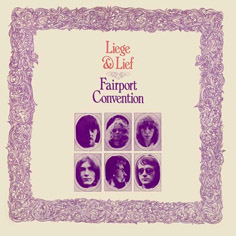
bgfairport-liege-liefYes, Black Gate’s focus is on the literature of the fantastic. But sometimes, fantasy needs a soundtrack.
In my first installment of “Fantasy Out Loud,” I focused on the act of reading adventure fantasy aloud. To children, by and large. But what happens once the darling tots are tucked into bed, with visions of sugarplums (or online MMO’s) dancing in their heads?

I’ll tell you what happens. I go downstairs and crank up the music. And what makes it onto the stereo more often than not? The music of the fantastic.

I’m not referring to film soundtracks, no, nor Wagnerian opera, though both surely count as fantastical (and I hope to treat both in future editions of “Fantasy Out Loud”). No, I’m talking here about rock music and its venerable forbear, folk. Folk music, with special attention here to the tradition of the British Isles, is positively rife with fantasy settings and tropes: swordplay (of both kinds), fairy abductions, marauding giants, the works.

Read More Read More

Fantasy Out Loud

Fantasy Out Loud

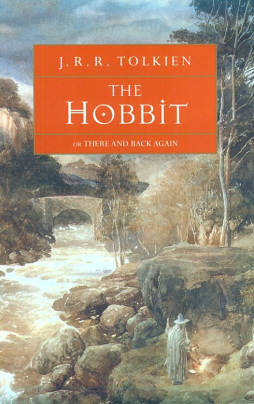
the-hobbitNearly every night, I read aloud to my boys.   For Evan, my seven-year-old, I have lately been reading The Hobbit.  Two nights ago, no sooner had I begun than Evan interrupted, saying, “It’s funny how they spell ‘Smaug.’”
“Oh?” I asked.  “How would you spell it?”

“S-M-O-G.”

“Good,” I said.  “That is how you would normally spell it.”  But privately, I thought how wonderful it was that Tolkien chose this other, more evocative spelling.  It also occurred to me that without Evan’s commentary, I might not have even noticed.

What we choose to read to our children has ramifications almost beyond counting.  Certainly, a shared reading experience is pivotal to the in-home dynamics and shared knowledge of any family, but insofar as one tackles a diet of writing that qualifies as “fantastic,” reading aloud is also crucial to the development and enculturation of an entire new generation of fantasy readers.  Given a world that grows ever more hectic, and therefore has less and less time for “pleasure” reading, this is no small thing.

I am fortunate to have two children, both boys, and I can see the results of my reading choices –– the goblin fruit, as it were, of my labor –– as if I had scrawled on their souls with indelible ink.  Corey, my older boy, now reads nothing but fantasy fiction, at least not by choice.  (He has also, to my dismay, discovered comics, and for this, too, I blame myself.)

Read More Read More

EXPERTISE: The Role of the Expert in Fantastic Fiction

EXPERTISE: The Role of the Expert in Fantastic Fiction

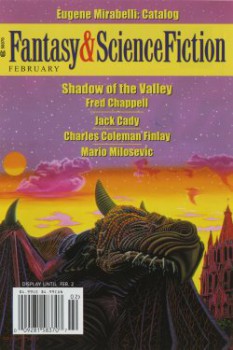
cov0902lg-2502As I began the second story in the latest issue of Black Gate, I was forcefully (but not forcibly) reminded of a review I wrote some years ago for Tangent Online. The review covered a 2009 edition of Fantasy & Science Fiction, the salient section being a paragraph I’d penned in response to Fred Chappell’s “Shadow of the Valley”:

As with heist movies and Tom Clancy thrillers, “Shadow of the Valley” thrives on the appeal of the expert, in this case Falco. He’s a man’s man, the icon of so many Westerns, the sort who can accurately predict the motives and movements of others, then exploit them to a tee. He has no emotional connections of any kind (indeed, women and children are notably absent from the story), and would likely deny needing any such thing. For experts, need is weakness. Think of Moorcock’s Von Bek, Fleming’s 007. We love these all-knowing cynics at least in part because they are so patently broken. Like them, Falco is the sort of tough-guy to whom readers cotton easily; his smarts and his world-weariness are butter for the bread of our reading experience. And so the story’s success stands or falls on Falco’s confident, wary shoulders; we follow the turns of this short story-cum-novelette to the degree that we bet for or against Falco’s success. Will he and his outlaw band reach the prized plants before Mutano, and will he get them back to semi-safe civilization before misfortune overtakes him? The pages turn readily in search of the answers.

Read More Read More

Dirty Words in Fantastic Fiction: A Writer Blogs About Process

Dirty Words in Fantastic Fiction: A Writer Blogs About Process

"Help! I'm an Anachronism!"

All writers, whatever their stripe, accomplish the bulk of their labor through the incisive, judicious choice of words.  Authors prone to world-building fantasy find themselves shackled in ways that most writers are not, limited to a surprising degree in their available terminology.  Consider, if you will, the following wonderful words: renaissance, Stilton cheese, bonobo, perestroika, taco, Hollywood, dim sum, tribologist, Ecuadoran, and haiku.

The common element?  You guessed it.  Not one of the words in that list is likely to have a place in the literature we lovingly call fantasy fiction.

Read More Read More

Race Matters: A Writer Blogs About Process

Race Matters: A Writer Blogs About Process

bgdancersNearly a decade ago, having spent four nights reading my story “A New Grave For Monique” aloud to a late-night workshop audience, I won an award for fiction from the Santa Barbara Writer’s Conference.  The audience (and the conference in general) was uniformly Caucasian.
About a year later, I showed the story to my friend Ellie, who immediately noted that when I introduced the Haitian character, Monique, I stated in the text that she was black.  Not a foul in and of itself, except that I did not introduce any of the story’s many white characters as white, a fact Ellie was quick to note.  Had I read “A New Grave For Monique,” since published in Traps (Darkhart Press, Scott T. Goudsward, Editor), at a conference of African-American or multi-national writers, I suspect I would have won little more than a pie in the face.  And deservedly so.

Read More Read More

Portals: A Writer Blogs About Process

Portals: A Writer Blogs About Process

Dangerous Doorways
Dangerous Doorways

According to the powers that be, Black Gate will be publishing a trilogy of mine starting in the fall of this year (2011). Please note that I do not say “fantasy” stories, or “high fantasy” or “heroic fantasy” or “sword and sorcery,” although all apply, and accurately enough.

Indeed, precisely because those identifiers fit, my three stories, “The Trade,” “The Find,” and “The Keystone,” would find a poor welcome in almost any current venue except for Black Gate.

Why, then, do I chafe at these terms, and why do they cause me such angst as I dash toward the finish line of the novel, The Portal, that succeeds the stories?

If I must answer at all, let it be to say that I am, like Arlecchino in traditional commedia, the servant of two masters, and that these two masters are at war, they truly are. If I had to reduce them to their simplest, most essential forms, I would call the first Story and the second Style. The first is simple, direct, goal-oriented; the second is impulsive and flighty, the filigree on story’s solid cake. Both have value. Both, indeed, are essential for creating solid, timeless fiction.

Read More Read More