Tolkien’s Nobel Snub
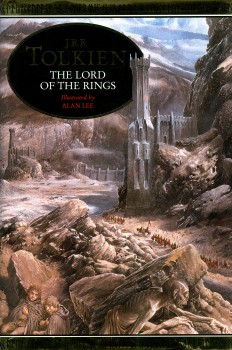
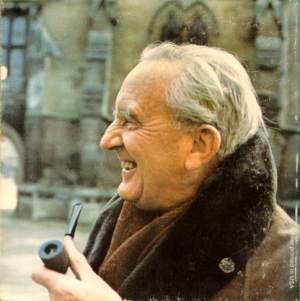 The 1961 nominations for the Nobel prize in literature apparently included The Lord of the Rings, and it seems Tolkien was dismissed rather out of hand for the award, according to an article in the online edition of The Guardian today.
I’m not here to argue whether The Lord of the Rings deserved a Nobel that year. Not having read any of its competition (save for a fair bit of Robert Frost), it would be rather presumptive of me to do so. But I can’t help but notice that the reason for its rejection seems rather flimsy. Nobel jury member Anders Österling wrote in a brief commentary that “The prose of Tolkien – who was nominated by his friend and fellow fantasy author CS Lewis – ‘has not in any way measured up to storytelling of the highest quality’, according to The Guardian.
Tolkien’s prose—which ranged from the colloquial speech of the Hobbits to the high medieval style—is not to everyone’s liking, certainly. Obviously it was not up to par for the Nobel voting panel nor in particular to Österling (who comes across in the article as the Simon Cowell of 1960s literary academics with his scathing comments about Frost and Lawrence Durrell). But we now know that, as a master philologist, Tolkien chose his words with great care and alternated between prose styles for deliberate effect. As Tom Shippey demonstrated in J.R.R. Tolkien: Author of the Century, Tolkien incorporated a modern prose style into Middle-Earth when he chose to do so (for the speech of Saruman and Smaug, for example) as a critique of modernism and the doublespeak of modern politicians. These are contrasted against archaic constructions Tolkien employed to convey deep age and timelessness and a high seriousness to his tale, as in the speech of an Elrond or a crowned Aragorn.
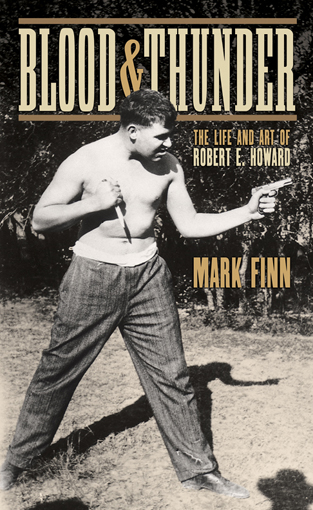 2011 hasn’t been the kindest year for fans of Robert E. Howard. January saw the end of the fine Del Rey series of Howard originals with the publication of the 11th and final volume
 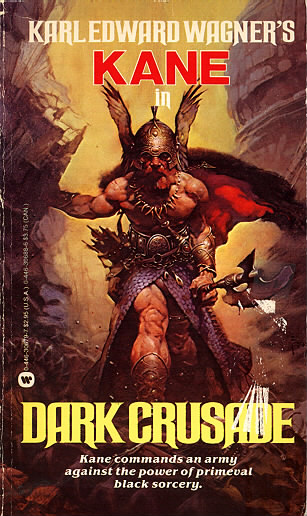 Why has swords and sorcery languished while epic fantasy enjoys a wide readership? In an age of diminished attention spans and the proliferation of Twitter and video games, it’s hard to explain why ponderous five and seven and 12 book series dominate fantasy fiction while lean and mean swords and sorcery short stories and novels struggle to find markets (Black Gate and a few other outlets excepted).
 Warning: Some spoilers follow
 I still haven’t quite come to grips with The Hobbit in 3D. I’ve got a few 3D films under my belt—Avatar, Captain America, Green Lantern, and Jaws 3—and to be honest, the added dimension hasn’t done much for me. Avatar made the most of it with its rich images of Pandora; the other films felt like they were trying to capitalize on a fad (hey, look, there’s a shield coming at me!) in order to take in a few extra bucks at the gate.
 Swords from the Sea
 Part 2 of a 2-part series
 Part 1 of a 2-part series