Robert Low’s The Wolf Sea
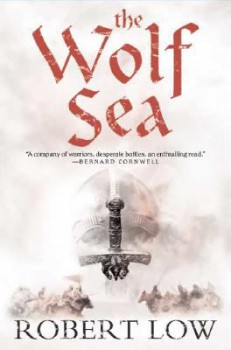 The Wolf Sea
Robert Low
Thomas Dunne Books — St. Martin’s Press (340 pages, Hardback, June 2008, First published in Great Britain by HarperCollins, $24.95)
Reviewed by Bill Ward
This follow-up to 2007’s The Whale Road, Robert Low’s debut novel of grim Viking adventurers questing for the lost horde of Attila the Hun, is a continuation of the story of the Oathsworn and their new and untested leader, Orm Rurisksson. Orm, still a teenager, earned a reputation as a ‘deep thinker’ amongst his Viking crew and was their choice for leader with the death of Einar the Black — the man who had led them on a doomed expedition to the very ends of the earth in the first book of this series.
The Wolf Sea begins in Miklagard — the Norse-termed ‘Great City’ of Constantinople — with the theft of the jeweled saber Orm rescued from the Volsung horde in The Whale Road. Valuable in and of itself, perhaps even magical, the saber is also the key to finding Attila’s silver because Orm has carved its hilt with runes that will act as a guide should the Oathsworn ever return to the steppe. It turns out the saber has fallen into the hands of their old enemy, Starkad, who also seeks the fabulous treasure but has no idea that he possesses the key to finding it. Starkad is convinced that Martin, the venal priest that journeyed with the Oathsworn in their quest for Attila’s tomb, knows the way to the treasure and he sets off to the Holy Land to find him — with Orm and the Oathsworn in pursuit.
…
 In the age of fat fantasy series, doorstop thrillers, and historical epics it’s often impossible to find a short, satisfying read. Gone are the days of the 60,000 word science fiction novel, or even the novella doubles series Ace once put out. Long a standard of genre fiction — both the worlds of SF and of fantasy having a host of renowned novellas and short novels considered classics in their respective fields — these short, sharp stories are increasingly ignored for multi-book works of massive length. But, sometimes, it’s nice to get a book done in a day or two, it’s nice to explore an idea, premise, or setting without committing to dozens or hundreds of hours with it.
 As some of you may know, I’ve been talking and thinking and blogging (not necessarily in that order) about reading more, and reading better over the course of the last year. Today being New Year’s Day, the day of resolutions and goal-setting, I thought I’d link to some of the posts I’ve written on the subject for those interested in focusing on ratcheting up their reading in the coming year.
 Some of my fondest Christmas memories involve getting (and, later, giving) a new crop of books as gifts every year. Unique among my interests, books have bridged the gap from childhood to adulthood — from the era of plastic battlesets and bolt-spitting robots to that of of daily planners, jumper cables, and bottles of Irish Cream. Books have always been there.
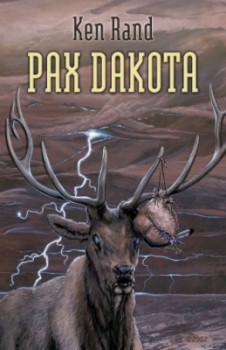 Pax Dakota
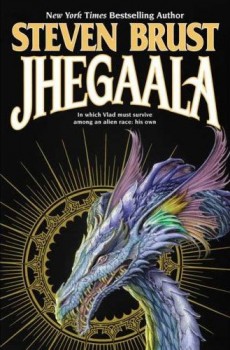 Jhegaala
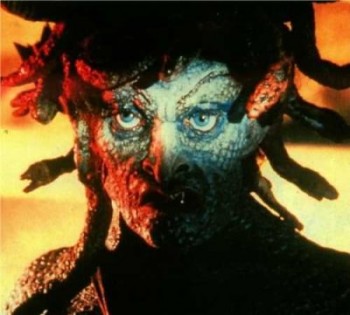 I’m not going to say anything about how Hollywood hasn’t had an original thought since 1997. Or the absurdity of remaking films when they are going to be rewritten or re-imagined anyway. Or how most remakes turn into hyper-kinetic kaleidoscopes of eye-candy and dumb dialogue.
 Chances are if you are at all interested in fantasy or science fiction books or games, you’ve at least brushed against Games Workshop’s ubiquitous Warhammer franchise. Warhammer comes in roughly two flavors, the fantasy version which is a Tolkien, D&D, and Moorcock mash-up, and the space opera version, called Warhammer 40,000. Taking place in the bleak world of the 41st millennium, with the tagline “In the grim darkness of the future there is only war,” Warhammer 40k is a violent world of warring factions, lost technology, dark and corrupting forces, fanaticism, and a medieval Gothic aesthetic. It is a universe where power armored soldiers charge into battle with chainsaw swords screaming religious oaths, millennia-old spaceships a mile long look more like Notre Dame Cathedral than the starship Enterprise, and daemonic forces and hostile races in the form of orks, ‘elves,’ and H.R. Geiger aliens erode the power of a moribund human civilization presided over by a nearly-dead God Emperor.
 When people ask me what I like to read I usually answer with a simple ‘everything,’ but of course that’s not strictly true. I don’t read trigonometry textbooks or Romance novels, celebrity memoirs or cookbooks, monographs on the evolution of sheep shearing or anything by Dan Brown (in fact, just give me that thing on sheep first). But when I say ‘everything’ I’m being figuratively if not literally honest, because my tastes — especially when compared to the average reader — are very broad. I don’t read only one kind of thing. I’m a generalist.
 I’ve been in reviewer overload lately, reading, taking notes, and penning reviews for the next issue of Black Gate. But, more than that, I’ve also been coordinating our crop of reviewers this time out, and thinking in terms of what exactly it is that ought to be in the review section of the magazine, not just in the reviews I put up on my own website. Having done over 50 reviews in the last year and a half or so, I think I’ve learned a few things, and I’d like to share my thoughts on what a good review should consist of. And at the end of this essay I’ll also offer some practical advice to anyone that wants to become a web reviewer themselves and share the reasons behind just why someone would want to take the time to review a book in the first place.