The Limits of Vision: Arthur C. Clarke’s Imperial Earth
When I began reading science fiction in the early 70’s, a handful of writers stood taller than any others, at least judging by the bookshelves at the thrift store around the corner from my middle school, where I spent my lunch money every day on used sf paperbacks. In those days the Kings of the Hill were Robert A. Heinlein, Isaac Asimov, Ray Bradbury… and Arthur C. Clarke.
I read very little Clarke in those years, though; for me, Heinlein stood higher than anyone else, with Bradbury and Asimov right behind. Clarke was far in the rear; aside from a few short stories, the only thing of his that I read back in the day was Childhood’s End.
For the past decade or so, though, I’ve been correcting that failure by reading the Clarke novels that I neglected all those years ago, and I’ve greatly enjoyed them. Most recently I read one of his later works, Imperial Earth. I found it a problematic book, and it left me with more mixed feelings than I usually have after finishing a Clarke opus.
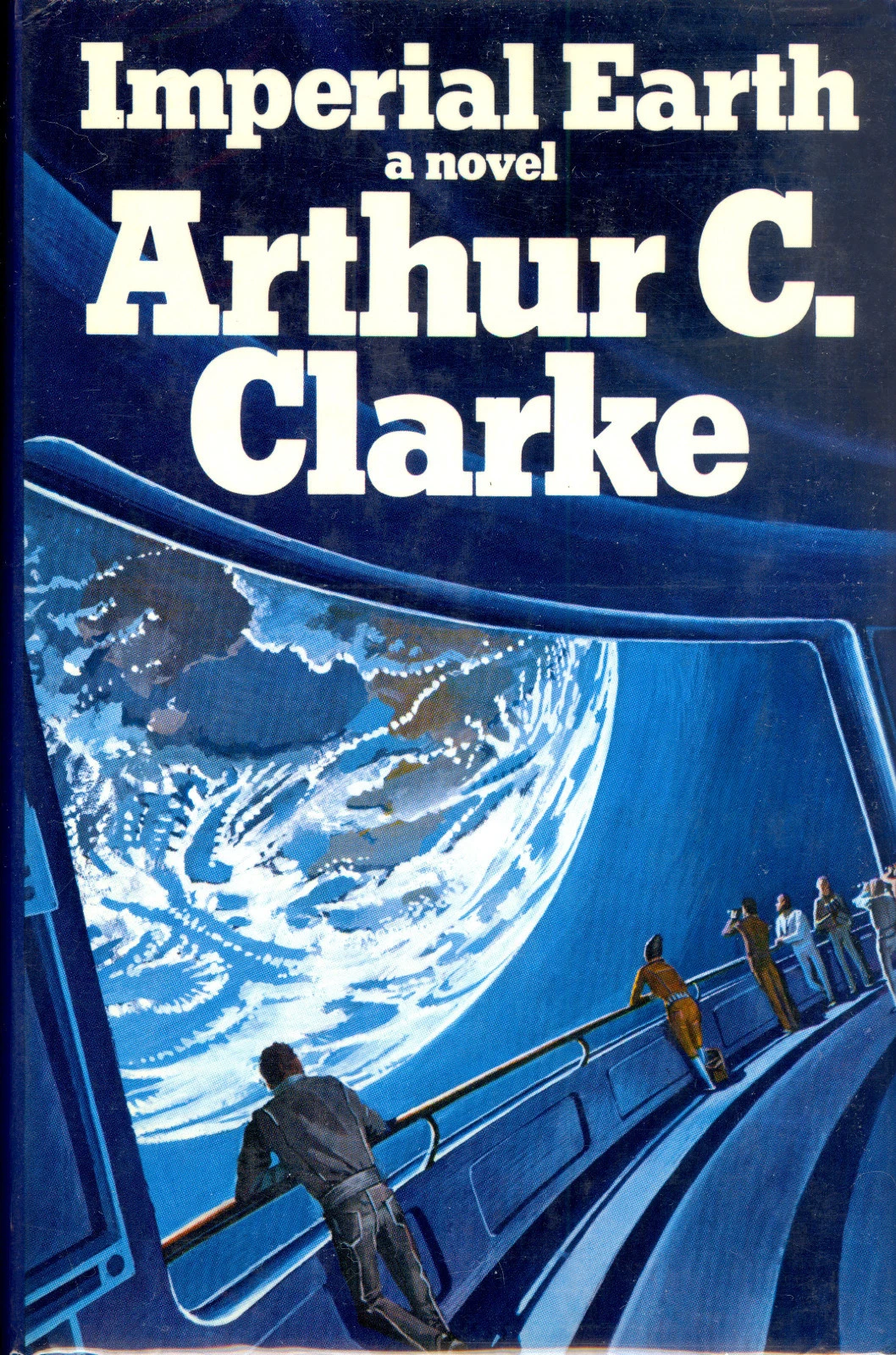
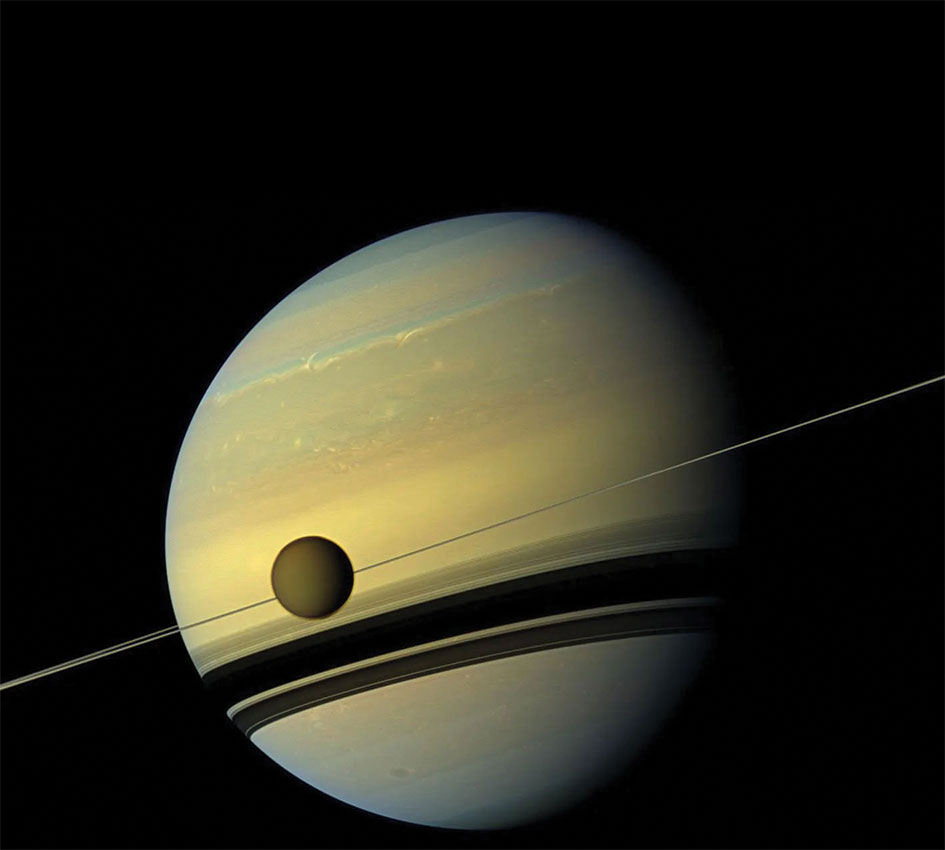
Published in the US in the bicentennial year of 1976 (a shorter British edition appeared in 1975 with the subtitle, “A Fantasy of Love and Discord”), Imperial Earth looks forward three hundred years to the United States’ quincentennial in 2276, when Duncan Makenzie, scion of the first family of Titan, leaves Saturn’s largest moon, which is now home to half a million people, to visit Earth, where he has been invited to make a speech at the grand celebration in Washington D.C. on July 4th.
The Makenzies achieved their prominence through the efforts of Duncan’s “grandfather” Malcolm, who devised a profitable way to harvest hydrogen from Titan’s atmosphere and export it to the home planet, where the element is the key ingredient in the fuel used by Earth’s interplanetary spacecraft. Malcolm’s enterprise has allowed the human race to expand beyond the bounds of Earth and settle in various corners of the solar system, including Mercury, Mars, and various planetary satellites.
I used quotes around grandfather because Duncan is a clone. In fact, he’s the clone of a clone. Because of genetic damage caused by a radiation mishap in space, Malcom was unable to have normal children, so he cloned a “son,” Colin, who then cloned Duncan. (In a note at the end of the book, Clarke acknowledges that readers who object that Malcolm’s defect would not be heritable are correct. Clarke’s response to this complaint may best be summed up in the immortal words of Ring Lardner: “Shut up, he explained.”)
Duncan has a lot to do on the only visit to Earth that he will ever make. (Though born on Terra, he grew up on Titan and his Titanian physique will not permit him to tolerate Earth’s far greater gravity when he gets older.) Aside from becoming as well acquainted with Earth’s history and culture as he can before he returns home after his year-long visit, he has several other pressing tasks.
The invention of a new, more efficient “asymptotic” space drive will soon steeply reduce Earth’s dependence on Titanian hydrogen and thus cause serious problems for that moon’s economy, and Duncan needs to see what he can do about that; he plans on visiting the doctor who cloned him to arrange to have the next Makenzie cloned from himself; he wants to reconnect with the love of his life, Catherine Linden “Calindy” Ellerman, whom he parted from years before when she returned to Earth after a tourist visit to Titan; and finally, he needs to get to the bottom of the mystery surrounding the political and financial intrigues of his estranged boyhood friend Karl Helmer, who is supposedly on a mission to one of Saturn’s lesser moons, but who is actually hiding on Earth. Karl’s plans may pose a serious threat to Earth-Titan relations, and the problem becomes even more knotty when Duncan discovers that Calindy — who was also romantically involved with Karl on Titan — is implicated in Karl’s schemes.
Oh, and he has to prepare and give a speech that the whole world — indeed, the whole solar system — will be listening to, a speech that must impress the entire far-flung human community with Titan’s importance and the key role it will play in the race’s future. That’s all.
It’s a lot for a character to have on his plate; indeed, it’s a lot for an author to have on his plate, and neither Duncan nor Clarke ever get it all properly sorted out. The result is a book that sometimes resembles a ball of yarn that the cat has been playing with, which is a big change from Clarke’s usual brand of clean, efficient, highly directional storytelling.
Aside from a brief opening (and an even briefer conclusion) on Titan, the bulk of the novel simply follows Duncan around on Earth as he attends to these tasks in a fashion that can best be described as relaxed.
Clarke holds the various plot threads in a surprisingly slack hand. Duncan’s more personal concerns, which one would suppose would be the most important to him, are treated rather casually. The cloning subplot especially isn’t handled in a particularly adroit way, as if Clarke knows that there are serious ethical issues associated with cloning human beings but doesn’t feel inclined (or perhaps even equipped) to seriously deal with them.
It turns out that women with significantly sub-par intelligence (and sub-par looks, too) are used as “incubators” for cloned embryos. Clarke implies that these women are delighted with the opportunity to become mothers, however briefly — after birth, the babies are taken away almost immediately — and suggests that they find great fulfillment in a role that many would condemn as sad at best and exploitative at worst. Once he sees how it works, Duncan feels a little funny about the arrangement, but his qualms don’t extend any farther than that, and he just stops thinking about it, as does Clarke, who quickly moves on, with a definite air of embarrassment.
The reconnection with Calindy likewise proves anticlimactic for both the characters and the reader. Duncan’s passion for his idealized adolescent love has grown with the passage of time, but Calindy has moved on (Duncan never meant much to her in the first place), and almost immediately he comes to recognize that all these years he has been obsessed with an illusion, one that is better left behind. (There are things, like the evolutionary destiny of the human race, that Clarke can get passionate about, but a romantic relationship between two individual human beings definitely isn’t one of them.) Duncan may have failed as a lover, but at least he gets Calindy to give him the information that he needs to track down Karl.
Duncan discovers that Karl is determined to construct a moon-sized radio array in the vicinity of Titan that will finally be able to contact an alien civilization. The whole thing involves some financial and political jiggery-pokery that is best kept under wraps until the scheme is farther along, hence the secrecy. (Duncan pieces the whole story together after Karl accidentally — and conveniently — falls to this death from the high platform of a radio telescope in South America.)
Happily, this revelation gives Duncan the theme for the speech that has been worrying him for months, which turns out to be not much more than a sales pitch for Helmer’s dream presented as an updated variation on JFK’s New Frontiers agenda and capped off with an invocation of the “lives, fortunes, and sacred honor” pledge of the American Founding Fathers. (There’s also a hint that if solar society will just get behind this project, eventually people will wind up becoming Gods. It wouldn’t be a Clarke novel without that, now would it?) Notwithstanding its venerable models, it’s a fairly flaccid piece of oratory and I doubt that it would rally an entire civilization to much of anything, but let’s not quibble this close to the finish line.
Oh, and the looming economic crisis on Titan? It appears that Clarke forgot about it so Duncan forgot about it so you can forget about it. The book ends with Duncan returning to Titan with his “son,” who turns out to be, not another Makenzie clone (at least that hall of mirrors is permanently closed) but a clone of Karl Helmer.
As a coherent piece of fiction, Imperial Earth is seriously flawed, especially compared to Clarke’s more successful books. It feels aimless and shapeless, and because no impetus builds, at the end no release is felt; it’s one of those books that stops rather than concludes. (The science fiction community apparently agreed. While the novels that preceded and followed it, Rendezvous with Rama and The Fountains of Paradise, both won the Hugo and Nebula for best novel, Imperial Earth won nothing.)
As a story, the book’s deficiencies are all too obvious, but — like many sf novels — it has considerable interest as a vision of the future, and if it’s read as a unhurried travelogue set on the Earth of 2276, then it works reasonably well as a presentation of Clarke’s ideas of what might lie ahead.
Fifty years on from Clarke’s 1976 vantage point, we can already identify some hits and misses in his portrait of 23rd century Earth. Clarke foresaw an early 21st century “time of troubles,” a period of social and political chaos apparently brought on by overpopulation and resource scarcity. Two hundred and fifty years on, the population has collapsed (is, in fact limited by law) with the result that the urban era of mega-cities is over. Because of the much-reduced population (combined with the possibility of off-planet settlement), a city of half a million is now a very large one, with the result that the Earth is increasingly rural.
Manually driving an automobile on a public road is a crime (I think that Clarke will prove right on that prediction, sooner rather than later) and everyone carries around a small personal computer that can perform a host of functions. The device bears a strong resemblance to a smartphone, but being the man that he was, Clarke has everyone using them for entirely practical purposes; no one in his future walks around looking at twenty-second videos of cats or babies or cats and babies or watching clips from Mercury’s Funniest Home Videos or compilations of the best commercials from Super Bowl CCCX.
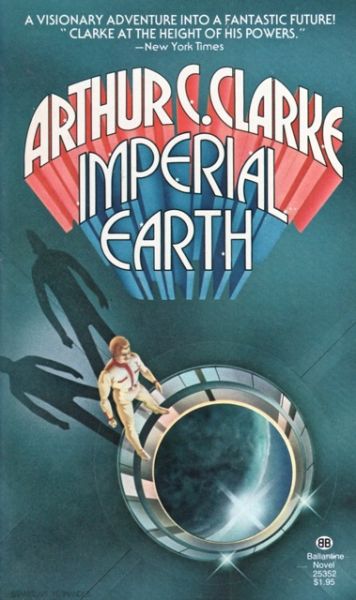
There’s also something odd going on in the book with race; about a quarter of the way in, Clarke lets you know that Duncan is black (it’s easy to miss — the cover artist of my 1976 Ballantine paperback didn’t catch it), and then, after putting in a line about “race snobbery,” he obliquely suggests that people can somehow change their skin color, with the implication that darker skin gives people more social cachet. It’s all very indirect and undeveloped, just a tossed-off, unattached idea that someone else would have written an entire book on.
What about government? How is this world run? The whole solar system is celebrating American independence on July 4th, but are there any sovereign nations anymore, really? (The idea that the United States will even exist in a recognizable form in a quarter of a millennia seems a lot more problematic now than it did when the book was published. What a difference five decades makes…)
Clarke is very vague on this and all other political matters. It seems that there is no longer any more war, disease, poverty, hatred or hunger anywhere (also no superstition or religion, which to Clarke amount to the same thing; at one point Duncan is introduced to bingo, which, he is told, is all that’s left of an ancient and forgotten faith), but how all this was accomplished is never explained. However the world is formally organized (elections are never mentioned), the people in charge of it are clearly the members of a technocratic elite, completely rational and thoroughly competent. They administer a peaceful world in which things work frictionlessly and efficiently through the efforts of a benign global bureaucracy, with nary a complaint from anyone because the people who run things never make mistakes of any consequence. (And you thought Imperial Earth was science fiction and not fantasy. How wrong you were. And an Englishman of all people should know that there’s no such thing as a clean empire.)
The only nod Clarke makes to the way things more commonly work in the world we actually have to slog our way through is when he explains the unusual spelling of Duncan Makenzie’s last name, which was the result of a long-ago computer error that, despite the family’s heroic efforts, proved intransigently uncorrectable. It never seems to occur to Clarke that such perversities of the system could have much worse and more far-reaching effects than merely changing Mackenzie to Makenzie.
If the novel has any underlying theme, it’s heeding the call of the future (good) and resisting the lure of the past (bad), and this plays out in many ways, from Duncan letting the dream of Calindy go, to a short trip he takes to a vastly changed New York, where he takes a tour of the newly-raised Titanic, a ghost ship finally docked at its destination, three and a half centuries late.
Though I have to judge it one of his weaker books, Imperial Earth still bears the indelible mark of Clarke — the belief (I would say even the faith, though he wouldn’t like the word) that human beings are fundamentally rational creatures who can solve any and all problems through the application of that rationality, unclouded by anything unscientific or irrelevant. There’s nothing standing in the way of our fixing everything and doing anything (except the previously mentioned irrational belief systems) and the only possible result of giving unfettered rationality a free reign would be paradise to start with, and in the end, who knows? Transcendence, the shucking off of the merely material, and maybe even… godhood? (Clarke strongly implies that Karl Helmer’s alien contact project is the first step in that process.)
You have to respect and admire Clarke for his unshakeable belief in human potential, for his conviction that we have it in our power to make ourselves and the world we live in perfect. (I almost said that you have to love him for his innocence.) But you also have to wonder if he ever knew any actual human beings, read any history, or had any experience with real-world bureaucracies. If he did, he had a faith that was strong enough to override any objections.
Like all of us, there were some things that Arthur C. Clarke just couldn’t or wouldn’t see, and sometimes those blind spots severely circumscribed his vision, but it’s a vision that’s still inspiring even when it’s not completely convincing. (And you can’t really blame him for his failure to foresee global warming, declining birth rates, or AI; those kinds of misses are unavoidable for even the farthest-seeing visionary.) Though he depicted it more coherently in several much better books, the utopia of peace and plenty that Clarke gave us in Imperial Earth can make you murmur, “How beautiful… and why not?” even when you know good and well why not. (And after all, what is inspiration for, but giving you “why nots?” when you need them most?)
At the very least, Clarke’s impossibly lovely dream of a trouble-free 23rd century Earth might provide a little much-needed hope when you’re waiting in line at the DMV, and that’s nothing to sneeze at, whatever century you’re stuck in.
Thomas Parker is a native Southern Californian and a lifelong science fiction, fantasy, and mystery fan. When not corrupting the next generation as a fourth grade teacher, he collects Roger Corman movies, Silver Age comic books, Ace doubles, and despairing looks from his wife. His last article for us was My Favorite Martian.
I started to read it long ago – one of those 70s era paperback reprints I got from a used book store. I liked what I read. Didn’t get bored, just distracted. Pretty cool we have what he predicted in that cloning a person is possible though the details are being worked out – but we have everything else – artificial wombs but cheaper and easier to use women (3rd world countries vs …exceptional..) as incubators and test tube babies, genetic engineering has been done on RL kids already… “World of Tomorrow” (an animated film) we might have people IRL just cloning themselves, implanting their basic memories and living onwards that way.
Hmm – too bad there wasn’t a re-doing with Gentry Lee, he’d re-visited some of his earlier works that way.
Personally, I wanna go “Human brain in a robot body” which if I stick around 20 years will be 100% possible and since my family we are 100% sane, alert till the last minute I probably have up to 120 years before needing some kind of nanotech/uplift to survive if I can escape the body failing at 80-100 years. Cool how a lot of “Science Fiction” is becoming or has become reality!
“A fantasy of love and discord”? That was the subtitle of Olaf Stapledon’s much earlier novel Sirius, a story about a dog with enhanced intelligence. Clarke has to have been familiar with it. I never knew that he had used the same subtitle!
I didn’t know that – Sirius is the only Stapledon I haven’t read. I do know that Clarke was a great admirer of Stapledon.
Sirius might be worth a look. I found it the most moving of Stapledon’s books. And he does a really brilliant job on examining how the sensory and motor traits of dogs affect the mentality of an enhanced dog.
Oh, I consider myself and admirer (within limits) of Stapledon and definitely intend to read Sirius sometime; I remember Brian Aldiss saying (In his history of sf, Billion Year Spree) that it was the least “cold,” most humanly relatable of Stapledon’s books, because of the dog.
I read some Clarke back in the day — Dad’s paperback copy of 2001: A Space Odyssey, and some of the other major titles (Rama, Childhood’s End, etc.), but he never quite grabbed me the way Heinlein or Asimov did. I remember the gold-covered HBJ hardcover of Imperial Earth being on the library shelf, and I know I checked it out a couple of times, but I don’t think I ever made much headway in it.
Clarke’s “Islands in the Sky” was the first book I ever bought, plucked from the wonderful mass market spinner of the neighborhood drug store (I still have my copy). I became quite a fan in sixth grade and devoured everything by him I could find including those Ballantine editions with cover art blatantly ripping off the spaceships from “2001.”
I find Clarke the most readable of science fiction writers of that era. He had good, basic storytelling instincts and his optimism about technology and humanity is infectious, not to mention a genuine sense of wonder lacking in most of his contemporaries. I kept up with him through “Rama” but passed on this one when it came out while I was in high school as the reviews were pretty tepid and my reading taste had changed by then. I still remember the cover art, weak as it is, and may yet give the book a read. It actually sounds kind of comforting given the state of the world these days.
Have to grin over the people carrying personal computers and using them for entirely practical and rational purposes, in the book. That reminds me of the “Carousel of Progress” scene wherein Father is talking about the new television sets that are available, and how he envisions that someday people will use them to learn foreign languages and all sorts of things… at which point, Grandma switches the channel from ballroom dancing to a boxing match. (Incidentally, I think it’s kind of fascinating that they’re about to refresh the CoP from 1900s-1920s-1940s-Present to 1960s-1980s-2000s-Future.) In some ways, Clark is totally right that humanity could do so much better, if we could just get out of our own way. But yeah, how much better we could do and what we’d end up doing is completely a matter of faith on his part.
It might be a good thing for the book that Clark didn’t make a bigger deal of the “race snobbery” and being able to change colors at will. As unfriendly as people tend to be, right now, about sharing and allowing the exploration of cultures outside of one’s own genetic heritage, a greater emphasis on the topic might have gotten the book canned in the modern day as promoting color-stealing and some sort of technologically-enabled race-face.
There’s a video of the original 60’s Carousel of Progress on Youtube somewhere. I grew up in SoCal and the Carousel was just about my favorite Disneyland ride. I’ve thought for years about writing a piece on it, but have never been able to decide whether it should be a HaHa or a BooHoo.
One of my folks was actually at the NY World’s Fair where the Carousel of Progress debuted, and vaguely remembers it. Always chuckles at the vacuum in the 1920s, because it originally turned around to reveal a General Electric logo that’s no longer there.
The parts of my life I’ve spent in the US have always been on the east coast, so I grew up with WDW. Favorite park growing up was EPCOT, but when I was in Magic Kingdom, my go-tos were the Tiki Room, the WEDway Peoplemover, and the Carousel of Progress. Maybe the Hall of Presidents, if I felt like braving a trip through the castle center. But the times the Carousel of Progress was closed for repair always felt a little empty.
I can definitely see any piece written on the Carousel being able to be either humor or grief. If you do write one, perhaps it can be both; there’s nothing better suited to the hysterical melancholy of nostalgia than the Carousel.
I read Imperial Earth back when it came out, in a book borrowed from my local library. The cover represented the Makenzies at looking rather Scottish, not surprising I suppose, but I did notice that Duncan is described as black. I remember the book pretty much the way you describe, and I more or less swore off subsequent Clarke fiction, which was a mistake in only one case — his next novel, The Fountains of Paradise, is really quite good — possibly his best. (I had read most of his work up to that point with a lot of enjoyment.) But Fountains does have one howler that is wholly illustrative of Clarke’s “faith”, as you appropriately call it, in humanity’s ultimate rationality.
To wit, the aliens come (in The Fountains of Paradise) and one thing they do is show humanity an absolutely logically perfect, irrefutable, proof that there is no God. And immediately, without a demur, everyone on Earth, of every religion, immediately goes “Oh, yeah, I see that. You’re right! I’m an atheist now!”
That strikes me as one of most gobsmackingly silly speculations to ever appear in an SF novel.
Ha! I didn’t remember that; it’s been several years since I read Fountains (which I agree is a terrific, riveting book). As many have observed, it’s not seeing is believing, it’s believing is seeing, and that goes for Clarke as much as it does for the Pope.
Elephant in the room successfully ignored.
I am renowned in my family for my obtuseness (especially by my children!) so it does not surprise me that I have no idea what particular pachyderm you’re referring to. Please enlighten me!
Clarke has been accused multiple times of being the Blighty version of Walter Breen. (Though it must be pointed out that Clarke was never charged or convicted.)
I’m fairly certain my first contact with the book was via the SFBC a long long time ago as a pre-teen. I started it and then it sat on my shelf to finish “one-day”. I never did finish it in book form. Decades later, I managed to finish it in ebook form.
While a majority of Sci-Fi seems accessable at any age, in my opinion this novel is adult oriented. It feels less like a story of what’s happening in the future and more about the maturing process of Duncan. The Calindy story line would be the most direct example of having to leave childish illusions behind. Another part seems to be the process of becoming not just a clone but his own person.
As an adult, I could resonate with some of the thoughts and feelings that we discover through Duncan. This is not something I could have done when I first read it. I’m glad I finally finished it but it’s not a book I would read again. However, it is one that has stuck with me has having a certain “mood” even when I don’t recall all the details of the story.