The Story Is All: Ten Fiction Editors Talk Shop
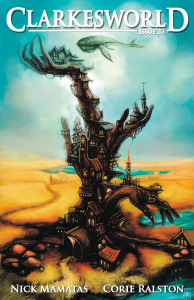 Issue 33 of Clarkesworld Magazine features a round-table interview with “Ten of the top speculative fiction magazine editors,” including Black Gate‘s John O’Neill.
Clarkesworld Magazine, edited by Neil Clarke, Sean Wallace, and Cheryl Morgan, is a 2009 Hugo Award moninee for Best Semiprozine.
It was founded in 2006 and has published fiction by Robert Reed, Jeffrey Ford, Theodora Goss, Stephen Dedman, Rebecca Ore, Jeff VanderMeer, Jay Lake, Mary Robinette Kowal, Catherynne M. Valente, and many others.
The interview also includes Realms of Fantasy‘s Shawna McCarthy, Sheila Williams from Asimov’s Science Fiction, Ann VanderMeer of Weird Tales, Patrick Nielsen Hayden of Tor Books, Cat Rambo from Fantasy Magazine, Mike Resnick from Jim Baen’s Universe, Stanley Schmidt from Analog Science Fiction and Fact, Jason Sizemore of Apex Magazine, and Gordon Van Gelder of The Magazine of Fantasy and Science Fiction.
The interview was ably conducted and assembled by Jeremy L. C. Jones, who states:
Ultimately, fiction editors are the people who mine the slush pile for new voices and who push established writers to grow beyond their previous stories. They read story after story, and more pile up each day. They screen, sort, revise, and reject. They seek the new, the fresh, the familiar, the entertaining, and the weird. They discover and they miss out.
“There is no magic formula,” said Gordon Van Gelder of The Magazine of Fantasy and Science Fiction. And this holds true for writing stories, submitting stories, and editing stories.
Among other things, Jeremy asked his subjects What are some reasons why you’d reject a good story? and What does “fit” mean for your magazine?
This whole interview is a treasure trove of info for writers, whether you write science fiction, fantasy, or anything else. — Filling Spaces
You can find the complete interview here.
 The People That Time Forgot (1977)
 I’m looking forward to China Miéville’s new novel, The City and the City. In the meantime, here’s an
  I’ve only ever heard the terms ‘escapism’ and ‘escapist’ used as pejoratives and, quite often, used to describe things that I enjoy. We all know what these terms mean, and especially what they are implicitly communicating: the notion that escapist entertainment is a crutch, a way of running away from reality. But also, and I think that this is more important, that it has no redeeming value as art or as educational material.

 Risus: The Anything RPG
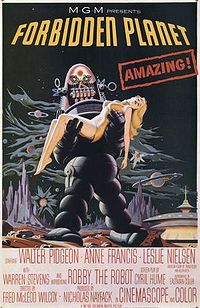 Given all the discussion of late about reboots, I wonder why no one has ever thought to revisit this classic. Forbidden Planet was my Star Wars when I was in fifth grade. In the New York metro area, Channel 9 had a feature called “Million Dollar Movie” that used to play a particular movie ever day throughout the week in the early evening. Forbidden Planet was a regular staple, and whenever it was in rotation, I was there in front of the TV (which, to give you an idea of how old I am, displayed only black and white).
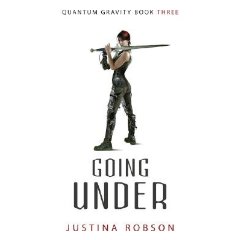 The notion of the female warrior, while rooted somewhat in factual history (e.g., Joan of Arc), is largely an idealized notion of mythology, science fiction and fantasy. I suppose there is doctoral dissertation potential in figuring out why patriarchal societies that at best otherwise relegate women to supportive roles away from the battlefield (and at worst and more typically brutally victimize women as spoils of war) generate these tales of powerful females who can lop off a head or two as well as the next guy. Speaking as a guy whose adolescent sexual fantasies were heavily influenced by Emma Peel, the black leather-clad consort of John Steed in saving the free world from various madmen bent on world domination by delivering a quick blow to the groin, I’m guessing it’s some kind of inversion of castration anxiety.
 Recently I had occasion to visit the toy store — a rarity in a life spent avoiding children as much as possible — and was sort of blown away by how different it was than I remembered. The last time I was in a toy store was probably as a pre-teen buying Advanced Dungeons & Dragons books (yes, unbelievable as it seems, Fiend Folio and Unearthed Arcana used to share self space with Teddy Ruckspin and Cabbage Patch Kids at the local Toys ‘R Us) and, while I wasn’t surprised to see a complete lack of anything RPG in my visit, what did impress me is just how much fantasy and scifi oriented material I did find — you might even say the place was a juvenile spec fic warehouse, though with a side order of dinosaurs, pirates, and the occasional pony.