More on the Conspiracy Plot

More on the Conspiracy Plot

Last week I posted my reaction to Lev Grossman’s “Good Books Don’t Have to Be Hard” essay in The Wall Street Journal. Here’s a more detailed analysis, courtesy of The Mumpsimus. Here also is Michael Agger’s take on Grossman’s own plotting in the Sunday New York Times Book Review.

On another note, I just finished China Miéville’s The City and the City.41uiqd13dyl_sl160_aa115_1 Intriguing premise — and something quite different from his previous work, which is always good to see in a favorite novelist — where two presumably East European cities somehow physically co-exist, with the inhabitants following strict protocols to avoid one another whenever their separate realities intersect.  Grossman would be happy that it has compelling plotting; however, as a “police procedural,”  Miéville doesn’t quite play fair. Part of the game in these kind of things is to at least give the reader a chance of figuring out the mystery of “whodunnit,” which I doubt anyone would be able to, although I’m guessing this isn’t  Miéville’s concern here. I think he’s aiming at something more metaphorical along the lines of the existential spaces we all tread among the various realms of social interaction.  Nonetheless, the unfolding of the mystery struck me as a little forced. Potentially, this could be the start of a series.
Interesting that Thomas Pynchon’s latest is also a noir detective novel that people might actually read, if only because its less than opus-length. However, while the detective novel form  might be a way to introduce new readers to Pynchon, I don’t think I’d pick The City and The City to introduce folks to Miéville.  That would probably be Perdido Street Station.

Fundraising Month at Ralan’s

Fundraising Month at Ralan’s

ralan-banner-01As a significant number of the readers of this site are writers I thought it only appropriate to mention that this month is the annual fundraising month for a terrific writer’s resource, Ralan’s Webstravaganza.

Those of you who use it know why it’s so great: up to date market information on everything from book publishers and pro-markets, calls for anthologies, freezines, pro-markets, contests — in fact just about everything that’s out there is listed at Ralan’s. It’s no exagerration to say that without Ralan’s I would not have found half of the magazines that I currently subscribe to or submit to, including the one I’m typing this post for right now.

So, if you use it, why not kick a little back to the guy that’s been doing all the work of keeping track of this stuff for us for years, Ralan Conley, a guy who doesn’t bombard his users with the hassle of a lot of adds or redirects or phony links. When I think about how much use I get out of Ralan’s over the course of the year, a 10 or 20 dollar donation is peanuts, an absolute bargain for a site that has become my favorite way to find new fiction markets and keep track of everything that is out there.
__________
BILL WARD is a genre writer, editor, and blogger wanted across the Outer Colonies for crimes against the written word. His fiction has appeared in numerous magazines and anthologies, as well as gaming supplements and websites. He is a Contributing Editor and reviewer for Black Gate Magazine, and 423rd in line for the throne of Lost Lemuria. Read more at BILL’s blog, DEEP DOWN GENRE HOUND.

The Real d’Artagnan

The Real d’Artagnan

The portrait Dumas paints of d’Artagnan in The Three Musketeers is iconic: a penniless young Gascon who sets off for Paris on a horse that has seen better days, armed with his father’s sword, an ointment his mother made that “miraculously heals any wound that doesn’t reach the heart”, and a letter of recommendation to M. de Trèville, captain of the King’s Musketeers.  From such humble beginnings are heroes made.  But, how accurate a portrait is it?

For The Three Musketeers (1843-44) and its sequels, Dumas drew upon the work – some call it scurrilous – of Gatien de Courtilz de Sandras (1644-c.1712), a pamphleteer and man of letters who may have personally known the historical d’Artagnan, Charles de Batz-Castelmore.  Courtilz’s Mèmoires de Monsieur d’Artagnan first saw publication in Cologne, in about 1700; it was a bestseller in its day, running into three editions.  Amid its rumor and gossip, under its skin of story-teller’s tricks, was a skeleton of fact – much of which one can easily verify through the records of the day, and by letters and dispatches archived in places such as the Bibliothèque Nationale.

Read More Read More

The Incredible Adventures of Algernon Blackwood

The Incredible Adventures of Algernon Blackwood

algernon-blackwood-oldIncredible Adventures
Algernon Blackwood (Macmillan & Co., 1914)

Of all the practitioners of the classic “weird tale,” which flourished in the early twentieth century before morphing into the more easily discerned genres of fantasy and horror, none entrances me more than Algernon Blackwood. Looking at the stable of the foundational authors of horror—luminaries like Poe, James, le Fanu, Machen, Lovecraft—it is Blackwood who has the strongest effect on me. Of all his lofty company, he is the one who seems to achieve the most numinous “weird” of all.

Blackwood is often referred to as a “ghost story” writer; indeed, one current in-print volume is titled The Best Ghost Stories of Algernon Blackwood. But true ghosts rarely appear in his fiction. Blackwood liked to dance around the edge of easy classification, and as his work advanced through the 1900s and into the teens, it got even harder to pinpoint. Blackwood’s interest in spiritualism, his love of nature, and his pantheism started to overtake his more standard forays in supernatural terror. His writing turned more toward transcendentalism and away from plot. The most important precursor to this development is his 1911 novel The Centaur, which critic S. T. Joshi describes as Blackwood’s “spiritual autobiography.”

Read More Read More

Conspiracy Theory: The Plot Against Plot

Conspiracy Theory: The Plot Against Plot

Lev Grossman maintains that the reading public’s desire for plot accounts for the rising popularity of young adult novels among adult readers who have tired of difficult, and, by implication, plotless novels that are supposed to be “good for you.”  Perhaps not coincidentally, Grossman himself is the author of what is classified in some corners as young adult fiction; his latest, The Magicians, sounds like a “grown-up” take on Harry Potter.  I’m looking forward to reading it, but not because I have been denied plot and have to resort to the young adult fiction aisles to avoid more difficult work that might give me a headache.

Grossman argues that the general reading public is reacting against the “plotless” works of Modernism that presumably have come to dominate our reading selections. The problem with this is that many of the works cited as “plotless” Modernist, such as The Great Gatsby, weren’t all that popular  at the time of their publication. Indeed, it wasn’t until after World War II when the academy declared these works as part of the literary canon, coupled with the post-war rise in college attendance, that people came to hear of them.  

Read More Read More

Disney buys Marvel Comics

Disney buys Marvel Comics

Holy cow, Disney just agreed to buy Marvel Comics for $4 billion.

Not bad for a company facing bankruptcy just a few years ago.

Clearly the properties they’re most interested in were the movie franchises. Still, I wonder how it will affect comics over the next few years… Will we see more cross-overs? Will Thor face Donald Duck? Will Spider-man appear in the next Toy Story (as one of the executives in the article jokes)?

Certainly the biggest immediate impact will be in merchandizing – not just toys and such, but cross promotion. Likely we’ll see Peter Parker in line for the next Pixar movie, and people in Disney movies will be seen picking up Marvel comics – just as the hip characters in the Fox TV show The O.C were always seen reading D.C. titles

I don’t know how it will affect the comics I still read and care about (like the Brian Michael Bendis Ultimate Spider-man), but I fear it won’t be good.

Non-Fantasy Reading

Non-Fantasy Reading

c595ea9a962fb1e597a344c5551417941414141I tend to go through my “to be read pile” looking for themes as an approach to wend my way through and choose what  I want030727944801_sx50_sclzzzzzzz_ to attack next. These two are about the realities of war and the casualties of those who manage to survive.  The first, Denis Johnson’s Tree of Smoke is a novel about the Vietnam war fiasco; the other is non-fiction, The Forever War (also the title of  Joe Haldeman’s classic satire of hard SF and the Vietnam war, whether by coincidence or intention I don’t know), a memoir by Dexter Filkins of his experiences as a reporter in Afghanistan and Iraq.  Harrowing, unsettling stuff and highly recommended as a dose of “reality” (even when, as in the case of Johnson’s novel, it is presented through a fictional lens) from fantasy swashbuckling.
Recent Books from Black Gate contributors

Recent Books from Black Gate contributors

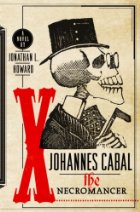
johannes1What’s the point of toiling long hours in relative obscurity for Black Gate, if we don’t pimp your new books?
With that in mind, I’d like to draw attention to a trio of new and upcoming titles from BG contributors – starting with a handsome little volume that caught my eye on the New Arrivals table at Borders last week.  The summary sounded terrific, but it wasn’t until I saw the author photo on the inside flap that I exclaimed “Hey!  I know this guy!”

That’s because Johannes Cabal the Necromancer was written by Jonathan L. Howard, author of the lead story in our last issue, “The Beautiful Corridor,” a nifty little tale of a resourceful young thief penetrating a very dangerous crypt – and the talking corpse (and other surprises) that await her at its heart.

Read More Read More

The Call of Cthulhu Movie, 2005

The Call of Cthulhu Movie, 2005

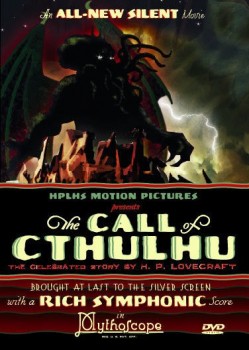
the_call_of_cthulhu_dvd_coverDirected by Andrew Leman; starring Matt Foyer, Chad Fifer, Noah Wagner, Ramon Allen Jr., and Ralph Lucas.

I cannot say I’ve ever been impressed with any film I’ve seen purporting to be based on a story by H.P. Lovecraft, as they have all tended to stray pretty far from what makes Lovecraft’s stories interesting in the first place. And they generally show the limits of their budget as well as being both poorly shot and acted. But then I heard about this little gem, distributed by the H.P. Lovecraft Historical Society, that adapts Lovecraft’s foundational short ‘The Call of Cthulhu’ in as loyal and accurate a way as possible. Not only that — and here’s the really interesting bit — the movie itself is a black and white silent film, as if it had been filmed at the time of the story’s publication in the 1920s.

The choice to make this a silent film was a smart one. Firstly, it does help evoke the period of Lovecraft in a way no film before it ever has (all of the ones I’ve ever seen where contemporary pieces, for a start), and also makes it feel like a world apart from our own. In leaving some things unseen and unsaid, and in creating an at times stylized environment, this film activates the viewer’s imagination to fill in the blanks — and speeches or effects which would seem silly or dreadful when laid bare in a modern film are instead left in the shadows. In surmounting the very limited budget for this project, the choice could not have been better.

Read More Read More