Browsed by
Category: Writing

Adventure On Film: The Color of Magic

Adventure On Film: The Color of Magic

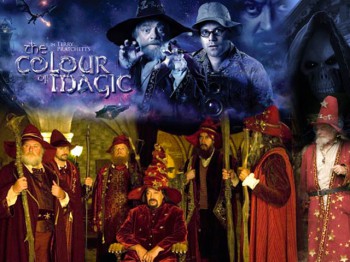
posterOnce upon a very suspect time, a human being by the name of Terry Pratchett conjured up a space-traveling sea turtle by the name of A’tuin, and proceeded to make a sizable fortune from the disc-shaped world he emplaced upon her. In Pratchett’s Discworld novels, magic of the most unpredictable kind is the norm, and so it should come as no surprise that, eventually, somebody had to commit his unique brand of literary lunacy to celluloid.
And so they did. The Color of Magic appeared in 2008, destined for British TV and comprised of two longish episodes.

Now, having admittedly come rather late to the Discworld table –– I read a short called “Troll Bridge” years ago, but didn’t realize it was part of a larger cycle –– my somewhat limited exposure was nonetheless sufficient to convince me that Pratchett’s novels were congenitally unfilmable.

Despite that dire opinion, I am happy to report that Sean Astin is delightfully droll as Twoflower, the Discworld’s first tourist, and David Jason is about as Rincewind as anyone could possibly be. As a murderous and ambitious wizard, Tim Curry simpers and smirks as only Tim Curry can, (although he doesn’t appear to be having nearly as much fun as he did as “Arthur King” in Spamalot). On an ankle-biting budget, the cinematography is generally first rate, as are most, though not quite all, of the props. Death –– a nuisance, and constantly in pursuit of Rincewind –– is lovingly voiced by Christopher Lee, but disappoints the eye. Bearing a cheap-looking sickle, Death appears to have just wandered in from a middling haul of Trick-or-Treats.

Physically, then, in real-world terms, The Color of Magic is of course filmable –– as is just about everything these days, including massive sand worms and infinitesimal specks of pollen. I even recall seeing, on Nova, an attempt to demonstrate string theory’s ten dimensions on the two-dimensional plane of a television screen –– an abject failure, yes, but I blame myself. My limited powers of imagination and whatnot. Me and my four-dimensional mindset.

So let me amend my question: can The Color of Magic be adapted to film successfully?

Read More Read More

Making the Clock Your Friend

Making the Clock Your Friend

Howard's haunted clockI’m busy.

I know, I know, a lot of us are busy, and I’ve been busy for a long time. But I mean I’m busier than I’ve ever been in my entire life.

So busy that if I don’t figure out a way to manage the busy-ness I’m mortified that I’m putting my dream job at risk. It took me decades of hard work to make it to the point where writing is actually my day job, so I’m fighting like tooth and nail to keep it that way.

In brief, here’s what’s been happening over the last months, in the order that the events began to impact the household.

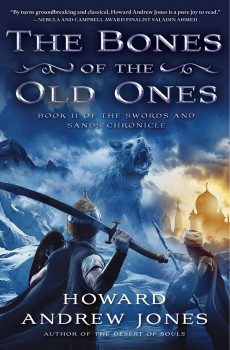
  1. I’m promoting the second Dabir and Asim novel, The Bones of the Old Ones, which will appear in print on December 11;
  2. I’m writing my next Paizo Pathfinder novel, and the deadline’s creeping ever closer;
  3. We’re undergoing a big bathroom/master bedroom remodel — we’ve been saving up for it for years, and there are constant interruptions and some consulting that has to take place;
  4. My mother had a heart attack followed by a triple bypass and is moving into my office until she’s well enough to move into the basement;
  5. The basement is currently unfinished, and I have to organize, clean, and trash what doesn’t need saving prior to it being turned into a small apartment for my mother; and
  6. Mom’s house has to cleared out and readied for sale.

Now I’m not complaining that we’re in a good enough financial position that we can afford to do some remodeling, and I’m not complaining that I have two separate series to work on, and I’m not sharing any of that because I need extra hugs. I’m just explaining what I mean by busy. I’ve got to take care of my mom, who was wonderful and supportive my whole life long, and I’ve got to keep my job going.

Read More Read More

What Writers Can Learn From Joss Whedon’s The Avengers Audio Commentary

What Writers Can Learn From Joss Whedon’s The Avengers Audio Commentary

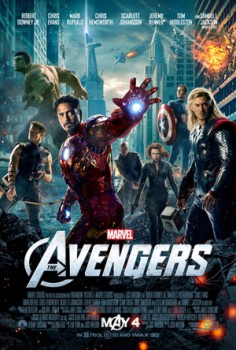
theavengers2012posterAbout a month ago, The Avengers (Amazon, B&N) came out on DVD and Blu-Ray. My guess is that most avid superhero fans have probably already gotten their copies. Even if superheroes aren’t normally your thing, though, I recommend getting the film, especially for those who are writers or aspiring writers.

When the film came out in theaters back in May, I wrote an article “What Writers Can Learn From Joss Whedon’s The Avengers.” All of those points are still valid and if you haven’t seen the film, the writing is top notch. The bonus materials on the blu-ray, however, give you glimpses into more than just the film-making process, but a good glimpse into how to craft a good story. Some mild spoilers will be revealed below, if you haven’t yet seen the movie.

Tor.com has compiled a pretty good breakdown of the commentary, for those who want a more complete glimpse of what Whedon discusses.

Read More Read More

Popular Marketing Mistakes: Cannibalism

Popular Marketing Mistakes: Cannibalism

the-inferior-small

1. The Sadness — It is too Much!

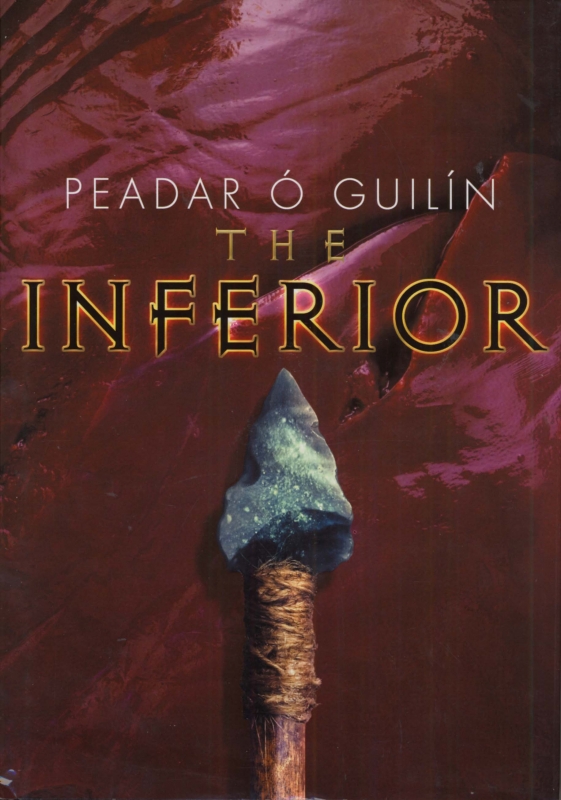
When my first book, The Inferior, came squalling into the light back in 2007 it received absolutely wonderful reviews.

Read this and remember why Science Fiction lit your fire in the first place!

An exhilarating read, highly recommended and an incredible first novel in what is going to end up an incredible career.

It made several “Best of the Year” lists. Foreign editors snapped up the rights. An agent in Hollywood got excited about the idea of a movie. What could possibly go wrong?

Well, for a start, nobody bought it.

By nobody, I don’t just mean sweaty little nerds like myself with fistfuls of notes or book vouchers. No, the shops didn’t want to buy it either. They failed to stock it, or did so in small quantities. They were right too, because the few copies that made it into stores gathered dust or wept quietly in the back of warehouses.

After “Best of the Year” lists, The Inferior began turning up in other places, such as “most underrated book” lists and — now that I have two novels in print — “most underrated series.” That’s a gentle way of saying “loserville.”

Yes, this depressed me and I whined to whoever would listen until I bored my friends to sleep with it. I didn’t understand back then that both myself and my publishers had made some interesting mistakes in our marketing of the book.

Read More Read More

Teaching and Fantasy Literature: Before They Even Get to the Invented Languages

Teaching and Fantasy Literature: Before They Even Get to the Invented Languages

dictionary-of-etymologyYou know that classic vocabulary assignment, the one everybody’s done because it really works?

As you read a book, keep a running list of words you can’t define, and when you take a break from reading, look them all up and write your own sentences using them. That assignment. It’s still the wheel, so I still don’t reinvent it, but sometimes I get tempted.

Since I took up freelancing eight years ago, nearly all my students have been children of immigrants. The kids are so bright, so hardworking, nobody notices how narrow their vocabularies are until about 7th grade, when the amount and level of writing students have to do shoots up.

The kids’ grades plummet, their English teachers at school shrug, the parents panic, and suddenly I’ve got a new paying gig. The students prefer to read fantasy — I do, too, of course — so I give them the classic vocabulary assignment to apply to the fantasy novel of their choice.

Then this weird thing happens, a thing I haven’t yet figured out how to turn to good use.

Read More Read More

The Business of Writing: Joining the Community

The Business of Writing: Joining the Community

communityI spoke to some creative writing students at a local university last Friday and I tried to tell them something it took me a long time to understand: when you begin your writing career, you’re joining a community.

By writing career,  I mean your first published work. In my case, I was first printed in a ‘zine titled Gauntlet. Before I submitted my story to the magazine, about the only thing I knew about Gauntlet was that it was open to heroic fiction and sword-and-sorcery. I was making a common mistake — I didn’t know  the market.

It’s hard to know ALL the markets, especially when, in those bygone days of yore, to know about the magazine you had to buy an issue. (Most of those little magazines couldn’t be leafed through at local bookstores because they weren’t carried.) Today we submitters have it a little simpler because most magazines have web sites where fiction can be sampled. And, of course, an increasingly large number of magazines ARE e-zines.

Read More Read More

Why I Stopped Reading Granta

Why I Stopped Reading Granta

granta-117-smallI used to subscribe to Granta when I was in grad school. It’s a literary magazine published in the UK, originally produced by students at Cambridge University (where it offered early work by Ted Hughes, A. A. Milne, Sylvia Plath, and many others). It was relaunched as a wider journal of “New Writing” in 1979; since then it’s published work by Mario Vargas Llosa, Richard Ford, Saul Bellow, Salman Rushdie, Ian McEwan, Gabriel García Márquez, and lots more.

But while Granta showcased some terrific writing — when it wasn’t focused on an odd mix of memoir and photojournalism — too often the fiction left me cold. On their website the editorial team writes convincingly of their “belief in the power and urgency of the story, both in fiction and non-fiction, and the story’s supreme ability to describe, illuminate and make real.” But what I frequently read in Granta weren’t so much stories as brief literary fireworks: dazzling to watch, but ultimately empty. For someone looking for love in the crowded literary scene, Granta seemed a bit too smitten with beauty and a bit too scornful of personality.

So I let my subscription lapse. But I did pick up the odd issue now and then. Not because of all that beauty or anything. Just, you know, for the articles.

Granta’s changed management a few times since we hung out together in grad school. The owner of The New York Review of Books took a controlling stake in 1994; in 2005 it changed hands again. I’ve lost track of how many editors it’s had over the same period. But it still does themed issues, and not very predictable themes, either. Granta #69 was The Assassin issue, and #74, Summer 2001, was Confessions of a Middle-Aged Ecstasy Eater (“Perhaps no truth is more momentous, as none more difficult to face, than the blackest, most abject one about oneself. My son supplies me with drugs, with Ecstasy.”)

In tune with that unpredictability, the theme of last year’s Autumn issue was Horror. This was intriguing enough for me to buy a copy, just to see what happened when Granta wandered into my neighborhood. The issue has an impressive table of contents, featuring original fiction by Don DeLillo, Sarah Hall, Rajesh Parameswaran, and Stephen King, and others. Of course there’s also the usual mix of non-fiction, from Will Self, Paul Auster, and Santiago Roncagliolo, among others.

And as a perfect metaphor for this awkward meeting of literature and genre, Mark Doty’s memoir-slash-essay “Insatiable” opens with the odd assertion, from a 2003 Walt Whitman bio, that “Bram Stoker based the character of Dracula on Walt Whitman.”

Read More Read More

Black Gate to Publish Online Fiction Starting Sunday, September 30

Black Gate to Publish Online Fiction Starting Sunday, September 30

black-gate-4-smallWe are very pleased to announce that Black Gate magazine, your home for the finest in adventure fantasy, will begin publishing original online fiction starting Sunday, September 30.

Holy crap, that’s tomorrow.

Wow. Uh, well, into the breach. Best way to do this is to jump right in, and figure it out as we go.

New fiction will be published right here on our website every Sunday, starting tomorrow. Here’s what’s coming in the next two months:

  • “The Duelist,” by Jason Thummel
  • “The Quintessence of Absence,” by Sean McLachlan
  • “The Daughter’s Dowry,” by Aaron Bradford Starr
  • “A Phoenix in Darkness,” by Donald S. Crankshaw
  • Novel excerpt: Queen of Thorns, by Dave Gross
  • “Godmother Lizard,” by C.S.E. Cooney
  • “The Poison Well” by Judith Berman
  • Novel excerpt: Bones of the Old Ones, by Howard Andrew Jones
  • Novel excerpt: The Black Fire Concerto, by Mike Allen

What can you expect from online fiction at Black Gate? We will be presenting original fiction from some of our most popular contributors, as well as exciting new authors and many of the best writers in the industry. All stories are presented completely free of charge.

We will be offering fiction at all lengths, including short stories, novellas, and novel excerpts. It’s just like reading an issue of Black Gate, except you can do it from the comfort of your couch. Or that uncomfortable chair in front of the computer, whatever.

Join us tomorrow as Jason Thummel brings us a riveting tale of a talented swordsman who finds himself caught up in a web of deceit and far-reaching ambition in a fast-paced tale of action in a violent city, “The Duelist.”

New Treasures: City Under the Moon by Hugh Sterbakov

New Treasures: City Under the Moon by Hugh Sterbakov

city-under-the-moonConfession time.

I love a good book. I also love a well-marketed book. As someone who’s been a publisher in this industry for over a decade, it gives me real pleasure to see someone bring a new title to market with genuine energy, enthusiasm, and inventiveness. It’s even better — and frankly, much rarer — to see a small press or self-published book get anything like a real marketing campaign.

Hugh Sterbakov’s City Under the Moon may be the best marketed self-published book I’ve ever seen. Anyone trying to publish a fantasy novel in America could learn from this man.

Now, I’m not 100% certain it’s self-published. But when the publisher (Ben & Derek Ink Inc.) neglects to have a website, publish other books, mention their address, or even put their name on the cover, that’s frequently a big clue.

Admittedly, Mr. Sterbakov has resources most aspiring self-publishers don’t. He’s a writer for Marvel Comics and Seth Green’s Robot Chicken, and in the latter capacity he’s been nominated for two Emmys. His animated comedy script Hell & Back is now in production, staring Mila Kunis and Susan Sarandon.

How does any of this help him? Here are just a sample of the blurbs for his novel:

Bioweapon catastrophes, government conspiracies, military sieges, historical revelations, psychological warfare and werewolves. You want more thrill from a thriller? — Seth Green

Fast-paced, action packed and terrifying. — Mila Kunis

Superpowered teens, angst, action and comedy… I don’t get it. –– Joss Whedon

When you get blurbs from Joss Whedon, Mila Kunis and Seth Green on your self-published novel, you’re doing something right.

Read More Read More

Electric Velocipede Kickstarter Funded! Started First Stretch Goal!

Electric Velocipede Kickstarter Funded! Started First Stretch Goal!

Less than a week ago, we posted here to talk about the Kickstarter campaign we launched to fund next year’s Electric Velocipede issues. We hit our $5,000 goal with two weeks to go.

Wow.

I guess people want to see more Electric Velocipede! Once you hit your goal on Kickstarter, in a lot of ways you’re done. However, since people can cancel their pledge at any time before your campaign ends, you want to keep talking it up so that more people pledge to cover the chance that a few might drop out. Also, with so much time left, it felt wasteful to just do nothing.

A lot of Kickstarter campaigns will run stretch goals once they reach their initial funding request. That way, there’s a reason for people who want to give to keep giving (you’d hate for someone who wanted to donate to feel like they missed their chance).

With that in mind, we’ve started our first stretch goal: we want to digitize all of Electric Velocipede‘s back issues (you can see the glorious cover to issue #1 on the right) and make them available as epubs, mobi files, and PDFs so that people can read them on whatever device they want to. We’ve had a number of people asking about it, often international backers, and we think it’s a good idea. We’ll need about $2,500 to do this, and we’re already more than $1,o00 of the way there!

It will take some doing for this; we need to get electronic rights from the first thirteen/fourteen issues’ worth of authors and then we need to convert the files. Neither of which is terribly complicated, but it is time-consuming. But it will be worth the effort. We’ve got a lot of fans that have come to us recently who have never been able to read copies of older issues since we always really small print runs.

We have a bunch of different things in mind for stretch goals, but this felt the most important, given how much it will benefit our readers. If we achieve this stretch goal, anyone who’s backed at $25 or more will receive electronic copies of all back issues of Electric Velocipede. That’ll be issues #1 – #21/22. That’s almost $1 an issue! Plus, at $25 you’ll get a print copy of a back issue, and a electronic four-issue subscription starting with issue #25. You’ll get almost the entire issue run for your $25 investment. You won’t regret it.