Browsed by
Category: Vintage Treasures

STRANGE! WEIRD! EERIE! The Odd, Unusual, and Uncanny Biography of Lionel Fanthorpe

STRANGE! WEIRD! EERIE! The Odd, Unusual, and Uncanny Biography of Lionel Fanthorpe

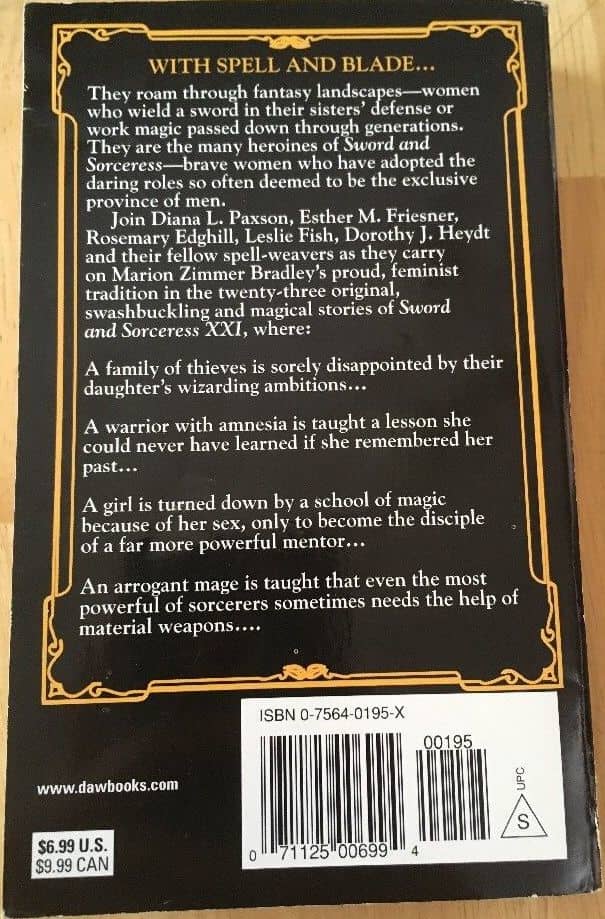
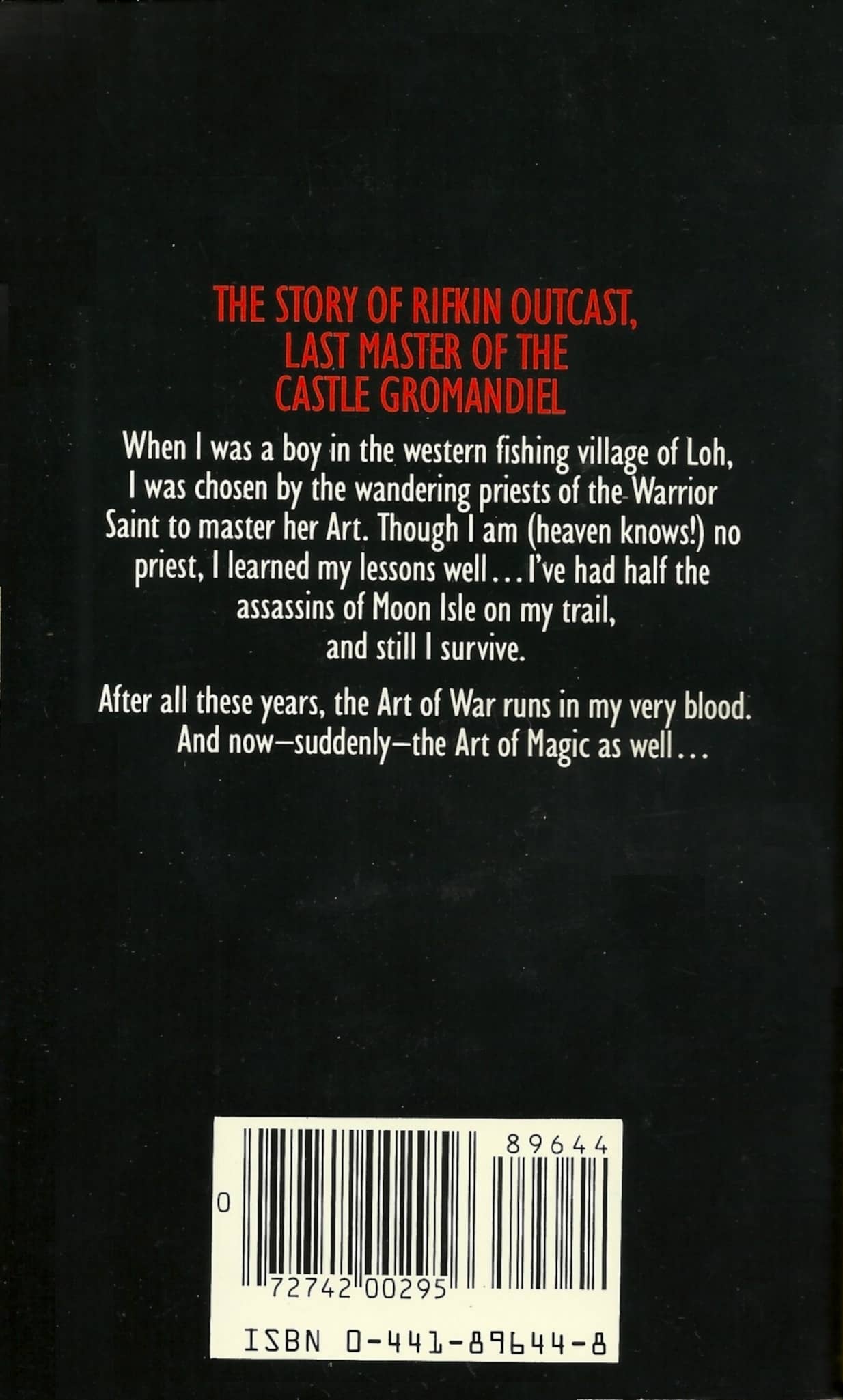
The Return Lionel Fanthorpe-small The Return Lionel Fanthorpe-back-small

Some writers agonize over every line. Some are prolific like Andre Norton. Others are hyperprolific like Isaac Asimov.

But Lionel Fanthorpe stands alone. He isn’t the most prolific author out there, having written “only” about 200 books, but he had the distinction of having written 168 books in less than a decade. Many he wrote in a week. Some he wrote over a three-day weekend.

This fervid output was the result of his association with Badger Books, a cheap-as-they-come UK publisher that emphasized quantity over quality. The publisher would commission the cover art first (or steal it from some old American paperback), send it to the author, and have them write a 45,000 word novel, usually with a deadline of one week.

Fanthorpe wrote 168 books for Badger between 1961 and 1967, dictating his tales into a reel-to-reel recorder and sending the tapes into the publisher’s typist. Often he’d stay up late into the night, covering his head with a blanket so he could concentrate. The results were overwritten, padded, and compellingly bad.

The only biography of Lionel Fanthorpe, Down the Badger Hole by Debbie Cross, has long been out of print but has now been revised, expanded, and released as a free ebook on the TAFF website.

And what a book it is! Cross gives us generous helpings of Fanthorpe’s prose, including masterful examples of padding through repetition.

Read More Read More

Birthday Reviews: Paul Preuss’s “Rhea’s Time”

Birthday Reviews: Paul Preuss’s “Rhea’s Time”

The Ultimate Dinosaur-small The Ultimate Dinosaur-back-small

Cover by Wayne D. Barlowe

Paul Preuss was born on March 7, 1942. Mostly a novelist, he has published the Venus Prime series and stand-alone novels Human Error, The Gates of Heaven, and Core. His short fiction output is more scarce, consisting of three short stories and a published excerpt from his novel Starfire. His novel Secret Passages was a nominee for the 1998 John W. Campbell Memorial Award.

“Rhea’s Time” originally appeared in The Ultimate Dinosaur, edited by Robert Silverberg and Byron Priess, which was heavily illustrated by Wayne D. Barlowe and included a mixture of science fiction and factual articles about dinosaurs. The story has not been reprinted outside The Ultimate Dinosaur, but the anthology has seen two editions following its first publication.

Although originally published in a collection about dinosaurs, there are no saurians in “Rhea’s Time.” Preuss relates, with almost clinical precision, the story of a woman who has been in a coma for nearly a year, since shortly after a skiing accident. He tells the story from the point of view of Doctor Rowan, who has inherited her case after her original doctor gave up on her.

Despite his patient being completely unresponsive, Roan discovers that she actually is moving, albeit extremely slowly. Rowan begins employing unorthodox methods to establish contact with the woman, who he calls “Rhea.” Talking about her career as a biostratigrapher with her husband, Rowan is eventually able to come up with a rather intriguing explanation for what she’s going through.

Read More Read More

Doubling Down, or Just How Bad Are Ace Doubles, Anyway?

Doubling Down, or Just How Bad Are Ace Doubles, Anyway?

The World of Null-A-small Universe Maker-small

Ace Double D-31: The World of Null-A (cover by Stanley Meltzoff)
paired with Universe Maker (cover by Paul Orban)

Just so you know where I stand, let’s get this out of the way right off the bat — I love Ace Doubles (and if you don’t know what an Ace Double is, are you ever in the wrong place. You should immediately go to Slate or HelloGiggles or Shia LaBeouf.com or somewhere, anywhere else or risk irreversible contamination. You’ve been warned.) I’ve loved them ever since the first time I laid eyes on one, in the thrift store that was around the corner from my middle school. The day I pulled the dual volume of A.E. Van Vogt’s The World of Null-A and Universe Maker (D-31) off the dusty shelf, I fell and fell hard; my lunch money never had a chance. I have a lot of reasons for loving these books, some of which have nothing to do with the quality of the writing found between their gaudy covers, and a good thing too, but we’ll get to that. First, though, the looooove.

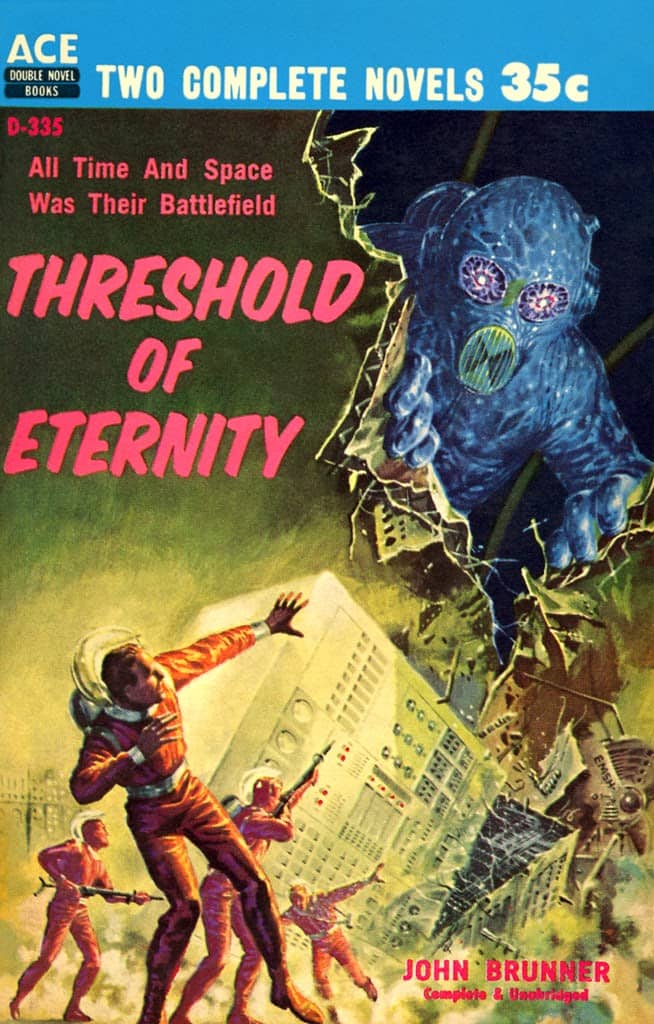
To begin with, I love them for those aforementioned gaudy covers, and why not? For twenty years, from 1953 to 1973, from D-31 to 93900 (mastering the Doubles numbering system is an arcane science in itself, especially the legendarily convoluted final five-digit series), artists like Ed Emshwiller, Kelly Freas, George Barr, Jack Gaughan, Gray Morrow, Ed Valigursky and many others poured forth a stream of wonderful images that amount to a romp in a candy shop of pulp science fiction props: mutants, ray guns, futuristic metropolises, bug eyed monsters, alien armadas, hostile planets, a-bomb shattered landscapes, femmes in danger, dangerous femmes, space stations, super-submarines, time machines, jut-jawed heroes in bubble-helmeted spacesuits, robots, domed cities… and, of course, spaceships, spaceships, spaceships! What, I ask you, is there not to love about that?

Read More Read More

Mythic Landscape: The Weirdstone of Brisingamen by Alan Garner

Mythic Landscape: The Weirdstone of Brisingamen by Alan Garner

Weirdstone_of_BrisingamenHalfway through my recent reread of Alan Garner’s 1960 debut novel, The Weirdstone of Brisingamen, it became clear to me that the true protagonist was the land, not the ostensible ones, sister and brother Susan and Colin.

Alderley Edge, in Cheshire, England, is the name of both a village and a great sandstone cliff “six hundred feet high and three mile long.” For Garner there’s a connection between land and myth, artistically at least, that is deep. His depiction of a land of rolling plains littered with farms and woods, riddled with thousands of years’-worth of mines makes it easy to see the svart-alfar, the “maggot-breed of Ymir,” boiling out of the earth. There’s something deeper than that, though; something that reaches beyond mere physical for Garner. It’s as if the land itself bred those stories and they are intertwined with it intimately and inextricably. Just walking the woods and rises around Alderley Edge, they can be felt pushing themselves up from the earth and traveling along on the backs of breezes.

Before the story proper begins, Garner recounts a true legend of Alderley Edge — that of a farmer from the village of Mobberly and the strange white-bearded man he meets on the way to market. The farmer hopes to sell his white mare at market in Macclesfield and when he agrees to sell it to the bearded man instead, he is shown a secret cave protected by an iron gate and filled with treasures. Inside sleep 140 knights, each, save one, with a perfect white mare by his side. The wizard, for that is what he is, tells the farmer why the knights are there:

“Here they lie in enchanted sleep,” said the wizard, “until a day will come — and come it will — when England shall be in direst peril, and England’s mothers weep. Then out from the hill these must ride and, in a battle thrice lost, thrice won, upon the plain, drive the enemy into the sea.”

In payment, the wizard tells the farmer to take whatever gold and gems he can fit into his pockets. He does, with unexpected and dire consequences for the future.

Read More Read More

Birthday Reviews: William F. Nolan’s “Starblood”

Birthday Reviews: William F. Nolan’s “Starblood”

Cover by Ron Walotsky

William F. Nolan was born on March 6, 1928. He is best known for his novel Logan’s Run, which was turned into an Academy Award winning (and Hugo nominated) movie, as well as a television series that ran for one season. Nolan also wrote three sequels to the original novel, the most recent of which, Logan’s Mission, appeared in 2017.

Nolan has received the Bram Stoker Award for his non-fiction book Nolan on Bradbury: Sixty Years of Writing about the Master of Science Fiction, as well as a Lifetime Achievement Award. He has received a Living Legend Award from the International Horror Guild, a Grandmaster Award from the World Horror Convention, a Special Convention Award from the World Fantasy Awards, and in 2006 he was named an Author Emeritus by SFWA.

“Starblood” first appeared in the anthology Infinity Four, edited by Robert Hoskins in 1972. It was also picked up by Forrest J. Ackerman and Pat LoBrutto for Perry Rhodan #102: Spoor of the Ants. Nolan has also included the story in several of his own collections, including Alien Horizons, Wonderworlds, Things Beyond Midnight, Dark Universe Stories: 1951-2001, Nightworlds, and Wild Galaxy.

The majority of “Starblood” presents the lives of six individuals in six short chapters. In each case, the main character dies suddenly and violently, through assassination, accident, or murder. In the course of these vignettes, Nolan does not attempt to tie them together in any way. He does offer a few lines of dialogue at both the beginning and the end of the story which offers a frame that explains what is happening, although it is not entirely satisfying.

Bobby is an infant whose crying annoys his parents so much his mother drops him from an air car without remorse. Tris is a woman who joined a cult in which she was sexually assaulted; when the cult throws her out and won’t allow her back in, she begs them to kill her. Morgan is killed in an ambush at night while he is fleeing his pursuers. David is a child who gets hit by a random car. Bax is killed at dinner by his dining companion and Lynda’s father, a paid assassin, accepts a hit on his own daughter.

Nolan’s world is bleak and unsympathetic, although he does toss out some interesting ideas about the future, notably the bookstore David is brought to (although given the selection of books recommended to the eleven year old, it is no surprise that he doesn’t like books). The closing frame offers a small link for the different stories, but it does nothing to alleviate the darkness of those stories.

Read More Read More

Drawing Out What it Truly Means to be Human: The Best of Philip K. Dick

Drawing Out What it Truly Means to be Human: The Best of Philip K. Dick

The Best of Philip K Dick-small The Best of Philip K Dick-back-small

The late Philip K. Dick (1928–1982), oftentimes lovingly called PKD, still fascinates many today. As evidence I point to the popularity of two current series on Amazon: The Man in High Castle, based upon Dick’s 1962 novel of the same name, and now Philip K. Dick’s Electric Dreams, an anthology show based upon various PKD short stories. And of course we just had the recent movie Blade Runner 2049, the sequel to the 80s Ridley Scott classic Blade Runner, based upon Dick’s novel Do Androids Dream of Electric Sheep? (1968). It doesn’t seem that PKD’s influence is going away anytime soon.

In this spirit I’m excited to discuss The Best of Philip K. Dick (1977), the ninth installment in Del Rey’s Classic Science Fiction Series. Science fiction writer John Brunner (1934–1995) wrote the highly appreciative introduction and the cover sports a new artist for the series, Vincent Di Fate (1945–), whose art style fits very well with the earlier classic covers of Dean Ellis and Darrell Sweet. Since this volume returned to a living (at the time) author, the afterword was by PKD himself.

PKD has always had something of a cult following. He is often associated with everything from classic science fiction, to cyberpunk and realistic futurism, to the drug culture of the 60s and 70s (thanks to a famous Rolling Stone article in 1975), and even with religious mysticism. There are countless books about Dick’s life and work, plus a multitude of documentaries, many of which are available online.

Read More Read More

The Galaxy in Scale: James Blish’s Cities in Flight

The Galaxy in Scale: James Blish’s Cities in Flight

Cities in Flight James Blish

There’s more windup than pitch in Thomas Xavier Ferenczi’s Tor.com column about Blish’s Okie series. But it’s someone writing about James Blish — not often seen these days.

I can’t exactly agree that these books are overlooked classics. They have a lot of the weaknesses and strengths of magazine sf at midcentury. They’re most interesting for their corrosive pessimism regarding democracy (as it is generally called), and their big-dumb-object sense of wild-eyed adventure. But the different parts of the fixups don’t work very well together; the world-building has inexplicable gaps; one gets tired of the characters out-wiling each other.

And gradually, in spite of all the repetition and confusion, the packrat crowding of irrelevant information, a symmetrical and moving story appears. Out of all the details in the book, some will be for you — not the same ones that hit me, very likely, but they will build up much the same impressive picture. Blish’s scale is the whole galaxy, a view that has to be awe-inspiring if he can only make you see it: and he does, I think, more successfully than any previous writer.

That’s from Damon Knight’s review of the core book in the group, Earthman Come Home. It was probably truer in the 1950s than it is now but, to the extent that it is still true, Cities in Flight is still worth reading.

Vintage Treasures: Driftglass by Samuel R. Delany

Vintage Treasures: Driftglass by Samuel R. Delany

Driftglass-small Driftglass-back-small

Driftglass was Samuel R. Delany’s first short story collection, and it was like a bomb dropped on science fiction.

Delany’s first work of short fiction, “The Star Pit,” appeared in the February 1967 issue Worlds of Tomorrow, and was nominated for a Hugo Award for Best Novella. That same year his groundbreaking “Aye, and Gomorrah” appeared in Dangerous Visions, and was nominated for a Hugo and won the Nebula Award for Best Short Story. Over the next two years Delany would receive an extraordinary eight Hugo and Nebula Award nominations for a string of brilliant stories, including “Driftglass,” the novella “We, in Some Strange Power’s Employ, Move on a Rigorous Line,” and the Nebula and Hugo-winning “Time Considered as a Helix of Semi-Precious Stones.”

All those stories, and five others, were gathered in Diftglass. It was the top-ranked collection of the year in the annual Locus Awards poll in 1972, beating Theodore Sturgeon’s Sturgeon Is Alive and Well…, Harlan Ellison’s Partners in Wonder, and Larry Niven’s All the Myriad Ways (and even placing above The Science Fiction Hall of Fame, Volume One on the overall list).

Read More Read More

Birthday Reviews: Patricia Kennealy-Morrison’s “The Last Voyage”

Birthday Reviews: Patricia Kennealy-Morrison’s “The Last Voyage”

Cover by Greg Call
Cover by Greg Call

Patricia Kennealy-Morrison was born on March 4, 1946. Kennealy got her start as a music journalist, serving as the editor-in-chief of Jazz &Pop and becoming one of the first female rock critics. In 1970 she participated in a handfasting ceremony with Jim Morrison of The Doors, although the couple never filed paperwork with the state to register their marriage.

In the 1980s, Kennealy-Morrison began publishing an epic space opera series, The Keltiad, which followed a group of Celts who left the British islands around the year 450, although the books were set in the 35th century. The series was comprised of two trilogies, and a stand-alone novel, as well as the short story “The Last Voyage,” and Kennealy-Morrison has indicated she plans to write more in the milieu. When her publisher cancelled further books in the 1990s, she turned her attention to mysteries and eventually set up her own press.

“The Last Voyage” was the first short story Kennealy-Morrison published, although she had several novels in the Keltiad series by that point. It was included in her 2014 collection Tales of Spiral Castle: Stories of the Keltiad, published by her own Lizard Queen Press, and which included three original Keltiad stories.

“The Last Voyage” tells the story of Jamie Douglas, a Scottish knight in the service of King Robert the Bruce. Douglas is serving his king in Paris at the time that the destruction of the Knights Templar is about to occur and he works with the Knights to spirit hundreds of them away for a life in Scotland, far from the reach of the French king bent on their destruction. En route to Scotland, their fleet is intercepted by a spaceship carrying the descendants of Celts who fled earth centuries earlier who offer the Templars a new life among the stars. Many of them accept, although a vestige of the Templars, including Douglas, continue on to serve King Robert.

Kennealy-Morrison combines the plight of the Knights Templar with her existing series of novels, The Keltiad, which provides the background for her space-faring Celts. Set in 1312, the story is reminiscent of Poul Anderson’s earlier The High Crusade, set in 1345. Unfortunately, while the aliens in Anderson’s novel provide the impetus for the novel, the Kelts of Kennealy-Morrison’s story serve more as a deus ex machina. In addition, her prose tends towards the over-written and florid, reminiscent of a more Victorian style in both description and dialogue. Kennealy-Morrison presents an interesting secret history, but her link in to her series of novels doesn’t integrate well into the historical context she presents.

Read More Read More

Birthday Reviews: Arthur Machen’s “The Coming of the Terror”

Birthday Reviews: Arthur Machen’s “The Coming of the Terror”

Cover by Wilfred Jones

Arthur Machen was born Arthur Llewellyn Jones on March 3, 1863 and died on December 15, 1947.

Machen had a strong interest in the occult and published his first poem, “Eleusinia” when he was 18 years old. He struggled as a writer before seeing more success in the 1890s, including the publications of his story “The Great God Pan” in 1894. In the early days of World War I he published the short story “The Bowman” which described phantom bowman from Agincourt called upon to help the British Expeditionary Force at the Battle of Mons. The story entered into popular culture as an actual description of the battle and led to the folklore around the “Angels of Mons.”

Machen originally published “The Coming of the Terror” in The Century, an illustrated magazine published from 1881 to 1930, although it grew out of Scribner’s Monthly, which dated back to 1870. The story was part of his longer novel The Terror and has rarely been reprinted only its own, only seeing print in 2003 in the Chaosium collection of Machen’s story’s The White People and Other Stories and that same year in Douglas Anderson’s anthology Tales Before Tolkien: The Roots of Modern Fantasy.

“The Coming of the Terror” feels a lot like one of the stories H.P. Lovecraft would begin publishing five years later, but with significant differences. Machen’s tale of mysterious deaths during the Great War slowly builds from reporting on the crash of an airman who hit a swarm of pigeons to the seemingly unrelated deaths and disappearances in a small village in Wales. The deaths lead to paranoia that the Germans have somehow managed to attack the English countryside undetected, either using a strange new weapon or by infiltrating the citizenry.

While Lovecraft cites Machen as one of his sources (and Machen mentions the original village of Dunwich in this story), “The Coming of the Terror” really isn’t Lovecraftian in nature. Machen doesn’t use excessively purple prose to describe the sinister events occurring around his Welsh village of Porth. Furthermore rather than being witnessed by a single individual, the effects are widespread. Everyone is aware that something is happening, and the fact that the newspapers refuse to report on it just make the conjectures that much more horrific. Machen allows events to build slowly, from a single incident to several, their relationship to each other only explicit because they are all taking place in the same story.

Read More Read More