Fantasia Diary 2015, Days 10 and 11: On the White Planet and The Blue Hour
 Thursday, July 23, was the first day of the Fantasia Festival I chose not to see any movies. Wandering down to the screening room was a very real temptation, but I desperately needed to do laundry and other household chores — as well as to write about the films I was seeing. In fact as I made my plans it seemed that I was entering a relatively light stretch of the schedule, before what looked like a killer weekend.
On Friday the 24th I returned to the De Sève Theatre for two films. The first was an animated Korean science-fantasy called On the White Planet. The second was The Blue Hour, a gay romance from Thailand with elements of horror. Both were interesting to watch and ponder, though I can’t say I found either perfectly satisfying.
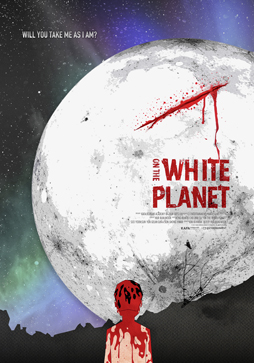
On the White Planet, or Chang-baek-han eol-gul-deul, was written and directed by Hur Bum-wook, and comes from the same animation school as Park Hye-mi’s Crimson Whale. It’s an extremely bleak but startlingly beautiful movie. It takes place on another planet (or some other time period of this planet) where there is no colour — everything’s white. Except for the sky and the lead character, Choi Min-je. Min-je’s flesh marks him out as an outcast, in what seems a very direct metaphor. Isolated at the start of the movie, he falls in with a gang, and things go from bad to worse. Murder and rape and all sorts of pain follow, and eventually the movie becomes a sort of extended chase as Min-je seeks sanctuary with two fellow escapees from the gang, and then goes on to try to find a way off the white planet.
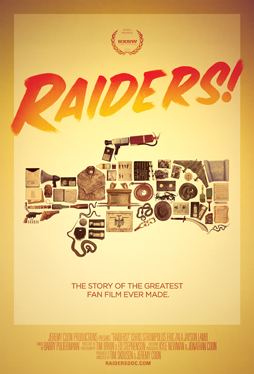 On Wednesday, July 22, I saw three movies at the Fantasia Festival — which made it an average day, to the extent I had an average day at Fantasia. It began at 1 PM, with a documentary called Raiders!: The Story of the Greatest Fan Film Ever Made. After that was a Japanese comedy-drama called 100 Yen Love. Then I made a difficult decision to pass on both the New Zealand horror-suspense film Observance and the American science-fiction film Synchronicity in favour of the Korean historical epic The Royal Tailor. I figured I could watch a later showing of Synchronicity, while Observance was available in the screening room. But this looked like my only chance to catch Tailor on the big screen, and I had an idea it was the sort of film that would take full advantage of the Hall Theatre’s scale.
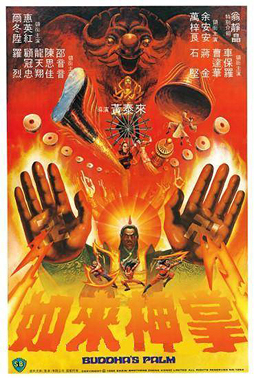 I was at Concordia’s De Sève Theatre early on Tuesday, July 21, for a showing of a 35mm print of the Shaw Brothers’ wuxia fantasy Buddha’s Palm. After that, I had a decision to make. At 5:30 the Nigerian zombie movie Ojuju played directly against a re-release of the British-Canadian horror-suspense movie The Reflecting Skin. Which would I see? And then after that, the first live-action film by director Mamoru Oshii, Nowhere Girl, was directly opposite a quirky romantic fantasy comedy, Haruko’s Paranormal Laboratory. Again: which to see?
 Monday, July 20, was a relatively short day for me at the Fantasia Festival, but one I was looking forward to with great curiosity. At 5 PM I was going to the De Sève Theatre to watch a collection of science-fictional short films: Fantasia’s International Science-Fiction Short Film Showcase 2015 (to give the screening its official name) would show nine films ranging from four to twenty minutes long from seven different countries. Afterwards I’d stick around to see the world premiere of Meathead Goes Hog Wild, a Chicago-set movie about a man pushed to the edge of sanity. It ended up an interesting mixed bag. To go through everything I saw in order:
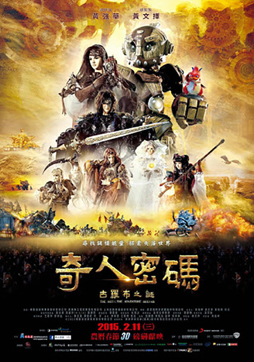 Some days at the Fantasia Festival I find a common theme among the movies I see. And some days I don’t. Sometimes the day’s movies are simply a wonderfully strange mix of things each wonderfully strange in themselves. Bearing that in mind, let’s jump into what I saw on Sunday, July 19.
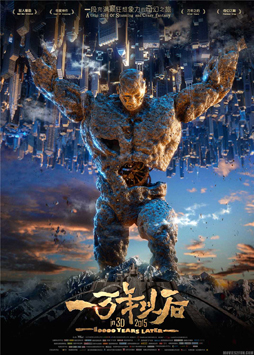 One of the things people don’t tell you about getting older is that the more books you read and movies you see, the more likely you are to see those stories echoed in other stories. The new books and movies you come across remind to you of the older books and movies you already know. Sometimes there’s good reason for that, as artists try to engage in a dialogue with their forebears. Sometimes you’re just seeing things.
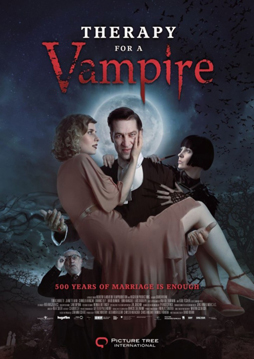 Late last Friday night, the 17th of July (or early the next morning, to be precise), I was unable to keep from smiling as
 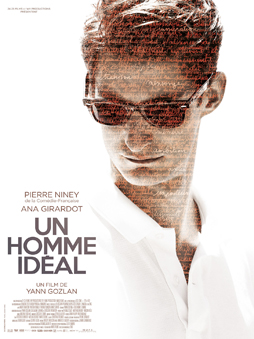 In the days leading up to the Fantasia Festival I’d look at the schedule and see a dilemma looming on the second day, last Wednesday. The first of many similar dilemmas ahead: which of two movies playing directly opposite each other do I watch? In this case a French suspense film, Un homme idéal (in English A Perfect Man), was up against a Donnie Yen martial-arts movie, Kung Fu Killer. The next day would be simpler, as my girlfriend and I had agreed to see the Japanese teen drama Wonderful World End together. But Wednesday offered two very different things. Which to watch?
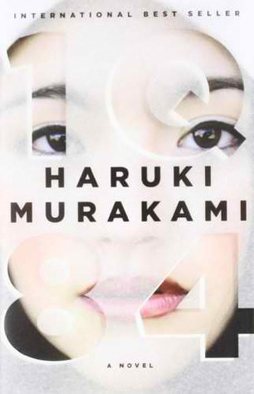 The first two books of Haruki Murakami’s 1Q84 were published in Japan in 2009, with the third following in 2010. Plans for a one-volume English edition were soon underway, with the first two books translated by Jay Rubin and the third, due to time pressures, by J. Philip Gabriel. The complete English edition, running over 900 pages despite the editing-out of some extended recap passages in the third book, appeared in 2011.