Browsed by
Author: John ONeill

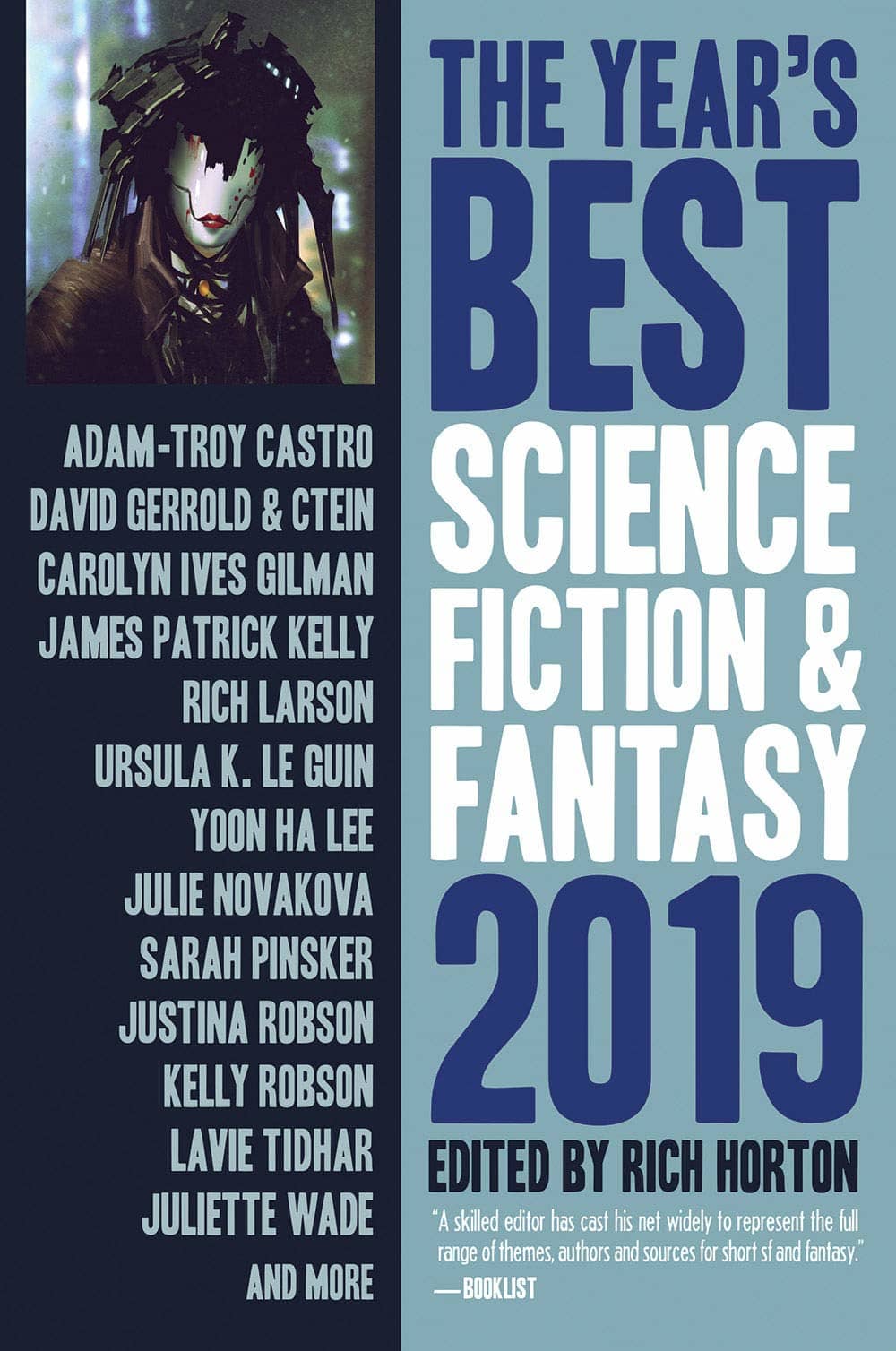
New Treasures: The Year’s Best Science Fiction & Fantasy 2019, edited by Rich Horton
New Treasures: The Year’s Best Science Fiction & Fantasy 2019, edited by Rich Horton

The Year's Best Science Fiction & Fantasy 2019-smallThe latest volume of Rich Horton’s Year’s Best snuck up on me. I know, I’m supposed to be on top of these things. For some reason I was expecting it later in the year, but it popped up in my Amazon cart last week, in stock and everything.

Rich produces my favorite Year’s Best every year, but hasn’t always seemed totally comfortable with all the trappings of being an editor. He hasn’t shown the same enthusiasm for lengthy introductions or Yearly Summations that Gardner Dozois famously did, for example. But in the last few years Rich seems to have really found his voice, and these days I find I really enjoy his intros. He avoids Gardner’s critical edge, for example, focusing instead on the collegial nature of the science fiction community.

This year he gives an affectionate shout out to his nominal competitors for your Best of the Year dollars, including editors Jonathan Strahan, Ellen Datlow, Neil Clarke, and even Gardner, who passed away last year, shortly before his Thirty-Fifth Annual Collection was released, ending an era. Have a look.

There are a lot of Best of the Year volumes in our field, and frankly I recommend them all. One of the features of SF in 2018 is how much of it there is. There’s enough short fiction that the Hugo shortlist can very nearly ignore men, and still be mostly full of strong stories. (There are a couple of duds, but so it always was.) There’s enough that both the Hugo and Nebula shortlists can completely ignore the traditional print SF magazines (F&SF, Asimov’s, Analog, and Interzone, let’s say), and still be mostly full of strong stories. How then to resolve that issue? Read as many of the Best of the Year volumes as you can, I say! (And, hey, why not subscribe to one of the print magazines, if that’s possible? And try some original anthologies as well.)

The main distinction, of course, for each of these books is the editor’s individual tastes. (Or so Hannibal Lecter tells us)… if I think my book is the best — and I do! — it’s for the obvious reason that my personal taste aligns pretty closely with the editor’s! But that said, I am abashed year after year to realize that Jonathan or Ellen or Neil or one of the other editors, (or, sigh, Gardner!) has chosen a gem or two I really should have taken myself.

Here’s the complete Table of Contents for the 2019 volume of The Year’s Best Science Fiction & Fantasy.
Read More Read More

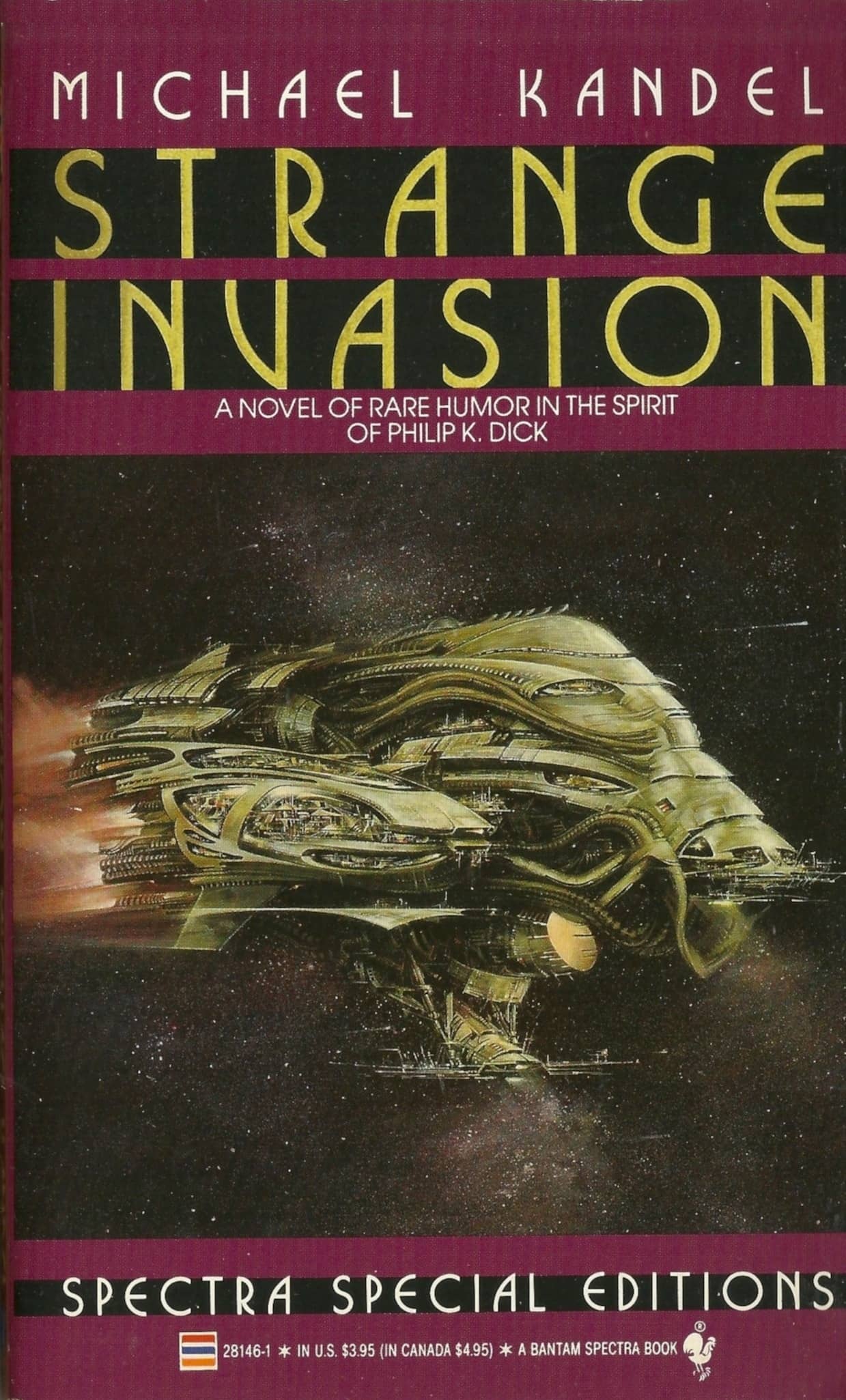
Vintage Treasures: Strange Invasion by Michael Kandel

Vintage Treasures: Strange Invasion by Michael Kandel

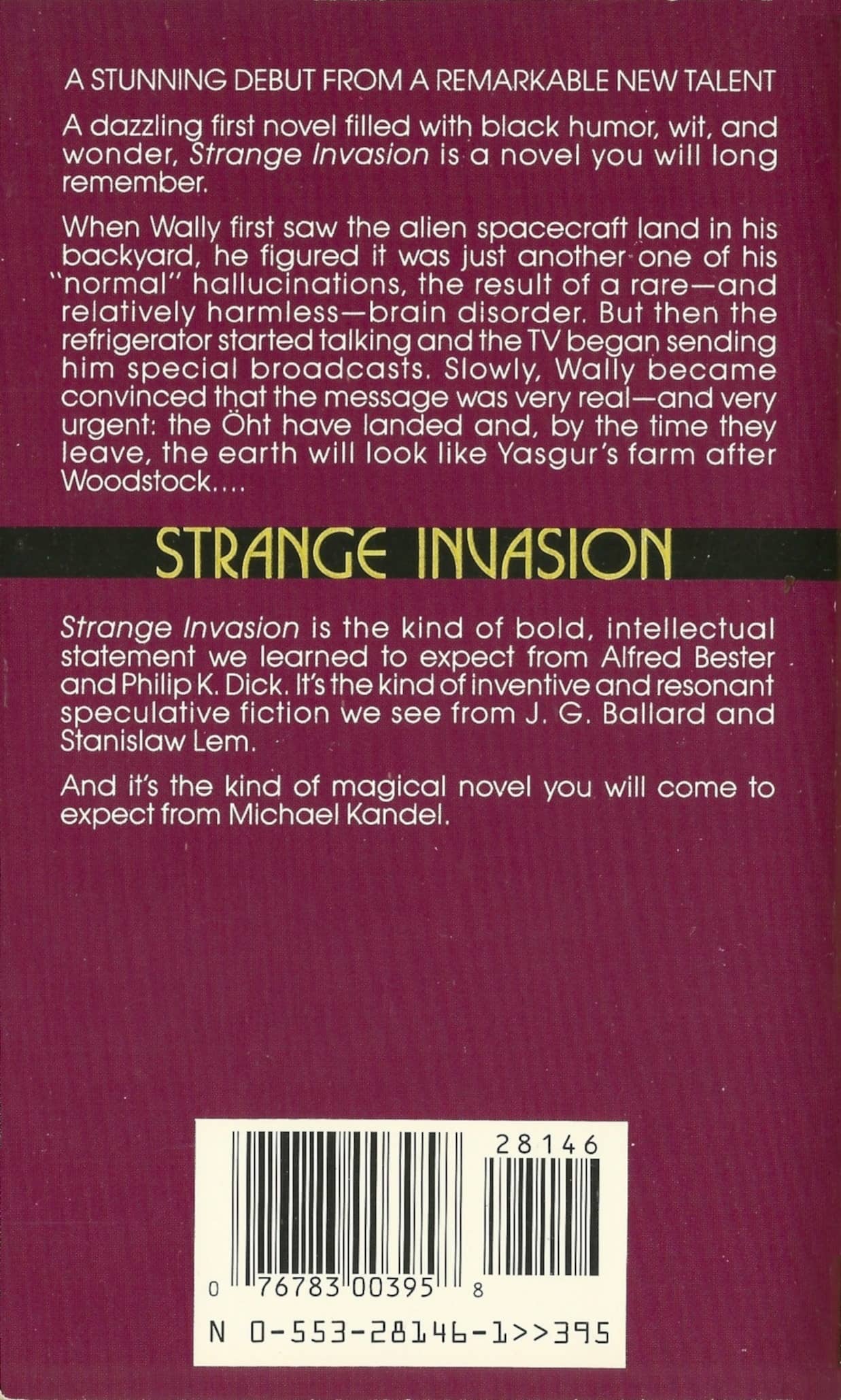
Strange Invasion-small Strange Invasion-back-small

Bantam Spectra Special Edition (1989), cover by Edwin B. Hirth, III

Michael Kandel began his career translating Stanislaw Lem’s Polish novels into English, including The Futurological Congress, The Cyberiad, and The Star Dairies. He was twice nominated for a National Book Award for his efforts. In 1989 he published his first novel with Bantam Spectra, Strange Invasion, followed quickly by In Between Dragons (1990), Captain Jack Zodiac (1991), and Panda Ray (1996). Since then he’s been writing mostly short fiction, most recently two stories in Gordon van Gelder’s 2017 anthology Welcome to Dystopia.

At the time Strange Invasion appeared, Bantam Spectra was the most prestigious imprint in the business. Founded by Lou Aronica when he was just 27 years old, its first release was David Brin’s Startide Rising (1983), which claimed a Hugo and a Nebula award. Spectra followed up with multiple hits, including Neal Stephenson’s debut Snow Crash (1992) and bestsellers from Isaac Asimov, Arthur C. Clarke, Raymond Feist, William Gibson, and Neil Gaiman — and, in 1996, a little book called A Game of Thrones, by George R.R. Martin. His acclaimed Full Spectrum anthology series ran for five volumes. Before he left Bantam in 1994, Aronica acquired five consecutive Nebula Award winners. In recent years the imprint has become moribund, and I believe it is now dead.

Strange Invasion came in 5th in the annual Locus Award for Best First Novel. But it has never been reprinted, and hasn’t seen a lot of modern attention. In some quarters it is still considered a modern classic, however. For example, here’s Don Web’s review at Bewildering Stories.

Read More Read More

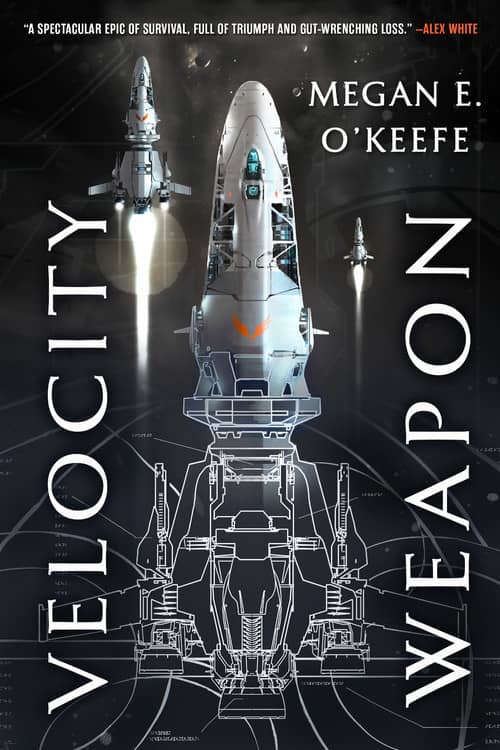
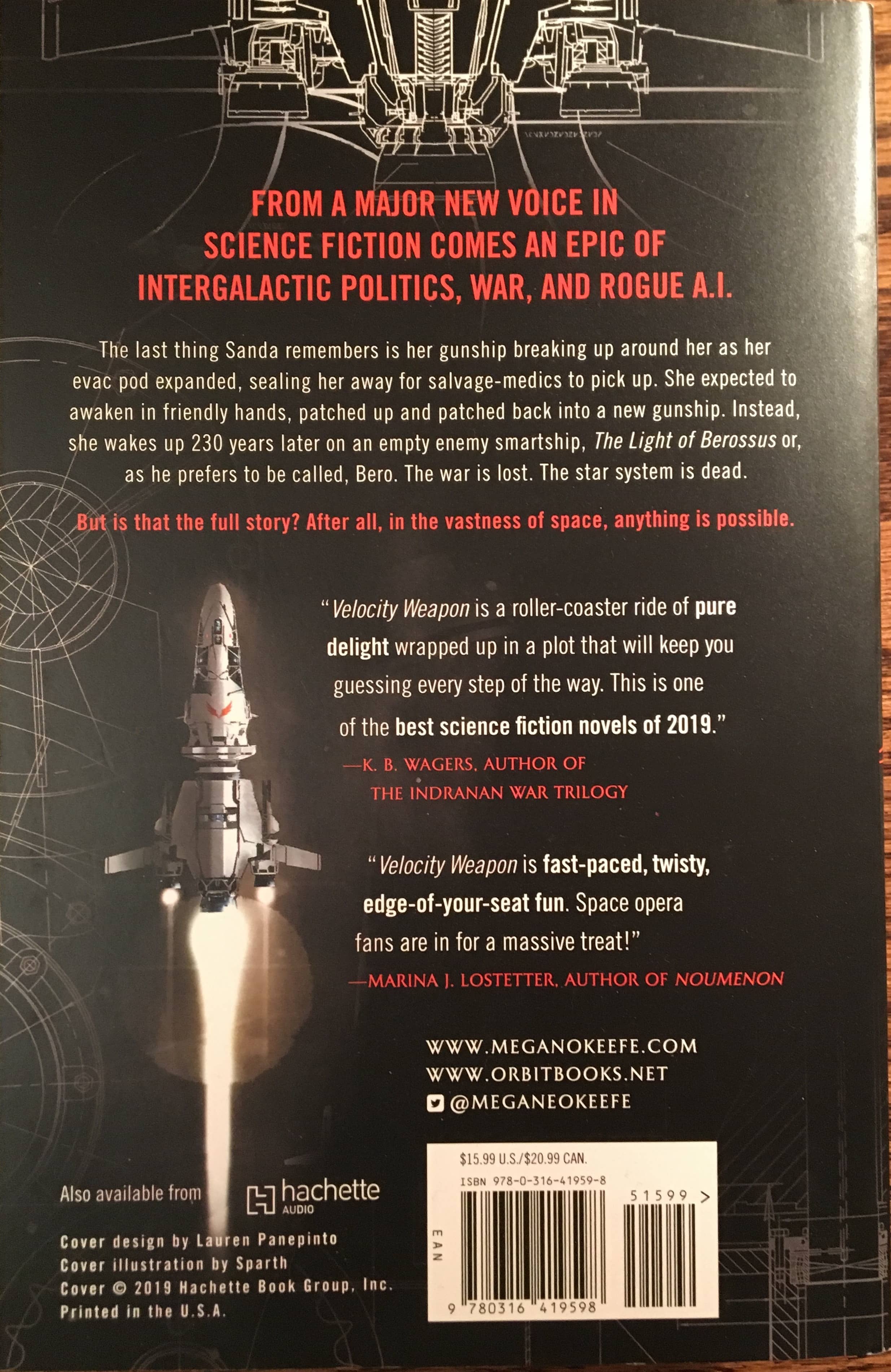
New Treasures: Velocity Weapon by Megan E. O’Keefe

New Treasures: Velocity Weapon by Megan E. O’Keefe

Velocity Weapon-small Velocity-Weapon-back-small

Two years ago I wrote a couple of articles about Megan E. O’Keefe’s Scorched Continent trilogy. The opening volume, her debut novel Steal the Sky, was nominated for the David Gemmell Morningstar award, and Beth Cato called it “like an epic steampunk Firefly.” The last book in that series appeared in 2017, so I’ve been keeping my eye out for something new from her, and it finally arrived early this summer. And it looks like space opera, my favorite new genre! Is the world good to me, or what. Here’s what Kirkus said about it.

The last thing Sanda Greeve remembers is her ship being attacked by rebel forces. She’s resuscitated from her evacuation pod missing half a leg — and two centuries — as explained to her by the AI of the rebel ship that rescued her. As The Light of Berossus — aka Bero — tells her, she may be the only living human for light-years around, as the war wiped both sides out long ago. Sanda struggles to process her injuries and her grief but finds friendship with the lonely spaceship itself. Sanda’s story is interspersed with flashbacks to the war’s effects on her brother, Biran, as well as scenes from a heist gone terribly wrong for small-time criminal Jules. The three narratives, separated by a vast gulf of time, are more intertwined than is immediately apparent. When Sanda rescues Tomas, another unlikely survivor, from his own evacuation pod, she learns that even time doesn’t end all wars….

Meticulously plotted, edge-of-your-seat space opera with a soul; a highly promising science-fiction debut.

That’s tantalizing enough for me; I bought a copy last week. I want to dig into this one right away — which may mean I have to spring for the audio version. I’ve been traveling a lot recently (9 states in the last two weeks), and I find listening to books while I’m driving is a lot more productive that trying to stay awake reading in a hotel room.

Velocity Weapon was published by Orbit in June, 2019. It is 505 pages, priced at $15.99 in trade paperback and $9.99 in digital formats. The cover is by Sparth. See all our recent New Treasures here.

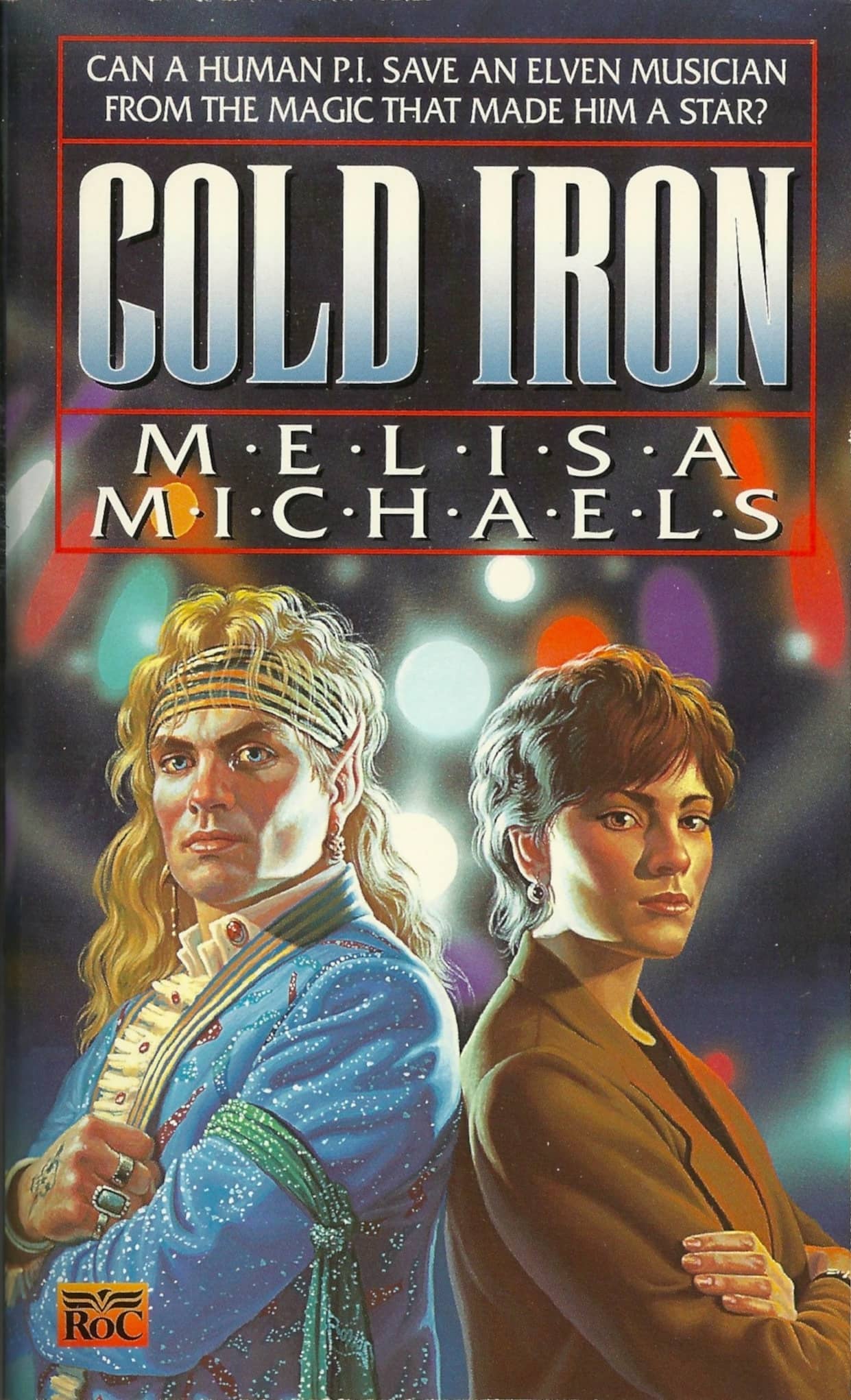
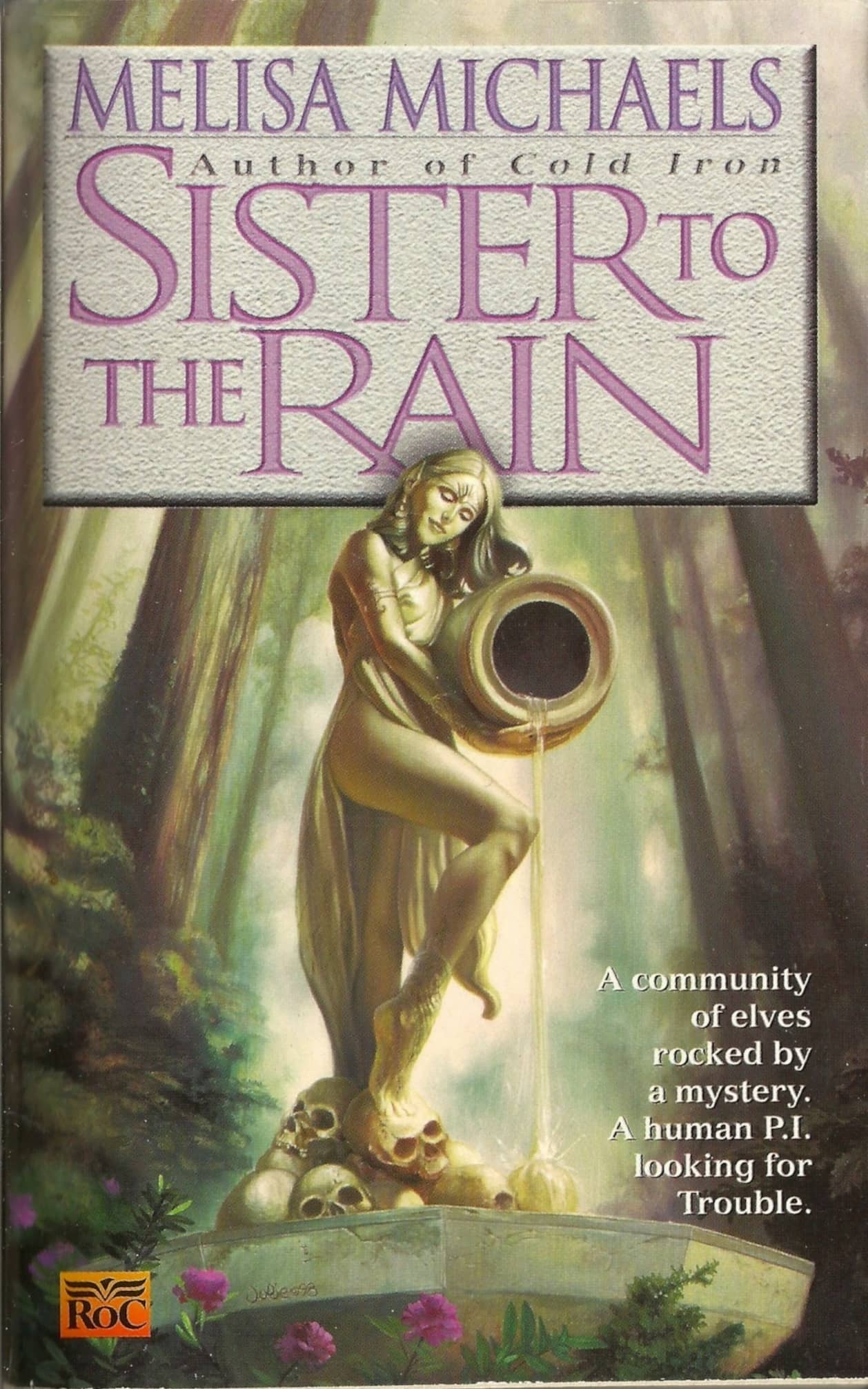
Vintage Treasures: Cold Iron and Sister to the Rain by Melisa Michaels

Vintage Treasures: Cold Iron and Sister to the Rain by Melisa Michaels

Cold Iron Melisa Michaels-small Sister to the Rain-small

I was preparing a Vintage Treasures article on Melisa Michaels on Saturday, and particularly her two-volume urban fantasy series featuring private eye Rosie Levine, Cold Iron (1997) and Sister to the Rain (1998), when I stumbled on this disturbing Facebook post by Rich Horton:

I have just learned that Melisa Michaels has died. I knew she had cancer, and she had recently reported that there wasn’t much more to be done, but it’s still sad news, and it seems to have come more quickly than she thought.

But I wanted to celebrate her — she was one of the first people to, as it were, welcome me to the SF community, when I first went online, and when I joined SFF Net. We had many great conversations (online) about SF and other matters. She is one of the people I really owe a debt to for helping me make friends in this field.

I read her novels, the Skyrider SF series and the Rosie Levine Fantasy/Mystery series, with much enjoyment… Melisa always made tremendous contributions to SFWA — as I recall, she was the first webmaster of the SFWA web page, right at the dawning of the WWW. I didn’t keep close track of her later on, especially after the demise of SFF Net, but we had reconnected to a small degree on Facebook. I offer condolences to her family, and I celebrate a life well-lived.

I didn’t know Melisa the way Rich did, but I was still very saddened by the news. And I thought we could help celebrate her life here by showcasing her novels. Rich discussed Cold Iron when it first appeared over 20 years ago; here’s an excerpt from the review at his website, Strange at Ecbatan.

Read More Read More

Future Treasures: Chilling Effect by Valerie Valdes

Future Treasures: Chilling Effect by Valerie Valdes

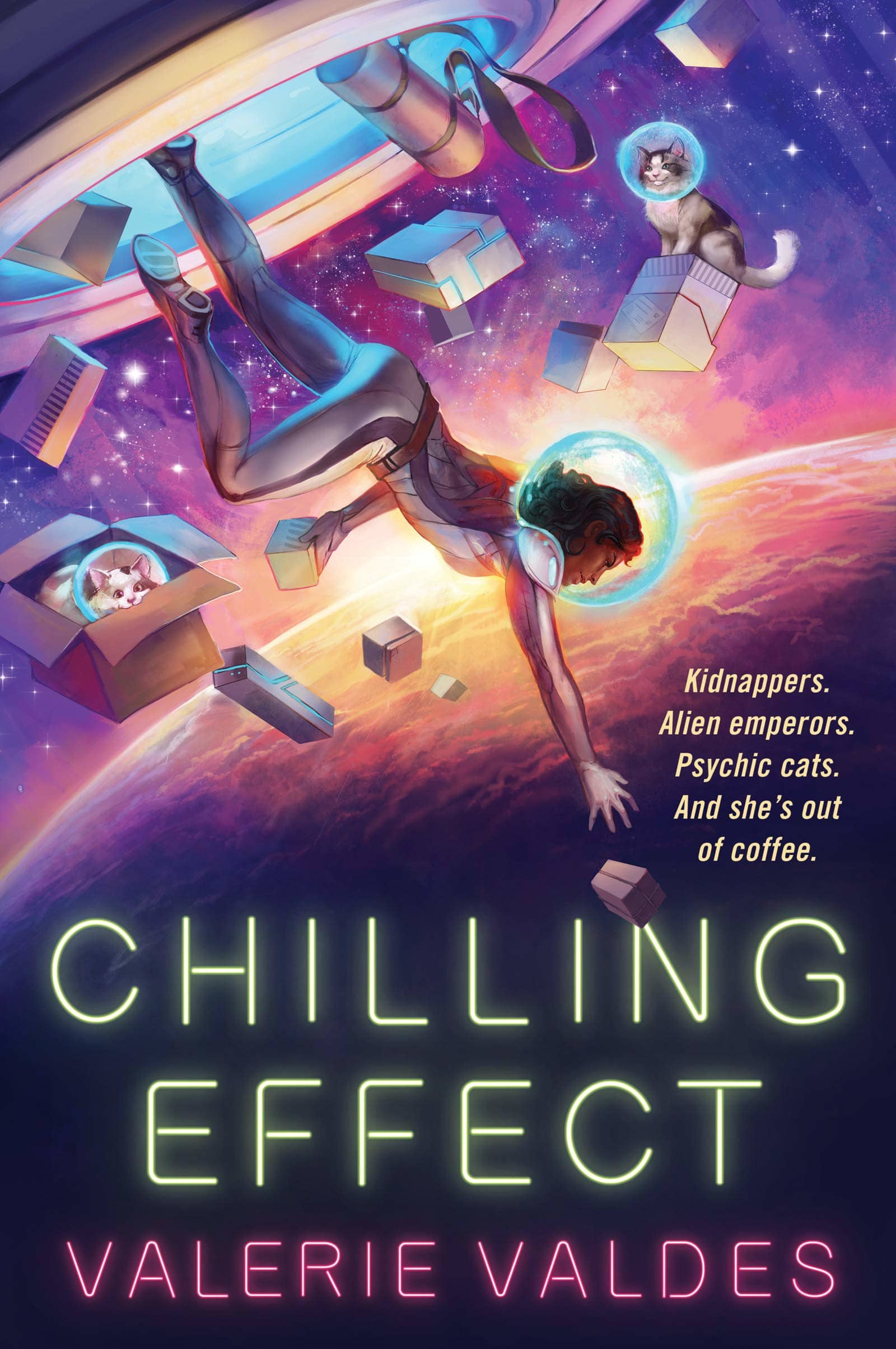
Chilling Effect-smallI’m still on a space opera kick. I know, I know, this has lasted for months now, and I should have moved on. But there’s just so many to choose from. It’s even spinning off sub-sub-genres, like Firefly-inspired space adventures (Aurora Rising, Starflight, and Becky Chambers’s Wayfarers Trilogy), gothic space opera (Gideon the Ninth by Tamsyn Muir), and now offbeat satires like Chilling Effect by Valerie Valdes.

Chilling Effect is Valdes’ first novel, but it’s getting lots of great press. Kirkus Reviews says “Valdes is a debut author, but this zany, rollicking adventure doesn’t show it. Jam-packed with weird aliens, mysterious artifacts, and lovable characters, there isn’t a single dull page… A tremendous good time and an impressive debut.” I’m in the mood for something a little less serious, and this looks like it will fit the bill.

A hilarious, offbeat debut space opera that skewers everything from pop culture to video games and features an irresistible foul-mouthed captain and her motley crew, strange life forms, exciting twists, and a galaxy full of fun and adventure.

Captain Eva Innocente and the crew of La Sirena Negra cruise the galaxy delivering small cargo for even smaller profits. When her sister Mari is kidnapped by The Fridge, a shadowy syndicate that holds people hostage in cryostasis, Eva must undergo a series of unpleasant, dangerous missions to pay the ransom.

But Eva may lose her mind before she can raise the money. The ship’s hold is full of psychic cats, an amorous fish-faced emperor wants her dead after she rejects his advances, and her sweet engineer is giving her a pesky case of feelings. The worse things get, the more she lies, raising suspicions and testing her loyalty to her found family.

To free her sister, Eva will risk everything: her crew, her ship, and the life she’s built on the ashes of her past misdeeds. But when the dominoes start to fall and she finds the real threat is greater than she imagined, she must decide whether to play it cool or burn it all down.

Chilling Effect will be published by Harper Voyager on September 17, 2019. It is 448 pages, priced at $16.99 in trade paperback and $11.99 in digital formats. See all our recent coverage of the best upcoming science fiction and fantasy here.

New Treasures: Echoes: The Saga Anthology of Ghost Stories edited by Ellen Datlow

New Treasures: Echoes: The Saga Anthology of Ghost Stories edited by Ellen Datlow

Echoes The Saga Anthology of Ghost Stories-small Echoes The Saga Anthology of Ghost Stories-back-small

Saga Press has produced some really extraordinary Saga Anthology volumes over the last few years, all edited by John Joseph Adams. They include:

Loosed upon the World: The Saga Anthology of Climate Fiction, edited by John Joseph Adams (2015)
What the #@&% Is That?: The Saga Anthology of the Monstrous and the Macabre, edited by John Joseph Adams (2016)
Cosmic Powers: The Saga Anthology of Far-Away Galaxies, edited by John Joseph Adams (2017)

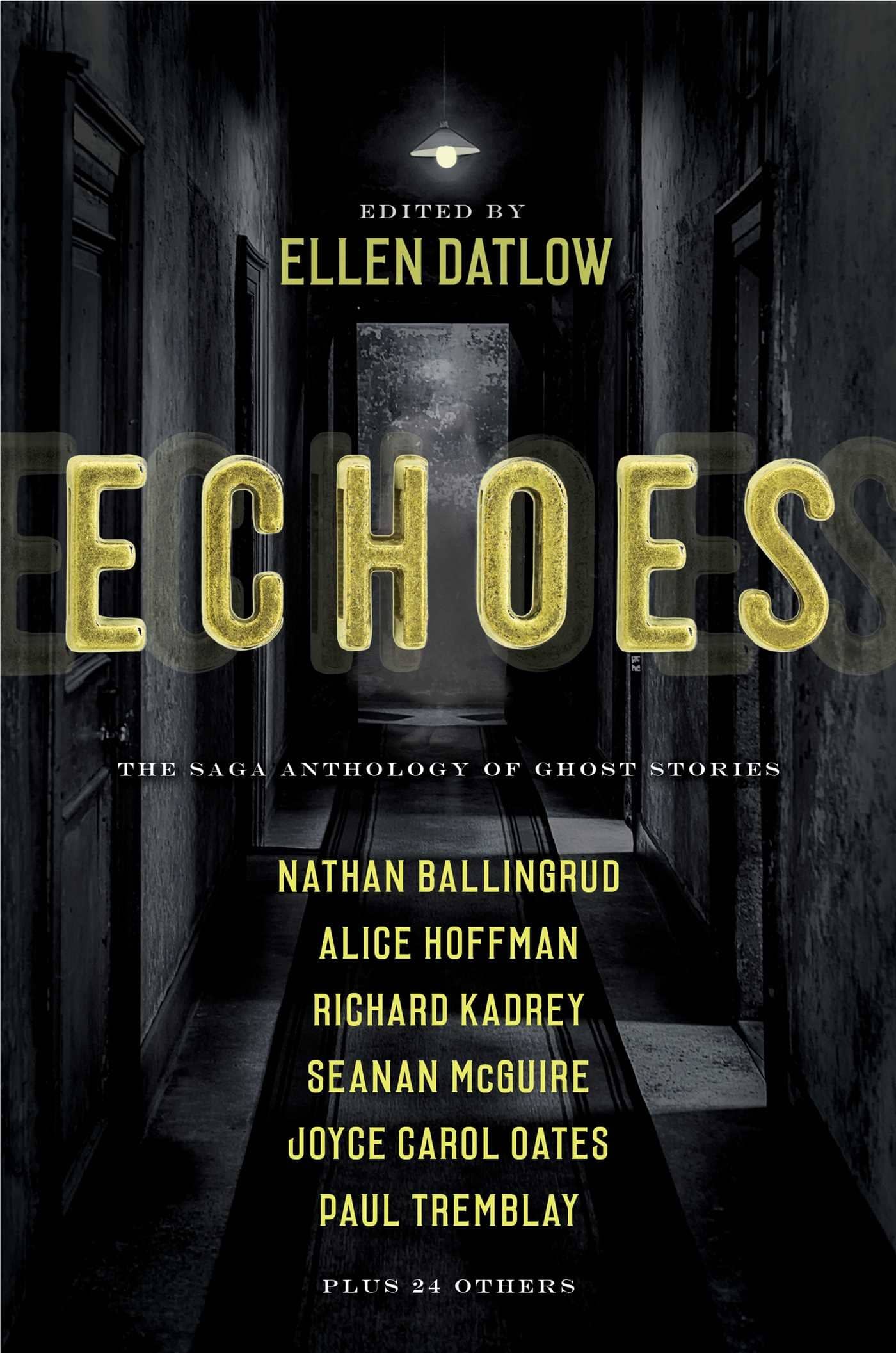
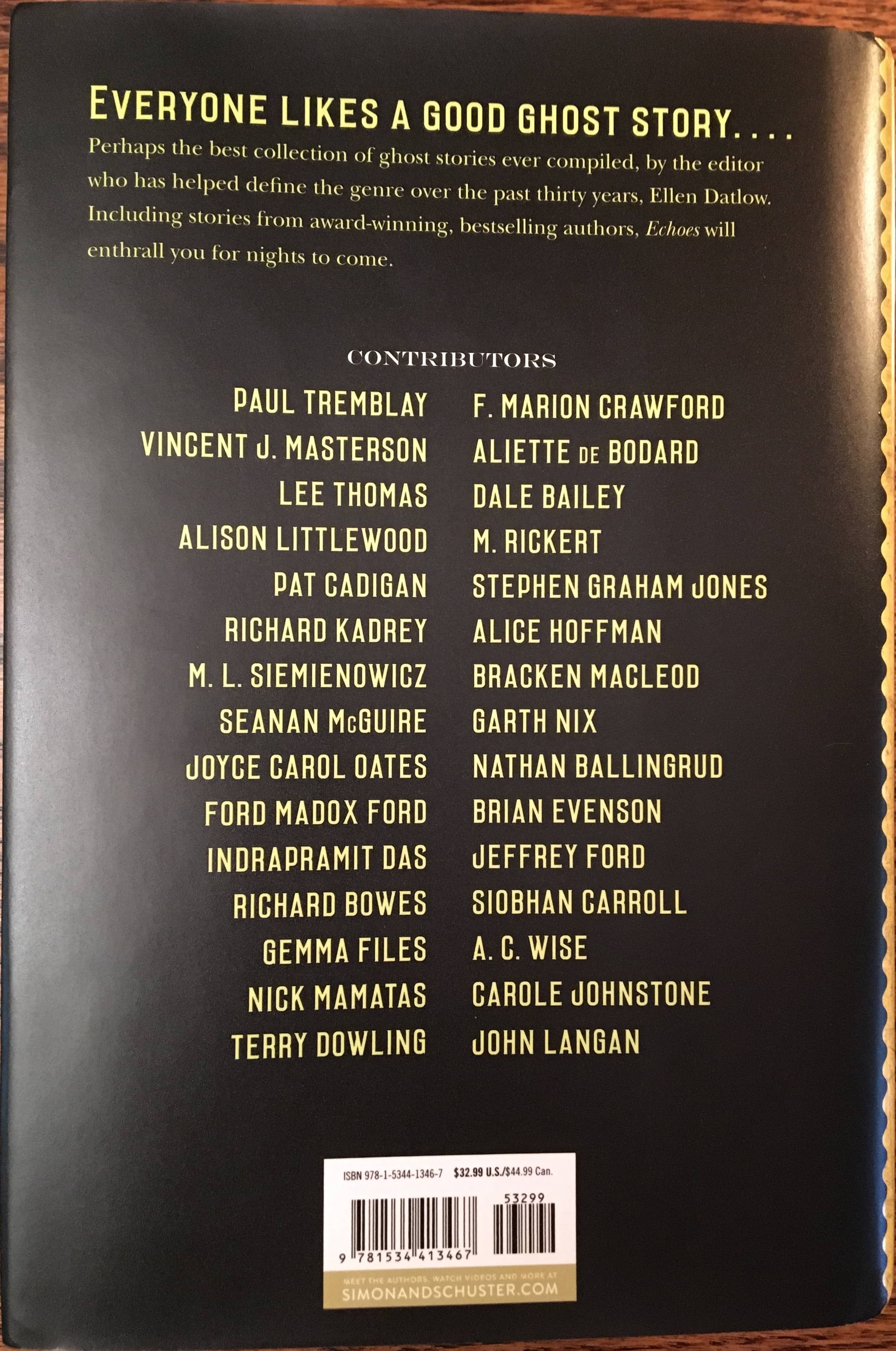
Last week saw a massive new entry in their annual anthology series. Echoes: The Saga Anthology of Ghost Stories collects brand new stories (and three reprints) by a Who’s Who of modern horror writers: John Langan, Nathan Ballingrud, Paul Tremblay, Pat Cadigan, Seanan McGuire, Joyce Carol Oates, Richard Bowes, Gemma Files, Nick Mamatas, Terry Dowling, Aliette de Bodard, Dale Bailey, Alice Hoffman, Garth Nix, Jeffrey Ford, M. Rickert, and many others. It’s a feast for horror fans, in a year that hasn’t seen many decent scary anthologies. Over at Tor.com, Lee Mandelo already has an enthusiastic review.

Echoes is an absolute behemoth of an anthology… Some are ghost stories with science fictional settings, others purely fantastical, others still realist — but there’s always the creeping dread, a specter at the corner of the story’s vision. The sheer volume of work Datlow has collected in Echoes fills out the nooks and crannies of the theme with gusto… I was immensely satisfied by the big tome, and I’d recommend it for anyone else who wants to curl up around a spooky yarn — some of which are provocative, some of which are straightforward, all of which fit together well.

Here’s a few of Lee’s story recommendations.

Read More Read More

Vintage Treasures: In the Drift by Michael Swanwick

Vintage Treasures: In the Drift by Michael Swanwick

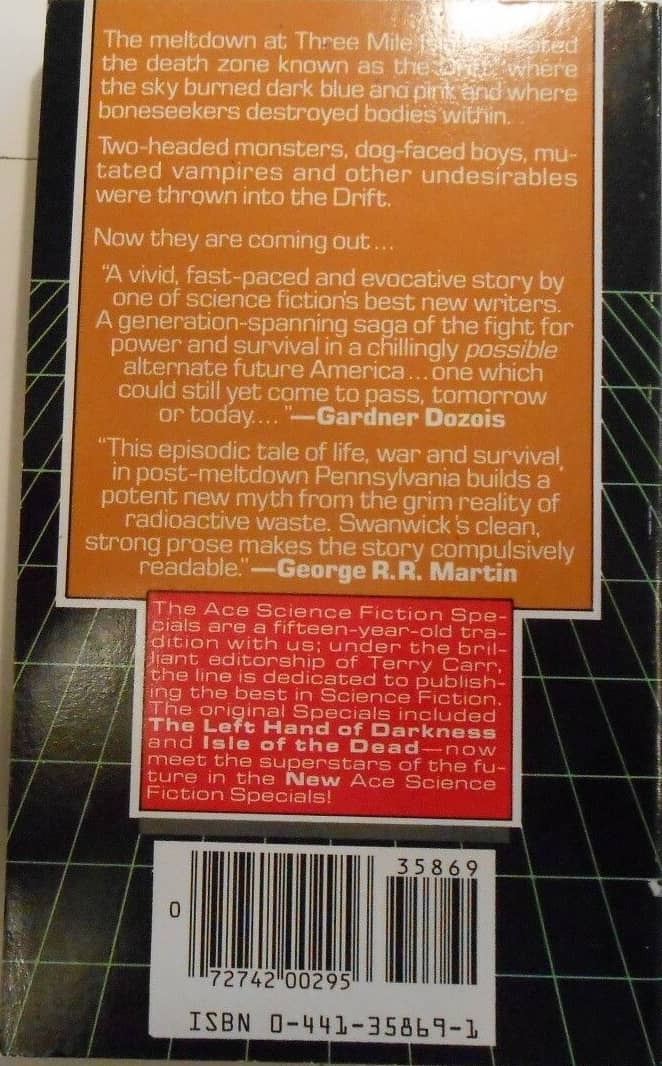
In the Drift Ace Science Fiction Special-small In the Drift Ace Science Fiction Special-back-small


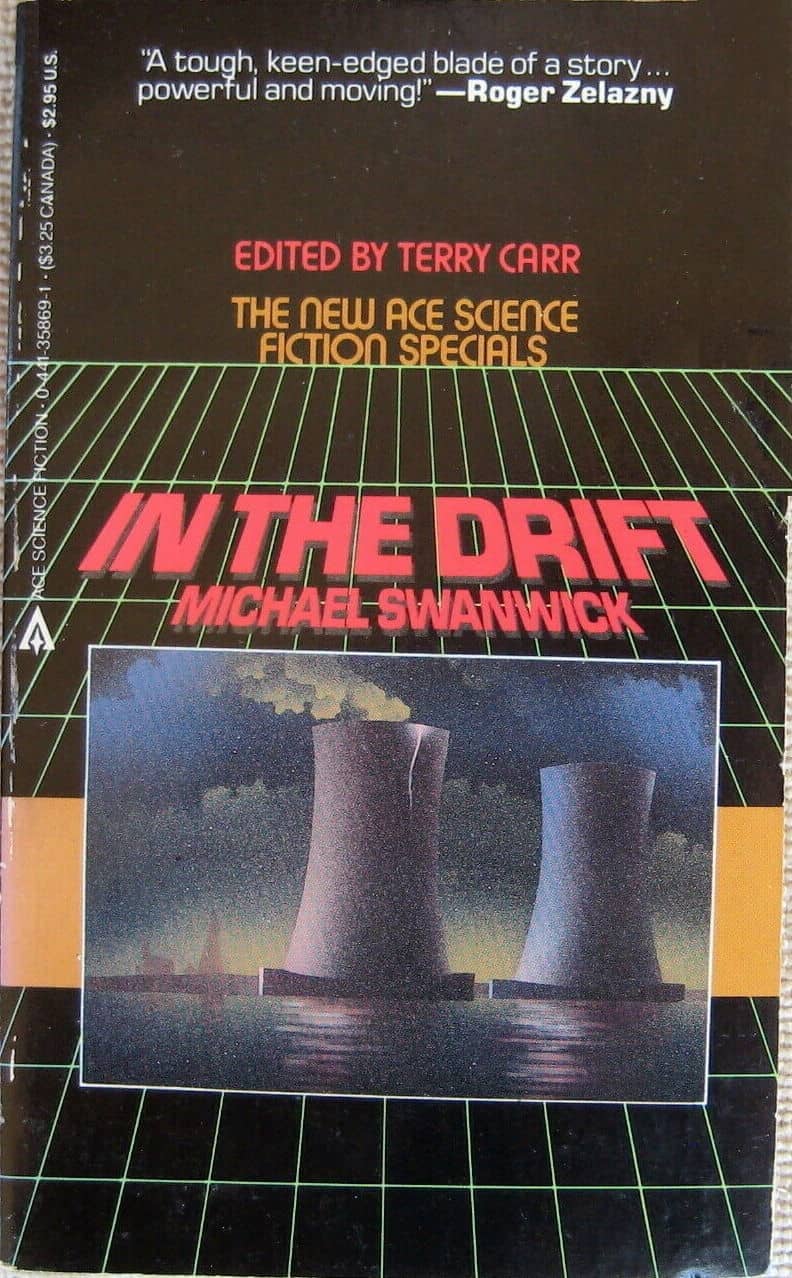
Ace Special edition of In the Drift (1985). Cover by Ron Lieberman

In the Drift was Michael Swanwick’s debut novel. It came in third for the Locus Award for Best First Novel, and was warmly reviewed by the usual sites, including Analog, Locus, and the New York Daily News.

It’s a science fantasy novel that imagines what might have happened if the 1979 partial meltdown of Reactor Number 2 at Three Mile Island, New York — a PR nightmare that almost single-handedly brought America’s brief infatuation with atomic power to an end — had instead been a full-blown nuclear disaster, contaminating the surrounding geography for hundreds of years and precipitating an era of mutants and monsters.

Now, that already sounds like something I’d be interested in. But what drew me to In the Drift — sucked me in like a nuclear-powered vacuum cleaner — was a casual read of the very first page. It’s a gorgeously rendered visualization of a postapocalyptic dark age, filled with vampires and mutants, laser guns, and an Italian Market. Seriously. Check it out below.

Read More Read More

The Barnes & Noble Sci-Fi & Fantasy Blog on the Best Science Fiction & Fantasy Books of August 2019

The Barnes & Noble Sci-Fi & Fantasy Blog on the Best Science Fiction & Fantasy Books of August 2019

Hollow Kingdom Kira Jane Buxton-small The Cruel Stars John Birmingham-small The Gurkha and the Lord of Tuesday Saad Z. Hossain-small

Andrew Liptak was fired from his position as Weekend Editor at The Verge two weeks ago, which means that we’ll no longer get to enjoy his monthly Best SF Books lists (you can see while we’ll miss them so much right here). Fortunately he was just hired on to write news items for Tor.com, and he’s picked up some freelance work at The Barnes and Noble Sci-Fi & Fantasy Blog, which seems like the perfect home for him.

In the meantime, Jeff Somers at the B&N Blog continues his excellent work cataloging the most interesting new releases each month. For August he’s itemized 22 items, including new books by Julie E. Czerneda, Kameron Hurley, Marie Brennan, R.F. Kuang, Tricia Sullivan, and many others. Here’s a few of the highlights.

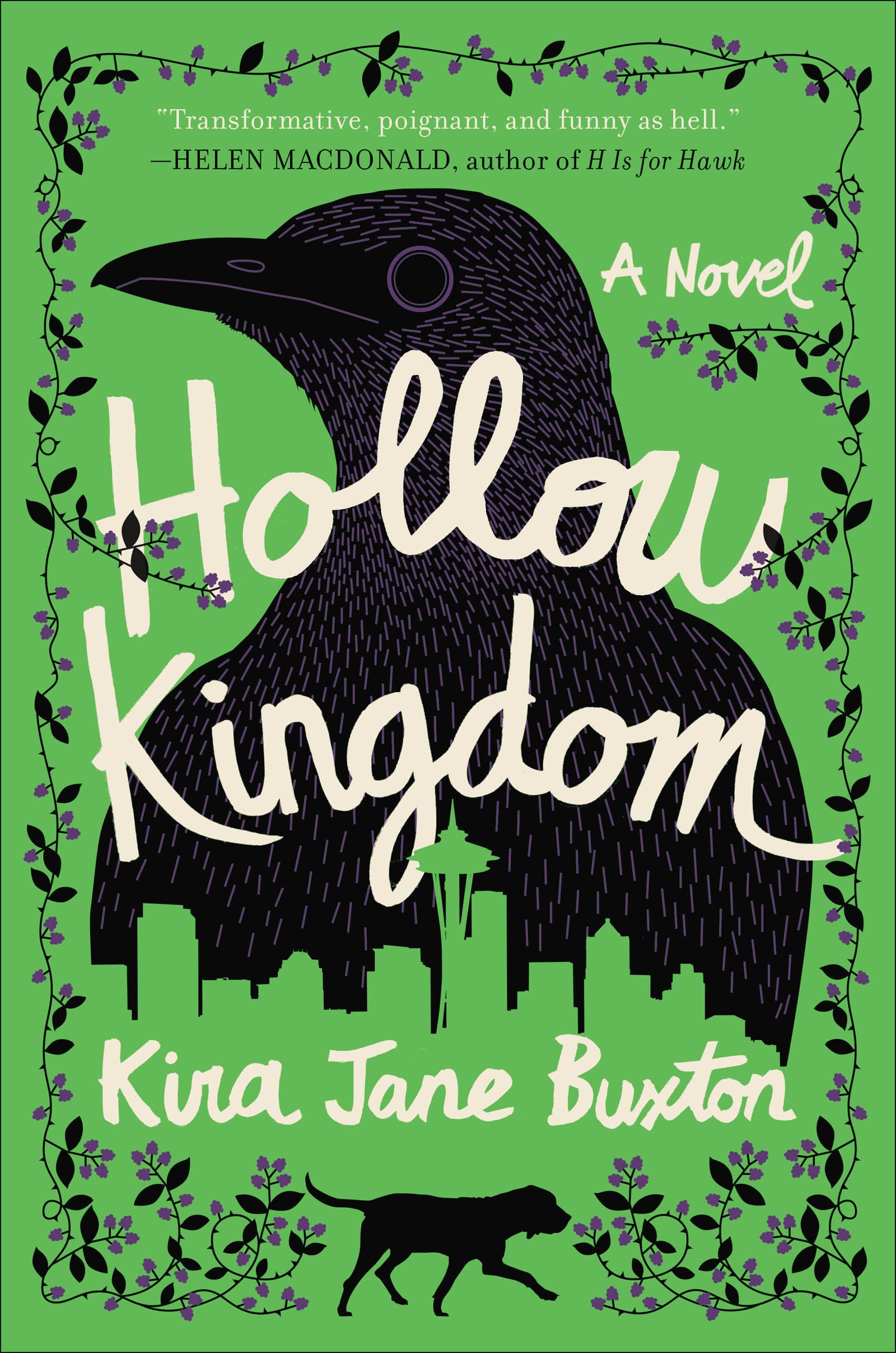
Hollow Kingdom, by Kira Jane Buxton (Grand Central Publishing, 320 pages, $27 in hardcover/$13.99 digital, August 6, 2019) — cover by Jerrod Taylor

Kira Jane Buxton’s debut puts a deliriously original spin on the viral zombie apocalypse as human civilization’s collapse is witnessed — and challenged — by S.T., a pet crow. S.T. may be a bird, but he loves many aspects of human culture, and he’s alarmed when his owner, Big Jim, begins to behave strangely and undergo physical changes. Realizing that something is terribly wrong, S.T. teams up with bloodhound Dennis and is soon tasked with saving as many pets as possible, even as humanity descends into chaos. It’s a darkly hilarious twist on the formula, proving again why the zombie novel subgenre is nigh-unkillable.

Read More Read More

New Treasures: The Municipalists by Seth Fried

New Treasures: The Municipalists by Seth Fried

The Municipalists-small The Municipalists-back-small

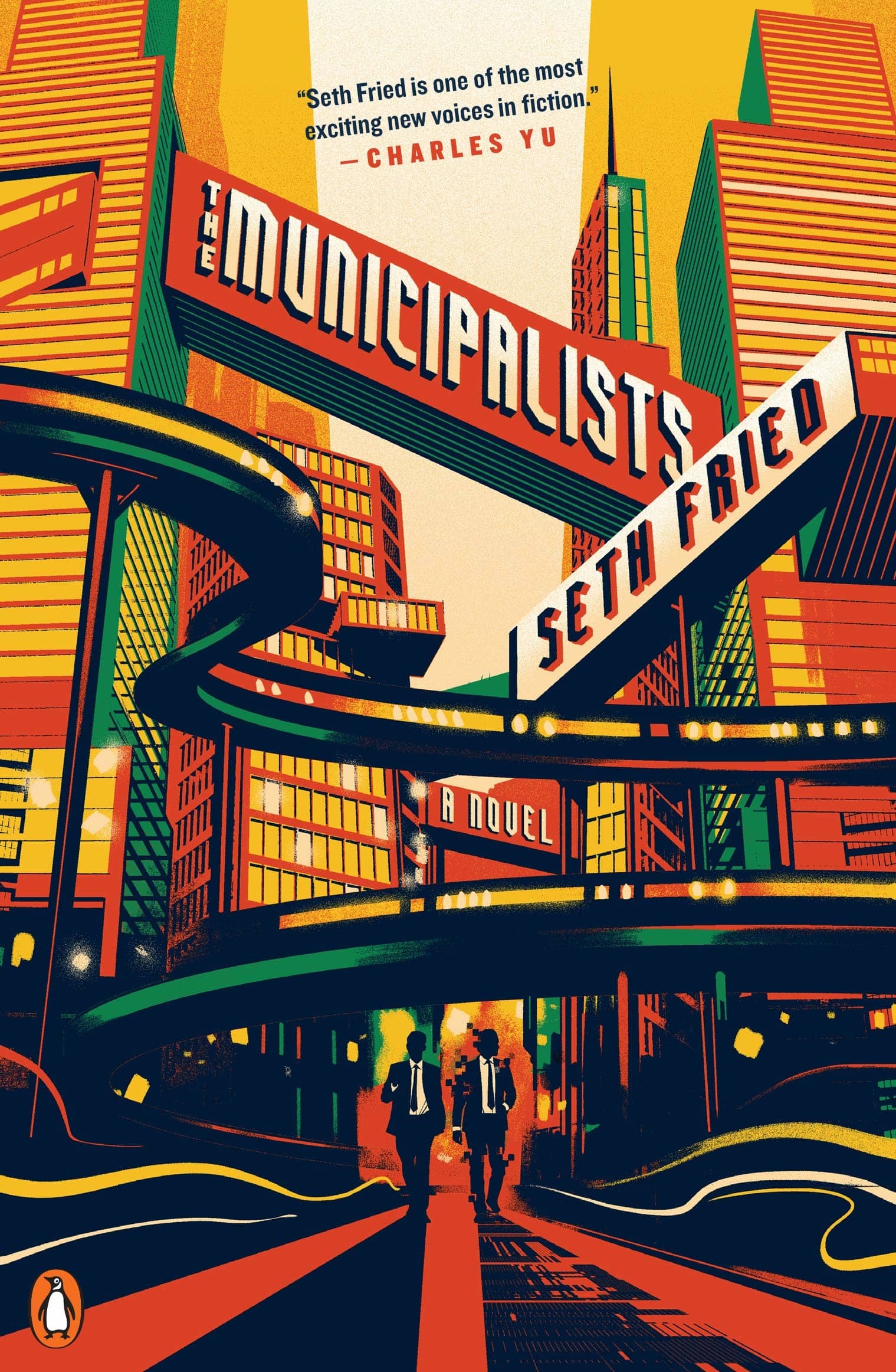
I’ve been slowing down my acquisition of new books recently, mostly for reasons of space. But occasionally a title will prove just too irresistible, as happened last week with Seth Fried’s debut, about a human and his AI partner on an adventure to save the great American city of Metropolis. It was Library Journal‘s “Debut of the Month,” and named one of the best books of the month by The Verge, io9, Amazon Books, Book of the Month Club, Tor.com, and others. Here’s Leah Schnelbach’s take at Tor.com.

The Municipalists, Seth Fried’s debut novel, is a futuristic noir that isn’t quite a noir; a bumpy buddy cop story where the cops are a career bureaucrat and computer program… It’s also deeply, constantly funny, and able to transform from a breezy page-turner into a serious exploration of class and trauma in a few well-turned sentences.

At first it seems like a wacky buddy cop book. The buttoned-down bureaucrat Henry Thompson is a proud member of United States Municipal Survey, traveling around the country to make improvements to city infrastructures… the kidnapping of a beloved teen celebrity [has] left the city reeling, only for people to be knocked truly punch-drunk by a series of terrorist attacks. The attacks and the kidnapping might be related. We’re soon taken all the way into sci-fi territory however when Henry gains a partner — a snarky AI called OWEN who is positively giddy about being sentient…

Seth Fried has been writing fiction and humor for years now, with excellent short work popping up in McSweeney’s, Tin House, One Story, and The New Yorker — his Tin House story “Mendelssohn”, about a Raccoon of Unusual Size, was a particular favorite of mine. His 2011 short story collection, The Great Frustration, was wildly diverse. Now with The Municipalists he proves that he can orchestrate a tight, complicated plot… Fried has also given us an endearing protagonist in Henry Thompson, and an all-time classic drunken AI, and if there’s any justice in the cities in this reality this will be the first book in a Municipalists-verse.

The Municipalists was published by Penguin Books on March 19, 2019. It is 265 pages, priced at $16 in trade paperback and $11.99 in digital formats. The cover is by Matthew Taylor. Read the first ten pages here, and see all our recent New Treasures here.

Vintage Treasures: The Starfire Saga by Roby James

Vintage Treasures: The Starfire Saga by Roby James

Roby James Commencement-small

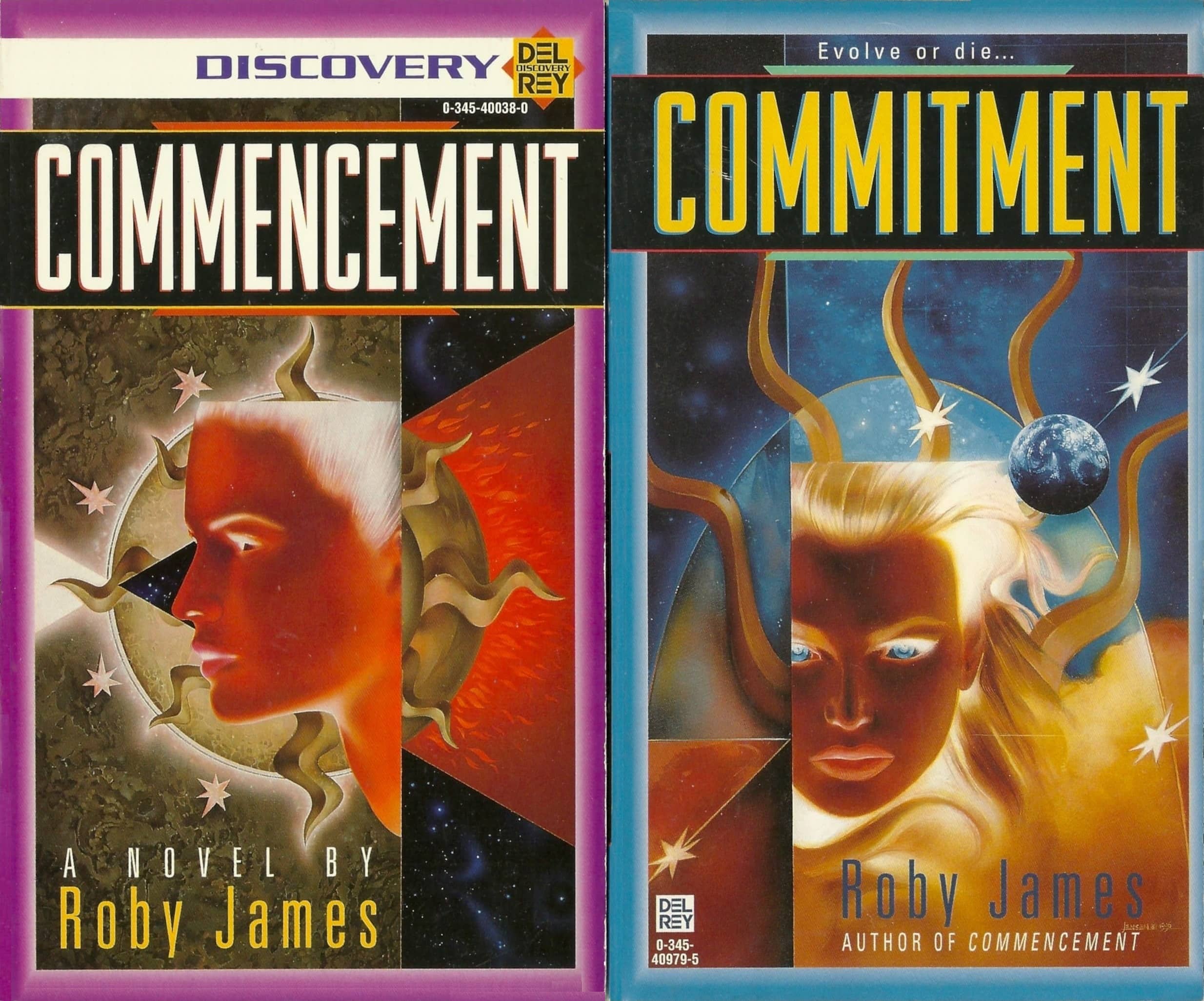
Covers by Bruce Jensen

The Ace Science Fiction Specials, a series of first novels edited by uber-editor Terry Carr, are legendary today. Between 1984-88 Carr published debuts by writers who’d go on to towering careers, including William Gibson, Kim Stanley Robinson, Lucius Shepard, Howard Waldrop, Michael Swanwick, Jack McDevitt, Richard Kadrey, and many others.

The Ace Science Fiction Specials get all the attention, but they certainly weren’t unique. Many publishers tried their hand at something similar, with varying success. One of my favorites was the Del Rey Discovery line (1992-99), which published first novels by Nicola Griffith, Mary Rosenblum, L. Warren Douglas, K. D. Wentworth, and many more — including Roby James, whose first two novels, Commencement and Commitment, appeared in ’96 and ’97. Together they make up the Starfire Saga.

“Roby James” is the pen name of Rhoda Blecker. In a 1996 interview with the Los Angeles Times, Blecker shared some of the genesis  and heavy themes of the tale. Here’s an excerpt, in which she talks about its major Jewish themes, and losing her mother when she was eleven.

Read More Read More