Browsed by
Author: John ONeill

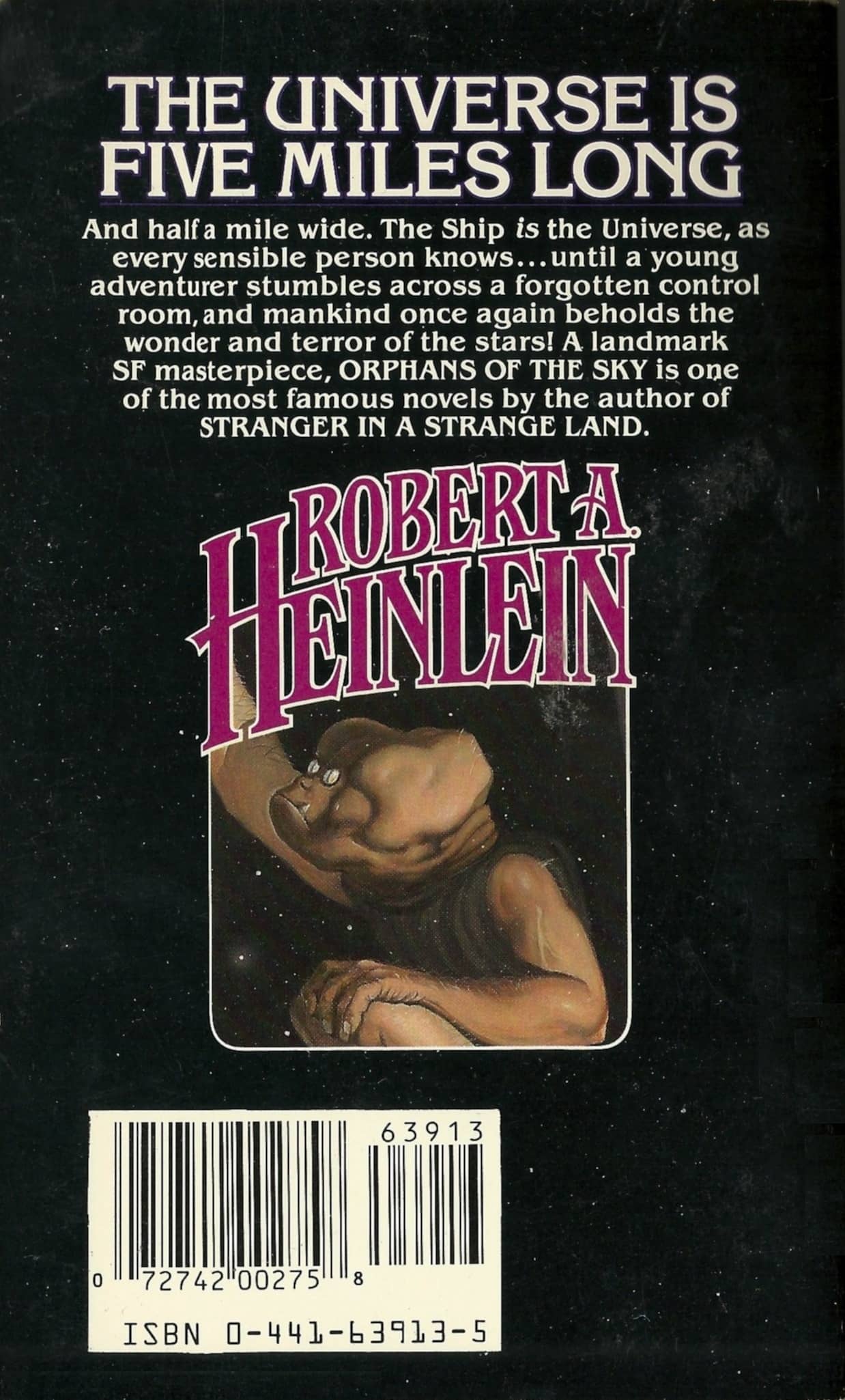
New Treasures: The Revisionaries by A. R. Moxon

New Treasures: The Revisionaries by A. R. Moxon

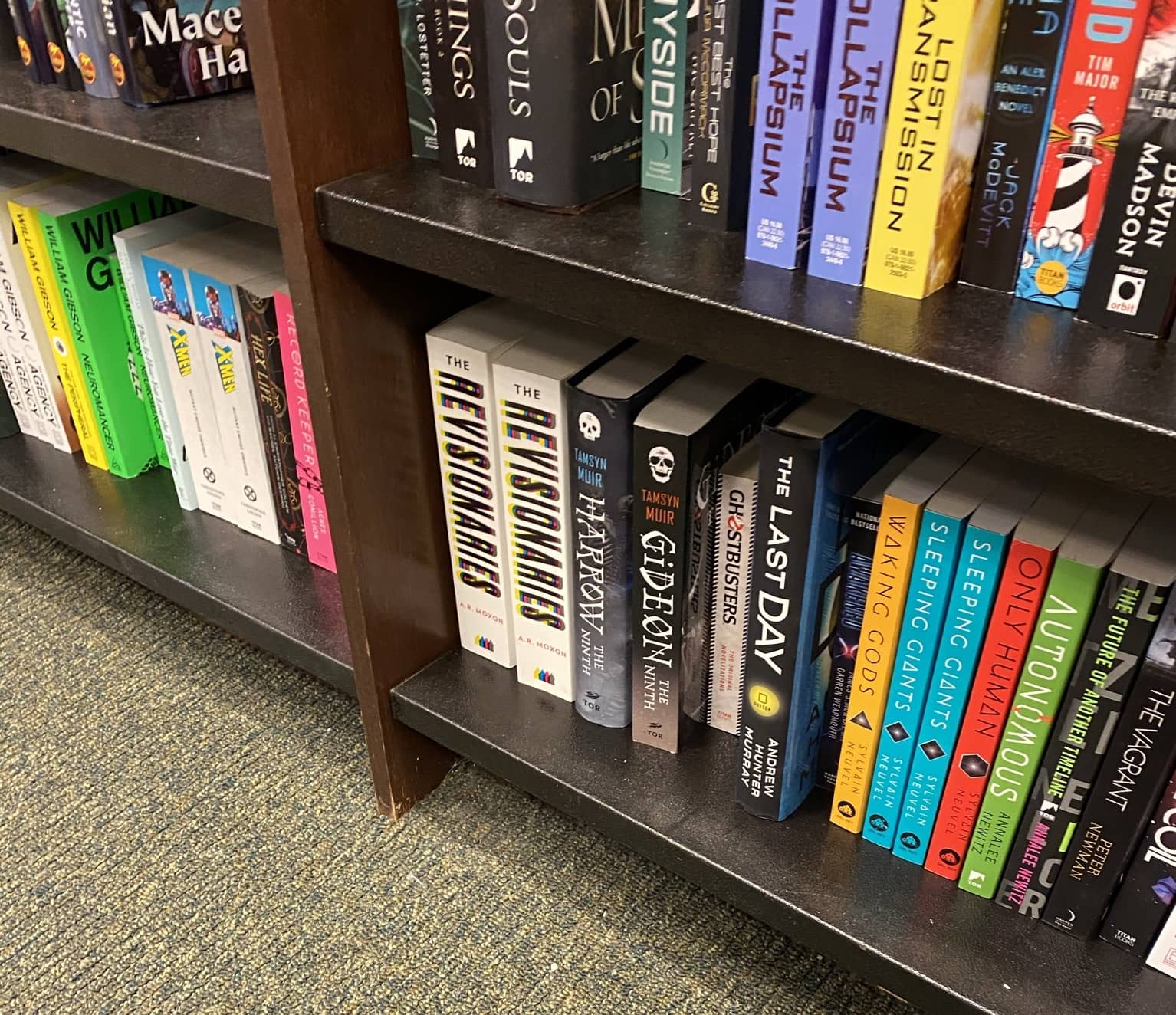
I made my monthly pilgrimage to Barnes & Noble today, to pick up the latest issues of Asimov’s SF and Analog, and the last print issue of Interzone. And also to browse the SF section to see what was new.

I found a deep-sea horror novel by Mira Grant that I’ll probably write about later, the opening novel in a new Iron Druid spin-off series by Kevin Hearne, and The Revisionaries, a 600-page debut novel by A.R. Moxon that sounded very intriguing. When I came home and did a quick search, I found a lot of acclaim and tantalizing plot summaries — none of which gave me a true sense of what the book was about.

Martin Seay (author of The Mirror Thief) calls it “A headlong adventure yarn set in a vividly-imagined cityscape,” and The New York Times labeled it “A spectacular invention… One shudders to imagine what Moxon would do with the means to make a horror movie.” And writing at NPR, Black Gate blogger emeritus Amal El-Mohtar says “I’m almost irritated by how much I enjoyed it… I’m astonished by how compulsively readable it is.” Here’s a clip from her full review.

The Revisionaries takes place in at least three locales across at least four levels of reality and is composed in at least five typefaces. It is, by turns and often at once, surreal, absurd, horrifying, earnest and satirical….

I could say that it begins in a derelict place called Loony Island, with the sudden release of patients from a mental hospital, and becomes a retelling of the Biblical story of Jonah by way of a travelling circus and heaps of metafictional meditation on the difference between gods and authors, and that would be a start. It’s a literary puzzle-box that also put me in mind of a tidier, more self-conscious The Filth, and if I keep making comparisons to comics it’s because the book invites them, from its epigraph at the beginning quoting Scott McCloud to the transformation of a key character into a villainous caricature of Superman to the literal appearance, on page 415, of a really good cartoon.

Given all that, I’m astonished by how compulsively readable it is… Moxon’s a genuinely wonderful storyteller.

The Revisionaries was published by Melville House on December 1, 2020. It is 608 pages, priced at $19.99 in trade paperback. Get all the details here.

See all our recent New Treasures here.

Space Opera That Reshapes the Genre: A Desolation Called Peace, Book Two of Teixcalaan by Arkady Martine

Space Opera That Reshapes the Genre: A Desolation Called Peace, Book Two of Teixcalaan by Arkady Martine

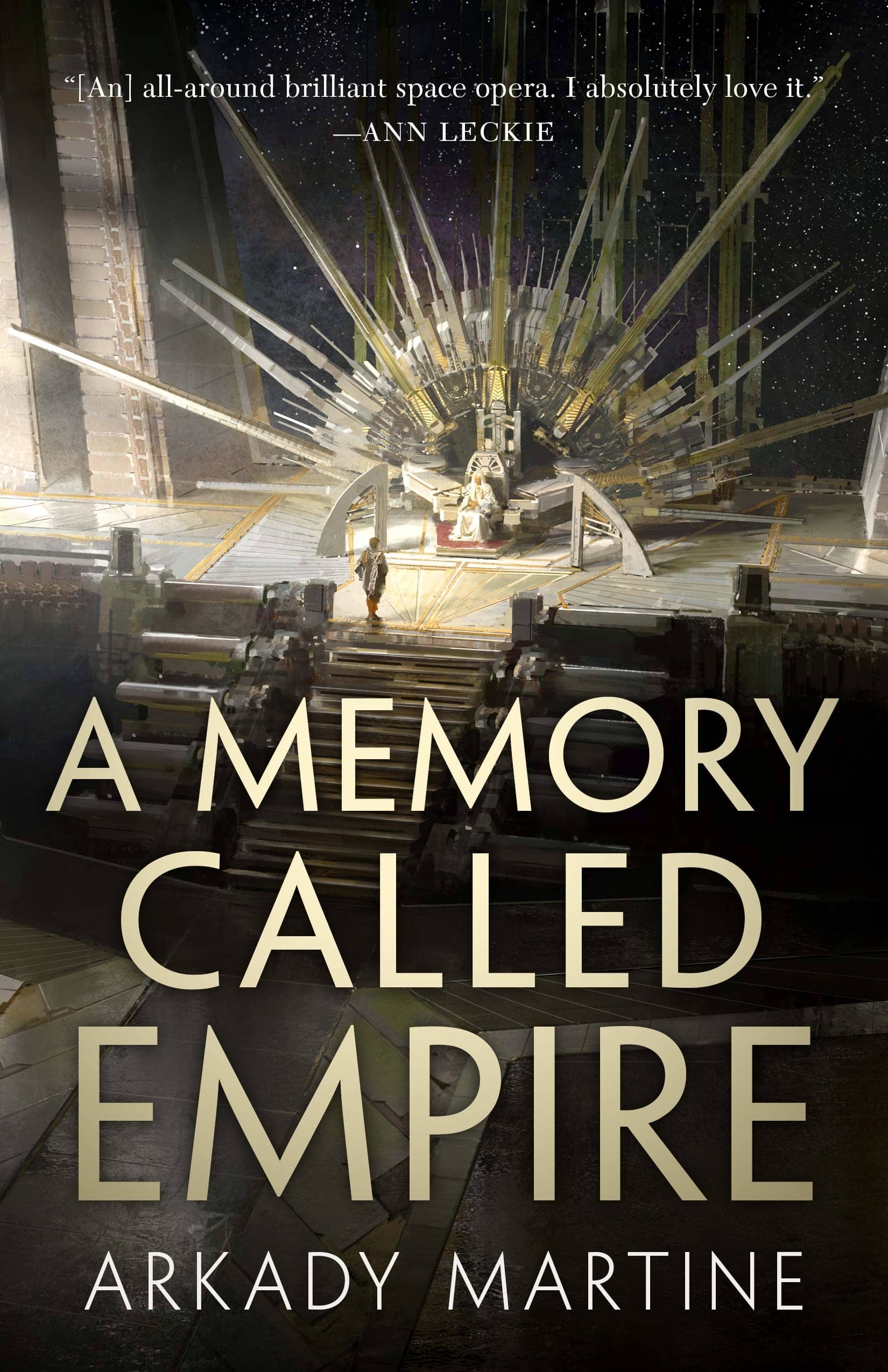
The first two novels in the Teixcalaan series from Tor Books. Covers by Jaime Jones

Arkady Martine’s debut novel A Memory Called Empire was published in 2019, and was nominated for major awards, including both the Nebula and Hugo. Debuts don’t usually win awards, but that didn’t stop Martine — her first book won the Hugo Award for Best Novel, beating out competition from Seanan McGuire, Tamsyn Muir, Kameron Hurley, Charlie Jane Anders, and others. Andrew Liptak summed up some of the reasons in his rave review at The Verge, which called it “a brilliant blend of cyberpunk, space opera, and political thriller.” Here’s an excerpt.

Ambassador Mahit Dzmare, an emissary from the distant Lsel Station, is called to the center of the vast Teixcalaanli Empire after her predecessor winds up dead… The novel is set in the very distant future: humanity has spread throughout the stars, traveling from system to system by way of a stargate-style network. That’s allowed the Teixcalaanli Empire — a hungry, expansion-minded society — to spread its influence throughout inhabited space, its culture and knowledge stretching from system to system. Mahit Dzmare is the ultimate fish-out-of-water when she’s abruptly assigned to replace Ambassador Yskandr Aghavn, who perished in the empire’s capital city. Her home, a self-sustaining habitat, has remained free of the empire’s oversight, something of paramount importance to the inhabitants of Lsel station…

Unbeknownst to the Teixcalaanlis, the inhabitants of Lsel Station have a particularly advanced technology at their disposal: an Imago, a thumb-sized device implanted in their brainstem that essentially grafts a digital persona into their mind…

It’s an excellent, gripping novel with a brisk plot, outstanding characters, and plenty to think about long after it’s over.

The much anticipated sequel, A Desolation Called Peace, will be published by Tor Books on March 2, 2021. It is 496 pages, priced at $26.99 in hardcover and $13.99 in digital formats. The cover is by Jaime Jones. Publishers Weekly calls the second volume “A dizzying, exhilarating story of diplomacy, conspiracy, and first contact… This complex, stunning space opera promises to reshape the genre.” Read an excerpt at Gizmodo.

See all our recent coverage of the best new series SF and Fantasy here.

Sunken Realms and a Road of Bones: Tales From the Magician’s Skull #5, edited by Howard Andrew Jones

Sunken Realms and a Road of Bones: Tales From the Magician’s Skull #5, edited by Howard Andrew Jones

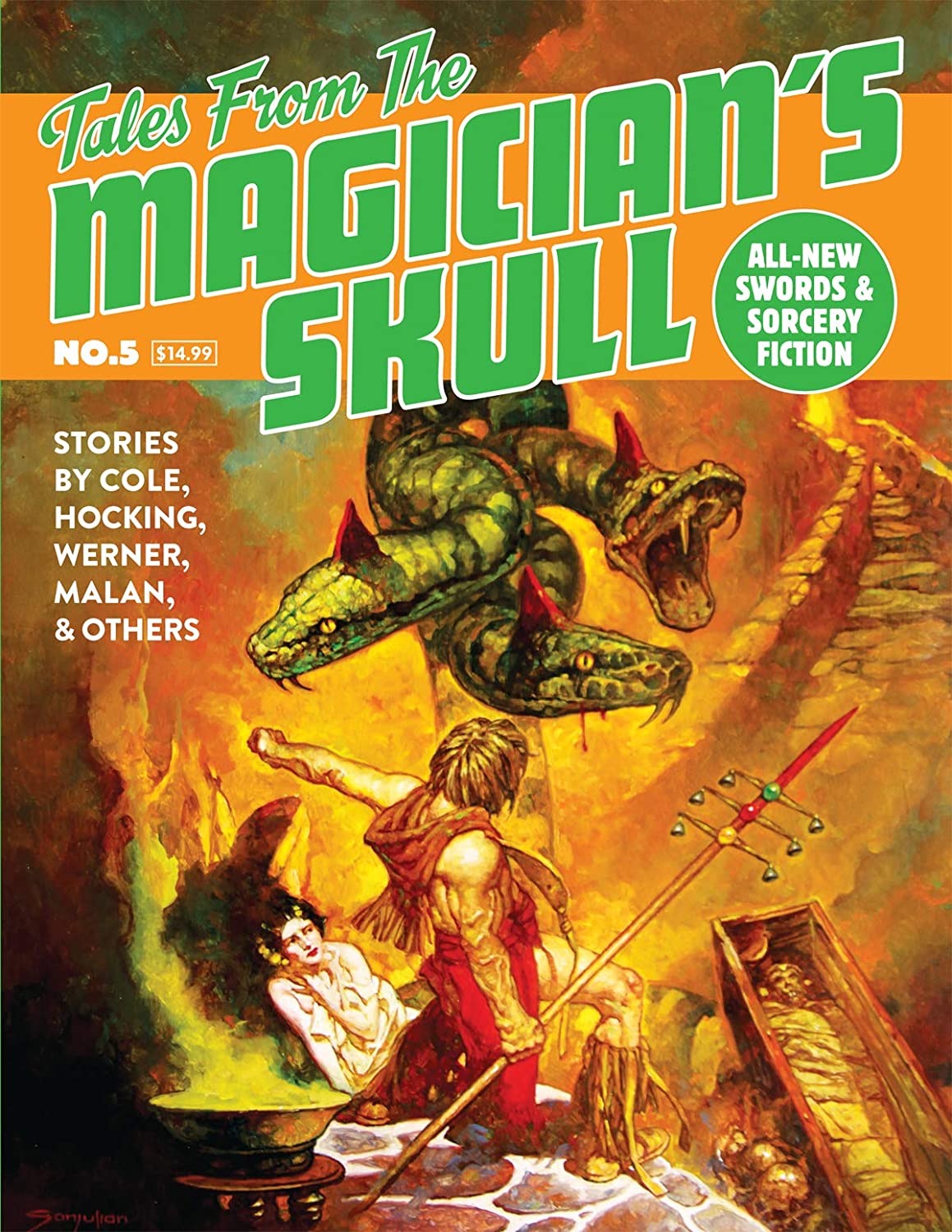
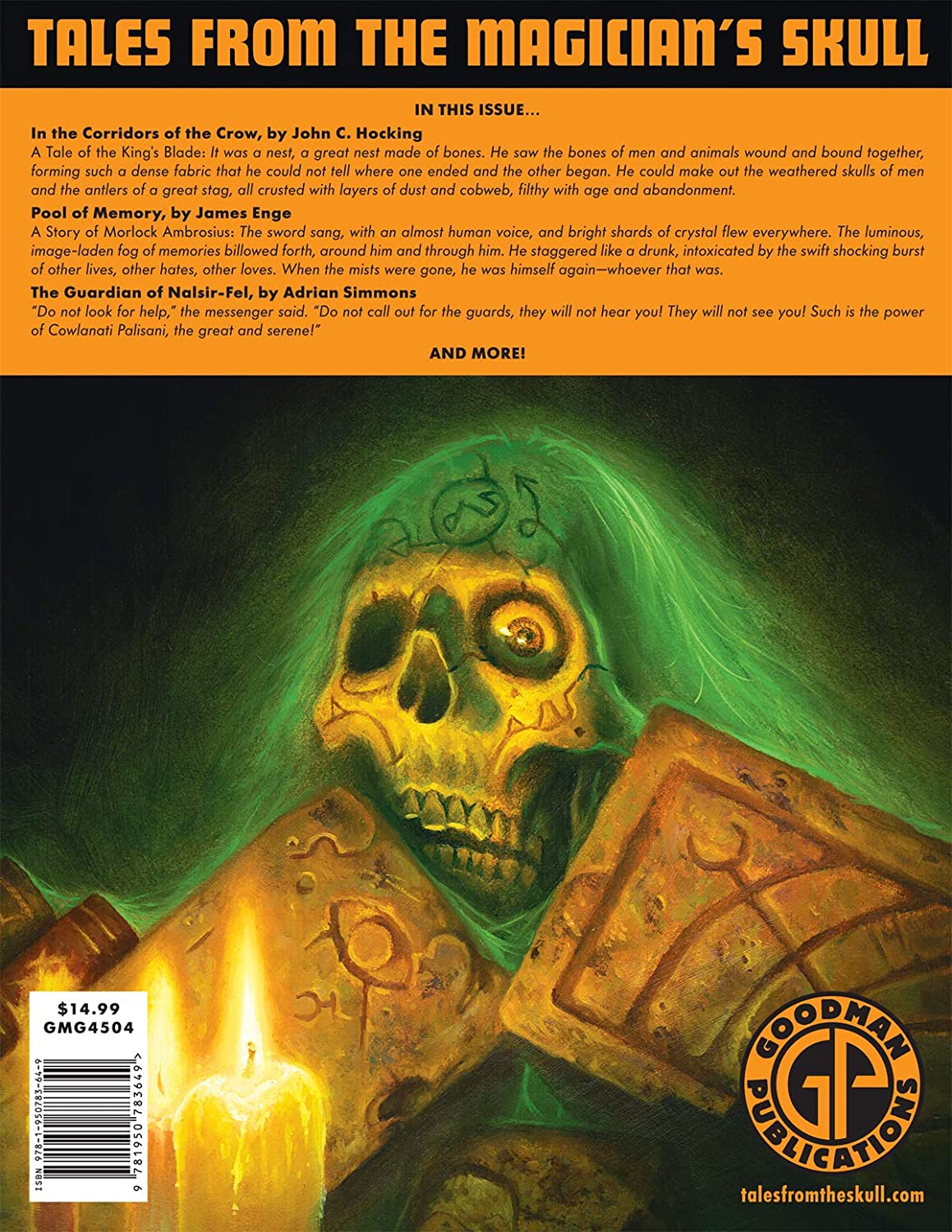
Tales From the Magician’s Skull #5 (Goodman Games, December 2020). Cover by Sanjulian

I don’t think there’s a magazine out there I look forward to as much as Tales From the Magician’s Skull, edited by Howard Andrew Jones and published twice a year by Goodman Games.

Yes, partly it’s because it regularly features so many people I consider friends, including James Enge, John C. Hocking, Ryan Harvey, Violette Malan, Adrian Simmons, and of course Howard, who was Managing Editor here at Black Gate for many years. If you’re a Black Gate reader in fact, you’re guaranteed to find a great deal you’ll love about the Skull — and not just because all of those lovely folks have written for BG over the years.

But I think the real reason I enjoy it is because the magazine is a tremendous amount of fun, and everything about it radiates an abiding love of adventure fantasy and sword & sorcery. Want an example? Here’s an excerpt from Howard’s introduction to the brand new issue — beginning with the welcome news that the magazine is open to submissions for the first time!

We will throw the gates wide on a trial basis for a limited time…. The Skull has decreed that we shall accept electronic manuscripts beginning on the anniversary of the birthday of the sacred genre’s father, Robert E. Howard, January 22, 2021, and close upon that date sacred to mortal fools, April 1, 2021…

Get more details on the Call for Submissions here.

Read More Read More

Future Treasures: Machinehood by S.B. Divya

Future Treasures: Machinehood by S.B. Divya

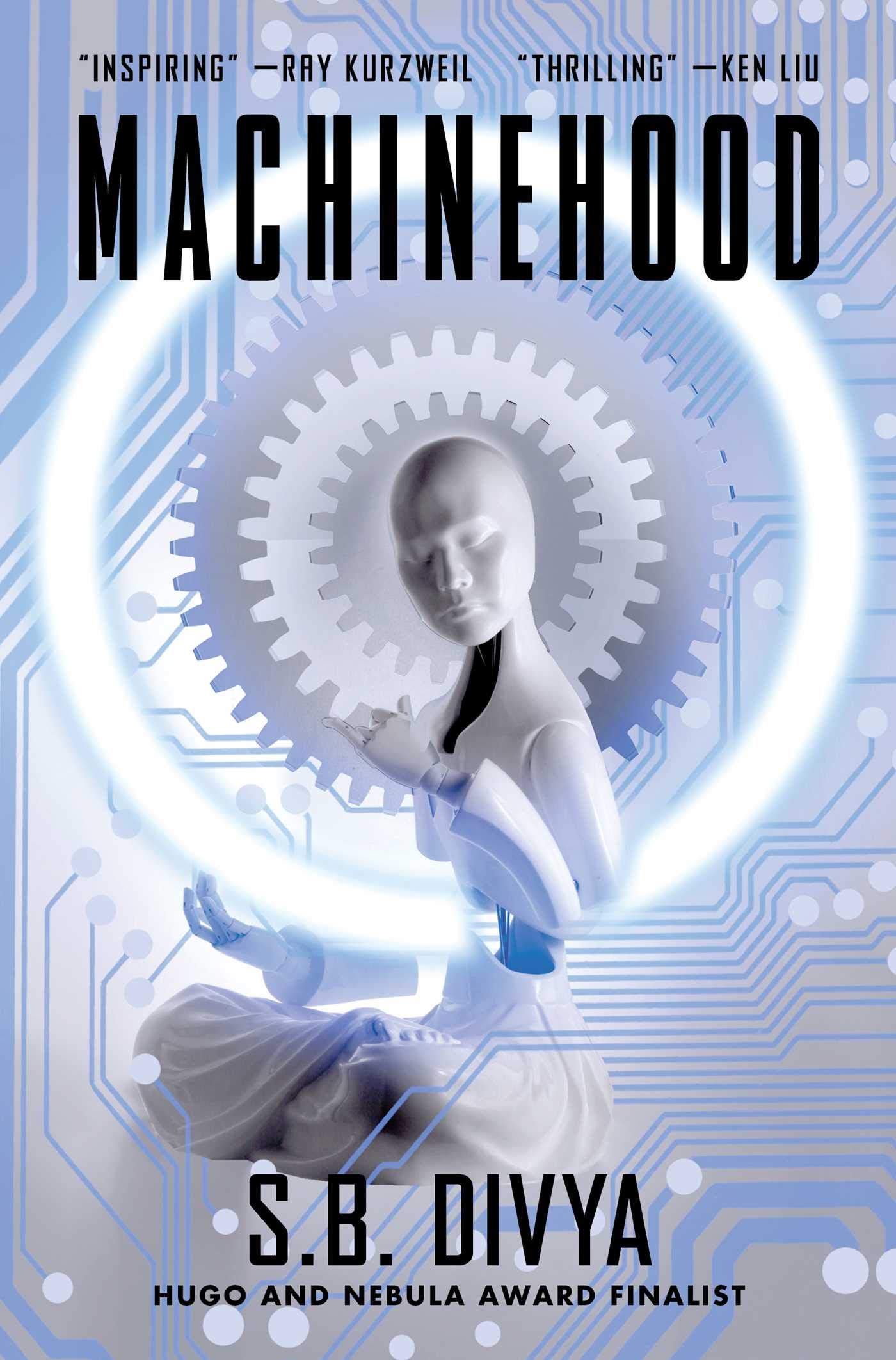
Machinehood (Saga Press, March 2, 2021). Cover by Richard Yoo and Zi Won Wang

S.B. Divya was nominated for a Hugo award for her groundbreaking work with Mur Lafferty on the hugely popular Escape Pod podcast. She’s published over a dozen short stories since 2014 in top-tier markets like Lightspeed, Tor.com, and Uncanny magazine, but her breakout book was Runtime (Tor.com, 2016), which was nominated for a Nebula Award for Best Novella.

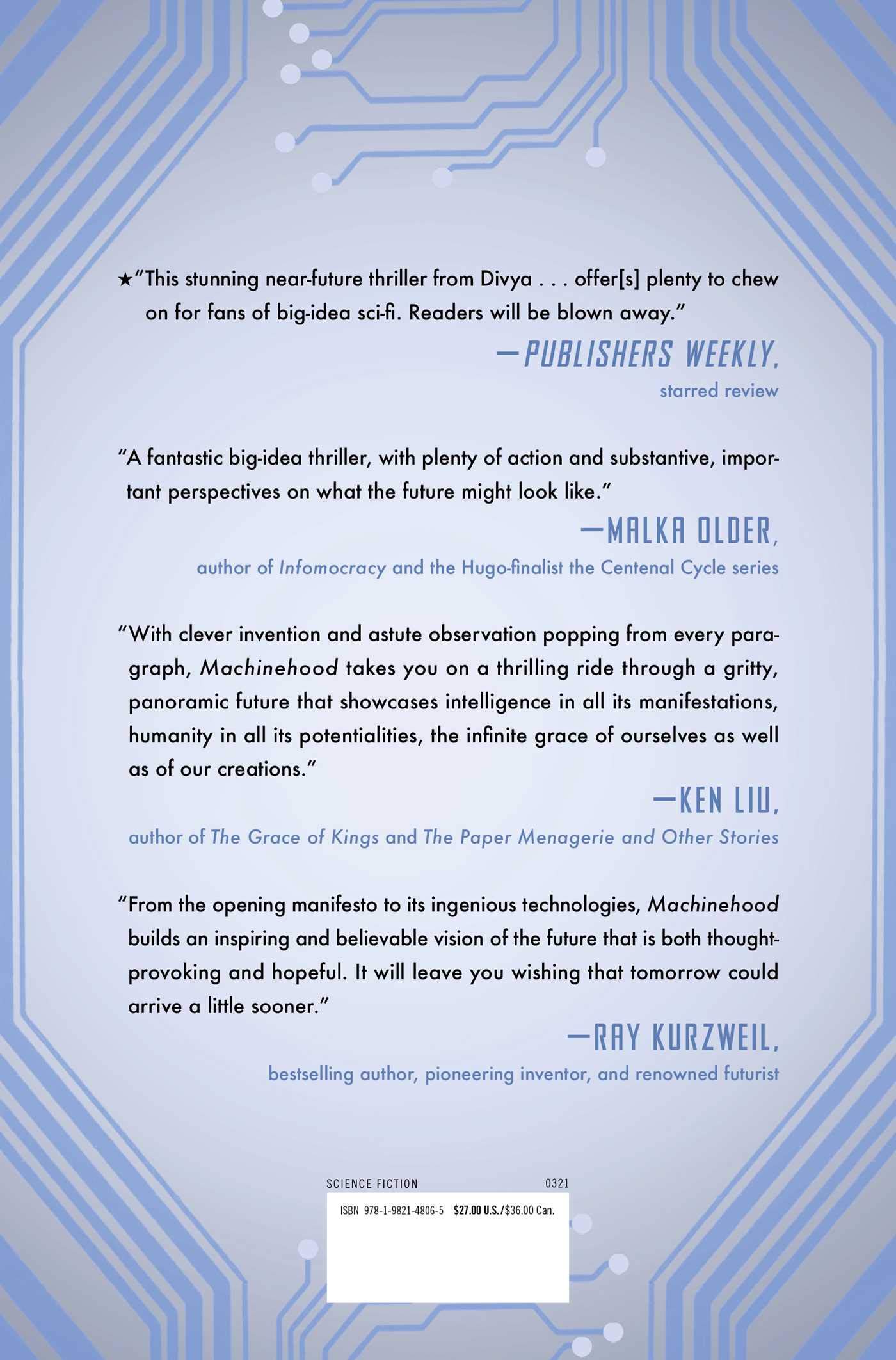
Her latest is a near-future thriller with plenty of cyberpunk elements, set in a gritty futurescape run mostly by AIs. Publishers Weekly called Machinehood “stunning” in a rave review; here’s an excerpt.

Bodyguard Welga Ramírez is a disillusioned former Special Forces soldier who makes her living protecting CEOs and celebrities, using mechanical implants and a course of high-tech drugs to enhance her combat skills… Welga especially enjoys the opportunity to perform for the ubiquitous microdrone swarms that film and broadcast her every move. She even adds stylish action moves to her fights to improve her tips from her viewers. But when a job goes wrong, Welga faces a mysterious pro-AI terrorist group called The Machinehood. Determined to learn who they are and what they want, Welga heads into the very heart of The Machinehood’s operation… Divya keeps the pace rapid, and her crack worldbuilding and vivid characters make for a memorable, page-turning adventure, while the thematic inquiries into human and AI labor rights offer plenty to chew on for fans of big idea sci-fi. Readers will be blown away.

Machinehood will be published by Saga Press on March 2, 2021. It is 404 pages, priced at $27 in hardcover, $9.99 in digital formats, and $44.99 on audio CD. The cover was designed by Richard Yoo and feature 3D art by Zi Won Wang.

See all our recent coverage of the best upcoming SF and fantasy releases here.

New Treasures: The Best of R. A. Lafferty, edited by Jonathan Strahan

New Treasures: The Best of R. A. Lafferty, edited by Jonathan Strahan

Two years ago, when The Best of R.A. Lafferty was published by Gollancz SF Masterworks, I wrote an excited New Treasures article that began like this:

Fabulous! Lafferty is one of my favorite short story writers, and far too much of his work — virtually all of it, really — is either long out of print, or available only in very expensive collector’s editions from Centipede Press. The prospect of a generous collection of his best short fiction in a compact and affordable trade paperback edition… seemed too good to be true.

It almost was. The Gollancz edition was very hard to acquire in the US (and it still is). Fortunately Tor Books saw fit to reprint the book as part of their own Tor Essentials line earlier this month, and it’s now widely available in a handsome and affordable trade paperback edition. Here’s the publisher’s description.

Tor Essentials presents science fiction and fantasy titles of proven merit and lasting value, each volume introduced by an appropriate literary figure.

Acclaimed as one of the most original voices in modern literature, a winner of the World Fantasy Award for lifetime achievement, Raphael Aloysius Lafferty (1914-2002) was an American original, a teller of acute, indescribably loopy tall tales whose work has been compared to that of Avram Davidson, Flannery O’Connor, Flann O’Brien, and Gene Wolfe.

The Best of R. A. Lafferty presents 22 of his best flights of offbeat imagination, ranging from classics like “Nine Hundred Grandmothers” and “The Primary Education of the Cameroi” to his Hugo Award-winning “Eurema’s Dam.”

Introduced by Neil Gaiman, the volume also contains story introductions and afterwords by, among many others, Michael Dirda, Samuel R. Delany, John Scalzi, Connie Willis, Jeff VanderMeer, Kelly Robson, Harlan Ellison, Michael Swanwick, Robert Silverberg, Neil Gaiman, and Patton Oswalt.

This is a joyous, wonderful, and wholly surprising book that belongs in the collection of every serious science fiction reader. Here the complete Table of Contents.

Read More Read More

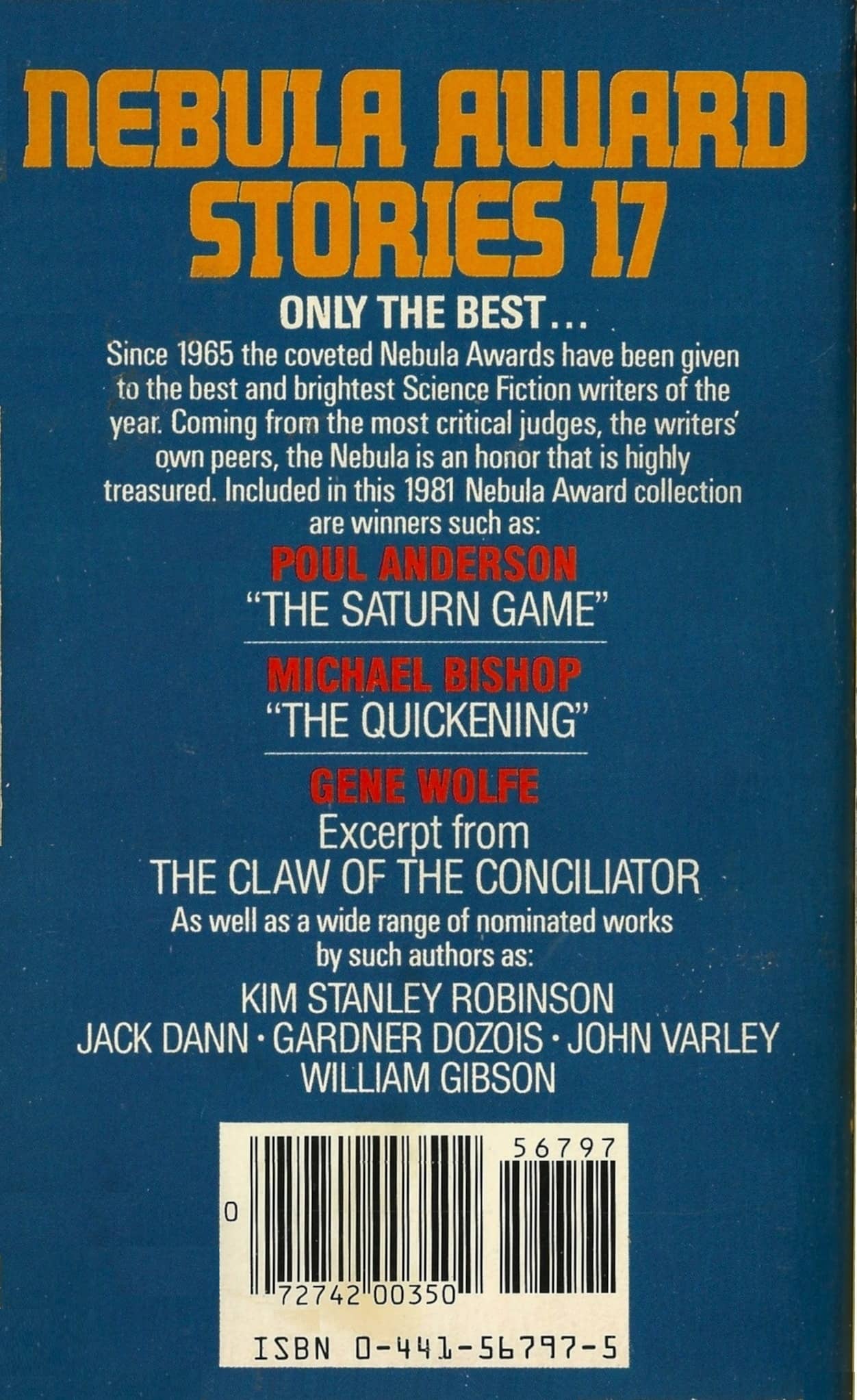
Vintage Treasures: Nebula Award Stories 17 edited by Joe Haldeman

Vintage Treasures: Nebula Award Stories 17 edited by Joe Haldeman

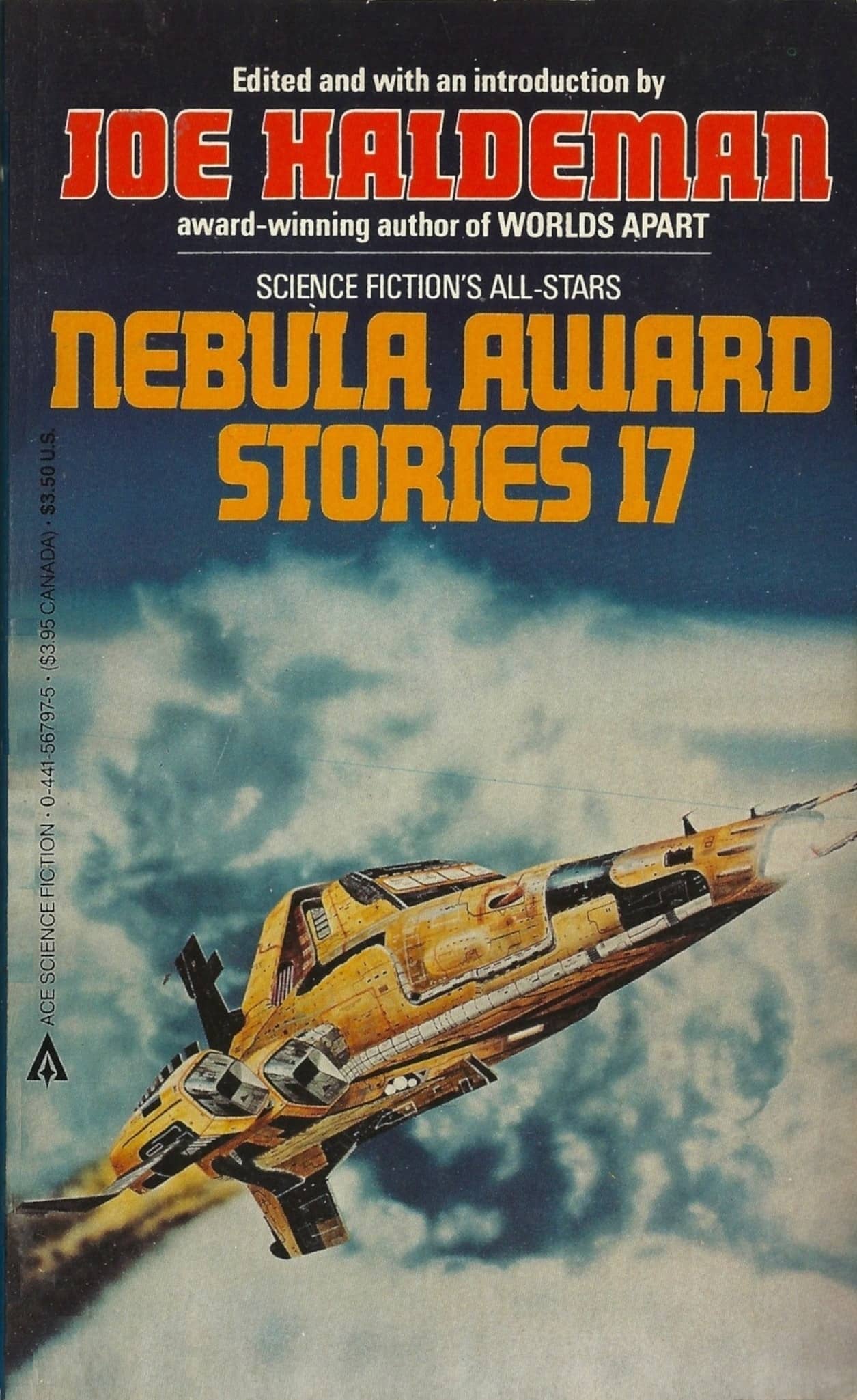
Nebula Award Stories 17 (Ace Books, 1985). Cover by Jeffrey Ridge

I’ve covered a few noteworthy anthologies here in the last few weeks, including Isaac Asimov’s surprising Tin Stars, and Donald A. Wollheim’s excellent 1989 Annual World’s Best SF. It’s sharpened my appetite for good anthologies, and when I found Nebula Award Stories 17 in a small collection of vintage paperbacks I bought in eBay last month, I knew I’d found my next weekend read.

The Nebula Awards anthologies have been published continuously for over five decades, ever since Damon Knight launched the series in 1966 to raise money to fund the Nebula Awards for the Science Fiction Writers of America. Volume 17 was the first (and only) one to be edited by Joe Haldeman, who by then had won a Nebula for his groundbreaking novel The Forever War (1975), and would win it again for the novella “The Hemingway Hoax” (1990), the short story “Graves” (1993), and the novels Forever Peace (1998) and Camouflage (2004).

Nebula Award Story 17 appeared in hardcover in 1983, but wasn’t published in paperback by Ace until 1985. It contains stories still remembered warmly today, including William Gibson’s “Johnny Mnemonic,” made into a Keanu Reeves film in 1995, Poul Anderson’s Hugo and Nebula-award willing novella “The Saturn Game,” Michael Bishop’s Hugo and Nebula nominee “The Quickening,” an excerpt from Gene Wolfe’s classic novel The Claw of the Conciliator, and a lot more. There are two stories from Terry Carr’s Universe 11, two each from Omni and F&SF, and the rest from magazines and anthologies like Asimov’s SF, Analog, and More Wandering Stars. Here’s the complete TOC, and a look at some of the magazines the stories originally appeared in.

Read More Read More

Future Treasures: Transgressions of Power, Book 2 of The Broken Trust by Juliette Wade

Future Treasures: Transgressions of Power, Book 2 of The Broken Trust by Juliette Wade

Mazes of Power and Transgressions of Power (DAW, 2020/21) Covers by Adam Auerbach

I admit I got a little excited by the release of Mazes of Power last year, mostly because it’s set in a thousand year-old cave city (and if I have to explain why that’s so cool, we can’t be friends). But the series has become even more interesting with the impending release of the sequel, Transgressions of Power, arriving in hardcover in two weeks. Here’s an excerpt from the starred review at Publisher’s Weekly for the opening volume.

Wade’s excellent high fantasy debut, the first in the Broken Trust series, invites readers into an intricately constructed and morally ambiguous world full of complex political maneuvering and familial pressure. For centuries, the cavernous city of Pelismara has housed the 12 Great Families that comprise the noble class of the city’s strict caste system, who cling to the glory of a long-faded golden era. When a mysterious illness known as Kinders fever kills the city’s Eminence, the 12 families vie to fill the power vacuum. It’s up to 17-year-old Tagaret to represent his family in the competition to become heir to the throne, but his sociopathic brother Nekantor’s twisted attempts to help their family ascend to power threaten to tear down everything… The impressively winding plot, layered worldbuilding, and psychologically acute characterizations are sure to hold readers’ attention. Wade is an author to watch.

The sequel picks up the tale of the deadly battle for succession, in which brother is pitted against brother in a desperate bid for power. Transgressions of Power will be published by DAW Books on February 23, 2021. It is 480 pages, priced at $27 in hardcover, $14.99 in digital formats, and $29.99 for the audio version. Read the first seven pages of the first book here.

See all our coverage of the best upcoming science fiction and fantasy here.

New Treasures: The Best of Michael Marshall Smith

New Treasures: The Best of Michael Marshall Smith

I don’t pay a lot of attention to the limited edition small press genre market here because, well, most of their output is overpriced and aimed squarely at collectors. The exception is Subterranean Press, who do fabulous work — and routinely produce much more reasonably priced editions of their high-end volumes.

The latest author to get the Subterranean treatment is Michael Marshall Smith, author of Spares (1996), Bad Things (2009), and many other novels, and more than half a dozen short story collections, including What You Make It (1999), and More Tomorrow & Other Stories (2003). The Best of Michael Marshall Smith is a mammoth 568-page retrospective that gathers 30 of Smith’s best stories from his lengthy and successful career. In a starred review, Publishers Weekly calls it a standout collection:

This standout collection showcase Smith’s facility at imbuing genre tropes with humanity. Every entry offers something unexpected, while grounding inventive paranormal situations in recognizable emotion. Smith.. crafts a plausible sequel to Lovecraft’s “The Music of Erich Zann” with “Window of Erich Zann,” successfully transplanting the tale from Europe to Haight-Ashbury and exploring the protagonist’s capacity to see into a terrifying alternate reality. Smith’s first published short story, “The Man Who Drew Cats,” which won the British Fantasy Award in 1991, offers a searing window into domestic violence…

Here’s the publisher’s description.

In 1990, British-born author Michael Marshall Smith burst on to the literary scene with his first story “The Man Who Drew Cats.” It won the prestigious British Fantasy Award for Best Short Fiction, and he went on to win the award again the next year. In a career that has now spanned three decades he has written nearly 100 short stories, published more than a dozen best-selling novels around the world, and scripted numerous movie and television projects. Now, to celebrate his three decades as a writer, The Best of Michael Marshall Smith brings together thirty of his most emotive and powerful stories (including all his award-winning short fiction), along with extensive story notes by the author.

Featuring evocative heading illustrations by Les Edwards, this career-spanning collection includes such memorable tales as “Hell Hath Enlarged Itself,” “More Tomorrow,” “To Receive is Better,” “What You Make It,” “Later,” “The Dark Land,” “What Happens When You Wake Up in the Night,” “Always,” and many others, in their definitive versions.

By turns touching, disturbing, and frightening, these stories are not limited by theme or genre, but reveal a writer always in command, and whose imagination knows no bounds. The Best of Michael Marshall Smith is the ultimate compilation of the author’s work, and stands as a testament to his mastery of, and commitment to, his craft.

The Best of Michael Marshall Smith was published by Subterranean Press in a deluxe hardcover edition on December 31, 2020. It is 568 pages, priced at $44 in hardcover and $6.99 in digital formats. The cover is by Stefan Koidl; the interior story heading illustrations are by Les Edwards. Order directly from the Subterranean website.

See all our recent New Treasures here.

Wandering a Monster-Ridden World: The Expert System’s Brother by Adrian Tchaikovsky

Wandering a Monster-Ridden World: The Expert System’s Brother by Adrian Tchaikovsky

The Expert System’s Brother and The Expert System’s Champion (Tor Books, 2018-21). Covers by Raphael Lacoste

British author Adrian Tchaikovsky has been steadily making a name for himself since he burst onto the scene with his 10-volume epic fantasy Shadows of the Apt. He’s followed that with several ambitious new series, including the Echoes of the Fall fantasy trilogy and the far-future hard science fiction Children of Time series. His latest is a sequence of tales in Tor.com’s prestigious novella line, opening with The Expert System’s Brother (2018). Liz Bourke gave it an enthusiastic review at Locus Online.

The title of The Expert System’s Brother makes one expect a cyberpunk world, but the landscape initially seems like that of fantasy. Gradually, the reader becomes aware that what seems like a fantasy setting is in fact science fictional one: a setting where the inhabitants have forgotten how they came to live the way they do.

Handry has always lived in a village called Aro. He has a sister, Melory, and a small community, but when he’s 13, he’s involved in an accident. The village’s Lawgiver (one of a handful of people, like its doctor, who has a ghost inside her skull that gives advice and commands) is casting out a troublemaker, a process that involves physically severing that person from the community by the use of a specially brewed substance. When the ac­cident happens, Handry gets some of that substance on him…

Handry now becomes a wanderer, drifting from village to village… At the town-village of Orovo, he learns some more about the world: a ghost-bearer (the bearer of an architect-ghost) has been gathering and feeding the Severed in order that they may do the difficult and dangerous work of helping the now-overcrowded village-town set up a new village… Handry falls in with another Severed called Sharskin… a man who discovered a place he calls the House of the Ancestors, and who believes that the Severed aren’t made lesser than the other people, but are in fact made more: restored to their original state, before the ancestors fell from grace and gave their descendants over to the rule of the ghosts…

The Expert System’s Brother has an engaging voice. Told in first person from Handry’s point of view, it showcases Tchaikovsky’s growing ver­satility as a writer of long-form science fiction, depicting an interesting world with compelling characters.

The second volume, The Expert System’s Champion, arrived last week. Here’s a look at the back covers for both books.

Read More Read More

Vintage Treasures: Swordsmen in the Sky edited by Donald A. Wollheim

Vintage Treasures: Swordsmen in the Sky edited by Donald A. Wollheim


Swordsmen in the Sky (Ace, 1964). Cover by Frank Frazetta

I’ve been on something of a Don Wollheim kick recently. I looked at his 1989 Annual World’s Best SF two weeks ago, and last week I explored a collection of 30 DAW paperbacks he published in the 70s, including two rare Imaro volumes by Charles Saunders.

We’ve examined a few of Wollheim’s older anthologies in the past, but I couldn’t recall writing about one of my personal favorites, Swordsmen in the Sky, his hugely influential 1964 collection of science fantasy tales by Poul Anderson, Andre Norton, Leigh Brackett, Edmond Hamilton, and others. I scanned the cover, drafted a quick piece, and checked for previous references to it — and that’s when I discovered a delightful review by none other than Charles Saunders himself, published right here at Black Gate, in the very early days of the BG blog. Here’s a taste.

Two of the stories Wollheim selected — Poul Anderson’s “Swordsmen of Lost Terra” and Leigh Brackett’s “The Moon that Vanished — are classics in the sense that they continue to fascinate with each re-reading, even though they were first published in 1951 and 1948, respectively. Anderson’s story is set in a far-future Earth that no longer spins on its axis, with Celtic culture surviving that catastrophe. Were it not for the scientific explanation for the seemingly magical power of the lead character’s bagpipes, “Swordsmen of Lost Terra” would qualify as sword-and-sorcery…

“The Moon that Vanished” is set on Brackett’s version of Venus, which was probably the best of all the fictional imaginings of that planet before space probes revealed the lifeless and hellish face hidden beneath its clouds. This story of a quest not for gold but godhead has proven more than equal to the test of time. Take away its interplanetary aspects and this story, too, is pure fantasy, if not sword-and-sorcery.

“People of the Crater,” by Andre Norton, takes place in one of those remote corners of our planet that will never show up on Google Earth. The titular crater is located in an unknown, mist-shrouded region of Antarctica, filled with strange creatures, sleeping gods, and magical science….

I was 18 years old when I first spotted Swordsmen in the Sky at the local train station’s book-rack during the year the anthology was published. The forty cents needed to purchase a copy jingled in my jeans. My sense of wonder was primed for fulfillment. Little did I know that the little paperback I carried out of that station would be a precursor not only to many other books I would subsequently read, but the ones I would write as well.

I have to tell you, it was a wonderful surprise to stumble on a forgotten BG contribution from Saunders, so recently after celebrating his work here. Read the while thing right here.

Read More Read More