Write-or-Die Spreads Fear Toxin from Your Desktop
 My novel-writing continues apace. Therefore, I shall be brief today. Or as brief as I possibly can.
Last year I did a series of posts about the “hi-tech lo-tech” devices that have emerged to help authors remove themselves from the distractions of today’s tech-crammed environment. The temptations that lure people away from writing seem to increase exponentially with each month, but these clever creations have found ways to use technology to create settings that don’t evoke technology, combining ease of use with the simple feeling of a clean sheet of typing paper. I’m as devoted this year as I was last year to the Alphasmart NEO and WriteRoom (which has a PC equivalent called DarkRoom), but I had reservations about the third lo-tech helper I discussed, Write-or-Die, the work of a certain Jeff “Dr. Wicked” Printy.
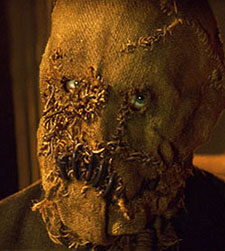
I blogged at the time that Write-or-Die wasn’t the sort of writing help that I needed: a web application that provides punishment if the writer did not continue to pound away at the keys in a steady beat. Many people love it, and claim they would never meet any of their daily deadlines without the program’s specter of terror, like the Scarecrow from Batman Begins hovering over them with his fear toxin, forcing them to dash forward. But I never found it that useful a tool—and I had a fear of losing my writing that was stronger than Write-or-Die’s punishments of annoying sounds and un-typing my last few words.
However, Dr. Wicked has a November present for writers: a desktop version of Write-or-Die, which he wrote using Adobe AIR so it runs on both PCs and Mac OS X. It isn’t free like the older online version, but Dr. Wicked asks for the modest fee of $10 for the application. If you find the online version immensely helpful, you’ll discover the desktop version doubly so because of its new features, and worth the investment.
 While her work sometimes hints at the fantastic, Lydia Millet isn’t strictly speaking a fantasy writer, certainly not in the sense of questing elves or weird alternate universes, and certainly not as evidenced in her new short story collection, Love in Infant Monkeys. Yet Millet’s work is frequently mentioned in genre venues; indeed, one of the stories collected here, “Thomas Edison and Vasil Golakov,” (in which the famed inventor of light bulbs and power generation attains metaphysical illumination by continually re-running a film of a circus elephant’s seemingly Christ-like electrocution)previously appeared in
  Chances are if you are at all interested in fantasy or science fiction books or games, you’ve at least brushed against Games Workshop’s ubiquitous Warhammer franchise. Warhammer comes in roughly two flavors, the fantasy version which is a Tolkien, D&D, and Moorcock mash-up, and the space opera version, called Warhammer 40,000. Taking place in the bleak world of the 41st millennium, with the tagline “In the grim darkness of the future there is only war,” Warhammer 40k is a violent world of warring factions, lost technology, dark and corrupting forces, fanaticism, and a medieval Gothic aesthetic. It is a universe where power armored soldiers charge into battle with chainsaw swords screaming religious oaths, millennia-old spaceships a mile long look more like Notre Dame Cathedral than the starship Enterprise, and daemonic forces and hostile races in the form of orks, ‘elves,’ and H.R. Geiger aliens erode the power of a moribund human civilization presided over by a nearly-dead God Emperor.
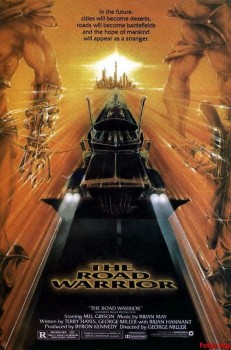 Right before I begin writing any major-length work, I do some important “stretching” exercises. No, not writing exercises; I do those nearly every day of the year regardless of what other projects I’m working on. This exercise is picking some DVDs off my shelves and queuing up a few key scenes that get me in the mood to tackle writing a novel. I don’t watch the whole movie (I usually don’t have the time), only a specific scene that does something to the synapses in my brain and makes me want to charge at the word processor and start slugging.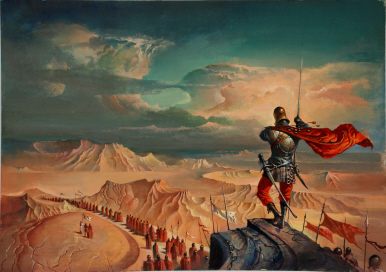
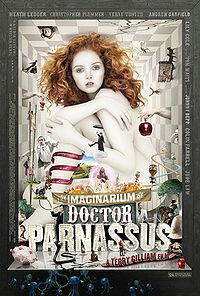 Very much looking forward to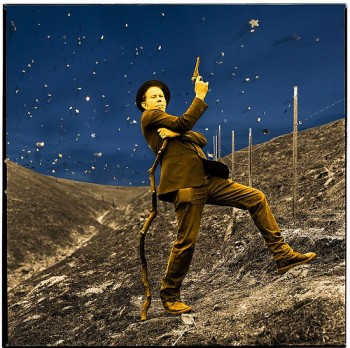
 When people ask me what I like to read I usually answer with a simple ‘everything,’ but of course that’s not strictly true. I don’t read trigonometry textbooks or Romance novels, celebrity memoirs or cookbooks, monographs on the evolution of sheep shearing or anything by Dan Brown (in fact, just give me that thing on sheep first). But when I say ‘everything’ I’m being figuratively if not literally honest, because my tastes — especially when compared to the average reader — are very broad. I don’t read only one kind of thing. I’m a generalist.
 I finally saw Spike Jonze’s Where the Wild Things Are a few days ago (because I’m never the first to see anything, as a matter of policy) and I thought it was pretty good. Some people have reacted with shock and horror to the violence and the scary bits, and maybe I’m over-reacting against them, but there wasn’t anything scarier in the movie than a regular kid might have to face in an average week. Which may, itself, be rather scary, but more so for adults and their illusions than for kids.
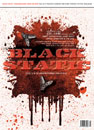 In the mail today, just in time for Halloween, is the blood-spattered graphic of the October/November
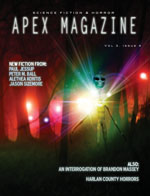 cover of Black Static magazine, the horror and dark fantasy counterpart that alternates monthly appearances with Interzone science fiction published by the folks at