The Pangaea volumes: Imperium Without End and Imperium Afire (Bantam Spectra, 1999 and 2000). Covers by Sanjulian
Lisa Mason began her career in the late 80s; her first novel was the cyberpunk Arachne (1990), set in an earthquake-devastated San Francisco. Her most popular title, Summer of Love (1994), about a time traveler from 2467 who visits the 1967 Summer of Love in San Francisco, was a finalist for the Philip K. Dick Award and spawned one sequel, The Golden Nineties (1995).
We’re concerned today with perhaps her most ambitious series, the two-volume Pangaeacycle set on a distant world (which — spoiler — turns out to be an alternate history version of San Francisco) where people live and work in a rigid society strictly segregated by genetic purity. Here’s John Clute’s summary from The Encyclopedia of Science Fiction.
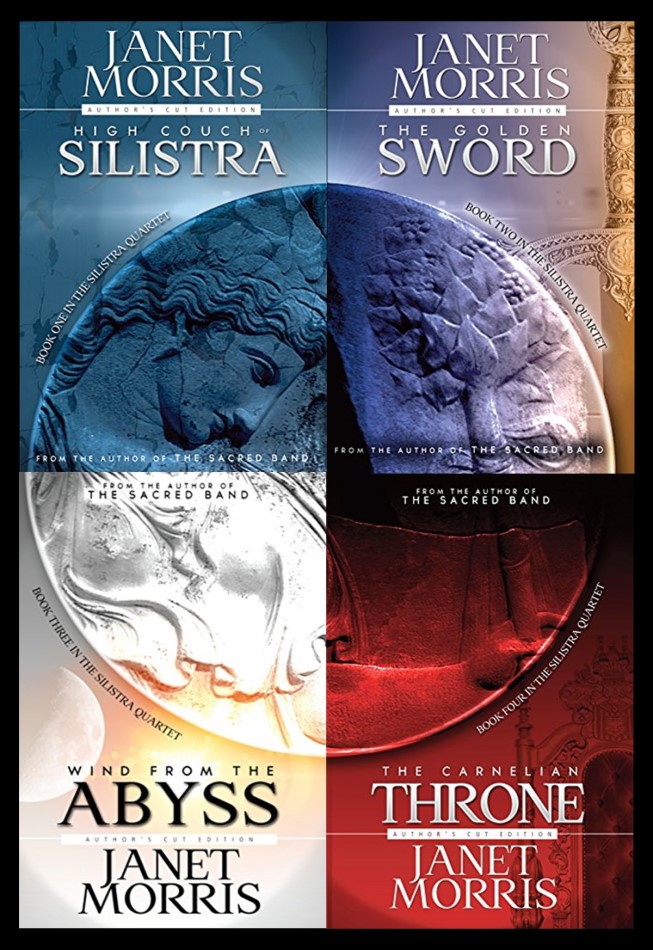
Janet Morris is a prolific author and has published a library’s worth of fantastic novels, enough to keep a reader busy for years. She has written everything from science fiction and heroic fantasy, to historical fiction and modern-day thrillers, many of them in collaboration with her husband, Chris Morris. Among her many novels are Outpassage, The 40-Minute War, The Kerrion Empire Saga, The Beyond Sanctuary Trilogy, andThe Sacred Band. In addition, Janet and Chris were among the original writers who contributed to Thieves’ World ™, the shared-world fantasy series first published by Baen Books in 1979. In 1986, the duo created,Heroes in Hell ™, their shared-universe series of anthologies and novels; they also edited and contributed stories to this Saga of the Damned. That series was first published by Baen Books, and ran from 1986 to 1989. In 2011, Perseid Press “resurrected” the series, and it has been going strong ever since. But I digress.
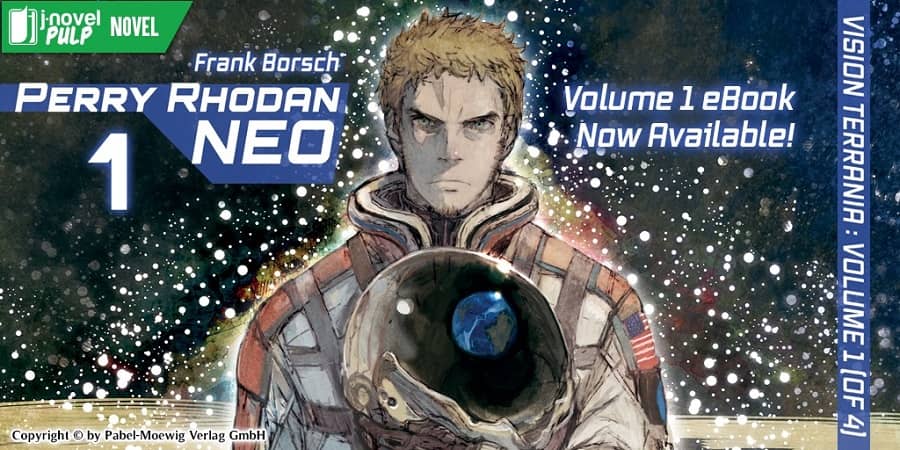
As you might deduce from the title, Perry Rhodan NEO is a newer rebooted take on the original Perry Rhodan series. It’s not so new in its homeland of Germany, where this version has been running since 2011 — although printed in its native language, of course. Having this particular series available digitally in English however, is definitely a brand-new development.
Despite its status as the world’s longest-running serialized science fiction story, it’s relatively unknown to most members of the English-speaking public. That’s not what drew my own interest though, as I first discovered Perry Rhodan back in its original English-language version decades ago, when it was published in paperback by Ace Books (when I was still in grade six?!). So, one might say that it had a fairly formative effect on my interest in the whole genre, or that it held some reasonably large amount of interest for me, at least…!
Mike Brooks’ Dark Run space opera trilogy was published in 2016/17, and was warmly received. Kirkus Reviewscalled it an “old-fashioned space Western… an entertaining page-turner,” and Andrew Liptak at the B&N Sci-Fi & Fantasy Blog said it “deserves to be this year’s break out. A space opera in the rollicking tradition of Timothy Zahn [and] John Scalzi…”
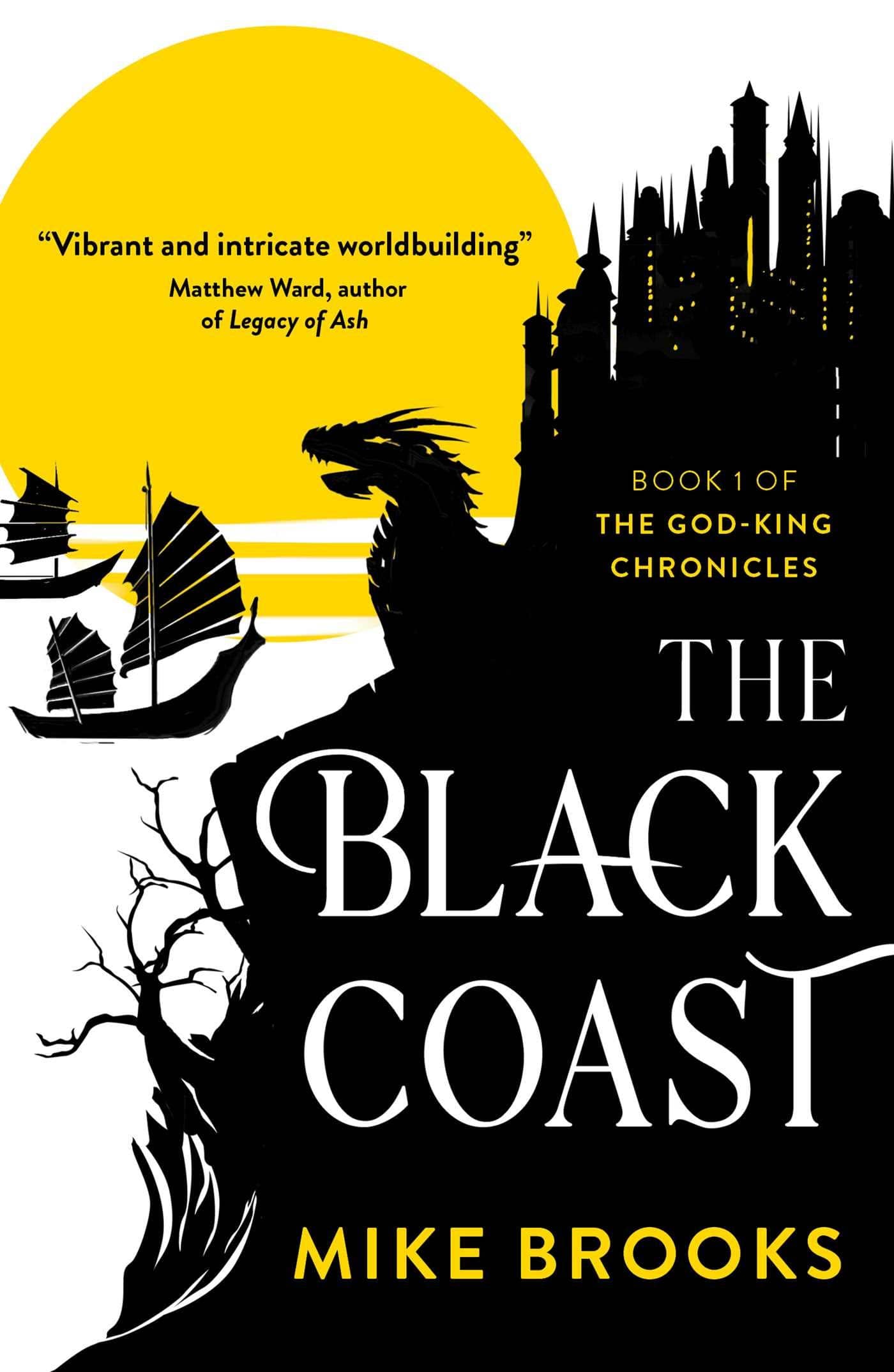
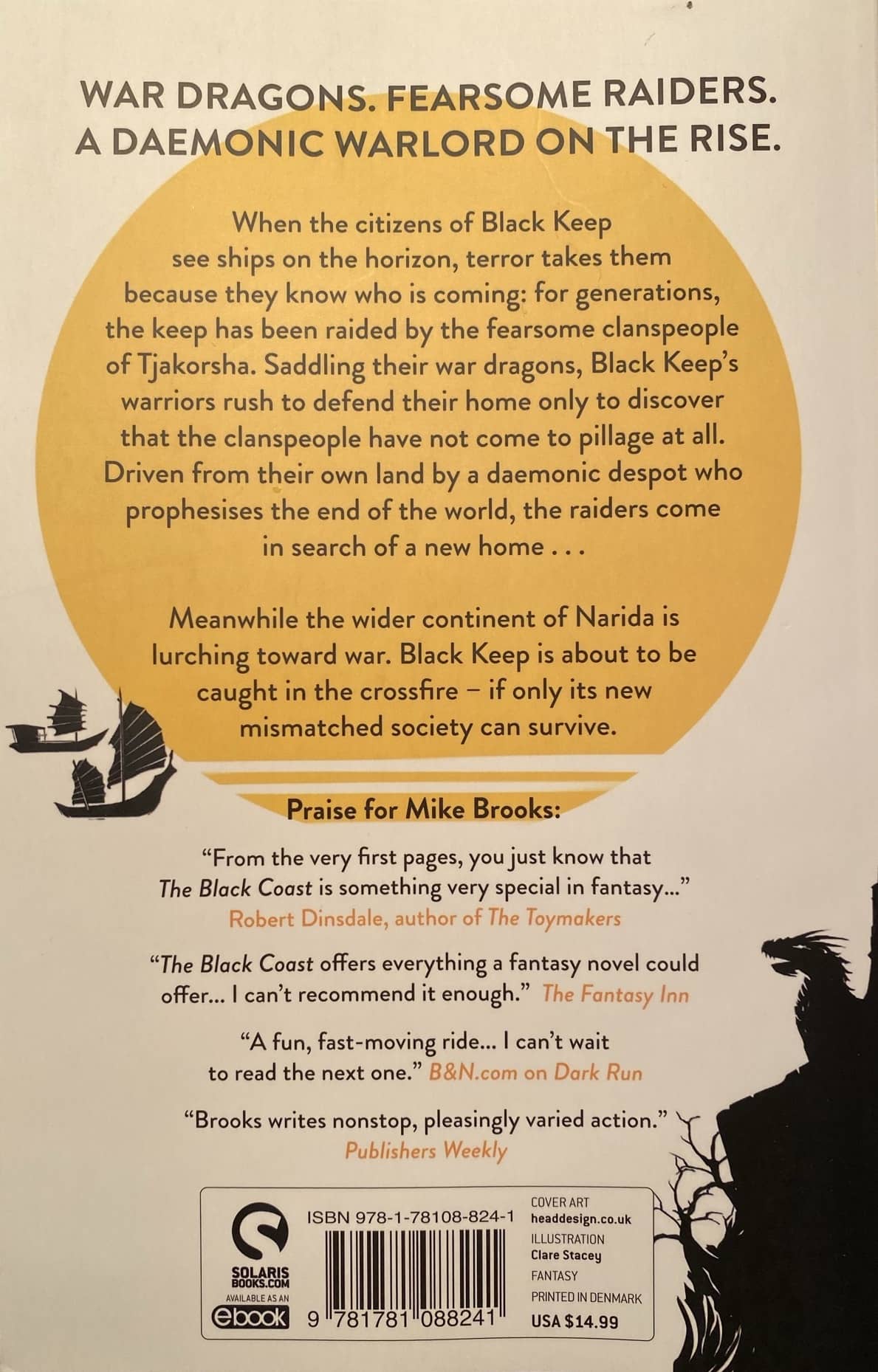
For the past few years Brooks has been playing around in the Warhammer 40,000 universe, writing novels like Rites of Passage and Brutal Kunnin’. This spring he re-invented himself again, this time as an epic fantasy novelist, kicking off The God-King Chronicles series with the novel The Black Coast. It was named an Amazon Editors’ Pick for Best SFF in February, and Publishers Weekly gave it a starred review. Here’s a snippet from their enthusiastic review.
When I was a young(er) person, I was a voracious reader. I blew through books all the time. Once, during a school reading challenge, I read so many books that I ran out of books to read, and ended up doubling up on some titles. I read so many books, my teachers didn’t believe me. They thought I made up the lot. Reading so much, and loving every minute I got to dive into another world; that I got to escape my reality for a little bit is in no small part of why I’m a writer now.
But I will admit, that I’ve been struggling to read of late. A combination of a time-consuming job, several side-hustles, and the added stress of a global pandemic, and all the stupidity of (some) folks regarding it, losing a long-time flatmate and having to move…. It’s all added up. The result was that I could barely pick myself up, let alone a book.
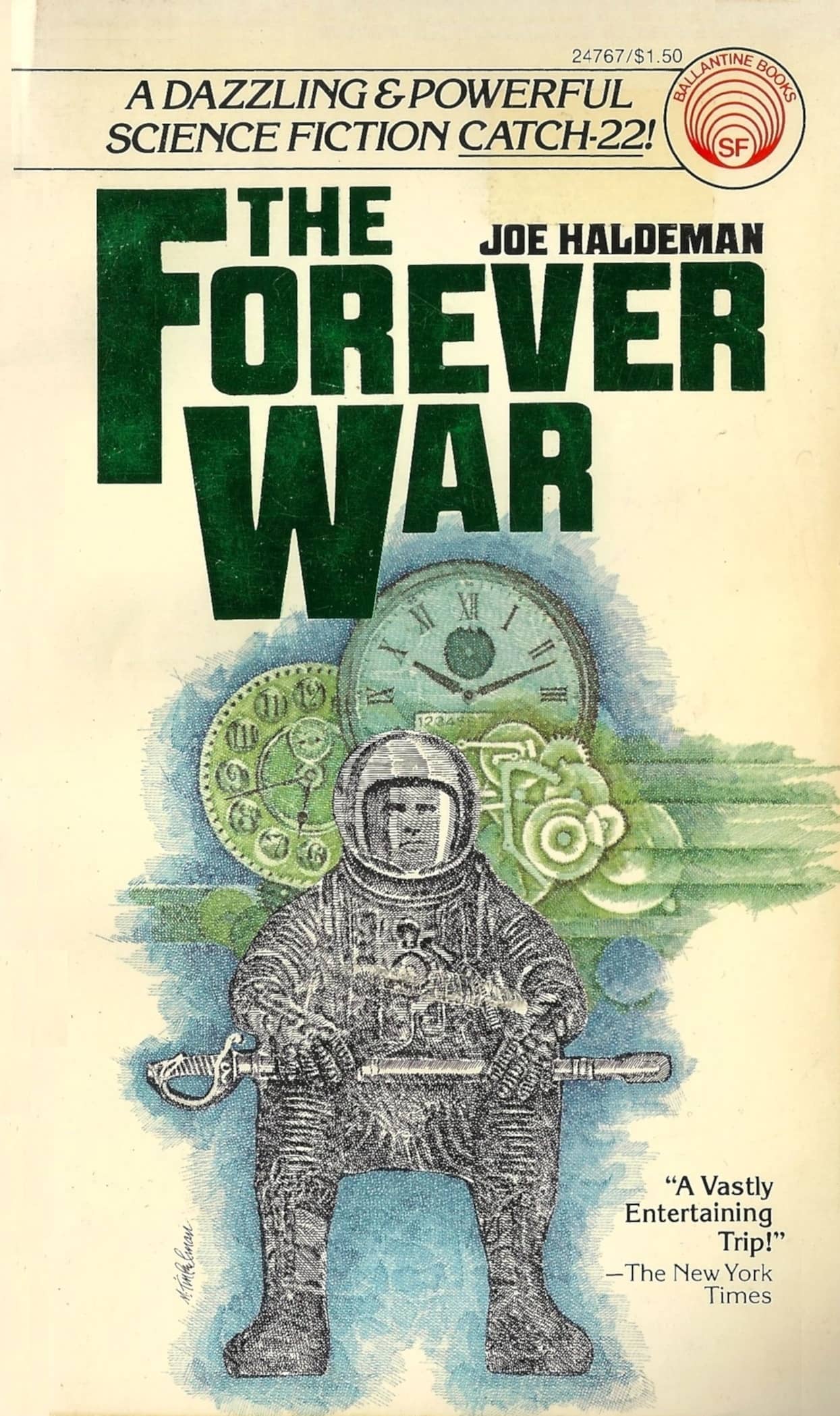
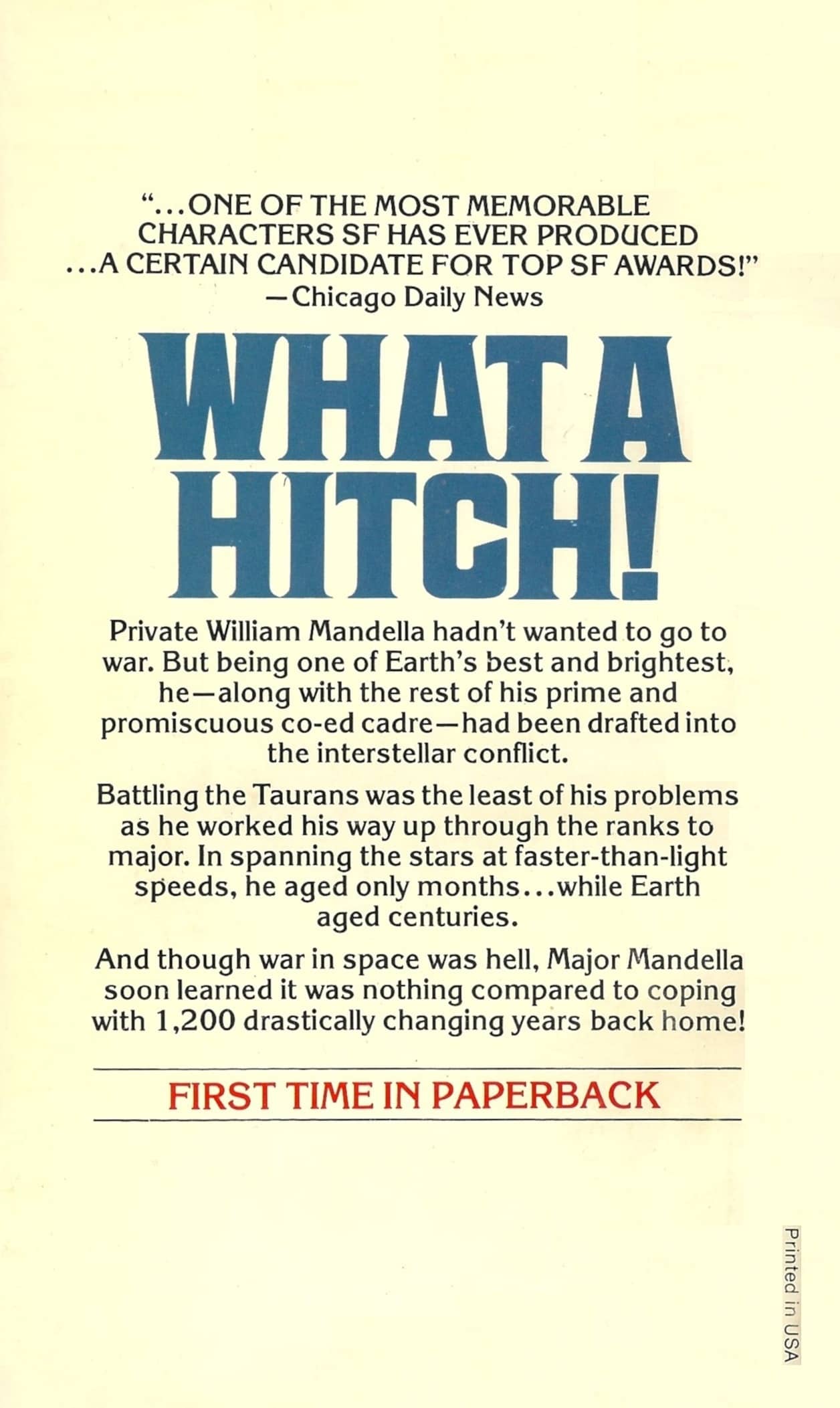
The Forever War (Ballantine Books, 1976). Cover by Murray Tinkelman
Joe Haldeman’s The Forever War is one of the most honored science fiction novels of all time. First published by St. Martin’s Press in 1975, it swept every major SF Award, including the Hugo, Nebula, and Locus awards. A decade later, in 1987, it placed 18th on Locus’ list of All-Time Best SF Novels, ahead of The Martian Chronicles, Starship Troopers, and Rendezvous with Rama.
Unlike many SF classics, its reputation has grown steadily over the decades. It’s been widely praised by critics, from Thomas M. Disch (“It is to the Vietnam War what Catch-22 was to World War II, the definitive, bleakly comic satire”) to contemporary authors such as Pulitzer Prize winner Junot Diaz. …
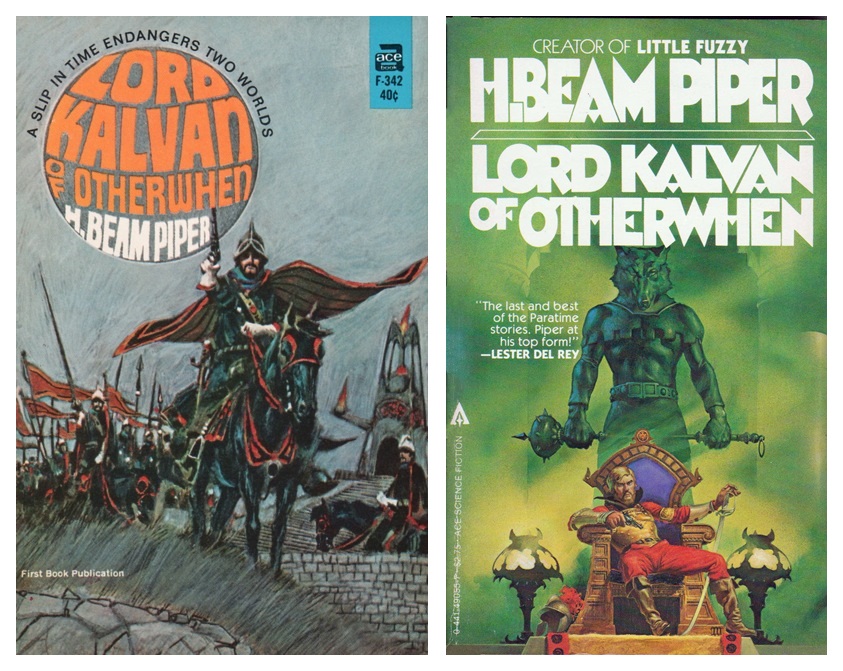
Lord Kalvan of Otherwhen (1965), Ace, cover art by Jack Gaughan (left) Lord Kalvan of Otherwhen (1984), Ace Science Fiction Books, cover art by Michael Whelan (right)
I think most people are familiar with Mark Twain’s A Connecticut Yankee in King Arthur’s Court (1889). (Certainly, there’s a delightful musical from 1948 featuring Bing Crosby that I loved as a kid.) Twain’s hero is an engineer from Connecticut who receives a blow to the head and is somehow transported in time and space to King Arthur’s England. Although the story is a social satire, it celebrates homespun ingenuity and democratic values, among other things. Although not a satire, Lord Kalvan of Otherwhen (1965) by H. Beam Piper, similarly celebrates good old American ingenuity and values, but takes place on an alternate 20th century timeline instead of the far past. It’s Piper’s last work and part of his Paratime universe.
In this article I’m going give you six (relatively) spoiler-free reasons to read the book, and one reason that has a spoiler, but that I think will only enhance your enjoyment of the work.
“It’s just because I have picked a little about mystics that I have no use for mystagogues. Real mystics don’t hide mysteries, they reveal them. They set a thing up in broad daylight, and when you’ve seen it it’s still a mystery. But the mystagogues hide a thing in darkness and secrecy, and when you find it, it’s a platitude.” ― G. K. Chesterton
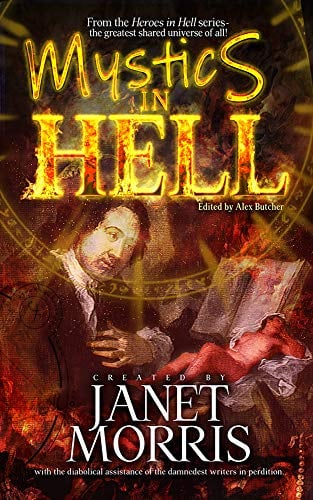
After a few unforeseen delays, Mystics in Hell has finally arrived. This is the latest edition in the long-running, shared-universe series, Heroes in Hell™. The gathering of real people from across our historical timeline, and the casting of fictional characters born of myth and legend, folklore and literature, is what makes this such a unique and fun series. Now, for those of you unfamiliar with the series or for those readers who may wish to be brought up to date, once again I’ll do my best to recap what’s been happening in our favorite Afterlife.
Mystics in Hellfollows on the hot hooves of Lovers in Helland the two volumes preceding it. The plagues which first manifested themselves in Doctors in Hell are evolving and mutating. In Pirates in Hell, disastrous floods swept through Hell, leaving behind wrack and ruin, and new islands and coastlines. The damned sought the help of pirates and other seafarers, seeking refuge and passage, hoping to escape to dry land and whatever safe harbor they could find. But there is no such thing as a safe harbor in Hell, and there is no escape.
Hooting Grange, eleventh volume in Jeffrey E. Barlough’s Northern Lights series, published March 2021 by Gresham & Doyle. Cover “The Close Gate” by Ernest William Haslehust.
One of the most popular fantasy series in the Black Gate offices these days doesn’t come from a major Manhattan publisher. In fact, it doesn’t come from traditional publishing at all. For the last 23 years Jeffrey E. Barlough has quietly been writing one of the strongest and most unusual fantasy epics on the market, put out by tiny California publishing house Gresham and Doyle.
Jackson Kuhl describes the eleven volume Northern Lights series as “kinda-sorta gaslamp fantasy, except there doesn’t seem to be any natural gas. Barlough’s creation is best described as a Victorian Dying Earth — gothic and claustrophobic… mastodons and mylodons mixed with ghosts and gorgons.”
Cat’s Pawn and Cat’s Gambit (Del Rey, 1987 and 1990). Covers by Barclay Shaw
Canadian writer Leslie Gadallah isn’t well known today. She produced a handful of novels in the late 80s for Del Rey, including two books in a highly regarded space opera, Cat’s Pawn and its sequel Cat’s Gambit, the first volumes in what’s now called the Empire of Kaz trilogy. Here’s an excerpt from Delia Sherman’s enthusiastic coverage in the May 1987 issue of Fantasy Review.
Cat’s Pawn is a first novel in the aliens-befriends-human mode. The plotting is masterful. The novel is made up of three complexly interrelated stories, and Gadallah moves easily among them, revealing what we need to know just when we need to know it. Bill Anderson, a linguist. suffers a heart-attack after the starship he is on is captured by pirates. Taran, a cat-like Orian diplomat, keeps him alive, rescues him, heals him, and generally takes a disconcerting interest in his health and welfare. When Bill moves to the port city of Space Central, he is taken up by its villainous boss Steven Black, who blackmails him into agreeing to assassinate Taran. Woven into all this is a plot to take over the galaxy by a race of murderous bugs…
Cat’s Pawn is always exciting. It is smoothly written and deals forthrightly with the question of how basic xenophobia is to human nature. And toward the end there are a coupe of scenes in the deserts of Orion which are truly strange and wonderful
Gadallah, now in her 80s, is — according to recent interviews at least — still writing.