Browsed by
Category: Books

Future Treasures: An Unkindness of Magicians by Kat Howard
Future Treasures: An Unkindness of Magicians by Kat Howard

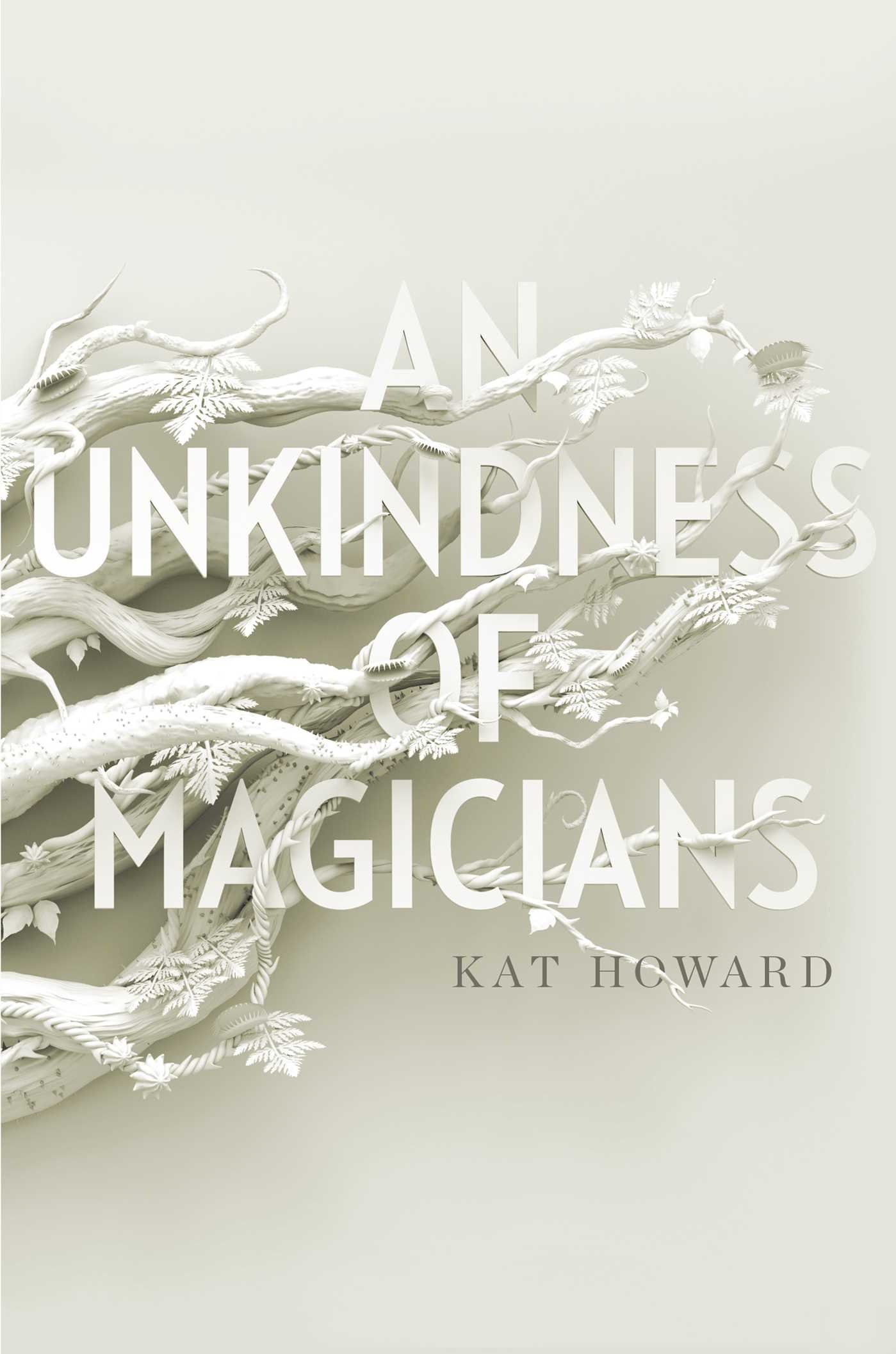
An Unkindness of Magicians-smallKat Howard’s debut fantasy novel Roses and Rot was a Locus Award nominee for Best First Novel, and a Publishers Weekly Best Sci-Fi/Fantasy/Horror Novel of Summer 2016. Her latest is a standalone tale of a secret cabal of wizards in New York City, and a woman who wants to bring down the entire system from within. It arrives in hardcover from Saga Press in two weeks.

The Unseen World prides itself on remaining invisible as magicians walk the streets of New York City, rich and literally powerful.

Every twenty years, vying for power and standing during the Turning, the heads of magical houses would elect a champion, a family member or a magician-for-hire, and begin a series of duels.

But the Turning has come early, after thirteen years, and Ian Merlin, the heir to the most powerful house in the Unseen World has elected to become the champion of his father’s chief rival, House Prospero.

Enter Sydney: An unknown magician from a candidate house, an outsider easily dismissed amongst the established wealth and power of the Unseen World.

Acclaimed author Kat Howard has written a magical revenge thriller amidst the private world of New York City’s most influential citizens, who feed off each other in a hidden game of magical dominance.

What the Unseen World will soon learn is that Sydney is a formidable duelist with power that hasn’t been seen in decades, and she has a score to settle.

An Unkindness of Magicians will be published by Saga Press on September 26. It is 355 pages, priced at $25.99 in hardcover and $7.99 for the digital edition. The cover is by Vault 49. Read Chapter One at Tor.com.
Future Treasures: The Complete Psychotechnic League, Volume 1 by Poul Anderson

Future Treasures: The Complete Psychotechnic League, Volume 1 by Poul Anderson

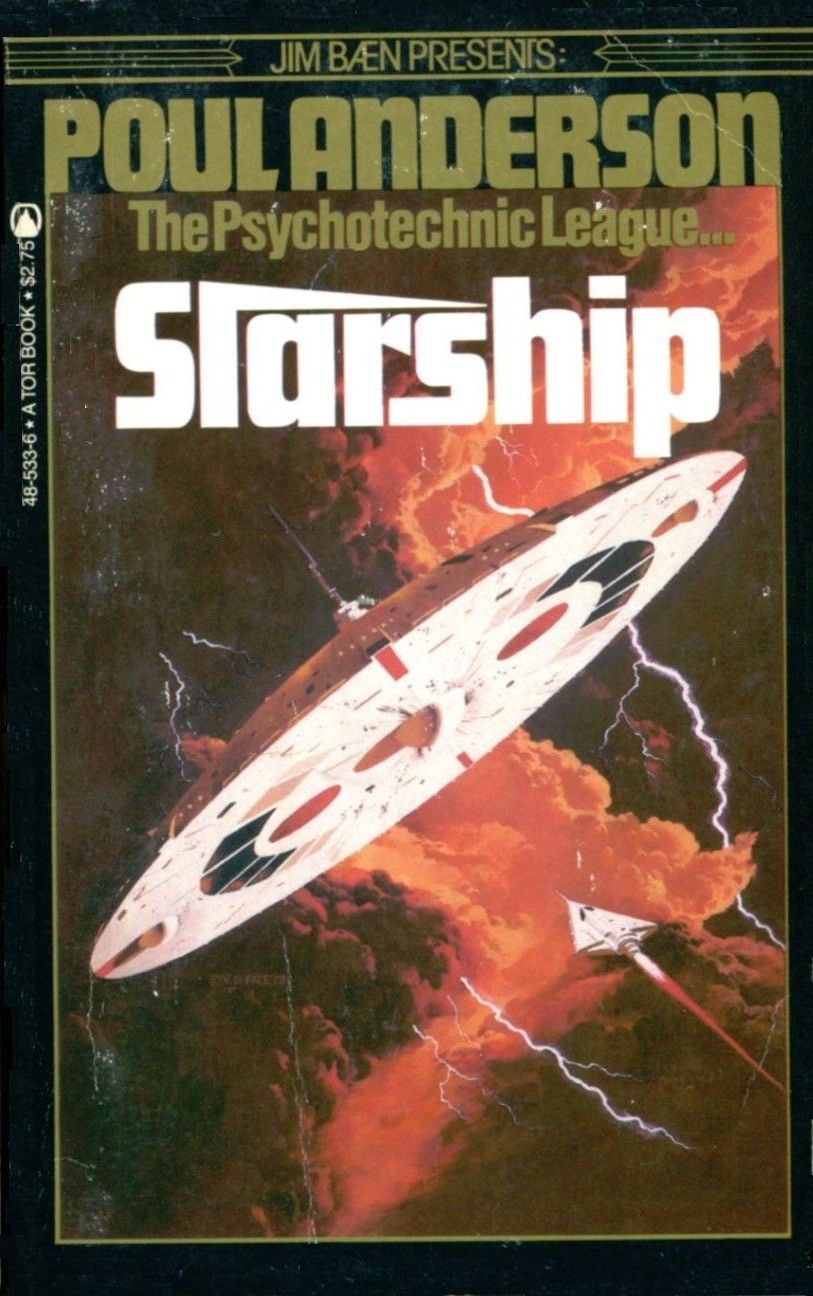
The Psychotechnic League-small Cold Victory-small Starship Poul Anderson-small

Poul Anderson was one of the most acclaimed and prolific science fiction writers of the 20th Century, and one of his most popular series was The Psychotechnic League, which told the story of the rise of a new civilization after a devastating nuclear war in the late 1950s that very nearly obliterated mankind.

The Psychotechnic League began as a Future History, a popular beast among short SF writers of the 40s and 50s. Anderson published the first story, “Entity,” in the June 1949 issue of Astounding Science Fiction, and set the opening of his series a decade in the future. The series continued for the next two decades, (appearing in Astounding, Planet Stories, Worlds Beyond, Science Fiction Quarterly, Cosmos, Fantastic Universe, and other fine magazines), eventually extending into the 60s. In the process, his “Future History” gradually became an “Alternate History,” as actual history trampled all over his carefully constructed fictional timeline.

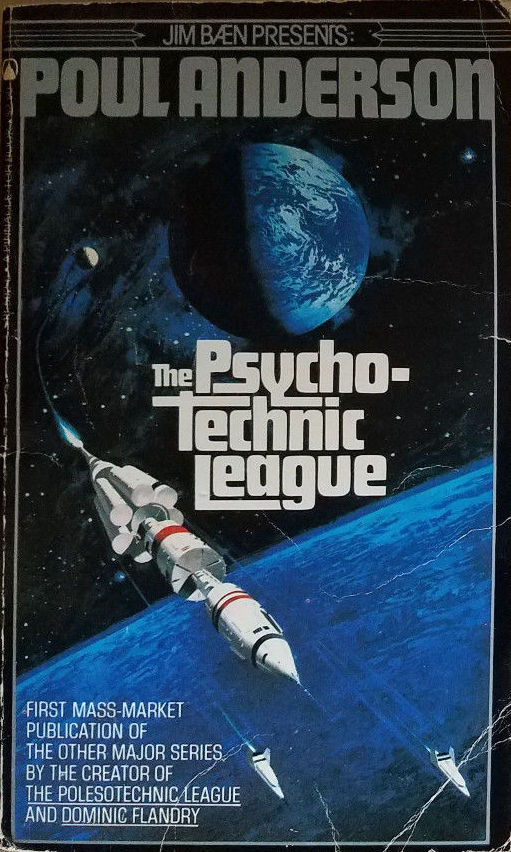
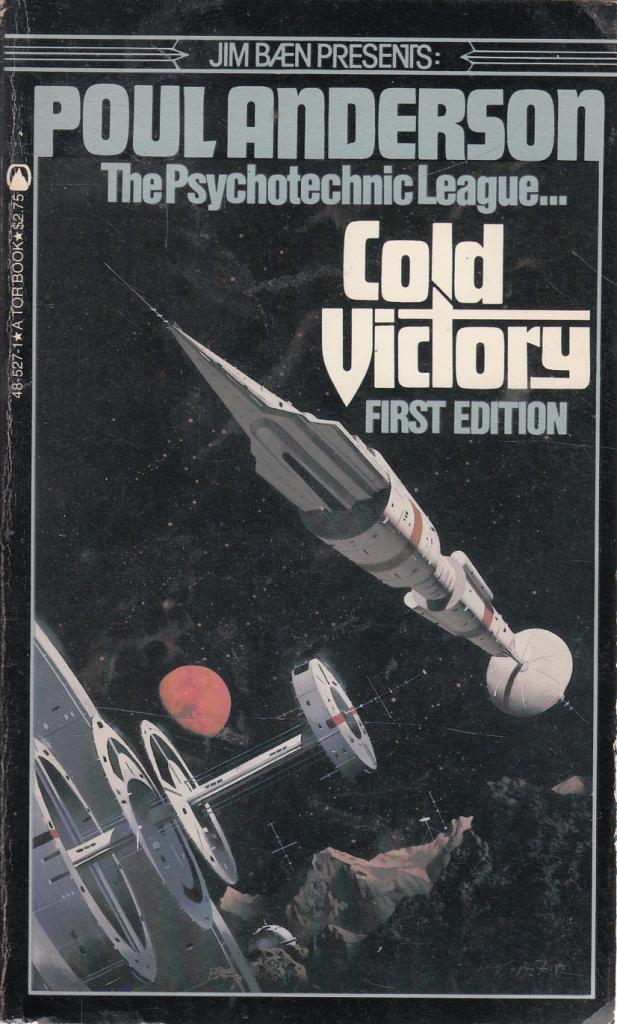
That didn’t seem to bother readers though, and the tales of the Psychotechnic League remained popular well into the 80s. The series included some 21 stories, including three short novels: The Snows of Ganymede (1955), Star Ways (1956), and Virgin Planet (1957). The short stories and one of the novels were collected in a trilogy of handsome Tor paperbacks in 1981/82, with covers by Vincent DiFate (above). Now Baen books is reprinting the entire sequence in a series of deluxe trade paperbacks, starting with The Complete Psychotechnic League, Volume 1, on sale next month.

Read More Read More

Dilvish, the Damned by Roger Zelazny

Dilvish, the Damned by Roger Zelazny

“Have you given any thought to what you are going to do if — rather, when — you make it to the top?”

“Look for trouble,” Dilvish said. “Defend myself at all times. Strike instantly if I see the enemy.”

Black and Dilvish to each other in “Tower of Ice”

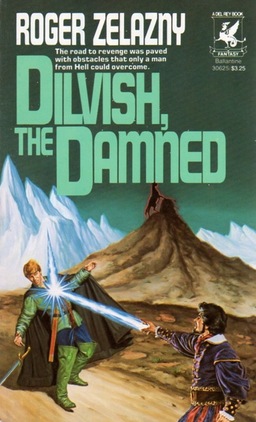
oie_1271358c5k3rMonDilvish, the Damned (1983), by Roger Zelazny, had been on my list of books and stories to avoid because of who recommended them. With this book, it was someone I played D&D with. In fact, he introduced me to the original D&D rules back in 1977 or ’78.

He was, and remains, the most voracious reader I’ve ever known, though he rarely reads outside of sci fi and fantasy. He would always tell me about whatever book he was reading — often read while he walked the mile and half to my house. When he’d describe a book to me, though, it was always about how cool and awesome the most powerful characters were. Big cowls and fancy wizardly skullcaps were symbols of greatness. The more absurdly godlike the protagonists were, the better.

A few years ago, he told me he was disappointed that the Twilight books didn’t end in an epic all out vampires vs. werewolves war. That Stephenie Meyer wouldn’t do that really didn’t make sense to him. It’s that sort of take on books that led me to take for granted that any book he suggested was going to annoy me as much as it excited him. I’ve overcome that block slowly. It took me nearly thirty years and a lot of positive recommendations to read Roger Zelazny’s Amber Chronicles. Even loving those — which I do — it took me another decade to pick up Dilvish, the Damned.

Dilvish is heir to both a Human house and an Elvish house, and a heroic warrior of great prowess. Two centuries ago, he came up against the powerful, evil sorcerer, Jelerak. The wizard, far stronger than Dilvish knew, turned the half-elf to stone and imprisoned his soul in Hell. It is only when Portaroy, a town once saved by Dilvish, comes under a new attack, he is freed to return to the mortal world with a metal horse named Black, and a desire to avenge himself on Jelerak.

Dilvish is part of the rebirth of swords & sorcery in the mid-60s alongside Elric and the Lancer Conan. Several of Zelazny’s stories were reprinted in S&S anthologies from the 1970s. Some of the stories are at least equal to those of Moorcock and Leiber, and way better than most by Lin Carter and John Jakes. Dilvish, the Damned is a 1983 fixup of all eleven Dilvish short stories. The first was originally published in Fantastic in 1965, and the last two first saw light of day in this collection.

Read More Read More

How I Spent My Summer Vacation

How I Spent My Summer Vacation

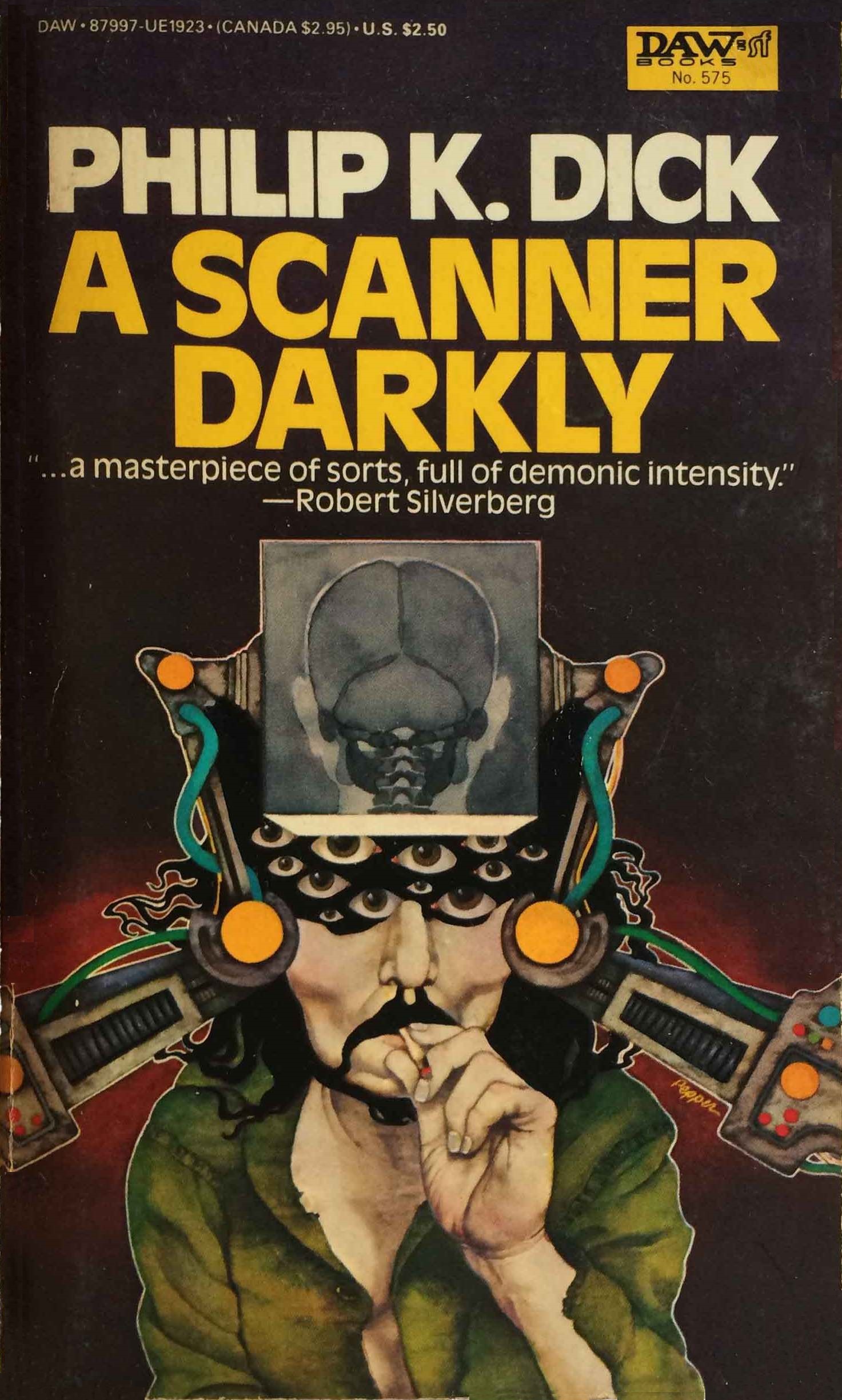
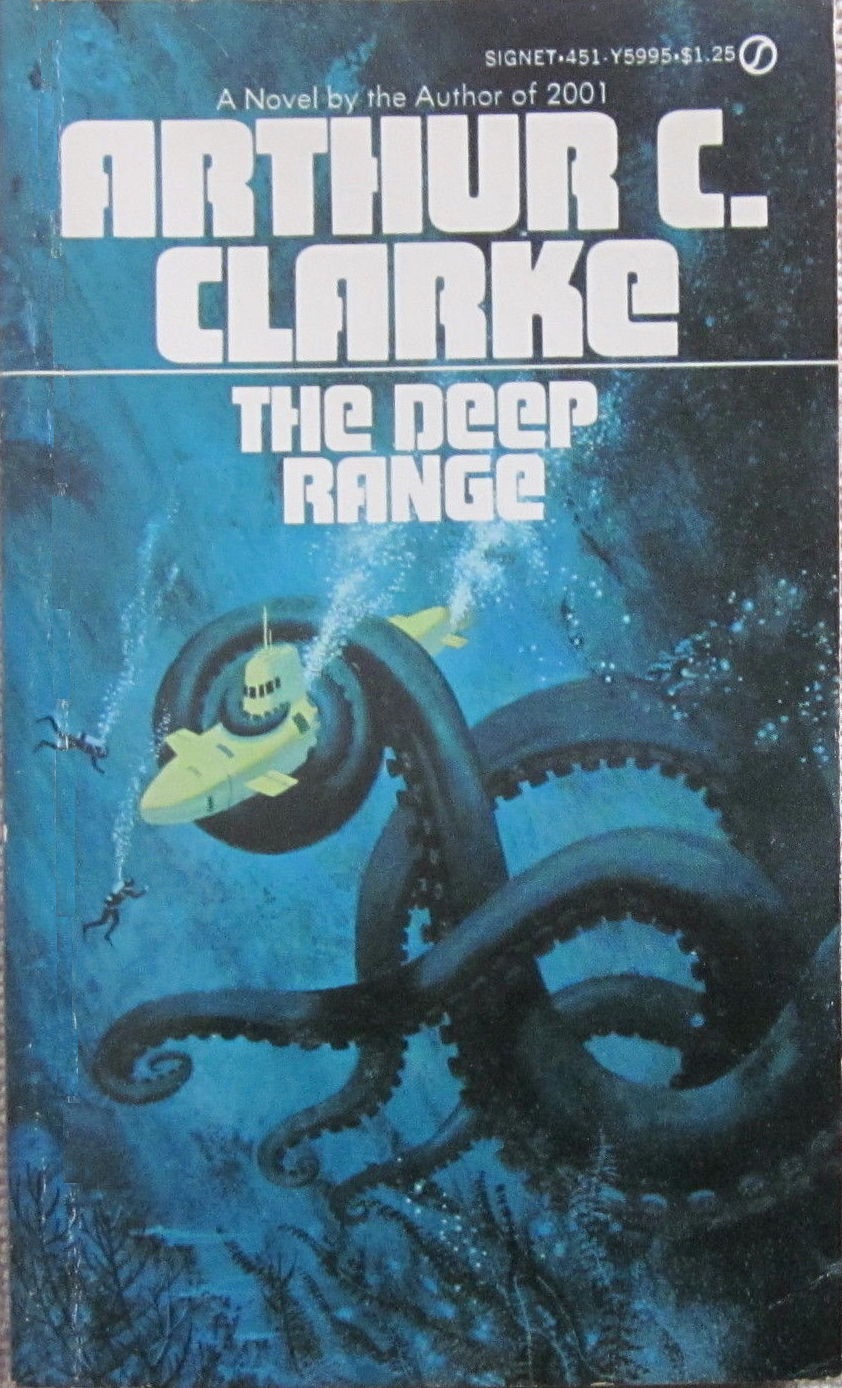
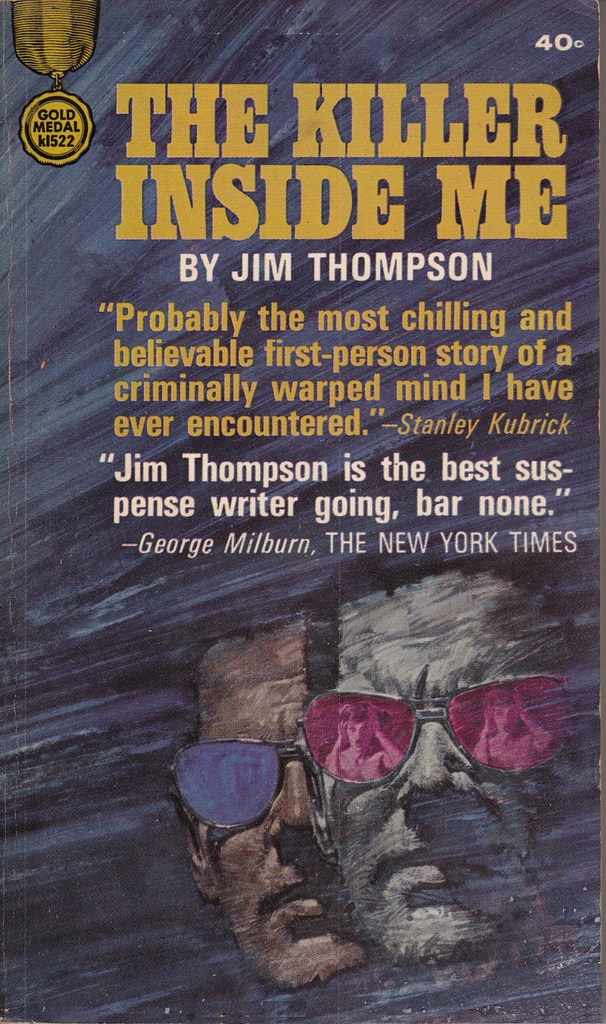
A Scanner Darkly Dick-small The Deep Range Arthur C Clarke-small The Killer Inside Me Jim Thompson-small

On May 25th I finished my thirteenth year at the small private school where I teach fourth grade. I love my job and I love my students, but remember the transports of joy that you felt when you were a kid, when the dismissal bell finally rang on that last day of school? I can assure you that your happiness was as nothing compared to the incandescent elation teachers feel on that final afternoon of the second semester.

At my school, we get eight weeks off, and I spend them much as I did when I was in school myself — I make a big stack of paperbacks and I read as many of them as I can before the next school year begins. Last summer, for some perverse reason I no longer remember, I changed my routine a bit; instead of tearing through the usual pile of science fiction/fantasy/mystery yarns, I decided to take on a different kind of book: David Foster Wallace’s postmodern magnum opus, Infinite Jest. Though it is itself marginally science fiction, Wallace’s massive novel is about as far removed from the kind of genre reading that usually fills my vacation as it is possible to get. I originally had some notion of doing a fair amount of my “normal” summer reading alongside of Infinite Jest, but it didn’t work out that way. I’m glad I read the novel, but it absolutely exhausted me; after hewing my way through thirty or forty pages I barely had enough physical and mental energy to hoist myself out of my chair, much less crack open a gaudy-covered Ace reprint of Radium Raiders of Deneb by Lester Cragwell Griggs.

If you’ve never tackled it, reading Infinite Jest is like driving coast-to-coast on a state of the art superhighway… that has a speed bump every fifty feet, for three thousand miles. I did manage to get Son of Tarzan read in between bouts with Wallace’s knotted prose, but the two books didn’t mix well, and left me feeling slightly seasick, not to mention somewhat confused about the nature of reality.

In any case, this year I was determined to return to sanity and my standard procedure and see if it’s possible to overdose on the heady fumes that waft from the pages of forty year old paperbacks. I now submit the results of my experiment for your edification… or, if you wish, to act as a grim warning.

Read More Read More

Vintage Treasures: Dragonfly by Frederic S. Durbin

Vintage Treasures: Dragonfly by Frederic S. Durbin

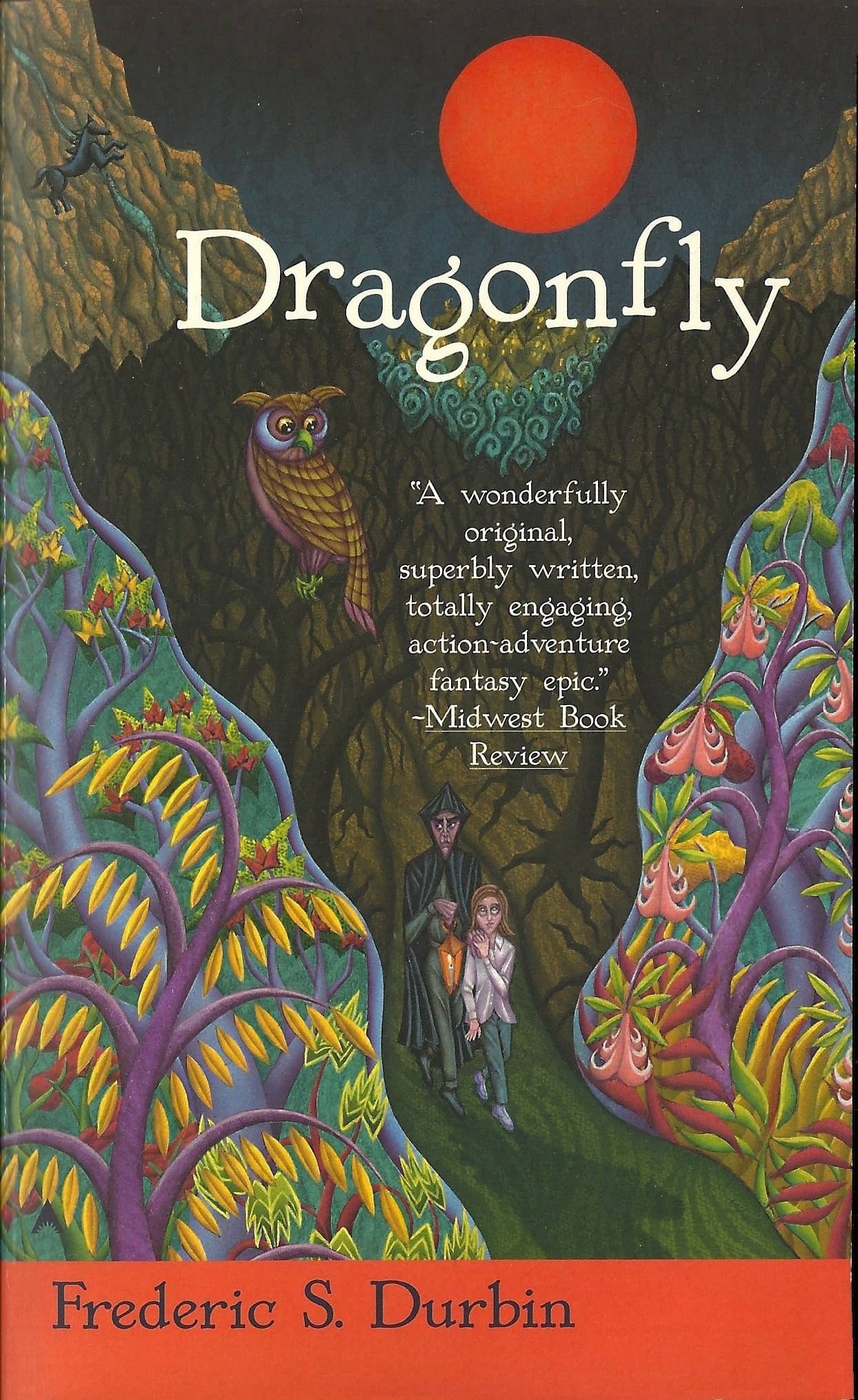
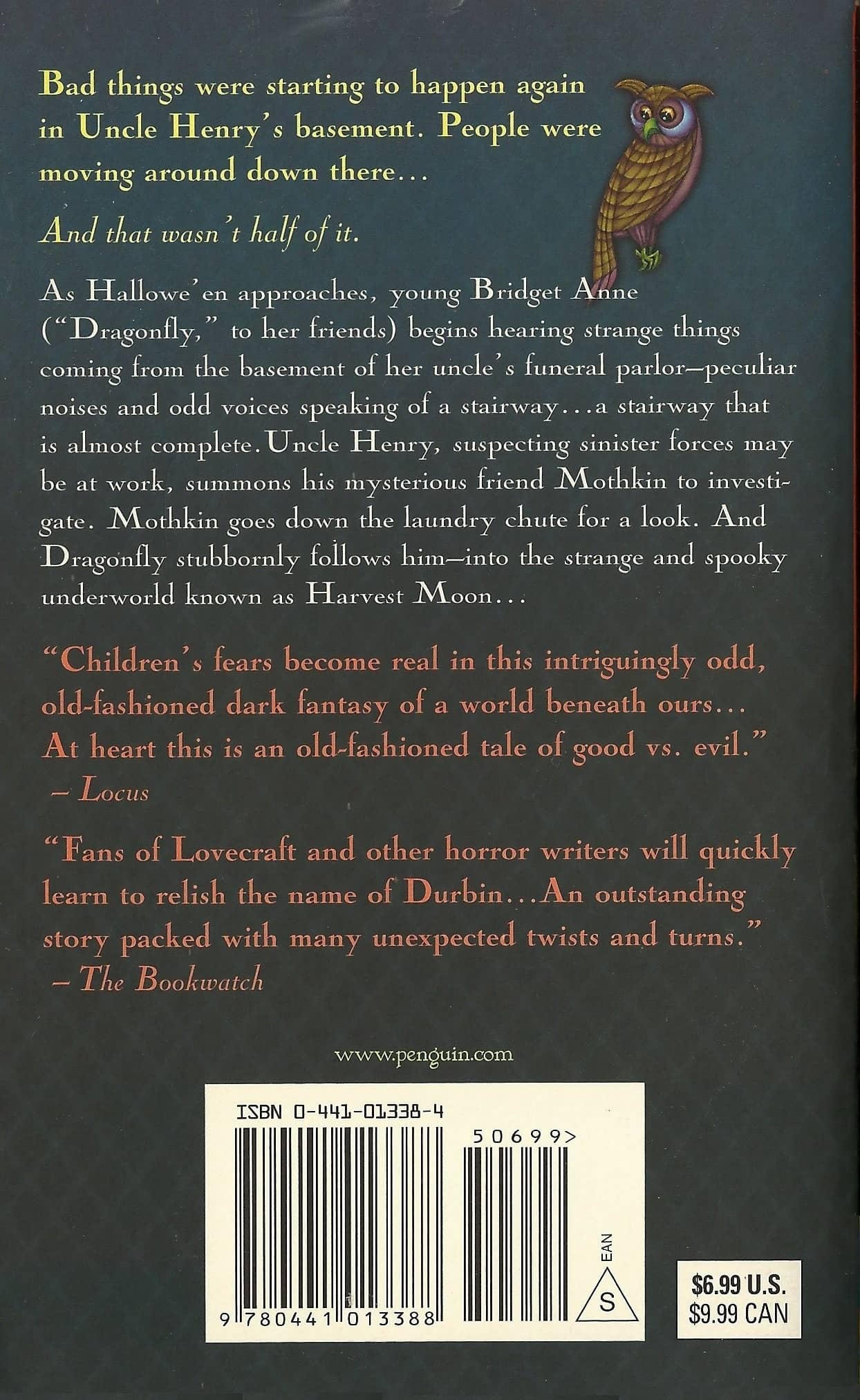
Dragonfly Frederic Durbin-small Dragonfly Frederic Durbin-back-small

Dragonfly was published in 1999 by Arkham House — the last novel the legendary publishing house produced in the 20th Century, and very nearly their last novel, period (they published one subsequent novel, John D. Harvey’s The Cleansing (2002), and about a dozen collections and anthologies, before effectively shutting down in 2010.)

It was an extraordinary coup for a debut novelist to win a contract from the publisher behind the earliest collections of H.P. Lovecraft, Clark Ashton Smith, Robert E. Howard, and numerous other major American fantasists. But Dragonfly was an extraordinary novel. The International Horror Guild nominated it as Best First Novel of the year, and Weird Tales called it “A marked success… makes us marvel that if could be a first novel.” Rambles labeled it “The perfect book for the Halloween season.”

Ace Books reprinted Dragonfly in paperback six years later, with a cover by Merritt Dekle (above). The paperback is becoming harder and harder to find these days, so when I stumbled on a new copy at Half Price Books this summer, I snapped it up immediately.

Read More Read More

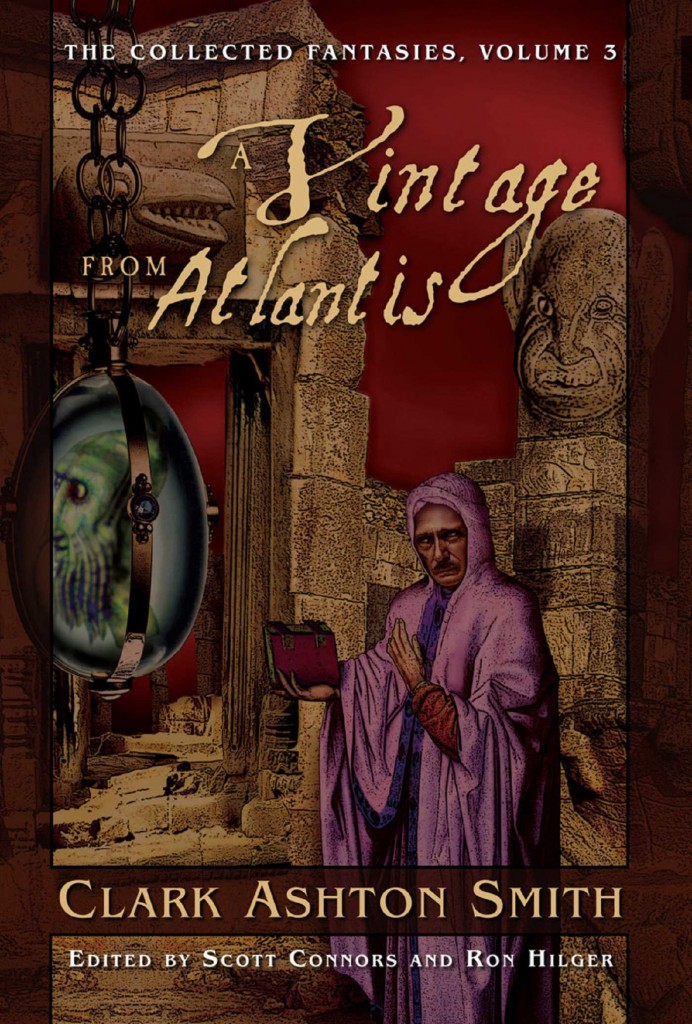
A Jaunt Through Clark Ashton Smith’s Collected Fantasies—Vol. 3: A Vintage from Atlantis

A Jaunt Through Clark Ashton Smith’s Collected Fantasies—Vol. 3: A Vintage from Atlantis

the-collected-fantasies-of-clark-ashton-smith-a-vintage-from-atlantis-9781597803649_hrHorrible it was, if there had been aught to apprehend the horror; and loathsome, if there had been any to feel loathing. —“Ubbo Sathla”

Clark Ashton Smith was approaching his writing peak and fortunate to have multiple markets open to his best work during the period of the stories in this volume (1931–32). Three magazines were publishing him on the regular: Weird Tales, Wonder Stories, and Strange Tales. The situation didn’t last; Smith suffered a slowdown when Strange Tales folded at the start of 1933. Without the Clayton Magazine, Smith lost a reliable alternative for whenever editor Farnsworth Wright at Weird Tales turned something down for being too outré or sexual. The deepening effects of the Great Depression pinched the surviving magazines and delayed payments. Wonder Stories, like any Gernsback mag, was dilatory enough with payments already. Although we’re approaching the CAS apex in this and Vol. 4, the omens of the end of his fiction-writing days are already clouding the cerulean skies.

Boilerplate recommendation for The Collected Fantasies: If you’re new to Clark Ashton Smith, these Night Shade editions aren’t the best starting point. I recommend the Penguin Classics collection The Dark Eidolon and Other Fantasies for readers who want to get started with a collection of some of Smith’s key short stories and poems.

Contents

Vol. 3 contains stories written over a little more than a year: April 1931 to June 1932. Each is listed with its original date and place of publication, sometimes in a modified form different from the corrected text the editors include here. Unlike previous volumes, every story reached professional magazine publication within a few years of composition, with the exception of “The Double Shadow,” which Smith self-published.

Read More Read More

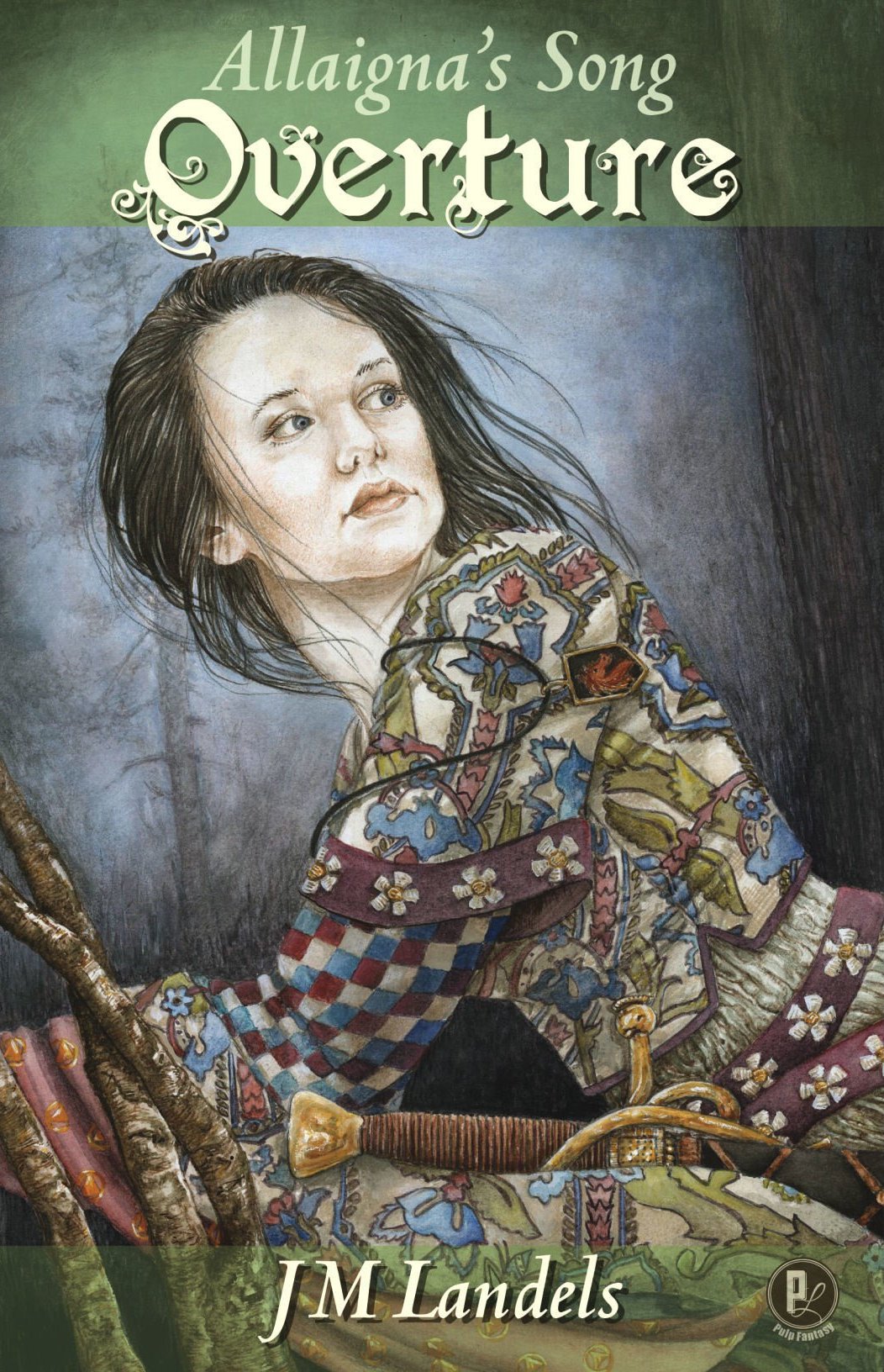
In 500 Words or Less: Allaigna’s Song: Overture by JM Landels

In 500 Words or Less: Allaigna’s Song: Overture by JM Landels

Allaigna’s Song Overture JM Landels-smallAllaigna’s Song: Overture
By JM Landels
Pulp Literature Press (288 pages, $17.99 paperback, $6.49 eBook, July 2017)

I’m a fan of the slow reveal in fiction, particularly if the writer provides just enough detail to intrigue you and increase the tension, but makes you wait to get a clearer picture about what’s going on. That’s part of the reason why Fringe is one of my all-time favorite shows. Building that tension and deciding what information to provide to the reader (or viewer) and when is very tricky; I’ve been told that some of my published stories have pulled it off, but I’ve written other pieces that totally buggered it up. And one thing I’ve never attempted is doing so with parallel narratives in a single work, where the connection isn’t clear at the outset and the tonal change is severe, since I’m always afraid that doing so will throw off my readers.

But in Allaigna’s Song: Overture, Jen Landels manages to avoid all of that, as she tells the story of child Allaigna and parallels it with two other narratives that, over time, are revealed to be the stories of her mother and grandmother. While the core is Allaigna’s discovery of her royal family’s true heritage and her capacity for magic, our real understanding of the world and the Game of Thrones-esque politics involving her family comes from these parallel narratives, since Allaigna is kept out of a lot of discussions and sometimes doesn’t understand or care about what’s really going on. The really neat thing is that when these parallel narratives first appear, there’s no indication about who we’re looking at or where the story has moved to – the first flashback to “Lauresa,” for example, occurs before we learn that Lauresa is Allaigna’s mother’s name – and there’s a shift in tense and narrative structure, which is really experimental and something I’ve never attempted. But Landels pulls it off, constructing a great slow reveal as details come to light.

Read More Read More

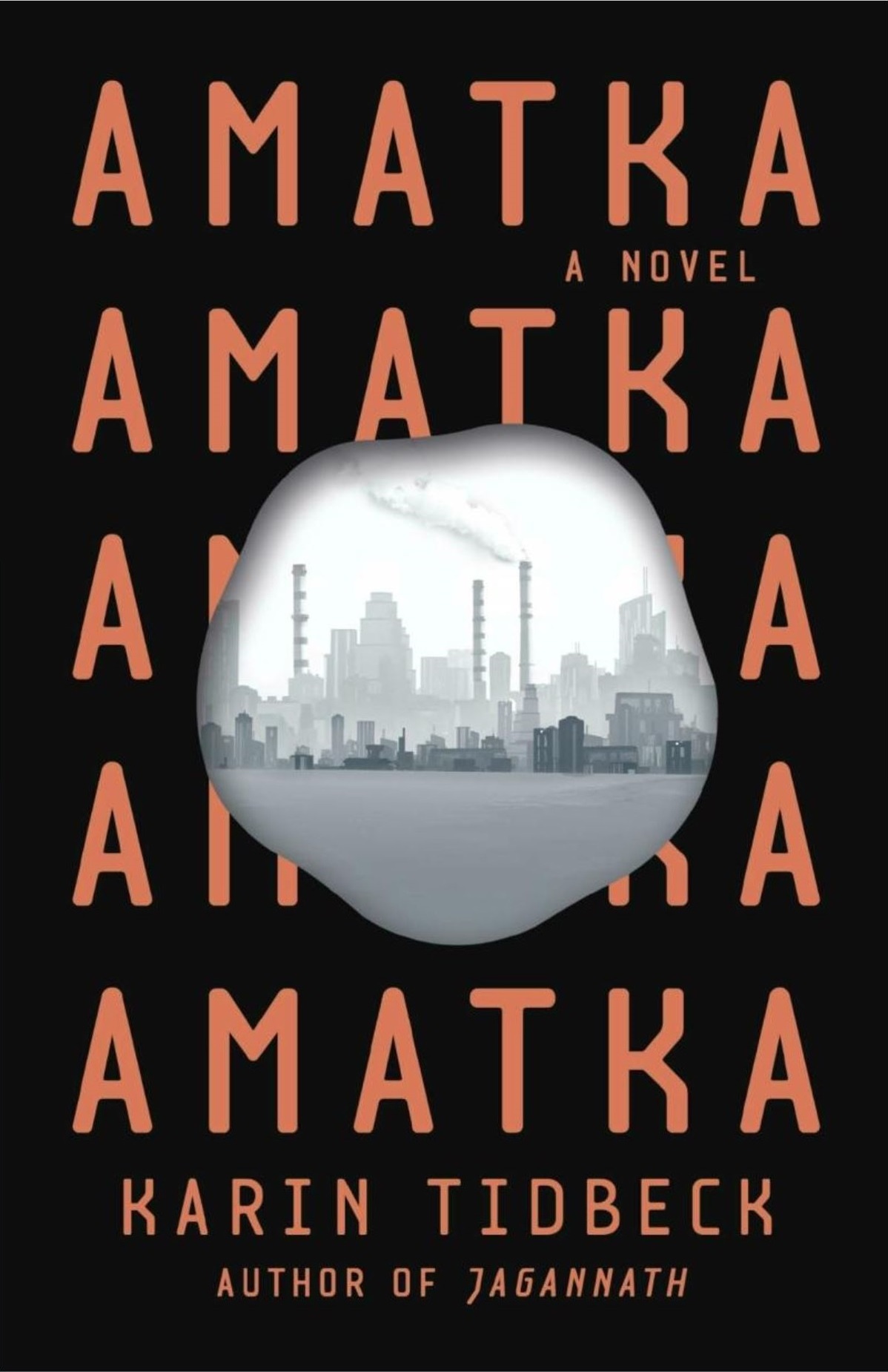
New Treasures: Amatka by Karin Tidbeck

New Treasures: Amatka by Karin Tidbeck

Amatka Karin Tidbeck-smallKarin Tidbeck’s first collection Jagannath brought rave reviews from China Mieville, Karen Joy Fowler, Elizabeth Hand, and others. Ursula K. Le Guin said, “I have never read anything like Jagannath… These are wonderful stories.”

Karin’s debut novel Amatka is likewise garnering a lot of attention. Weird Fiction Review calls it “Remarkable… weird fiction at its most inventive and self-questioning.” And Jeff VanderMeer says “Karin Tidbeck’s Amatka is a stunning, truly original exploration of the mysteries of reality and what it means to be human… a brilliant short story writer has been revealed as an even more brilliant novelist. One of my favorite reads of the past few years, an instant classic.”

Print copies of Jagannath are now almost impossible to find. Don’t make the same mistake of overlooking Amatka! It arrived in trade paperback from Vintage in June.

Welcome to Amatka…

where everyone has a role, language has strange properties, and nothing — not even the very fabric of reality — can be taken for granted.

Vanja Essre Two is sent to the wintry colony of Amatka on an assignment to collect intelligence for the government. Dissent is not tolerated in Amatka, nor is romantic love, but Vanja nonetheless falls for her housemate Nina, a true believer in the colony’s ways. But when Vanja is drawn into a resistance movement, she must choose between love and a revolution, which promises liberation at the cost of tearing the world as they know it apart.

Amatka was published by Vintage on June 27, 2017. It is 216 pages, priced at $15.99 in trade paperback and $11.99 for the digital edition. Read more at the author’s website.

Future Treasures: Magicians Impossible by Brad Abraham

Future Treasures: Magicians Impossible by Brad Abraham

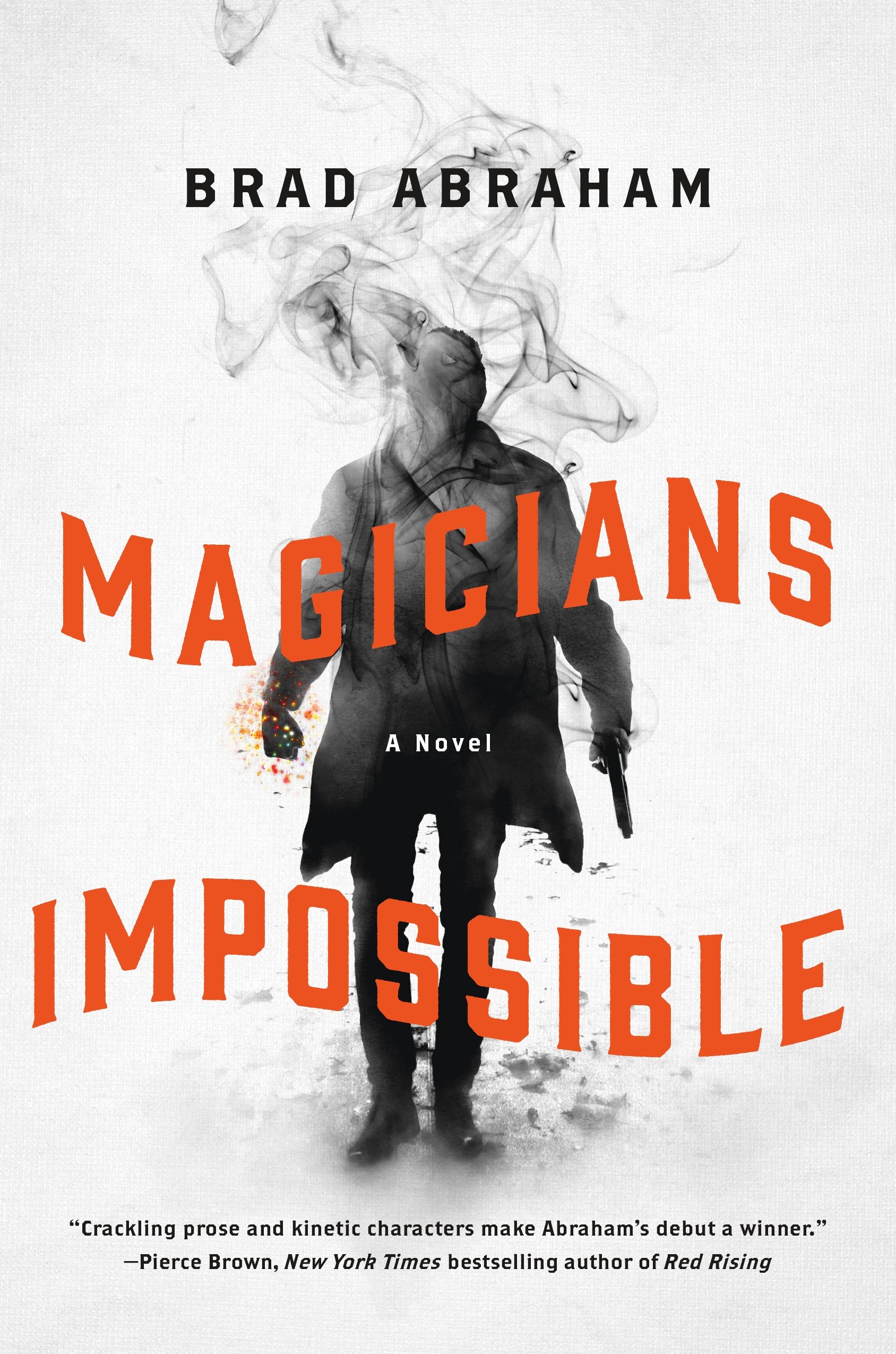
Magicians Impossible-smallBrad Abraham has written for film (Stonehenge Apocalypse), television (RoboCop: Prime Directive), comics (Mixtape), and genre magazines (Rue Morgue, Starburst). His first novel is Magicians Impossible, which Library Journal says reads like “Harry Potter meets James Bond,… this series launch by a screenwriter features ages-old spy rings of magic-wielding secret agents… a cinematic, fast-paced debut.” It arrives in hardcover next week from Thomas Dunne Books.

Twenty-something bartender Jason Bishop’s world is shattered when his estranged father commits suicide, but the greater shock comes when he learns his father was a secret agent in the employ of the Invisible Hand; an ancient society of spies wielding magic in a centuries-spanning war. Now the Golden Dawn―the shadowy cabal of witches and warlocks responsible for Daniel Bishop’s murder, and the death of Jason’s mother years before―have Jason in their sights. His survival will depend on mastering his own dormant magic abilities; provided he makes it through the training.

From New York, to Paris, to worlds between worlds, Jason’s journey through the realm of magic will be fraught with peril. But with enemies and allies on both sides of this war, whom can he trust? The Invisible Hand, who’ve been more of a family than his own family ever was? The Golden Dawn, who may know the secrets behind his mysterious lineage? For Jason Bishop, only one thing is for certain; the magic he has slowly been mastering is telling him not to trust anybody.

Magicians Impossible will be published by Thomas Dunne Books on September 12, 2017. It is 390 pages, priced at $27.99 in hardcover and $14.99 for the digital version. The cover was designed by Ervin Serrano. Read an excerpt here.

A Not So Trimphant Ending to The Atlan Saga: Some Summer Lands by Jane Gaskell

A Not So Trimphant Ending to The Atlan Saga: Some Summer Lands by Jane Gaskell

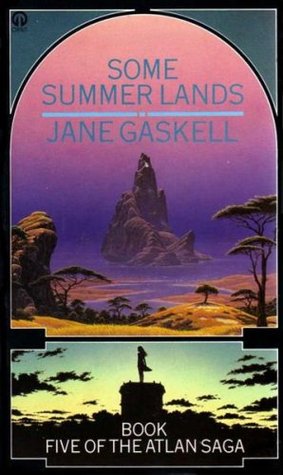
Orbit Futura Edition

“The Fourth Book in the Hitch-Hiker Trilogy” proclaimed the cover blurb on the Pan version of So Long and Thanks for All the Fish, by Douglas Adams. And many smiled and thought this was very clever and funny. The fourth book in a trilogy wasn’t actually a new idea, even back in the 1984. Now a fifth book in a trilogy is a little more unusual, and indeed when one appeared (Mostly Harmless, in 1992) the updated blurb proclaimed: “The Fifth Book in the Increasingly Inaccurately Named Hitchhikers Trilogy”.

What has Douglas Adams got to do with Jane Gaskell?

Well, she did the same thing. She wrote a pretty good trilogy – albeit one which some publishers stretched into four books – and then, by all appearances, decided to tack on another volume some years later. This is of course my opinion, but if you’ll indulge me a bit you will see why I reached that conclusion.

Now there are plenty of authors who have tacked books on to a successful trilogy — and some who have even added a whole follow up series. To be fair to Mr Adams, his additional books were pretty good, though not up to the standard of the original series. To me, they still felt like they were more of an afterthought than a specifically planned and executed conclusion.

Some Summer Lands also does not quite fit. Sadly, that is not the only issue. I cannot in honesty give this book the same recommendation I gave to the other books in the Atlan Saga, which were pretty good, with occasional flashes of brilliance. Some Summer Lands was published in 1977, roughly ten years after The City. My Orbit Futura edition weighed in at 360 pages split into three parts of varying length.

Some Summer Lands is not pretty good. Dismally disjointed, maybe. Rambling, definitely. Misguided, certainly. One of the few positives I had from the experience was that it helped me realize why I had taken on re-reading the series with such trepidation. The first three (or four) books surprised me, as I did not have fond memories of the series when I read it in my youth.

Anyone who has read my earlier reviews may remember me marveling at certain aspects and wondering why I had disliked them as a teenager. Now I know why! It’s this last book which casts a dark shadow.

Read More Read More