Joyce Carol Oates’ Gothic Quintet, Part III: Mysteries of Winterthurn
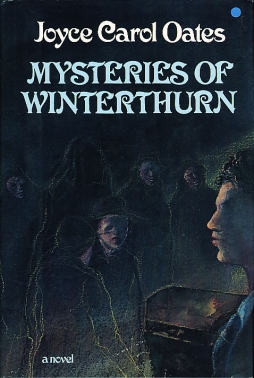 For the past couple of weeks, I’ve been looking at Joyce Carol Oates’s Gothic Quintet, in advance of the publication of the fifth book in the sequence next March. I started off with 1980’s Bellefleur, which I thought was brilliant. Last week I looked at 1982’s A Bloodsmoor Romance, which I found interesting, but not up to the first book’s level, perhaps due to my unfamiliarity with the romance genre. This week, I’ll be looking at Mysteries of Winterthurn, from 1984, which impressed me quite a bit.
Winterthurn plays with the mystery novel as Bellefleur did the Gothic and Bloodsmoor did the romance. Like those books, it both celebrates and subverts its form, and presents a parable whose themes include America, gender, and God. Unlike those books, it also creates a fully-realised community, the city of Winterthurn, against which background its hero investigates three separate cases. I think it succeeds both as a story and as a work of well-wrought prose. It deftly manipulates symbol and theme, while in its pacing and manipulation of suspense, it might well be called genre-savvy; though not necessarily savvy in the genre one would expect.
The book follows detective Xavier Kilgarvan in three separate cases over about two dozen years. In the first case, “The Virgin in the Rose-Bower; Or, The Tragedy of Glen Mawr Manor,” a teenaged Xavier investigates a murder at Glen Mawr Manor, the dwelling of his uncle, Judge Erasmus Kilgarvan, and Erasmus’s three daughters — for one of whom, Perdita, Xavier has conceived a strong attraction. As killings and macabre events continue, Xavier finds himself facing apparently supernatural forces. In the second case, “Devil’s Half-Acre; Or, The Mystery of the ‘Cruel Suitor’,” Xavier returns to Winterthurn in his late twenties, at the height of his fame, to unravel the events around the deaths of five women in a ruined landscape near the city. He draws closer to Perdita, even as his suspicions are drawn to the aristocratic Valentine Westergaard. Finally, “The Bloodstained Bridal Gown; Or, Xavier Kilgarvan’s Last Case” sees Xavier, nearing forty, dealing with a triple murder in Winterthurn — and, again, his love for Perdita.
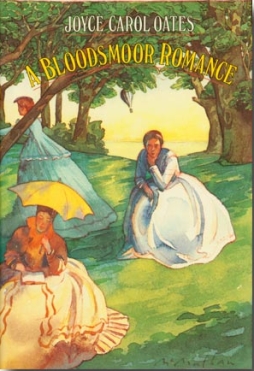
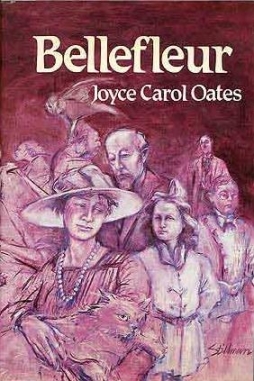 Published in 1980, Joyce Carol Oates’ novel Bellefleur is an astonishing gothic tour-de-force, a breathtaking and phantasmagoric book that whirls through generations of an aristocratic New England family. It deals in almost every kind of traditional horror-story trope: a sprawling, crumbling, haunted house; angered spirits of the land; men who take the shape of beasts; at least one innocent heiress who develops a peculiar case of anemia after being courted by a sinister European nobleman. All these things are folded into an overarching tale of greed, power, sex, and tragedy, told in a wild style that almost hides a precise structure of event, theme, and imagery.
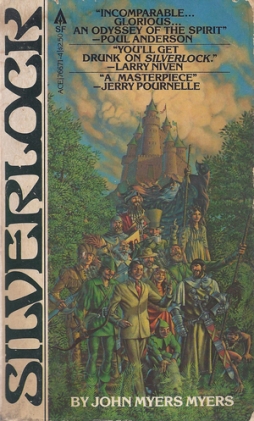 It’s been said that this is the age of the mash-up: of art formed from the fusion of other works of art. A film like The Avengers blends together characters from five other movies. Fan-fiction interrogates texts we thought we knew, crossing characters from one tale over into another. At an extreme, a work like Alan Moore’s League of Extraordinary Gentlemen imagines a world where every character derives from some other source, comes from some other story; imagines a world where all stories overlap and so make a strange collective setting. In fact, though, this is really nothing new. Crossovers, it has been said, date back to Homer writing of heroes coming together to fight the Trojan War. And League of Extraordinary Gentlemen-style mash-ups have precedents as well; I have not read Philip José Farmer’s Riverworld books, nor have I read John Kendrick Bangs’ Associated Shades novels, which date back to the 1890s, but I have read John Myers Myers’ 1949 novel Silverlock, and came away from it with a few thoughts.
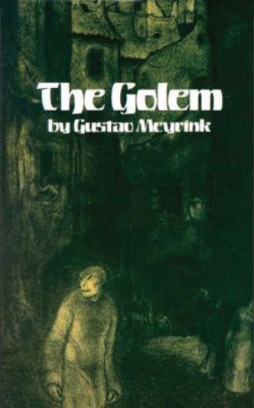 The first thing I feel I have to say about Gustav Meyrink’s novel, The Golem, is that it’s intensely, thrillingly strange. Dreamlike, elliptical, informed by theosophical and occult symbols, it wrong-foots you; nothing in it develops the way you’d expect, not in terms of character or plot or imagery. And yet that strangeness feels almost like a side-effect, a byproduct of its insistence on its themes, on its vision, on its focus on the reality of Prague and on whatever it is that lies beyond that reality. Perhaps the strangest thing about the book, published in installments in 1913 and 14 and published as a whole in 1915, was that this odd esoteric horror story was also tremendously popular in its day.
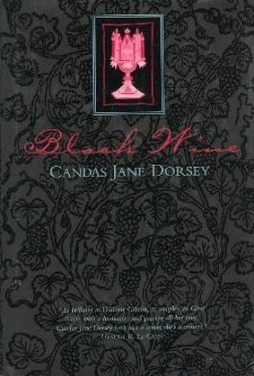 Some time ago, at one book fair or another, I took a chance on a book I’d never heard of: Black Wine by Candas Jane Dorsey. I’m not sure why; I’d already had reasonable luck at the sale, as I recall, so I didn’t feel the need (as one sometimes does) to grab a book for the sake of coming away with something. I don’t normally buy books based on cover art, and in any case this cover was more stylish than striking, a black pattern on black. It may have been the mention on the cover that the book had won an award for Best First Fantasy Novel. Most likely, it was the puff quotes on the back, featuring praise from Elisabeth Vonarburg and Ursula Le Guin (who compared Dorsey to Gene Wolfe). At any rate, buy it I did, for whatever reason; and having finally gotten around to reading it, I’m happy I went for it. Black Wine is an excellent, excellent book.
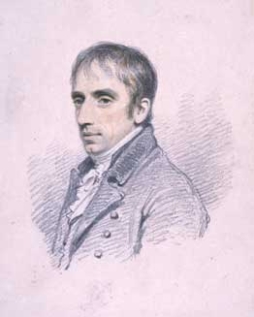 This post is part of an ongoing series about fantasy and the literary movement called Romanticism, specifically, English Romanticism in the late eighteenth and early nineteenth centuries. The series began with
 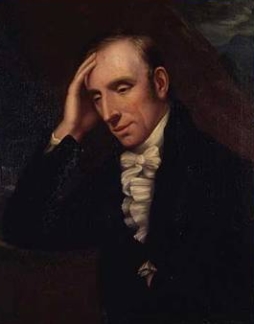 This post is part of an ongoing series about fantasy and the literary movement called Romanticism; specifically, English Romanticism in the late eighteenth and early nineteenth centuries. The series began with
  A few months ago, I started an irregular series of posts about Romanticism and fantasy. I wanted to talk about the significance of Romanticism, the literary movement of the late eighteenth and early nineteenth century, to the development of fantasy fiction. For a variety of reasons, I’d been distracted from continuing those posts for a while; I want to return to them now. The original inspiration for this series of posts came when
  Almost exactly a year ago,