Weird Times 5: Food
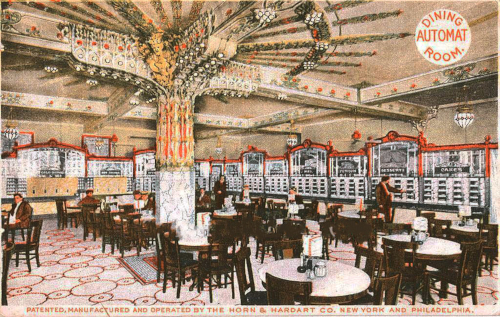
Let’s say you get hungry as you walk along, and think about getting some food later. Maybe you see a restaurant, and a grocery store near it. What kind of food will you be able to buy in the store? And what sort of a restaurant are you looking at? There are a lot of potential answers to that second question, but I want to focus on one admittedly unusual possibility. If you’re in the right city, especially New York or Philadelphia, maybe you have the chance to pop into an automat. And in New York, you might even spot a future Weird Tales writer drinking the hot chocolate.
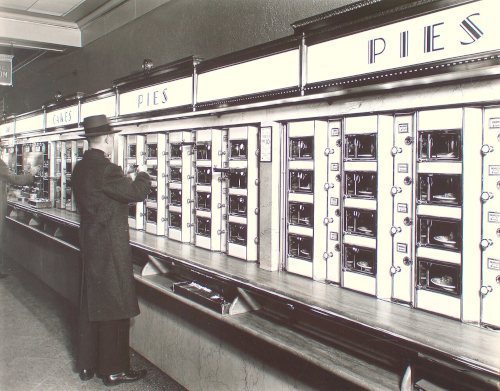
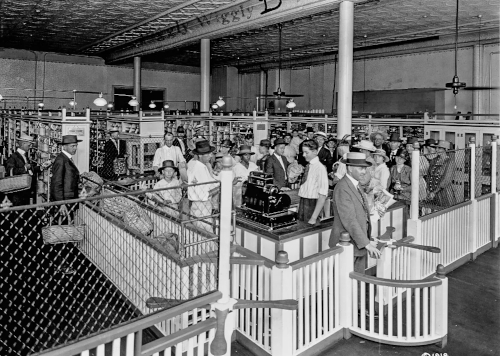
An automat has a dining area, a kitchen area, and between them a wall with glassed-in boxes, each with some foodstuff in it — a sandwich, a piece of pie, specialties like baked beans or Salisbury steak. A customer puts a coin (typically one or more nickels) in a slot, which opens the front window so they can take the food. Through a back window kitchen workers replace the food that’s been taken out, then cook more. If you as a customer deal with any of the staff at the automat, it’ll probably be the cashier who makes change at a booth, and even they don’t talk much.
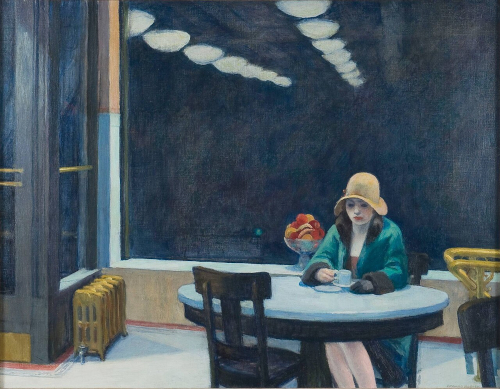
The mechanised nature of the automat appeals to Americans in the first half of the twentieth century. The coin-operated restaurant feels almost futuristic. Horn & Hardart dining halls are spacious, and the architecture bright and elegant: high ceilings, balconies, white marble floors, brass frames on the windows, dolphin heads on the coffee-machine spouts. It is, as the name implies, automatic; you don’t have to deal with people. Immigrants don’t have to worry about their poor English. Working women, who exist in new numbers at around this time, can go alone or in groups. Unusually, automats cut across social class — you can find beggars and the upper class and artists all at neighbouring tables. At Horn & Hardart in particular the quality’s not just consistent, but good enough people decades later will rave about the taste. Prices are right; a nickel isn’t much, even in the 20s, and it gets you a respectable portion of food. Plus, of course, you don’t have to tip.
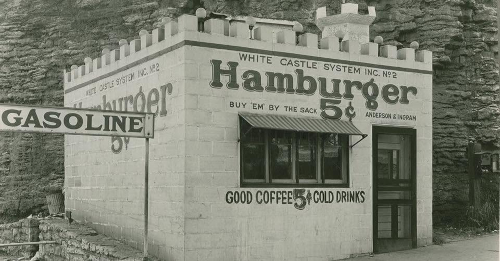
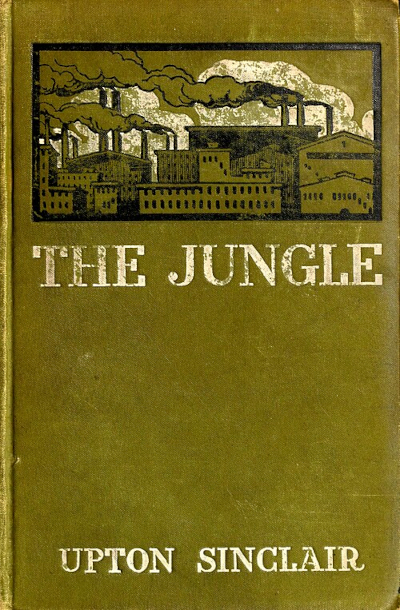
Hot dogs and hamburgers have both become popular in the last twenty years, and it is around this time that people start adding cheese to hamburgers to create the cheeseburger, but the reason for the success of White Castle is the cleanliness. Americans are still shocked by Upton Sinclair’s 1906 novel The Jungle, which graphically depicted horrific unsanitary procedures at meat processing plants. The book led first to public outcry and then to legislation including the Meat Inspection Act and the Pure Food and Drug Act. Although watered down by the influence of the meat-packing industry, these laws did curb some of the worst abuses; food and drink are safer than they’ve ever been, but consumers still want reassurance.
Automats and the White Castle system of food preparation are two responses to the fear of food-borne illnesses. Chain restaurants, as distinct from fast-food, are another partial answer and exist in several forms. Notably, the Childs’ Restaurant chain, founded in 1889 and at its peak in the 20s, has well-designed dining spaces known for their cleanliness and white-clad waitresses; it established the cafeteria-style tray line format. Howard Johnson’s orange roofs will appear in 1925. The first A&W restaurant will open in 1923, with drive-in service provided by ‘tray boys’ and tray girls,’ and frosty mugs for their root beer kept in a freezer until serving; A&W will develop into a franchise in 1925.
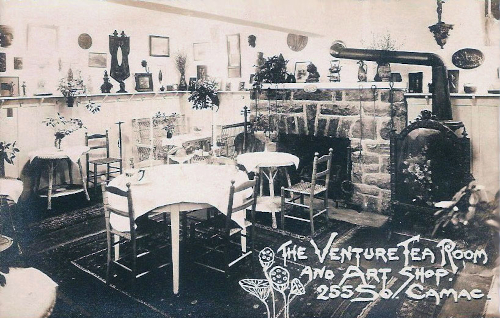
To put some numbers to that last point: in the early 1920s more than 20% of the workforce are women. There were 387 employed men per 100 employed women in 1920, and that’ll drop to 354 working men per 100 working women in 1930. The percentage of women participating in the labour force has been slowly but steadily increasing, sometimes in new occupations — not only are waitresses becoming more common, so are women clerical workers. On the other hand, in 1920 only 4% of married white women around the age of 30 worked; 33% of married nonwhite women worked. The ratio of women’s earnings to men’s is only a little more than half.
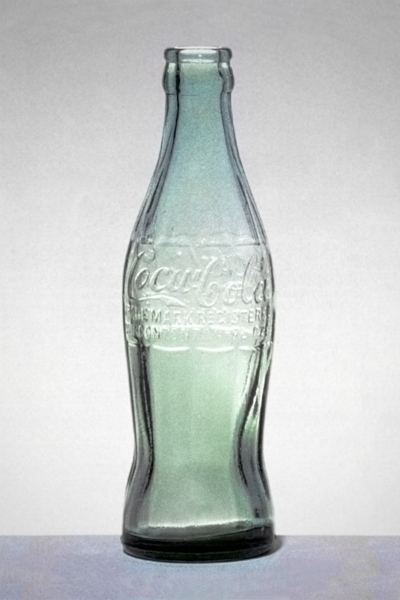
Luncheonettes are also exploding in popularity. These are lunch counters opened in drug stores and five-and-dime stores, offering simple food as a way for store owners to gain a new revenue stream. Often they grow out of the longstanding drug store fixture, the soda fountain. Soda fountains serve soft drinks and beverages made from syrups mixed with water and ice; you can ask the server, a ‘soda jerk,’ to add, say, cherry syrup or grenadine to your cola. In 1922 the blender was invented to make milkshakes at soda fountains, though it won’t be developed for home use until the mid-1930s. Bottled soft drinks can also be bought; since 1915 Coca-Cola’s been available in a distinctive contoured bottle, setting it apart from copycats. There’s a range of other soft drinks, though — among them carbonated root beer (as opposed to the original medicinal beverage drunk warm) from 1876, Doctor Pepper (locally available in Texas in 1885, nationally from 1904), ginger ale (from Canada Dry starting in 1904), and Orange Crush (from 1911).
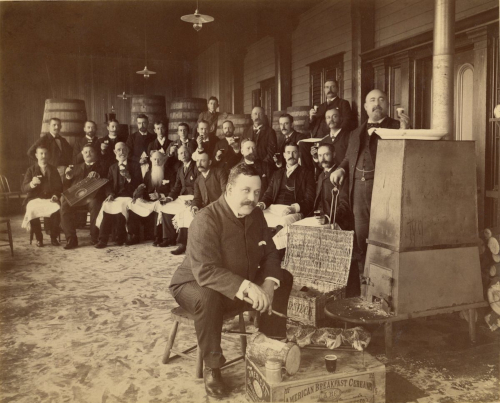
But while these things are struggling, theme restaurants are thriving, a novelty invented in Paris and brought over to North America in the early 20th century. In 1908 Murray’s opened, a restaurant themed around ancient Rome; 1917 saw the advent of the Pirate’s Den, with three ‘decks’ got up with Jolly Rogers, and cutlasses on the walls, and treasure maps for tablecloths. And also emerging at this time is the diner, small prefabricated restaurants, often repurposed train dining cars. They serve cheap food but are developing or popularising their own distinctive slang: 86, a cup of mud, greasy spoon.
Similarly, although Chinese immigration is severely restricted, certain kinds of businesses can get visas for their employees, and starting in 1915 restaurants became one of those businesses. The number of Chinese restaurants in the United States doubled from 1910 to 1920, and then will double again by 1930, aided by low-priced food and the late hours the restaurants stay open. Conversely, despite a brief craze for sushi in 1905, and records suggesting that by 1910 Japanese restaurants were not uncommon in the United States, increasing restrictions on Japanese immigration caused those restaurants, and the nascent white American taste for Japanese cuisine, to vanish.
Americans began to consume fewer starches (like bread and potatoes) and to consume more fruit and sugar. But the most striking development was the shift toward processed foods. Instead of preparing food from scratch at home (plucking chickens, roasting nuts, or grinding coffee beans), an increasing number of Americans purchased foods that were ready-to-cook. Important innovations in food processing occurred during World War I as manufacturers learned how to efficiently produce canned and frozen foods. Processed foods saved homemakers enormous amounts of time in peeling, grinding, and cutting.
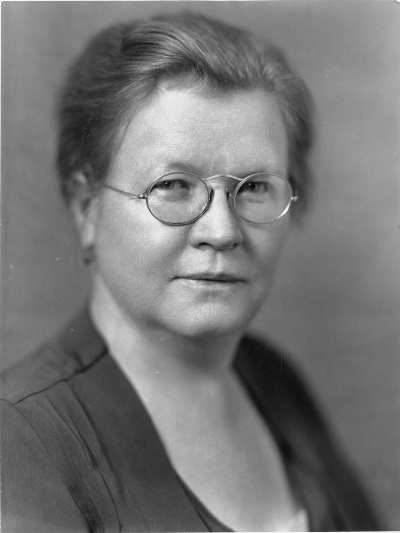
Some habits have not yet changed; olive oil hasn’t become a standard part of cooking for most Americans, for example, with lard or butter still stand-bys. Corn starch and corn bread are still unusual for any but the poor. Still, change is coming from a number of different directions. So, for example, science is developing new understanding of nutrition. Scientists had worked out that food contained proteins back in the nineteenth century, but it was only a dozen years ago that they identified the first ‘vitamine’ (the ‘e’ was only dropped three years ago). On July 1, 1923, President Harding will create the Bureau of Home Economics to research “the scientific basis for the mechanics of living.” Its head, Louise Stanley, will be the highest-ranking woman in the federal government, and her bureau the largest employer of women scientists in the country. There is in fact a need for women trained in home-ec, among journalists, food companies, department stores, and the like.
(Worth noting in passing a recent major scientific advance in food production that’ll only play out in later decades. In 1909 Fritz Haber developed a new process to create ammonia from nitrogen in the air; scaled up to industrial use by Carl Bosch the next year, this would eventually become vital in ensuring enough food was produced for a world of billions of people, and incidentally win both men Nobel Prizes. The use of the Haber-Bosch process is in its early days in 1923, and is more notorious for having been useful to the German military in the Great War.)
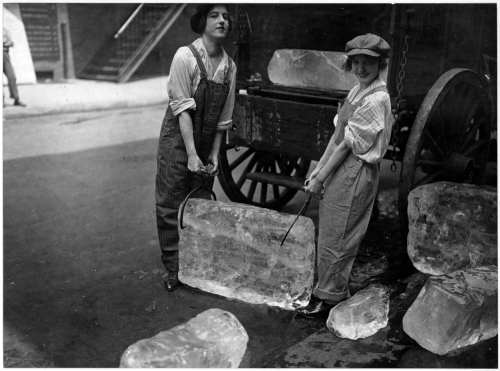
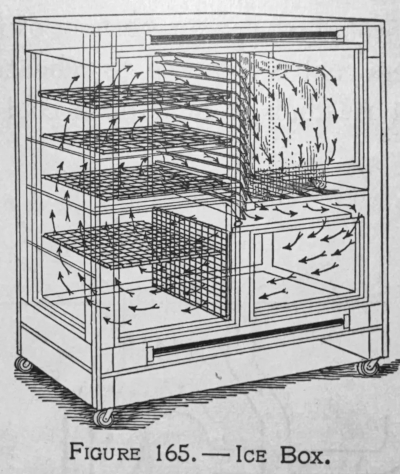
Because refrigeration’s so primitive, milkmen provide daily deliveries of milk in glass bottles. Pasteurisation of milk without spoiling the taste was perfected in 1906, but it’ll take until well into the 1930s before pasteurised milk becomes standard even in urban areas. In 1923, apartments might have small doors to allow milk to be delivered inside, while some houses have small milk boxes on the porch or built into the side of the house. Note that the thermos was developed in 1904, and in 1920 the American Thermos Company began selling metal lunchboxes specifically for children.
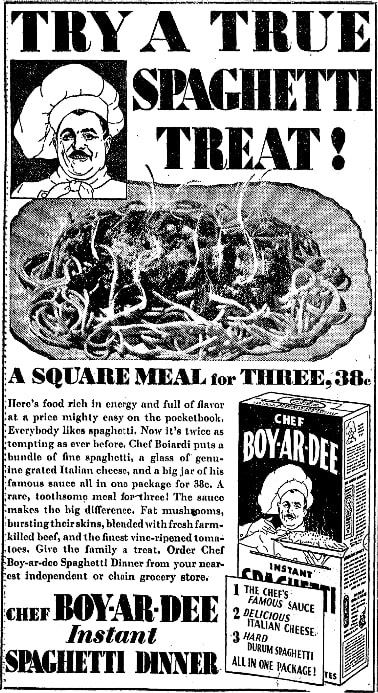
The last three decades or so of the nineteenth century had seen a dramatic increase in processed (prepared) foods, as various technologies like canning and mason jars became more common; so several kinds of foods and still-surviving brand names developed. Canned goods are becoming cheaper, though the double-wheeled can-opener won’t be invented for years yet. Cellophane was invented 15 years ago, and DuPont licenses the right to manufacture and sell the stuff in the United States in 1923; but although it’s waterproof, suitable for wrapping candy and perfume and cigarettes, it will not be moisture-proof until 1927, at which point it leads to revolutions in food packaging. Loaves of bread often come wrapped in wax paper, though something like half the bread in the country is homemade; in 1928 presliced bread will be introduced, advertised as “The Greatest Forward Step in the Baking Industry Since Bread Was Wrapped.” The popularity of sliced bread increases along with the popularity of the electric pop-up toaster, patented in 1921 and on sale by 1926.
But the first doughnut-making machine was invented in 1920. Jell-O is slowly gaining popularity. The H.J. Heinz Company has advertised 57 varieties for almost three decades. Campbell’s soup is sold with its familiar carnelian-and-white labels. Note that marketing and branding of these companies are as important as they will be a hundred years later, and successful innovations are swiftly copied. Thus the 1920s are seeing a vogue for what has been called “living trademarks” — fictional characters who serve as both spokespeople and images. The first was Aunt Jemima, played by Nancy Green at the 1893 Chicago World’s fair, but 1920 brought, among others, ‘Marie Gifford’ for Armour canned meats, ‘Mary Blake’ speaking for Carnation, and ‘Ann Bradley’ for Spic and Span. In 1921 a flour company introduced ‘Betty Crocker.’
Breakfast cereals are especially enthusiastic adopters of new advertising strategies. Some, for example, use testimonials to the healthiness of the product; Wheaties will be introduced next year. In 1877 the Quaker Mill company got the first trademark for a breakfast cereal, “a figure of a man in ‘Quaker garb,’” effectively the first cereal mascot; a 1901 merger would create the firm Quaker Oats, who were one of the companies to introduce premiums giveaways redeemable with a proof of purchase — including, in 1902, very small pieces of land. Last year the Kellogg Toasted Corn Flake Company was renamed the Kellogg Company, and next year will be the beneficiary of a report by the United Fruit Company that bananas and corn flakes represent a supremely healthy breakfast for families, thus introducing the idea of bananas on cereal.
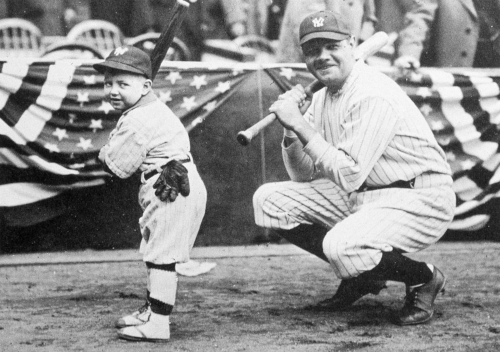
In truth, all kinds of sweet foods, natural and prepackaged, are gaining new heights of popularity, helped by the invention of new kinds of candies. The American Licorice Company introduced red licorice in 1920. The Tootsie Roll came out in 1907. Cracker Jack, arguably the first junk food, has been around since 1896. Just last year, in 1922, Haribo introduced the gummi bear to the world. Pez will be introduced in 1927 (though the dispensers won’t come along until the 50s). Above all, this is the golden age of the candy bar. The first Hershey chocolate bar, the first American-made mass-produced milk chocolate bar, was produced in 1900; after soldiers during the Great War got chocolate bars in their rations, they developed a taste for them. Difficulties in preserving chocolate bars for transport means every major regional centre has its own set of producers and brands. One estimate has around 30,000 different kinds of candy bars being produced across the United States, rising to 40,000 by the end of the decade. Bars are named for celebrities; when the makers of the Baby Ruth bar were sued by baseball star Babe Ruth, they claimed it had been named for President Grover Cleveland’s daughter Ruth (who had died at age 12 in 1904) — then when Ruth tried to sell his own authorised bar, sued him for copyright infringement and won.
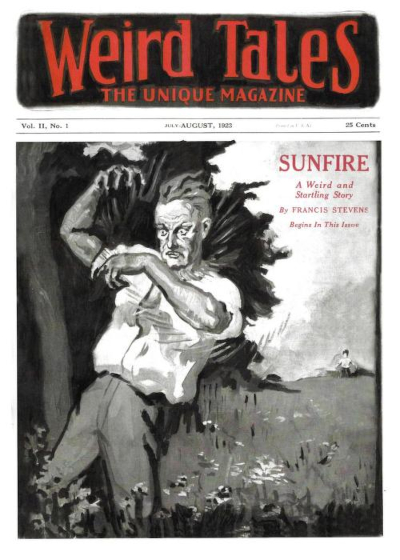
This kind of geopolitical background to the everyday food of Americans may seem far away from Weird Tales. That’s not necessarily the case. Consider the story “Shades,” by Bryan Irvine, in the magazine’s fifth issue (volume 2 number 1, July-August 1923). The tale’s about a group of Robin-Hoodish thieves striking back against “the real criminals — the big fellows.” And among the “wealthy men in this city who amassed their fortunes through systematic, ‘legalized’ robbery” is “Dixon Denner, the profiteering sugar king, whose indiscriminate and heartless machinations had been felt in every home in America.” Food is a vital part of everyone’s life, and like everything else in the 20s, it’s changing in ways both superficial and profound, both visible and not.
Find all my posts about Weird Tales here!
Matthew David Surridge is the author of “The Word of Azrael,” from Black Gate 14. You can buy collections of his essays on fantasy novels here and here. His Patreon, hosting a short fiction project based around the lore within a Victorian Book of Days, is here. You can find him on Facebook, or follow his Bluesky account, @bookofdays.