Fiction Writers, Read Non-Fiction
Good afterevenmorn, Readers!
This one is for the writers out there. Also, I’d like to remind all the writers out there that any writing advice should be taken with a large grain of salt, and while the title does make it seem like I’m commanding thee to read non-fiction, you don’t have to. Of course. I just find that I get most of my inspiration for my fiction from non-fiction.
Very specifically, archaeology… Especially for fantasy (but it has its place in science fiction, too, as you’ll see).
I am currently writing what I think will be a trilogy… Alright, I’m not currently writing it. In fact, I’ve been struggling to write anything at all, and have only just returned to it after a multi-month hiatus. In my defense, I have been preparing for the imminent release of The Timbercreek Incident. And also, I’m working two jobs. I’ve dropped a lot of plates.
The point is, I’m working on a story.
It is a fantasy, with a long-standing war between demon factions that the poor people of the south happen to be unknowingly shielded from by one of those very factions… and that shield is breaking. It’s complicated, and heavily inspired by all those Chinese dramas I keep watching. But that is not where the original inspiration for this particular tale came from.
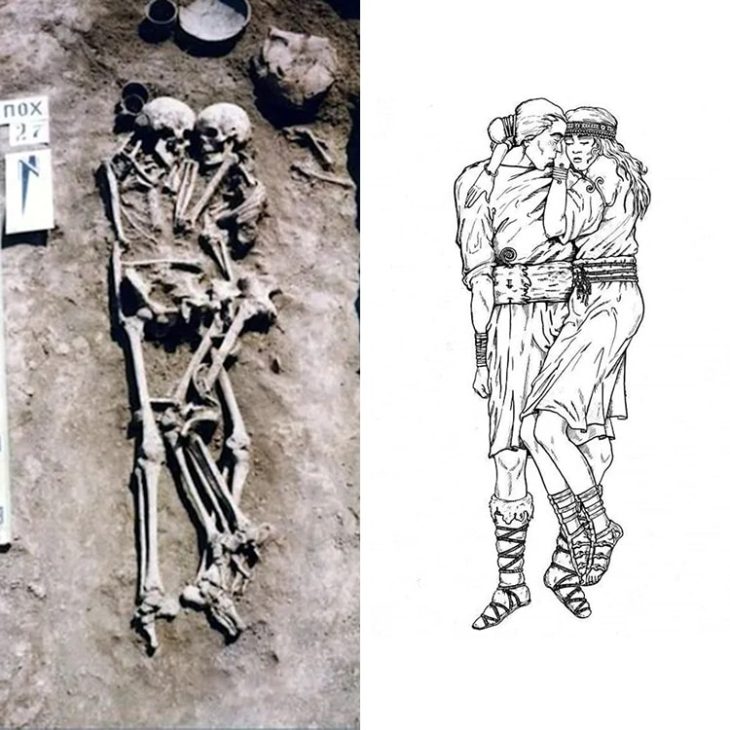
No. That inspiration came from an article I read about a burial of a man and a woman in Datong, China. It appears to date to the Northern Wei period. The same inspiration hit me again when another article popped up of a similar burial, this time of a Bronze Age couple in the Ukraine. Further research has revealed a few others – the Neolithic burial in Italy, and another one in Greece. A couple dating to the Middle Ages were found holding hands in Romania.
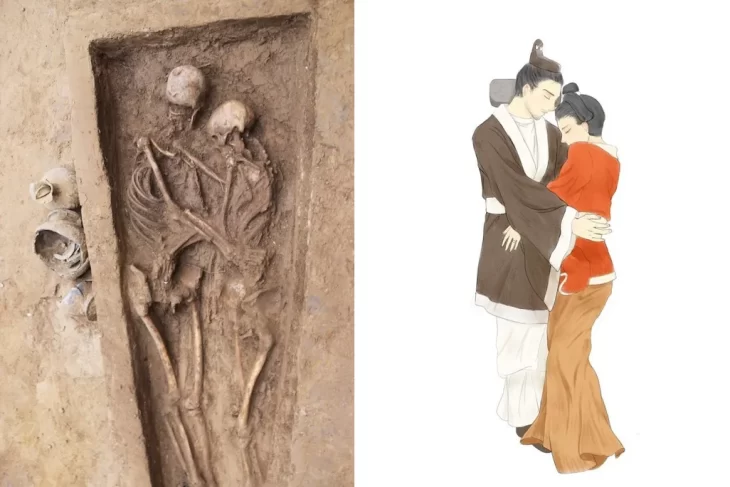
All of these burials put in my head forgotten tales of epic love. And that was all my head needed. It was off to the races. In a short time, I had the two lovers — a war leader of a fierce, secretive, semi-nomadic people of the northern Steppe, and her counterpart, a powerful Duke, who stands at the right hand of the emperor of the largest empire in the south. She is consumed by the war with the demons, and hurting from the death of the man she loved at their hands. He is consumed by fears for the empire should the emperor, his cousin, fall victim to his lifelong illness, and by the fear that he will be trapped in a loveless political marriage, turning bitter and cruel like his father.
I’m not going to give too much away. It will be serialised for my Ko-Fi subscribers when I’m done writing it, and released for purchase for the wider public (hopefully) shortly after that.
It’s not the only thing I’ve written that was deeply inspired by archaeology. Archaeology and folklore are my academic loves, so that is the non-fiction I gravitate towards. Nearly everything I write is heavily influenced by it. The Seraphimé Saga features shamanic ideas I acquired reading about archaeological speculation as to how our ancestors understood the world through symbol and ritual. Of course, Daughters of Britain follows closely the cultures and events in the period just after Boudicca’s failed revolt against Roman occupation and cruelty.
Hell, even Vampire novels have a basis in academic research on folk beliefs… or mostly do. And sometimes on virology. Which is fascinating.
But I’m not the only writer who finds fodder for their stories in the world of non-fiction. I mentioned The Bloodsworn series by John Gwynn, which I enjoyed very much. He clearly did his research into “Viking” society, weapons, armour, and fighting styles. It created a world that felt rich with history and very much lived in, and made the book feel real, despite the resurrected gods and seiðr witches casting their rune magic all over the place.
I’ve mentioned Steven Erikson before, but his background in archaeology and prehistoric anthropology is exceedingly evident in The Malazan Book of the Fallen, which included a group of undead warriors based so heavily on Homo Neanderthalenisis even the lay person is unlikely to miss it.
An archaeological conspiracy inspired Roland Emmerich and Dean Devlin into creating an incredible science fiction screenplay. I’m sure most of you have guessed it. Stargate (the film, not the series) uses the oft-touted conspiracy theory that the pyramids were built by and for extraterrestrials. While I despise that particular “theory,” which is considered by actual Egyptologists (and a whole lot of other academics) to be wildly problematic, it did create an incredible premise for a really great science fiction film… and it’s campier, much adored child, the Stargate series (multiple).
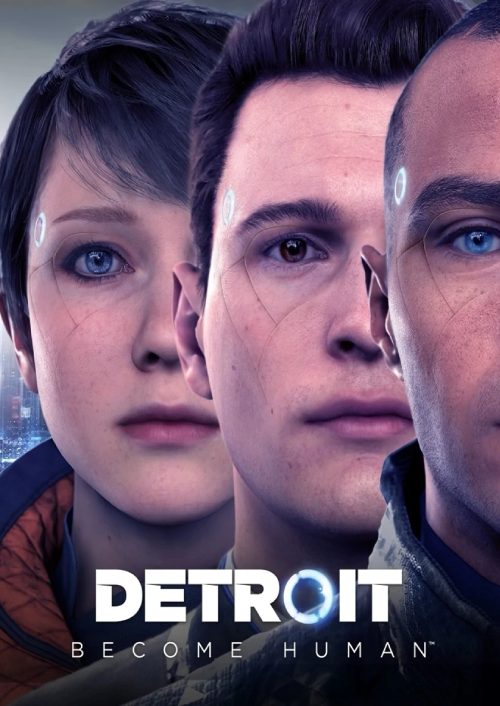
I’m using archaeology and anthropology as examples because that’s my fixation, but that need not be the only place a writer might find inspiration. Astronomy, physics, and psychology are all dynamic, evolving fields that are full of questions that the imagination might begin to fill with the fantastic. The philosophical questions raised by artificial intelligence have inspired some incredible art. The Matrix, obviously. The Terminator series. But also, Detroit: Become Human.
What I’m saying is that the general advice of “read (read often, read widely)” is solid advice. I would also implore you to read outside of fiction as often as you can. And if you find academic journals terrifying, and expensive, you can reach out to the researchers of papers you find in there. Most of them will very happily send you the entire article for free!
There are also excellent science educators putting out great YouTube videos for those who are just dipping their toe into the academic spaces. My favourite include SciShow/Complexly and if it’s archaeology and anthropology specific, Milo Rossi (Miniminuteman). They’re great ways to get a sense of what’s going on in the world of academia without having to have a dictionary or translator by your side. From there you can deep dive into any topic that catches your fancy.
Just, please, don’t ask ChatGPT or Grok or Claude… or whatever hallucinating LLM is currently in vogue. Go to real people. For now. As a favour to me. And the environment.
Alright, I have to go and behave like a productive member of society now.
What are some of your favourite discoveries in your favourite fields of enquiry? I love reading what makes other people’s brains tingle. And who knows? Maybe I’ll find another hit of inspiration for another story.
When S.M. Carrière isn’t brutally killing your favorite characters, she spends her time teaching martial arts, live streaming video games, and sometimes painting. In other words, she spends her time teaching others to kill, streaming her digital kills, and sometimes relaxing. Her most recent titles include Skylark, Human and The Timbercreek Incident.
The greatest work of nonfiction I’ve ever read is Rebecca West’s 1941 book, Black Lamb and Grey Falcon. Of course, a 1,200-page book about Yugoslavia isn’t everyone’s cup of tea; it took me decades to work up enough courage to plunge in. West said that she wanted to “show the past side by side with the present it created.” It’s a thousand years of art, architecture, religion, war, politics, all on the eve of the greatest conflict of all – World War Two. (By the time the book was published, the Nazis had occupied the country, and West’s dedications was, “To my friends in Yugoslavia, who are now all dead or enslaved.”) It’s the most profound meditation on history that I’ve ever read, and it’s so brilliantly written that you want to corner people and read large passages aloud to them.
Oh my – I’m gushing. But it really is that extraordinary.
Oh, well… now I need to find it. Thanks for the rec!
FAVORITE: William J. Bernstein’s “A Splendid Exchange.” It’s a global and detailed account of how trade and commerce have shaped our world today. It’s readable, fascinating, meaty, a platform for wonderful research rabbit trails, and one of those books that, upon reread, makes the reader go, “Hang on. I don’t remember that from last time. That makes so much sense!” (I currently have his “Masters of the Word: How Media Shaped History, from the Alphabet to the Internet” sitting by my bedside, unread, for escape the next time the world does something rotten.)
Currently enjoying to varying degrees and would probably recommend:
Mike Pitts “Hengeworld” (You might like that one, SMC.)
Joshua Howgego “The Meteorite Hunters”
John Montias “Vermeer and his Milieu: A Web of Social History”
Walter Laquer “Dying for Jerusalem”
Clyde Brooks “Tending Critters in the Ridges”
Alan Crouchman “B-52 Flak-Bait” (What an amazing aircraft.)
FAA “Helicopter Flying Handbook”
A great list! (and I expect you’re right about Hengeworld… anything about prehistory is my particular fixation)
I don’t suppose that you watch “Time Team” fairly regularly, now that it’s back, then…? Gosh, those folks are great.
The Storygraph application you recommended a few years ago is proving extra-useful. I just went and looked at my 5-star reads, and it turns out 50%+ are actually non-fiction. Not listed above but exceptional:
Merlin Sheldrake “Entangled Lives: How Fungi make our Worlds, Change our Minds, & Shape our Futures”
Dan Jones “The Plantagenets: The Warrior Kings and Queens Who Made England”
Donald A. Norman “The Design of Everyday Things”
Richard Rashke “Escape from Sobibor”
Edward Ellsberg “No Banners, No Bugles”
Anthony Sadler et. al. “The 15:17 to Paris: The True Story of a Terrorist, a Train, and Three American Heroes”
Bonnie Doane “The Parrot in Health and Illness”
Tennent Bagley “Spymaster: Startling Cold War Revelations of a Soviet KGB Chief”
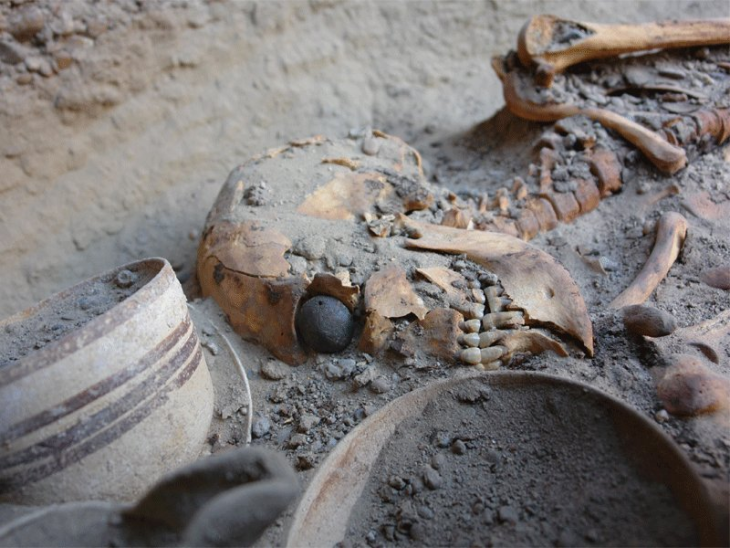
I remember seeing an announcement of that archeology find where that top photo was taken on social media – fascinating!
And one person’s reply:
“ Do. Not. Remove. The. Golden. Eye. From. The. Unnaturally. Large. Holy. Woman’s. SKELETON.
Please.”