Saved by the Panther: Jonathan Maberry on storytelling, books, and how the Black Panther changed his life, Part 1
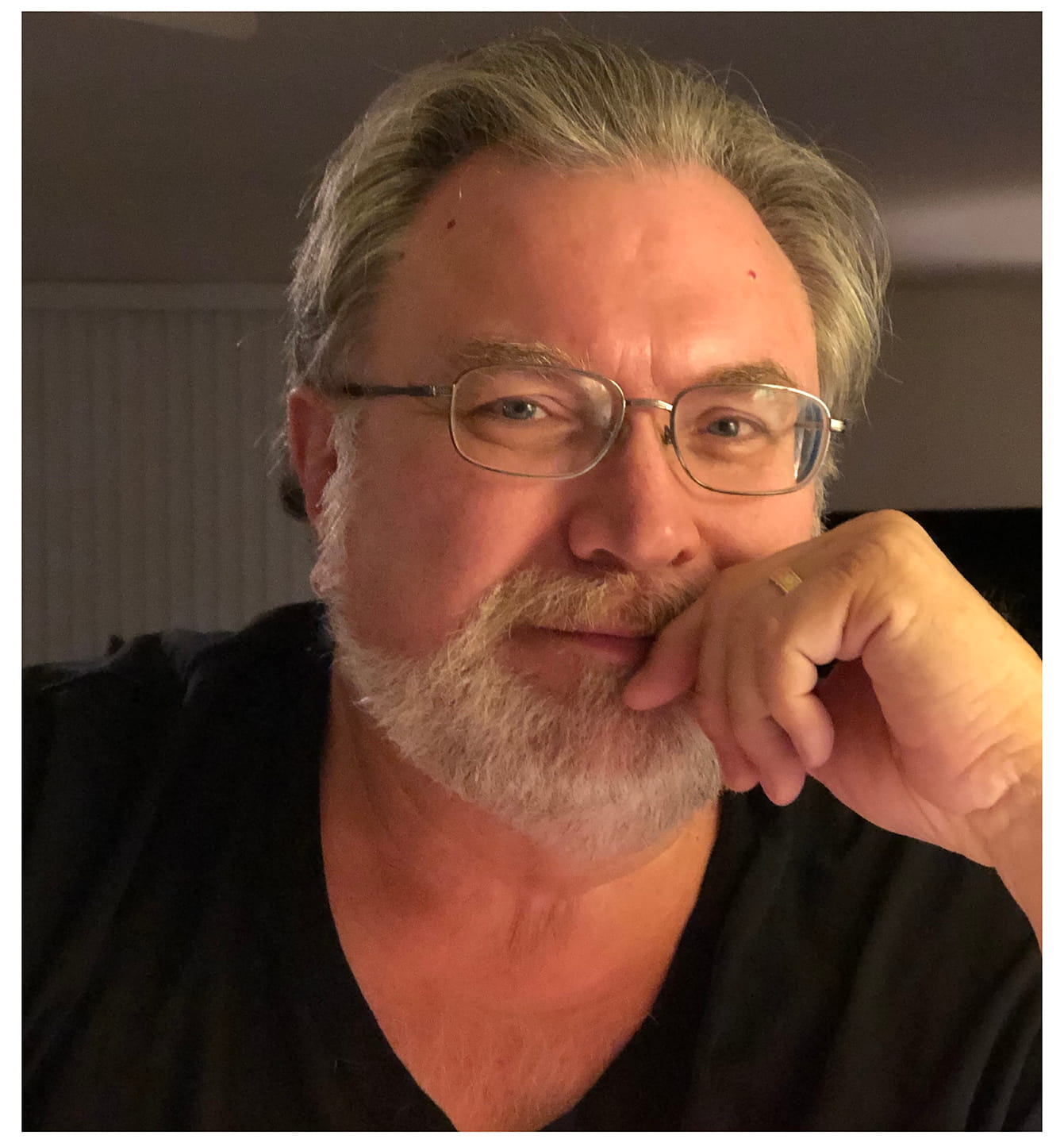
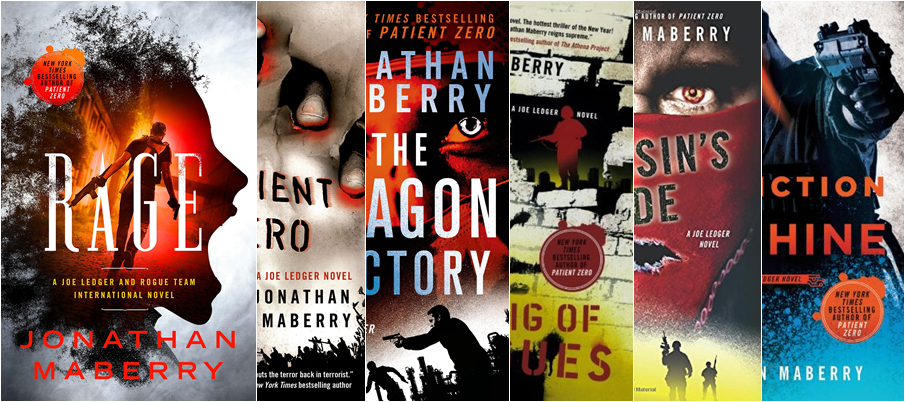
Since the publication of his first novel Ghost Road Blues, Jonathan Maberry has been a mainstay in genre fiction circles. Whether its for one of his multiple series, comic book writing, or the numerous anthologies he’s edited over the years, audiences have come to know and love his work.
With the completion of his 57th novel right around the corner, Maberry is still going strong. The five-time Stoker Award winner joined me for a chat about the past, present, and future. From his childhood in the rough Kensington neighborhood of Philadelphia to being editor of Weird Tales, here’s what Maberry had to share with Black Gate magazine in an interview so big we had to split it in two.
You’ve been writing and editing for decades, how has the industry changed since you made your fiction debut?
My first novel came out in 2006 which is just around the time that digital was rising, so a couple years from then on we saw the end of CDs and cassettes for audio books and the rise of digital downloads.
Also, we saw the rise of independent publishing going from what looked like cheap work to much more sophisticated work. Because, it’s kind of a sad event but had a good benefit, during the economic downturn a lot of people in publishing a lot of editors agents and so on lost their jobs. And those folks, a lot of them went freelance. So the indie crowd is now able to hire professional freelancers that worked in traditional publishing to be able to edit their books, design their books and so on which raised the quality of indie to be somewhat comparable to traditional publishing.
I’m 100% traditional published but you’ve seen so many books come out that are definitely top quality from the indie world and that’s happened during that phase.
We’ve also had the rise of CGI and AI which can be good or can be really bad. I’m not a fan of generative AI at all-I’m part of that big Anthropic lawsuit in fact. We’ve also seen the rise of E-book, though for a while a lot of industry folks thought that was going to explode and be the dominant form for books, but it turned out to be in third place. First is still print, audio is next, and for guys like me audio is actually more, and then e-books are a smaller group. I think that will change especially during the economic crisis we’re going through now. Because print relies on oil and everything from the chainsaws that cut down trees to the paper mills and trucks that drive them to the book store that’s all oil.
My personal favorite part of this is building a community because I’ve always been a community builder in the writing world anyway. For the last 26 years I’ve been actively building communities in various places so that writers of all kinds can share knowledge and mutually benefit. I started the Writers Coffeehouse back then and it’s since spread out to other parts of the country. I run the San Diego chapter and it’s thriving. It’s a free 3-hour networking group for writers of all kinds.
And that’s something that’s really wonderful. I can use these utilities like Zoom, Facebook Live, and others to talk to people, I can do classes, I do a writing masterclass as a charity fundraiser every month online. I do virtual panels, book events. All of that has happened in the 20 years since I started fiction.
The friends of mine who don’t like it, who are very much analog in their approach to writing, got left behind. And I’m sorry for them as a person but not sorry for them professionally because business has always changed and you have to change with it. That’s a fact of life. Business will not ask you whether it’s comfortable for you to change its going to change based on its needs and we’ve got to change with it.
Before you wrote your first novel in 2006, you’d written other books. What was it that made you want to become a writer and storyteller?
Honestly, I think I was born that way. I can remember even before I could write I was telling stories with toys. Storytelling was always baked into my DNA in some way. What changed over the years is the kind of writing. As a kid, I wanted to write comics and stories because that’s what I was reading and that’s what I understood. And my mentors, the people I met along the way at the time, were very encouraging of that.
But in high school I was very political. It was right after Watergate, right after the Vietnam war. Journalists had risen to become like rock stars. Woodward Bernstein, even Walter Cronkite, people like that were the voice of truth that we were hearing and I wanted to be that. So I shifted from fiction, probably in 10th grade, and then for the next 30 years that was my focus, nonfiction.
I went to school on a journalism scholarship through Temple University with every intention that I would expose the corrupt whatever, tear that down and expose the truth and all of that. Investigative journalists were like rock stars. But…I never actually did that. Halfway through college I took a course on magazine features and decided that was more fun, and I did that as part time work for decades.
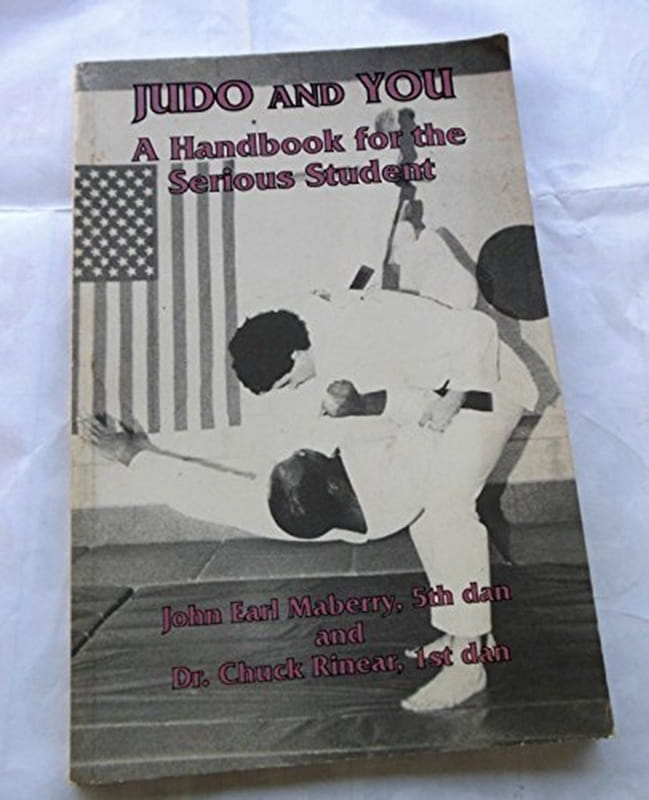
My day job was always teaching martial arts in various ways including teaching martial arts history at Temple University for 14 years along with teaching jujutsu classes and women’s self-defense and other things. So I was writing about that sort of stuff, my first book was a judo textbook I wrote for a friend of mine who was a judo instructor at Temple University. That book came out in 1991.
My breaking away from that kind of writing happened in stages. I started out with the ‘write what you know’ and since I’d been doing martial arts since I was five, I wrote about that. I then started writing about what I liked: skydiving, music, I wrote about travel, theater, bartending, holidays, parenting, all sorts of stuff. I did about 1200 feature articles and maybe 3000 reviews and filler pieces.
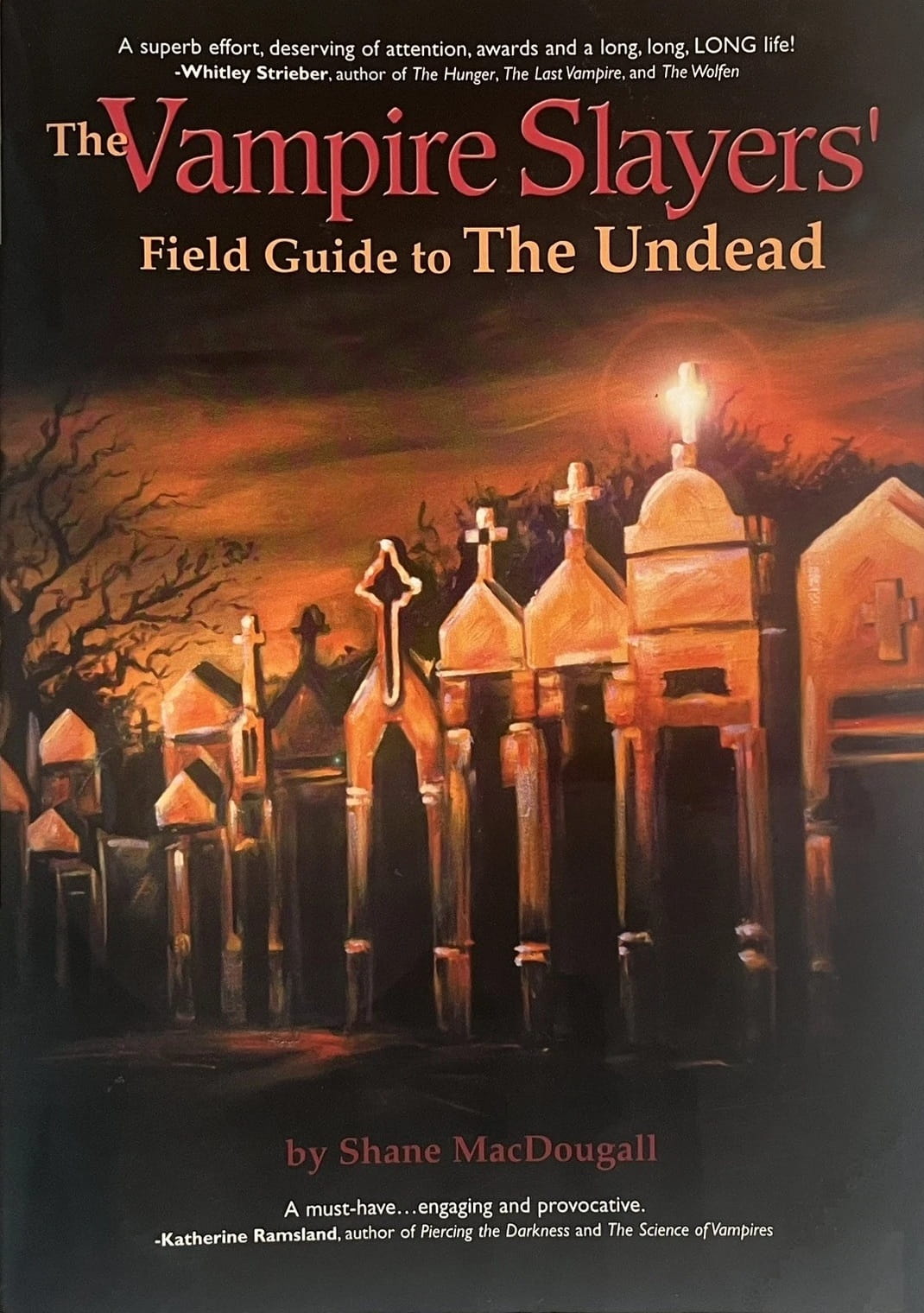
Then around 2000 I wrote a nonfiction book about supernatural folklore – The Vampire Slayers Field Guide to the Undead — about what people actually believed about monsters throughout history. It was the only thing I ever published under a pen name – Shane MacDougall — because my martial arts book publisher was afraid that such a dramatic genre shift would negatively impact sales of those other books. It did not, as it turned out.
 |
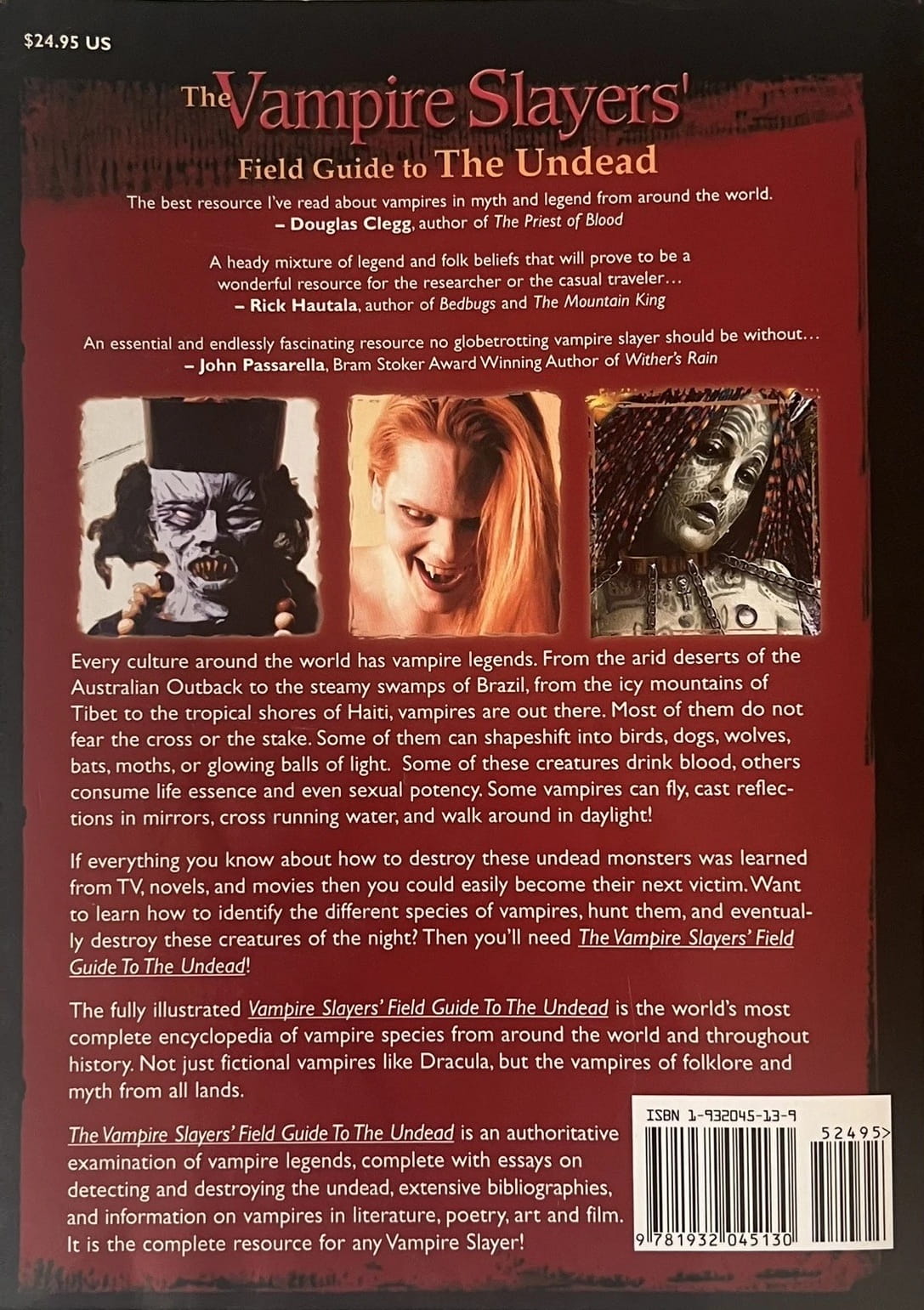 |
The Vampire Slayers’ Field Guide to the Undead by Shane MacDougall,
AKA Jonathan Maberry (Strider Nolan, October 1, 2003)
While researching folklore it made me want to find novels that use the folkloric versions of monsters but they were very hard to find, at least back then. Now they are more common. But back then my wife said, “Why don’t you just write it.” And you know I actually never considered that, so I spent five years learning to write a novel and trying to understand the carpentry used to build a novel. You know, the elements of craft: pacing and tone, voice, point of view, figurative and descriptive language, the three act structure, all that.
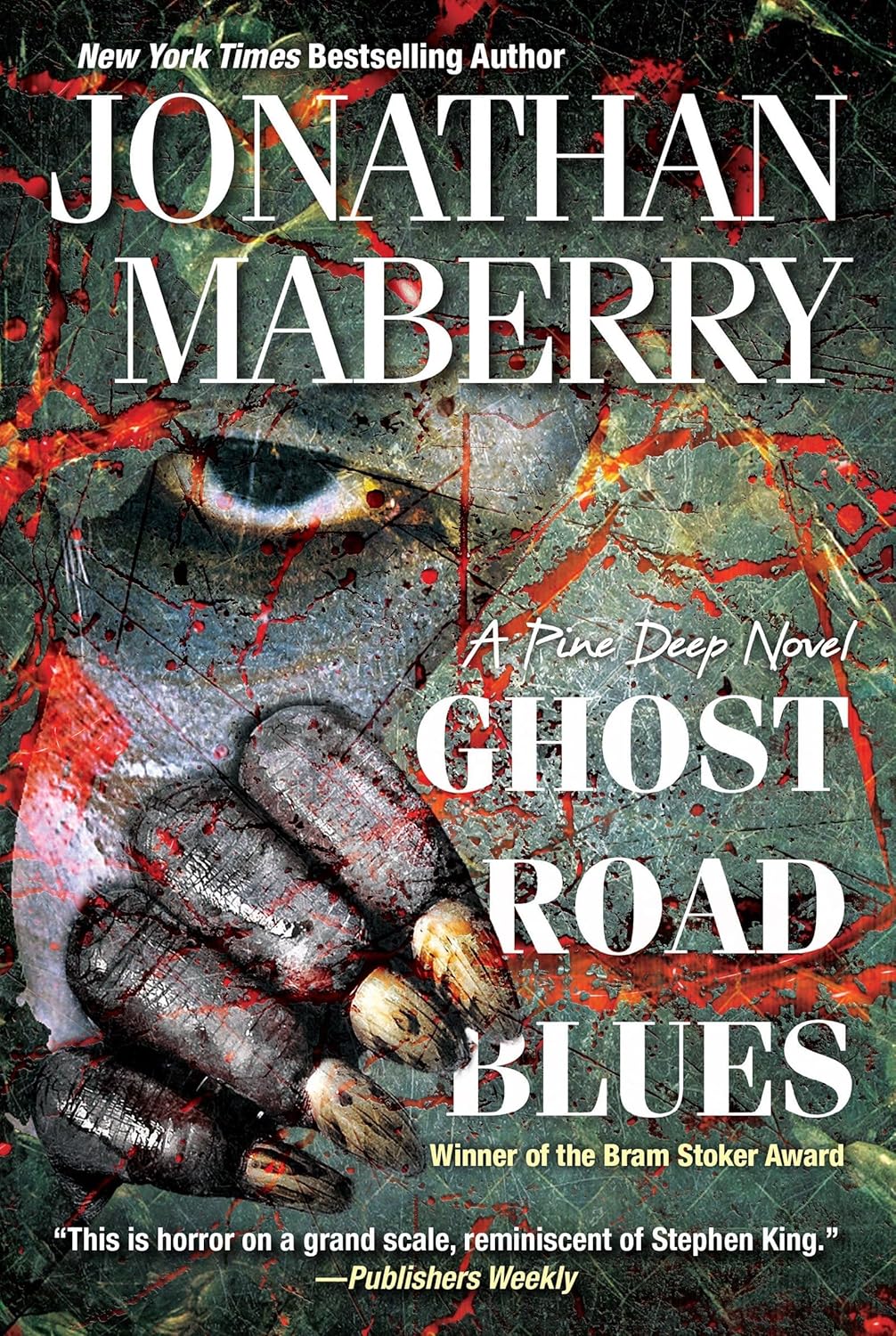
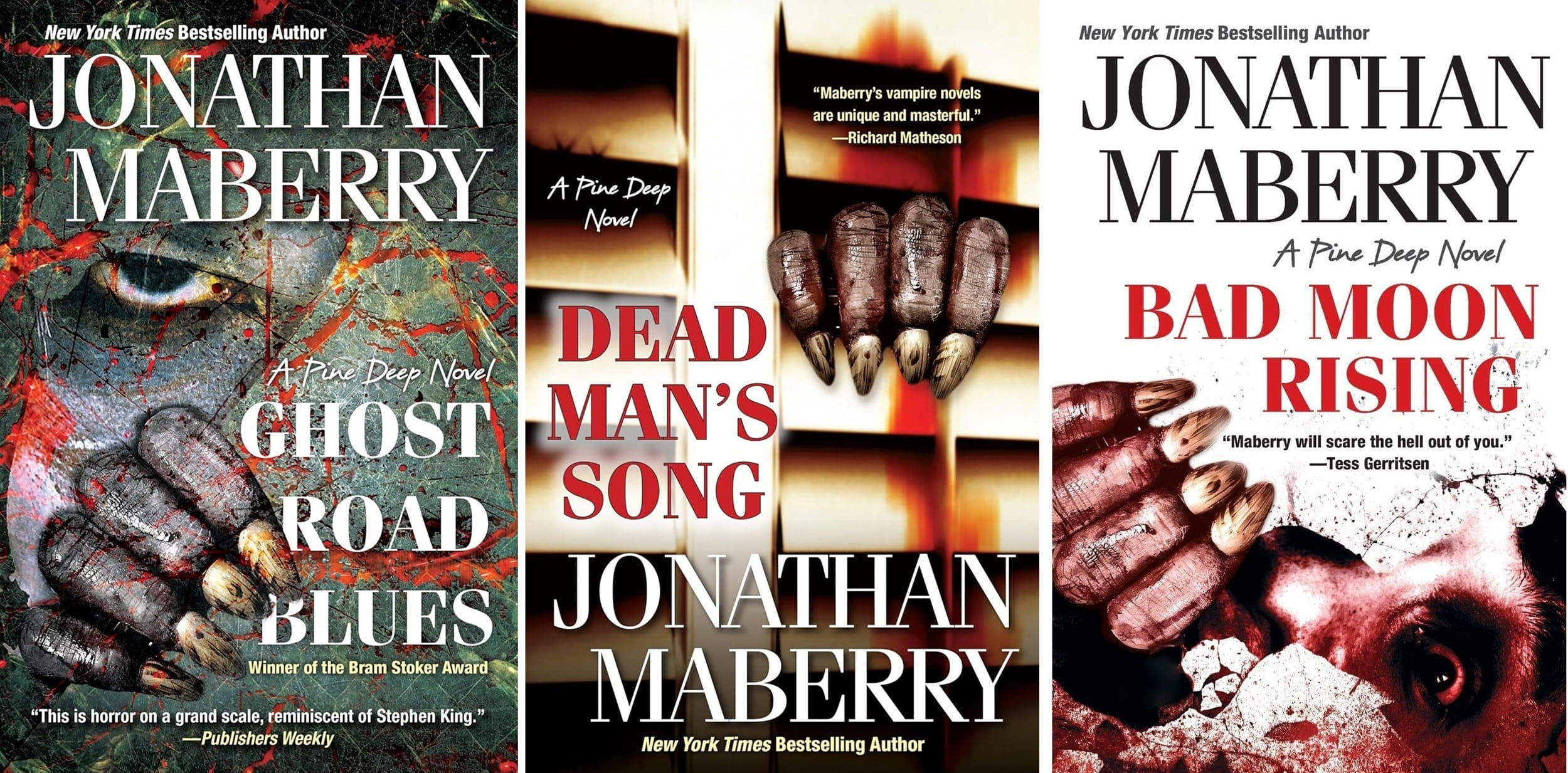
And then I wrote a novel just to get it out of my system more than anything else. I got an agent really quickly, and it sold to the second publisher who looked at it. The book Ghost Road Blues is still in print. In fact June 6th will be the 20th anniversary of its release. June 6th is also when I’m getting the lifetime achievement award from the Horror Writers Association.
 |
 |
Ghost Road Blues by Jonathan Maberry (Kensington Books reprint edition, May 2016)
Just as publishing changes I’ve changed with publishing. I’ve had to learn about the business of publishing, about marketing and promotion, about business etiquette, and about the ways these things had changed and would continue to change.
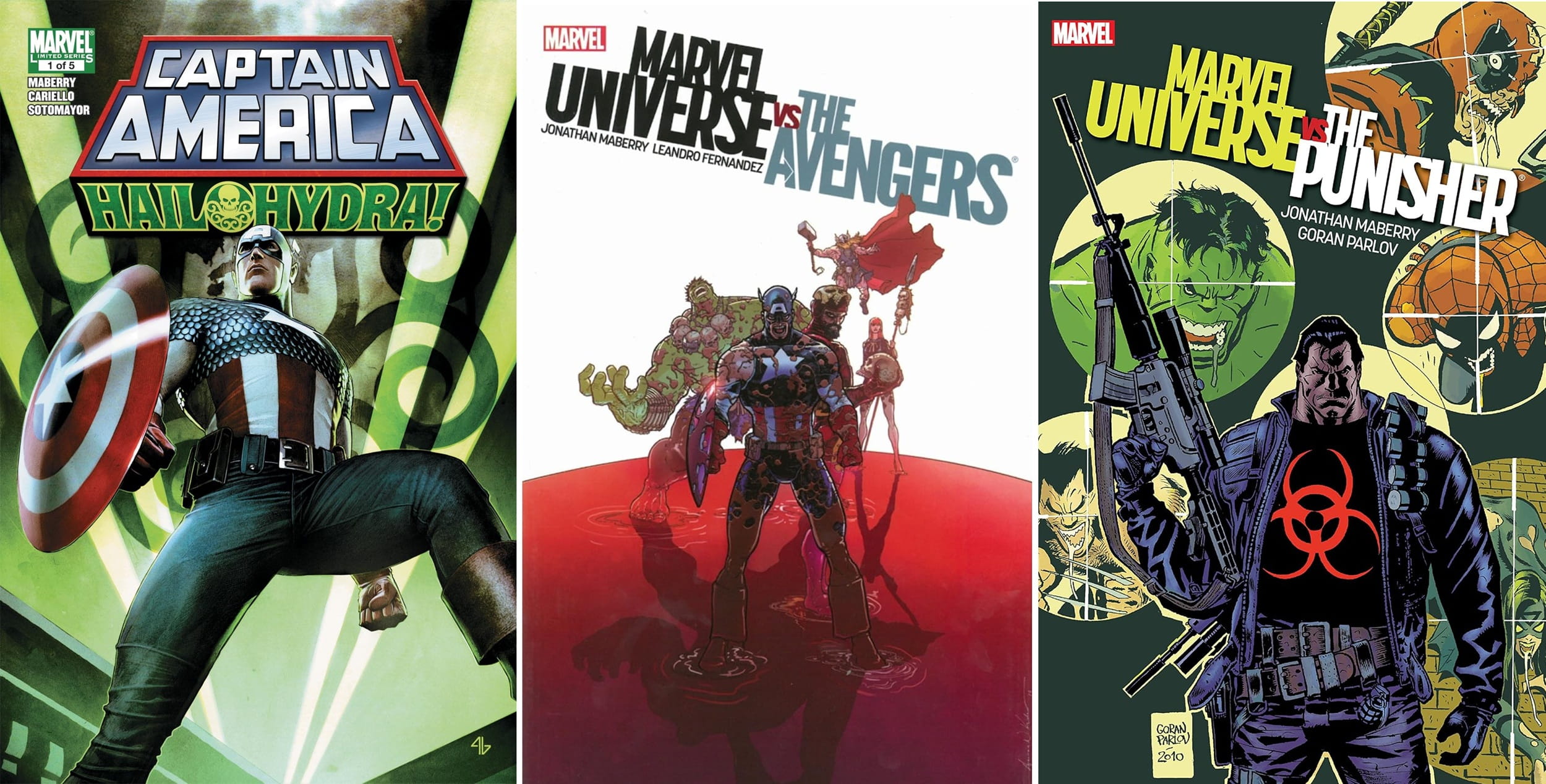
I eventually wound up getting into comics, too. I’d grown up reading comics. Mostly Marvel, but other stuff as well, but I’d never seen what a comic script looked like. That was something else to learn, and I was there for it. ‘It’ was my novel Patient Zero that got Marvel interested enough to reach out and ask me if I would like to write for Marvel which is, by the way, a silly, silly question. Of course I want to write for Marvel. I’ve met very few writers that would say ‘oh I wouldn’t bother with that.’ No, we all want to write for Marvel.
I’m glad you mentioned all your other interests because that ties very nicely into my next question. How do you balance being a martial artist, a teacher, having all those different interests with being a writer. And how do you leverage those interests to help your writing?
These days I actually don’t teach martial arts anymore. I’d been doing it for 60 something years and it takes a toll on the old bones, you know? I do workshops on how to write fight scenes and I do some consulting on Spec-Ops and SWAT but that’s a smaller part of what I do. Everything else is writing now. It’s my day job, it’s what I do.
As far as balancing things, I look at my process all the time. I want to understand what makes me happy as a writer, because happiness has to be a big part of that; what makes me most efficient and what gets in the way of that and you tweak the process. It took me three and a half years to write the first draft of my (first) novel and then a year and a half to revise it. Now I write a long novel every three months.
I think a lot of that pace has to do with being trained as a journalist. When you’re trained to be a newspaper reporter you’re not trained to write slow. Editor says go out and give me 2,000 words on that 5-alarm fire and phone it in. That isn’t waiting for the muse to whisper to you, or going out and waiting for the fire to speak to you. A reporter goes there, gets the information, finds a hook that makes that article different from every other article on the subject, writes it quick and dirty, fixes it in the rewrite and moves on. I applied that mindset and process to my fiction. So it allows me to be very productive but also, it allows me to be efficient enough so that I have family time. Without that balance what the hell are you working for?
As far as other jobs, I teach writing masterclasses online, I teach at writers conferences all over the country, and I do in-person things like the Writers Coffeehouse. These are kind of built into my schedule. Everything goes on my calendar. I run my writing career like a business because it is a business. I have an assistant who is a contract worker. I hire her by the hour when I need her and everything else is a one man show. And she is a working writer herself – Dana Fredsti. She’s a novelist and freelance editor.
If you’re running a business you’d better be efficient at it and you’d better be able to let it evolve with the times. Being willing to change as the publishing world changes has allowed me to have a rich writing career and a rich family life.
You’ve written in a wide range of different genres: supernatural thrillers, science fiction, horror, etc. Do you find it easy to hop from genre to genre? Is there a certain frame of mind that you have to get into to write a zombie horror story as opposed to a dark science-fiction one?
I actually find jumping from genre to genre is like a palate cleanser. It freshens up your mind; it allows you to let the other things sit and think for a little bit while you go in and do something else, and then when you come back it’s ready for you to work on it.
My schedule works like this: I write one novel every three months as I said. During that three month period I’ll have maybe five or six short stories I have to write, I have a couple comics I’ll have to come back and do another issue of every couple of weeks, I have a packet I have to write for my online workshops, and I have appearances I need to do.
I just came back from the Las Vegas Writers Conference where I kept pretty busy with programs but soon as each program was over I went back up to my hotel room and I would write. I need t get at least 3,000 or more words done every day, even while teaching multiple classes at a writer’s conference. Its efficiency. It’s not that I’m the fastest writer in the world, I’m fast but I’m not the fastest. I’m just very focused on my process, my time management, and growing my career. I want to make sure that when I’m on the job I’m the best version of my own employee and my own boss that I can be. And that also makes it fun because then the business thrives.
 |
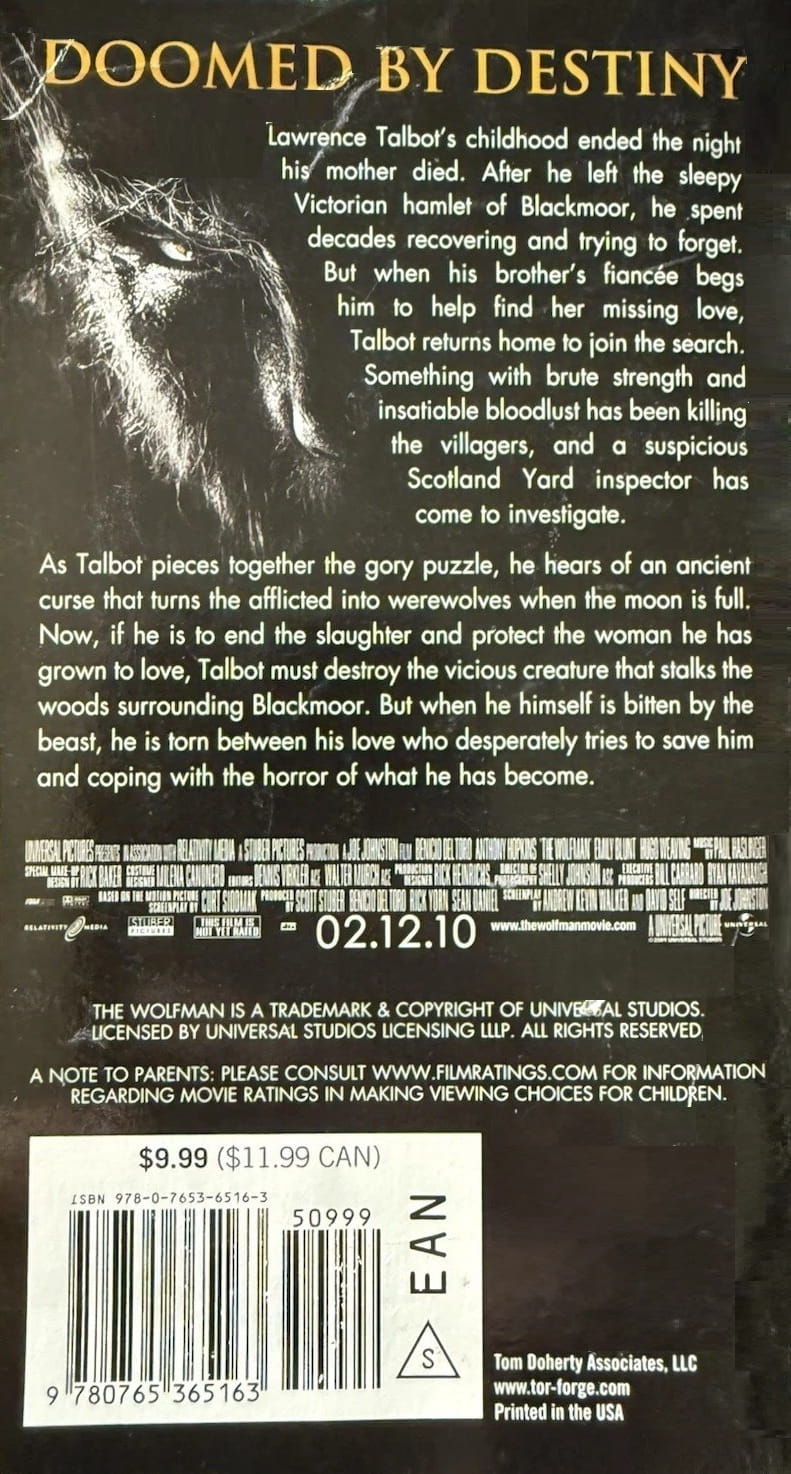 |
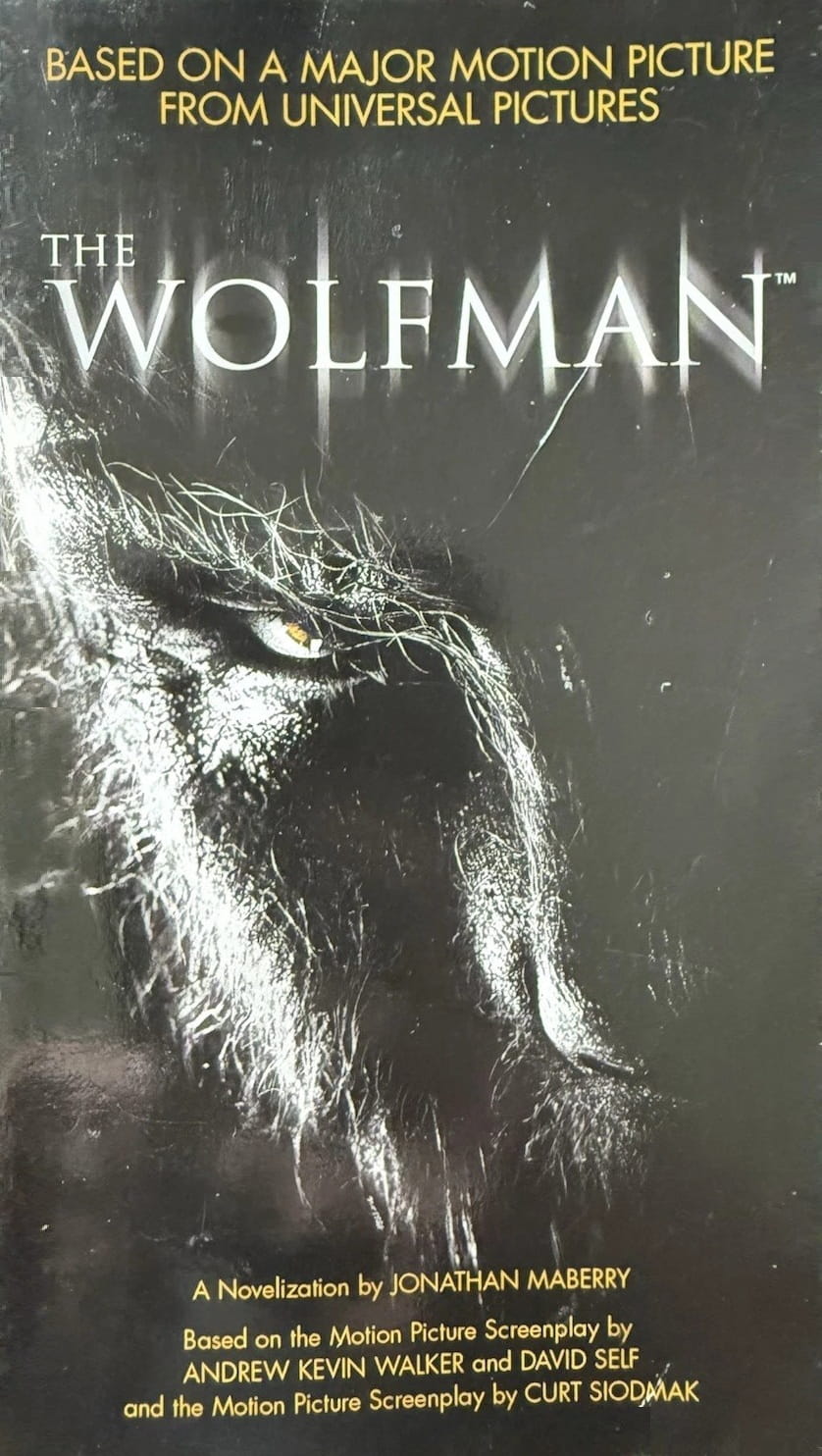
The Wolfman, Jonathan Maberry’s first bestseller (Tor, February 2010)
Through tie-in works and comics you’ve had the opportunity to write some classic characters including Doctor Doom, Deadpool, the Xenomorph. Is it difficult to add your own spin and style to these classic settings? How do you approach that when compared to writing your own characters?
I have people write in my literary worlds as well. There’s an organization called the International Association of Media Tie-in Writers. It’s for people who write in other people’s licensed worlds – like Star Wars, Star Trek, CSI, as well as movies and even video games. I’m currently the president of that organization. I’ve been able to write short stories, comics, and novels about other people’s amazing characters. I’ve done work with Hellboy, Planet of the Apes, True Blood, John Carter of Mars, Aliens vs Predator, X-files — some of that stuff was written because I went after it. Some of it was written because my very first best-seller was a tie-in to The Wolfman.
I enjoy exploring those worlds. Marvel really got me started with that because when they contacted me and asked me if I wanted to write, the first thing they offered me was a short (8-page) Wolverine script. I’ve read a lot of Wolverine comics, and those comics were not all written by the same person; they were written by dozens of writers. So it’s a matter of learning what is kept as bedrock by all writers working on that license and then to find an entry to tell something new without reinventing someone else’s character.
Like, you’re never going to turn Wolverine into someone who is just passive, that’s not him. Punisher is never going to start regretting killing a bad guy. So what you’re looking for is another element of their life that you would like to add another note to. With Wolverine, I ended up having him have to kill the Japanese woman he was in love with. That scenario was created by another writer years back, but like all stories there are untold “moments” that invite new ideas. My focus was on what the psychological effect on him was, and the inner turmoil that resulted from so tragic an act.
With The Punisher they don’t want you to change The Punisher’s personality so I gave him side characters who served the role of bringing personality, humor and other points of view somewhat into it.
Read Part Two of our interview with Jonathan Maberry right here at Black Gate!