Richard Stark’s Parker, Part 2: Parker the Barbarian!
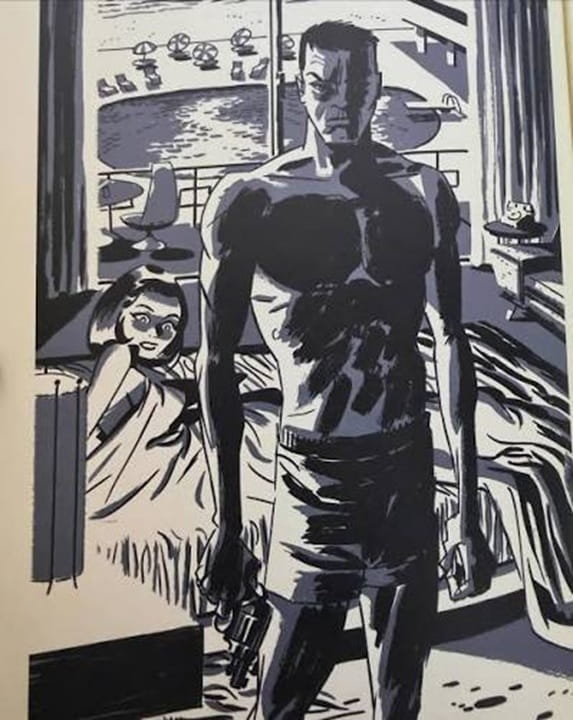
Last time we discussed the character of Parker, Donald E. Westlake’s master thief and heist planner.
This time, we’ll look at why we’re talking about Parker at all, here in the hallowed spaces of this fine magazine.
Parker might seem like an odd fit. Allow me, however, to draw some parallels that will help to illustrate how and why the master criminal Parker fits in with classic sword and sorcery characters like Conan the Barbarian. For these two gentlemen have far more in common than one might guess.
First: Neither Parker nor Conan fit into civilization at all, and neither wants any part of it.
Oh, they’re both happy to take from it what they desire. But actually being a part of civilization? Abiding by its rules? Being a “straight”?
By Crom, no!
What we call “civilization” doesn’t really work for either of them.
Both of them thrive in a world of chaos. Neither can, under any circumstances, accommodate themselves to the rules of society. They both occasionally attempt to “pass” as civilized people, when necessary for a job they’re doing, but this never lasts long. They simply don’t look or feel right. Discomfort with civilization radiates off both of them. They don’t fit in. People can somehow sense there’s a shark cruising through the water.
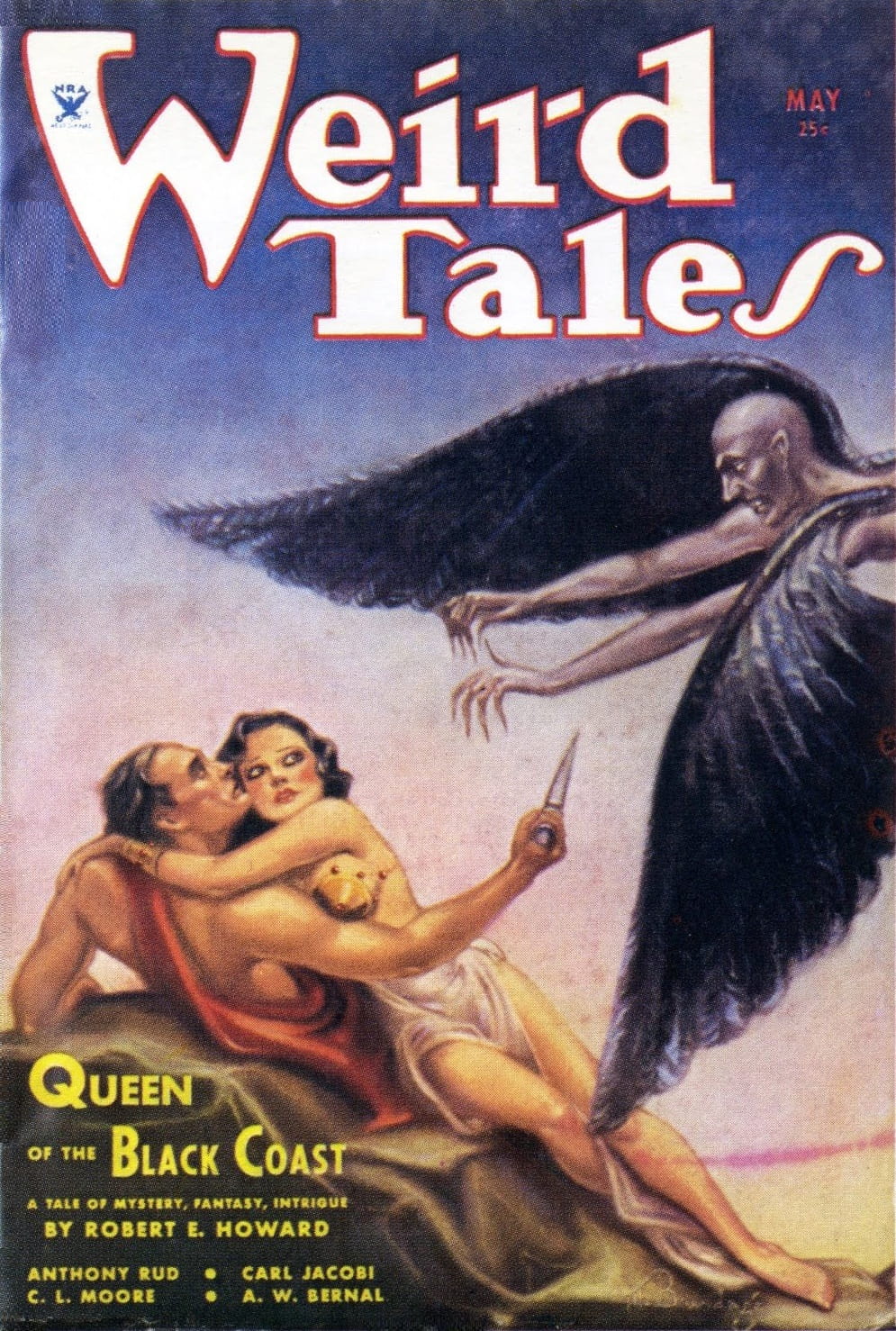
Robert E. Howard, creator of Conan, had very definite views on civilization. Generally, he was against it. He imbued those feelings into his famous literary character. As Conan says, in “Queen of the Black Coast”: “By Crom, though I’ve spent considerable time among you civilized peoples, your ways are still beyond my comprehension.”
Howard’s opinion was that barbarians are more direct, more honest, and more trustworthy than city-dwellers. For example, if two “civilized” people come into conflict, they tend to favor indirect methods of fighting. They’ll talk about each other behind one another’s back, trying to ruin each other’s reputation. They might resort to poisons, and the only violence committed might be a sneaky knife in the back.
If two Barbarians with a “beef” run into one another in the woods, however, the situation is very different. Howard felt they would be straightforward and open with one another. They would likely just fight a duel to settle their issues. Face to face, sword against sword, muscles against muscles. No skulking about, no lies, just honest combat.
As startling as it might sound, Parker often shows even less interest in the ways of civilization than Conan. At one point, he’s visiting a now-elderly acquaintance, looking for information. She begins chatting with him about old times, as human beings tend to do. Westlake then tells us that Parker tunes her out entirely, while uttering occasional sounds of agreement, so she will think he’s listening. He does this not out of any consideration for her feelings, but because it will be easier for him to get the information he needs if she is happy, believing he is being attentive.
 |
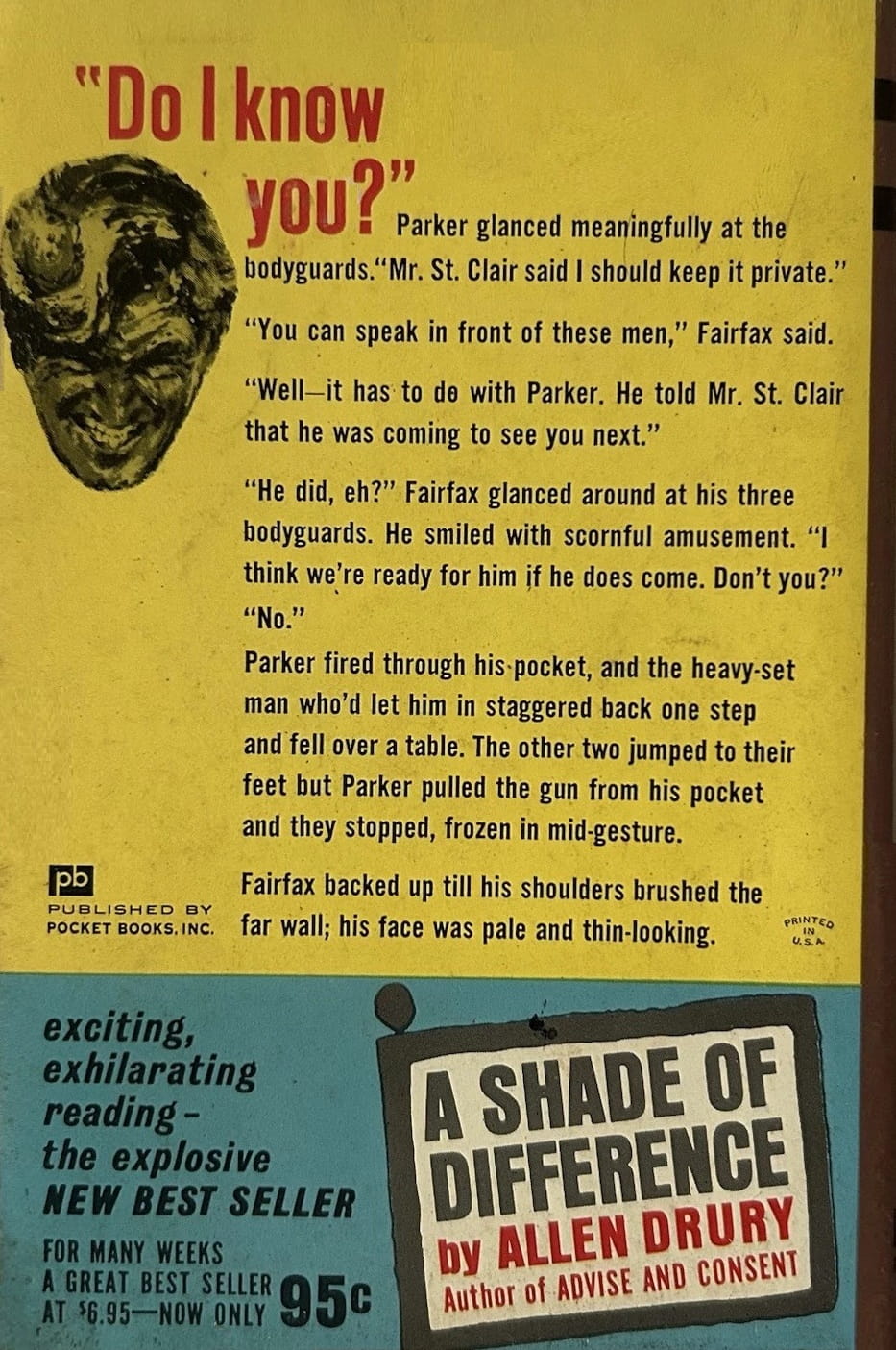 |
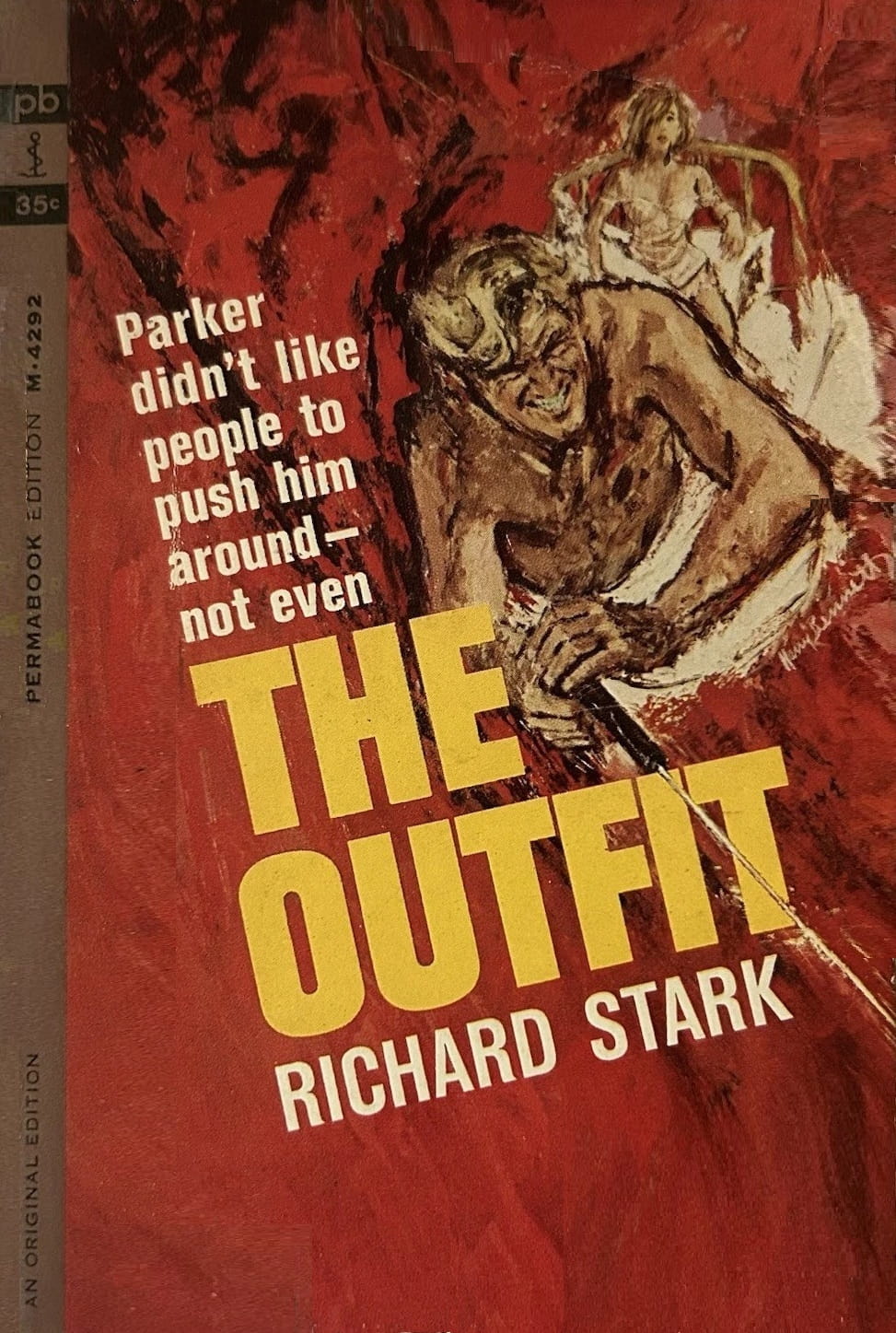
The third Parker novel: The Outfit (Pocket Books, 1963)
Just like Conan, Parker has his own sense of how the world works, and he believes in that interpretation with 100% certainty. There is no doubt, no hesitation. Parker, like Conan, can swing into swift and decisive action at a moment’s notice.
Neither really goes looking to hurt or kill anyone. But, with both of them, the potential for violence is never far away. And if it is called for, it will be handled ruthlessly but professionally, in a contained and controlled manner that is nonetheless overwhelmingly effective.
Okay, you say – but Parker is a thief, not a barbarian.
Ah, but Conan was very famously a thief, at least early in his career.
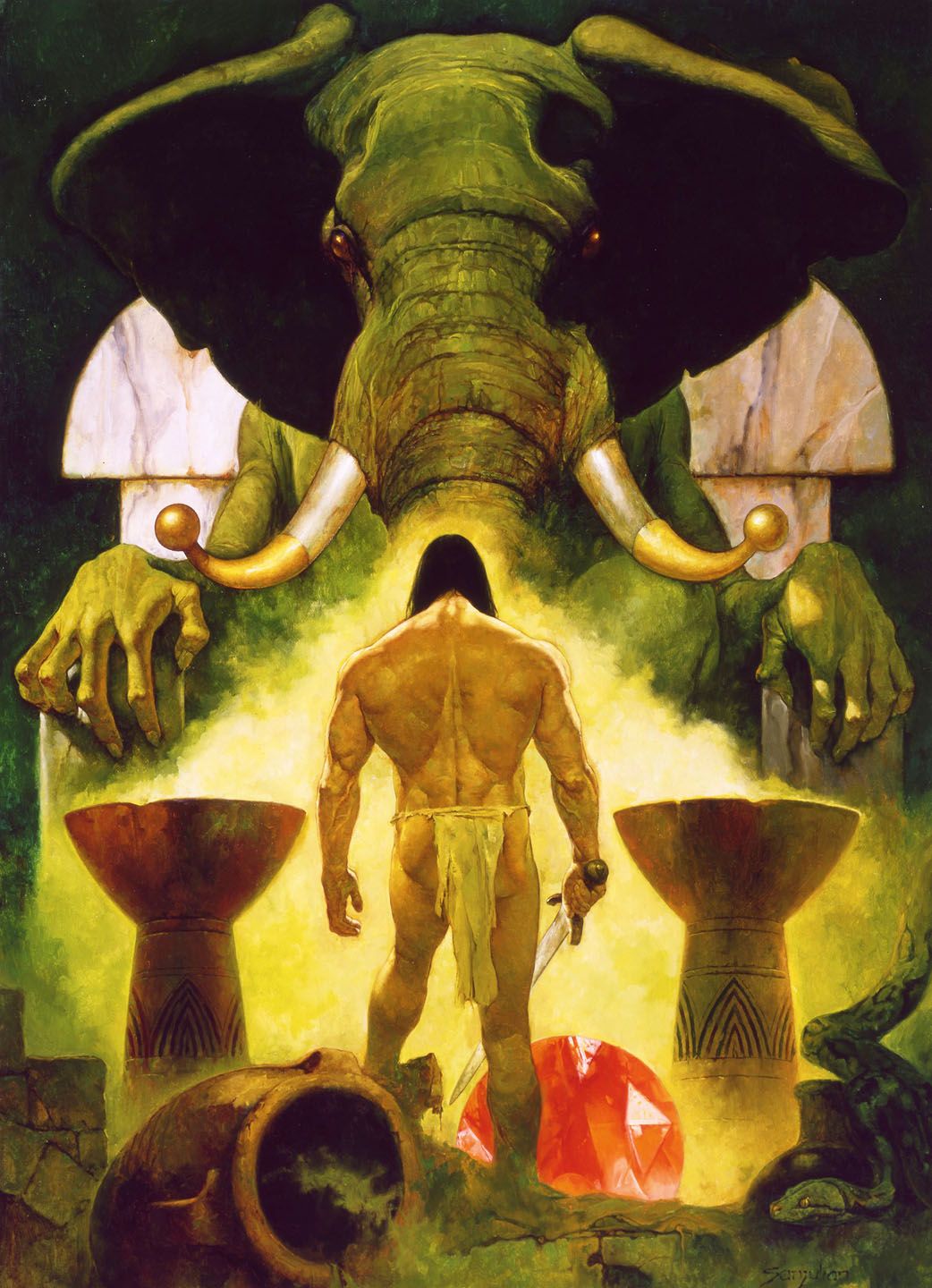
In what we might term the “young Conan” stories, such as “The Tower of the Elephant” and “The God in the Bowl,” the barbarian is newly arrived to civilized lands and is working as a thief. He occasionally teams up with other thieves to form the Hyborian equivalent of a heist string, but, like Parker, he’s always clearly the boss, or at least the one nobody else can boss around (for long).
Parker’s entire career is based on his skills as a master thief. And nobody bosses him around.
It’s very likely that, had Conan not transitioned into life as a mercenary, a pirate and eventually a king, he might have matured from a simple thief to a master burglar himself.
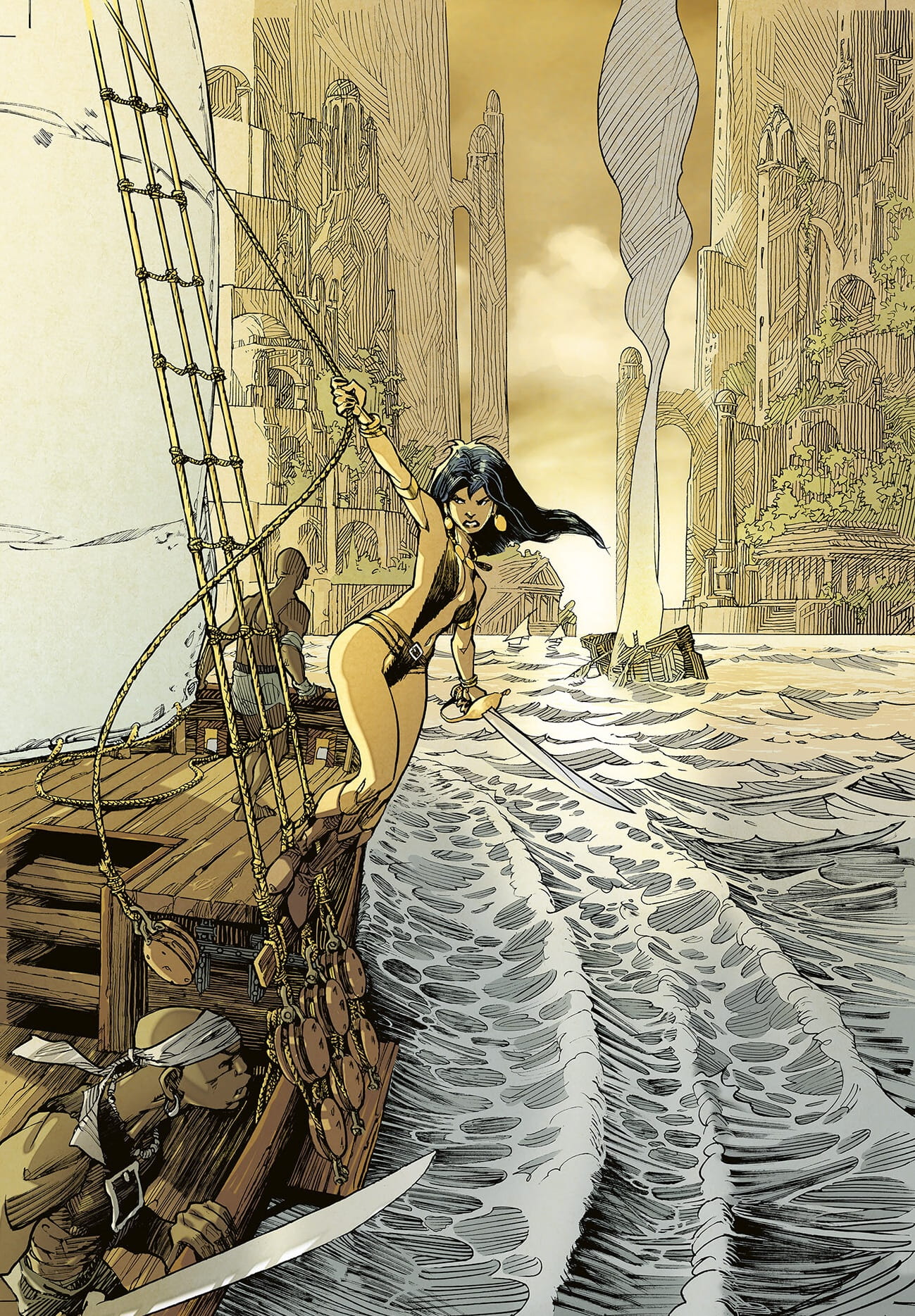
In another scene from “Queen of the Black Coast,” Conan found himself a defendant in a court of law. The judge demanded that he give over information on his accomplices. Conan refused. Then, he tells us:
The court waxed wroth, and the judge talked a great deal about my duty to the state, and society, and other things I did not understand, and bade me tell where my friend had flown. By this time I was becoming wrathful myself, for I had explained my position.
But I choked my ire and held my peace, and the judge squalled that I had shown contempt for the court, and that I should be hurled into a dungeon to rot until I betrayed my friend. So then, seeing they were all mad, I drew my sword and cleft the judge’s skull; then I cut my way out of the court, and seeing the high constable’s stallion tied near by, I rode for the wharfs, where I thought to find a ship bound for foreign parts.
That is very much Parker’s way of thinking. He sees law and order and civilization as structures meant to constrain other people. They are merely inconveniences for him, and much of his working life involves finding ways around those laws.
 |
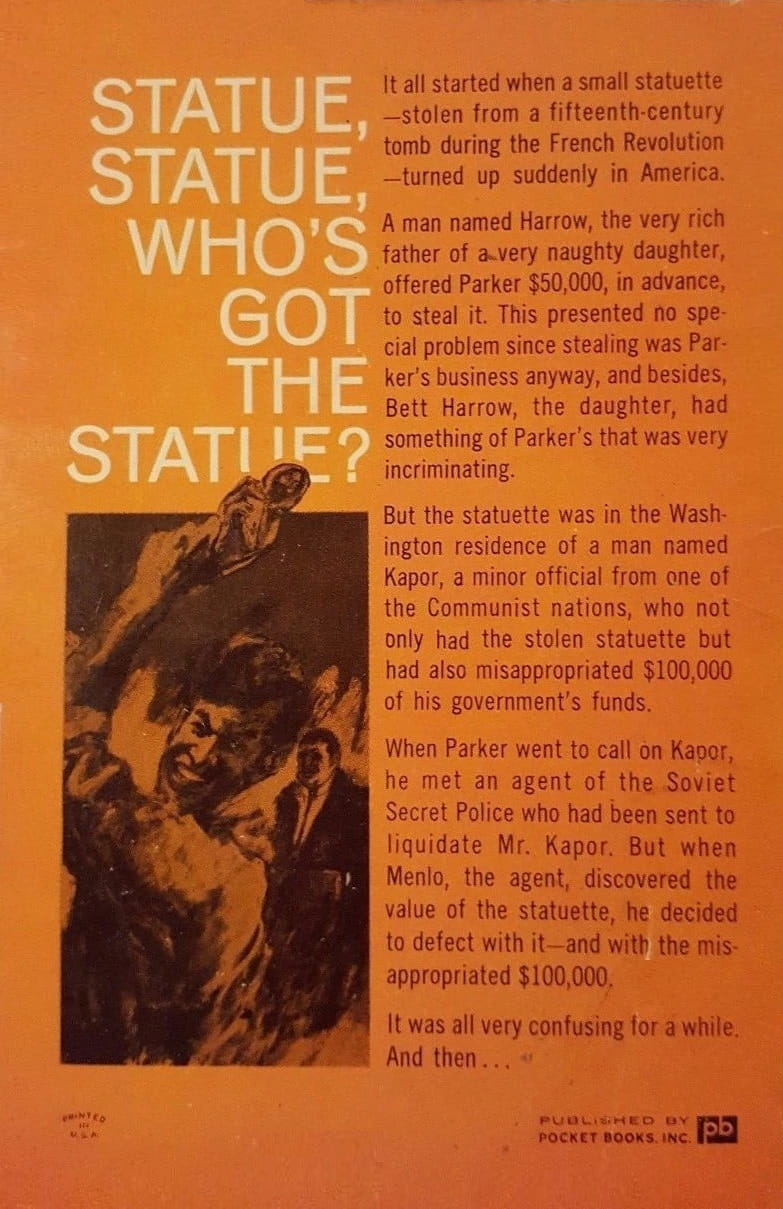 |
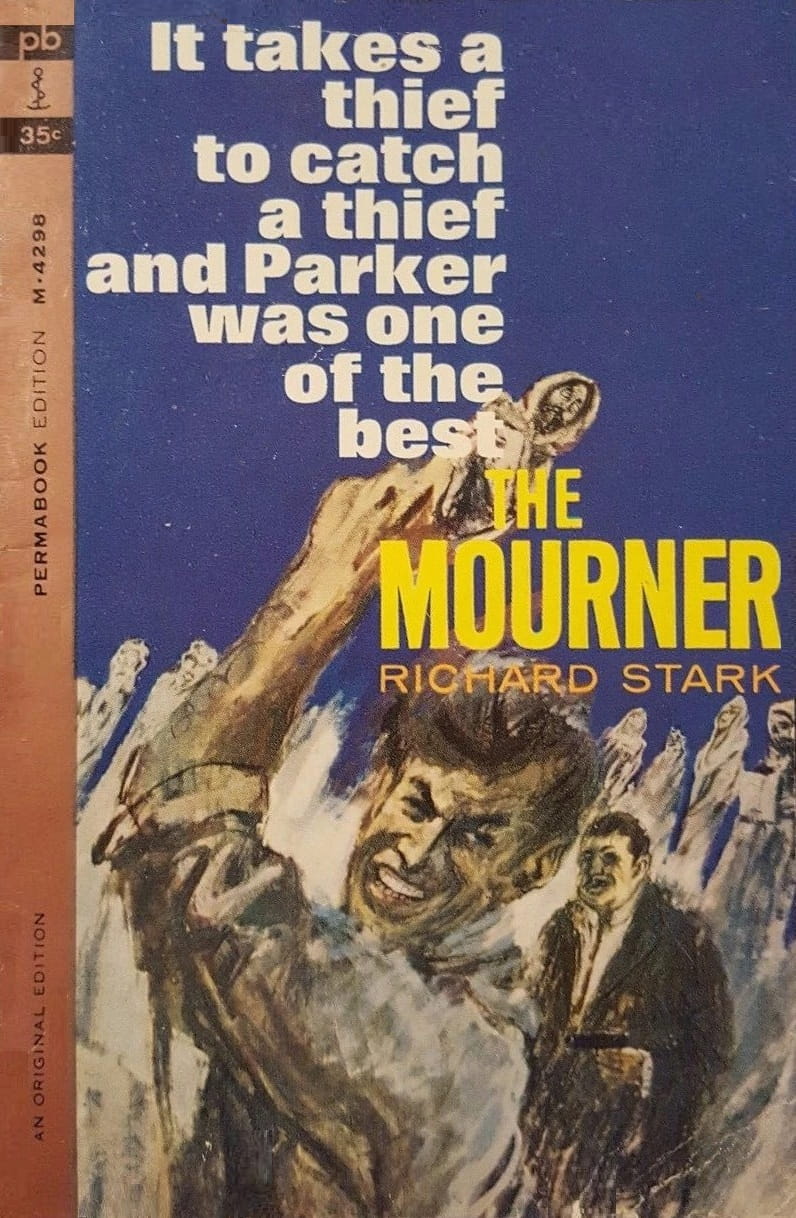
The fourth Parker novel: The Mourner (Pocket Books, 1963)
Conan has been called a panther and a lion. (His nickname among the pirates of the Black Coast, “Amra,” means “Lion.”) Parker has been described as a shark and a wolf, and said to move in a pantherlike fashion. He may lack Conan’s overall musculature, but – in more than one of the novels – his hands alone are enough to terrify even the hardest of criminals.
Both are hard to get to know, hard to make friends with. One has to earn their respect and their loyalty through demonstrated ability. When one finally earns that loyalty, that respect, one’s position in that world is immeasurably safer.
Both Conan and Parker at best tolerate the allies they work with, while still wondering what’s wrong with these people that don’t see the world the way they do.
Both make one important exception when it comes to their disinterest in involvement with other people: They both love the ladies. Parker’s interest only arises once a job is done, in a sort of subconscious release and celebration of a task accomplished. (In later Parker novels, he even becomes somewhat monogamous.) Conan is a bit less discriminating. There are few times he’ll shove a beautiful wench or damsel in distress out of bed.
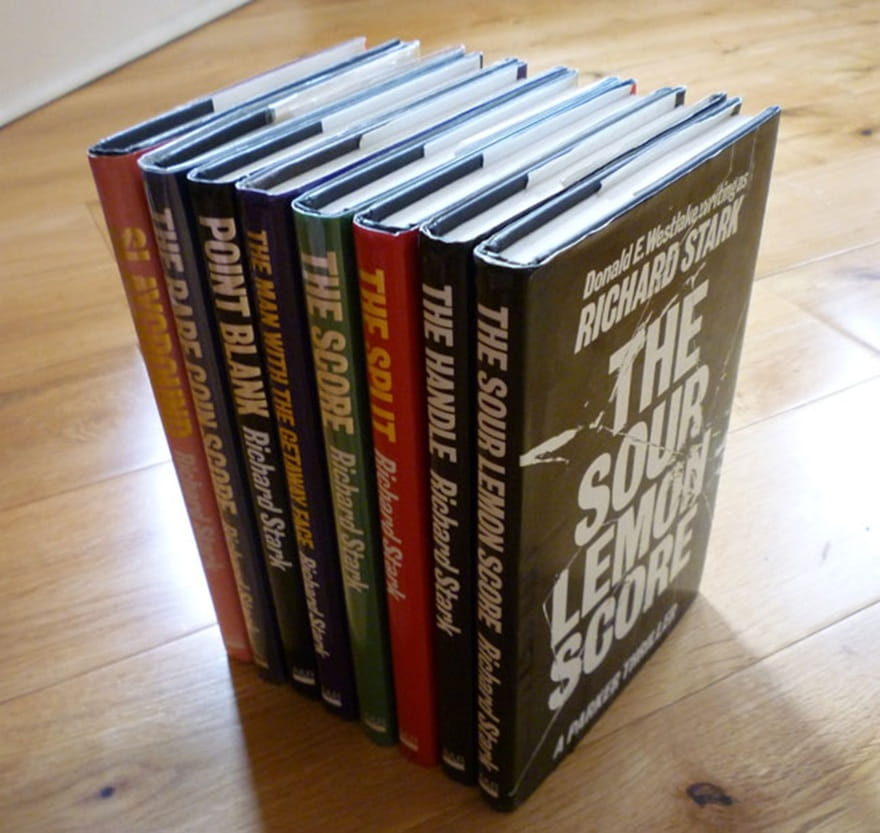
When we first meet Parker in The Hunter, he’s married, though that doesn’t last long. When we bid him farewell at the end of Dirty Money, he’s not married, but he has Claire, with whom he’s long-since settled down and taken up housekeeping.
Conan has lots of women along the way, each of them as disposable to him as the ones in Parker’s wake. When he meets Zenobia and then becomes king of Aquilonia, however, he too settles down and takes up housekeeping. Or rather, castle-keeping. Or, I suppose, kingdom-keeping.
Both untamable barbarians end up tamed, to some degree, by a woman.
One interesting difference is that Conan visibly ages from one story to the next, though not in a linear fashion as the tales were originally written. His career jumps all around through the stories. Howard apparently wrote each adventure in the order it came to him rather than in chronological order.
Parker, meanwhile, is ageless. Like a comic book superhero, he’s more or less the same character in the early 1960s and in the early 2000s.
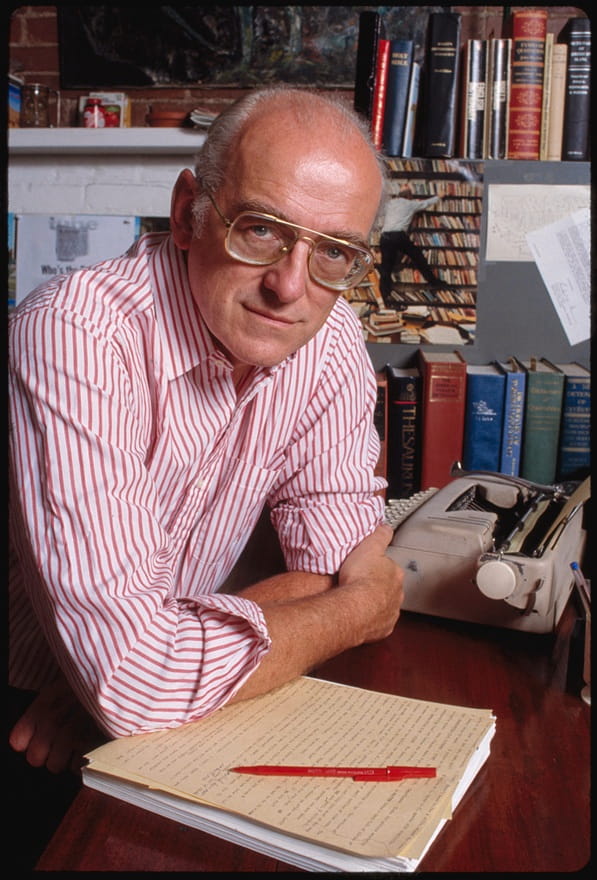
Parker probably appreciated Conan – I’m sure Westlake did – and Robert E Howard would have loved and respected Parker.
Consummate outsiders, they both cruise along in societies that are alien to them, and only their supreme competence gets them safely through to the end.
In both cases, we have examples of what is sometimes called “competence porn.”
We love to watch someone in action who is extremely good at their job. From police procedurals to pulp adventure, we like to see someone who knows what they’re doing do what they know.
As Westlake once said of Parker, “It’s true his job is a dramatic one, but it’s still a job. The only way somebody’s going to be interested in watching a guy take the hinges off a door is if there’s $100,000 on the other side.”
As for believing the entire legal system is insane? For both of them, that just adds to the fun.
Van Allen Plexico is a multi-award-winning author, member of the SFWA, and a Pulp Grandmaster. Among his many novels are the Harper & Salsa crime series, set in the Sixties and carrying something of the flavor of the Parker books, beginning with the 2018 Pulp Factory Award-Winning Best Novel of the Year, VEGAS HEIST. See all of his work at www.plexico.net.
Nice parallel, making an excellent case for your premise. If the judge from ‘Queen of the Black Coast’ were still alive, I suspect even he (she?) would have to agree. 😉
“Look around you, as all the people settle down./And when you’re old and grey,/You will remember what they said:/That two girls are too many,/Three’s a crowd, and four, you’re dead.” — Herman’s Hermits, “Dandy.”
I’ve heard that having a character with questionable hero/anti-hero/villain status settle into a relationship with one woman, tends to be an author’s final definitive stamp that “this is a hero.” Kind of that whole thing of “there must be something good in him, if she thinks he’s worth sticking with.” Is there any sign that that’s what Westlake was doing with Parker, by giving him Claire? (Apologies if this is a dumb question; as noted last time, I’d never heard of Parker, before. The first Parker book is currently tucked into the TBR pile.)
That’s a very interesting question, and I like it.
First, know that a whole lot of Parker fans do not like Claire. Some go so far as to say Westlake at least partially ruined the series and the character by keeping her around and making her a permanent part of his life.
I guess I should do a whole column just on her when she finally appears.
I think she changes the books in two or three important ways.
One, she gives him a vulnerability. You can attack Parker by threatening Claire.
Two, he no longer jumps into bed with every halfway-attractive woman he encounters during a job. Though there is one moment in the later books where he is very sorely tempted.
And three, she brings a sort of domesticity to him, in the sense that he has a place to go back to at the end of every job and just sit on the sofa and read the newspaper, rather than hanging out at the beach and waiting for the next job opportunity to come along.
I don’t know that any of those three things are necessarily “bad,” but they do fundamentally change his character and the nature of the stories.
And finally, I will add: I think there’s no question that Parker becomes a tiny bit more sympathetic of a figure as the books go by. In the very first book, as you will soon see, he’s pretty rough and unsympathetic. Westlake even originally killed him off at the end of that story—as I have previously noted. But, very quickly, Parker changes into more of a deliberate professional, which is what many of us appreciate most about him. And I think Claire only adds a bit more stability to that aspect of his character.
Thanks for taking the time to answer my question, and writing a column on Claire sounds like a great idea, if you still want to when she appears. The three ways she changes the Parker vs. world dynamic make sense, in light of the sympathy shift. That would definitely move him further toward hero from villain.
Odd that she’s a lightning rod for some Parker fans. Usually, authors can get the readers thoroughly behind settlement. Does the dislike of Claire mostly tend to stem from item 1, that she’s a vulnerability? I suppose that would depend on how Westlake chose to write her; if she knows/doesn’t know Parker’s career; if Parker lets himself be controlled by threats to her, or if he uses threats to her to motivate himself, or if he just laughs it off sometimes because he knows the threatener will be in a world of pain if she ever finds out. Plenty of narrative options, all of which will offend some segment of the readership.
Again, thanks! Continuing to look forward to the next columns in this series.
The most vocal anti-Clair fan always referred to Parker as a machine. I think on some level, like Conan, the wish-fulfillment aspects of the character are so appealing that fans don’t wish to be reminded about domesticity.
It’s the same reason why Zenobia is the least popular of the major women in Conan’s life. Valeria and Belit go on adventures with Conan, but Zenobia is more of someone whose strengths lie in running a court/household.
I’m pro-Clair as I both think the novel that introduces her is one of the best, and the senses I get with Clair much like Parker’s first wife, gives Parker support though he would never admit it. Parker knows that at a certain point, being in a relationship actually protects his cover more when not committing heists than just drifting around on the beaches of Florida.
I personally read Parker’s ruthlessness as extreme emotional repression as a survival instinct, so when, later in the series, we occasionally see just enough of a crack in the emotionless facade at certain points, it means something.
Parker also shows some loyalty to Grofield his sometimes partner in crime.
(Spoilers)
In Butcher’s Moon Grofield is captured and Parker rescues him. Well, he is about to leave him and then he gets a severed finger tip from Grofield’s captors. Then Parker goes to war. There’s a speech where Parker tries to explain to other criminals he’s enlisted why. It’s written in such a way he doesn’t seen sure. Like a sociopath trying to understand that he’s feeling empathy for the first time.
I suspect the main reason some readers don’t like Claire is that we had eight novels in which to get to know Parker (mostly) without a significant other. So when she comes along, it represents something of a fundamental change to the series.
Claire is in a way the most interesting character in the series, from a moral viewpoint anyway. Parker has no conscience, no consciousness of right or wrong at all, but Claire does. Very early on, she sees the human consequences of what Parker does and she deliberately chooses not to look at them.
It actually makes her rather despicable in a way that Parker, for all of his violence, isn’t. (And of course Westlake never points this out or points it up. That wasn’t his way.)
What an unusual narrative choice, on Westlake’s part! …And there goes my book budget for this paycheck, because now I *have* to read the whole series, to see how much Claire chooses to benefit or not benefit from what she “doesn’t see,” and how Parker reacts to those choices. The interactions between two characters like that had to be a blast for Westlake to write.
If you get the University of Chicago editions, don’t skip the intros – they got some very good people to do them.
Alright, then. Deliberately selecting for the UC versions.
I’ve commented this before, but it has always surprised me how sword-and-sorcery fans tend to have common interests in other genres. I ran across the Parker series by way of the Mel Gibson movie Payback, and at the time I thought I discovered something.
I never made the comparison to Conan before. I think you’re spot on.
Bad-asses that live by their own code and bow to no one.