Dark Muse News: Horrific Art – Interviewing Tim Waggoner
This Dark Muse News column continues its coverage of Beauty in Weird Fiction/Art via interviews (a series that began in 2014 on my author blog and was taken up by Black Gate in 2018). We’ve hosted authors such as Carol Berg, Anna Smith Spark, Darrell Schweitzer, CSE Cooney, Scott Oden, CS Friedman, Bryn Hammond…. and many more… the latest being Waclaw Traier.
Now we corner author Tim Waggoner, who has published over sixty novels and eight collections of short stories. He’s a four-time winner of the Bram Stoker Award, a two-time winner of the Scribe Award, and he’s been a finalist for the Shirley Jackson Award and the Splatterpunk Award. He’s also a full-time tenured professor who teaches creative writing and composition at Sinclair College in Dayton, Ohio.
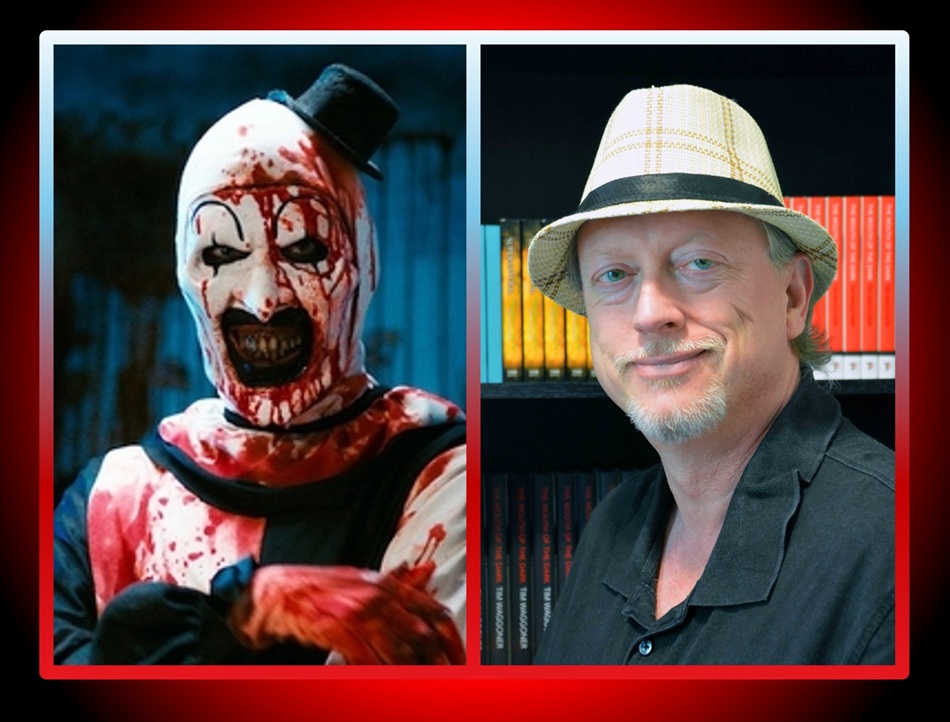
Waggoner has been getting a lot of press, and an award, for his novelization of the Terrifier movies that feature the serial killer named Art. You’ll learn more about that in this interview. Check out the juxtaposition of Art (the Terrifier on the Left, for clarity) and Tim Waggoner (innocent author on the Right). What wonderful hats they have!
Sword & Sorcery fans are also excited that Waggoner penned a Conan novel, just released from Titan Books, called Spawn of the Serpent God (Black Gate review ink). Being a fan of S&S and horrific art, I jumped at the chance to learn more about Tim Waggoner’s perspectives on craft.
Let’s learn from Tim Waggoner about how horror and beauty interplay!
Who is Art? This interview series focuses on Beauty in Weird/Horror. You literally portrayed weird, horrific “Art” by novelizing the Terrifier 2 movie villain (named Art). Can you introduce folks to Art, and discuss how you expanded on the characters/lore (doubling the size of the script f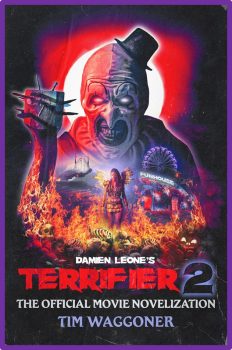 rom Terrifier #2!).
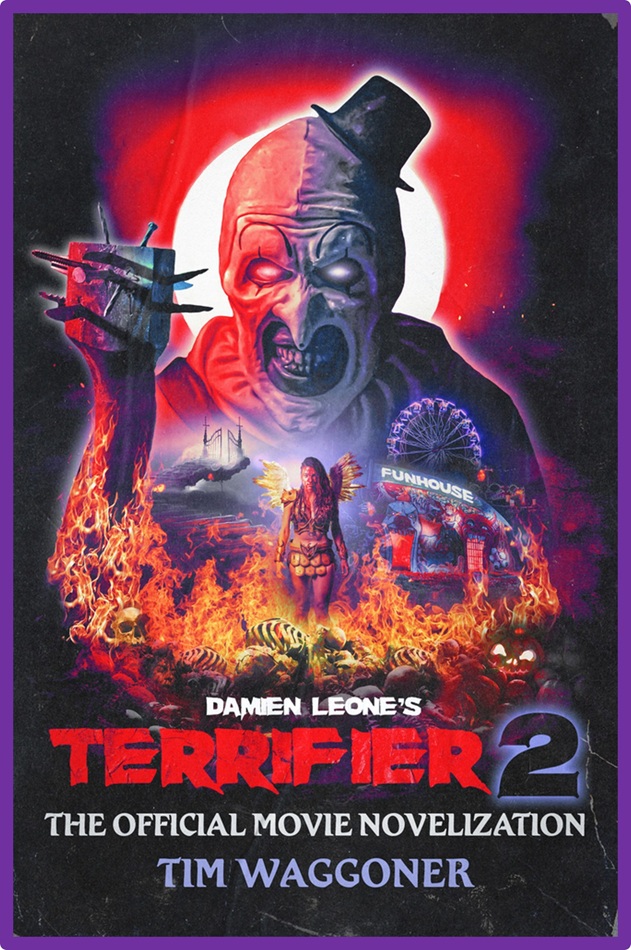
Art is the scary clown archetype combined with the slasher archetype, and he’s an especially brutal one. He’s silent like Michael Myers and Jason Voorhees, but he’s far more expressive physically. He can be playful in a dark, sadistic way, like Freddy Krueger, and his kills are bloody and violent, like Leatherface. He has a childlike quality that can be strangely endearing, but when he drops his façade, we can see the cold, empty evil that lies at his core. All these aspects combine to make him the most effective horror villain to come along in years.
I’ve done ten novelizations at this point in my career, and a movie script doesn’t provide enough material for a full-length novel. Most editors want at least 80,000 words, and a movie script usually results in 40,000 to 50,000 words of prose. So you have to add quite a bit of material to create a full novel. I look for areas in the script that could be explored further. In Terrifier 2, Art has a van, but we don’t know how he gets it, so I wrote a sequence showing that. In Terrifier 3, we know that Sienna has spent some time in a psychiatric hospital, so I explored that aspect of the script. I also developed the supporting characters further, in order to make them seem more like real people and not just prey for Art. In both novelizations, I added details about what lies behind the mystery of Art – what exactly he is, where he came from, why he’s allied with what seems to be a demon, etc. I extrapolated these details from hints in the script since only Damien Leone, the writer/director, really knows what’s going on!
Well, we need to talk about the hats now! Any comments on your fedora or Art’s top hat?
My wife and I attended the World Horror Convention in 2013 in New Orleans, and I brought a straw fedora to wear when we were wandering around the French Quarter so I wouldn’t get a sunburned head. People mostly ran into each other in the hotel lobby, so I was usually wearing my hat when people saw me. But during and after panels, people would ask me why I wasn’t wearing my hat, and I’d think, ‘Because I’m not outside!’ During the Bram Stoker Awards afterparty, I was talking with editor Leah Hultenschmidt. I told her how everyone kept asking me about my hat, as if it was a hall costume or something. Leah said I should keep wearing the hat at cons as a branding method. She said that since I was tall, people would always be able to find me because of the hat. “I challenge you to wear it for a year,” she said. I was reluctant, but I promised I would, and I did. I’ve worn it at conventions and author appearances ever since. I call it My Stupid Author-Branding Hat.
You covered effective monster-making on your blog regarding “Art Appreciation.” Do you think Art is an artist?
Art doesn’t display his kills the way some horror villains do, but he’s definitely creative in the way he commits his murders. And he’s creative when it comes to his clown/mime antics. I don’t know if he was named “Art” because he’s a kind of an artist, but it was something I leaned into when writing the books.
Any tips on creating “Monsters” in general? Is there any beauty in these creatures who typically villainize protagonists?
One of the best ways to create an effective monster is to drill down to what their core archetype is and then find a new way to express that archetype. For example, in the early sixties, Alfred Hitchcock made Psycho, based on Robert Bloch’s novel. Norman Bates is a version of the werewolf archetype – a human who transforms into a savage monster – recreated for the modern world. Using this technique, you can keep the power of an archetype without any of the baggage that might’ve become attached to it over the years through books, comics, movies, and TV shows.
You can also combine aspects of archetypes. George Romero and John A. Russo did this when they created the zombies in Night of the Living Dead. Their zombies are a combination of the living dead, ghouls that eat flesh, vampires that spread their contagion, humans that become alien, and a horde of monsters. Putting all these pieces together resulted in an iconic monster that’s become part of the pantheon of legendary horrors.
I do find beauty in the monstrous. It has a power and a dark majesty that I’ve been attracted to all my life as a reader and viewer. For some reason, the monstrous stimulates my imagination more than anything else. The great thing about the dark is that anything could be in it – anything at all.
You contributed to THE BEAUTY OF DEATH – Vol.1: The Gargantuan Book of Horror with a bunch of other horror masters. The collection’s title resonates with the topic of Beauty in Horror. What was your contribution?
I’m not sure why publisher Alessandro Manzetti used The Beauty of Death as a title. The anthology’s theme was horror stories relating to water. I wrote a story called “Fathomless Tides,” which deals with a couple having trouble in their relationship, along with the man’s fear of sharks. I often try to find the beauty in the grotesque in my horror stories, and I did this in “Fathomless Tides,” especially at the end.
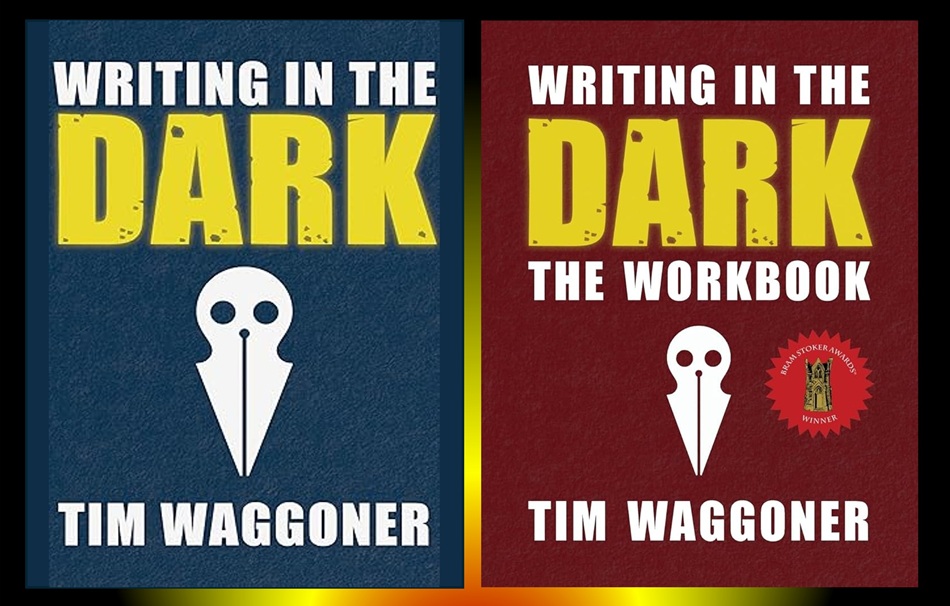
“Writing in the Dark” is the name of your blog and your book(s) on how to write horror. Can you highlight your guides to writing?
Writing in the Dark is a book on writing horror. Writing in the Dark: The Workbook is a companion to the first book, which presents horror-writing exercises. Let Me Tell You a Story is a book about writing short fiction, using stories from throughout my career as examples. Just Add Writer is a book about writing media tie-in fiction. They’re all published by Raw Dog Screaming Press.
Muses and Mentors: from internationally known Garth Merengie (“The One Man Fear Factory”) to fellow once-Ohioan Dennis McKiernan, please discuss mentors and role models you have had.
There have been so many! In the fields of science fiction, fantasy, and horror, “pay it forward” isn’t merely a platitude – it’s a core value. I was in a writers’ group with Dennis for several years, and I learned a ton about the craft and business of writing from him. He was kind enough to introduce me to writers and editors at various World Fantasy Conventions, and he also recommended me to his agent, Jonathan Matson, who took me on as a client. We worked together for nineteen years until his death.
Mort Castle has helped so many writers over the years, both as a professional writer and writing teacher. Before he immolated his career, Thomas F. Monteleone mentored dozens of writers, including me. Jonathan Maberry is so generous with his time and advice, and he’s supportive of all writers. Dawn Dunn taught me how to network at conventions. And I’ve learned a ton just by listening to writers on panels during conventions over the years and following them on social media. I learned a vast amount about being a professional from the late Mike Resnick, and I read Lawrence Block’s columns and books on writing religiously. I learned more about writing from him than anyone else. That’s why I dedicated Writing in the Dark to him.
I’ve been writing and teaching for forty years now, and I’ve done my best to honor my mentors and pay it forward to new writers, and I hope they, in turn, will do the same.
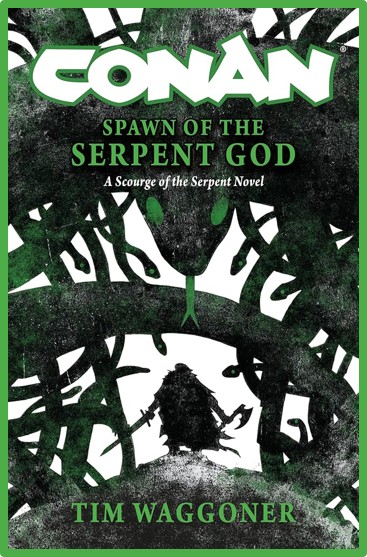
Any Horrific Beauty in your recent Conan Novel (just reviewed on Black Gate Conan: Spawn of the Serpent God?
Sword and Sorcery fiction and horror go great together, so horror appears throughout Spawn of the Serpent God. There are serpent men, the evil god Set, giant spiders, an undead woman who was Conan’s girlfriend when he was younger, intelligent apes, ancient monsters, possession, shadow-snake zombies, a god-cursed warrior… Whether these horror elements are beautiful is up to the reader, I suppose. They’re beautiful to me, but then I wrote the book!
Tim Waggoner in 2019
“Years ago, a student asked me why I write horror. “You seem like such a pleasant person,” she said.
I looked into her eyes and smiled.
“Writing horror is what keeps me pleasant.
I meant it as a joke, but I think it’s as good an explanation as any, and probably the closest to the truth.”
There is a fun anecdote from your Kendall 2019 interview to explore more (excerpt above). How does horror bring joy/pleasantries?
There’s the carnival thrill-ride aspect. Scary stories are fun! There’s also a deeper emotional catharsis you can reach as you emotionally wrestle with some of the darkest aspects of human existence. Perhaps the greatest thing that horror can do is help us confront the most serious existential question that we face as mortal beings: We all know that we’re going to die eventually, so how do we go on living with that knowledge? How can we find meaning in a universe that is dying all around us? Characters in horror stories, whether they survive or not, contend with darkness, fight back against it… They keep living until their very last moments – and we can do the same. I find that idea very comforting.
One of your blog posts indicated that “the worst thing artists can experience is indifference to their work.” How do you balance being empathetic while intentionally disturbing the reader?
I write with a close point of view, so readers can understand what a character is thinking and feeling, even during the most intense scenes. I believe in giving every character his or her dignity, even if they only spend a short time onstage. A number of reviews I’ve seen about my Terrifier books discuss how they’re even more intense than the movies. That’s because I stay in the characters’ point of view when they suffer and die, and I invite readers to do the same.
You have a fascination with dark fantasy. Can you explain your muse, like where it originated and where it takes you?
When I was in my early twenties, I wondered why horror writers’ stories were so limited when they had the whole realm of the supernatural to explore, and I wondered why fantasy writers’ stories didn’t take more advantage of magic in their worlds. Their worlds and magic systems tended to be similar. I eventually ran across the work of Charles DeLint and Robert Holdstock, and their fantasy fiction had strong elements of horror. Bradbury did a much better job of this fusion in his fiction. I decided to explore blending horror and fantasy in my own work, and then in my mid-twenties, I began reading Clive Barker’s novels. Not only did he blend horror and fantasy to great effect, is novels had an epic scope and world-building as well. Shortly after this, Twin Peaks came on the air, and I loved it so much, I checked out all of David Lynch’s films and became a lifelong fan. I think Lynch’s work is an ultimate expression of fantasy fused with horror (along with mystery and noir elements).
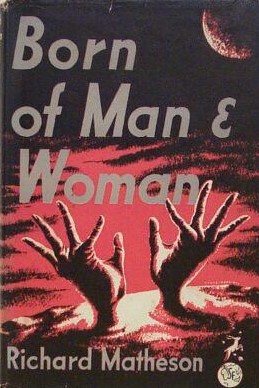
Do you find beauty in your, or others’, weird fiction/dark art? Dissect an example.
One example I’d give is Richard Matheson’s short story “Born of Man and Woman.” I first read it in high school, and it had a huge impact on me. It’s written as a series of short diary entries from a monstrous child whose human parents keep them (a gender is never specified) locked up in the basement. The child has only rudimentary language and simplistic thoughts from having been isolated all its life. Sadness permeates the story, which is a metaphor for child abuse/neglect. It’s also the story of how monsters are made, not born.
Do you see beauty in the things that terrorize/scare you?
I’ve been a horror fan all my life, so horror media of any kind doesn’t scare me. The real horrors of the world can be too hard to look at straight on, like an eclipse, and horror lets us look indirectly at darkness, through imagery and metaphor. That’s what I think the true beauty of horror is.
Tim Waggoner in 2026
“The real horrors of the world can be too hard to look at straight on, like an eclipse, and horror lets us look indirectly at darkness, through imagery and metaphor. That’s what I think the true beauty of horror is.”
Have you any other muses besides writing (music, drawing, pottery…)? Can we share any of those here via images/links?
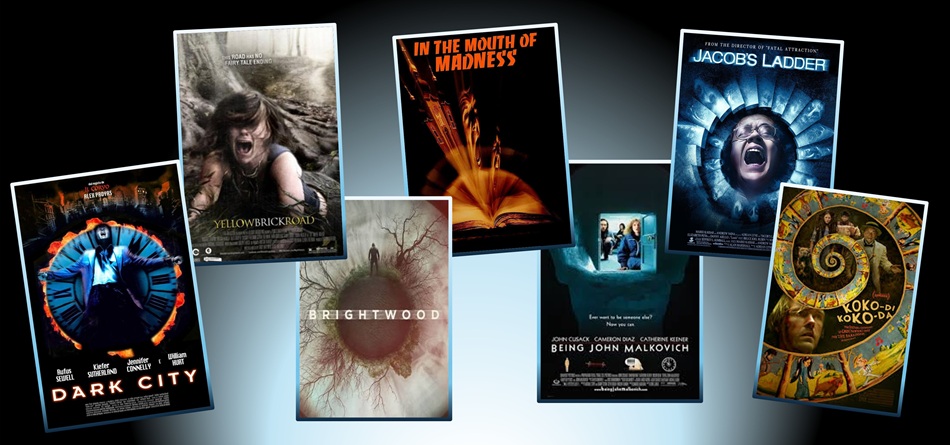
Here’s a list of bizarre/surreal films I find inspiring:
- Brightwood
- Resolution
- The Endless
- Something in the Dirt
- Vivarium
- Titane
- Berberian Sound Studio
- The Editor
- Men
- Hostile Dimensions
- Koko-Di, Koko-Dah
- Strange Factories
- Caught
- Dark City
- Lost Highway
- Yellowbrick Road
- The Attic Expeditions
- In the Mouth of Madness
- Triangle
- Drive Back
- Dead End
- mother!
- Being John Malkovich
- Tetsuo: The Iron Man
- Dave Made a Maze
- Naked Lunch
- Jacob’s Ladder
- Mad God
- Gozu
- The TV show From
Any inside scoop we can share exclusively here (i.e., what is something most people do not know about you or your creative endeavors)?
My first published novel was an erotic novel called Dying For It, which I wrote for the long-defunct Foggy Windows Press. Foggy Windows’ brand was erotic stories about married couples. I wrote about husband-and-wife private investigators who have trouble keeping their hands off each other while they’re working. I couldn’t take the whole thing seriously, so I made the book a comedy, too.
Any new releases in 2026?
Winding Road Stories will be releasing a reprint of my novel Beneath the Bones, as well as a new sequel called The Gatherum. I’ll also have a new horror novelization out, but it hasn’t been officially announced yet. I’ll have a handful of short stories out in anthologies, too.
Tim Waggoner
Tim Waggoner has published over sixty novels and eight collections of short stories. He writes original dark fantasy and horror, as well as media tie-ins, and his articles on writing have appeared in numerous publications. He’s a four-time winner of the Bram Stoker Award, a two-time winner of the Scribe Award, and he’s been a finalist for the Shirley Jackson Award and the Splatterpunk Award. He’s also a full-time tenured professor who teaches creative writing and composition at Sinclair College in Dayton, Ohio. His papers are collected by the University of Pittsburgh’s Horror Studies Program.
- Four-Time Bram Stoker Award-Winning Author
- Website: timwaggoner.com
Blog: http://writinginthedarktw.blogspot.com/
Facebook: http://www.facebook.com/#!/tim.waggoner.9
Instagram: tim.waggoner.scribe - Threads: @waggoner.scribe@threads.net
- Bluesky: @timwaggoner.bsky.social
- YouTube Channel: https://www.youtube.com/channel/UCZEz6_ALPrV3tdC0V3peKNw
S.E. Lindberg is a Managing Editor at Black Gate, regularly reviewing books and interviewing authors on the topic of “Beauty & Art in Weird-Fantasy Fiction.” He has taken lead roles organizing the Gen Con Writers’ Symposium (chairing it in 2023), is the lead moderator of the Goodreads Sword & Sorcery Group, and was an intern for Tales from the Magician’s Skull magazine. As for crafting stories, he has contributed eight entries across Perseid Press’s Heroes in Hell and Heroika series, and has an entry in Weirdbook Annual #3: Zombies. He independently publishes novels under the banner Dyscrasia Fiction; short stories of Dyscrasia Fiction have appeared in Whetstone Amateur S&S Magazine, Swords & Sorcery online magazine, Rogues In the House Podcast’s A Book of Blades Vol I & II, DMR’s Terra Incognita, the 9th issue of Tales From the Magician’s Skull, Savage Realms Magazine, and Michael Stackpole’s S&S Chain Story 2 Project.