Imaro: The Trail of Bohu
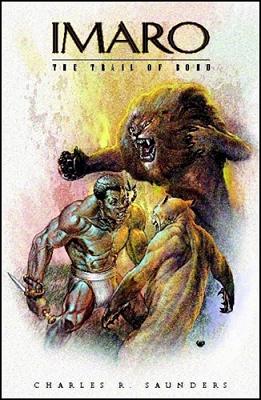 Imaro: The Trail of Bohu
Charles R. Saunders
Sword & Soul Media (217 pages, $20.00, January 2009)
Fans of Sword & Sorcery and Heroic Fantasy had reason to rejoice as 2009 kicked-off with a big release from one of the genre’s master storytellers. No, it wasn’t a new Elric novel, nor a previously undiscovered Fafhrd and Gray Mouser short. And not a book by one of those other famous names, Howard, Vance, Gemmell, or Wagner, either. It was Imaro: The Trail of Bohu, the third in the Imaro series, by the best fantasy author you’ve never heard of.
Of course, many of Black Gate’s readers have heard of and are fans of Charles R. Saunders, but the world at large has been slow to catch up. The perilous journey of the Imaro series into and out of print has been related elsewhere, but finally it seems things have gotten on the right track and this previously unfinished series will at last be in the hands of fans everywhere, thanks to new imprint Sword & Soul media.
Imaro: The Trail of Bohu continues the saga of the outcast warrior Imaro in the land of Nyumbani; a rich fantasy setting based on African history and myth. But, while the first two books in the series, Imaro and Imaro: The Quest for Cush, were essentially episodic in structure (constructed as they were of Saunders’ short stories), The Trail of Bohu, the first Imaro book written as a novel from start to finish, presents us with a bigger overall story — it is, in fact, the beginning of the arc that will carry the reader through books four and five and, let’s just say, things really start to get going in this installment of the Imaro saga.

 X-Men Origins: Wolverine is zapped into obscurity by the twin phaser-blasts of Trekstalgia and JJAbramitude, I would like to point out that the movie doesn’t actually suck.
 In brainstorming topics for my ‘getting back on the horse’ return post here at Black Gate after my absence of a few months — I’ve come up with a few mildly interesting ideas. Firstly, I thought about looking at the nature of escapism, how it shouldn’t have the unfair pejorative connotation it does, and how it certainly isn’t limited to works of prose or film or video games designed solely to entertain. Then too I was considering a weird phenomenon I’ve only really just been made conscious of, that of how utterly mainstream fantasy, or, let’s say ‘the fantastic,’ has become just in the last few decades — and I mean aside from the obvious stuff like the popularity of fantasy and science fiction books and movies, but everything from television commercials and product packaging to childrens’ toys and popular expressions bear out the reality that the once distant worlds of speculative fiction are now familiar place names in the cultural atlas of modern life.