Face-to-Face with the Chimaera of Arezzo
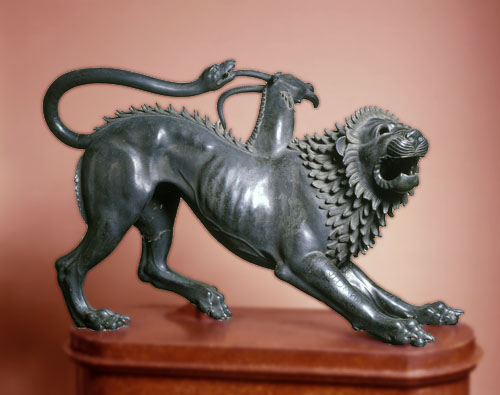 I don’t often get the opportunity to encounter true works of ancient artwork, those anonymous pieces of bronze and stone and gold that appear reproduced in textbooks, volumes of history, and museum brochures. Living on the western edge of the New World means I have a lack of local access to them, and when I’m in the Old World, I’m usually among the artworks of the early modern masters, who painted onto canvas their dreams of the ancients. Not that such art isn’t wonderful, but I’m a classicist deep down in my cerebellum, and I don’t get to engage with the genuinely ancient as often I would like.
But this week I got to stare into the eyeless sockets (which probably once held eyeballs of glass) of one of the masterpieces of the ancient world: the Chimaera of Arezzo, an Etruscan bronze sculpture that is spending a few months away from Italy to lair up in the Getty Villa Museum in the Los Angeles suburb of the Pacific Palisades. I grew up in the Palisades, and it’s still a pleasant twenty-minute coastal drive from where I currently live, but I hadn’t gone to the Villa since its re-opening a few years ago. The Chimaera was an easy way to entice me to my first visit in ages. This is a sculpture that, although I didn’t know its official title until I was a college student, formed part of my consciousness since I first fell in love with Greek myth at a young age. No book could talk about the wonderful lion-goat-snake conglomeration that the hero Bellerophon killed with a throat-coating of lead without showing a picture of this Etruscan masterpiece.
 The much anticipated — and feared — “reimagining” of Patrick McGoohan’s classic cult TV series The Prisoner is scheduled for release on AMC in November. One good sign is that Ian McKellen is cast as Number Two (a role which, unlike the original series, will not revolve among multiple actors) and is (like the original) of fixed duration. James Caviezal is Number 6 and there are some interesting parallels here. Caviezal played Jesus in Mel Gibson’s (who was rumored to be a candidate for Number 6 in the various movie proposals over the year) The Passion of the Christ, controversial for its brutal, some would say sado-masochistic, portrayal of the Gospel stories. Like McGoohan, Caviezal is an observant Cathloic. Caviezal has made public stands on such issues as stem cell research and it is not inconceivable this might have affected his career in an industry that for the most part tilts left; McGoohan reportedly turned down the role of James Bond for moral reasons and insisted in his contract that he would not kiss women on-screen, particularly ironic given that The Prisoner was embraced by the sexual liberation advocates of the Sixties counter-culture for the program’s non-conformist ethos.
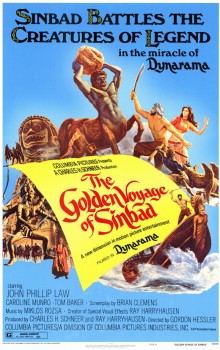 The Golden Voyage of Sinbad (1974)
 Intriguing premise — and something quite different from his previous work, which is always good to see in a favorite novelist — where two presumably East European cities somehow physically co-exist, with the inhabitants following strict protocols to avoid one another whenever their separate realities intersect. Grossman would be happy that it has compelling plotting; however, as a “police procedural,” Miéville doesn’t quite play fair. Part of the game in these kind of things is to at least give the reader a chance of figuring out the mystery of “whodunnit,” which I doubt anyone would be able to, although I’m guessing this isn’t Miéville’s concern here. I think he’s aiming at something more metaphorical along the lines of the existential spaces we all tread among the various realms of social interaction. Nonetheless, the unfolding of the mystery struck me as a little forced. Potentially, this could be the start of a series.
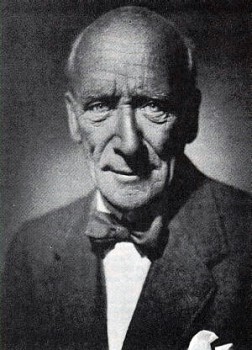 Incredible Adventures
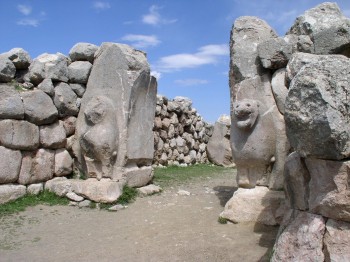 Hey, have you heard? Archie Andrews is going to marry Veronica Lodge. Good for him; I always had this thing for Veronica. I hope Archie isn’t in this only for the Lodges’ money. In celebration of this momentous moments of moments, I’m going to write about the Hittites.