A Decisive Argument for Physical Media
It was six years ago. Six years. Do you remember? Do you remember the lockdown summer of 2020?
Things may have been easing up by then where you were, but here in California the ball was just getting rolling. Ah, the joys of living on the Golden State’s cutting edge! Half your income goes for bandages and blood transfusions. (I’ll spare you the story of my fourth-grade year in an “open,” chart-your-own-course California classroom, where I didn’t learn any math but did listen to a lot of Cheech and Chong records.)
Rough as COVID was, though, we got through it, one way or another. Never were our books, our music, our television shows and movies more important to us. They became more than mere diversions; often they were literally lifelines anchoring us to a sanity that we felt we were floating farther away from each day. (Sometimes I was amazed that the whole social and economic life of the United States was put on hold just so I could get caught up on The Mandalorian.)
All of this came back to me just last week, when I got the email that I wait for every June or July, the one announcing the annual Criterion 50 percent off sale at Barnes and Noble. Criterion, as I’m sure you know and if you don’t, you should, is “dedicated to gathering the greatest films from around the world and publishing them in editions of the highest technical quality, with supplemental features that enhance the appreciation of the art of film.” For movies, Criterions are the gold standard of physical media.
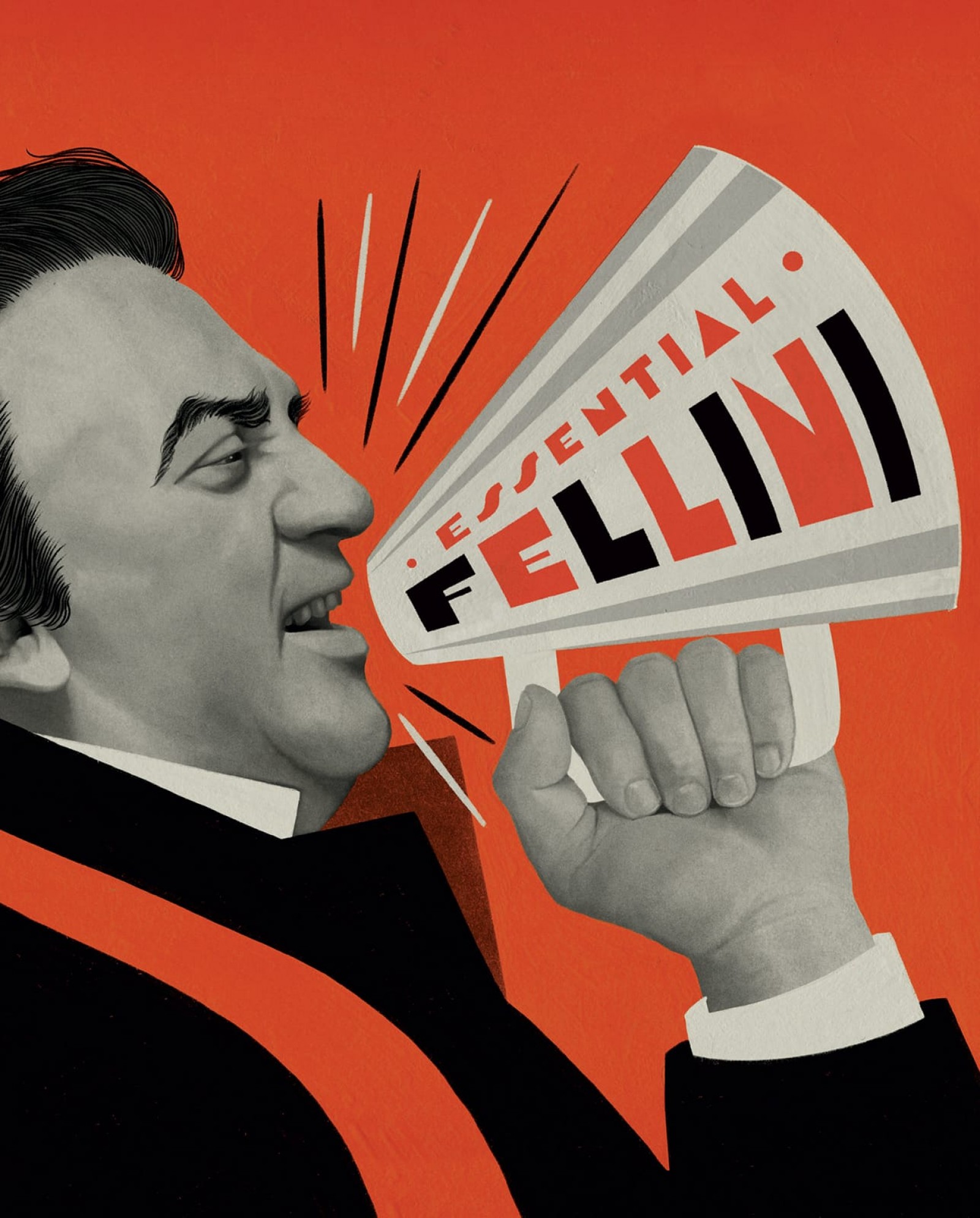
They don’t have to convince me, though — I have almost six hundred Criterions, from a last few DVD’s that they’ve never upgraded to other formats, like Laurence Olivier’s Hamlet (United Kingdom 1948, Spine #82), to 4K UHD editions of recent films like Guillermo del Toro’s Nightmare Alley (United States, Mexico 2021, Spine #1286) to multidisc Blu Ray collector’s sets like the massive, thirty-nine film Ingemar Bergman’s Cinema. (Some collector’s sets like Ingmar Bergman’s Cinema and Essential Fellini don’t have spine numbers, but some like Lone Wolf and Cub (Japan 1972-1974, Spine #841) and Godzilla: The Showa-Era Films 1954-1975 (Japan 1954-1975, Spine #1000) do. Thought you had me, didn’t you?)

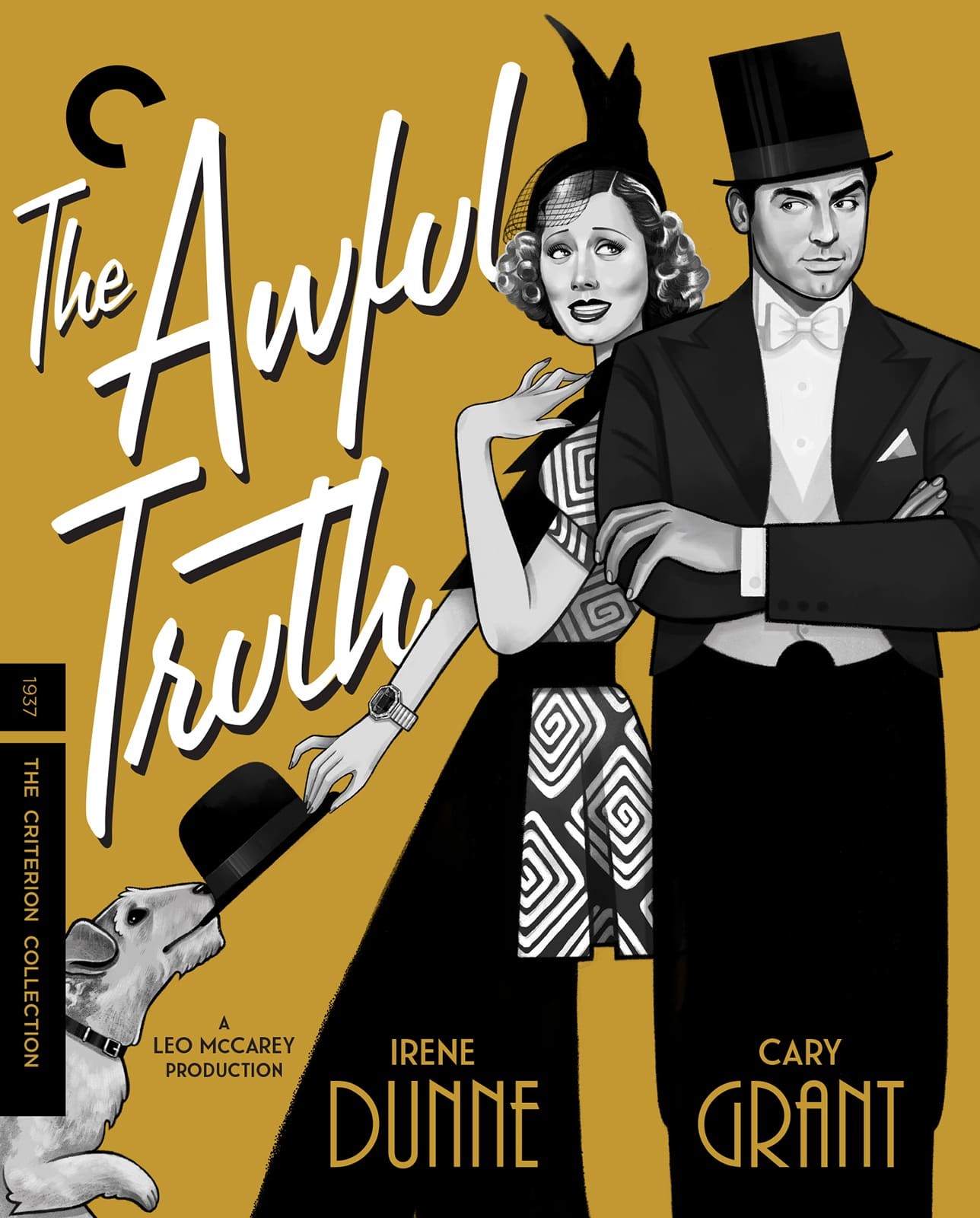
As many Criterions as I have, The Awful Truth (United States 1937, Spine #917) is, I’m never satisfied; I always want more. I can’t help myself, Your Honor — I’m a hopeless addict, a Criterion junkie, and it was the same six years ago; when the email arrived on the morning of July 9th, 2020, I was not missing the sale, pandemic or no pandemic.
My wife knows the drill — as soon as I get the notification, I give a loud yelp, jump up from the computer, grab my wallet and head for the door. (I do usually remember to get dressed first.) The only difference in 2020 was making sure that I had a mask before leaving the house.
It’s fifteen miles to the Barnes and Noble; I arrived at the store ten minutes after pulling out of my driveway, observing the speed limit all the way. (Both statements are true, I swear it — I must have passed through a wormhole somewhere on the freeway.)
When I walked into the store, it was virtually empty. You remember the eerie, almost postapocalyptic, last-man-on-earth emptiness of streets and shops and all public places then? How even in a grocery store, you almost expected to hear the wind moaning and see sheets of crumpled newspaper and other trash blowing down the aisles? The Barnes and Noble was like that; it’s a very large building, and I doubt that there were four people in it.
I walked to the back, where the movies and music are. The Criterions take up about twenty-five feet of the back wall, and as I stepped up to begin my browsing, there was only one other person there, at the other end, a young man probably thirty years my junior. While I had started at the left-hand side with Amarcord (Italy 1973, Spine #4), he had started on the right with Zatoichi: The Blind Swordsman (Japan 1962-1973, Spine #679). Standing there in our masks, we were like two stick-up men from different gangs showing up to knock over the same bank.
Starting at opposite ends of the display, we of course wound up meeting in the middle. Ordinarily, I’m not someone who strikes up conversations with strangers; there are folks who can spend ten minutes next to someone in a dentist’s waiting room and go away knowing as much about them as their best friend, but I’m not one of those people. In normal times, therefore, I probably would have just passed this kid without a word.
2020 wasn’t a normal year, though, was it? And so, as we met in the middle, a conversation spontaneously started.
Strangers though we were, we did know something about each other, the same thing that you always know about anyone you see at a Criterion sale — we could be sure that we each knew and loved great movies, and that was enough.
In the space of just a minute or two, we were talking away as if we had known each other for years, and of course, the talk was about movies — genres, studios, directors, actors, scenes, great individual shots or moments… we covered them all. Someone observing from a distance would have probably thought that we were a little crazy, or that we each had just escaped from being locked away for months in a dark closet somewhere and were desperate for human contact. They wouldn’t have been far wrong.
We stood there, each clutching our Criterions (you can tell how much money addicts show up with by the height of their stacks). Our conversation finally wound down — we had probably talked for about forty minutes — and I prepared to head to the cashier, but before I could go, my new friend asked me a question. He had enough money for one more Criterion; if I could choose it for him, what would it be? I can’t tell you how touched I was.
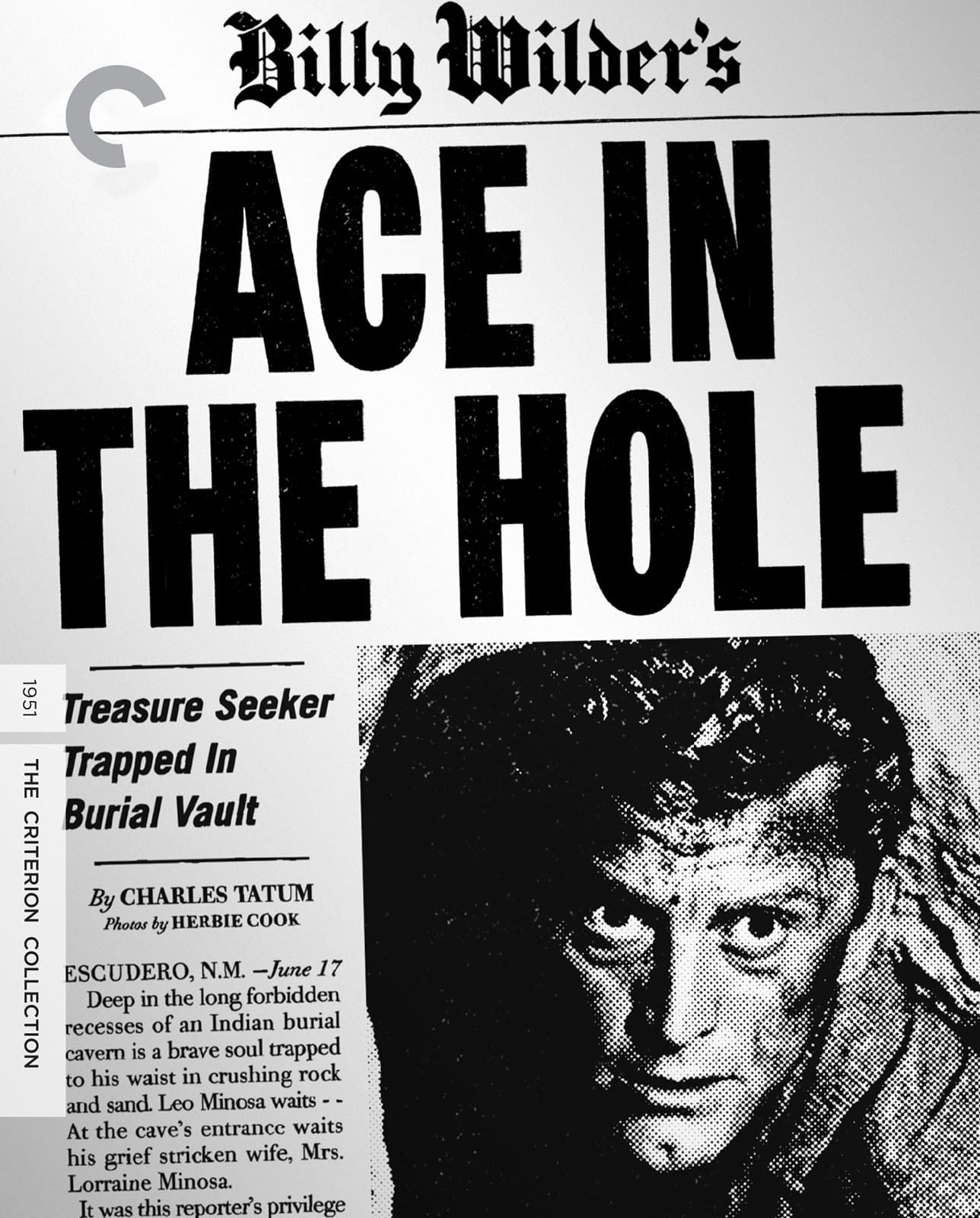
I instantly thought of one of my all-time favorite films, a glass of acid flung in the face of the American public (and even more recklessly, the American media, which probably accounts for the terrible reviews it received), Billy Wilder’s Ace in the Hole (United States 1951, Spine #396).
Kirk Douglas (in his greatest performance) is Chuck Tatum, a down-on-his-luck newspaperman doing penance in Albuquerque as he looks to push his way back into the Big Apple big time by finding a major story. Tatum finds a small story, but he manipulates it to make it big, bigger, the biggest in the country, and because of his selfishness and cynical string-pulling, an innocent man dies. (A souvenir hunter has gotten trapped in a cave; he could be extricated in a day but to stretch the story out and heighten the drama, Tatum convinces the authorities to use a method that will take a week or more, and the luckless Leo Minosa dies of pneumonia.) The self-loathing that Douglas displays by the end of the movie is positively radioactive.
It’s a brilliant, absolutely scalding film (God only knows how Wilder convinced the studio to make it) and one of the finest cinematic achievements of the 50’s… and before my hand was halfway to it, I knew that great as it is, Ace in the Hole was not the movie for that particular moment. The pleasure that I had experienced talking to my young friend told me that.
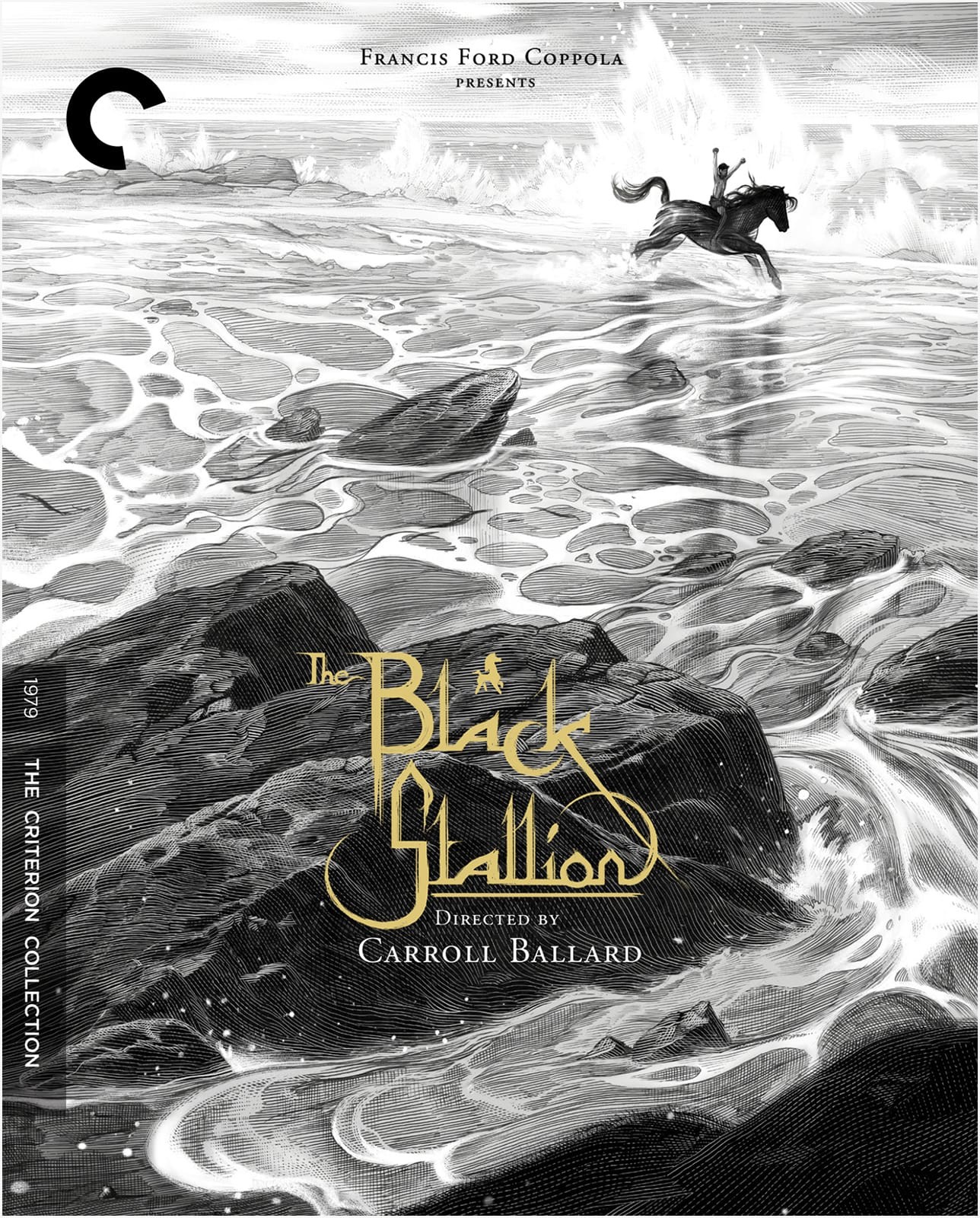
Carroll Ballard’s The Black Stallion (United States 1979, Spine #765), based on Walter Farley’s classic children’s novel, is the story of a boy, Alec, who is shipwrecked on a desert island with a wild black stallion. Alec struggles to survive on the barren island and also to tame the savage horse. He succeeds in both tasks (not without being painfully thrown off the stallion’s back several times), and he and the animal are eventually rescued and taken back home to America, where Alec is befriended by a jockey (an Oscar-nominated Mickey Rooney). The film concludes with Alec and the stallion beating the nation’s top two horses in a match race.
At the end of the film, as Alec and the black stallion surge ahead to win the race, the scene flashes back to Alec’s triumphant moment on the island months before, when the horse finally permitted the boy to ride him. Again we see the pair racing along the beach together, no longer separate from each other but virtually one creature, Alec’s hair flying wildly, his face glowing and his arms lifted ecstatically.
It is one of the most beautiful and moving images of joy and freedom in all movies, and even now I’m tearing up as I sit here thinking of it.
Joy, freedom, release — that’s what my friend needed most at that moment, what I needed, what we all needed. Thank God we had some wonderful songs, some wonderful stories, and some wonderful movies to hold us up until that release came, to keep us from reaching The Breaking Point (United States 1950, Spine #889), to assure us that nothing lasts forever and that one day we would be able to look back on that hard time and shake our heads as we asked ourselves, “Has it been that long ago, already?”
Six years.
The young man accepted my suggestion and left with The Black Stallion. I look for him every year when I return for the current sale (we never even asked each other our names), but I’ve never seen him, and it was the same this year. (I wasn’t completely disappointed — I did come home with eleven new Criterions.)
If 2020 was to be our single Brief Encounter (United Kingdom 1945, Spine #76) and our paths never cross again, I hope that he loved The Black Stallion as much as I do; I hope it gave him something that he needed, something he could hold onto until things got better. If nothing else, I hope that today it reminds him of a moment of human connection during a time when such moments were especially precious because they were so much harder to come by.
My movies (only a fraction of which are even Criterions) take up a lot of room. They make a definite impact on my shelf and closet space, and they sure as hell make an impact on my wallet. But I remain committed to physical media, and not just because I get cheesed when movies disappear from streaming services right before I’m ready to watch them. There are other reasons to own and not just stream — human reasons, as I always remember every year at this time.
Oh, and if you need a recommendation for a good movie to watch tonight, I can give you one. In fact, I already have.
Thomas Parker is a native Southern Californian and a lifelong science fiction, fantasy, and mystery fan. When not corrupting the next generation as a fourth grade teacher, he collects Roger Corman movies, Silver Age comic books, Ace doubles, and despairing looks from his wife. His last article for us was The Real Superheroes of the Comics
One thing about physical media is they can’t censor an existing copy. They can censor future ones, but if you have the original you have the original.
Physical media are great. But our shelves are full, and we have no walls where we could set up more shelves.
One of my best wish fulfillment dreams, a long time ago, was of moving into a new apartment, and discovering that in one of the bedrooms, the closet space was occupied by a descending stair that led to a complete second floor filled with bookshelves . . .
Yeah, it’s not that I don’t still buy physical media (despite the complete lack of anywhere to put new items), but I’ve also started getting increasing amounts of stuff digitally, generally on a sliding scale based on a complex formula that takes into account how much I actually want it relative to other things, what format it’s available in, cost, and various intangibles.
I’ve been slowly getting all their releases of the Archers’ movies. I Know Where I’m Going and A Canterbury Tale, both bought with no knowledge of what they were like, quickly became two of my favorite movies. We have hundreds of dvds, of all sorts, and I’d never give them up for a purely streaming system.
The Red Shoes and A Matter of Life and Death are magnificent. I saw A Matter of Life and Death on television when I was a kid (under its American title, Stairway to Heaven) and never forgot it. I’m going to write a piece on it one of these days…
I sympathize with all those operating under physical constraints, but it’s amazing how much space opens up when you throw your children out!
I’m all for a return of physical media – but also argue it should be supported by people and this includes independent operators. We are in an opposite world “Crazy Clown World” in many ways – the big media companies despite their $ are just doing safe bets of re-re-re-remaking the same things again and again while they shut down options. They rely on corporate welfare to make $ (and negative stock bets) on stuff they know will flop vs risking on anything new. I’ll allege an obvious non-compete agreement. Then the few indies that manage to get in and don’t instantly sell out get vilified – recently glitch studios was smeared for making merchandise as if that was selling out…? Note due to the monopoly of about six giant companies they can’t put their works direct to DVD for sale or on TV and it was a miracle the final Amazing Digital CIrcus got to theaters. Merchandise is one of the few options left.
So we need to get political but NOT in the stupid fake news issues and left/right debates. Try FTC dot gov and file mass complaints of the media companies to force breakups, no tax breaks, lock crooked stock trades up and force open their doors for competition. We don’t need to EAT a book, movie, video game, RPG – so why should there be 6 corporate welfare boosted companies holding access to 90% range? We need the markets OPEN again. Comic Books and Indie fiction publishing should be one of the first and best – some box of consignment items that move from store to store and when something sells the $ is split. So free inventory, no real risk for stores – if they weren’t locked in corporate contracts something they’d jump on.
I think there should be a “Human League” for comic books – that is something a single person or small team can do. The condition needs to be the art is outside the computer with no advanced tech. They can use any reference from a stilled video to an Ai image even but NO tracing – or camera obscura/lucida, light table… Eye to mind to hand to paper. Pencils, pens, inks, paints… IF colored in the computer ONE layer, NO “Auto-Color” that IS an Ai tool but really anyone can laserjet or photocopy a page and color that. And if they HAVE to use bristol (or other high quality art paper) the machines work on that also. This would be a re-release of Underground Comix era and early 1980s Direct Market and get a wild anarchy of independent styles and stories again – vs another crisis to justify 99 variant covers for the 1/2 issue of the re-re-re-relaunch of “Bat-Mutant”. For AI Writing, just listen to audiobook SLOP on YouTube already – anyone writing with it 99% level the soy mincy bland milquetoast flavor soaks through. A NON censored AI might help a legit writer juggle ideas and watch for Kessel Runs to Parsecs. Me I get “PermaBanned” instantly and I don’t know what I did or didn’t do… But I used to submit lots of documents and got replies like “Content of story made me vomit” from potential publishers, oh well…
It’s also cool the people into music who get their own LP’s pressed and even release on tapes and miniDiscs.. Dungeon Synth and Vaporwave for the last two mainly though MacintoshPlus is on LP also since lots of early 80s New Wave music was popular on LPs and many had those. Too bad 8 tracks are too old school now, that’s where I’d go first but like the idea of a cassette tape for some projects. I’d also like to PRINT my stories in an “Ace Double” format but can’t seem to find a printer who’ll do it – including the paper – also like DAW books were before Betsy…
2020 was definitely a year of fewer but more in-depth personal contacts. I budgeted three or four hours for my once-every-three-weeks grocery run, because I knew that on top of filling my massive shopping list, I was probably going to spend at least 45 minutes talking with the cashier and any other store workers I encountered. Learned so much about those folks, but like your Criterion Companion, they’ve since vanished. Hopefully, they’re all OK.
The social aspect of physical media is definitely a good argument for its continuation. Trying to think of any similar experiences… all I’m coming up with is the occasional phone call, though. “Hey. I got a Kino Lorber catalogue in the mail, today. Did you get one?” “Yeah, yesterday. You looked through it, yet?” “Only the first pass. Already have an order list going.” “Oh, spill! Are you finally pulling the trigger on ‘Art in the Western World?'” …Though, having all of “The Chosen” (so far) in physical media has made it easier to bully the Young Adult Group at church into getting together to do something, even if it is just a potluck over an episode or two. They can’t use the excuse that the church doesn’t have a good enough signal to stream anything.
Personally, my favorite thing about physical media tends to be the sheer variety of peripheral features across editions. An extreme example: I have four or five different versions of the original Stargate movie, and they all have completely different making-of documentaries, blooper reels, and commentaries. Many of those extras are available nowhere online. Without physical media, the depth and richness of the stories behind productions gets lost, or only sequestered in inaccessible professional archives.
I just moved over there boxes of VHS tapes, and DVDs (along with a player for each) to my new house.
Some of those VHS’ were bought in the eighties and have made the moves to Colorado, Texas, and back to Ohio.
Physical media (and books) will always be a part of my home.
The fire restoration company is just about finished clearing out the house and I’ve been over there saying yes/no to stuff. We pulled several boxes of old VHS tapes out of the rafters; I didn’t even remember that they were still up there. I’ve long since replaced almost all of them with DVD’s or Blu rays, so they went goodbye.
“Fire restoration?” Oh, no. I’m sorry you have to deal with that. Wishing the best for you.
Thank you! Little flame damage, lotta smoke damage, so things mostly have to be cleaned. It could have been much worse.
Rip your DVDs to video files, backed up on a big external drive, and store the originals in the attic or basement. Now you’ve got YOUR films taking up very little physical space, but still yours–not temporary rentals like with streaming services.
Ok… but then I can’t gloat and cackle insanely as I run my hands over them!