The Epic Science Fiction & Fantasy of Poul Anderson, Part One: The Last Viking Trilogy
As a teenager reading SF and Fantasy, I had two go-to authors whose work never let me down. One was Andre Norton, who I’ve talked about a lot. The other was Poul Anderson (1926-2001), who I’ve barely mentioned so far. I’ve got a number of posts planned about him.
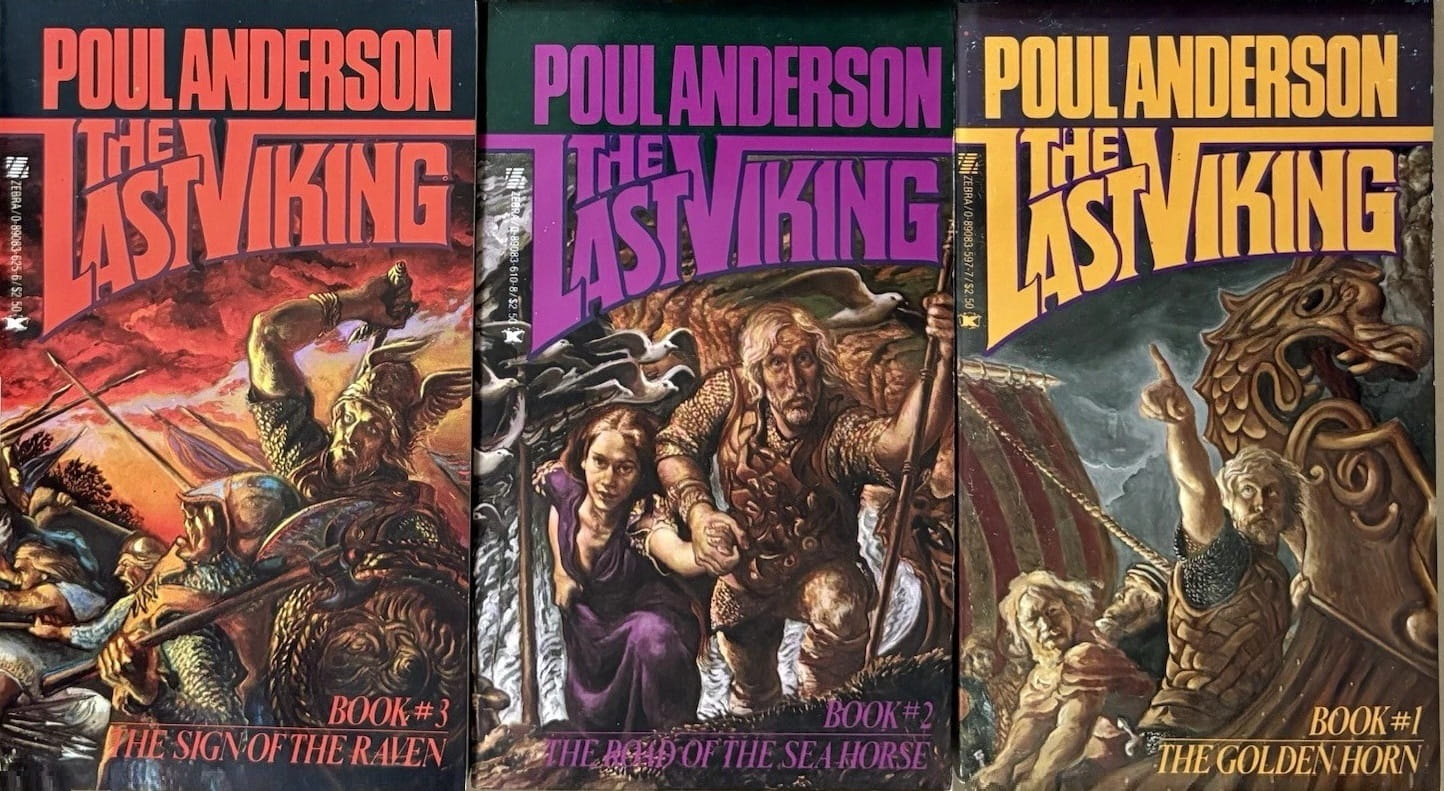
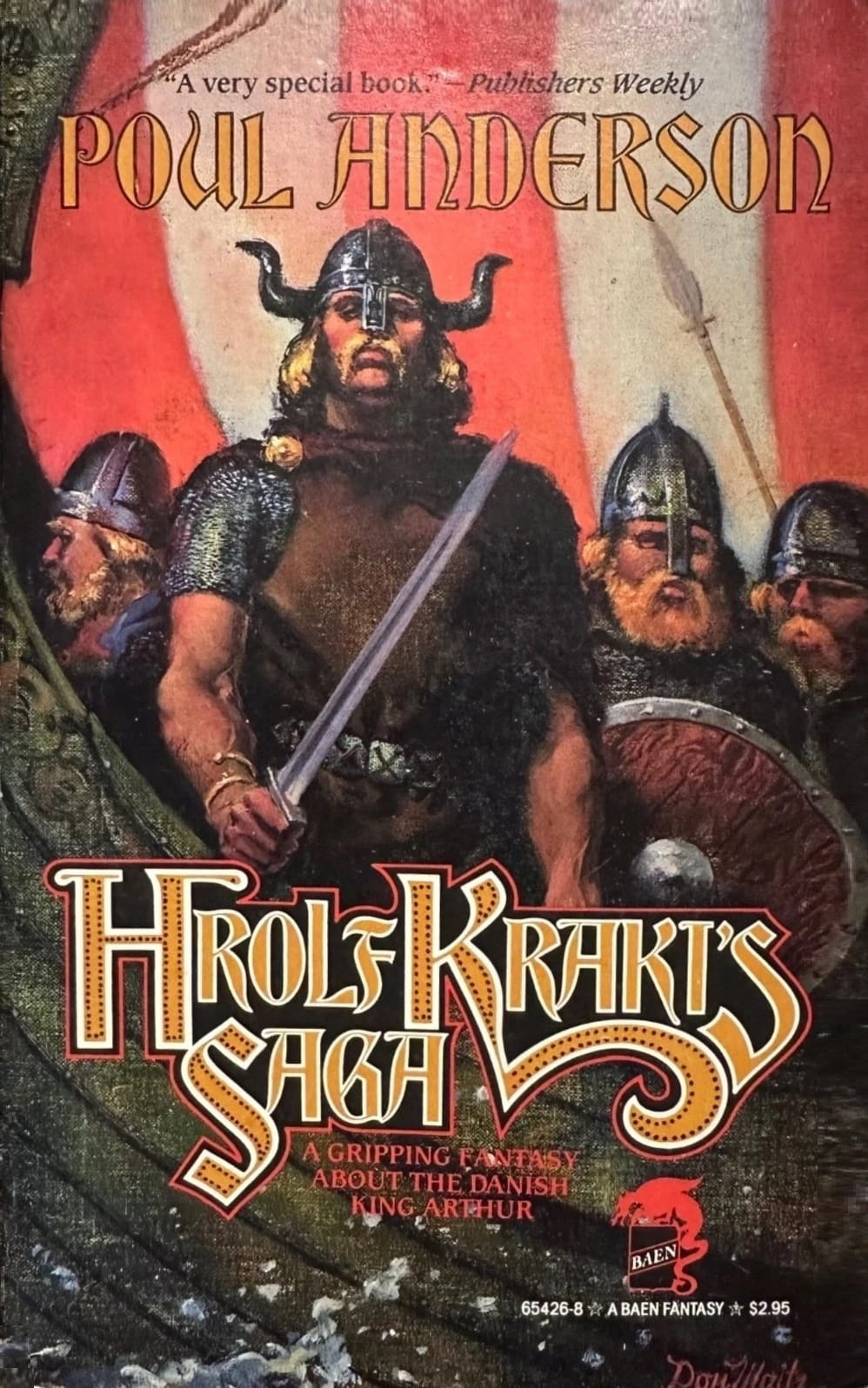
Anderson wrote excellent heroic fantasy and SF with equal ease, although I slightly prefer his fantasy. The series I want to talk about first is his Last Viking trilogy, consisting of The Golden Horn, The Road of the Seahorse, and The Sign of the Raven, all published in 1980 by Zebra. They blur the line between fantasy and heroic historical. The cover artist is uncredited but my best guess is Don Maitz, who did the cover for another Anderson Viking book called Hrolf Kraki’s Saga (see below). I could be wrong; if so, someone will surely tell me.
[Click the images for Viking versions.]
 |
 |
Hrolf Kraki’s Saga (Baen Books, August 1988). Cover by Don Maitz
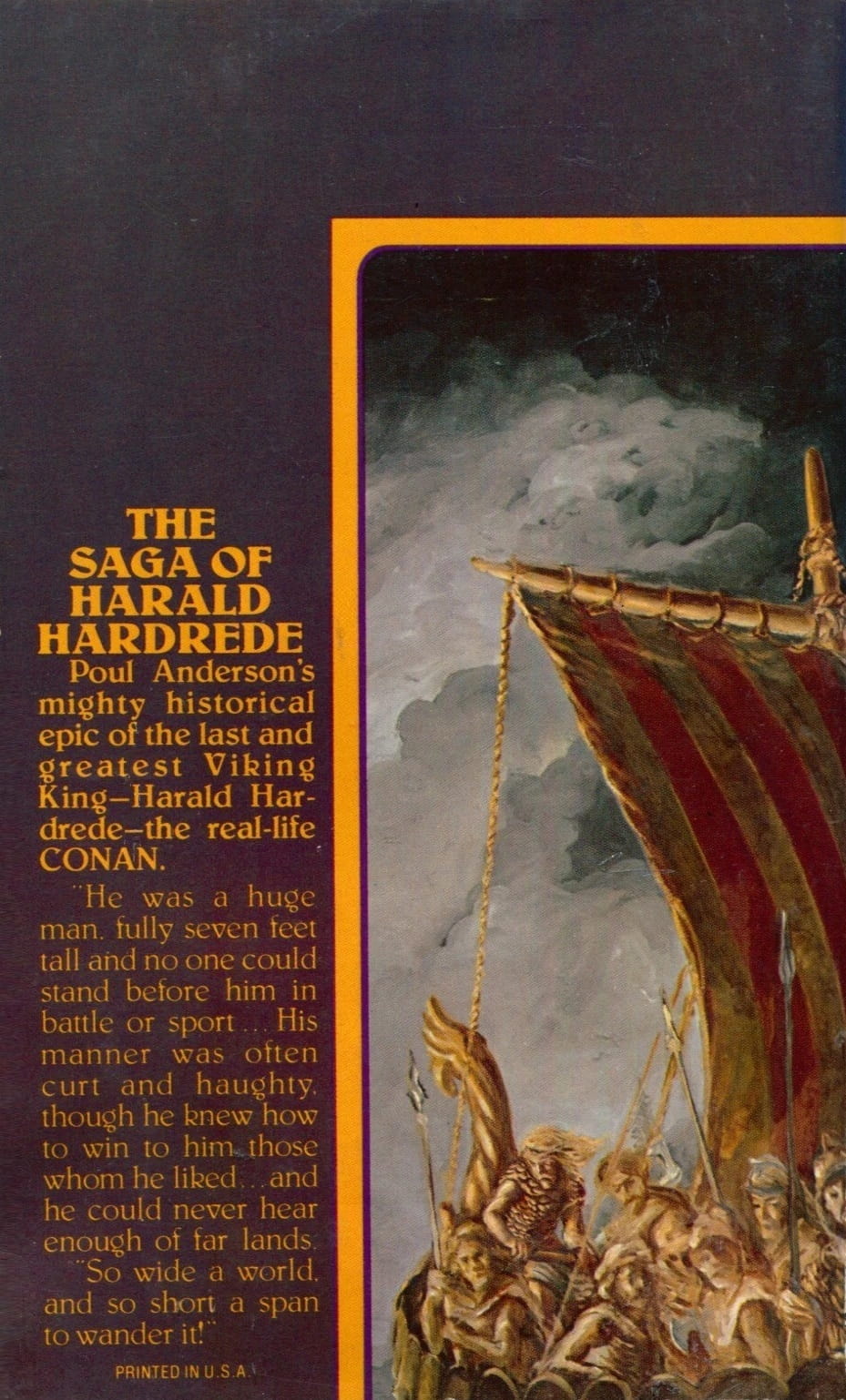
This series tells the story of Harald Sigurdharson, better known as Harald Hardrede, sometimes called “the real-life Conan.” The books are based on as true a history as Anderson could put together from many sources. He admitted taking some liberties but believed the works were very close to a true picture of Hardrede and his times. They often do read more as history than fiction.
Hardrede generally makes a good historical model for Conan. He was born from the blood of Kings, which is certainly different from Conan. And he was never a thief, like Conan. But he was definitely a reaver and a man of great mirth and great melancholies. He was a lover of drink, and of many women — he took two to wife — and he was, quite probably, the greatest warrior of his age.
 |
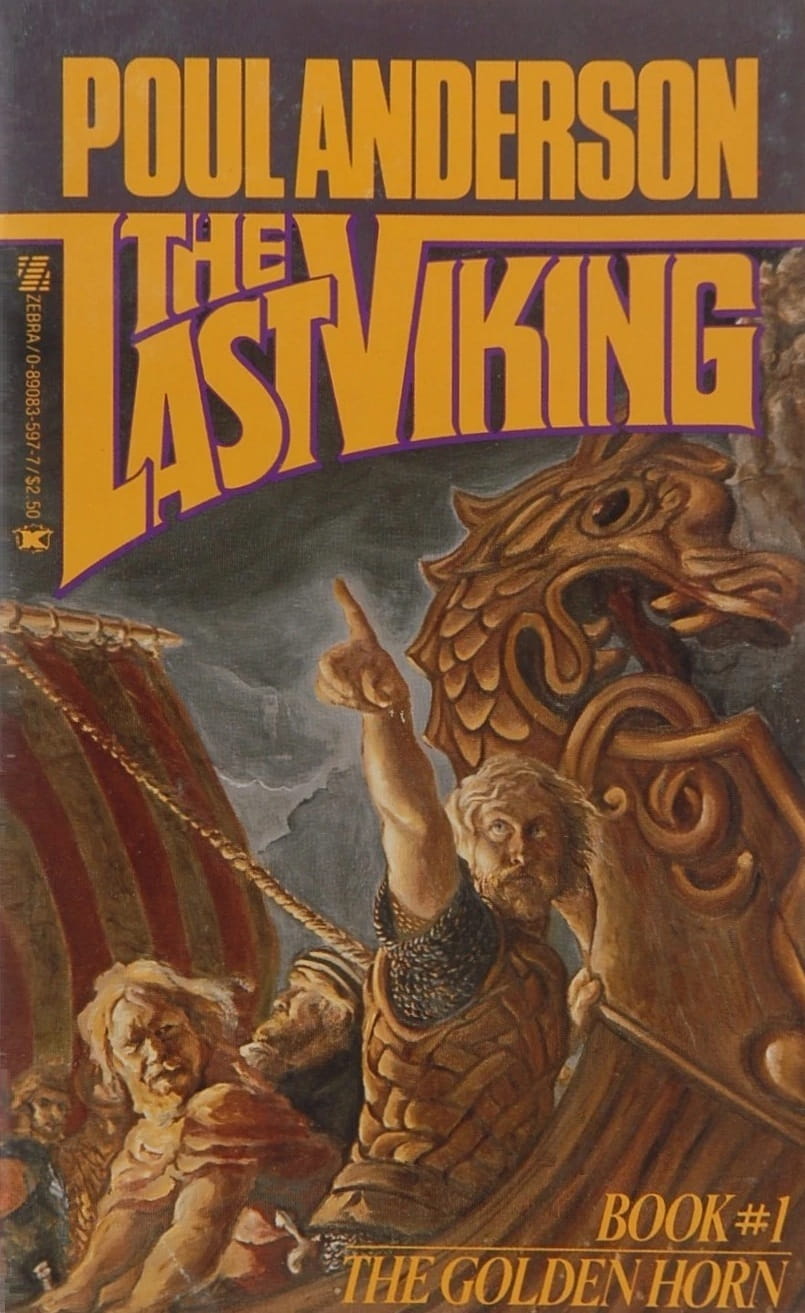 |
The Last Viking: The Golden Horn (Zebra Books, 1980). Cover artist uncredited
He was said to be seven feet tall and he fought with an axe. Even in his fifties he was powerful in battle and always in the forefront. None could top him. In fact, the description of his older days reminds me very much of Conan as King.
In Hardrede’s youth, he was much traveled and quick with languages. Near the age of 15, already as tall as most men, Harald fought in a battle where his King and army were cut to pieces. He was one of the few who lived (sounds like Conan). Afterward, he traveled to Russia where he led men in battle the first time. He went to Constantinople to serve the empire and became chief of the Varangian Guard, made up of fair-haired northern warriors.He made his name and earned much wealth, which he put to good use when he later made himself King of Norway.
 |
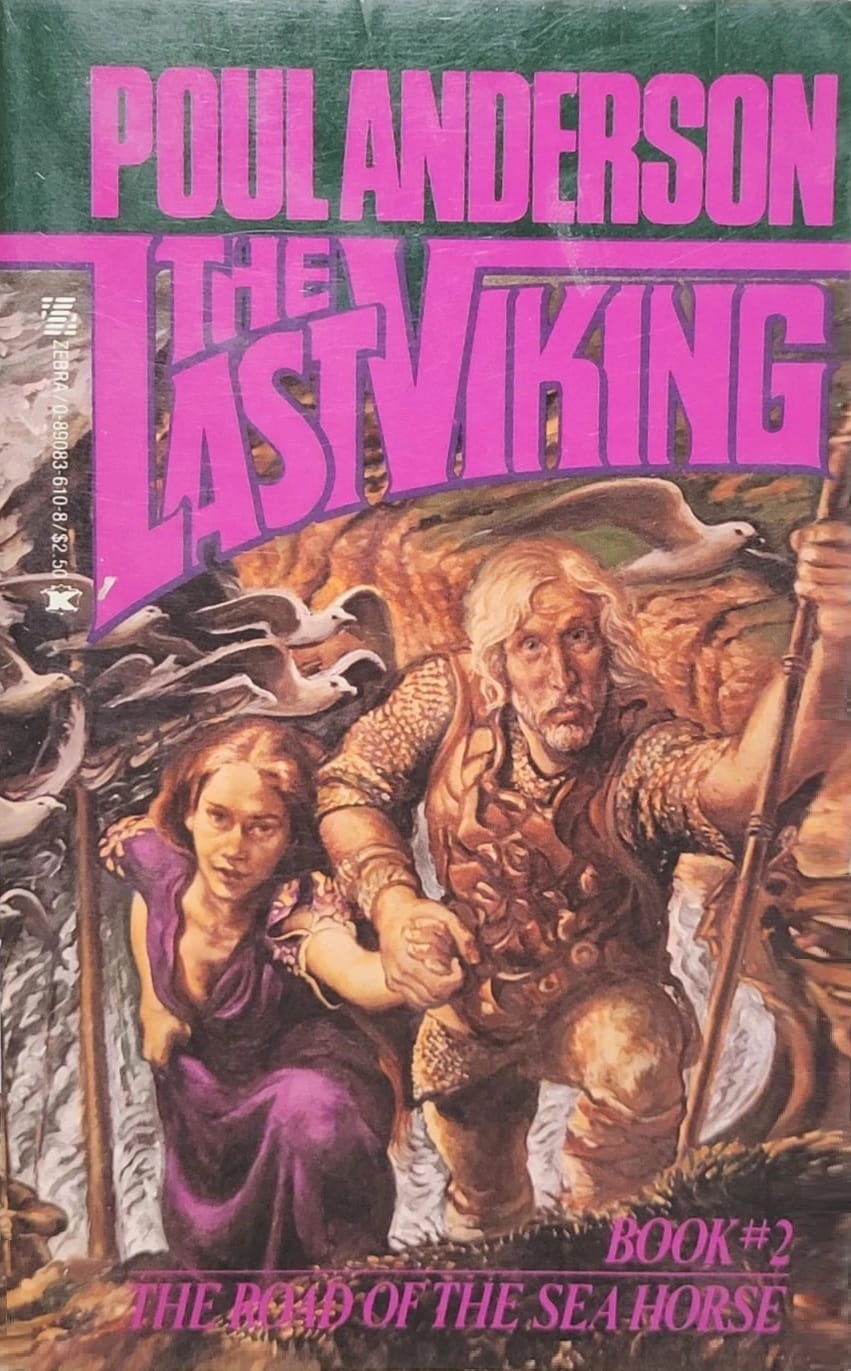 |
The Last Viking: The Road of the Sea Horse (Zebra Books, May 1980). Cover artist uncredited
Hardrede wanted to be King and yet chafed at the restraints of rule — just like Conan as King. Hardrede was ambitious. He dreamed of a northern empire and wanted a place for his sons to rule after him. Yet, he also dreamed simply of exploring, of seeing Vinland, or of finding out what lay over the curve of the world. He even took ships into the arctic, though ice turned him back in the only major defeat he ever suffered. Save his last.
Harald Hardrede died trying to add England to his kingdom. He fell at the battle of Stamford Bridge, warring against overwhelming odds, and this was chronicled in the trilogy’s third volume. Anderson did a great job of “showing” this battle, making you feel the sweat and exhaustion, making you smell the blood and hear the shock of shields on shields and axes against flesh.
 |
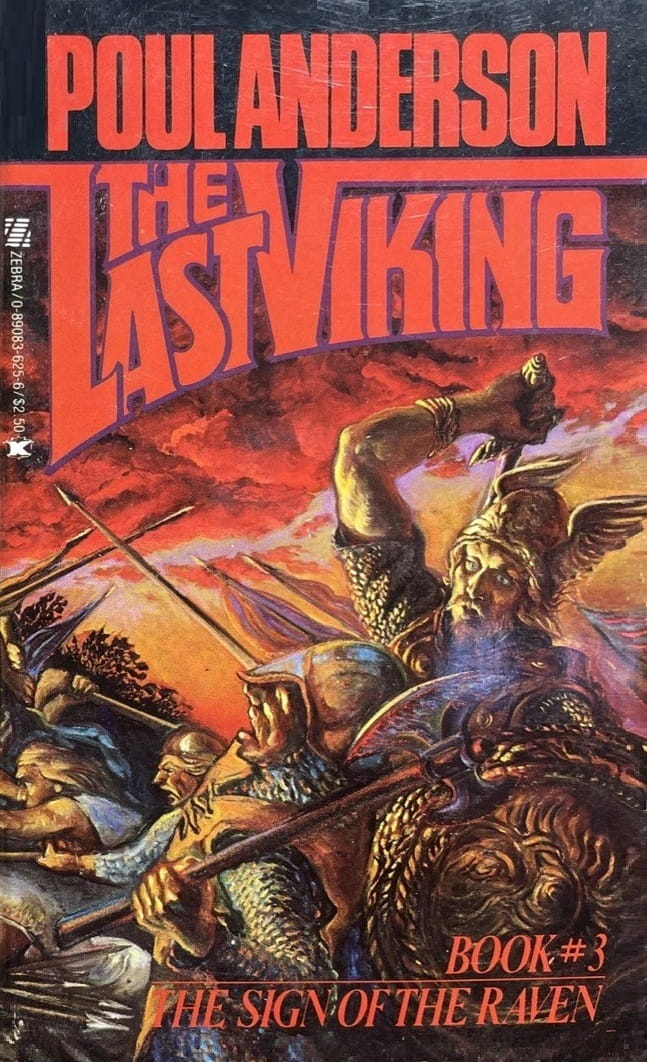 |
The Last Viking: The Sign of the Raven (Zebra Books, June 1980). Cover artist uncredited
I remember when I finished the battle scene, I put the book down and sat quietly for a long time. Hardrede’s standard was a raven banner called Landwaster, and it seemed I could hear the snap of it in the wind behind my head. Though there was no wind in the modern office where I sat.
I tell myself, as an enlightened 21st century man, that war is a nasty and evil thing. That there is no good way to die. I know how desperately I would pray that my son be spared such pain. My rational mind knows that glory is a fleeting thing and not worth its price in pillaged lands and fatherless children, or in trampled fields and dead kin.
 |
 |
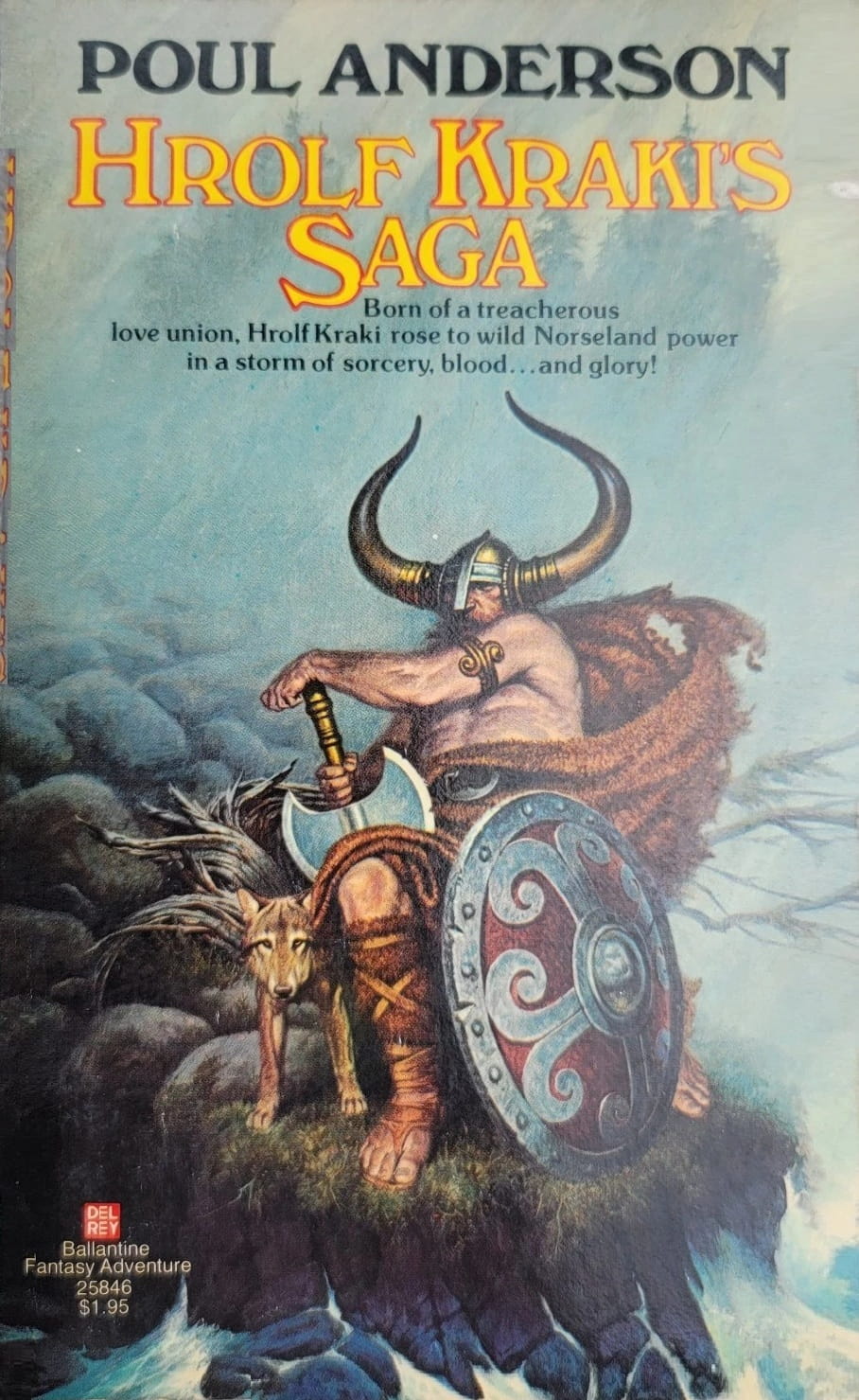
Hrolf Kraki’s Saga (Del Rey/Ballantine, July 1977). Cover by Darrell Sweet
But sometimes there is a thing in my soul that doesn’t quite believe it. I don’t like that in myself. But I can’t deny it.
I close my eyes and think of frost glittering on spears, of streaming light flashing from helmets and mail and the broad hilts of swords. I think of warhorses, of steam bleeding from their nostrils and their eyes wild. I think of the tramping boots of warriors, and the shock of battle lines coming together beneath black and red banners. I see the axes, their edges turned copper with gore, and the sleeting drench of arrows. I can hear the whisper of steel, like tearing silk, and the white din of weapons and armor and hate. And God help me, I think of Harald Hardrede and say: “There was a man.”
The Epic Science Fiction & Fantasy of Poul Anderson continues in:
Part One: The Last Viking trilogy
Part Two: Flandry of Terra and 7 Conquests
Part Three: The Broken Sword, Hrolf Kraki’s Saga, and Conan
Part Four: The High Crusade, Three Hearts and Three Lions, and The Queen of Air and Darkness
Charles Gramlich administers The Swords & Planet League group on Facebook, where this post first appeared. His last article for us was Part Two of The Dark Fantasy of Karl Edward Wagner. See all of his recent posts for Black Gate here.
I really do need to read the Last Viking trilogy.
I did read another book about Harold Hardraada a few years ago — Michael Ennis’ big, fat historical novel Byzantium, although I think that it mostly covered his youth and his time in the Varangian Guard.
I’ve not seen that one about Hardraada
Always happy to see Mr. Anderson getting some nice attention. His collection The Guardians of Time (1960) was one of my first sf books borrowed from the library. And I, too, liked his ability to mix history and myth and legend, along with science fiction, seamlessly. I liked Hrolf Kraki’s Saga, so I should have been all over The Last Viking, but I missed them entirely. Thank you for reminding us, Mr. Gramlich!
I’ve got a bunch of Anderson, and still some that I haven’t read. He was pretty prolific
Having read The Broken Sword (finally!) I am quite keen to try these out. To be honest I was not even aware of some of these books. Will definitely need to remedy thus deficit.
Anderson wrote a LOT.