The Epic Science Fiction & Fantasy of Poul Anderson, Part Four: The High Crusade, Three Hearts and Three Lions, and The Queen of Air and Darkness
 |
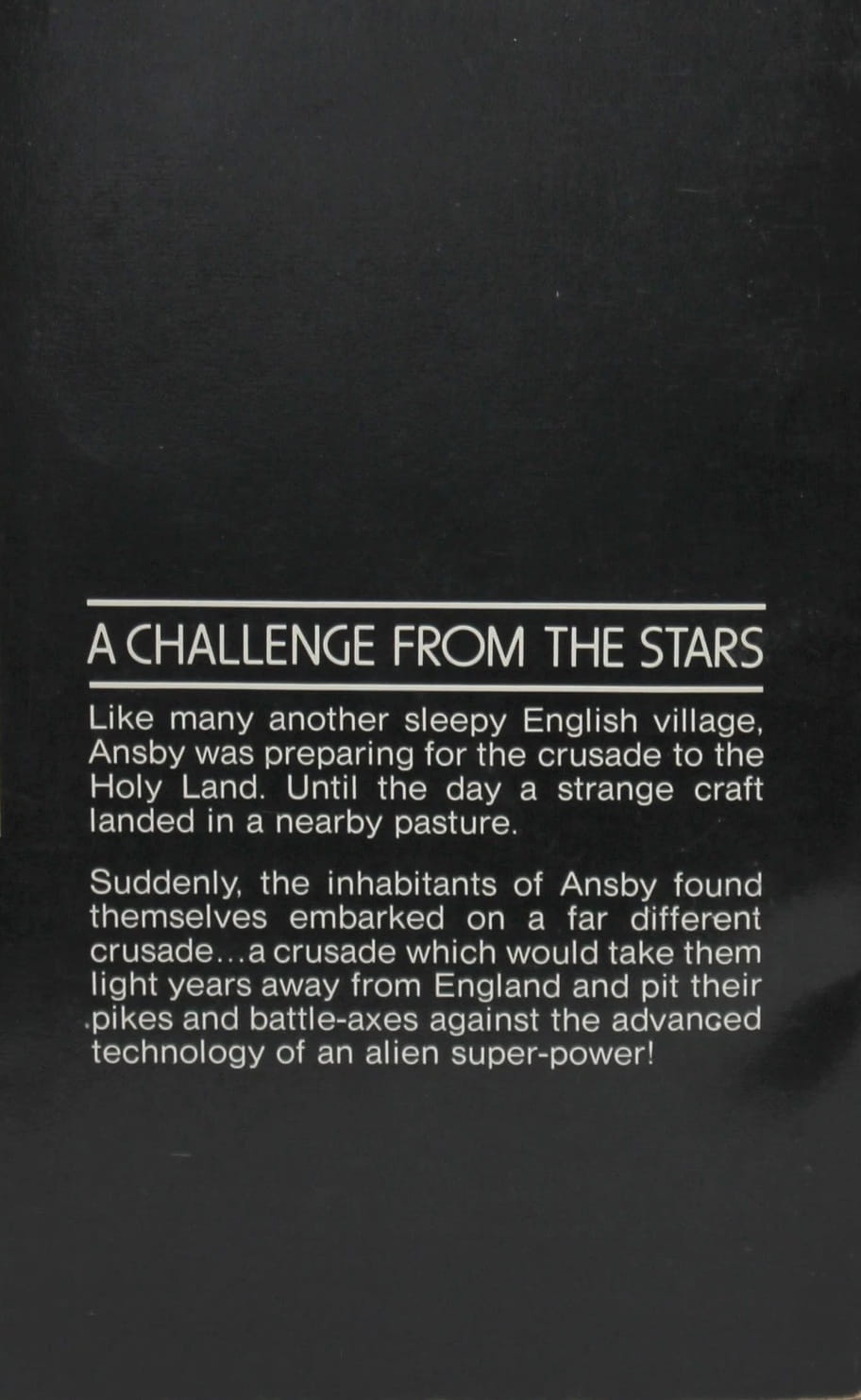 |
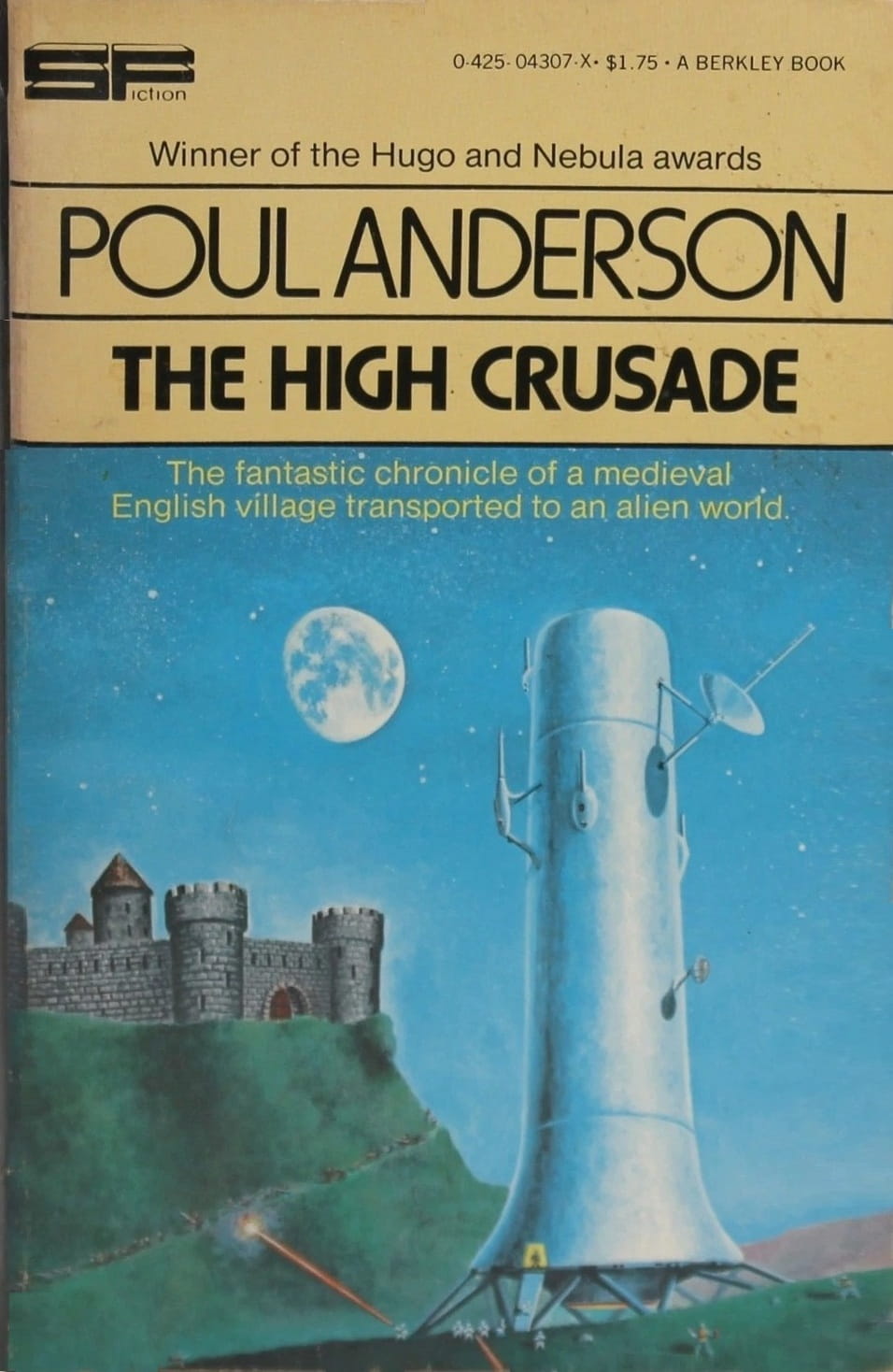
The High Crusade (Berkley Medallion, March 1978). Cover artist unknown
Two other good novels by Anderson are The High Crusade (SF), a humorous look at 14th Century humans getting loose in the universe with a captured spaceship, and Three Hearts and Three Lions (Fantasy), which follows a modern (1950s) Earthman who is cast onto a parallel Earth where fantasy and magic are real.
The High Crusade (Doubleday 1960) was first published in three parts in John Campbell’s Astounding Science Fiction, July – September 1960. It starts when an alien spaceship lands in England in 1345 just as an English army is being formed to fight in France. The ship belongs to the Wersgorix, who have conquered many planets. This time their plans go awry and the English capture the ship. And now they’re about to take the war to the aliens. My copy is Berkley, 1978, with the cover artist uncredited (see above).
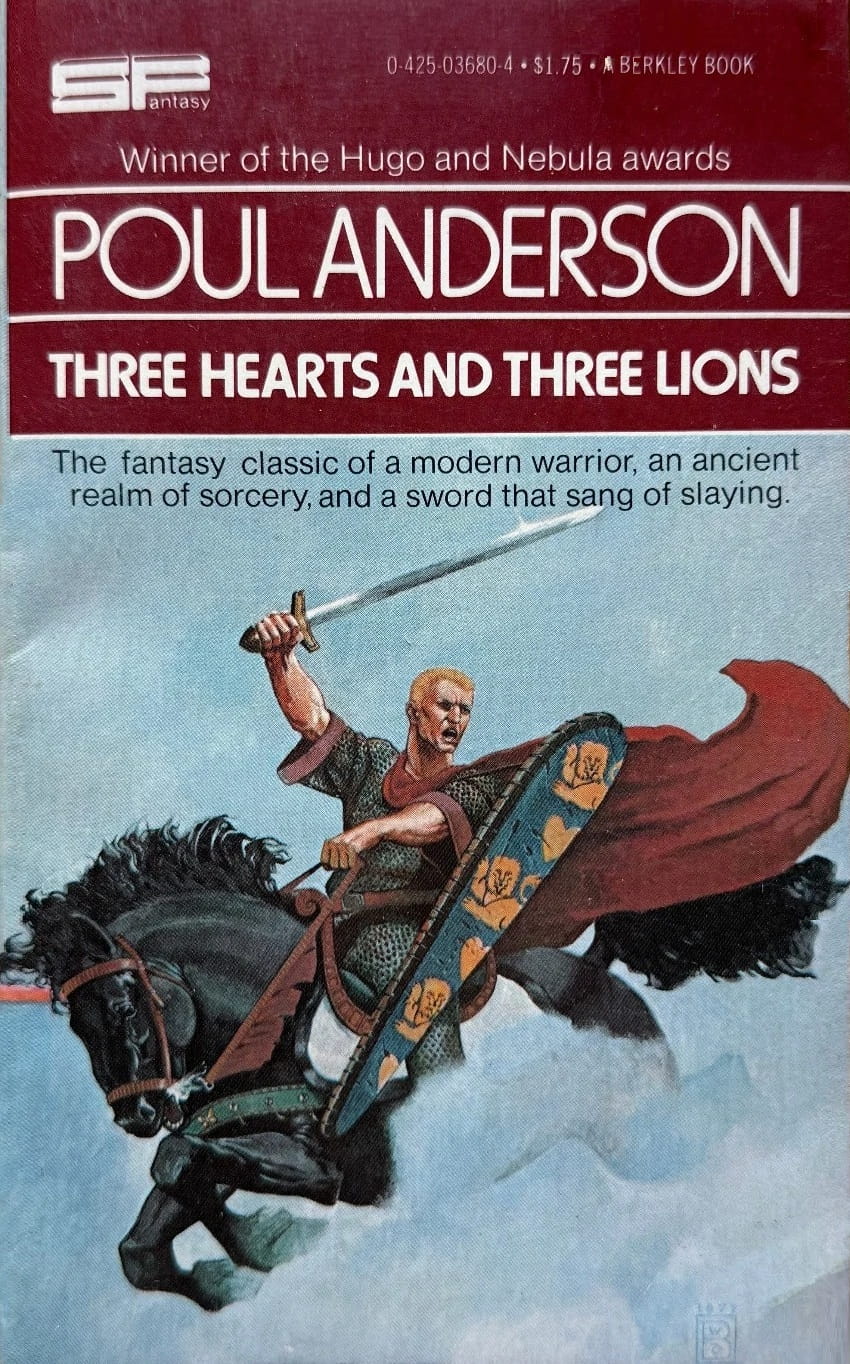
Three Hearts and Three Lions would be categorized as “High Fantasy” and was first published serially in 1953 in The Magazine of Fantasy and Science Fiction. It was published in book form in 1961. My copy is Berkley, 1978 with a cover by Wayne Barlowe (see below, midway down).
[Click the images to crusade for bigger versions.]
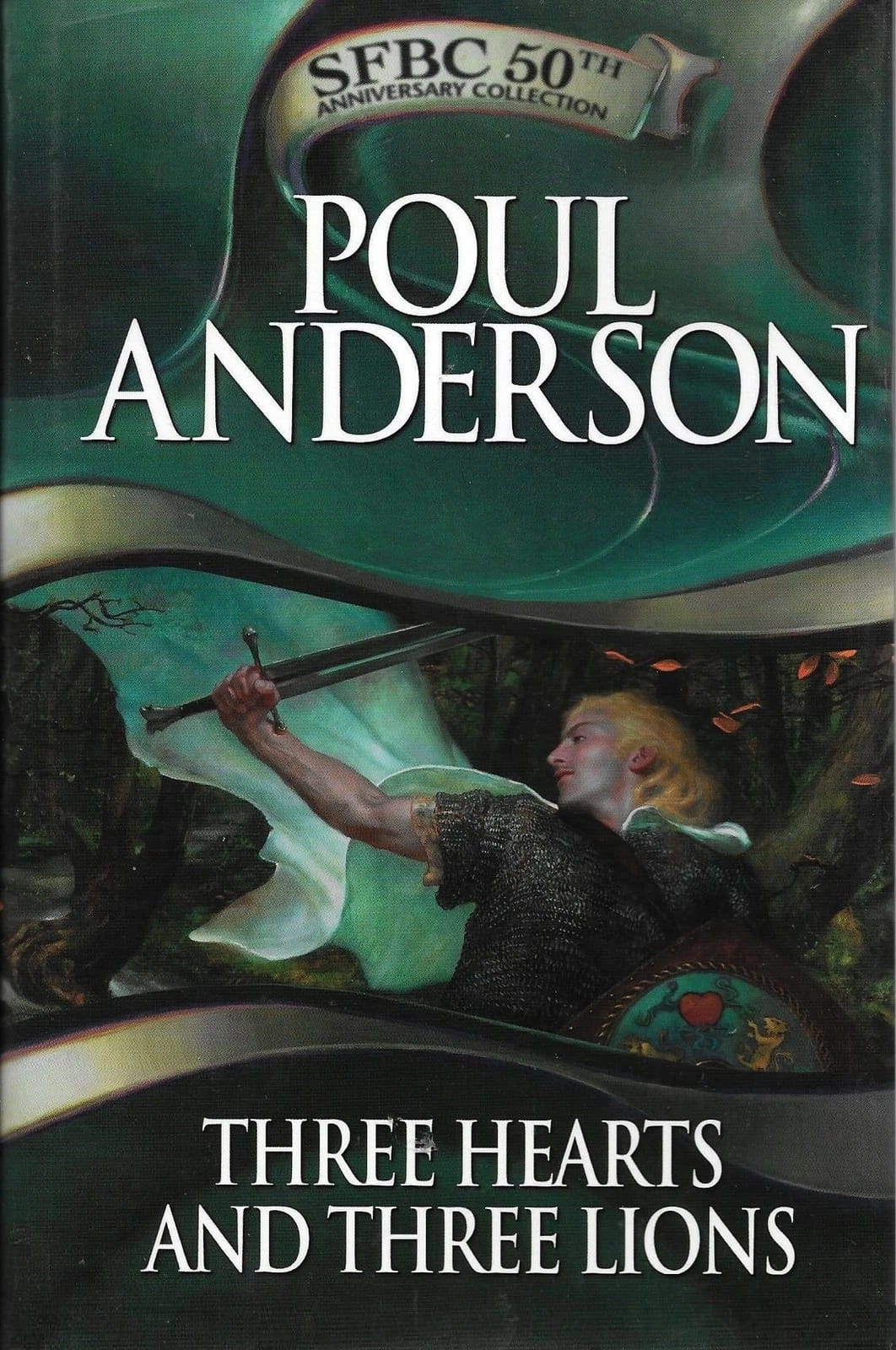
The book opens with an author’s note introducing the protagonist — Holger Carlsen. (As an aside, I was struck by a similarity in the name of our hero here and the main character in A Catcher in the Rye — Holden Caulfield. Catcher was published in 1951 so I wonder if Anderson read that work and perhaps wanted to create a character who was much the opposite of Caulfield. Or maybe it’s just a coincidence.)
Anyway, in the author’s note, Holger Carlsen is described as “gigantic” with “yellow hair” and “blue eyes.” He was abandoned as a child in Denmark and returned to Denmark in 1941 to join the anti-Nazi resistance. He is shot and knocked unconscious in a battle.
The story then switches to Carlsen’s point of view. He awakens on a parallel Earth, in an undefined medieval period after 814 A. D. Nearby is a warhorse carrying weapons and clothing of medieval style. Carlsen meets a witch named Mother Gerd, who tells him he must enter the land of Faerie to find Duke Alfric, an elf. She offers him a dwarf named Hugi as guide. Many adventures follow.
 |
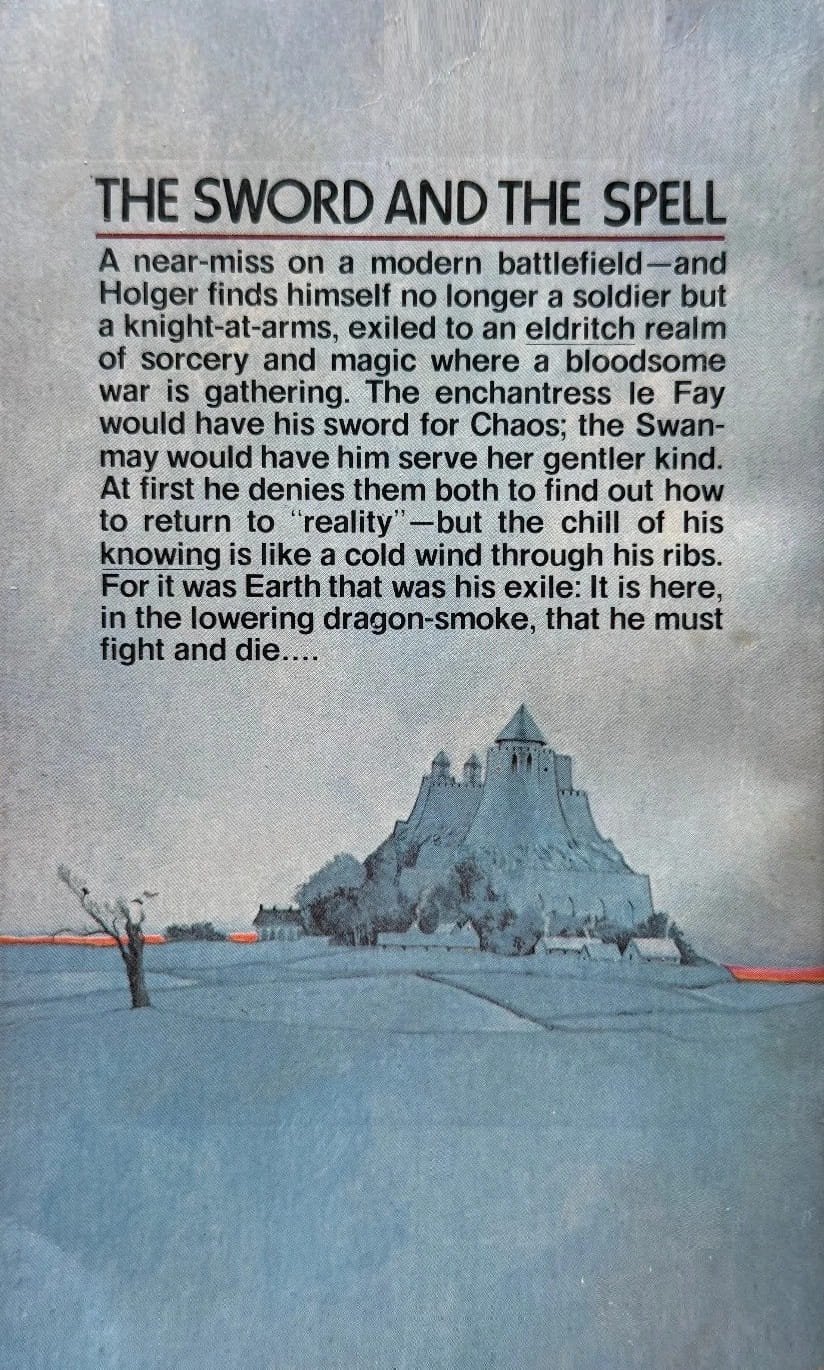 |
Three Hearts and Three Lions (Berkley Medallion, April 1978). Cover by Wayne Barlowe
Conceptually, Three Hearts and Three Lions is similar to The Broken Sword. Both feature the land of Faerie and its elves, sprites, and other supernatural beings. Each is set within the 9th century A.D., and each uses Northern European myths as background. The plots are simple and linear. The Broken Sword pays more attention to the land and people of Faerie. It features a full-scale war within Faerie, between elves on the sympathetic side and trolls on the chaotic side. In Three Hearts and Three Lions, most Faerie folk side with Chaos against Law and humans, and the war is fought offstage.
Three Hearts and Three Lions and The Broken Sword illustrate Anderson’s deep understanding and appreciation of Northern European myth. Anderson later revisited the same themes in such works as Hrolf Kraki’s Saga (1973), and his Last Viking series (The Golden Horn, 1980, The Road of the Seahorse, 1980, and The Sign of the Raven, 1980), and in 1997’s War of the Gods. Similar mythic concepts and stylistic structures appear in all the later books, and Holger Carlsen is much like the Viking warriors of Anderson’s other fantasies.
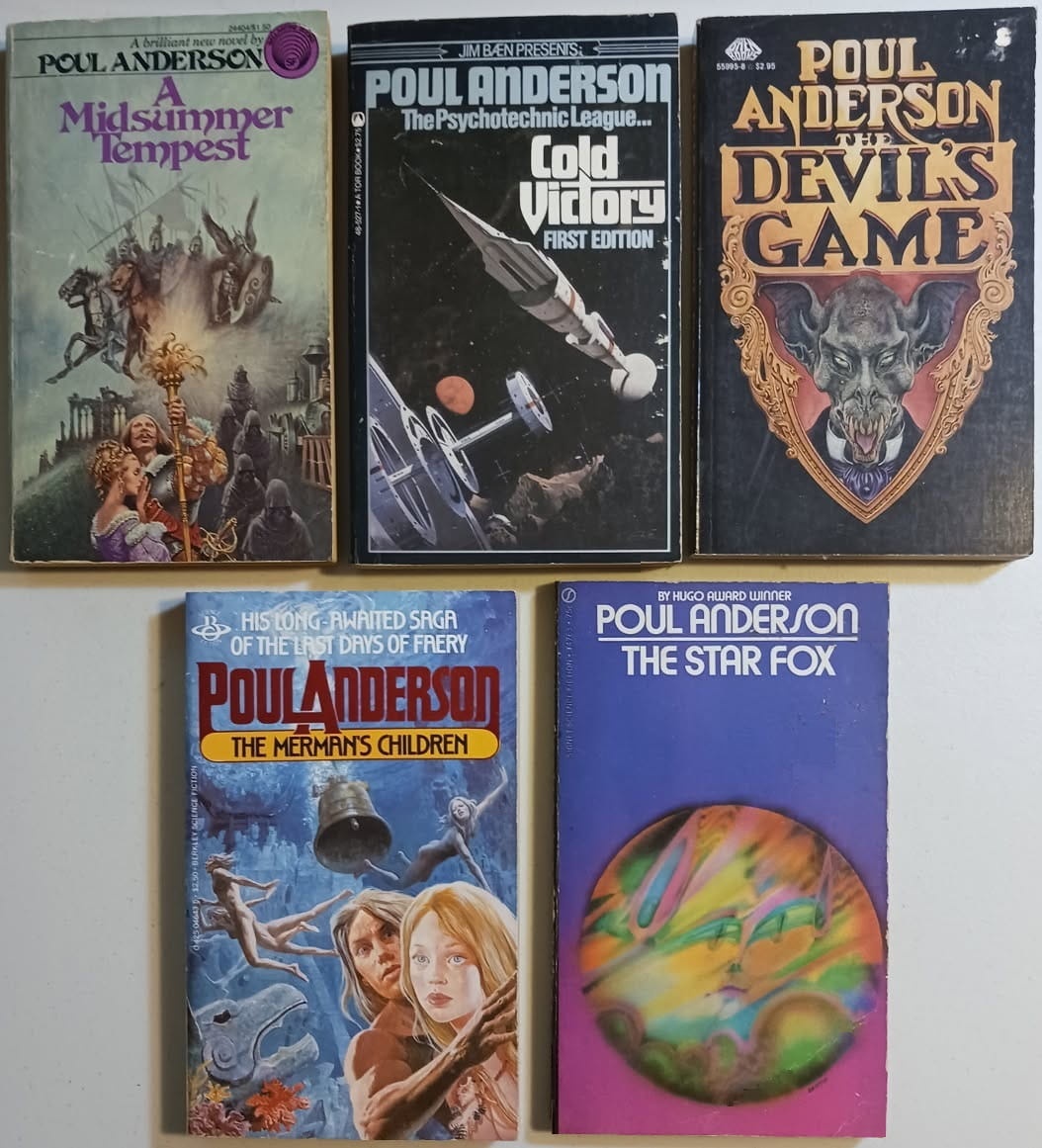
Bonus picture above: The last unread Anderson paperbacks I have.
I have plenty more I could talk about Poul Anderson, but this will be my last post for now. I’ll be back to him in the future with more stories and book covers. But I want to mention some of his short fiction, which I often like better even than his novels. There are quite a few collections but here are two of my favorites.
 |
 |
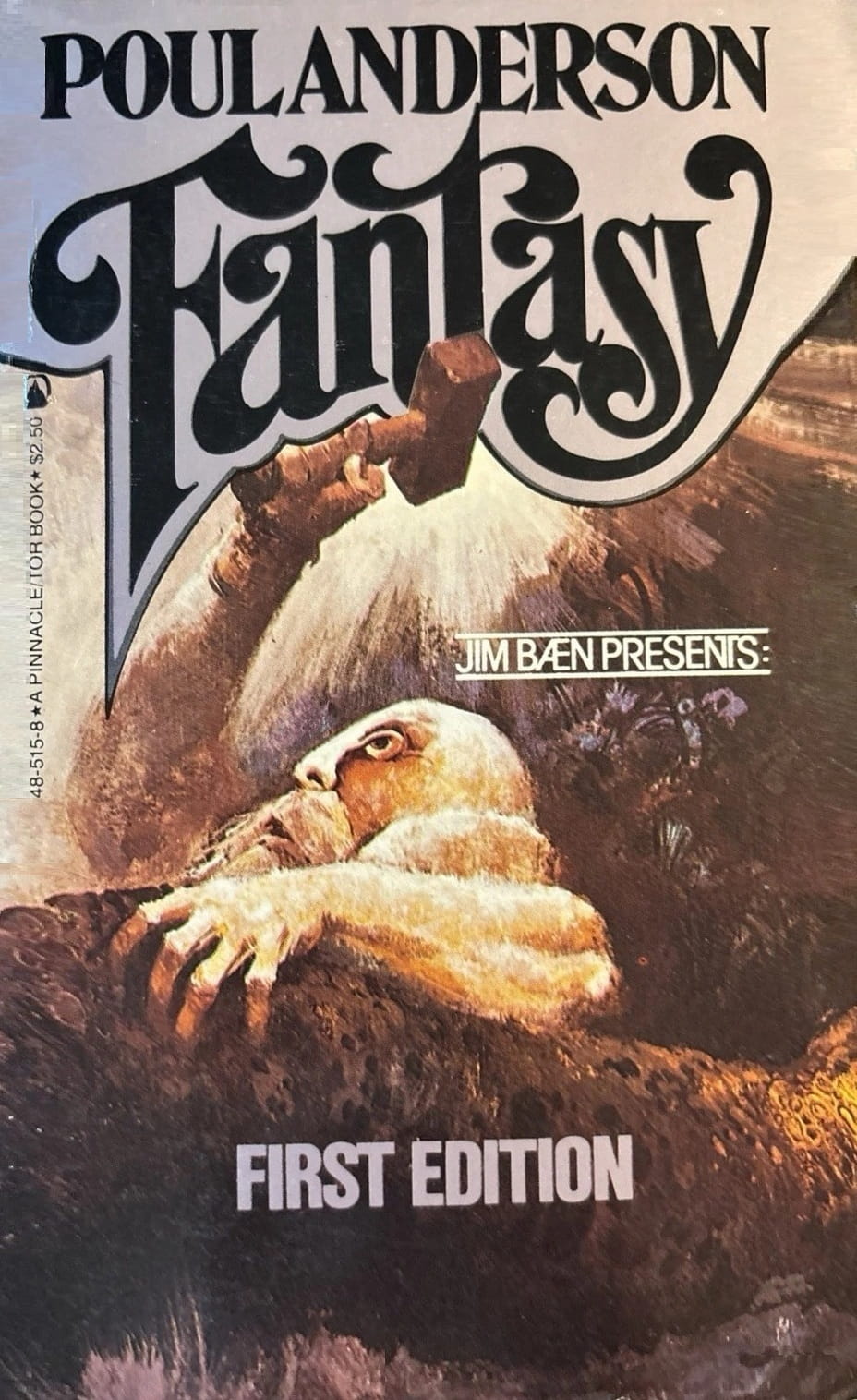
Fantasy (Tor, September 1981). Cover artist unknown
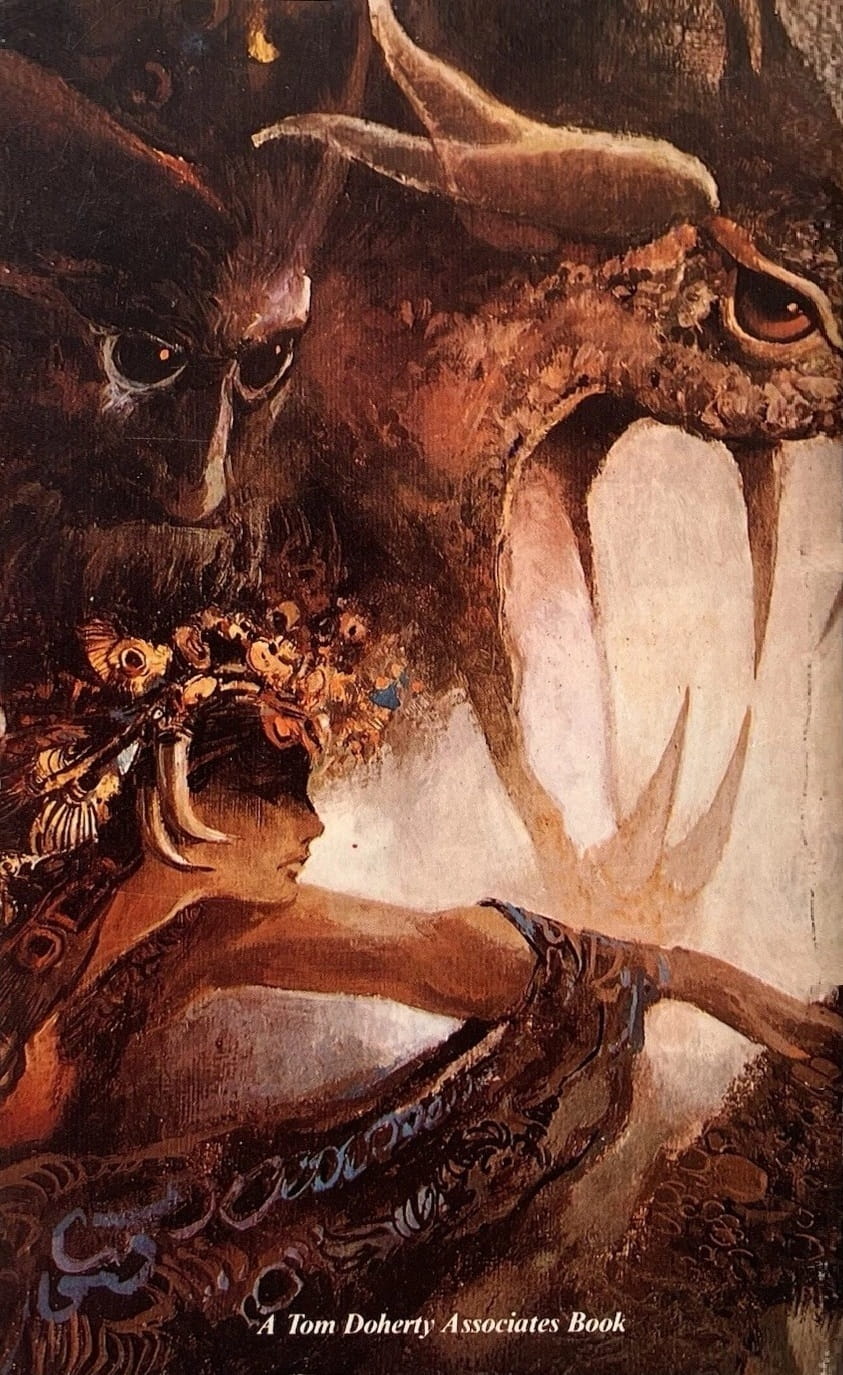
Fantasy (Tor, 1981, first edition; The cover is pretty cool, particularly the back portion; amazingly, the cover artist is unknown). This is an excellent collection of Anderson’s short fiction, with some non-fiction essays as bonus.
Among the strongest stories are “A Logical Conclusion,” which is interplanetary adventure (read Sword & Planet) at its best, “Superstition,” which is about a future governed by “scientific” magic — one of the more memorable tales I’ve read, and “Interloper,” about someone surprising who saves Earth. The last story has a character named “Kane” in it.
The book contains the excellent, and somewhat famous, essay “On Thud and Blunder,” a succinct lesson any would-be fantasy writer ought to read. There is also Anderson’s contribution to the Conan parody genre with “The Barbarian.” It features “Cronkheit.” I found it considerable funnier than most such tales, but still not that good in comparison to Anderson’s serious work. This collection is apparently hard to find.
 |
 |
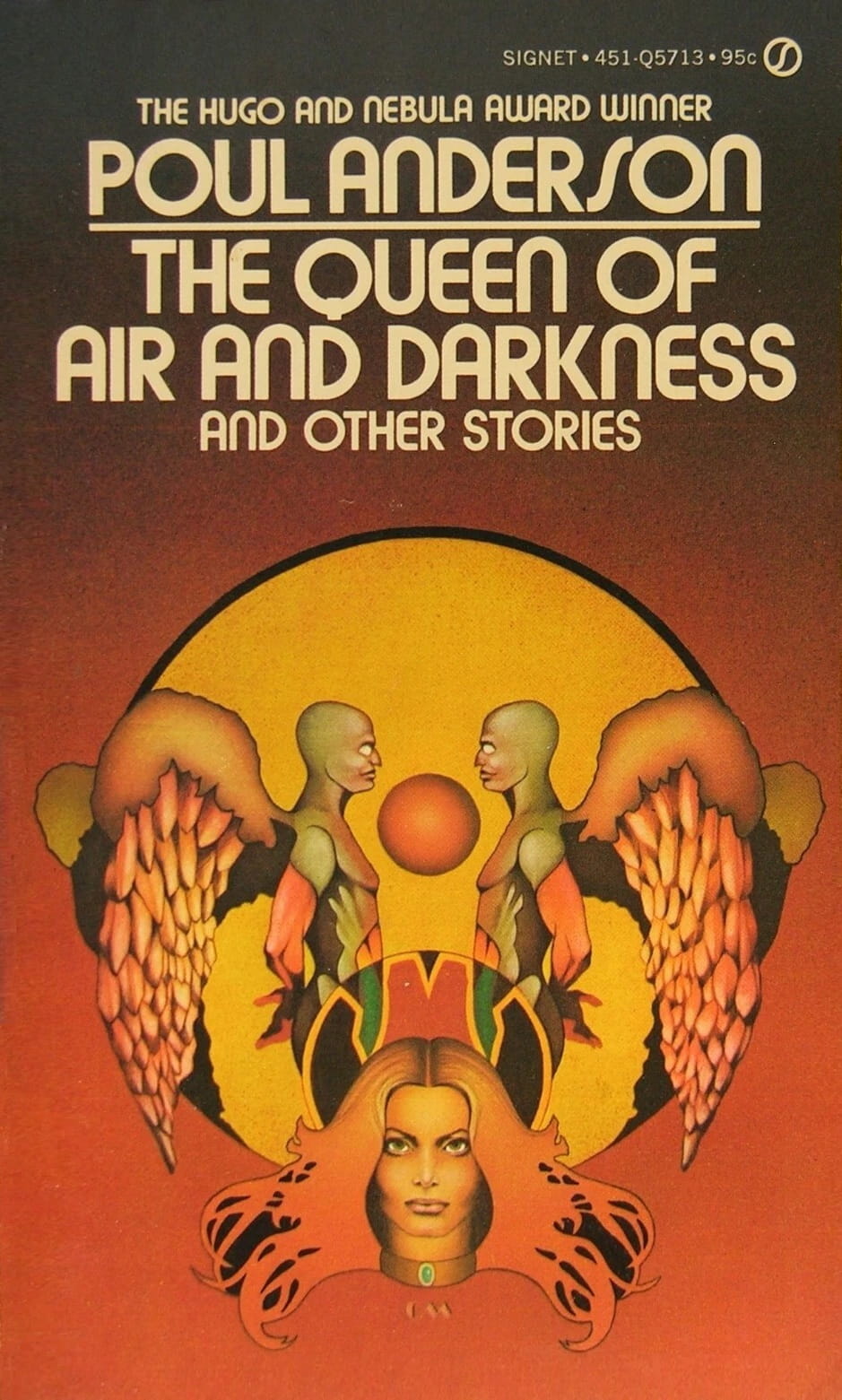
The Queen of Air and Darkness (Signet, December 1973). Cover by Charles Moll
Another great collection of Anderson’s short fiction is The Queen of Air and Darkness (Signet, 1973, cover by Charles Moll). The title story is one of my all time favorite Anderson tales and has made my personal short list of the best all time SF/Fantasy stories. It’s only partially SF story, and far more fantasy, and is tremendous both in style and in content/plot.
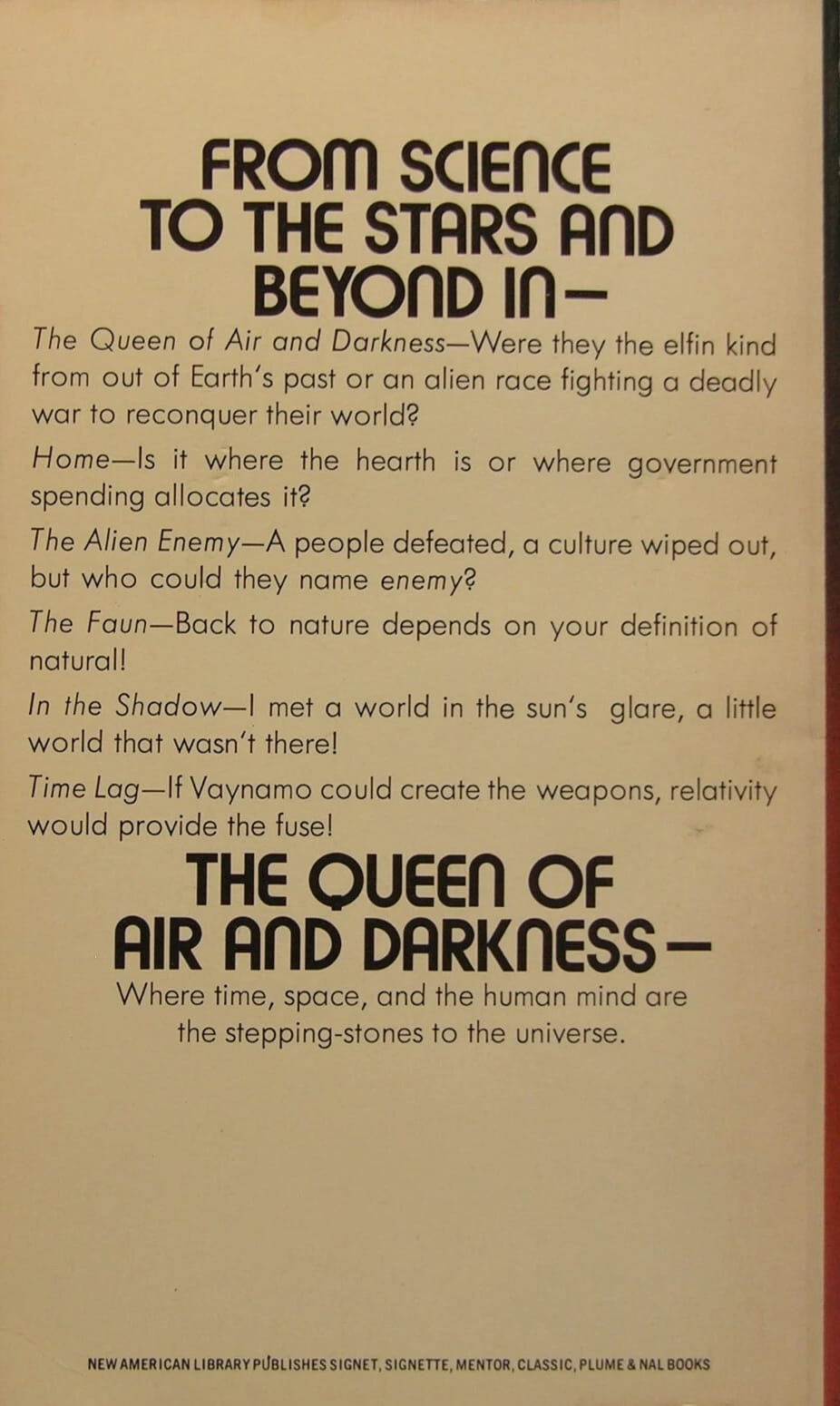
Of the other five stories in the book, only “The Faun” seems rather slight, though I did enjoy it. The rest of the stories are good, but not nearly as powerful as the title tale.
 |
 |
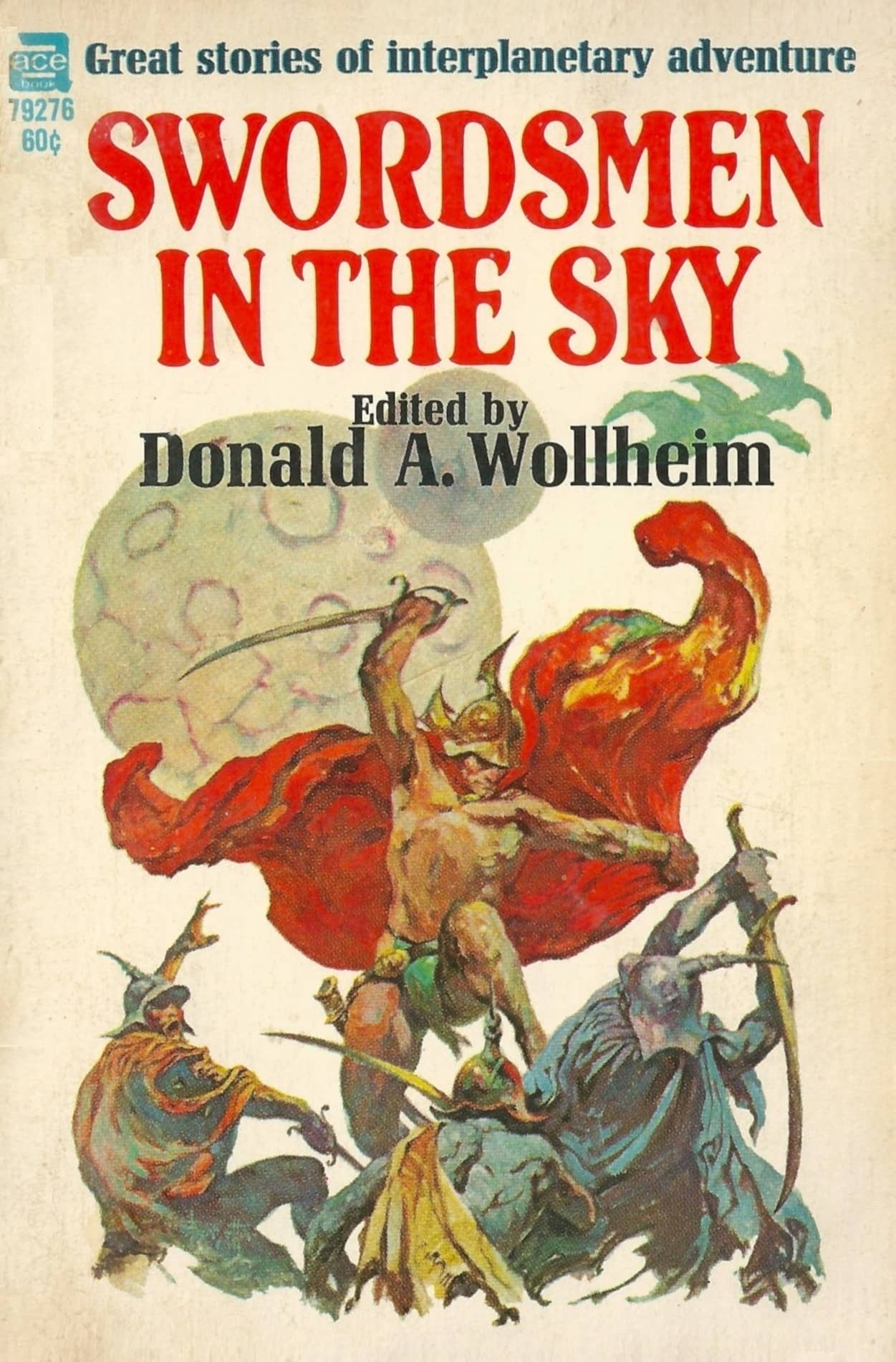
Swordsmen in the Sky (Ace, 1964). Cover by Frank Frazetta
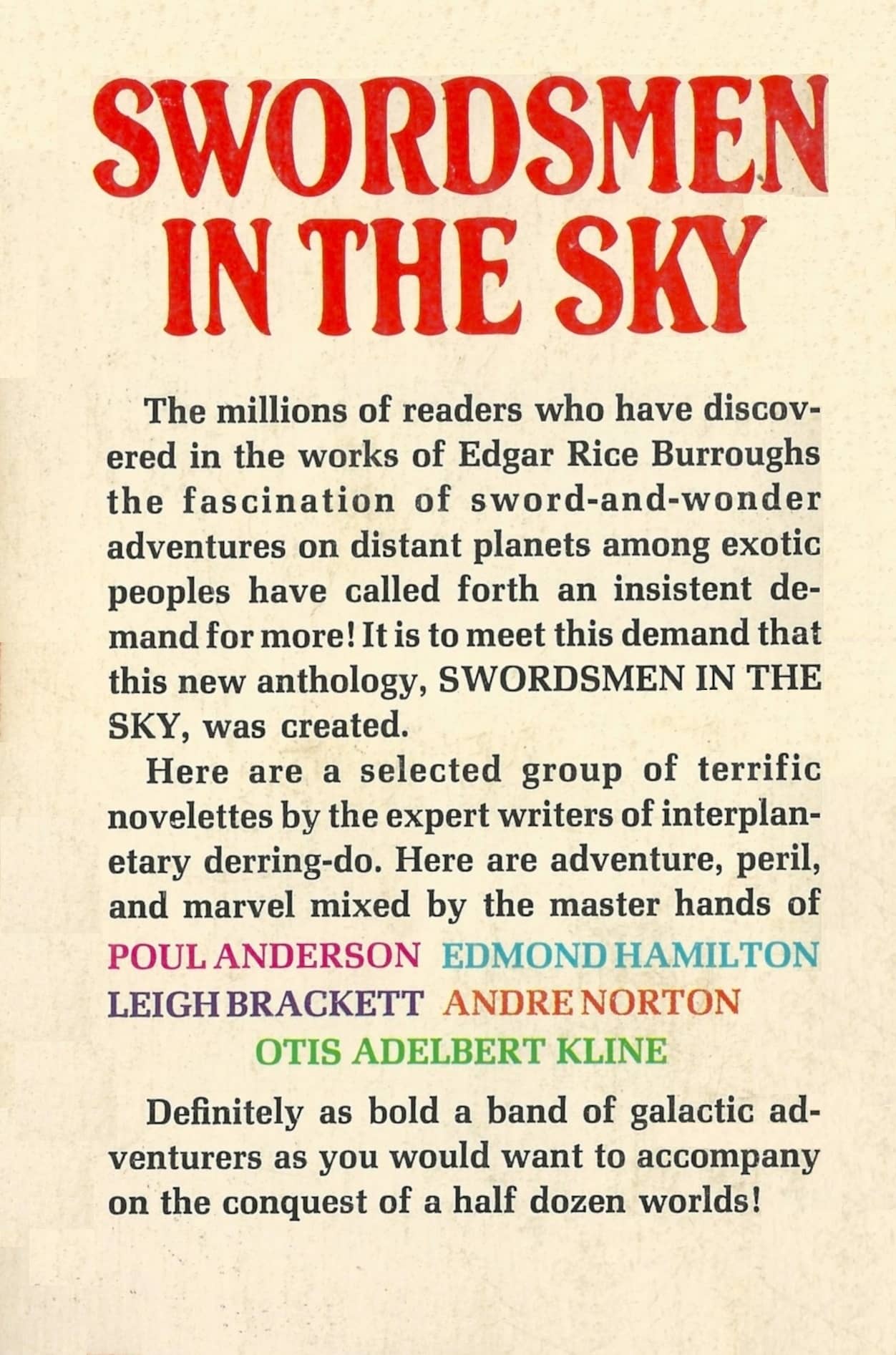
This said, however, my absolute favorite piece by Anderson is a longish short story called “Swordsman of Lost Terra,” the first story in a wonderful anthology called Swordsmen in the Sky, which I talked about in Part Two of this article. This was the first tale I found by Anderson, and it fired my imagination like nothing I’d read before.
That whole anthology is memorable, though, and probably significantly to blame for making me want to be a writer. This book is fairly rare but you can find reasonable copies for sale on Amazon. If you haven’t read it, I’d urge you to give it a try. Cover by Frazetta.
 |
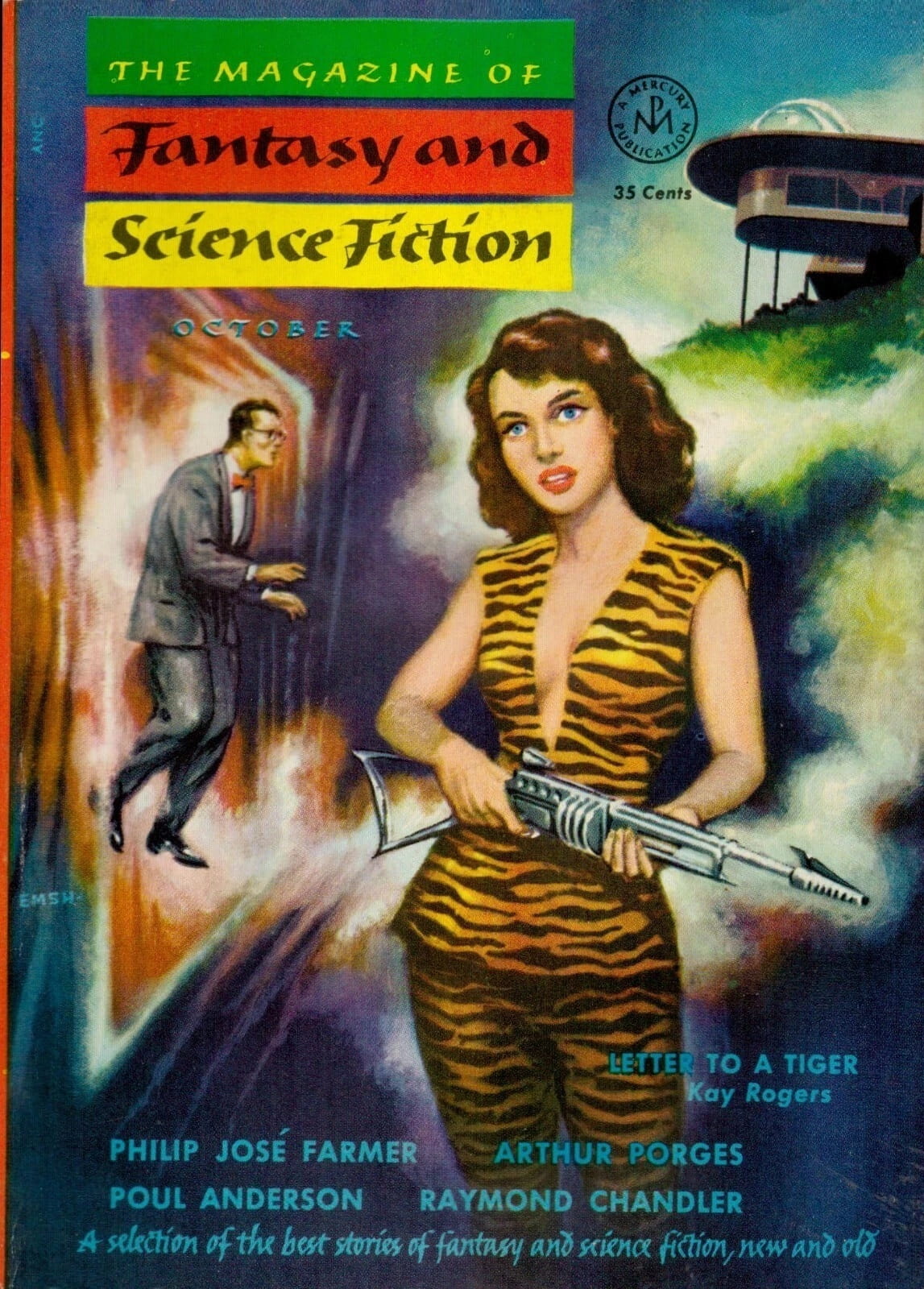 |
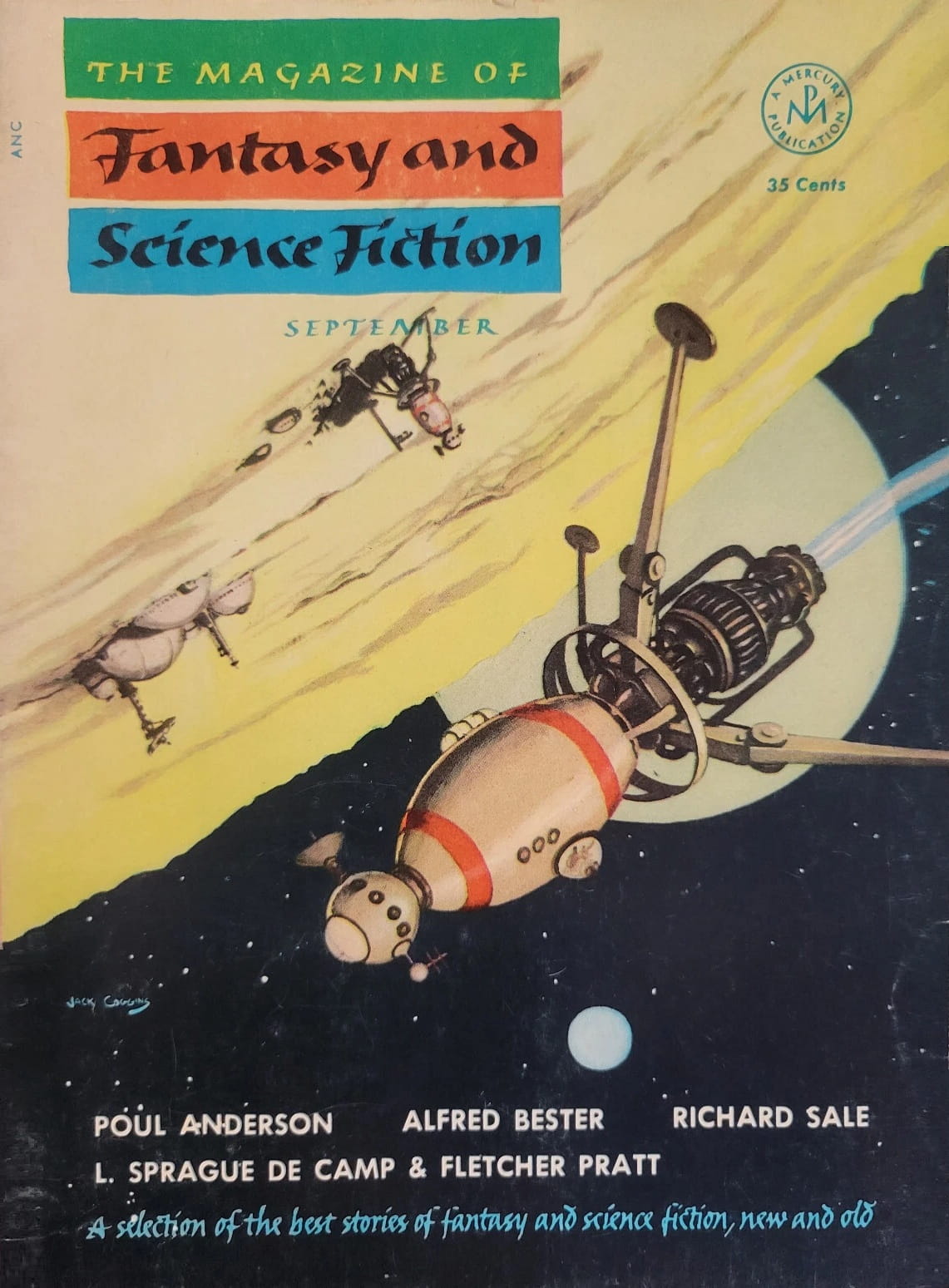
The Magazine of Fantasy & Science Fiction, September & October 1953, containing
the serialized version of Three Hearts & Three Lions. Covers by Jack Coggins and Emsh
The Epic Science Fiction & Fantasy of Poul Anderson continues in:
Part One: The Last Viking trilogy
Part Two: Flandry of Terra and 7 Conquests
Part Three: The Broken Sword, Hrolf Kraki’s Saga, and Conan
Part Four: The High Crusade, Three Hearts and Three Lions, and The Queen of Air and Darkness
Charles Gramlich administers The Swords & Planet League group on Facebook, where this post first appeared. His last article for us was Part Three of The Epic Science Fiction & Fantasy of Poul Anderson. See all of his recent posts for Black Gate here.
If memory serves me correctly (pretty much a coin flip these days) Three Hearts and Three Lions was a favorite of Michael Moorcock, and influenced the Law vs. Chaos elements in his own Eternal Champion books.
I’ve heard that as well.
It strikes me that the world might be a better place if more people read about Holger Carlson than Holden Caulfield.
Why not a mash-up? My most cherished secret wish is that someone would write a Robert E. Howard story in the style of Henry James, and a Henry James story in the style of Robert E. Howard.
Wow, that gives me some ideas
absolutely
In Wizardry and Wild Romance, Moorcock briefly mentions Three Hearts and Three Lions but gives a lot more weight to The Broken Sword by Anderson, sang that it “remains my favorite book in the genre and he one from which I derived considerable inspiration for my own early stories.” He may have talked more about 3 hearts elsewhere, of course.
I’ve enjoyed your articles on Poul Anderson, thanks Charles. I read both “Three Hearts and Three Lions” and “The High Crusade” in the early ’80s and enjoyed them both. Although I must admit, I don’t recall much of the stories. I recently read “The Time Mercenaries” (1968) by Philip High where the crew of a WWII submarine are brought out of deep freeze to defend a world against attacking aliens. It was one of those stories about a resourceful under-gunned group taking on a technologically superior opponent. Reminded me of “The High Crusade”, Niven’s Man-Kzin war stories and Saberhagen’s Berserker stories. All enjoyable. Thanks again for the great article and all the photos of books from “back in the day.”
I remember High crusade more fondly as I’ve aged than when I first read it. I should give it a reread.
Oh… no… oh, no… please tell me that someone else reads “Wersgorix” and flashes to Goscinny and Uderzo’s work. The first “Asterix the Gaul” was published in 1961, so perhaps the English regionalization specialists had recently read “The High Crusade” and so been influenced.
I’m afraid I didn’t make that connection.
Unsurprising, since it’s very “what if” and apropos of nothing else to do with Poul Anderson. Just the first thing that popped to mind at your description of “The High Crusade.”
Thumbs up
Those unread paperbacks … I haven’t read three of them either, but as for the others, A Midsummer Tempest is one of Anderson’s best (and even reprises Holger Carlson as a bit character), while The Merman’s Children is a perfectly respectable fantasy, somewhat melancholy and not at the top, but not bad, either.
These days I only read about one of my remaining Anderson’s a year but it’s about time I get to one. Perhaps “tempest.”
As far as my unread Poul Anderson, I’ve only got 2: “Mirkheim” and “After Doomsday” – the 1961 Ballantine Books cover is worth the price of admission.
I have read Mirkheim. Hard SF.