What’s For Dinner? The Library at Hellebore by Cassandra Khaw

I’ve lost count of novels that involve some sort of magical college featuring adolescent misfits plucked from humdrum daily existence thrust into contests between good and evil, not to mention raging hormones.
Blame Harry Potter, though Rowling was building on the trope, not inventing it (c.f., in particular, A Wizard of Earthsea). She just got wildly successful with it. So why shouldn’t others also build on that success?
Granted there is nothing new under the sun; no one is irked that Maggie O’Farrell did yet another riff on a Shakespeare play with Hamnet. Even so, not to knock the whole dark academia thing, I can understand how some might sneer at yet another mystical schoolyard fantasy.
Sure, some are tapping into a built-in audience without trying to rise much above the hackneyed (c.f., example, Starfleet Academy, despite the presence of Paul Giamatti and Holly Hunter, though you could probably say the same about most of the Star Trek spinoffs, The Next Generation and Strange New Worlds notwithstanding). Most others expand the form (c.f., the aforementioned Hamnet).
Which brings us to The Library of Hellebore by Cassandra Khaw. A sort of middle finger to the whole Harry Potter universe.
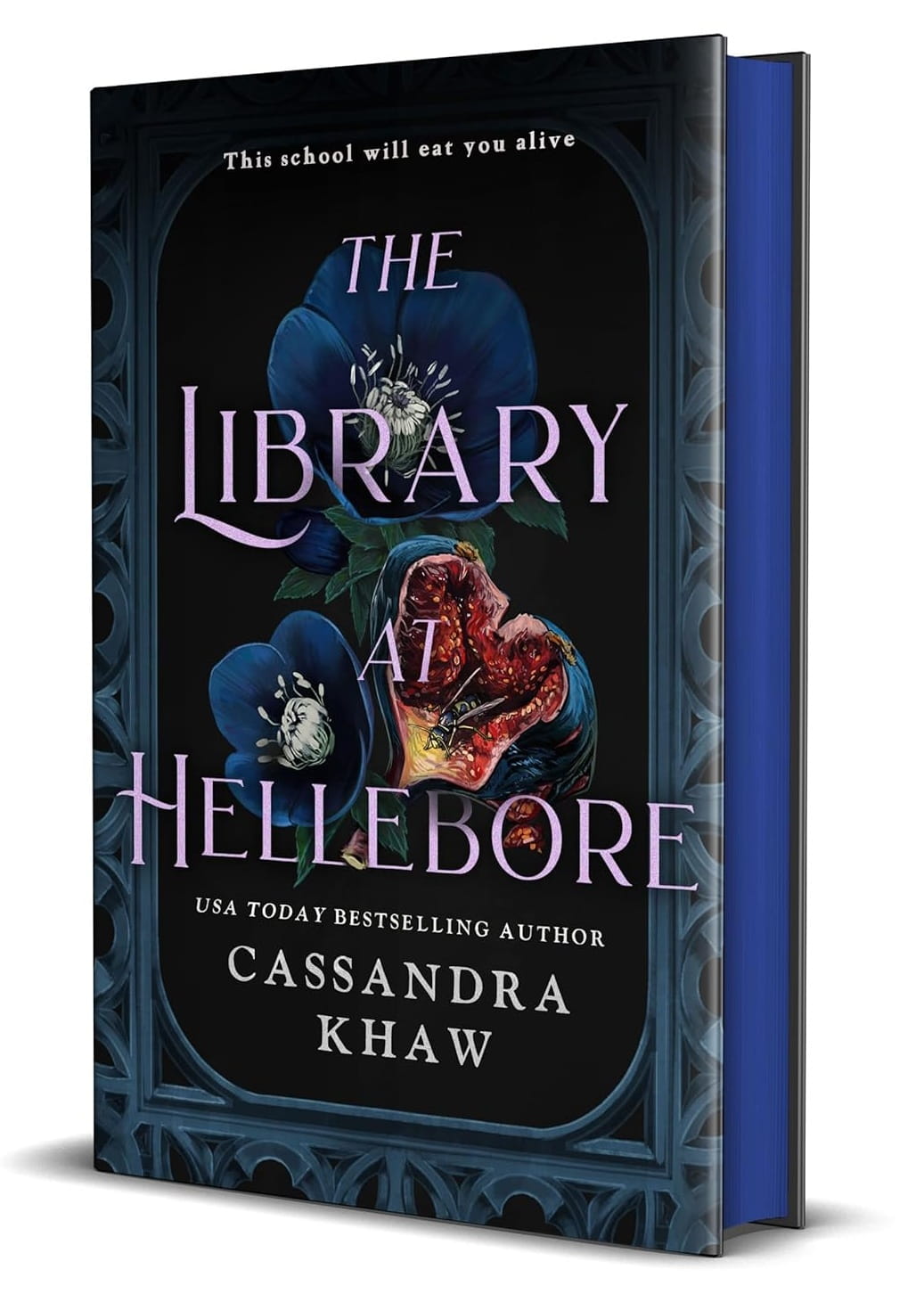
Here’s how it starts.
When I woke up, my roommate, Johanna, was dead… the walls were soaked in effluvium. Every piece of linen on our beds was at least moderately pink with gore. The floor was a soup of viscera, intestines like ribbons unstrung over the scuffed wood.
So despite all the familiar elements — The Hellebore Technical Institute for the Gifted, students with magical abilities, the titular library — we’re not in Kansas anymore. Hammering home the point that this is not a Harry Potter clone is when the headmaster says,
That we might be sorted into houses, a prospect so repellant the crowd spontaneously lost all fear of her and began groaning objections.
“I am just kidding,” she simpered among the thunderous murmurs. “Although the way you’re all complaining, I might have to make it happen.”
Though she retained her mask throughout, what mystique she possessed was lost in the wake of that awful joke.
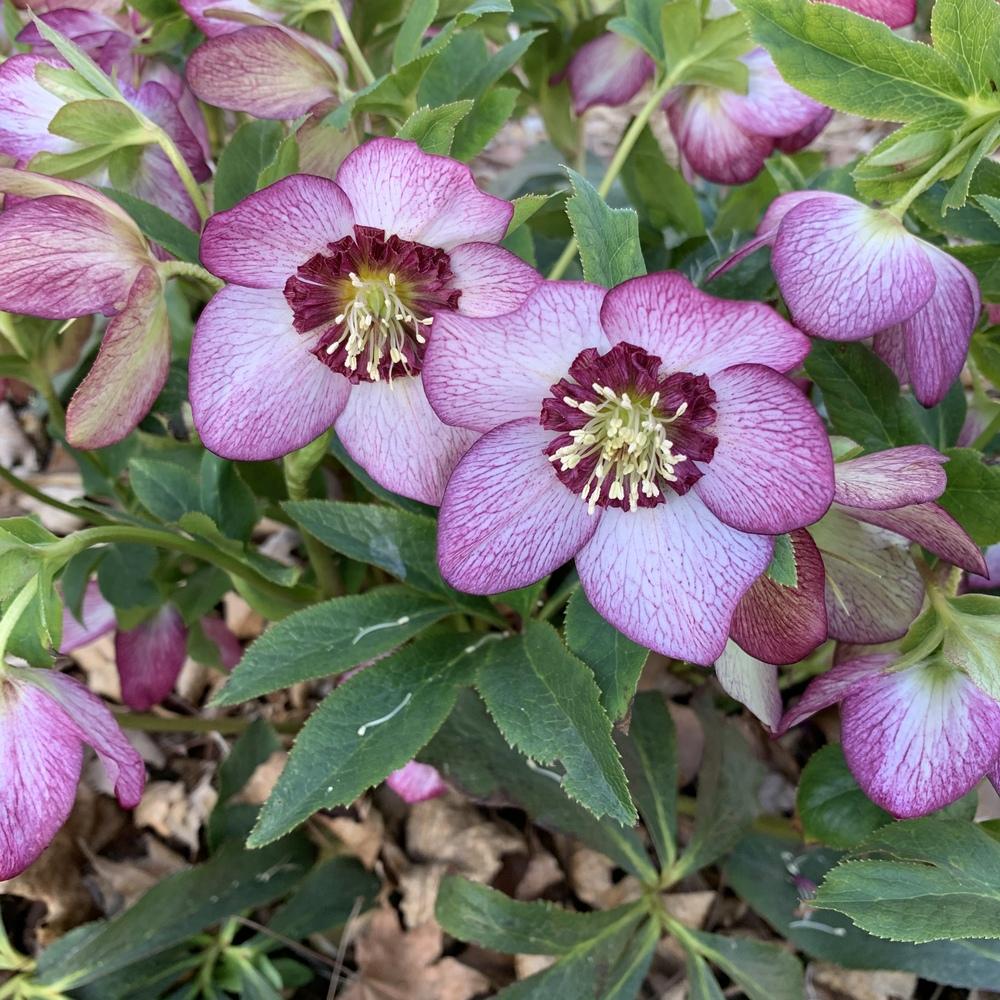
While Hellebore might seem to connote humdrum existence in the netherworld (and maybe at some level Khaw intends to convey that), a hellebore is actually a poisonous plant, sometimes used in antiquity to treat psychosis. Indeed, our narrator, Alessa Li, hasn’t escaped a humdrum Muggle existence by being chosen to enroll in the institute; rather, she’s been kidnapped to prevent her powers from harming normal society.
Further distancing the novel from run-of-the-mill dark academia is that the Institute’s faculty aims to eat the student body. Now that’s dark.
Which brings us to the titular library, where Alissa and some of her surviving classmates — though hardly friendly allies — escape from professorial ravenous cravings. But there are no safe spaces even at this bastion of learning and knowledge as the monstrous librarian has her own carnivorous cravings.
The only lesson here is that of kill or be killed. Not in a Hunger Games kind of way. More like in an eat or be eaten Darwinian kind of way. Literally.
The horror genre is transgressive, meant to provoke revulsion in reminding us of bodily disgust, of psychological dislocation, of humanity’s animalistic nature. The horror of the Library of Hellebore is that “things like decency are nothing but human inventions. The cosmos bends nowhere except toward annihilation.”
David Soyka is one of the founding bloggers at Black Gate. He’s written over 200 articles for us since 2008. See them all here.
I thought Lev Grossman’s “The Magicians” trilogy was in part a riposte to the “Potter” series (and to CS Lewis as well). Not only did I find Grossman’s older characters much more interesting than Potter and his chums (Rowling was drawing on the long British tradition of the juvenile-focused school story as much as on Fantasy), but I liked both its criticism of the whole idea of exclusive “magic schools” and the underlying theme that regardless of having great powers and fantastical adventures, you can still be extremely screwed up.
Apropos of nothing, I LOVE that Vladimir Logos illustration.
I enjoyed that book–beautifully written and also horrific. It’s a tight narrative, without too many digressions explaining the fictional worlds rules.
[…] See the review here. […]