Molding Rebellion: Alien Clay by Adrian Tchaikovsky
 |
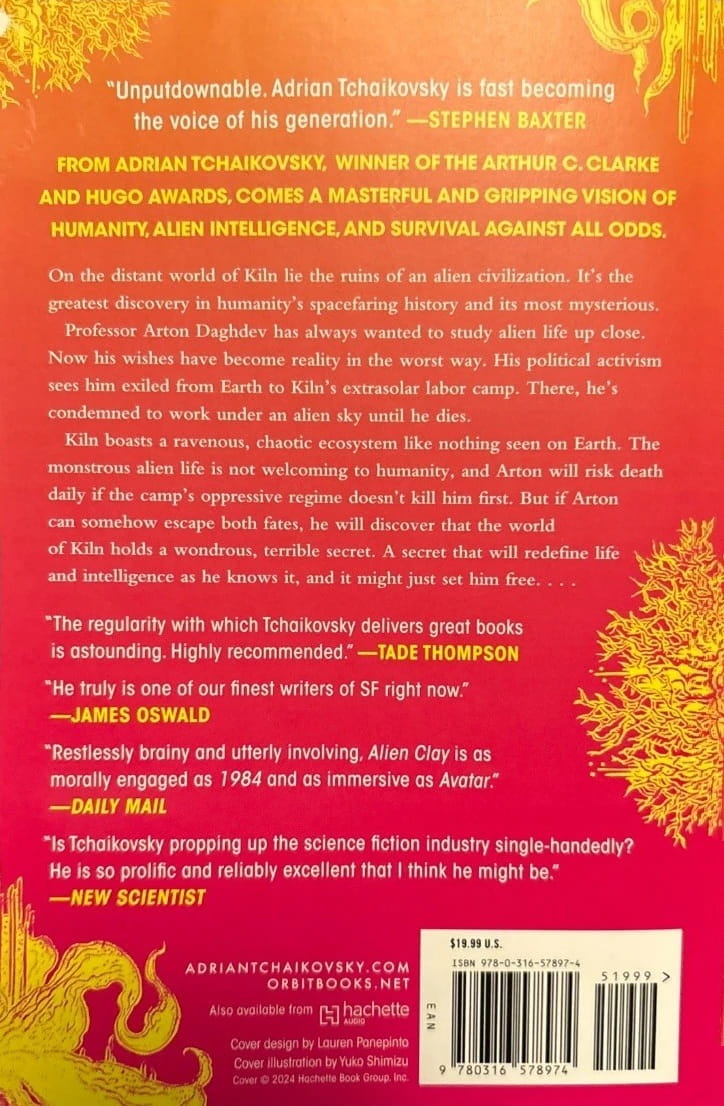 |
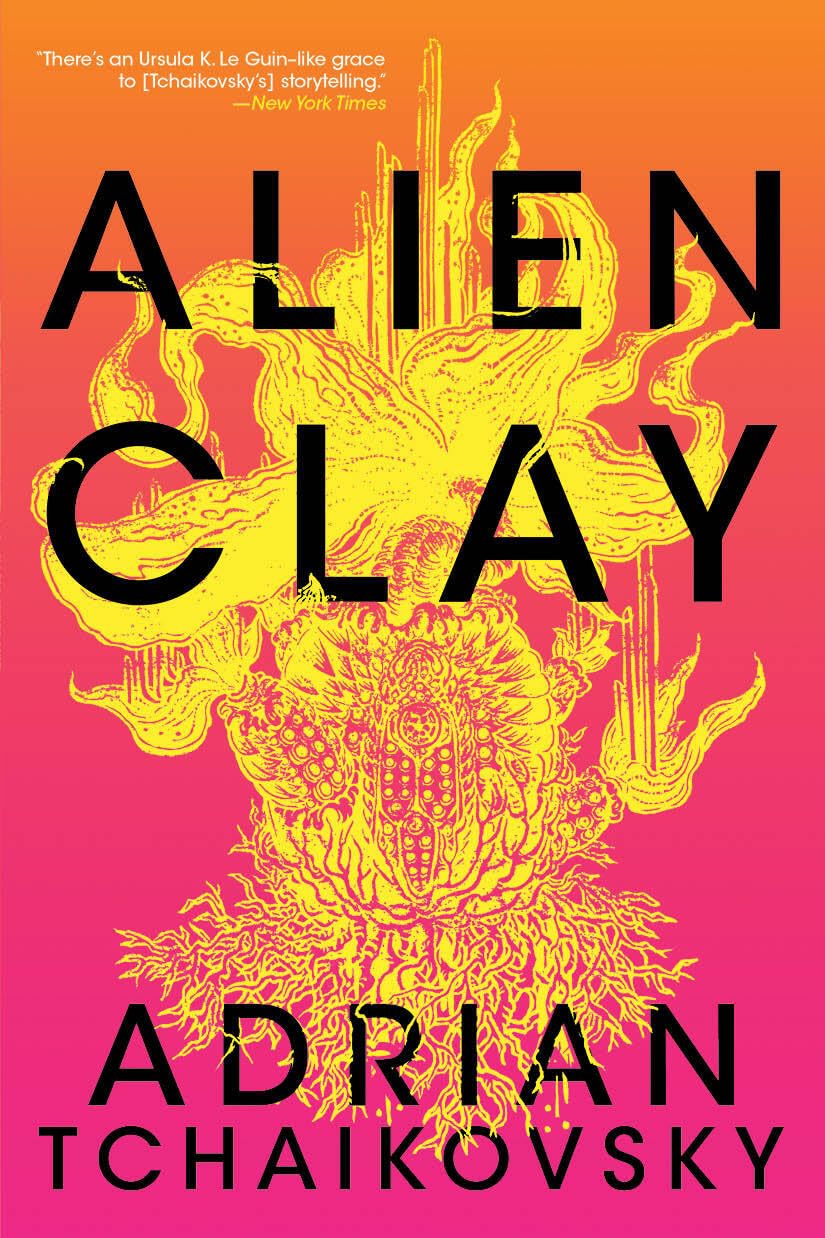
Alien Clay (Orbit, September 17, 2024). Cover design by Yuko Shimizu
Mushrooms in the cellar. Brood parasites. Puppet masters. Body snatchers. The Borg.
Resistance is futile.
But what, exactly, are we resisting?
Possession by alien entities into some kind of hive mind may have been inspired by studies of the social behaviors of ants; indeed, aliens are often depicted as bugs that threaten to unseat humankind’s self-awarded seat at the top of the evolutionary pyramid.

The invasion of body snatchers held particular appeal during the Red Scare of the 1950s and the supposed threat of sleeping Communist cells dedicated to destroying the American Way of Life (which was its own variety of hive mind) and instituting mindless collectivism (a fear to this day stoked by right wingers). The 1956 film about the pod people, based on the Jack Finney novel, is a classic depiction of insidious conformity and the inability of the individual to withstand it.
A trope that Adrian Tchaikovsky subverts in Alien Clay.
The first person narrator is Professor Arton Daghdev (whose last name is frequently mispronounced, something I expect the author as a fellow descendant of Polish ancestry also experiences). Daghdev is a dissident biologist challenging an academic orthodoxy demanded by the fascist Earth government termed the Mandate. For the “crime” of questioning whether humanity is the evolutionary pinnacle, Daghdev is sentenced to the exoplanet Kiln, a penal colony charged with investigating what appears to be the archeological remnants of an alien civilization.
For a scientist, such a punishment might seem to have an upside. There are two problem, though. The first is that any findings must adhere, any evidence to the contrary, to Mandate authorized dogma. More significantly, harsh environmental conditions on Kiln render any on site excursions extremely hazardous. Which is why they are using prison labor. Of which there is always a plentiful supply from a home planet bent on crushing those who don’t toe the autocratic line.
There was a time where I might have had trouble with this premise. Why would an authoritarian regime commit resources, even expendable resources, on a scientific mission for which conclusions are preordained with unclear benefits? But these days, with health policies determined by unsupported dictates and political correctness, it seems perfectly appropriate.
 |
 |
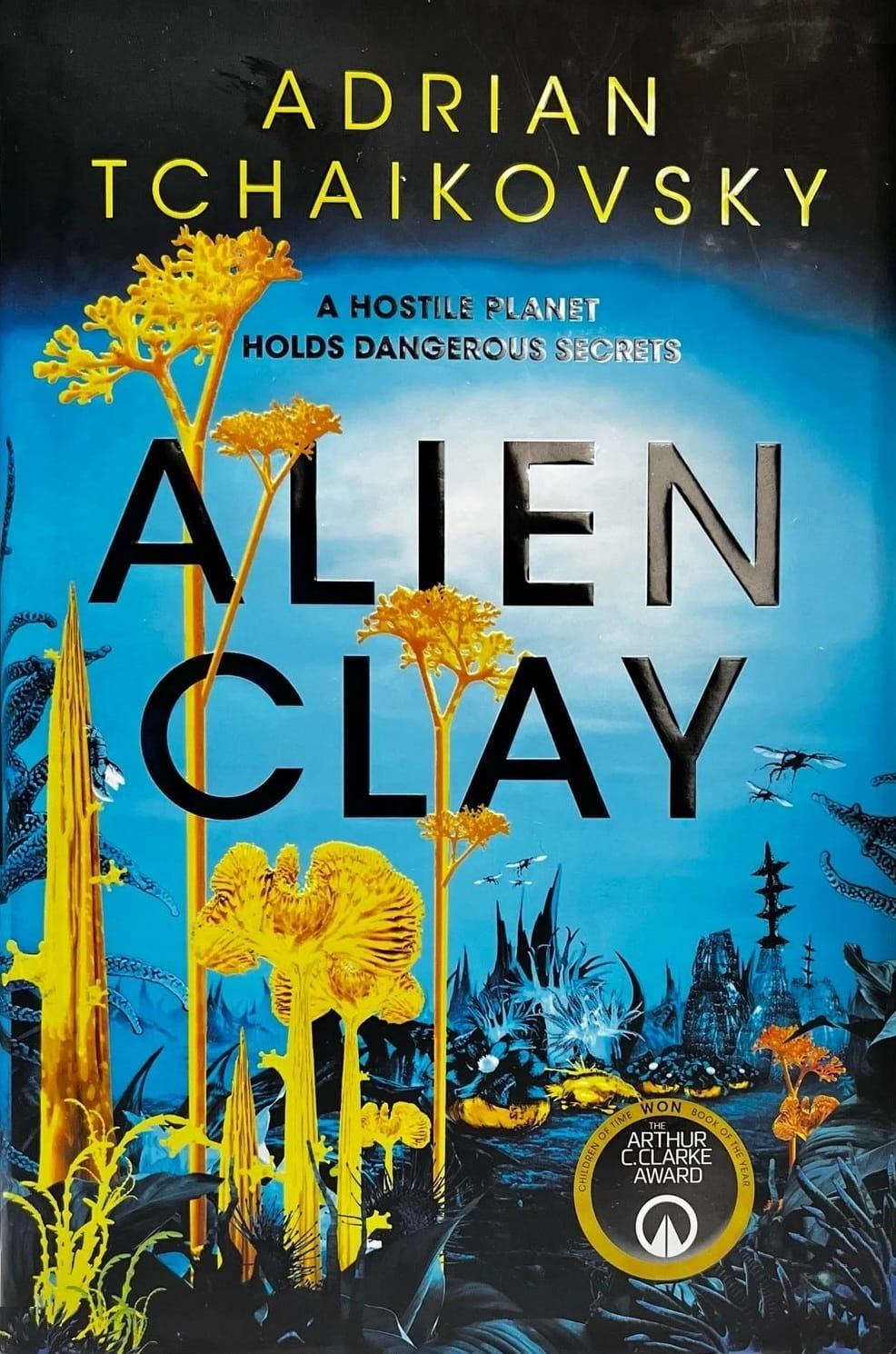
Alien Clay (Tor UK, March 28, 2024). Cover uncredited
Of course, once a revolutionary, always a revolutionary, except maybe when you question not only your own commitment and sufferance to the cause, but also who among you is likely to sell you and your comrades out. Or that your comrades might think you are the one doing the selling out.
So there is an attempted insurrection, one that is quickly smashed thanks to a betrayal. For his participation, Daghdev is removed from relatively safe bureaucratic chores conducted within the safety of the camp compound and assigned to Excursions, teams sent out to explore the alien ruins exposed to the highly infectious Kiln atmosphere. While they are issued some protective gear, they are prisoners, so expense is spared. Infection is expected. A saving grace is periodic three-day decontamination to forestall contagion. A process that sometimes is withheld as punishment.
Should an Excursion team not return to camp within minimal “safety levels” and suffer long-term exposure to Kiln’s strangely recombinant biologics, as happens to Daghdev’s team, no rescue mission sent out. Excursions are also Expendables.
In another type of story, the infected rise to absorb the rest of humanity. Here is where Tchaikovsky flips the script. Infection leads not to madness, but evolutionary jumpstart. Where the hive mind isn’t the embodiment of totalitarianism, but its enemy.
The alien clay here is actually human, on a planet named after an oven that transmutes clay into hardened finished material. A transmutation that has a ways to go before it can be considered finished.
David Soyka is one of the founding bloggers at Black Gate. He’s written over 200 articles for us since 2008. See them all here.
[…] My review of Adrian Tchaikovsky’s Alien Clay appears at Black Gate. […]