Browsed by
Month: November 2020

The Public Life of Sherlock Holmes: Psych of the Dead

The Public Life of Sherlock Holmes: Psych of the Dead

Psych_CastEDITEDI could not figure out what to write about today. I re-watched Paul Newman’s Harper, and thought about a post on that – especially since I recently re-read the autobiography of screenwriter William Goldman. And I saw Unholy Partners, a good hardboiled newspaper flick with Edward G. Robinson and Edward Arnold. I re-watched three versions of The Hound of the Baskervilles (Ian Richardson, Peter Cushing, and Jeremy Brett), and Bruce Campbell’s My Name is Bruce. I read Mark Latham’s Sherlock Holmes – Van Helsing novel, Betrayal in Blood. I started Robert E. Howard’s Cormac Mac Art stories, which I’d not read yet. I even started typing about Fortnite, the phenomenon with over 350 MILLION registered accounts – I play as a way to connect with my soon-to-be teenage son. But none of those subjects ‘clicked’ for this week.

I was sitting, looking at the well over a thousand books in my home office drawing a blank. I had a case of writer’s malaise. For Halloween, I watched a couple episodes of Psych, and I’ve decided to write about that. This isn’t one of my in-depth series’ looks, like I wrote for Leverage, and Hell on Wheels. But we’ll still talk about one of my favorite detective shows.

The premise of Psych is that Shawn Spencer (played by James Roday) has Sherlock Holmes-like powers of observation. Growing up, his dad (a terrific co-starring performance by Corbin Bernsen) was a hard-nosed cop who taught his son by locking him in the trunk of the car, challenging him in a restaurant to close his eyes and tell him how many diners are wearing hats, and the like. In the pilot, circumstances force Sean to pretend those observational skills are actually psychic revelations. He has to continue the charade to avoid jail. It sounds ridiculous, but they make it work well enough in the pilot.
Read More Read More

Witches, Sorcerers, and Space Citadels: Alan Brown on Swords Against Tomorrow, edited by Robert Hoskins

Witches, Sorcerers, and Space Citadels: Alan Brown on Swords Against Tomorrow, edited by Robert Hoskins

Swords Against Tomorrow-small Swords Against Tomorrow-back-small

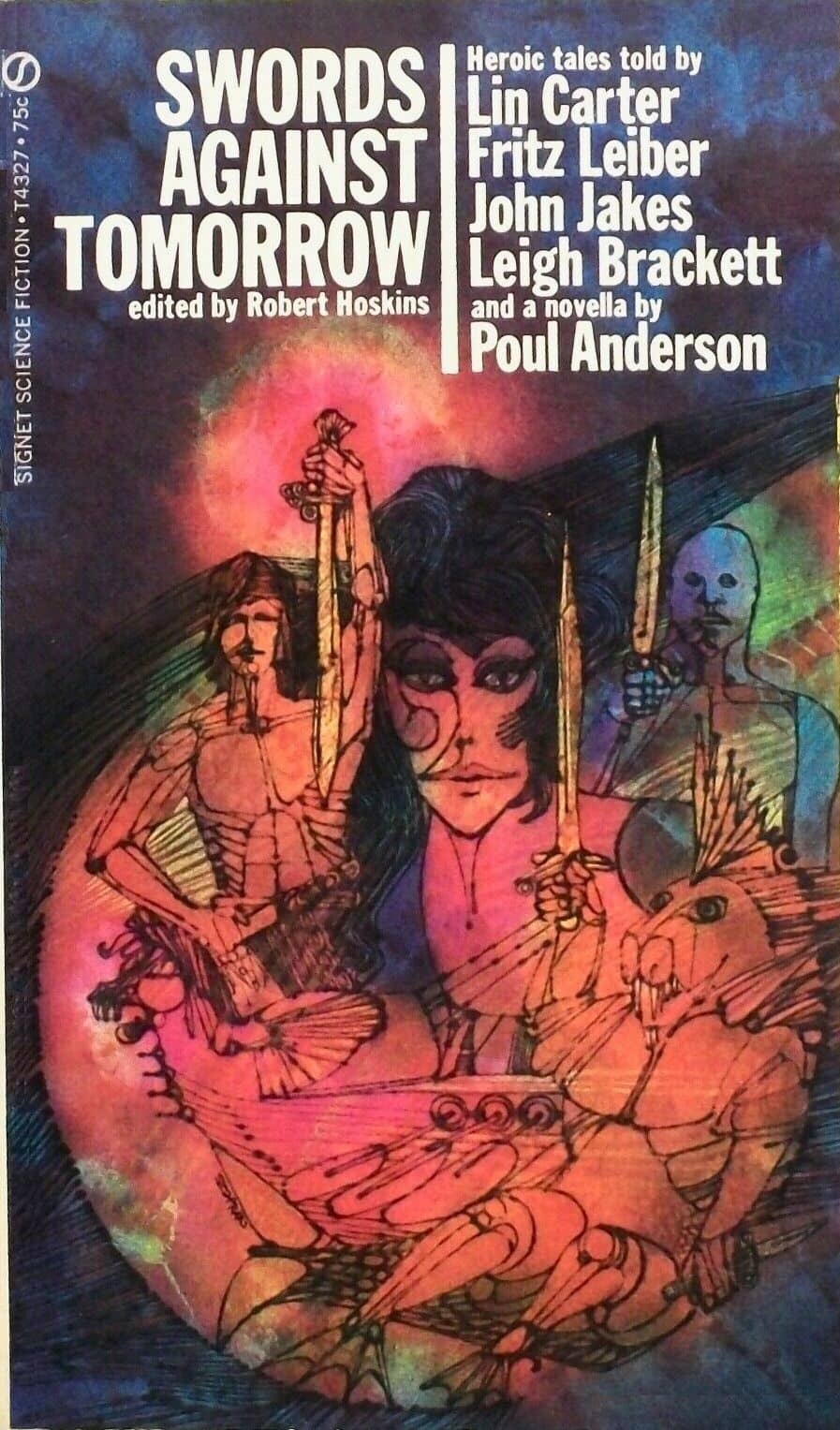
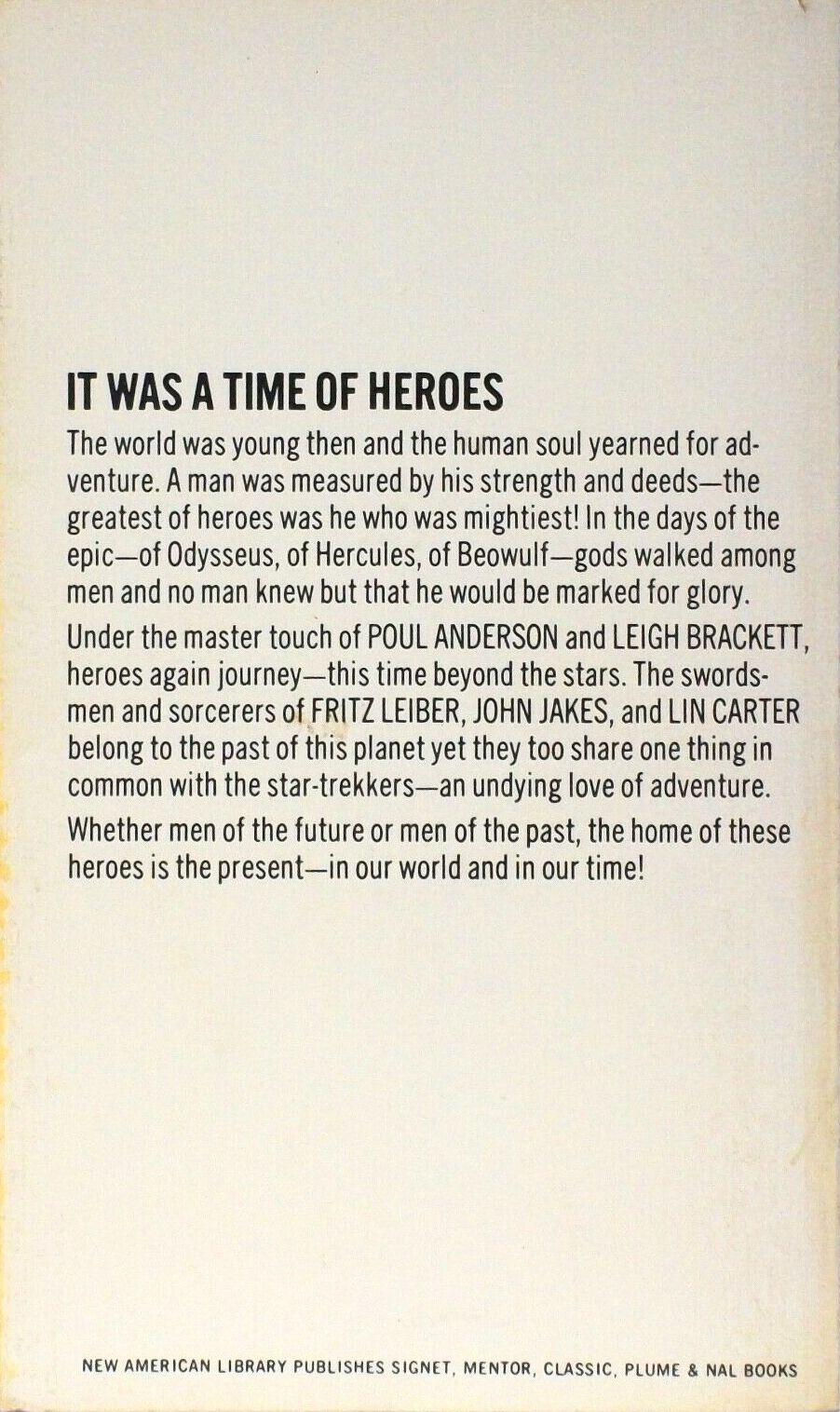
Swords Against Tomorrow (Signet / New American Library, August 1970). Cover by Gene Szafran.

I’ve been enjoying Alan Brown’s classic science fiction reviews at Tor.com. In just the last few months he’s looked at Masters of the Vortex by E. E. “Doc” Smith, H. Beam Piper’s Space Viking, Edgar Rice Burroughs’ Pirates of Venus, Sterling E. Lanier’s Hiero’s Journey, and Murray Leinster’s Med Ship. That’s a pretty satisfying journey through some great 20th Century SF right there (depending on how generously you’re disposed towards “Doc” Smith, I grant you).

But I was especially intrigued by his lengthy review of Robert Hoskins’ 1970 sword & sorcery anthology Swords Against Tomorrow, a long-forgotten volume that contained five long stories by Poul Anderson, Fritz Leiber, Lin Carter, John Jakes, and Leigh Brackett, including a pair of reprints from Planet Stories and an original novelette from Lin Carter. All but one are reprints — including a standalone novella by Anderson, a Fafhrd and the Gray Mouser adventure, a Brak the Barbarian story, and a tale in Brackett’s famous Venus series.

This is a fine little paperback that introduced readers to some of the most popular heroic fantasy series of the era in the early 70s, and I certainly didn’t expect to see it featured so prominently at the premier genre site over half a century after it was published.

Read More Read More

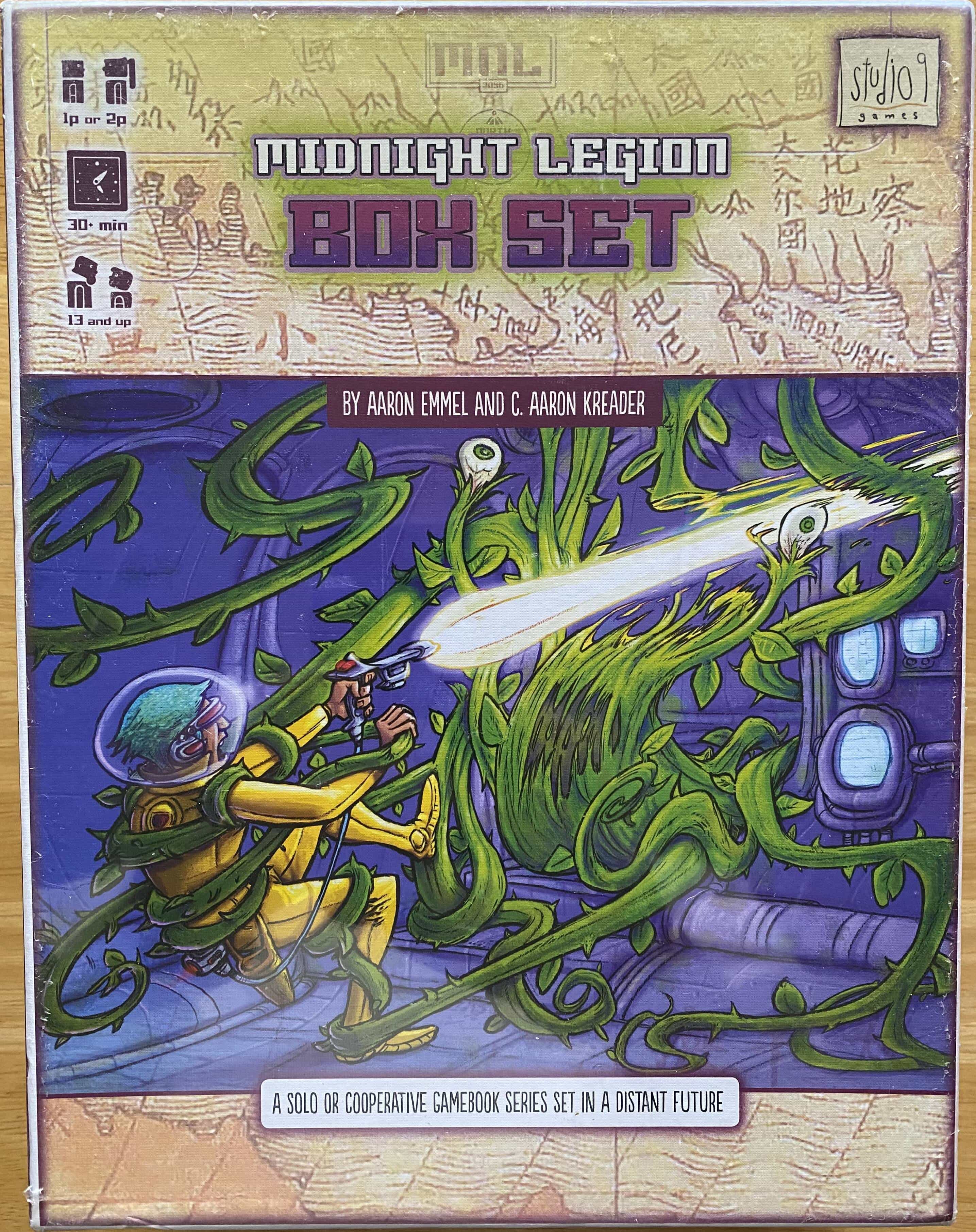
Rebuild Civilization on a Savage and Alien Earth in Midnight Legion from Studio 9

Rebuild Civilization on a Savage and Alien Earth in Midnight Legion from Studio 9

Midnight Legion Box Set-small Midnight Legion Box Set back-small


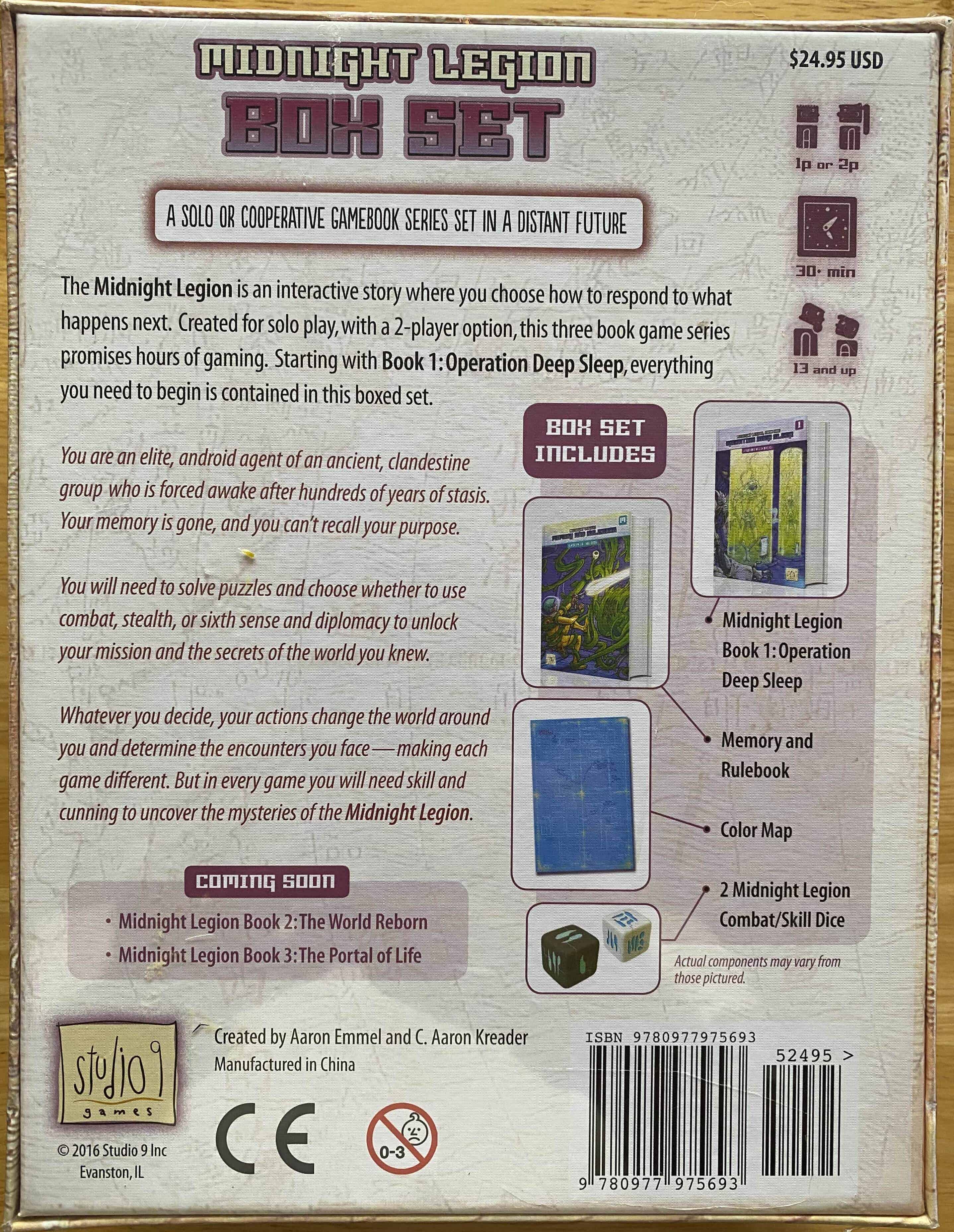
Midnight Legion box set from Studio 9 (2016). Art by C. Aaron Kreader.

It’s been a busy year, between changing jobs in April, managing a fledging writing career as Todd McAulty, running Black Gate, and coping with a pandemic. I don’t get to read as much as I used to, and I definitely don’t get to game as much. I especially regret not having the chance to dig into some of the new generation of solo RPGs, like Four Against Darkness and Into the Dungeon.

But I did spend a few shekels to try Midnight Legion, a very promising post apocalyptic solo gamebook series with a strong Metamorphosis Alpha vibe. Created by writer Aaron J. Emmel and artist C. Aaron Kreader and published by Evanston, Illinois-based Studio 9, Midnight Legion is a three-book series featuring an amnesiac android who awakens on a vastly changed Earth peopled with strange creatures and deadly mutant plants, and must piece together the clues to his original mission. You get everything you need to start in the intro Midnight Legion box set, published in 2016 with this description on the back:

You are an elite, android agent of an ancient, clandestine group who is forced awake after hundreds of years of stasis. Your memory is gone, and you can’t recall your purpose. You will need to solve puzzles and choose whether to use combat, stealth, or sixth sense and diplomacy to unlock your mission and the secrets of the world you knew.

The Midnight Legion is an interactive story where player(s) choose how to respond to what happens next. Created for solo play, with a 2-player option, this three book game series promises hours of gaming. Starting with Book 1: Operation Deep Sleep, everything you need to begin is contained in this boxed set.

The second gamebook, The World Reborn followed in 2017, and the final volume Portal of Life in 2019. Together they form an ambitious and compelling science fiction adventure that I’m anxious to dig into.

Read More Read More