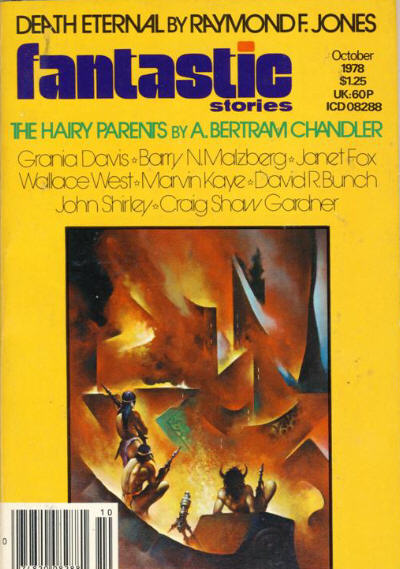
Forgotten Authors: Raymond F. Jones
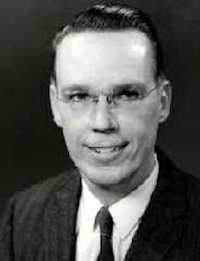 Raymond F. Jones was born in Salt Lake City on November 15, 1915. He studied engineer and English at the University of Utah before working as a radio engineer. He later suggested that getting an English degree is one of the worst things a writer could do. He had a reasonable amount of success as an author, with his novel This Island Earth being the work he is best known for. It was adapted into a film in 1955, starring Jeff Morrow and featuring Russell Johnson, who would go on to portray the Professor on Gilligan’s Island, and Richard Deacon, who played Mel Cooley on The Dick van Dyke Show.
According to Jones, he was introduced to science fiction in 1927 when he read H.G. Wells’ War of the Worlds. He decided he never wanted to read it again because he was afraid it couldn’t live up to the “thrill of that first contact with the realm of imagined science.”
After graduating college, he served on a mission in Galveston, Texas and worked installing telephone exchange equipment for Western Electric in Texas, but after marrying Elaine Kimball on June 27, 1940, he took a job with the Weather Bureau to cut down on travel. During World War II, he used his radio engineering degree at Bendix Radio in Baltimore before settling in Arizona after the war.