Browsed by
Category: Series Fantasy

Talking Tolkien: Philosophical Themes in the Silmarillion – by Joe Bonadonna
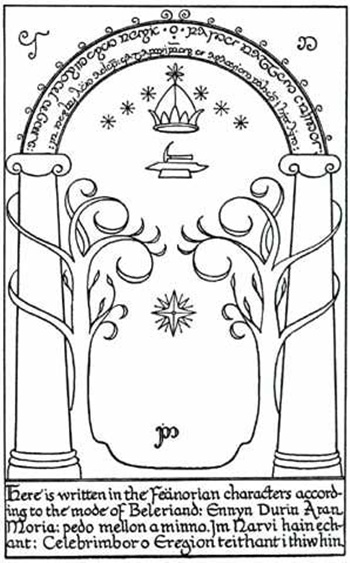
Talking Tolkien: Philosophical Themes in the Silmarillion – by Joe Bonadonna

We kicked off Talking Tolkien with Joe Bonadonna, and he’s back! After looking at religious themes in The Lord of the Rings the first time around, it’s philosophical ones in The Silmarillion. Joe does the heavy lifting – I’m just a pretty face. As with his first essay, he wades into pretty deep waters. Joe has guested for my ‘A (Black) Gat in the Hand’ Pulp series, and I’m thrilled he wanted to Talk Tolkien. He even recruited two of our contributors. Read on, and thanks, Joe!

First, I want to reiterate that I am most definitely not an expert on Tolkien’s writings and his history of Middle-earth. Naturally, I’ve read The Hobbit, The Lord of the Rings, and The Silmarillion, as well as Smith of Wooton Major, Farmer Giles of Ham, and The Children of Hurin. But I haven’t read anything else Tolkien wrote. Thus, I’ll only be scratching the surface here.

My sources used in research, from which I quoted passages, are: Ruth S. Noel’s The Mythology of Middle-Earth, Robert Foster’s The Complete Guide to Middle-Earth, Paul H. Kocher’s Master of Middle-Earth, William Ready’s Understanding Tolkien, Humphrey Carpenter’s Tolkien: The Complete Biography, and the Tolkien Gateway website, as well as The Hobbit, the appendices in The Return of the King, and The Silmarillion itself. Please note: although the titles of Kocher’s, Noel’s and Foster’s books use a capital E for “earth,” I will use Middle-earth as Tolkien himself did. All that being said, I just wanted to clear the air so you good folks who are reading this will know that I am by far no scholar or expert on all things Tolkien. I’m just here to share an old college essay with you.
Read More Read More

Vintage Treasures: War in Heaven by David Zindell

Vintage Treasures: War in Heaven by David Zindell


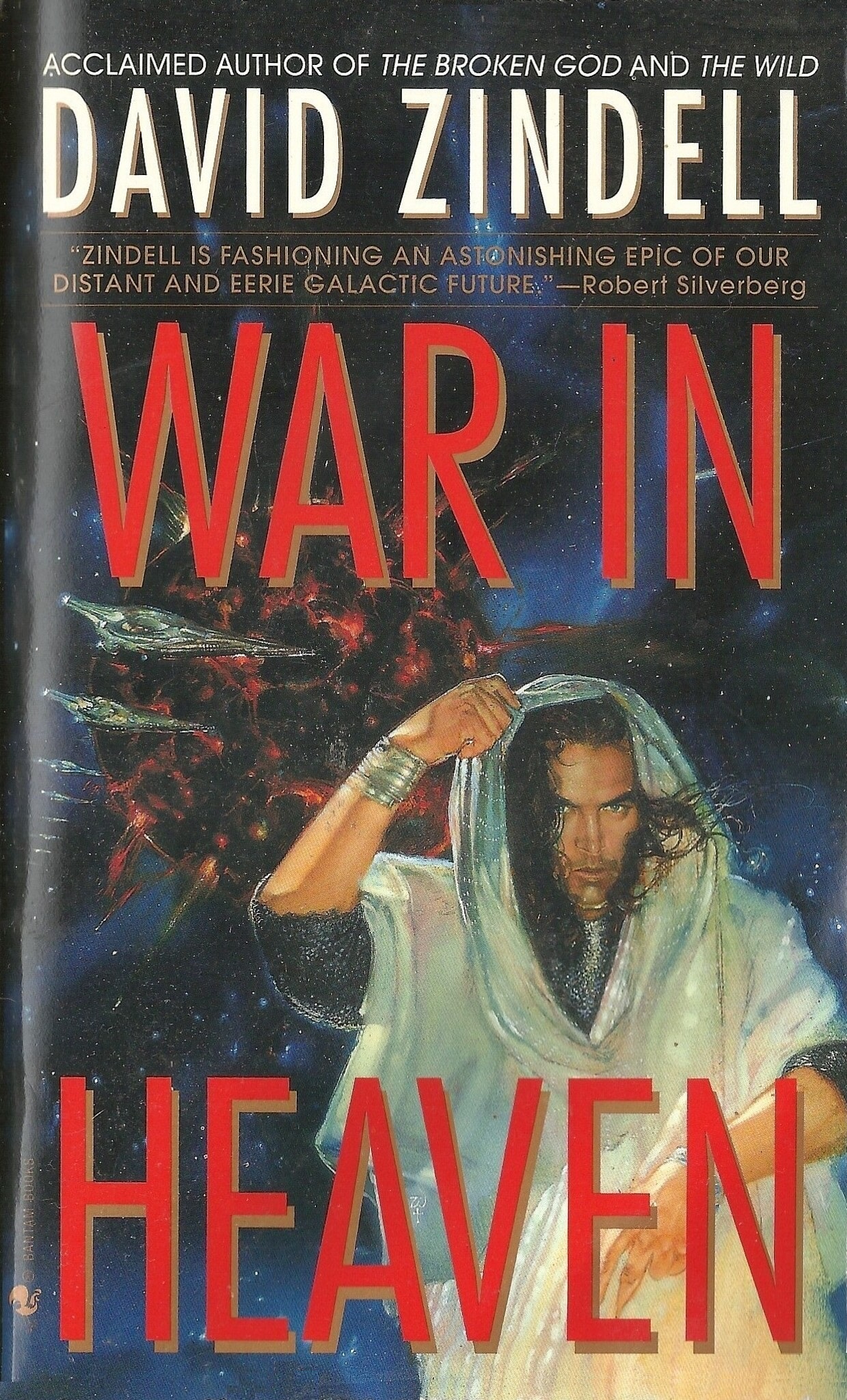
War in Heaven
(Bantam Spectra, January 1998). Cover by Dean Williams

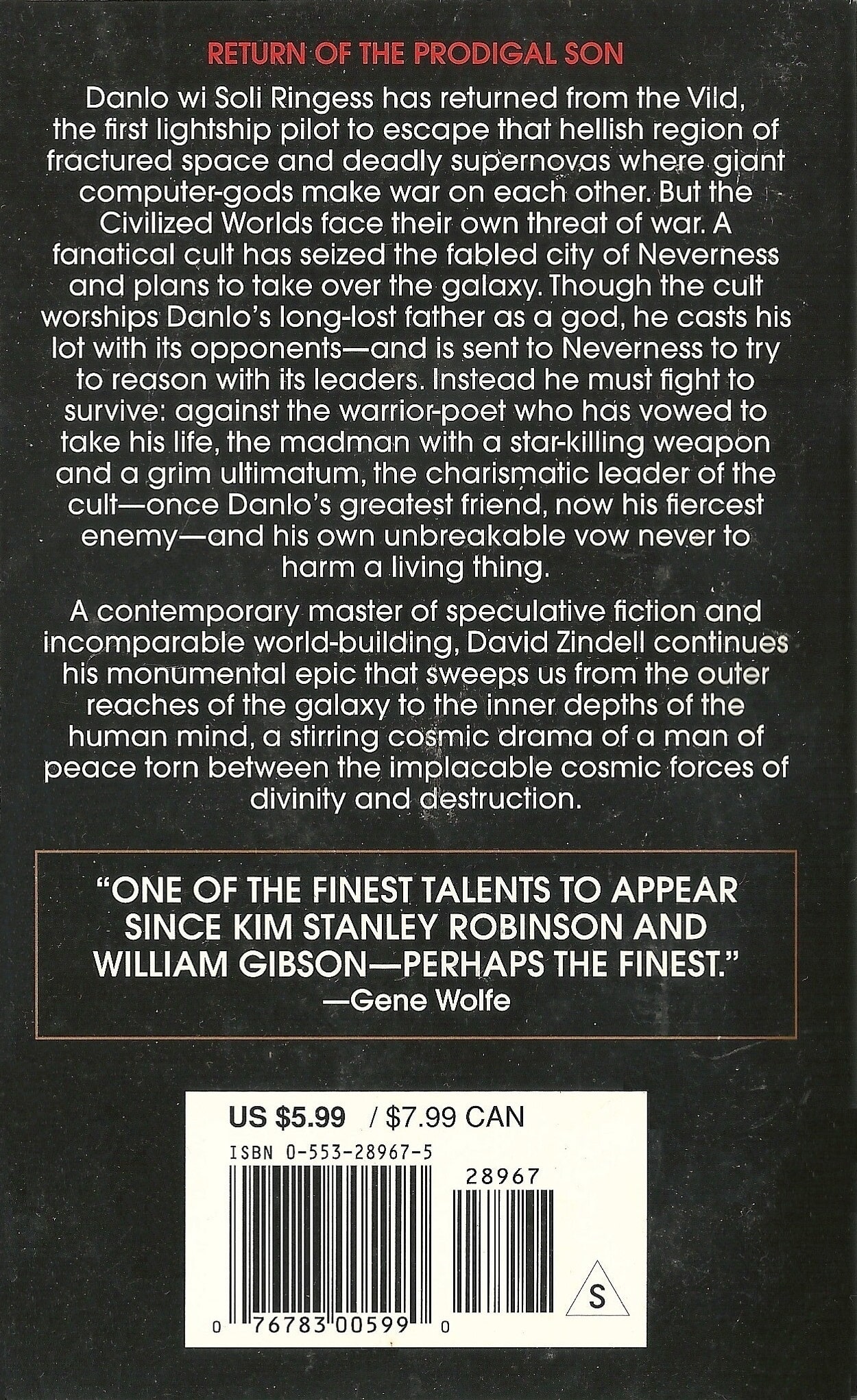
David Zindell came out of the gate strong as a young science fiction writer in the 80s and 90s. He was nominated for the John W. Campbell Award for Best New Writer in 1986, and his debut novel Neverness won instant and wide acclaim. Edward Bryant said it “Propels him instantly into the big leagues with the likes of Frank Herbert and Ursula K. Le Guin,” and Kirkus Reviews gushed “Zindell succeeds brilliantly… in his convincing portrayal of what a super-intelligent being might be like…. Vastly promising work.” On the basis of that single novel, Gene Wolfe called Zindell “One of the finest talents to appear since Kim Stanley Robinson and William Gibson — perhaps the finest.”

Zindell followed up Neverness with a sequence set in the same universe, A Requiem for Homo Sapiens. War in Heaven (1998) was the last book in the series — and in fact the last science fiction book he ever wrote. At least until he returned to the genre this year, with his first new SF novel in a quarter century, The Remembrancer’s Tale.

Read More Read More

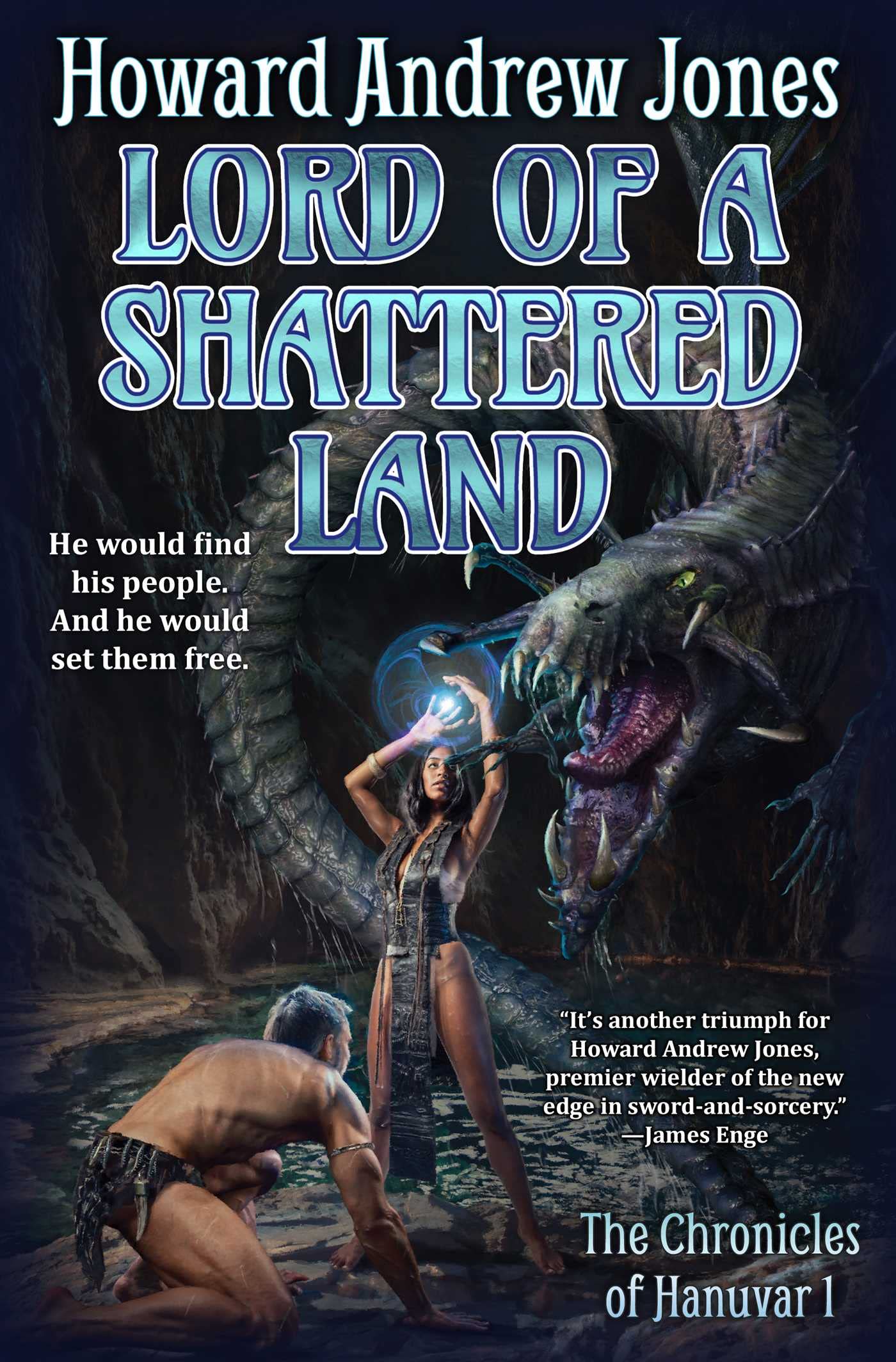
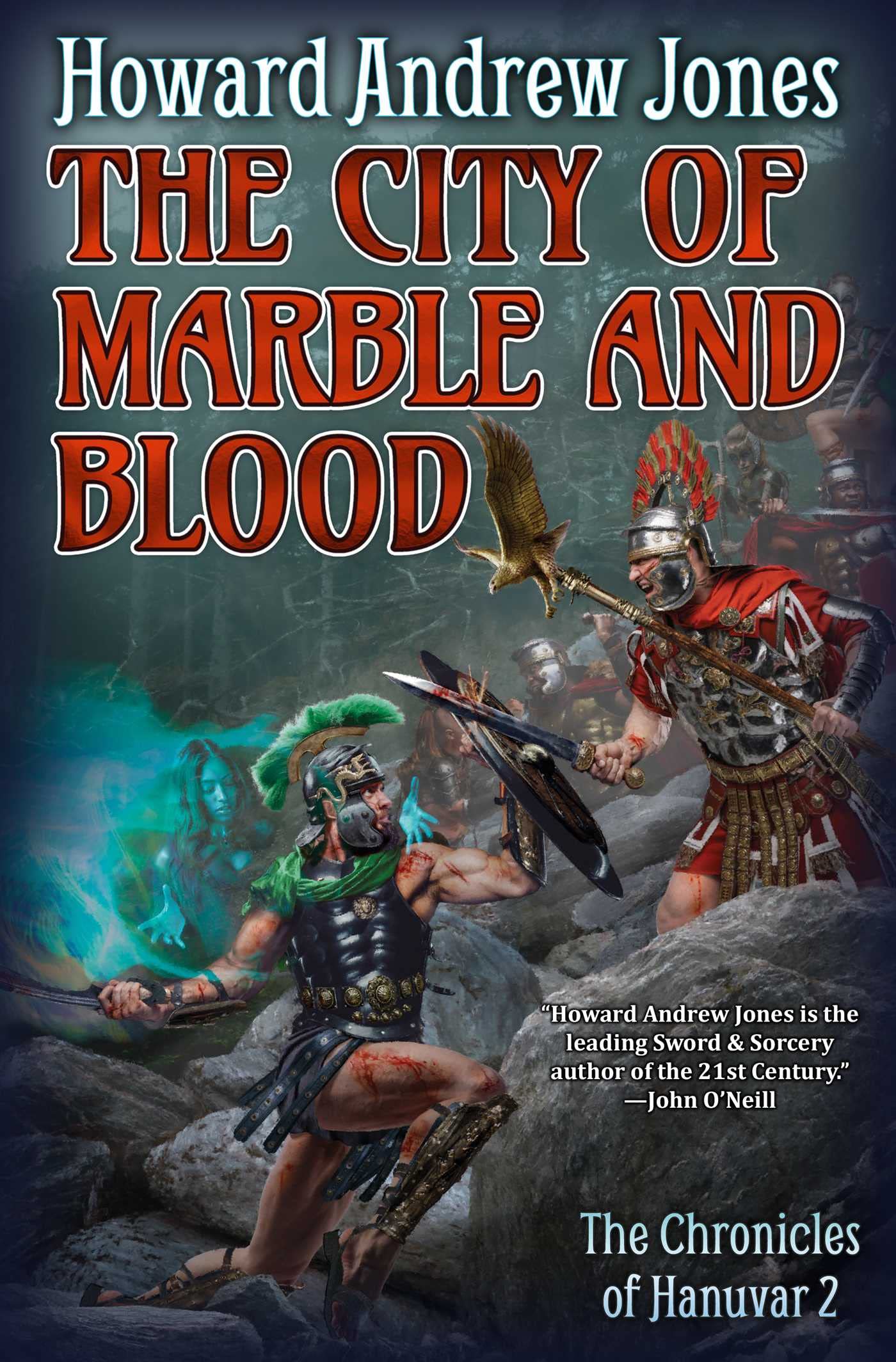
Get Ready for a Fantasy Revolution: Lord of a Shattered Land by Howard Andrew Jones

Get Ready for a Fantasy Revolution: Lord of a Shattered Land by Howard Andrew Jones


Lord of a Shattered Land
and The City of Marble and Blood
(Baen, August 1 and October 3, 2023). Covers by Dave Seeley

A few times in my life I’ve had an early look at a book that I knew was going to revolutionize fantasy. When I received an advance proof of A Game of Thrones by George R.R. Martin in 1996. When Andy Heidel at Avon sent us an early copy of Neil Gaiman’s first novel. When Betsy Wollheim at DAW sent me an advance reading copy of The Name of the Wind in the fall of 2006.

I had that same feeling while reading Howard Andrew Jones’ Lord of a Shattered Land, the opening book in the Chronicles of Hanuvar, on sale in less than two weeks. Howard is the leading Sword & Sorcery author of the 21st Century, and this series is his masterwork.

Read More Read More

Talking Tolkien: On The Tolkien Reader – by Rich Horton

Talking Tolkien: On The Tolkien Reader – by Rich Horton

It’s another of my Black Gate cohorts this week for Talking Tolkien. Rich is one of the science fiction cornerstones at the Black Gate World Headquarters, but he’s been a Tolkien fan since the seventies. He’s gonna talk about a book I never added to my shelves. Before the explosion of books like The History of Middle Earth Series, and Children of  Hurin, and his Beowulf, there weren’t a lot of ‘other’ Tolkien books out there besides the main five.

But even before The Silmarillion finally saw print, there was The Tolkien Reader. 

______________________

The Tolkien Reader was first published in 1966 by Ballantine Books in the US; in response to the greatly expanding popularity of The Lord of the Rings, driven by the paperback editions from Ballantine (and the pirated edition from Ace.) This was an attempt to bring a varied sampling of his work to readers hungry for more. I read it myself in the early ’70s, after I read The Hobbit and The Lord of the Rings. As an introduction it reprints a piece Peter Beagle did for Holiday (perhaps at the instigation of Alfred Bester?) called “Tolkien’s Magic Ring”, which primarily discusses the Middle-Earth books.

It’s a good and varied collection throughout, and really does the job of showing a different side to Tolkien (though not THAT different!) from that seen in The Lord of the Rings. I’ll be looking at each of the sections separately, and slightly out of order, in that I think the best part by far is Tree and Leaf, which comes second in the book.

Read More Read More

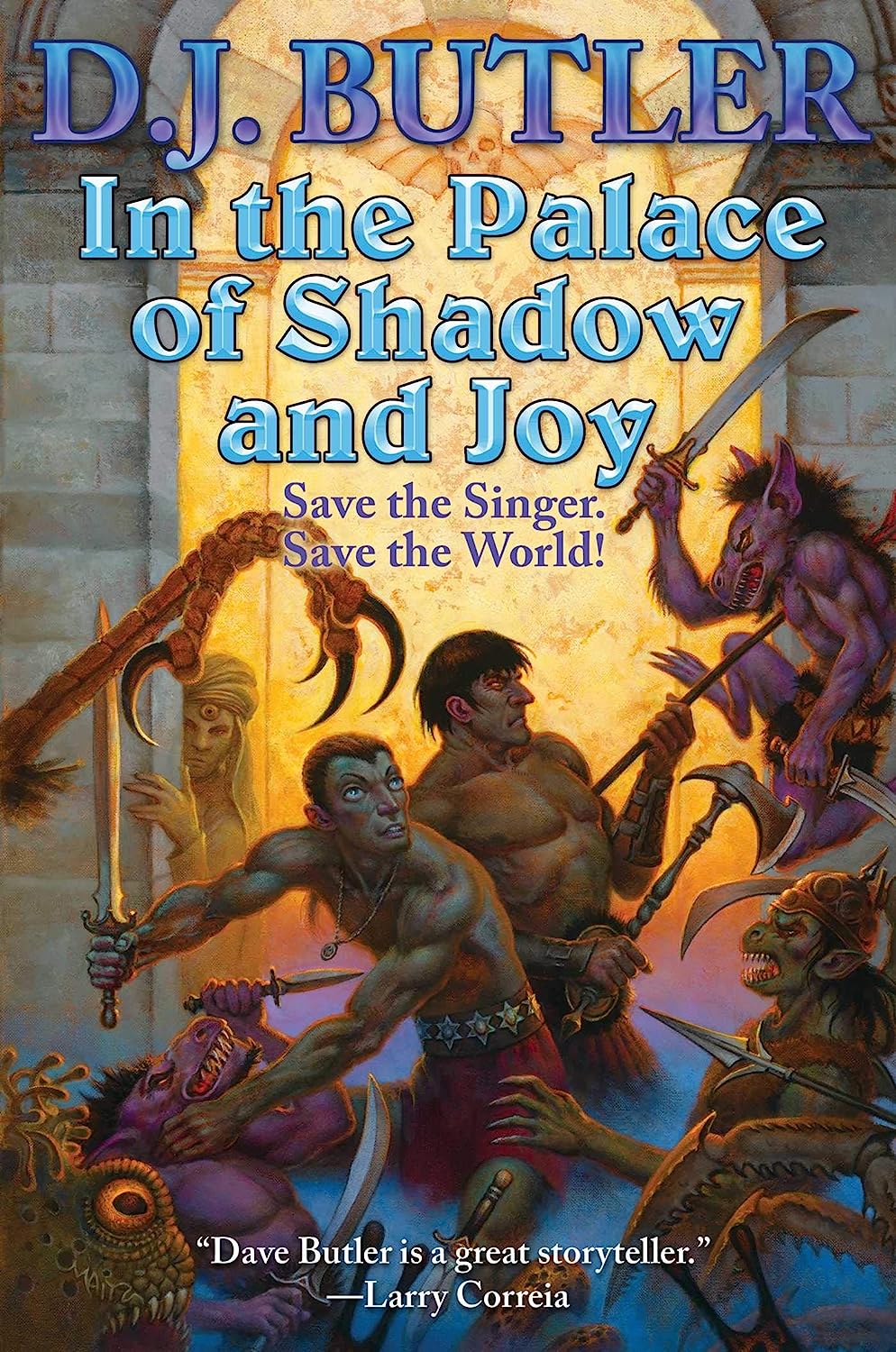
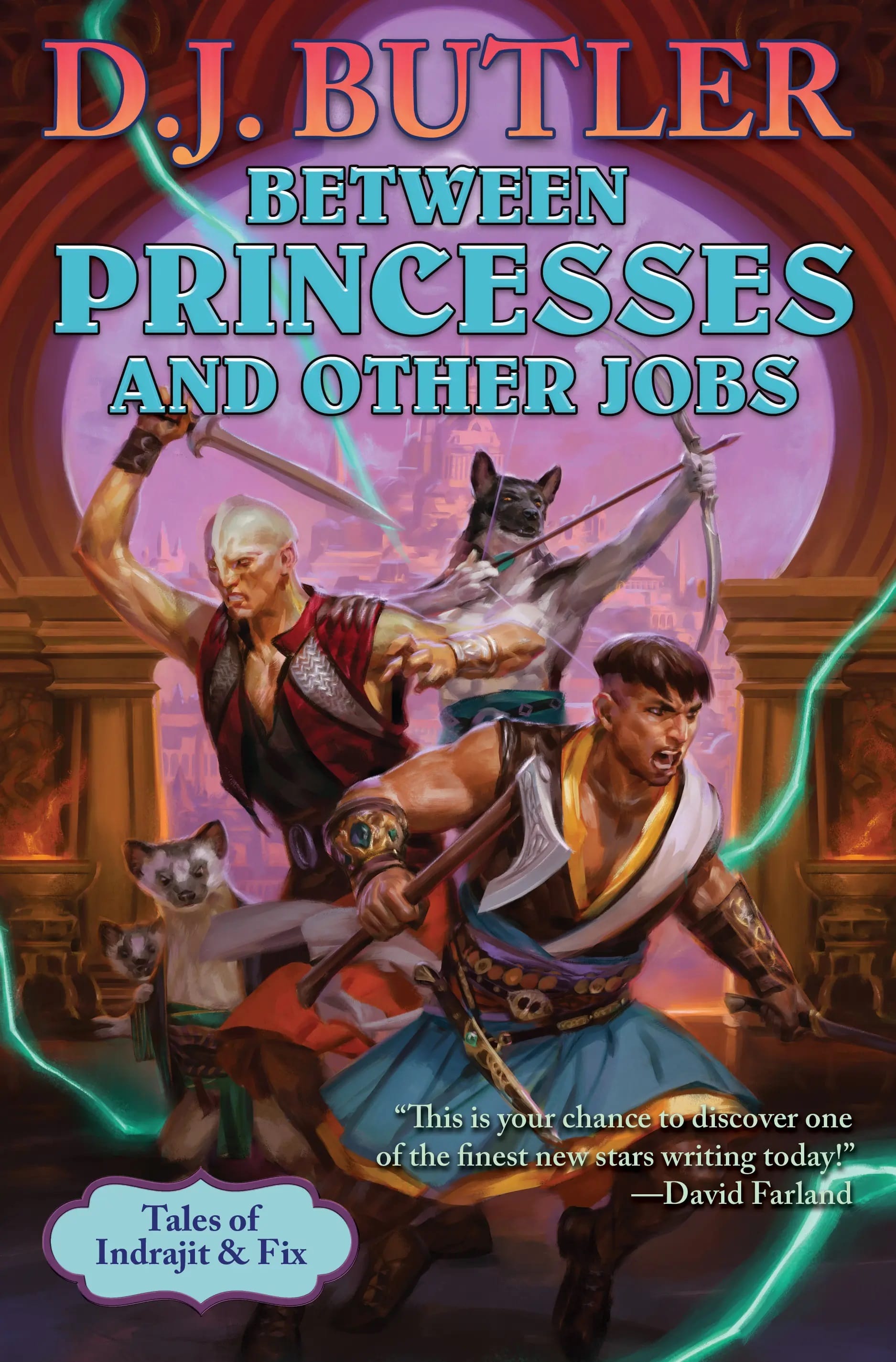
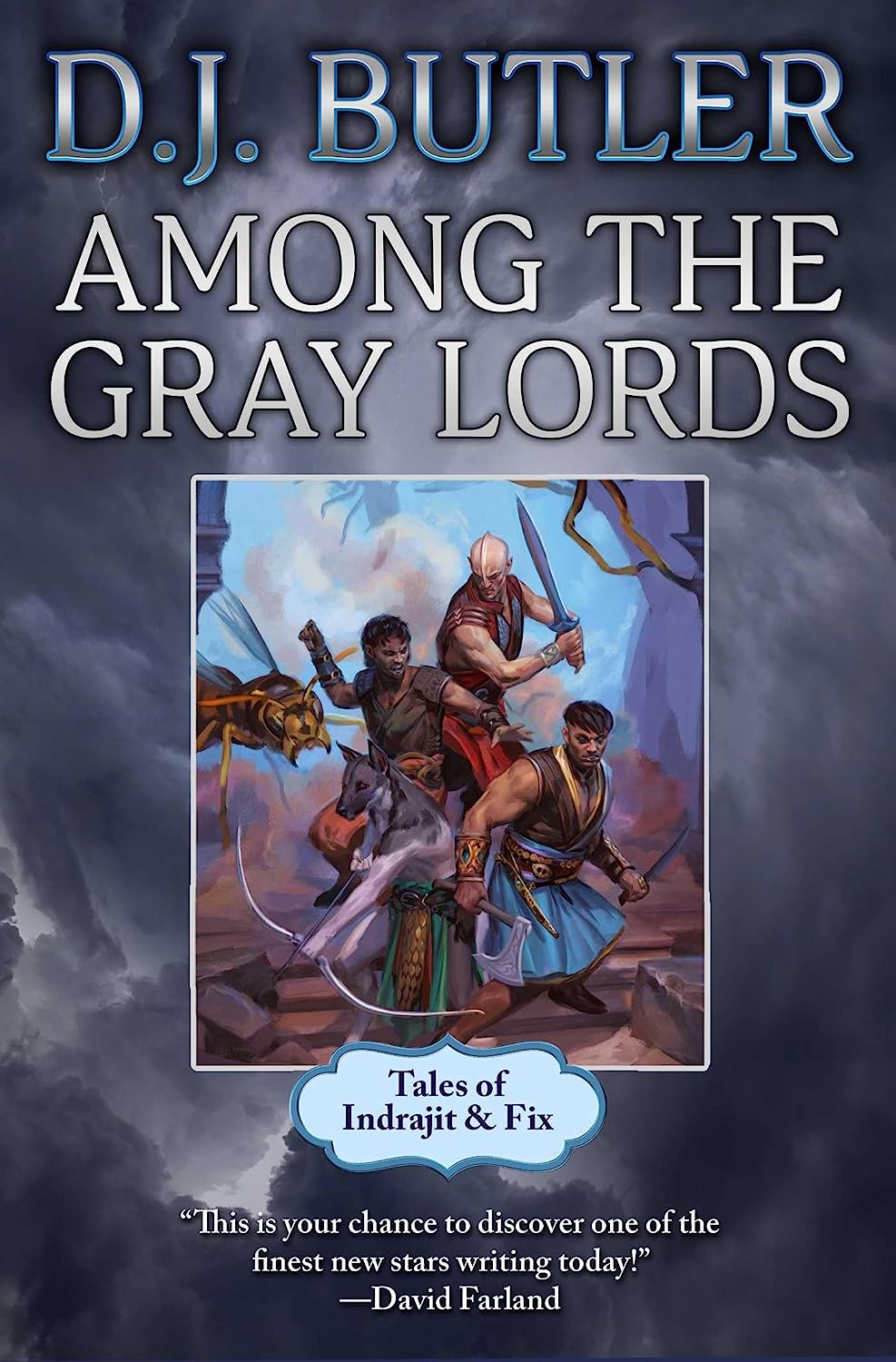
Indrajit and Fix Up

Indrajit and Fix Up


In the Palace of Shadow and Joy
, Between Princesses and Other Jobs, and Among the Gray Lords
(Baen Books, July 2020, July 2023, and January 2024). Covers by Don Maitz and Kieran Yanner

Dave Butler first came to my attention with the Witchy Eye series. It was pitched to me as epic fantasy set in Colonial America. I took this to mean Alternative History, which is interesting but not really my cup of tea. After several rounds of recommendations from people I trust, I finally took the leap. And that’s when I read this line right here:

Not since St. Martin Luther nailed the skin of the Eldritch ’eretic Cetes to the church door in Wittenberk an’ cried ‘’ere I stand!’ ’as such powerful preachink been ’eard by Christian ears, I trow!

Saint Luther? Nailing the skin of a heretic to the door of Wittenberk, rather than the Theses? Brother, if you know me, you know how all in I am at this point. By the time I was done with the book, David Butler had entered the hallowed halls of authors whose books I buy the day they drop.

Which brings us to the Indrajit and Fix novels.

Read More Read More

Talking Tolkien: Does Size Matter? The Rankin-Bass Hobbit by Thomas Parker

Talking Tolkien: Does Size Matter? The Rankin-Bass Hobbit by Thomas Parker

Fellow Black Gater Thomas Parker and I share quite a few interests – but within those interests we tend to vary wildly. I enjoy chatting with him. I conned him into writing a…I mean, he graciously agreed to do a Horace McCoy piece for A (Black) Gat in the Hand, and I’ve been after him to shore up my Black Gate views by doing a guest piece for me. And man, do I LOVE this one on the Rankin-Bass classic, The Hobbit. It was worth the past four years of badgering him.  Read on!

Let me begin with a statement that is impossible to prove but that almost no one would dispute: J.R.R Tolkien’s 1937 children’s fantasy The Hobbit is one of the most beloved books in the world, and because it serves (according to the cover of my old Ballantine paperback) as the “enchanting prelude to the Lord of the Rings” it is also one of the most influential books of the last century, all of which means that those who would presume to adapt the story for other media would be wise to tread warily.

Over the decades, there have been stage adaptations (including an operatic one), graphic novels, and many audio renderings. But when it comes to film adaptations, there are really only two versions to choose from, and they couldn’t be more different in scale, emphasis, and execution.

Most recently we have the triple-decker expansion offered by Peter Jackson — The Hobbit: An Unexpected Journey (2012), The Hobbit: The Desolation of Smaug (2013), and The Hobbit: The Battle of the Five Armies (2014), three movies that together have a running time of almost eight hours and that were made with all the technical sophistication and immense resources that Mordor… er, a major Hollywood studio can offer. The trilogy had combined budgets of six hundred and sixty-five million dollars, and during their initial theatrical releases the films netted approximately three billion dollars (to say nothing of profits from home video and merchandising). As the Dark Lords of the boardroom can tell you, each zero in those immense grosses is a veritable Ring of Power in itself.

Read More Read More

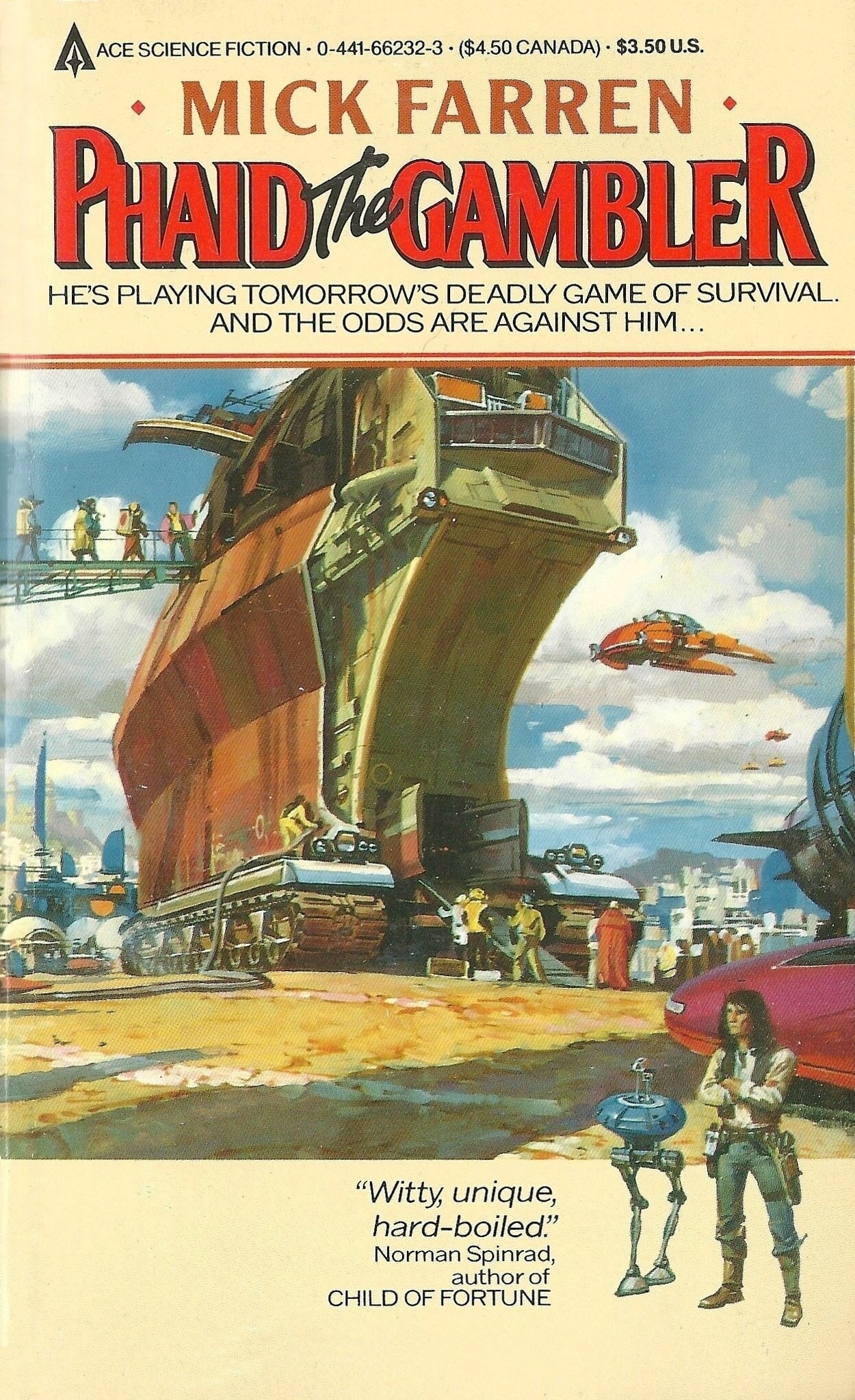
Vintage Treasures: Phaid the Gambler by Mick Farren

Vintage Treasures: Phaid the Gambler by Mick Farren


Phaid the Gambler
(Ace Books, August 1986). Cover by Jim Gurney

Mick Farren was a fascinating guy.

He was the singer for the UK band The Deviants in the 60s, and released two solo albums in the late 70s, and a live album in 2005. He began his writing career in the early 1970s as a journalist for the UK Underground press, and eventually the mainstream New Musical Express. By the end of the 70s he was supporting himself as a full time writer, and over a 30-year career he published 23 novels before his death in 2013 at the age of 69. He died after collapsing on stage during a Deviants concert in London in July 2013.

Read More Read More

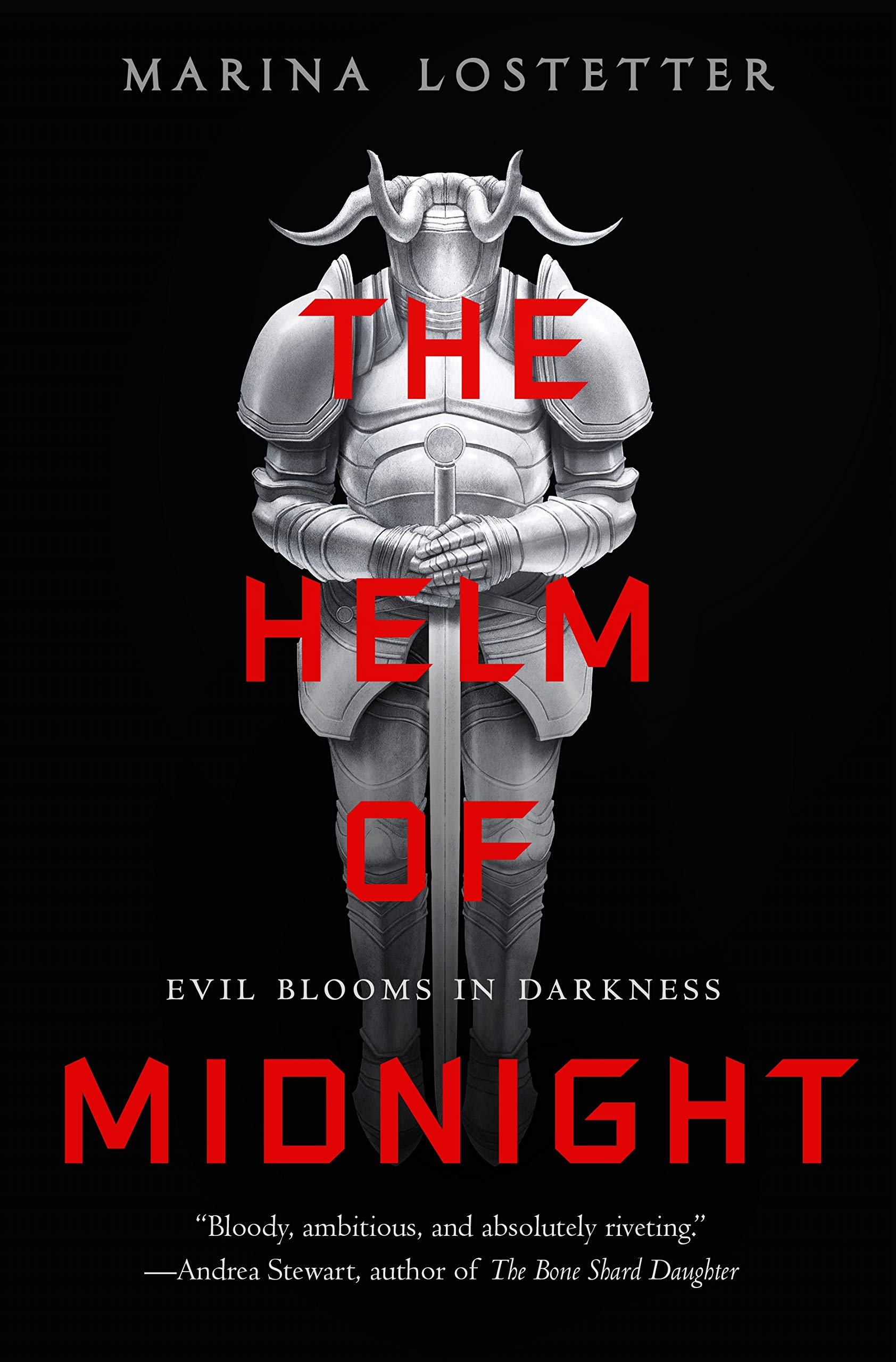
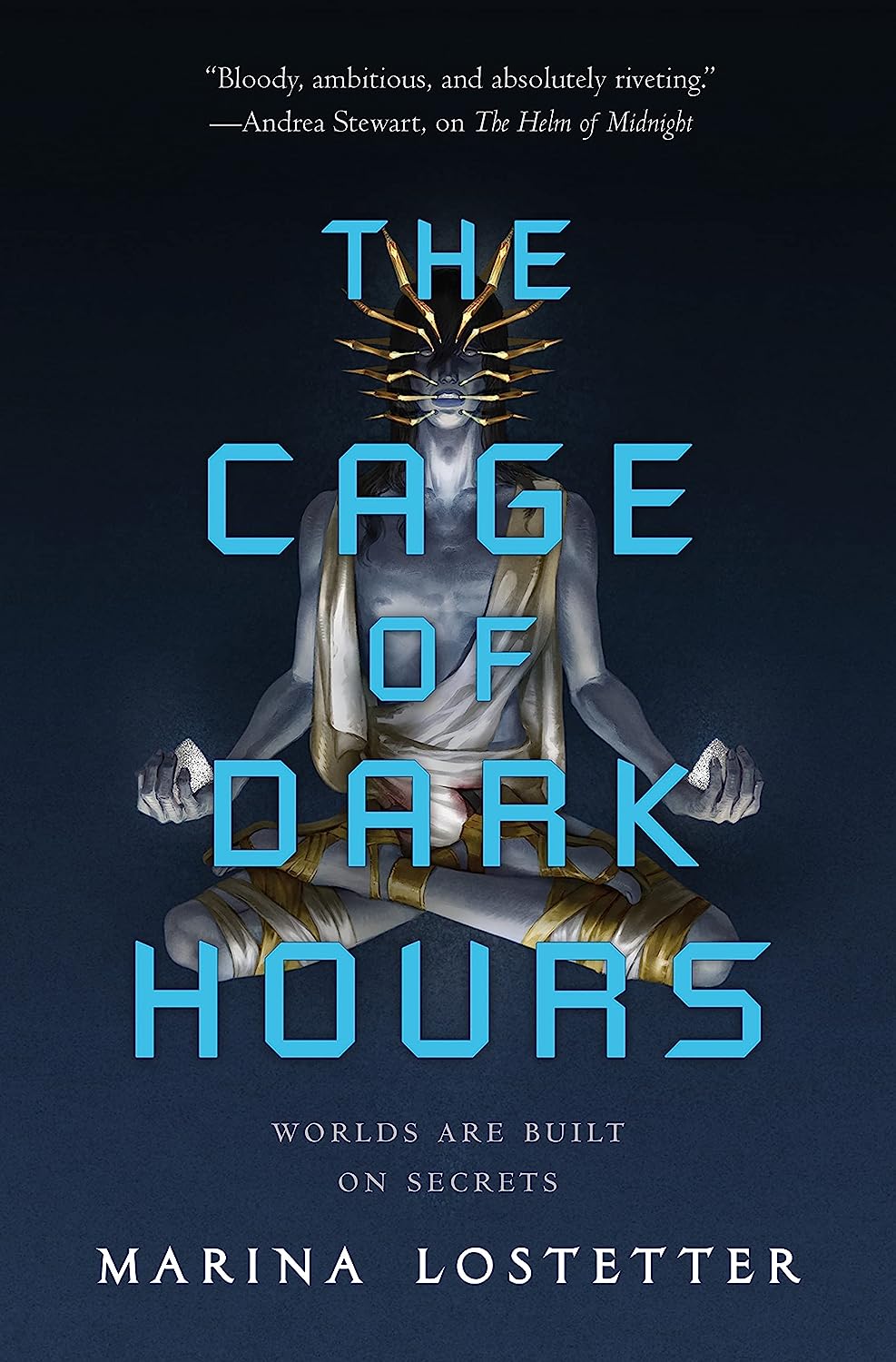
Fantasy Detectives and an Ancient Mystery Cult: The Five Penalties Trilogy by Marina Lostetter

Fantasy Detectives and an Ancient Mystery Cult: The Five Penalties Trilogy by Marina Lostetter


The Helm of Midnight
and The Cage of Dark Hours
(Tor, April 2021 and February 2023). Covers by Sam Weber and Reiko Murakami

Marina Lostetter has had a heck of a career in just the last ten years. She started publishing in Orson Scott Card’s Intergalactic Medicine Show in 2012, and quickly followed up with sales to Galaxy’s Edge, Lightspeed, Daily Science Fiction, Shimmer, Uncanny Magazine, and many other fine outlets. Her first three novels, all part of the Noumenon space opera trilogy (published 2017-2020) won wide acclaim from major outlets (“Brilliant… the genre at its very best.” — Kirkus Reviews; “Lostetter remains at the forefront of innovation in hard science fiction.” — Publishers Weekly).

Last year Lostetter released her first fantasy novel, The Helm of Midnight, and five months later followed up with the aliens-vs-robots adventure Activation Degradation. She’s only published one book this year, The Cage of Dark Hours (sequel to Helm of Midnight, and the second book of The Five Penalties trilogy), but it’s still early.

Read More Read More

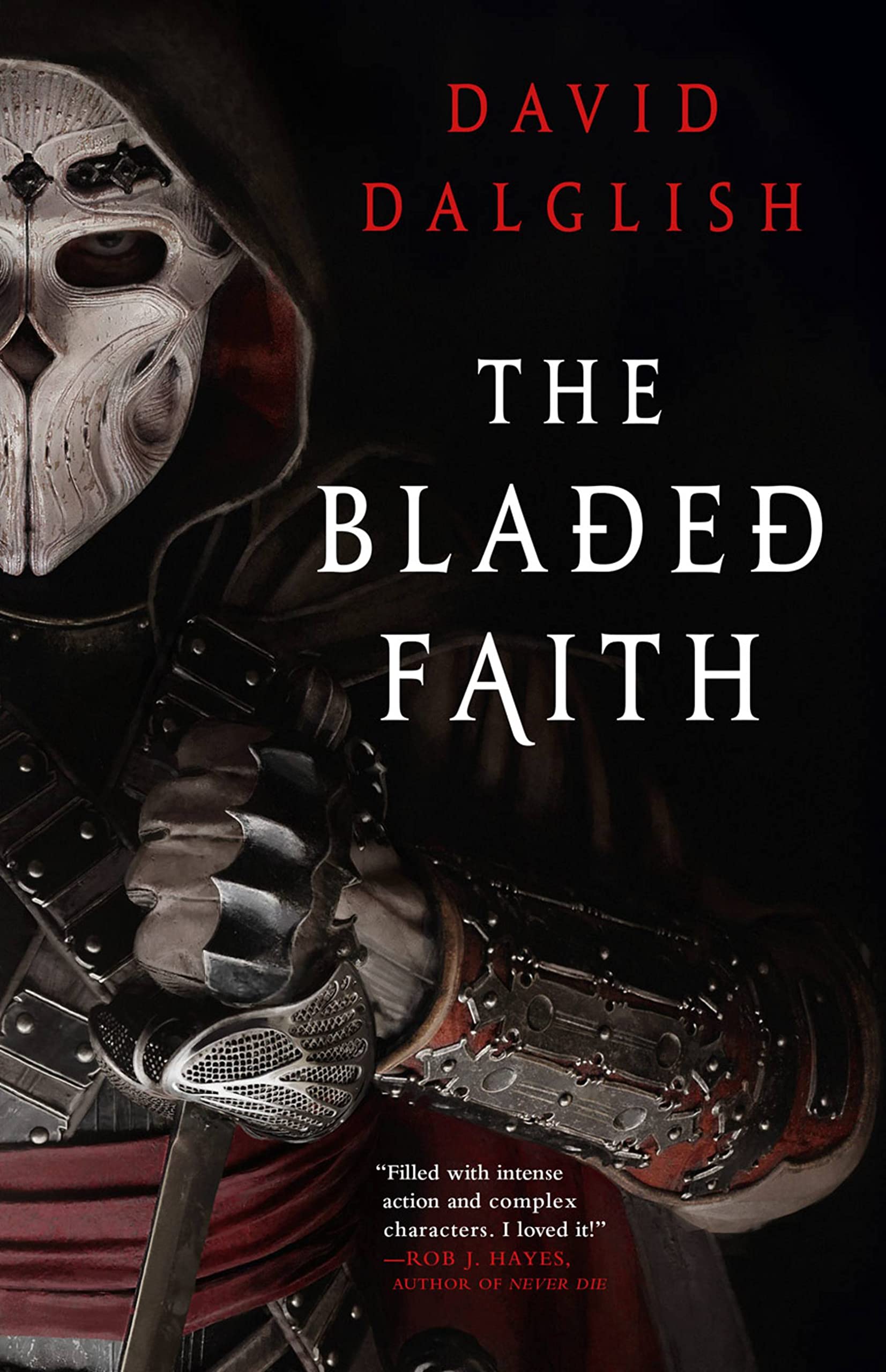
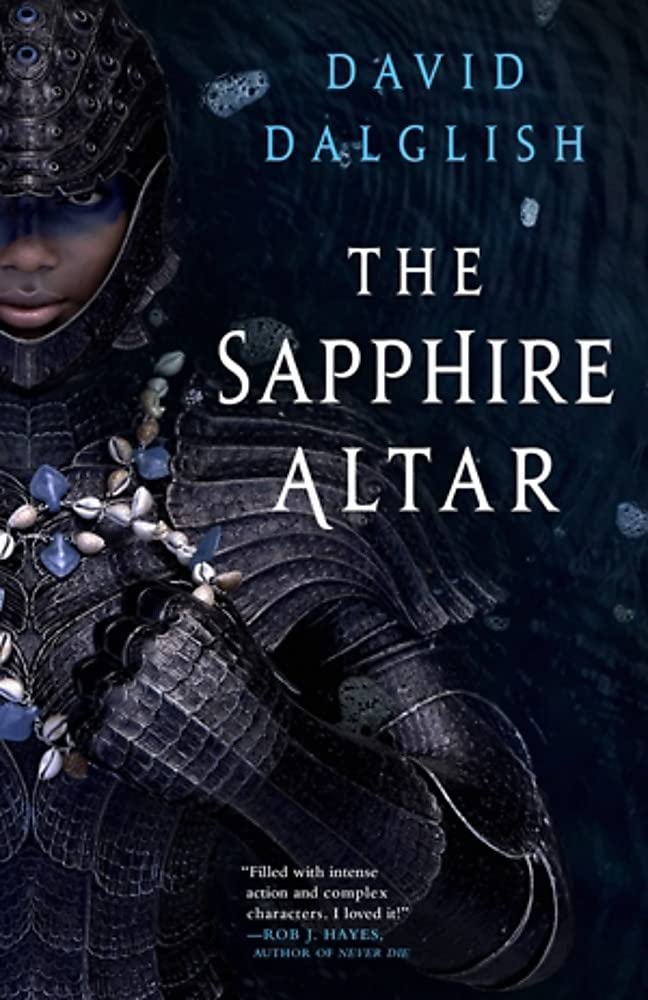
New Treasures: Vagrant Gods by David Dalglish

New Treasures: Vagrant Gods by David Dalglish


The first two novels of the Vagrant Gods trilogy: The Bladed Faith and The Sapphire Altar
(Orbit Books, April 5, 2022 and January 10, 2023). Cover art by Chase Stone

David Dalglish is the author of more than two dozen fantasy novels, including the Seraphim trilogy, the 6-volume Shadowdance series, and The Keepers trilogy. His Vagrant Gods trilogy, which opened last year with The Bladed Faith, takes place in a brand new setting, a world in which an usurped prince dons the skull mask of a legendary assassin to reclaim his kingdom and his slain gods.

Booklist says “This dark adventure will hook genre fans with its detailed world building, strong characters, and gory, action-packed scenes,” and BookPage calls it “beautiful, grandiose and expansive.” The second volume in the series, The Sapphire Altar, arrived in January, and the third book, The Slain Divine, is due on January 9, 2024.

Read More Read More

Talking Tolkien: The Singularity of Vision in Tolkien’s Middle-Earth – By Gabe Dybing

Talking Tolkien: The Singularity of Vision in Tolkien’s Middle-Earth – By Gabe Dybing

Talking Tolkien took a break last week so my annual Summer Pulp series, A (Black) Gat in the Hand, could pop in. But we’re back to the Professor this week. Gabe Dybing and I talk about RPGing on the side – we even started a short-lived Conan campaign. So I was thrilled when I conned him into…I mean, he agreed to contributed a post on MERP. If you don’t know what MERP is, read-on. Those were some terrific RPG books.


I have decided to take “Discovering Tolkien,” the title of this series, as my means of entry into the subject. By doing so, I can only hope that I happen to make (if not “new”) interesting or sideways observations about Tolkien’s awe-inspiring achievement. And this approach moreover gives me the opportunity to address a subject that this series’s editor has wanted me to handle, which is the nature of Iron Crown Enterprises’s (I.C.E.’s) Middle-Earth Role Playing (MERP), specifically the 1987 edition that I purchased at Waldenbooks in the Eden Prairie Center in Eden Prairie, Minnesota, a game that, incidentally, also introduced me to roleplaying in general.

Some may feel that I add too much detail, by citing precisely where I bought MERP, but I expect that I may find some sympathy with others who are perhaps about my own age – this year I am approaching age 48. These details, the milieu in which I discovered Tolkien, are inextricably bound together with the experiences of reading and re-reading this masterwork of English Language and Literature. They also inform the ways in which I continued and continue to explore this achievement through other media.

Let me pause for a moment on “incomparable.” I don’t want to be misunderstood: of course I can compare all manner of worlds and works to Tolkien’s Middle-earth, but, in my view, none will “measure up.” In many ways, my discovery of Tolkien in the fifth grade began a lifelong and – to this day – never ending quest to discover it again, and I don’t think I ever shall.

That’s not to say that some works haven’t come close. I don’t intend to be “critical” in this essay, so please let me deal glancingly with the productions that most obviously were meant to imitate Tolkien.

Read More Read More