Browsed by
Author: Greg Mele

Neverwhens, Where History and Fantasy Collide: Of Orks and Orkney

Neverwhens, Where History and Fantasy Collide: Of Orks and Orkney

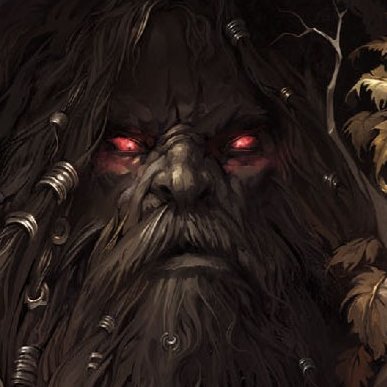
Scott Oden Scott Odin

One of these men is an author, the other is Odin…there’s more commonality than you might think.

Scott Oden  is an American writer best known for his historical novels set in Ancient Egypt and Ancient Greece, and historical fantasy. Oden’s breakthrough novel was 2005’s Men of Bronze, set in late Pharonic Egypt; it was followed in 2006 by Memnon and in 2010 with The Lion of Cairo, which mixed pulp-style action and sorcery with Crusader politics in Fatimid Egypt. His most recent novels are the opening volumes of the saga of Grimnir, the last orc, following a quest for revenge across the centuries, from Brian Boru’s Ireland in the 11th century to 14th century Messina in the forthcoming third and final volume. Considering how much his areas of interest and writing overlap with Christian Cameron, whom I interviewed last month, it was fascinating to see how much the two authors methods of world building do, and don’t, overlap.

GM: So you’ve written both historical fiction and fantasy. Which genre was your first love?

SO: Definitely fantasy. The Hobbit was my gateway text, back when I was 8 or 9 years old, and I quickly followed that with The Lord of the Rings, Robert E. Howard’s Conan (the Ace editions), and eventually Moorcock’s Elric and Karl Wagner’s Kane. I liked some historical fiction as a kid, mainly the fictionalized biographies of Harold Lamb — especially Alexander of Macedon… what kid wouldn’t marvel to the feats of Alexander, as described by Lamb? I was — and remain — a huge aficionado of Greek, Roman, Egyptian, and Norse myth. I had this little pocket-sized encyclopedia from Scholastic called Gods, Demigods, and Demons by Bernard Evslin. I still have that battered old copy . . . [GM: So do I!!!]

Read More Read More

Neverwhens: Where History and Fantasy (Careers) Collide — an Interview with Christian (and Miles) Cameron

Neverwhens: Where History and Fantasy (Careers) Collide — an Interview with Christian (and Miles) Cameron

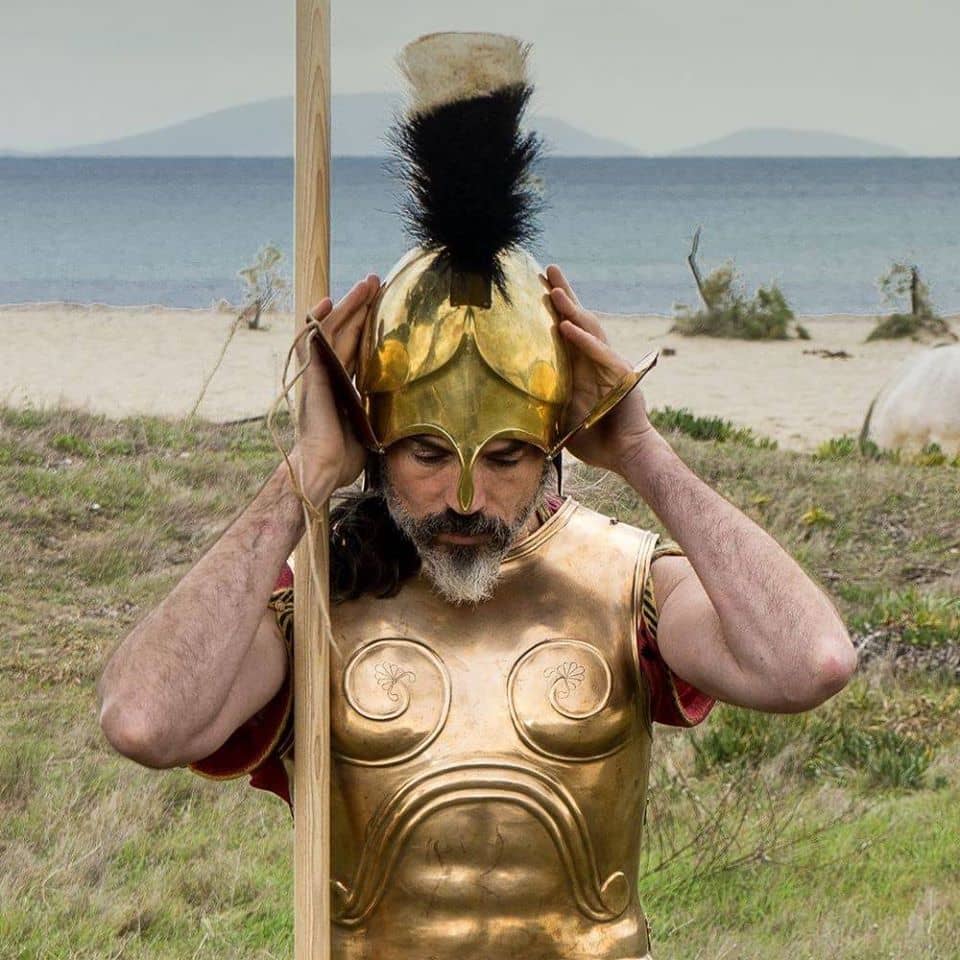
C Cameron as Hoplite -- Alternate-small

Christian Cameron as a Hoplite

Christian Cameron, a well-known historical fiction author who writes espionage novels under the pen name Gordon Kent and fantasy under Miles Cameron, is a Canadian novelist who was educated and trained as both an historian and a former career officer in the US Navy. His best-known work is the ongoing historical fiction series Tyrant, set in Classical Greece, which by 2009 had sold over 100,000 copies. But in recent years he’s not only chronicled ancient Greece, but 14th-century European history — military, chivalric, and literary — in England, France, Italy, and Greece and roughly in parallel with the career of Chaucer’s knight (the Chivalry series). And, as Miles Cameron, he also writes fantasy with the Traitor Son tetralogy and Masters & Mages trilogy.

Cameron is a passionate reenactor, and uses the experiences of reenacting, including knowledge of the material culture and the skill sets required to recreate any portion of life in the past as essential tools in writing his novels. Cameron helps organize and direct military and non-military reenactments in the United States, Canada, and Europe. In addition to recreating the life of an early 5th-century BCE Plataean Hoplite, Cameron also runs a group dedicated to the role of rangers and Native Americans in the American Revolution, and participates in tournaments as a knight of the late 14th century. One such tournament is the Deed of Alms, an annual HEMA (Historical European Martial Arts) charity tournament hosted in Toronto to combat homelessness.

GDM: So you’ve had a long and very successful run as an historical fiction writer before adding fantasy to your repertoire. Which genre was your first love?

CC: Fantasy all the way.  Except Dumas’ Three Musketeers, which is to me the greatest adventure novel ever written. I had a friend who was seriously in to ‘Old School’ fantasy; Lord Dunsany, Tolkien, E.R. Eddison, Robert E Howard… etc.  Amazing stuff.

Read More Read More

Neverwhens, Where History & Fantasy Collide: Witcherian Swordplay and…. er… 14th century Mullets?

Neverwhens, Where History & Fantasy Collide: Witcherian Swordplay and…. er… 14th century Mullets?

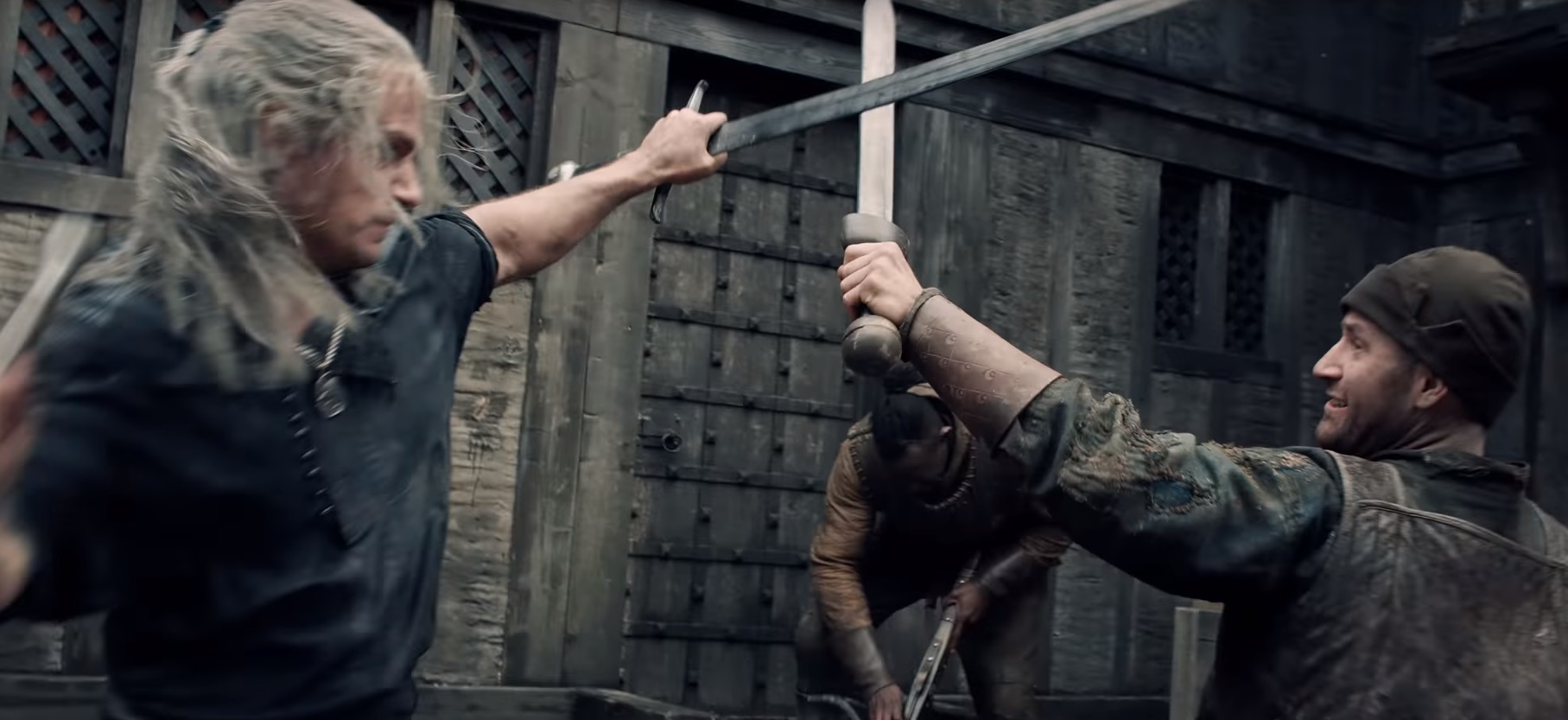
The Witcher sword fight-small

OK, this is just STUPID, assuming one likes their fingers. (If, you are also angry that a guy in vaguely
Renaissance clothing is swinging a Roman gladius at a man with a medieval longsword,
I salute your attention to detail, but you’re probably watching the wrong show.)

There’s an interesting side-effect to being a researcher and author on historical, European martial arts (HEMA), especially when you also own a large, full-time school for the same in a major city. I wish I could say that side-effect is vast wealth and fame (someone pass a Kleenex to my wife, she always tears up when she laughs), but instead it is that, every time there is a major media event involving something sword-like, a well-meaning reporter wants your take on its authenticity. This happened almost every season during Game of Thrones, until I quipped “the show is so much more exciting when everyone keeps their swords sheathed,” and perhaps the funniest one was when The Force Awakens came out and the interviewer wanted my take on Kylo Ren’s new lightsaber style with its cross-guard/vent thing. I tried to give an honest answer:

Well, that seems a great way to cut your own arms off, but it sure looks neat. As to how they fight with the saber… I have to be honest, I have no idea how a psychic, telekinetic space-wizard uses a very light, edgeless plasma-beam trapped inside a force-field.** But it was fun!

**If I bungled some detail of lightsaber technology in that reply, don’t tell me. Ignorance is bliss, and honestly, it won’t change the point — a lightsaber isn’t a real sword, doesn’t behave like  a sword, nor are Jedi normal people. Consequently, the fights can pretty much be whatever the director wants. If you’re looking for “realism” in Star Wars, and have zeroed in on critiquing the lightsaber fights, you’re so far down the rabbit hole, I can’t save you.

Read More Read More

Neverwhens, Where History and Fantasy Collide

Neverwhens, Where History and Fantasy Collide

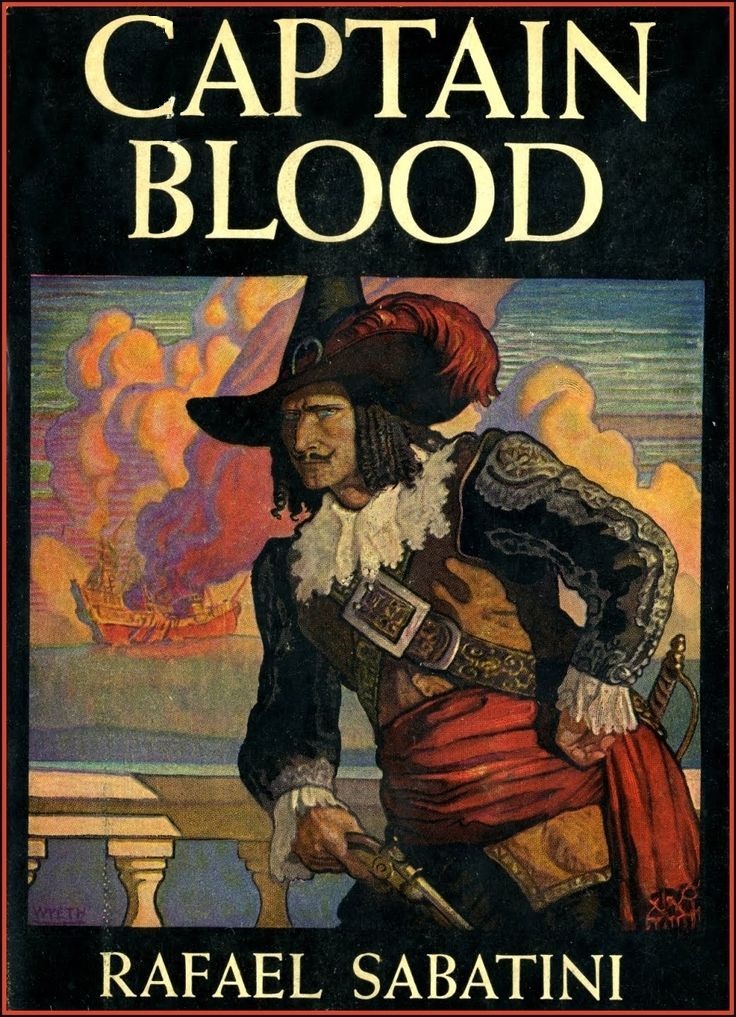
Captain Blood Sabatini-small

Fantasy and Science Fiction are often viewed as two distinctive, though related, forms of speculative fiction, but in reality, the genre is a continuum in which the dreamscapes of a Lord Dunsany or Robert Holdstock can lead us through twisting turns of possibility until we arrive at Andy Weir and Ian Banks, or a Neal Stephenson story of “digital resurrection” can turn into a story of gods, goddesses and quests.

The central theme, the true “Call of Cthulhu” behind good speculative fiction is not “swords, sorcerers or blasters,” but the author’s ability to take the reader out of the comfort of our mundane world, and by introducing varying degrees of what-ifs, neverwhens or neverwheres to take us on inward journey that stimulates our imagination, our sense of wonder, our ability to consider this spinning rock we live on today. Of course, what I am talking about is “world-building.” The world building may be subtle, introducing only the smallest tweaks to reality, or it may be the all-encompassing sweep of foreign lands, peoples and languages, most famously represented by Tolkien’s The Lord of the Rings.

There are a lot of ways to tackle world-building, but this column is going to focus on one: historicity in fantasy fiction. Full disclosure: I have a background in medieval history and have spent most of my adult life meticulous reconstructing medieval martial arts from primary source material. So, I’m a nerd. For the average fantasy reader, an obvious pushback is “it’s fantasy, Greg, what does it matter?” I am glad I asked for you!

Read More Read More