Richard Stark’s Parker, Part 7: The Outfit
 |
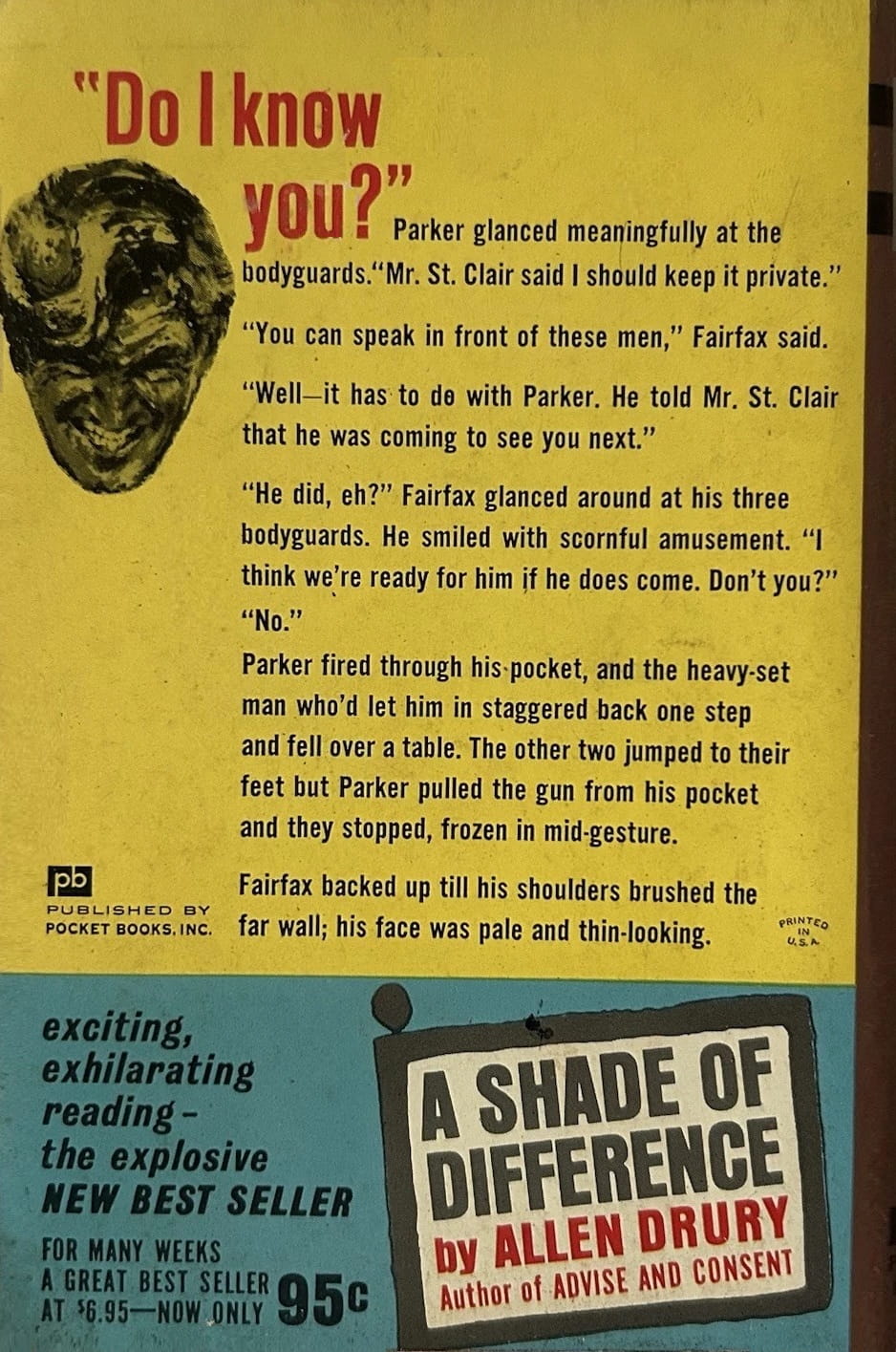 |
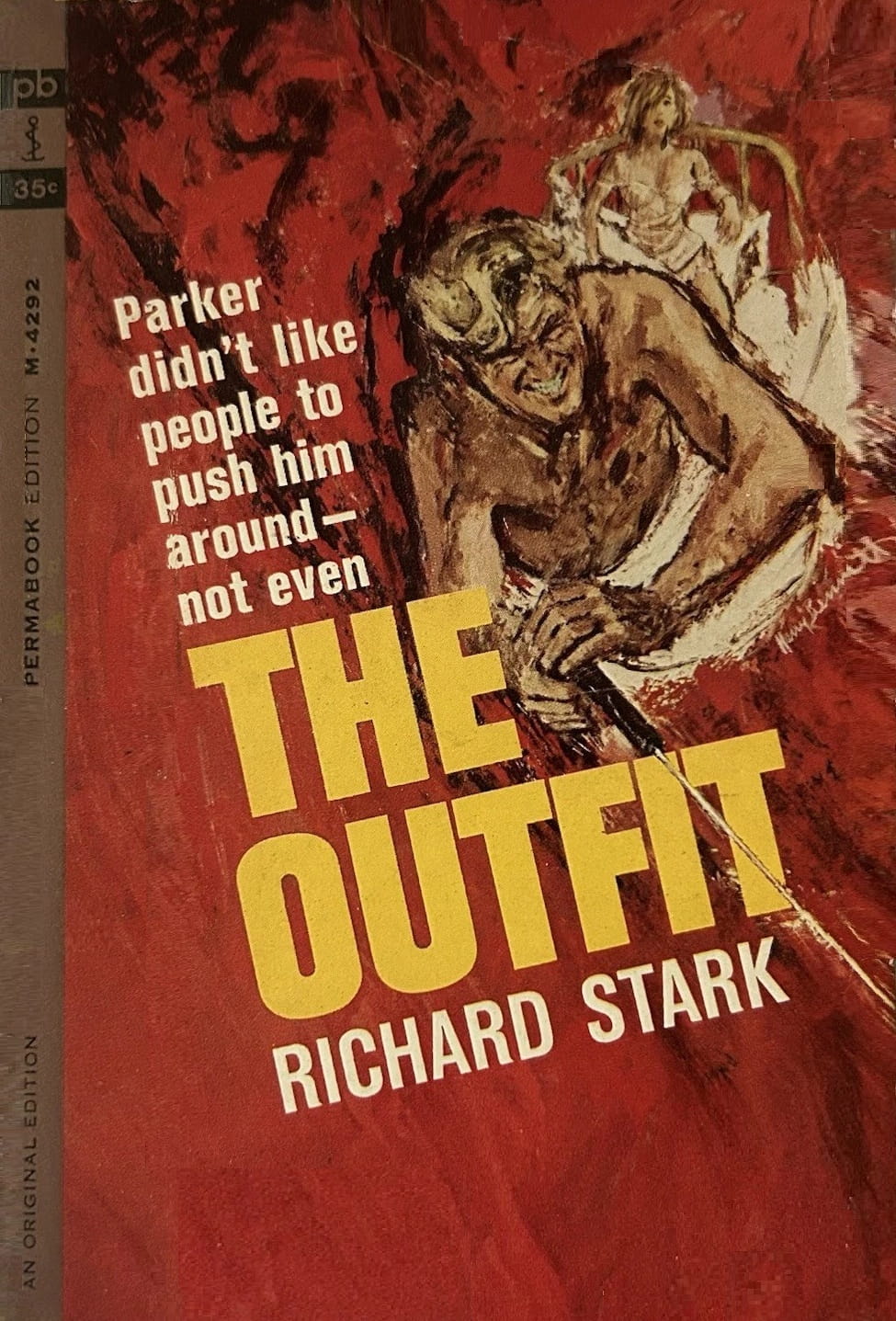
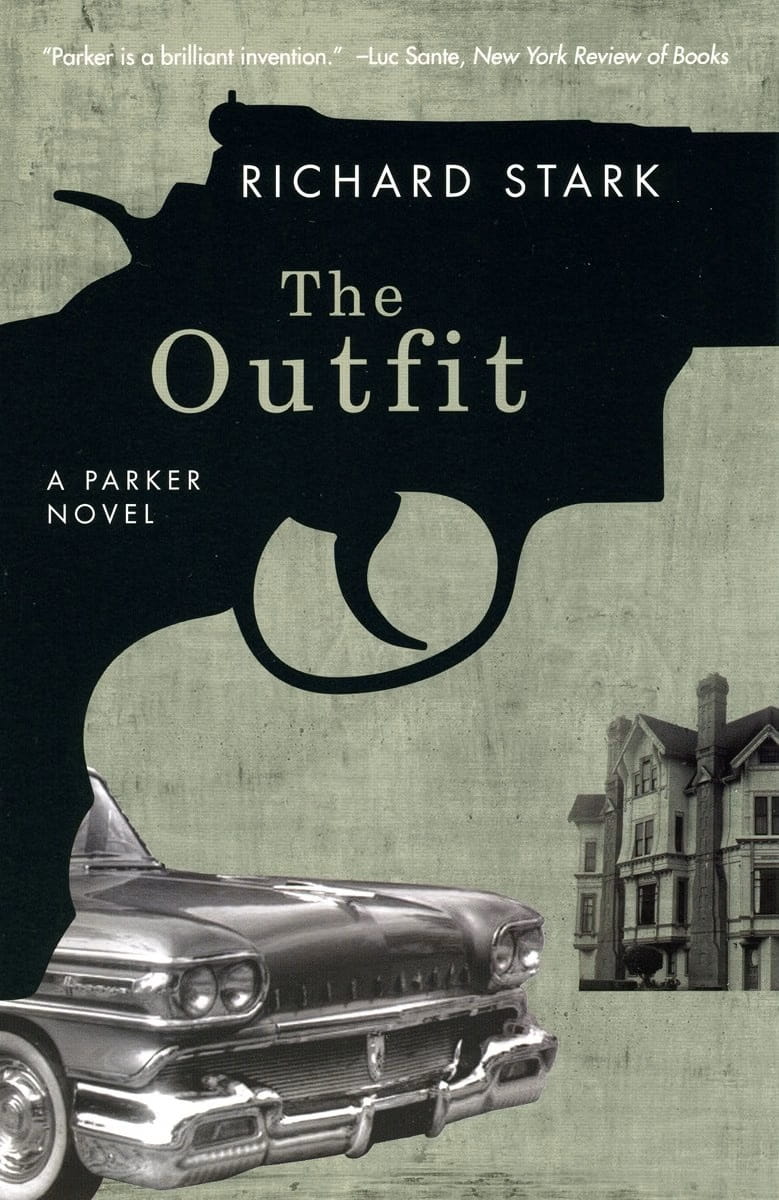
The third Parker novel: The Outfit (Pocket Books, 1967)
What is it?
Volume 3 of Richard Stark’s Parker series of crime novels. It is also the third part of the unofficial Outfit Trilogy, the first three books in the series, in which Parker goes up against an organized crime syndicate.
Quick and Dirty Summary
After surviving an assassination attempt by a killer hired by the Outfit, Parker decides it’s time to settle matters with organized crime once and for all.
He writes letters to other criminals and heist artists he knows, all across the country, encouraging them to hit targets run by the Outfit. He believes they all have cased Outfit joints before, and have found their vulnerabilities, but have refrained from actually robbing them because of a sort of “professional courtesy”–they’re run by organized crime. But he also believes they’re particularly vulnerable to being robbed because they’ve gotten soft and complacent, and their employees think of themselves as regular, white-collar workers rather than criminals. They will therefore be less likely to resist a robbery attempt.
Various robberies then occur, each one successful and each one costing the Outfit many more thousands of dollars. Parker’s plan is to make life so uncomfortable for the Outfit that it sees the wisdom in leaving him alone.
While the robberies that result from Parker’s letters are playing out across the country, Parker tracks down the mansion where Bronson, the national head of the Outfit, is currently residing. He and occasional accomplice Handy McKay watch it for days, observing patterns. Once they feel they know the comings and goings of the gangsters that live there with Bronson, Parker makes his move–invading a house filled with armed tough guys and planning to single-handedly kill the top mob boss in the country.
The Objective
Parker isn’t looking to make any money this time around. He just wants to end the constant attempts on his life by the Outfit.
He contacts one of the second-tier lieutenants of the Outfit, Karns, and strikes an informal deal. Parker will eliminate the man at the top of the mob food chain, thereby elevating Karns to that position. In return, Karns will call off the hits on Parker.
Part of the fun of the first three Parker novels is seeing the organized crime men constantly underestimating Parker and dismissing the idea that he can actually cause them or their syndicate any harm. He’s Parker – of course he can. And he does.
The Adversary
Parker has finally worked his way up to Arthur Bronson, national head of the Outfit.
Bronson is, of course, surrounded by lots of armed men that Parker will have to go through to get to his target.
There’s also an entertaining diversion where Parker visits a redneck family in extremely rural Georgia to buy a car, and gets accused of messing around with the wife of one of the hicks. “Parker meets Hee-Haw” was not something I was expecting, the first time I read these books. But there is a similar scene in the previous book, involving the three people who live at the plastic surgeon’s clinic. So a pattern does seem to be emerging, of a frustrated Parker occasionally having to deal with small groups of very stupid people. And it’s quite funny.
The String
Handy McKay returns for another heist. He and Parker go in together on the home invasion of Bronson.
Again, Handy swears this will be his last job before he retires and opens a diner in Presque Isle, Maine. Whether he follows through on that or not remains to be seen.
Others of Note
A gaggle of other low-level heist artists pop up here and there in this book, carrying out various robberies of Outfit joints. This comes after Parker sends them letters suggesting now might be a good time to try it.
The Complication
At the start of the book, Parker is in bed with a beautiful blonde named Bett Harrow, when the hitman comes in through the window. By the time Parker has dealt with the would-be killer, Bett has disappeared, along with Parker’s pistol. He’s certain she intends to use it to blackmail him. What she wants from him, we don’t know yet.
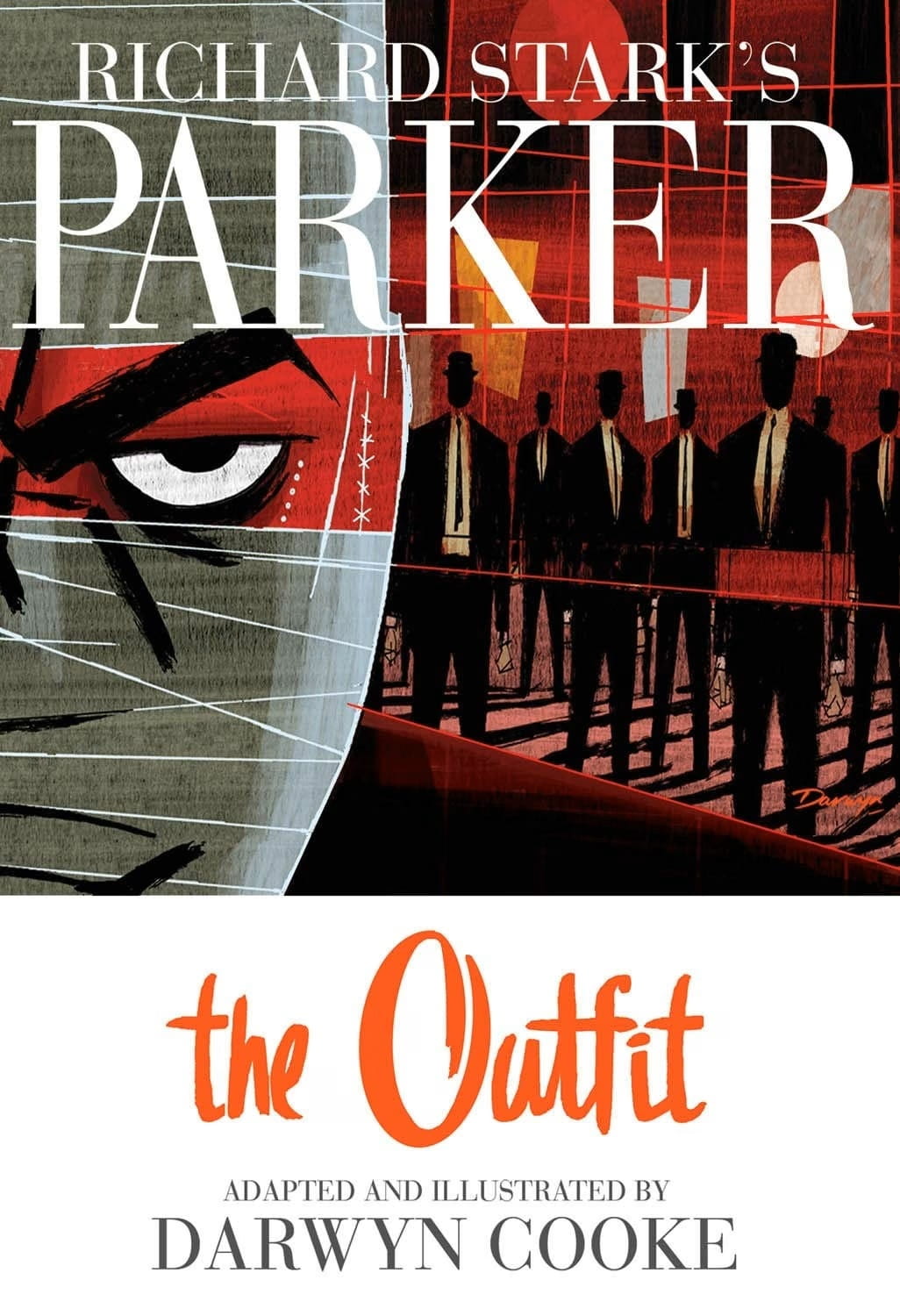
Adaptations
Darwyn Cooke adapted The Outfit into a 160-page graphic novel of the same name. It is spectacularly great.
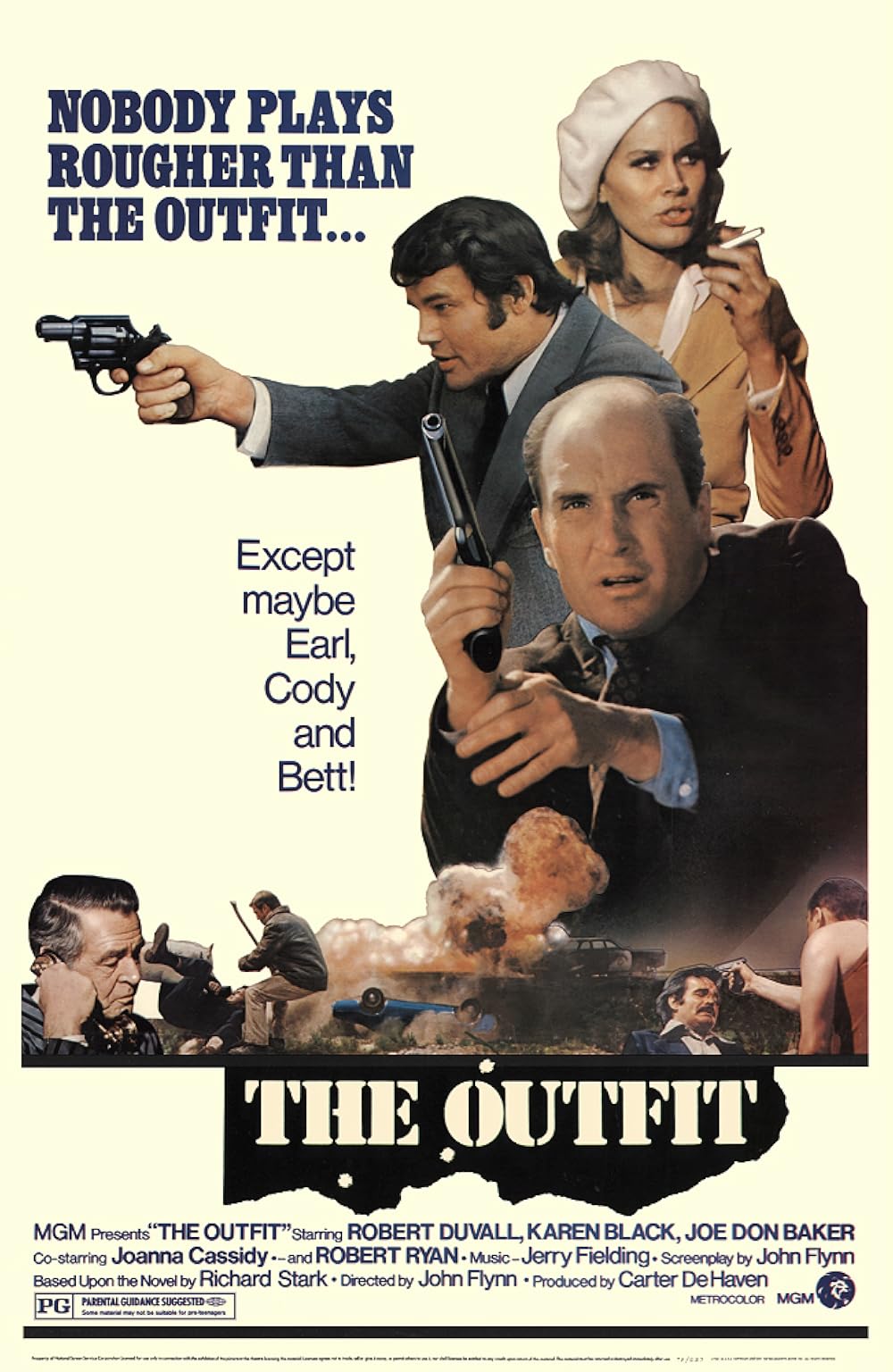
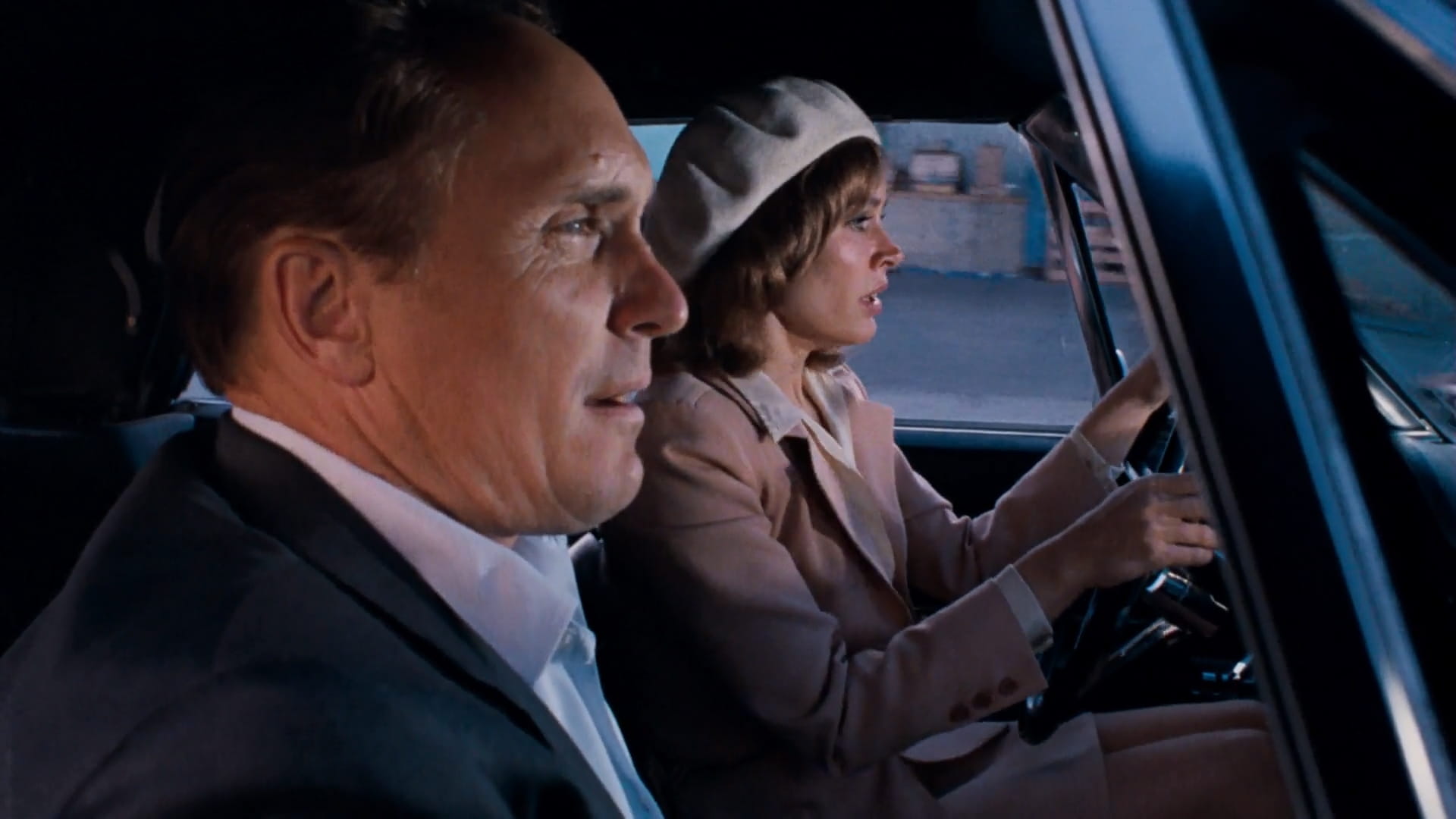
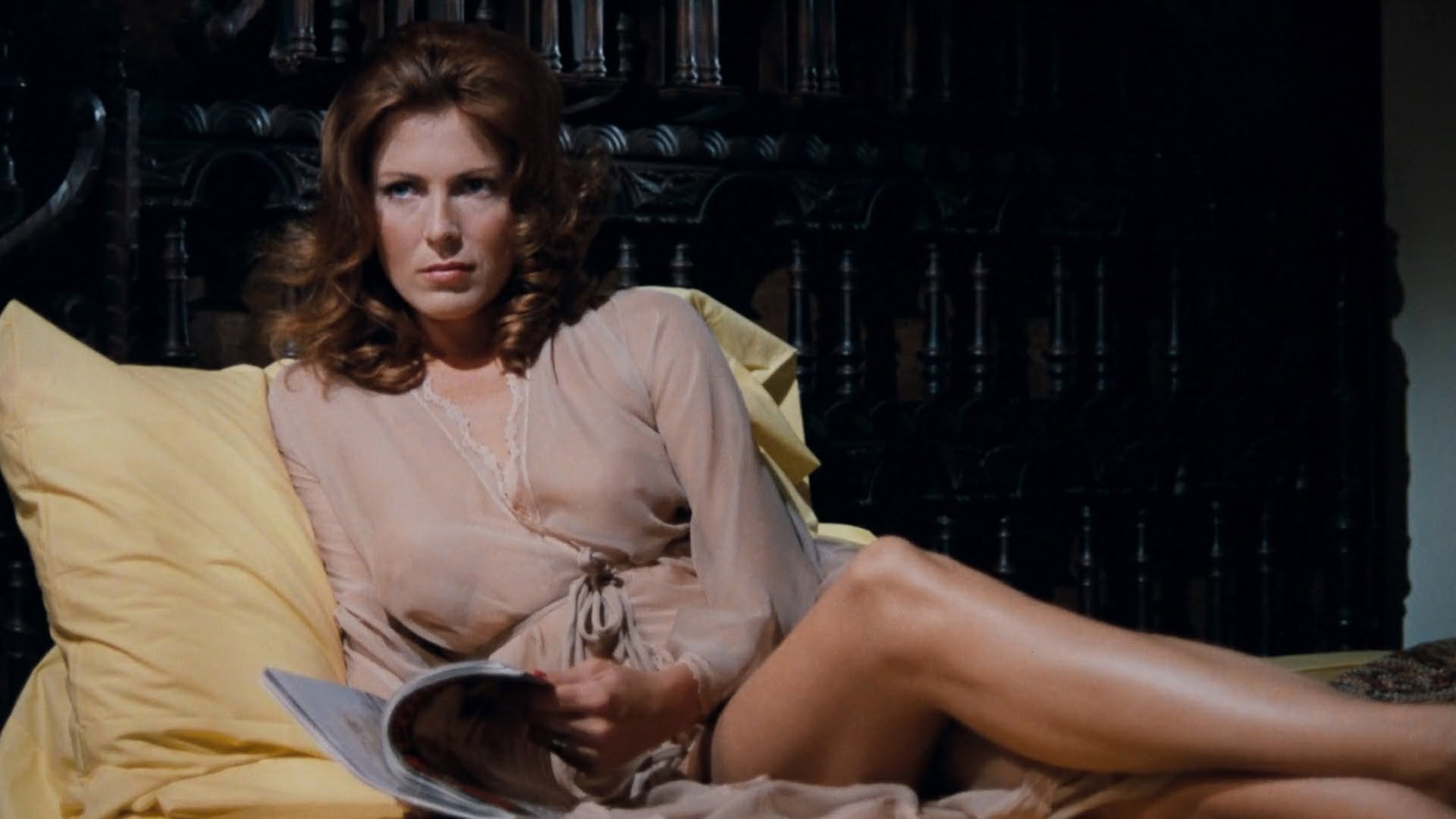
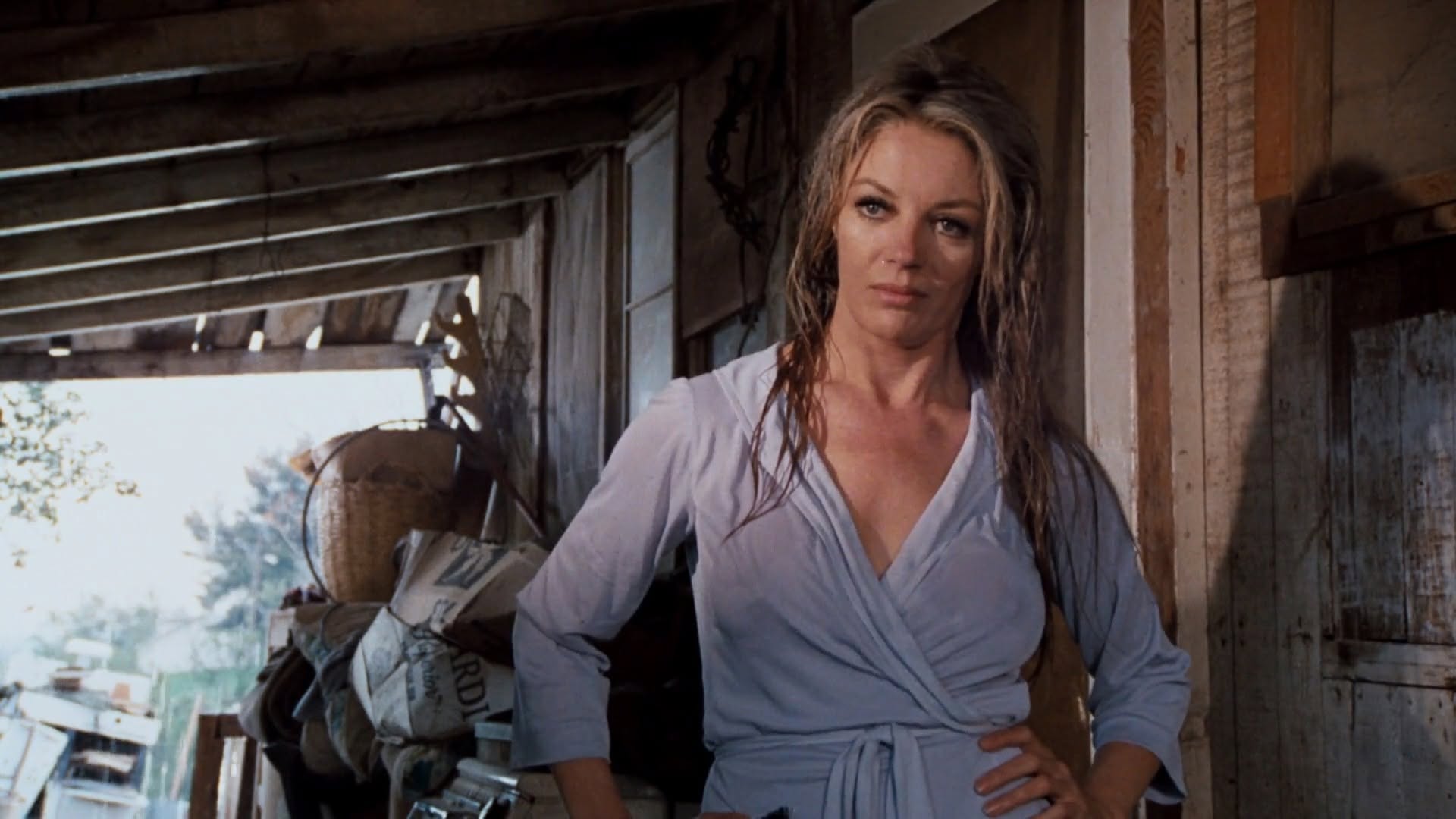
John Flynn wrote and directed a movie version in 1973, about which opinions are usually divided. It starred Robert Duvall, Karen Black and Joe Don Baker.
Filmed exactly a decade after the novel was published, the movie was originally intended by Flynn to be a period piece, set just after World War II. As such, many of the actors (Elisha Cook Jr., Richard Jaeckel, Marie Windsor and others) were cast due to their connections to post-war films. But then, just before filming, the studio decided to move it forward to the present day, and other members of the cast (such as Karen Black and Robert Ryan) represent that era.
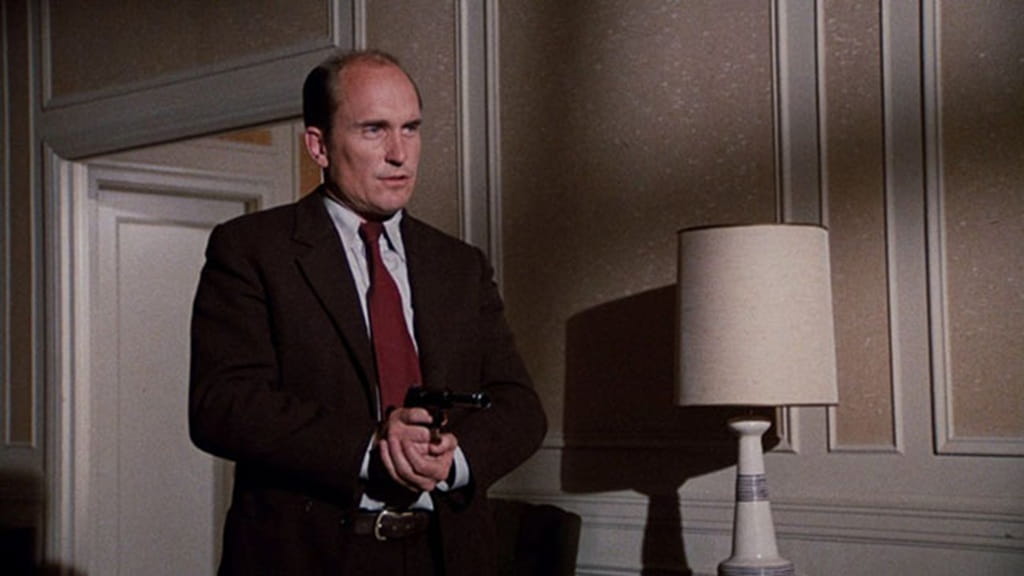
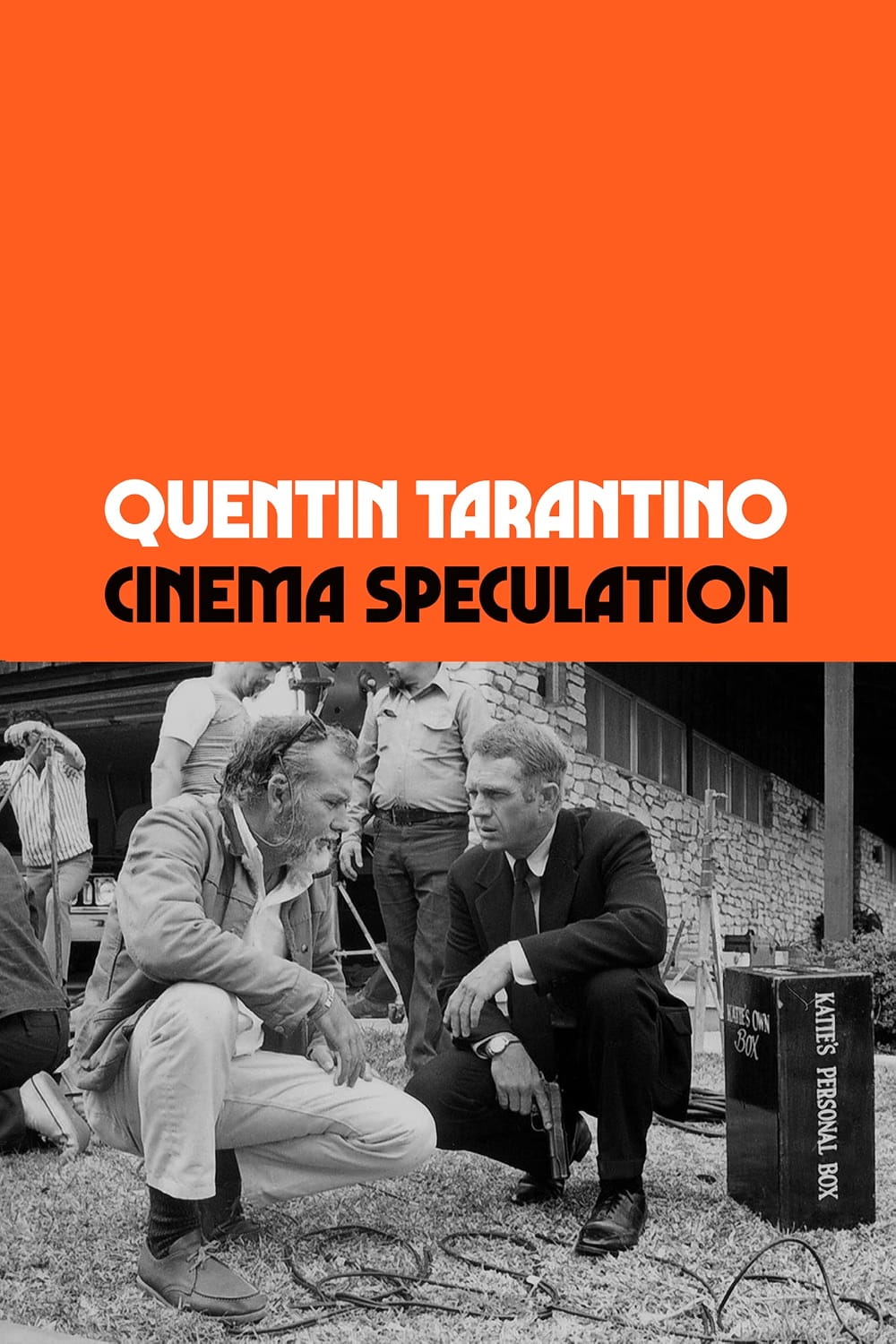
The Outfit wasn’t in theaters long, back in the day, and didn’t do particularly well there. In recent years, however, its reputation has risen. It has been featured in various film festivals, and Quentin Tarantino devotes part of a chapter of his fine Cinema Speculation book to it.
Adaptations made prior to Donald Westlake’s death were not allowed to use the name “Parker,” so he’s “Macklin” in this one.
I do have a couple of notes about it — one a compliment and the other a tiny complaint.
In the book prior to this one, Parker has just had plastic surgery (The Man with the Getaway Face). Consequently, throughout the two books, none of his old confederates in crime recognize him. Stark makes much of their suspicions of this seeming “newcomer” who claims to be their old associate.
But that’s way too complicated for a quick, less-than-two-hour movie — one that needs to be focused squarely on the (criminal) matters at hand. So, instead, the screenwriter added a deceased brother for Macklin. That one ingenious addition resolves all the “plastic surgery” issues. In the film, when someone doesn’t recognize Macklin, it’s because they knew his brother, rather than knowing him with a different face. Very smart.
My other point is not so much a complaint as a small missed opportunity. When Macklin goes into the Outfit’s hotel to rob their poker game, the doorman tells him he can’t leave his car where he parked it. Macklin tells him, “I’ll be right back.” After the robbery, on his way out, the doorman shouts at him, “I thought you said you’d be right back!” Macklin replies, “I got held up.”
Instead, Macklin should’ve said, “There was a hold up!”
Note: This movie currently is available for free on YouTube.
How Parker is Parker here?
(With a 1 being he bakes cookies with Claire, and a 10 being Slayground):
I am awarding this book 8 Parkers.
By this, the third novel in the series, Stark has the character nailed down, for the most part.
The only thing that rings somewhat false is Parker writing all these letters, politely asking other criminals to hit the Outfit. Obviously he wouldn’t want to do it over the telephone, for fear of being overheard by the Law. And there weren’t any other options in 1963. But it still seems odd for Parker to be sitting at a hotel desk all night, writing letter after letter to a bunch of crooks across the country.
Other Notes
This book has a terrific opening. Parker is staying in a resort hotel, and in bed with a rich, athletic and gorgeous 29-year-old woman, whom he thinks of as “a good animal.”
A hitman climbs through the window and tries to kill him.
Parker refrains from firing his .32 pistol at the guy out of concern for the loud noise it will make.
Instead of shooting back, he renders the assassin unconscious, and on a quick downward slide to death, by throwing a .32 pistol at him and hitting him in the head.
We’ve seen the old cliche a million times of a gangster or cop firing his gun until it runs out of bullets, then throwing the gun itself at his enemy. (Police Squad made a whole comedy bit out of it.) This is probably the one time ever in crime fiction that throwing a handgun at someone actually worked.
“Die someplace else,” Parker tells the delirious assassin as he basically tosses him down the stairwell.
Quote
His stubby, pregnant .32 was clipped to the springs under the bed like a huge black fly standing upside down, and Parker’s hand was reaching out for it before he hit the floor.
Subjective Rating
7/10
Follows:
Followed by:
Vol 4: The Mourner
Van Allen Plexico is a multi-award-winning author, member of the SFWA, and a Pulp Grandmaster. Among his many novels are the Harper & Salsa crime series, set in the Sixties and carrying something of the flavor of the Parker books, beginning with the 2018 Pulp Factory Award-Winning Best Novel of the Year, VEGAS HEIST. See all of his work at www.plexico.net.
This was the first of the books that was actually fun to read. The first two were necessary for background ingredients and patterning Parker and co., but this is the first I’d reread for its own sake. When Westlake took the narrative view off of Parker to establish the venues, casers, and heists that we got to see being pulled on the various criminal enterprises, it really did fantastic things for immersion. When other authors do stuff like that, it’s usually head-slappingly easy to spot the flaw in the venue or there’s a teeth-gritting moment when the reader wants to grab the victims by the neck and shake because they act particularly dumb. But Westlake set each venue up with near-visual precision and believable functionality, and the people inhabiting the scenes were realistic in their foibles, actions, and reactions.
I could have been happy reading another 60 pages of that, no need for plot advancement. It was beautiful and hilarious.
You’re going to enjoy the last book in the original series, BUTCHER’S MOON. (Or, possibly, you will think it accomplishes the same thing as this book, but with twice as many words!)
Interesting that you felt the first two books are more about setting Parker up. The first book was supposed to be a one-off. And I think many fans feel the second book is one of the better ones. That’s one thing about this series, though– we all favor (and disfavor) different books in it entirely! Looking forward to your continued reactions and impressions.
I’ll be looking forward to “Butcher’s Moon,” then, since that sounds very much like the only thing I’d want to change about “The Outfit”– more!
“The Hunter” could definitely have been a standalone, if Westlake’s editor had left it alone. But, like you said in an earlier article, Parker wasn’t quite Parker in the first book. I’d also say that the world wasn’t quite fully developed until the end of the second book. The set-up (of characters and world) has been completed at about a quarter of “The Outfit,” but there are a few Parker behaviors that wouldn’t quite be expected without the other two books. *Shrugs.* That’s all I meant.
Having to pause at the end of book 6, for the moment. Looking forward to seeing your reviews of the next several!
The chapter that begins with the old lady’s dime was the first time I could really see Westlake’s influence on Stephen King. It has that chatty tone that King sometimes gets, primarily in his non-fiction, but definitely in some chapters of his longer works when he needs to explain something to the reader.
Another chapter in an upcoming book reads like King at his cruellest. Both of these sections read so much like King I would have thought they written by the man.