Forgotten Authors: Arthur Leo Zagat
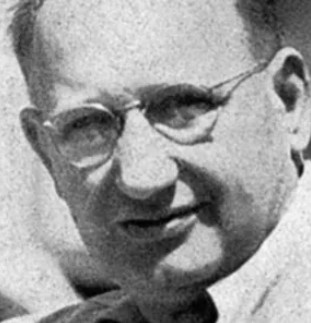
Last week, I mentioned Arthur Leo Zagat, who was born in New York on February 15, 1896. He collaborated with Nat Schachner on their first eleven short stories, before they both launched solo careers. Like Schachner, Zagat attended City College, where he earned a Bachelor of Arts degree. After college, he served in World War I and studied at Bordeaux University before returning home to earn a law degree from Fordham University. He went on to found the Writers Workshop at New York University. In 1922, he married a woman Ruth Knopf and they had one daughter, Hermine.
Like Schachner, Zagat also practiced law until he decided he could make a living writing full time. In 1941, he was elected to the national executive committee of the Authors League’s pulp writers’ section.
1930 saw the start of his career as an author with the publication of “The Tower of Evil,” which he co-wrote with Nat Schachner. The two men collaborated on eleven stories published in 1931 before both turning to their solo careers as authors. Of the two, Zagat would prove to be the more prolific, although he wrote in a wide range of genres, with his science fiction forming only a small part of his output.
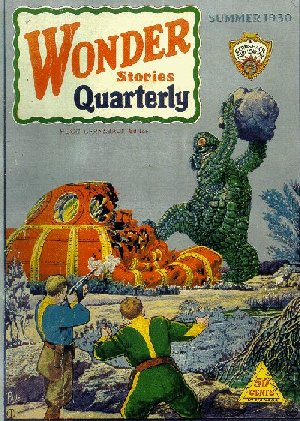
Zagat’s first solo genre story was “The Great Dome of Mystery,” which appeared in the April 1932 issue of Astounding Stories. He branched out to various other pulp magazines, such as Dime Mystery Magazine. He wrote stories about “Doc Turner” that appeared in The Spider, the “Red Finger” series that was published in Operator #5, and under the pseudonym Morgan LaFay for Spicy Mystery Stories, although John Clute has described the LaFay stories as “excruciating.” He also wrote under the pseudonym Grendon Alzee. After 1936, most of his SF genre work appeared in Argosy.
Zagat wrote the six story “Tomorrow” series for Argosy beginning in 1939 with “Tomorrow,” which was set in a near future post-holocaust world. The final two stories in the series, “Sunrise Tomorrow” and “The Long Road to Tomorrow,” were serialized in the magazine.
He also published the novel Seven Out of Time in 1939. Originally serialized in Argosy, it would achieve publication by Fantasy Press in 1949, the same year Zagat died. It tells the story of seven figures from throughout history and brings them to a far future period in which emotions have been lost in order to learn what emotions are and why they are important.
Graham Stone has written that while Zagat helped build many of the tropes of interstellar space travel, such as established shipping lines, his stories had a repetitive feel to them, which may be why he didn’t achieve the reputations of E.E. Smith or Edmond Hamilton. Zagat wrote more than 500 short stories for the pulps, although only about 20 percent of them could be considered within the sf genre.
During World War II, he returned to service, working in the Office of War Information, which served as a form of communications and information between the battlefront and civilian communities through newspapers, radio broadcasts, films, and photographs. Following the war, he remained involved with the military, organizing writers’ workshops for hospitalized veterans.
Zagat suffered a heart attack at his home in the Bronx on April 3, 1949. He is buried Cypress Hills National Cemetery in Brooklyn.
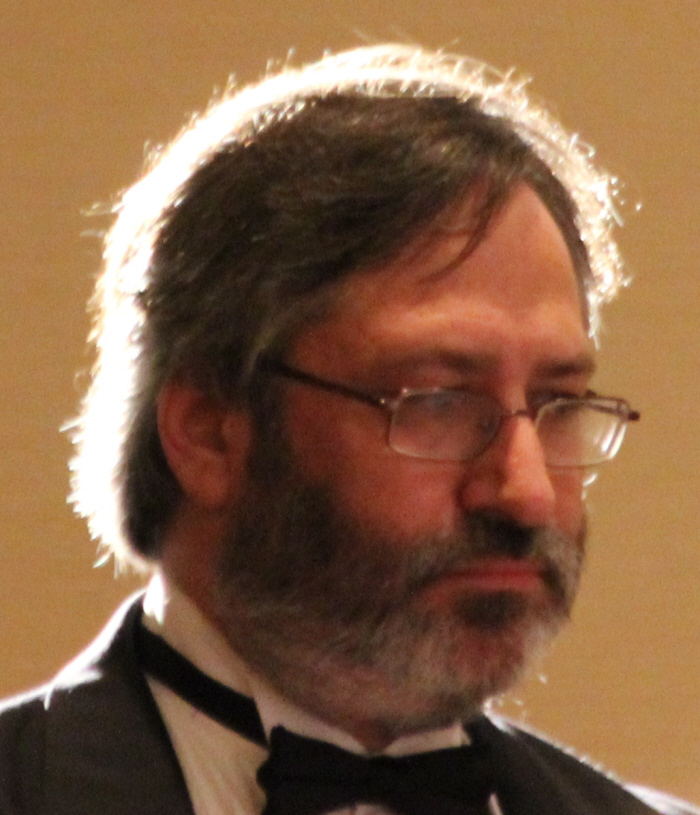 Steven H Silver is a twenty-one-time Hugo Award nominee and was the publisher of the Hugo-nominated fanzine Argentus as well as the editor and publisher of ISFiC Press for eight years. He has also edited books for DAW, NESFA Press, and ZNB. His most recent anthology is Alternate Peace and his novel After Hastings was published in 2020. Steven has chaired the first Midwest Construction, Windycon three times, and the SFWA Nebula Conference numerous times. He was programming chair for Chicon 2000 and Vice Chair of Chicon 7.
The only thing I’ve read of Arthur Leo Zagat’s I’ve read is “Exiles of the Moon” which he co-wrote with Nat Schachner. It makes me wonder how the collaboration worked between the two. I assume they both lived within close proximity to one another that would make writing together practical.
Looking through his entry in the ISFDB, I see there are a few collections of his works through smaller publishers, Altus Press and Ramble House specifically. I’ll have to look into his work as now I’m curious about his writing and I’m always on the lookout for a new (old) author to read.