Forgotten Authors: H. B. Fyfe
Horace Brown Fyfe, Jr. who published under then name H.B. Fyfe, was born on September 30, 1918 in Jersey City, New Jersey. He was educated at Stevens Academy before attending Columbia University. Fyfe served in World War II and earned a Bronze Star. Fyfe’s day job was working as a laboratory assistant and a draftsman.
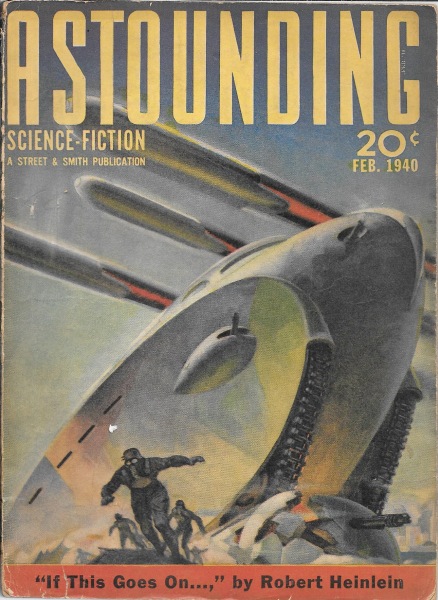
Fyfe began publishing in 1940, with the short story “Locked Out,” which appeared in the February issue of Astounding. Later that year, he published the short story “Hold That Comet!” in collaboration with F.H. Hauser. This was Fyfe’s only collaboration and Hauser’s only science fiction sale. He returned to college after the war and married Adeline Doherty in 1946.
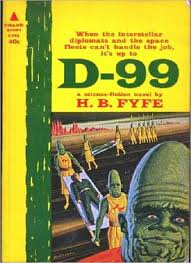
Fyfe may be best known for his stories of the Bureau of Special Trading, which featured alien bureaucrats who were generally outwitted by the humans who they were attempting to stymie. His novel D-99, was unrelated to the BTS series, but it was similar in tone, although Rich Horton commented “That whole aspect of the book is wildly sexist, in a vaguely Mad Men-ish fashion.” Given that Campbell appreciated stories that demonstrated human superiority to aliens, it isn’t surprising that Fyfe’s fiction found a home in Astounding and Analog.
He reversed this trope for the story “Protected Species.” Fyfe has the humans treating the native aliens with contempt. There is a possibility that they are a race that has degenerated since they had built a fallen culture on the planet. Although the humans who are colonizing the world go so far as to hunt them (catching very few of them), a visiting inspector works to have them declared a protected species, with a twist ending that changes everything, but feels as if Fyfe ends the story where it should have really gotten going.
In the July 1951 issue of Astounding, his short story “Experimentum Crucis” appeared with the byline “Andrew MacDuff,” his only pseudonymous story. As with “Protected Species,” this story has the aliens getting the better of the human merchant who sees them as a means of making a lot of money quickly, in this case, by exploring a moon their system that they realize could be harmful to them.
Fyfe’s aliens are not particularly alien, they serve the purpose of the story, but are generally cast in specific roles in order to have the stories play out the way Fyfe wants them to, without any real world or culture building.
Fyfe published about sixty stories before retiring in 1967. Few of his stories stand out above his others. He was a competent author who occasionally could extrapolate to the future, but many of his stories haven’t aged well, relying too much on the culture and mores of the times in which he was writing. Several of his stories show promise, but he rarely was able to explore the ideas he introduced fully.
Adeline died in 1970 and Fyfe later married a second wife, Sonya, who survived him. Fyfe died in Teaneck, New Jersey on November 17, 1997.
I reviewed Fyfe’s short story “The Well-Oiled Machine,” in 2024 as part of my A to Z Reviews series on Blackgate.
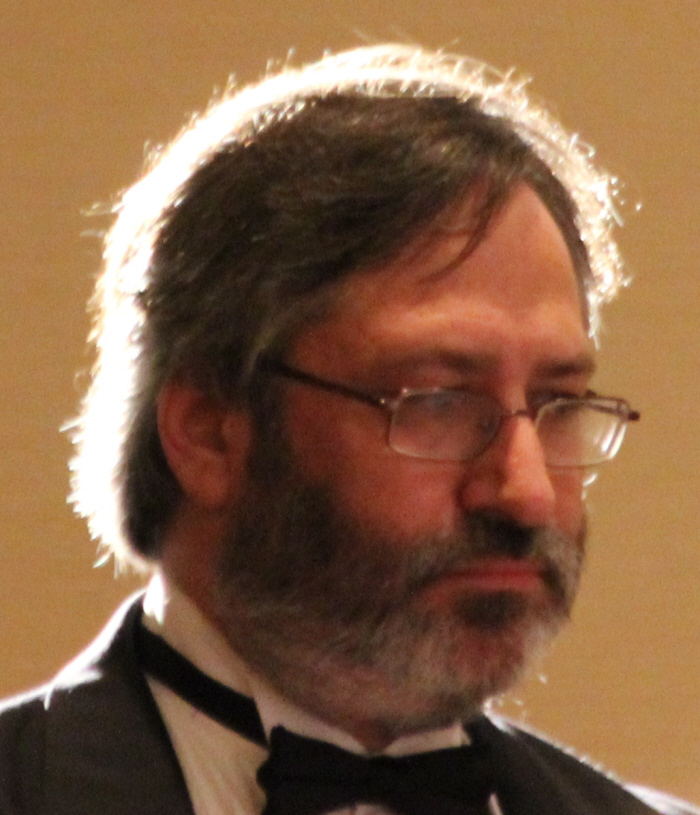 Steven H Silver is a twenty-one-time Hugo Award nominee and was the publisher of the Hugo-nominated fanzine Argentus as well as the editor and publisher of ISFiC Press for eight years. He has also edited books for DAW, NESFA Press, and ZNB. His most recent anthology is Alternate Peace and his novel After Hastings was published in 2020. Steven has chaired the first Midwest Construction, Windycon three times, and the SFWA Nebula Conference numerous times. He was programming chair for Chicon 2000 and Vice Chair of Chicon 7.
I think you nailed Fyfe just about perfectly, Steven.
I do like noting that for a time people speculated that either “H. B. Fyfe” was a pseudonym for “H. Beam Piper”, or vice versa, given that a fife player would be a piper, and that both were Astounding/Analog regulars. (But Piper much the better writer.)
I think his story Manners of the Age (available on Project Gutenberg) deserves some consideration, if only for identifying an issue we all seem to be worrying about now: what happens when we can replace human interaction with sycophantic machines?