Becoming a Reader
I read a lot as a kid and read widely, sampling anything I could find. I always had books on my “want to read” list but also had a lot of chores and never had as much time to read as I wanted.
As a result, when I was a teenager and we were “assigned” readings for school, I resented it. I already knew a dozen books in the library I wanted to read as soon as I could get to them. And, too often, the assigned books were not nearly as colorful or interesting as the stuff I was already reading.
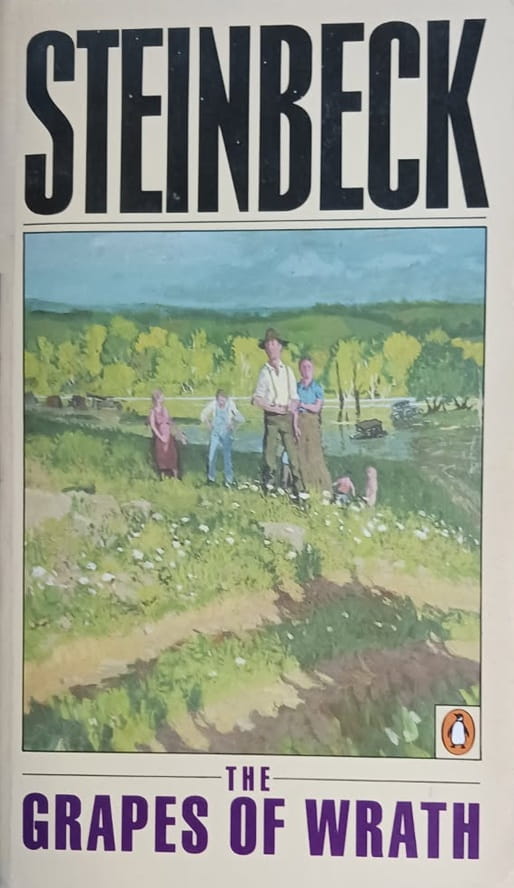
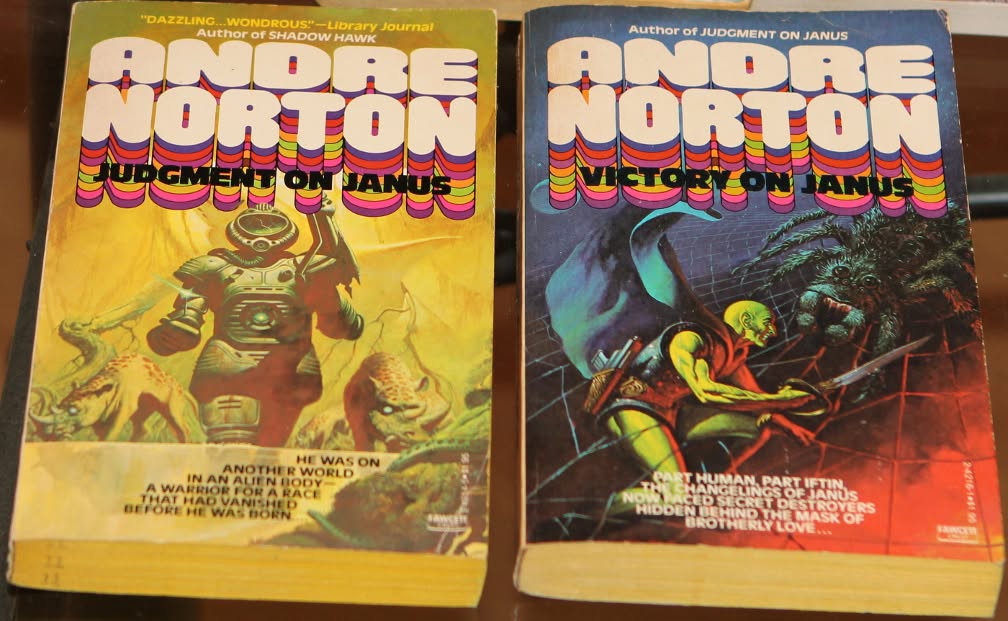
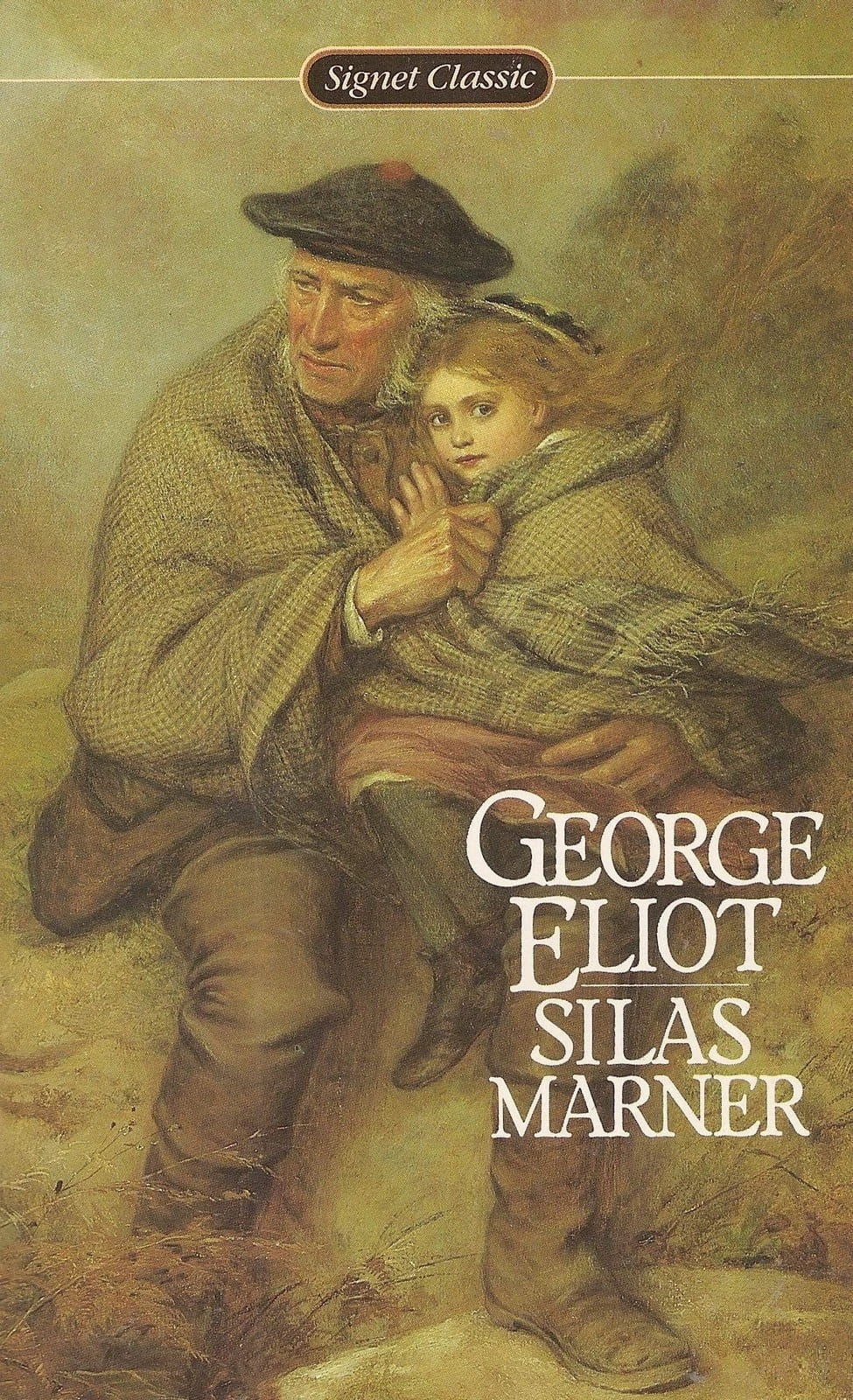
We were assigned The Grapes of Wrath by Steinbeck. A huge book about farmers, which my family was. I wanted to read of lost civilizations and swashbuckling warriors, not chores. We had to read Silas Marner; I hated it. We had to read The Metamorphosis by Kafka, and by then I’d read several books that did the “transformation” concept better than Kafka, particularly Andre Norton’s Judgment on Janus.
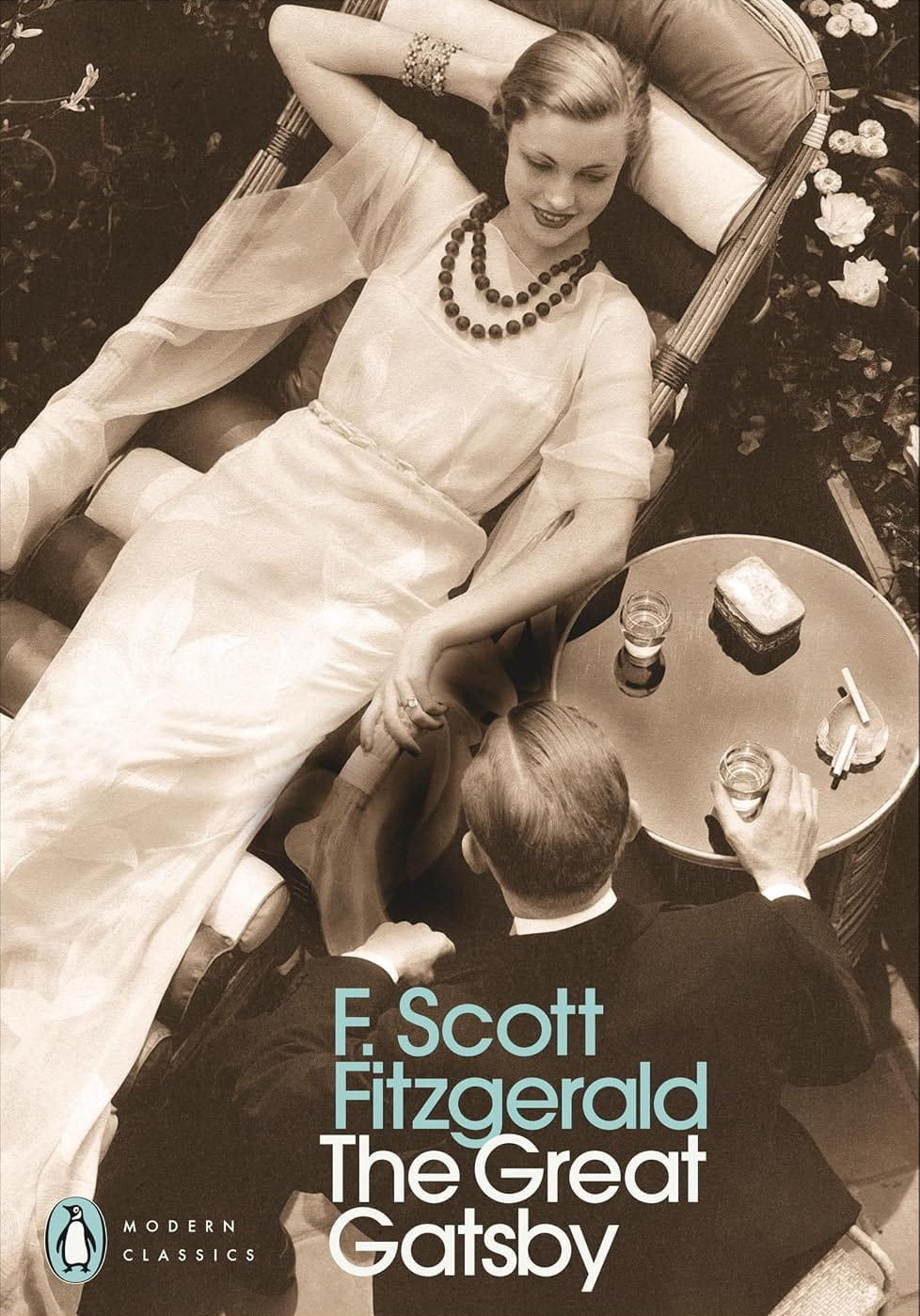
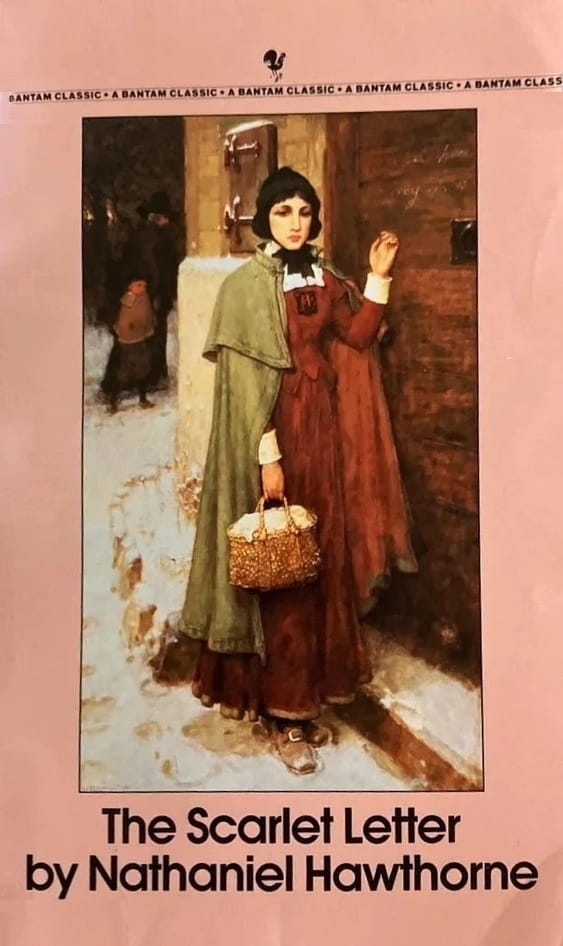
Then we had to read The Scarlett Letter by Hawthorne and I… liked it. It was a historical story, about a foreign time, and yet it connected to my world where religion and sin were major topics. Next we read F. Scott Fitzgerald’s The Great Gatsby. I liked it, too — a totally alien world to me and yet full of some of the glamour I found on Barsoom or in ancient worlds of swords & sorcery.
I was introduced to short stories by Edgar Allan Poe and Jack London, and we even had one Ray Bradbury tale — though I was already a fan because of books like R is For Rocket and The Martian Chronicles. By the time I left high school I wasn’t quite so adverse to being “assigned” reading. I’d found there was potentially good reading everywhere, in all kinds of stories and by all sorts of authors.
Half a dozen years later, I even reread many books I’d disliked in high school. I found The Grapes of Wrath to be wonderful; it got me to read everything Steinbeck wrote. I still hated Silas Marner, though, and The Metamorphosis. That hasn’t changed yet. But by the end of high school I was ready to explore the more varied literature in college.
College lit classes introduced me to two works that had a profound influence on my own development as a writer. The first was the King James version of The Bible. My family was Catholic and I’d read the Catholic Bible in my teen years.
We didn’t read the whole Bible for my college class but read samples from King James, which is considered — by Catholics — to be a Protestant Bible. (It doesn’t include books that are part of the Catholic Bible, such as Tobit, Judith, Wisdom, Sirach, Baruch, 1 & 2 Maccabees, and portions of Esther and Daniel.)
 |
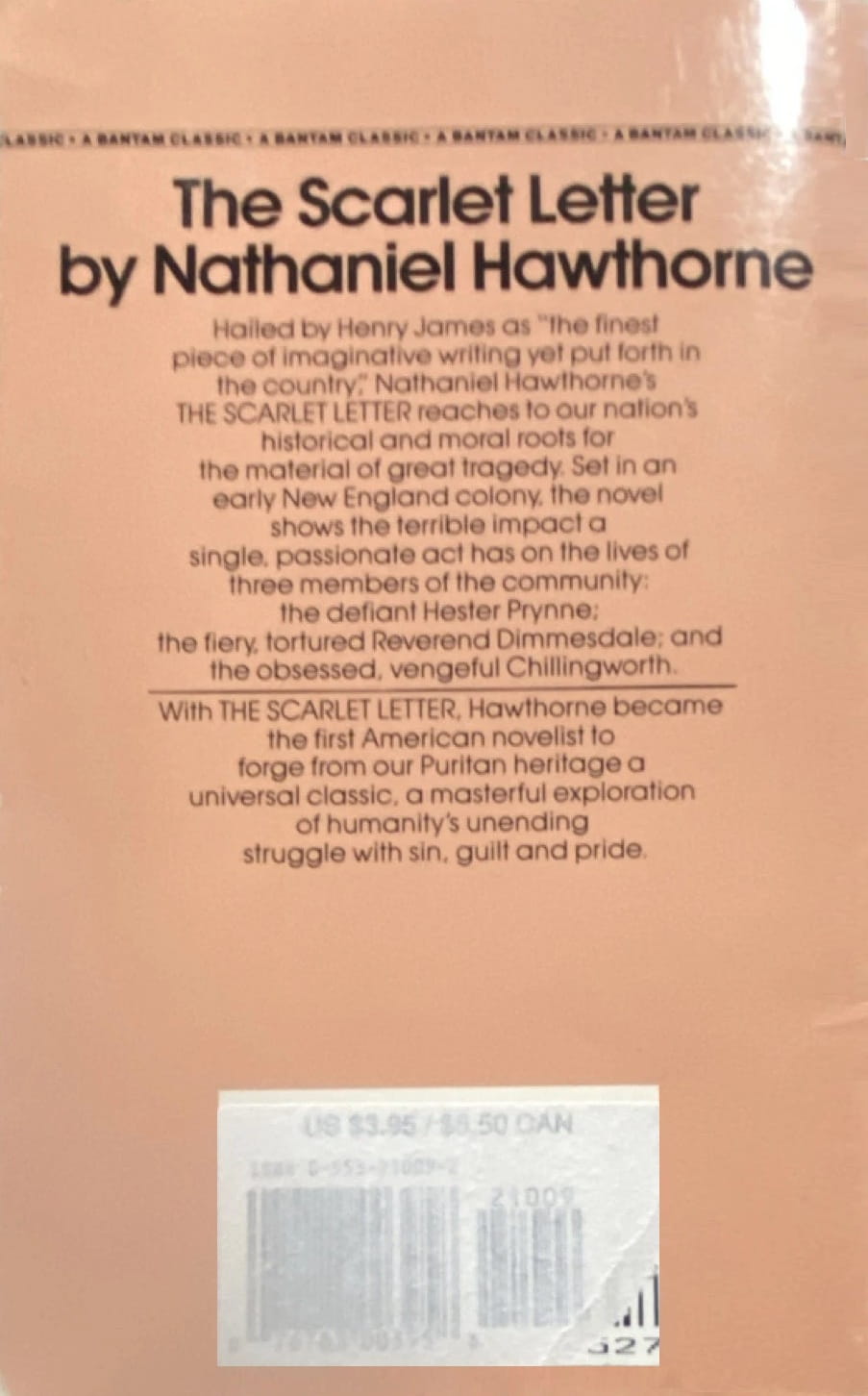 |
The Scarlet Letter by Nathaniel Hawthorne (Bantam Classic)
My college class did not read The Bible for religious reasons. We read it as literature, and the King James version is magnificent literature. I wasn’t even religious anymore myself but I loved the language. Rev, chap 6, verses 7-8:
And when he had opened the fourth seal, I heard the voice of the fourth beast say, Come and see. And I looked, and behold a pale horse: and his name that sat on him was Death, and Hell followed with him.
I got goosebumps. The drama and power of such words engaged my emotions and imagination, and I realized such language had been an influence on some of my favorite writers, like Robert E. Howard, Edgar Rice Burroughs, and Ray Bradbury.
 |
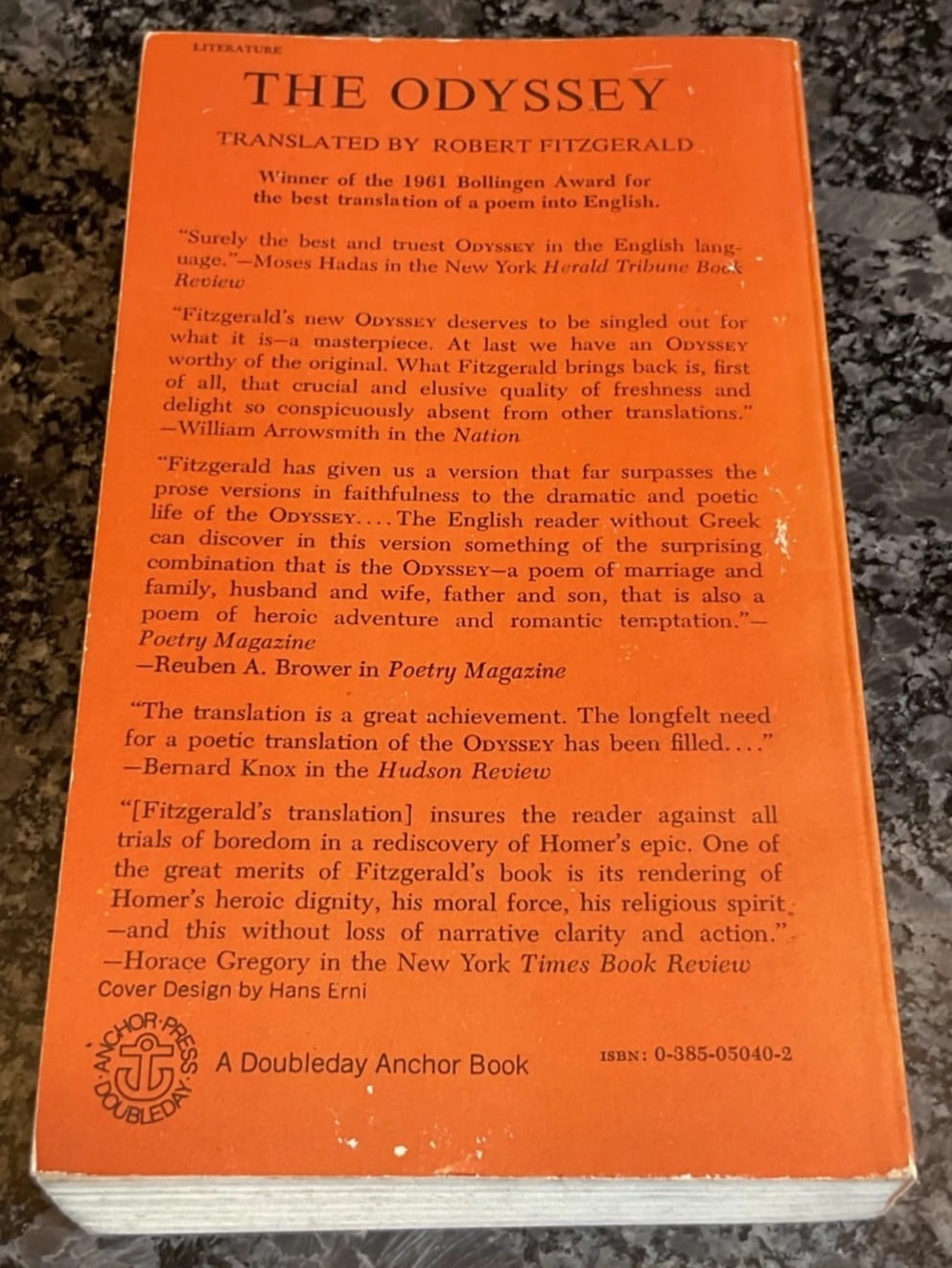 |
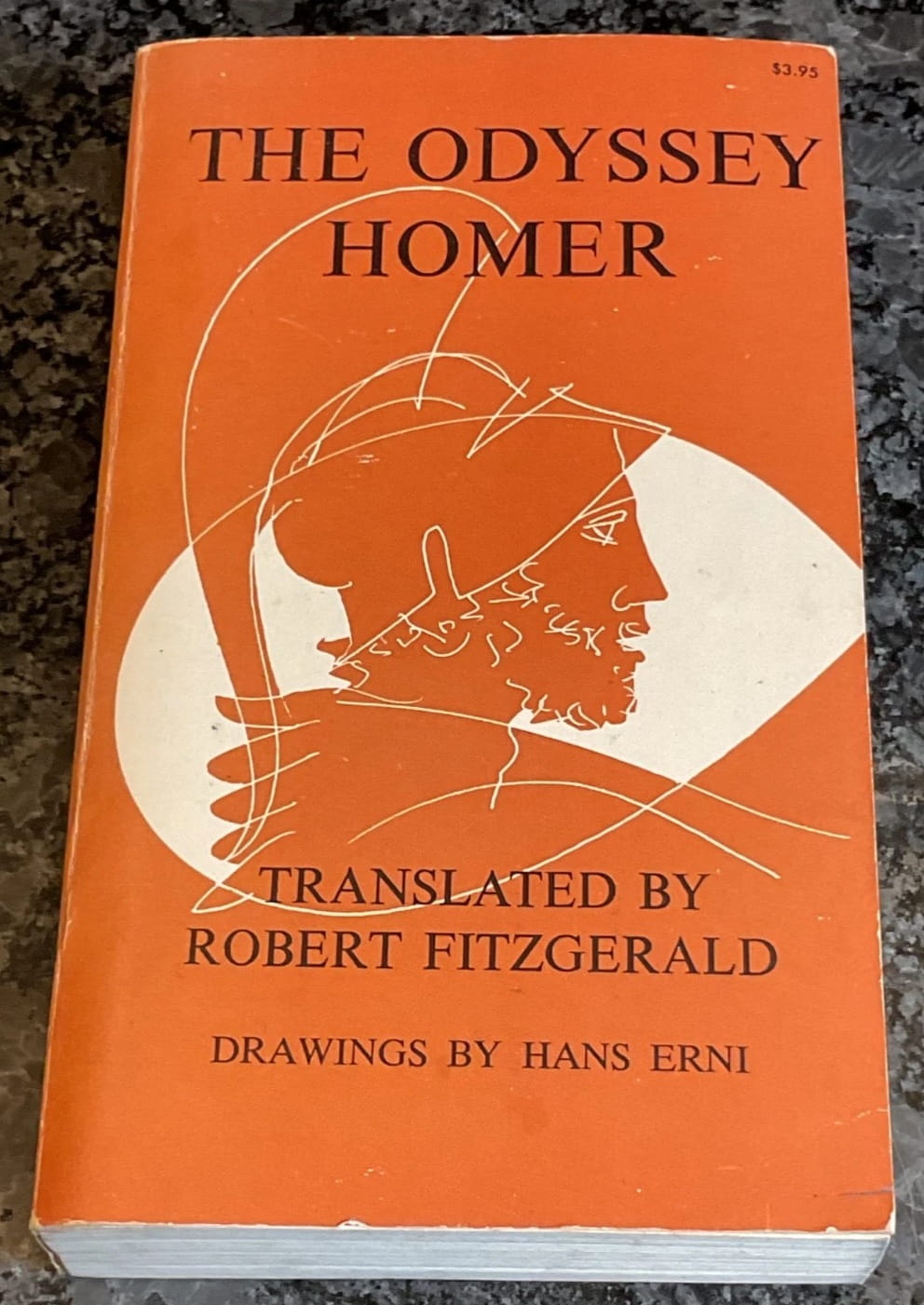
The Odyssey by Homer, translated by Robert Fitzgerald (Doubleday Anchor)
The second book I read in literature class that influenced my writing — and my thinking about literature — was The Odyssey by Homer. The translation we read was by Robert Fitzgerald and I’m so grateful for that. It, too, was a magnificent effort. I even memorized sections:
The sun rose on the flawless brimming sea, into a sky all brazen—all one brightening, for gods immortal and for mortal men, on plowlands kind with grain.
Homer was an 8th century B.C. Greek poet, and his words in The Odyssey and The Iliad set the stage for the kind of heroic literature we celebrate on this page — tales of heroes and monsters, tales of exotic lands, of wild beasts and adventures, tales to be shouted with ale-soaked breaths, to be told around fires that burn against the forever darkness.
Charles Gramlich administers The Swords & Planet League group on Facebook, where this post first appeared. His last article for us was Part Five of his survey of the heroic fantasy of David C. Smith. See all of his recent posts for Black Gate here.
We had ‘Silas Marner’ on our school course. I can’t say I ever warmed to it. One thing that surprised me about ‘Middlemarch’ (which I read a few years back) is that Eliot could be pretty funny. That certainly wasn’t a takeaway from ‘Silas Marner’!
Weirdly enough I only ever read one book by Steinbeck – ‘The Acts of King Arthur & His Noble Knights’. It was great (if unfinished). In the introduction he explains how he could identify with the characters because they were the sort of people he might bump into in his home town, which I think is a great point. People are people, at the end of the day.
Around twenty years ago, I read the FitzGerald version of ‘The Iliad’ (solid) and – subsequently – the Fagles translation of ‘The Odyssey’ (which was great).
Outside school, my diet as a teenager was almost entirely speculative fiction – mostly Moorcock, plus a lot of Sci-Fi, although I did read the occasional classic (‘War & Peace’, which I’ve never re-read).
I haven’t tried Silas Marner. I read Middlemarch lately and found it fairly enjoyable, much more so than The Mill on the Floss, which didn’t seem to me to resolve its central conflict. But I have to say I enjoy both Austen and Gaskell more than Eliot.
I haven’t tried middlemarch because of my experience with Marner, though I have a copy around here somewhere. Someday.
I have not yet had the strength to tackle War and Peace, though I have a copy, and I have his much shorter Cossacks, which I read as a kid and liked pretty well. It took me a couple of years to get through Moby Dick by Melville, which was another huge book.
In recent years I’ve been undertaking to read various sorts of classic literature, both poetry and fiction. Currently I’m making my way through Sinclair Lewis’s Main Street, and I’ve just borrowed a collection of William Wordsworth’s poetry from the university library. Perhaps my most consistent impression is that the poems I like best in collections are those that I’ve often seen before in anthologies; it rather seems as if anthologists tend to converge on spotting a poet’s best work.
The Odyssey is an interesting work: The first half of it is very much analogous to science fiction, with the science being navigation. Odysseus explores strange new islands and seeks out new life and new civilizations. Or is he making it all up? Consistently, whenever he meets new people, we see him lying to them; he might have been lying to Nausicaa and her parents as well. And then the second half is a story of covert ops and revenge.
Interesting way of evaluating The Odyssey, and I can see it. It’s part of the reason I liked that book. it had so many fantasy elements that I was already loving in other sources. In my 30s I started deliberately reading some of the classics I missed and still do so on occasion. I just finished Gogol’s Taras Bulba.
I bounced off most of the school reading. Silas Mariner, Scarlet letter, The Pearl, and Of Mice and Men. But i loved the Greek/Roman Mythology we covered.
What really got me into reading is my middle school teachers would have rows of books in the back of class and they had mandatory free reading time where you could pick whatever you wanted.
Standouts i remember were reading The Book of Three in the fourth grade and Outlaws of Sherwood by Robin Mckinley in the 6th.
Going into my freshman year we had to read Ender’s Game and Flowers For Algernon. I loved them. These both changed my life and really launched me into the brooding teenager phase.
You can delete this one. Not sure why it didn’t post the first time
I was assigned Flowers for Algernon in college but was happy to read that and really loved it. I read Ender’s Game on my own and it was great too. By Junior High, though, I was already hooked on SF with Norton, Heinlein, etc
We had to read most of the classics you listed here and I bounced off of all of them except the stuff we read for Greek Mythology.
What helped me get into reading was my teachers having rows of random books and mandatory reading time during class but we could pick anything off the shelf.
The Book of Three and Outlaws of Sherwood by Robin McKinley were two big ones for me.
Going into my freshman year we had to read Ender’s Game and Flowers for Algernon. I loved both of them and they changed my life. Launched me fully into my brooding teenager phase.
My high school required sophomores to take American Lit and British Lit each for 9 weeks (1 quarter). Poe was the only American author I enjoyed and reading “Great Expectations” was a slog – a quiz everyday after our nightly required reading. As an engineer in college, I took Mythology as a filler class. Loved it. I could spend an hour or more reading (usually in one of the union quiet study rooms) and consider it “study”. I came across a survey of college literature and English professors asking “what books would you want your students to have read before entering college?” and it listed the top 100 responses. I’ve read through a bunch but I am still painfully negligent in reading the classics. I find it hard to get up the enthusiasm to read “Crime and Punishment” or “Heart of Darkness” when I have 120+ sci fi and fantasy books waiting on my shelf to be read.
Thanks for another great article, Charles. The pic of the Andre Norton books was a bonus.
I know what you mean. These days I read one or two “classics” a year but mostly it is fantasy, SF, and westerns, outside of required nonfiction stuff for work. I actually enjoyed Heart of Darkness as an adult but probably wouldn’t have as a high schooler. I’ve never made it to Crime and Punishment either. The last classic I read was Taras Bulba, which at least had quite a bit of fighting action in it.
I’ve never tackled Silas Marner, though I intend to some day, if only because people seem to dislike it so. I’ve read Middlemarch twice, though, and it is, by a fair margin, the greatest novel in English I’ve ever read. (I would nominate Anna Karenina the greatest, period.) And Aonghus is right – Eliot can be quite funny. There’s an electioneering scene in Milldemarch that makes me laugh out loud.
I don’t know why people give “beginners” Great Expectations or A Tale of Two Cities to introduce them to Dickens. (Well, I do, actually – they’re short.) They’re both great books, but not the ones for a young person to start with. I would start someone with the wild, bloodcurdling melodrama Oliver Twist.
In recent years (after being a real Dickens/Eliot/Thackeray/Browning Victorian nut) I’ve discovered Trollope (I’ve read all the Barsetshire and Palliser novels and The Way We Live Now), and though I can’t claim that he’s a greater genius than his contemporaries that I’ve named, I can say that he’s given me more pure pleasure than anyone I’ve ever read.
The election scene is exactly the one I had in mind! And – like you – I laughed out loud.
That said, I don’t think metaphors were her strong suit – comparing life to a scratched mirror being one case in point.
I’ll have to try middlemarch
We slogged through Great Expectations and David Copperfield, both of which I hated, one in junior high and the other in high school. But A Tale of Two Cities was much more enjoyable as a teenager, because Revolution! I do find the adoration of Dickens by some of the British authors of a certain political bent (think Mieville, Moorcock, et al.) to be baffling. Along with their rejection of Tolkien, it seems to put them more in the stodgy camp with my old teachers. The cutesy character names that Dickens sometimes uses also seem to have been adopted by some British fantasists, in a way they probably think of as arch and clever, but which just comes across as affected and silly to me. As an adolescent I much preferred depressing, turbulent stories, like anything by Dostoevsly or (with his anti-romances where every marriage turns out to be unhappy) Thomas Hardy. But those weren’t assigned readings. I actually wonder if the fact that half of my fellow citizens never read another novel after getting out of school might be the result of some sort of aversive conditioning from assigned readings.
I truly cannot think of anything to say in defense of David Copperfield (which was, I think, the greatest reading experience of my life) except – to each his own.
I’ve been getting into Hardy’s fiction recently; after reading most of his poetry, I’ve read Return of the Native, Tess, and Under the Greenwood Tree. I respect Hardy and recognize his genius, but a lot of the time I feel like he’s a butcher with his thumb on the scale. (I especially felt this with Tess.)
Readers certainly do come in all stripes. From my experiences so far, I can pretty much assure I’ll never be a Dickens fan, but he certainly had stories to tell and observations to make and I’m sure there are still worthwhile ones for me that I haven’t discovered yet because I haven’t read all his work. Peter Matthiessen is an author I struggle with sometimes. His work can be difficult and complex but when I do discover something I’m amazed. His The Snow Leopard is my favorite book of all time. Cormac McCarthy hits me similarly.
Think the Russian authors are in a whole different league? It’s hard to see any English author producing a book like ‘Crime & Punishment’, in terms of how it identifies with the perpetrator of a terrible crime while also looking at the broader context – ie, collectivism and the man of destiny (two sides of the same coin imo). Really prophetic!
I have so far only sampled the Russian authors. I just read Taras Bulba and it was really an exercise in mythmaking and I don’t think it had any great insights into the human condition, but I have not read Crime and punishment or War and peace. I will get to them sometime.
After I got out of graduate school and was visiting my home town once, I told my English teacher in high school that if I hadn’t already been a reader, she would have cured me of it with the assignments we had. I think it hurt a lot of young folks my age back in the day, although I know required books have changed dramatically since then. I don’t know what kids in school these days have to read
I think most of my high school teachers knew I was a reader as I always had a paperback tucked among my text books. I was blessed to go to a high school that did not have a set English curriculum for juniors and seniors but required 2 semesters of electives. Loved the mythology class and the Shakespeare class I took . My teacher for my senior history elective- 20th century Wars- required us to read one war-related book of our choice. He liked me and let me read “The Mouse the Roared” as my choice.
I read The Mouse that roared for a college class and liked it quite a bit. I still have that copy
yes, I wanted even my literary reading to have some action somewhere and not just talking. The Scarlet letter had some tense scenes.
I haven’t read Middlemarch or a lot of Dickens, I liked A Christmas Carol certainly and some of his short stories. I have some Trollop around here but haven’t read it. Among the Classic authors, Hemingway in particular has probably given me the most pleasure and the most insights into human nature. Fitzgerald and Steinbeck as well. of course, they are later than most of the Classic authors you mention.
Yeah, I also was generally not a fan of the sorts of books that would get assigned in class, surprisingly few of which had covers by Michael Whelan or Frank Frazetta or even Darrell K. Sweet.
In American Lit in college we were assigned Theodore Dreiser’s Sister Carrie and I don’t think I made it past the first page. So I mostly skipped or bluffed my way through the discussions (I remember commenting that he must’ve been getting paid by the word) and presumably did poorly on the test.
I do remember enjoying Moby Dick, though, and the various Dickens novels I encountered, although not enough that I’ve ever tried to read Dickens of my own recognizance.
I have a graphic rendition of The Tale of 2 cities and enjoyed that! It was very brief
My issue with ‘A Tale of Two Cities’ is that it’s customary to have your mc pulled in two different directions (ie, the right direction and the wrong direction) but Carton is in far too big a hurry to do the right thing. I put it down and thought; ‘what if he had a dog? Something he’d miss and would miss him? Enough to give him second thoughts?’
I’ve only read the first few pages of the actual book. I have a nice copy I’ll get to sometime
That’s one of the ones I haven’t read — mine were Great Expectations and … um, I don’t remember the second, but it wasn’t Tale of Two Cities or Oliver Twist or one of the usual suspects.
Oh, and every Christmas, I celebrate by listening to my two-CD set of Patrick Stewart’s dramatic reading of A Christmas Carol.
Oh, I like that Stewart piece
Been trying to figure out a way to respond to this article in a way that doesn’t disintegrate into a whinge-fest about required reading, because you make a great point about how time and maturity seem to put a different spin on some of the classics, and I appreciate your perspective on the artistry of Apocalyptic Literature as represented by Revelation. …But I can’t keep myself from dissolving into complaints. Ugh. So, since there seem to be several people who question what classics people were made to read or not read in school after they left, I’m just going to list here what I remember from my era there, in case it would be illuminating for anyone.
High School through Uni. Lit. Course Required Reading Classics That I Disliked (1999-2010):
–The Giver
–Tuck Everlasting
–Heart of Darkness (×2)
–Of Mice and Men
–Cold Sassy Tree
–(Victorian short story about a married couple; for their anniversary, she sold her hair to get him a chain for his pocket watch, and he pawned his pocket watch to get her a tortoise shell comb for her hair.)
–(Renaissance short story about a man who adored his falcon, but had to kill it to give a sumptuous meal to the local lord’s daughter when she came to visit, whereas her father had sent her to visit to attempt to buy the falcon.)
–Crime and Punishment
–Metamorphosis
–The Great Gatsby
–The Scarlet Letter
–God of Small Things
–The Art of War
–Moby Dick (my choice out of two)
–The Idiot
–Jane Eyre
–Wuthering Heights
–Romeo and Juliet
–The Prince
–Stories (Chekhov)
–The Demolished Man
–The Things They Carried
–Flowers for Algernon
–The Dead Lie Down
–The Antonio Gramsci Reader
–The Art of Rhetoric
High School through Uni. Lit. Course Required Reading Classics That I Liked (1999-2010):
–War of the Worlds
–Fahrenheit 451
–The Arthashastra
–The Federalist Papers
–The Letters of George Washington
–A Modest Proposal
–From Russia With Love
–The Republic
–Snow Crash
–Commentary on Livy
–Natural Law
–The Brothers Grimm
–The Prince and the Pauper
Classics I Read Independently and Disliked:
–Anna Karenina
–Mill on the Floss
–The Island of Doctor Moreau
–The White Company
Classics I Read Independently and Liked:
–The Illiad
–The Odyssey
–The Aeneid
–Bullfinch’s Mythology
–The Faerie Queen
–Pride and Prejudice
–Northanger Abbey
–A Christmas Carol
–Twelve Books on Architecture
–Tales of the Pentamerone
–The Three Musketeers
–The Four Feathers
–The Scarlet Pimpernel (and all sequels)
–The Black Tulip
–Arabian Nights
–The Kalevala
–(All of C.S. Lewis)
–Idle Thoughts of an Idle Fellow (and sequel)
–Two Years Before the Mast
Oh, and they also made us read that novella about a woman who killed her husband by whacking him over the head with a frozen leg of lamb, then disposed of the evidence by feeding the roasted leg of lamb to the police who came to investigate. (Disliked.)
And that book about a farmer whose wife died, and the ladies of the town put her in the coffin upside down so that her dress wouldn’t get smashed, which meant that it fell off the cart that the farmer and his two sons were using to take the wife to the city to be buried, which broke the oldest son’s leg, which they tried to cast with concrete, and had to whack open with a sledgehammer to get him actual medical treatment, meanwhile the wife’s body is starting to smell bad, and when they finally get to the city and get her buried, the farmer remarries within two days and chooses his new wife based on the fact that she owns a gramophone. (Who thought that was a good idea to make high schoolers read?! Disliked!)