Conan the Barbarian: Lamentations of a 35-Foot Snake
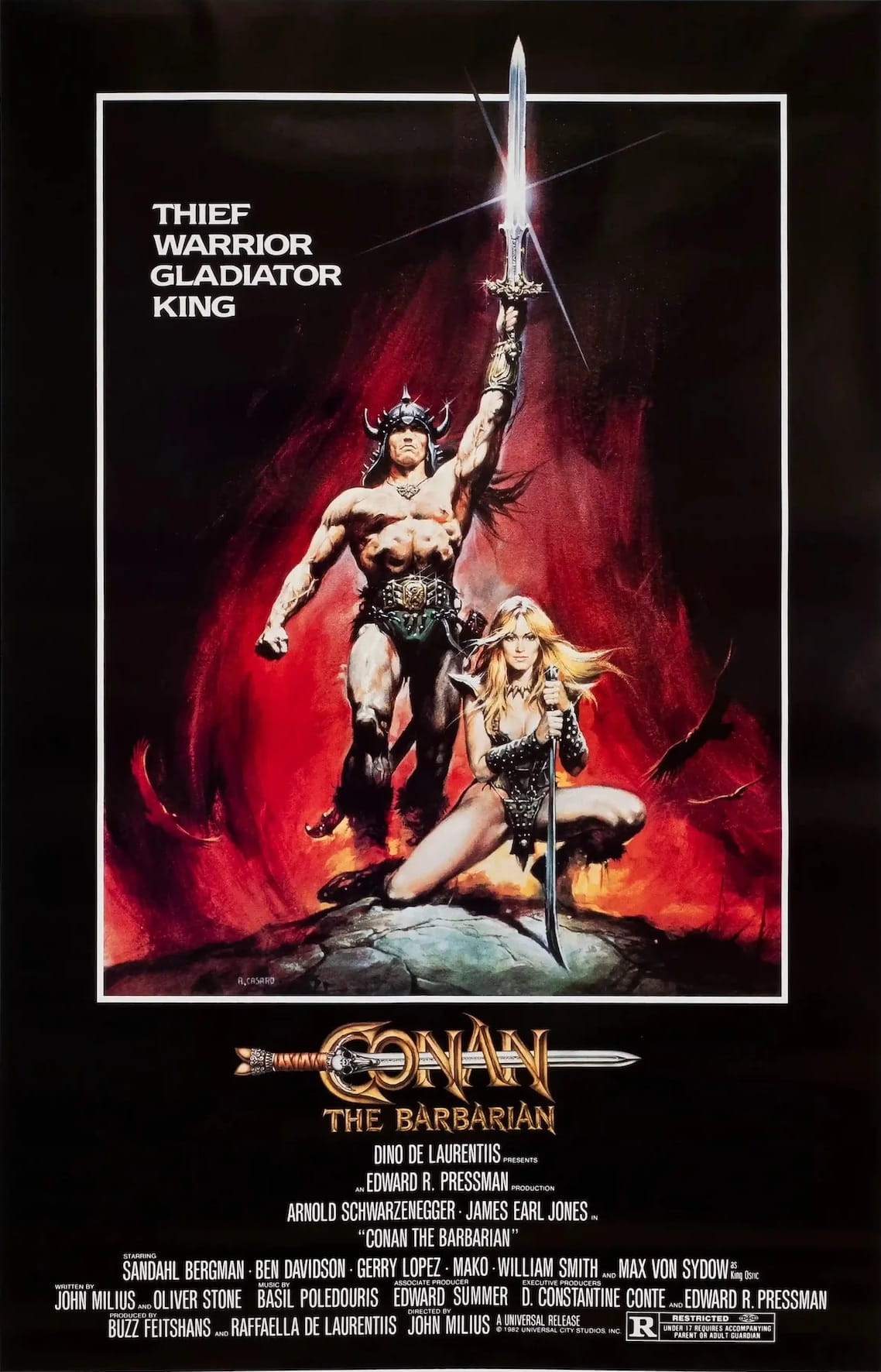
Conan the Barbarian (129 minutes; 1982)
Written by John Milius and Oliver Stone. Directed by John Milius.
Based on the Conan stories by Robert E. Howard.
What is it?
The first film adaptation of Robert E Howard’s greatest creation: the Cimmerian warrior who was a thief, soldier, pirate, mercenary and king. We get at least a glimpse of most of those here, even if in a somewhat distorted form.
Noteworthy
The original script for the movie was written by Oliver Stone (Platoon; JFK) under the influence of a whole lot of drugs. It would’ve run at least four hours, and featured Conan in a sort of Thundarr the Barbarian post-apocalyptic future hellscape, battling an army of 10,000 mutants.
The production company struggled to find a suitable director, at one point considering Stone and also looking at Ridley Scott. Scott, coming off the filming of the first Alien movie, turned them down. (There’s an alternate timeline where we got Alien vs Conan. And I would’ve been there for it.)
Finally John Milius, who had written the screenplays for Clint Eastwood’s Dirty Harry (1971) and Magnum Force (1973), agreed to direct the film — if he could rewrite Stone’s screenplay. No one objected to that idea. Milius was already contracted to do his next film for Dino De Laurentiis, so he convinced the producer to make Conan that movie.
Milius combined elements from various Conan stories by Robert E. Howard for his rewrite of the script, as well as borrowing the villain (Thulsa Doom) from the stories of another Howard creation, Kull the Conqueror.
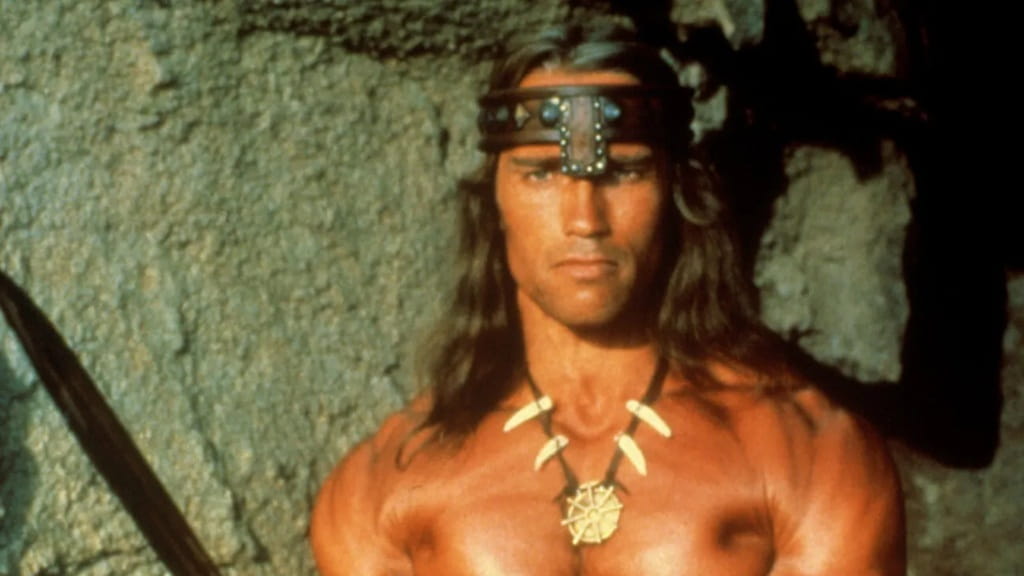
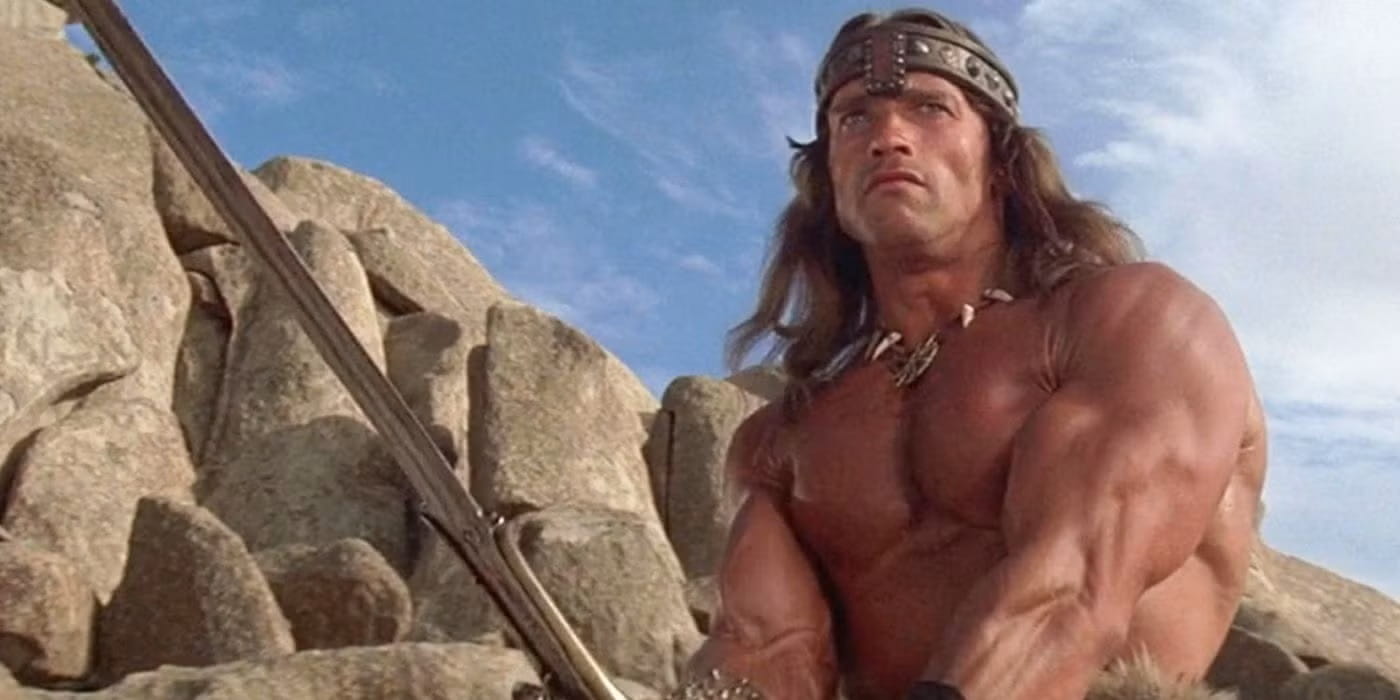
After the producers saw Arnold Schwarzenegger’s bodybuilding film, Pumping Iron, they agreed he was the clear choice for the title role. They did, however, require him to slim down from a massive, muscular 240 to a more lithe 210 pounds, through a regimen of rope climbing, horseback riding and swimming.
This was the breakout role for Schwarzenegger, who would go on to dominate action cinema for years. Other actors who were considered include Charles Bronson, Lou Ferrigno and Sylvester Stallone. Ferrigno and Stallone are predictable, but a Charles Bronson Conan would certainly have been… something. I’m not sure what, though. He might have made a better Subotai.
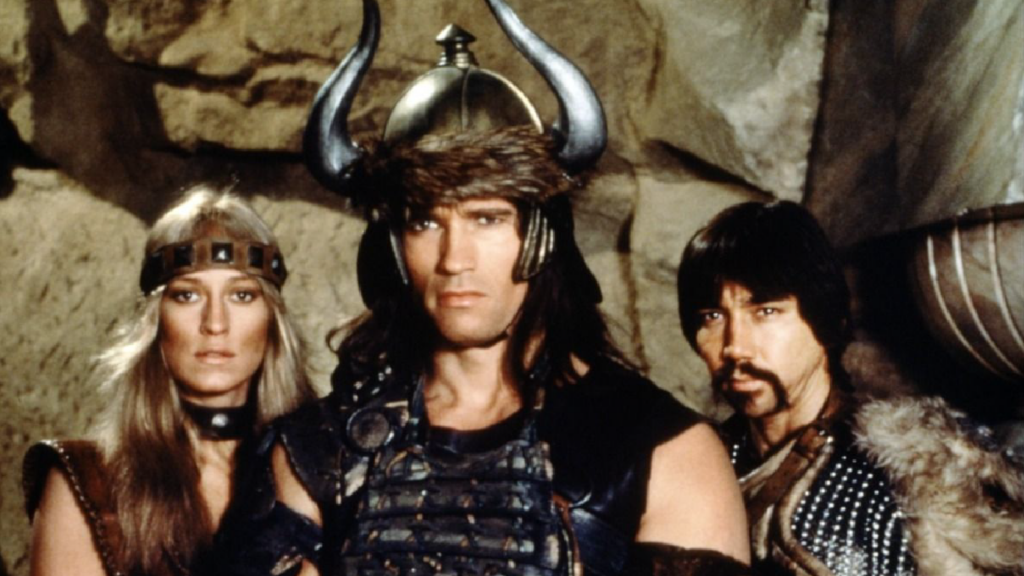
Interestingly, Conan’s two allies in the film were also played by relative newcomers. While Schwarzenegger’s background was bodybuilding, Gerry Lopez (Subotai) was a champion surfer, and Sandahl Bergman (Valeria) was a dancer who had appeared in Bob Fosse’s All That Jazz. All three performed their own stunts, but none of them pleased Milius with their initial acting performances. Schwarzenegger was subjected to intensive speech training in a (failed) attempt to reduce his heavy Austrian accent, while Lopez’s lines ultimately were overdubbed by another actor. When James Earl Jones joined the cast, he began helping coach Arnold on his line delivery.
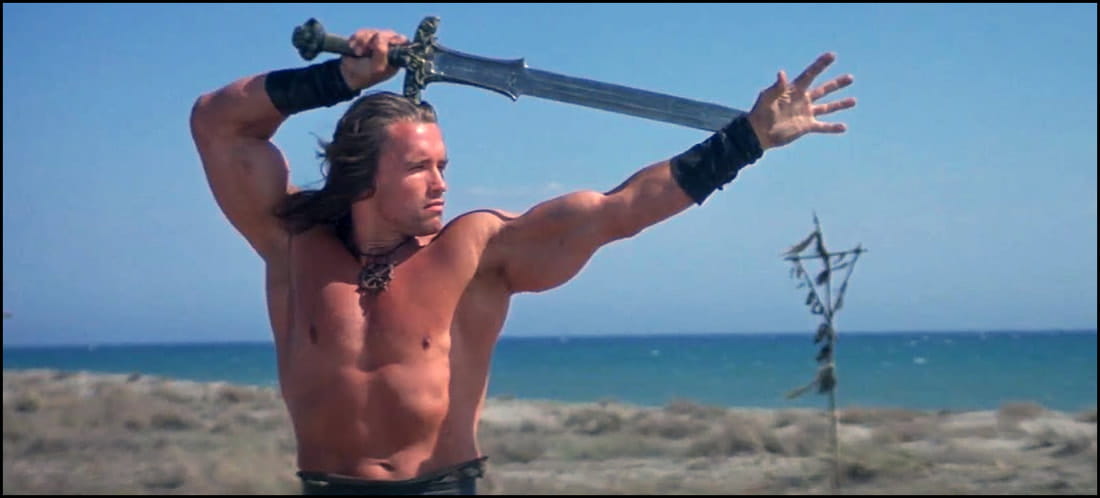
Four carbon steel copies each were forged of Conan’s father’s sword and the Atlantean sword he finds in a tomb, at a cost of $10,000 each. These were used for closeup filming. Lighter versions used in combat scenes were made from aluminum and fiberglass. Some were able to retract their blades to simulate a killing blow, and others could spray blood from their tips.
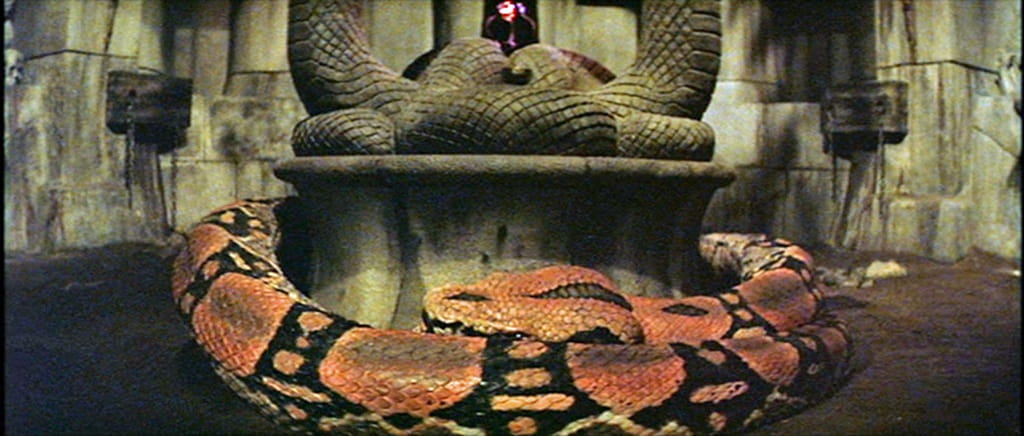
The giant snake Conan kills was over 35 feet long and cost $20,000 to create. It was so large it would not fit onto the set, so only part of it is ever shown on screen. Its skeleton was made from the same material used to build aircraft frames.
Some action scenes were filmed using a remote-controlled camera crane system originally created by Nick Allder during the filming of Dragonslayer.
The movie was shot in five months in various locations in Spain. It took over a year to edit. During that time, editor C. Timothy O’Meara removed several particularly violent scenes to which the studio objected. He then had to piece the movie back together without them, and keep the story comprehensible in the process.
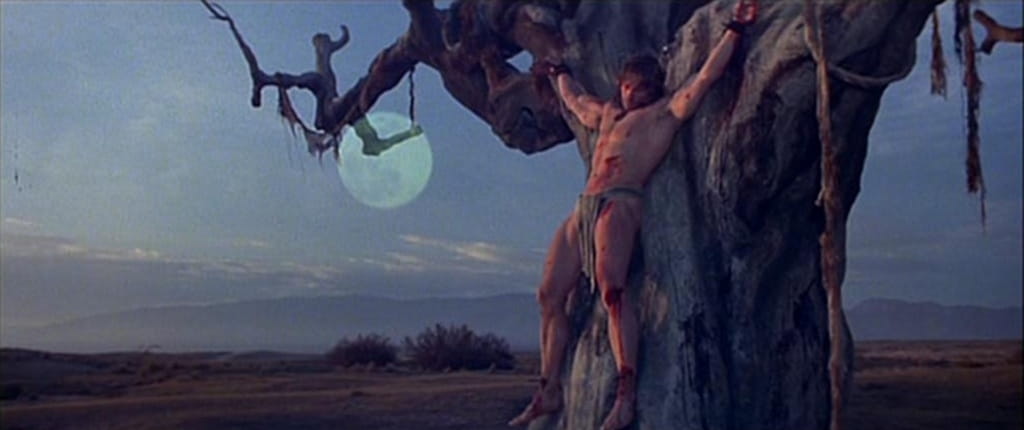
The musical score for the film, composed by Basil Poledouris, is spectacular and memorable. It was the first film to list Musync, a newly developed music and tempo editing software package, in the credits. Musync allowed Poledouris to compose much of the music before filming had even wrapped, and then alter it to fit the various scenes after they were completed. It was the last film released by a major studio with a mono soundtrack, because producers balked at the extra tens of thousands of dollars required for a stereo score, and because they felt at the time not enough theaters were equipped to handle that anyway.
The film earned around $75 million (on a $20 million budget) in its initial theatrical release. This was considered successful enough that a sequel, Conan the Destroyer, was released two years later. (We’ll cover it soon.)
Quick and Dirty Summary
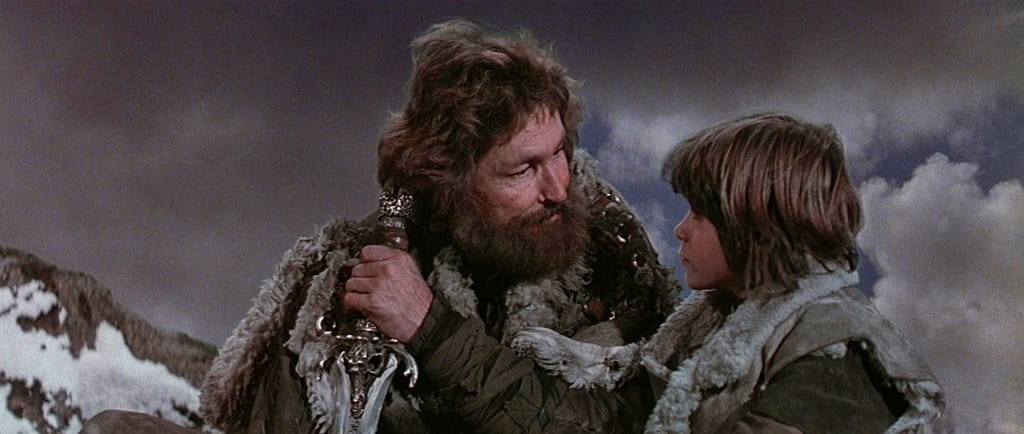
A young barbarian vows revenge on the snake cult leader who killed his parents and destroyed his village. He grows up to be a powerful warrior with a heavy Austrian accent, and teams up with a pair of thieves moonlighting from their surfing and dancing jobs. Eventually he gets the chance to exact his vengeance, slaying the snake cult leader and destroying his temple – but at a price.
Fantasy/SF/Sword & Sorcery Elements
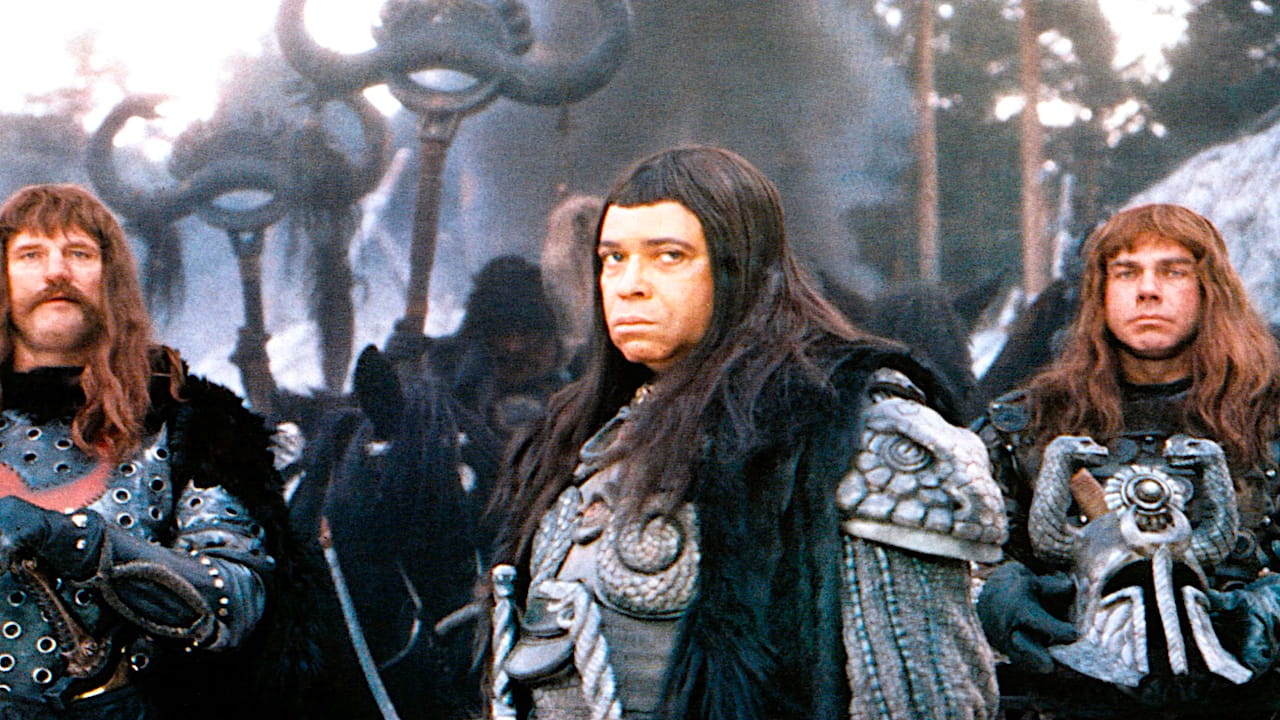
Robert E. Howard literally wrote the book on muscles and steel triumphing over sorcerers, monsters and evil gods. And Conan is the prototypical Sword & Sorcery hero. He greatly dislikes sorcery, but he seems to fare pretty well against it.
This film overflows with Sword & Sorcery elements. The battle with the giant snake is memorable, as is Conan’s showdown with Thulsa Doom’s henchmen. Doom’s slow transformation into a giant snake himself – a remarkable achievement of practical special effects in the days before CGI – comes out of nowhere and shakes things up again.
High Point
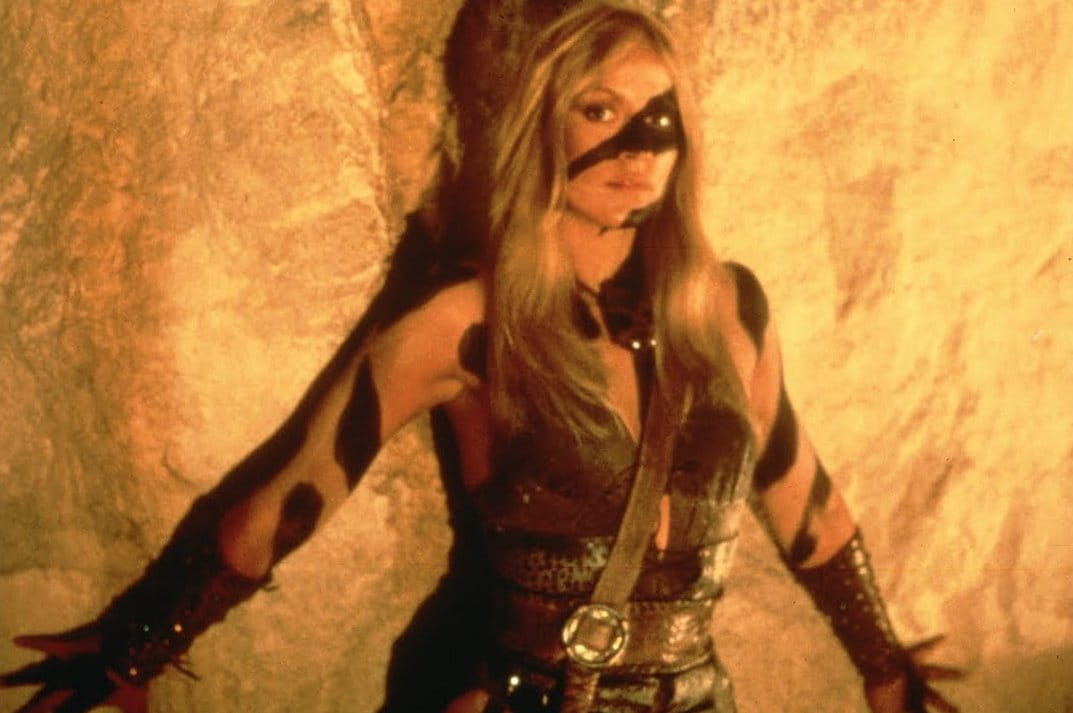
Once Conan becomes “grown-man warrior Conan,” the plot remains fun but it becomes fairly predictable. Full-on Conan isn’t going to lose to anybody in his debut film. At that point, the only questions are, “How will he kill them all?” and “Will any of his allies die along the way?”
I would argue the most interesting portion of the movie is actually the first third, as we watch a young Conan transition from scene to scene in slavery, as a gladiator, and a survivor, all the while learning about the world around him and looking for the cultists who wiped out his village.
And of course there’s the classic moment where he reminds us all what is best in life: “To crush your enemies, see them driven before you, and hear the lamentations of the women!”
Low Point
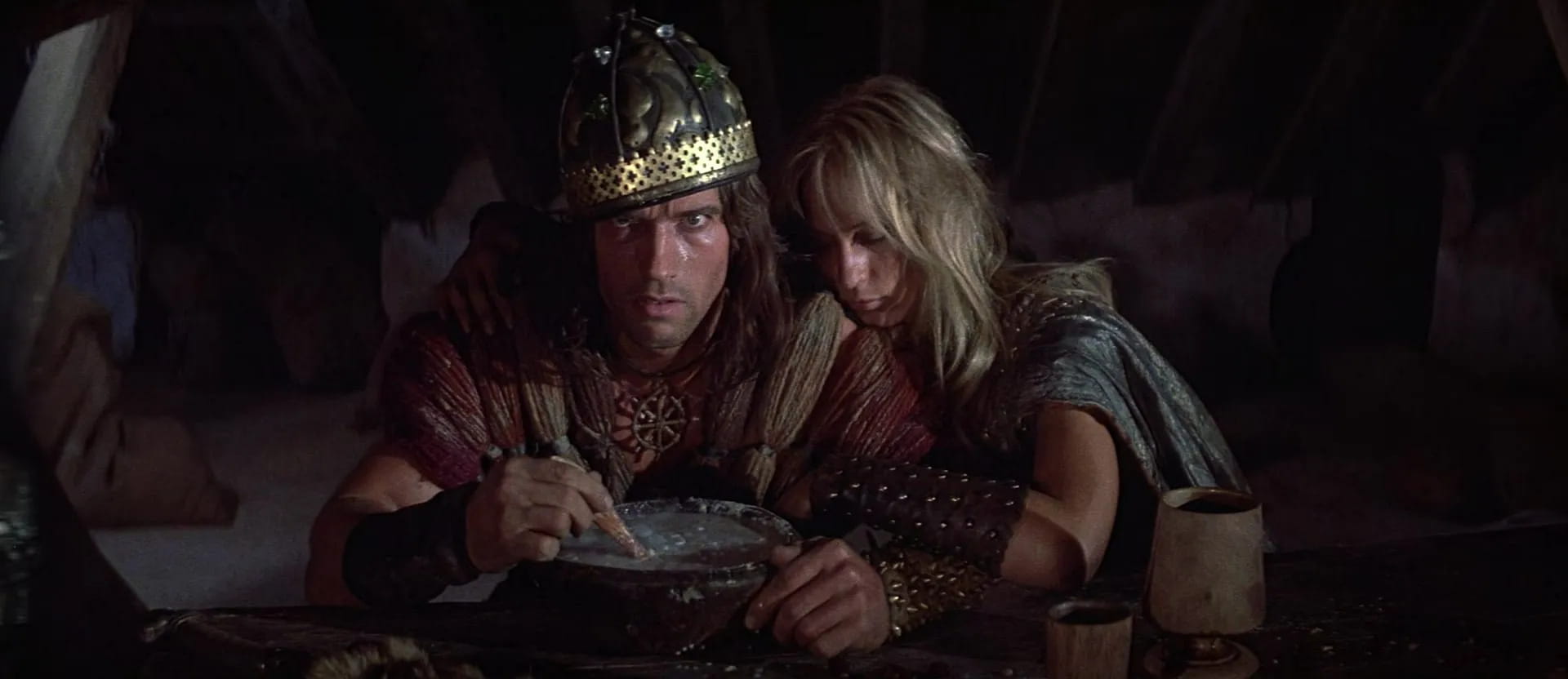
There’s no question that Schwarzenegger’s performance here, at the very start of his career, is iconic and enjoyable. But it’s a situation similar to “movie James Bond vs book James Bond.” In both cases, the movie version of the character is significantly altered from the literary version. Arnold’s Conan is dumbed down. He’s mostly muscle and brute force. At one point, he punches a camel. His reactions are often comical, and some are played for comedy. Howard’s Conan was always capable of winning a fight with his muscles and his sword, but he was also a serious, clever and canny guy, endowed with native smarts and charisma.
Standout Performance
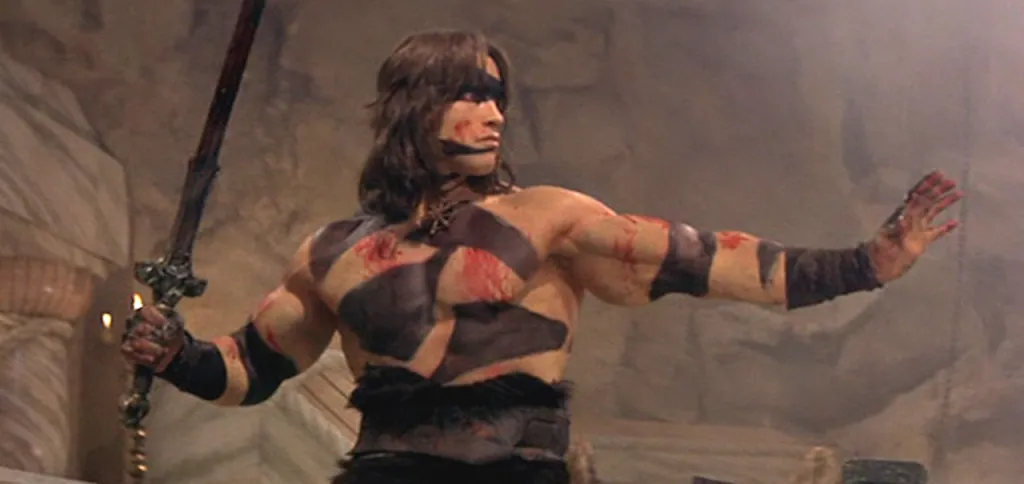
All of the above said, it would be a crime not to give the nod here to Schwarzenegger. This movie would not be half of what it is without his unforgettable presence looming over nearly every frame. He may not exactly be Howard’s Conan, but he’s mesmerizing, entertaining, and entirely awesome.
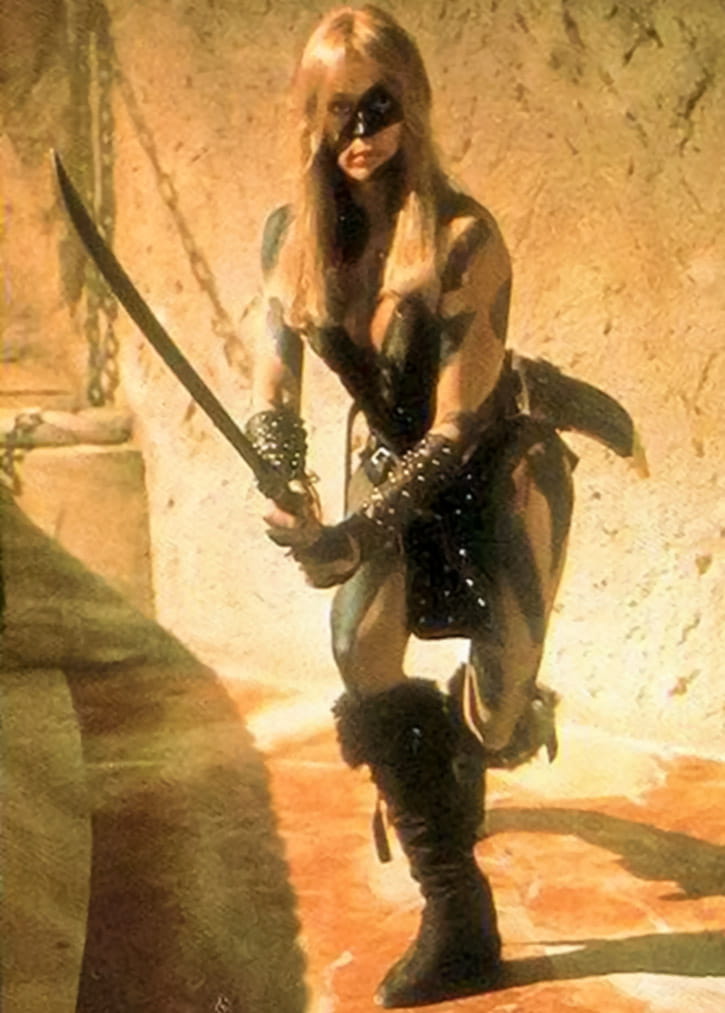
Overall Evaluation as a Movie and as Fantasy/SF/Sword & Sorcery
Conan the Barbarian is an excellent action/adventure movie in general, but it is on the “Mt. Rushmore” of Sword & Sorcery films. It has to be. It brought the greatest hero of the genre to the big screen for the first time. It gave him a worthy opponent and high stakes. It combined drama, action, character and violence, with a touch of humor along the way.
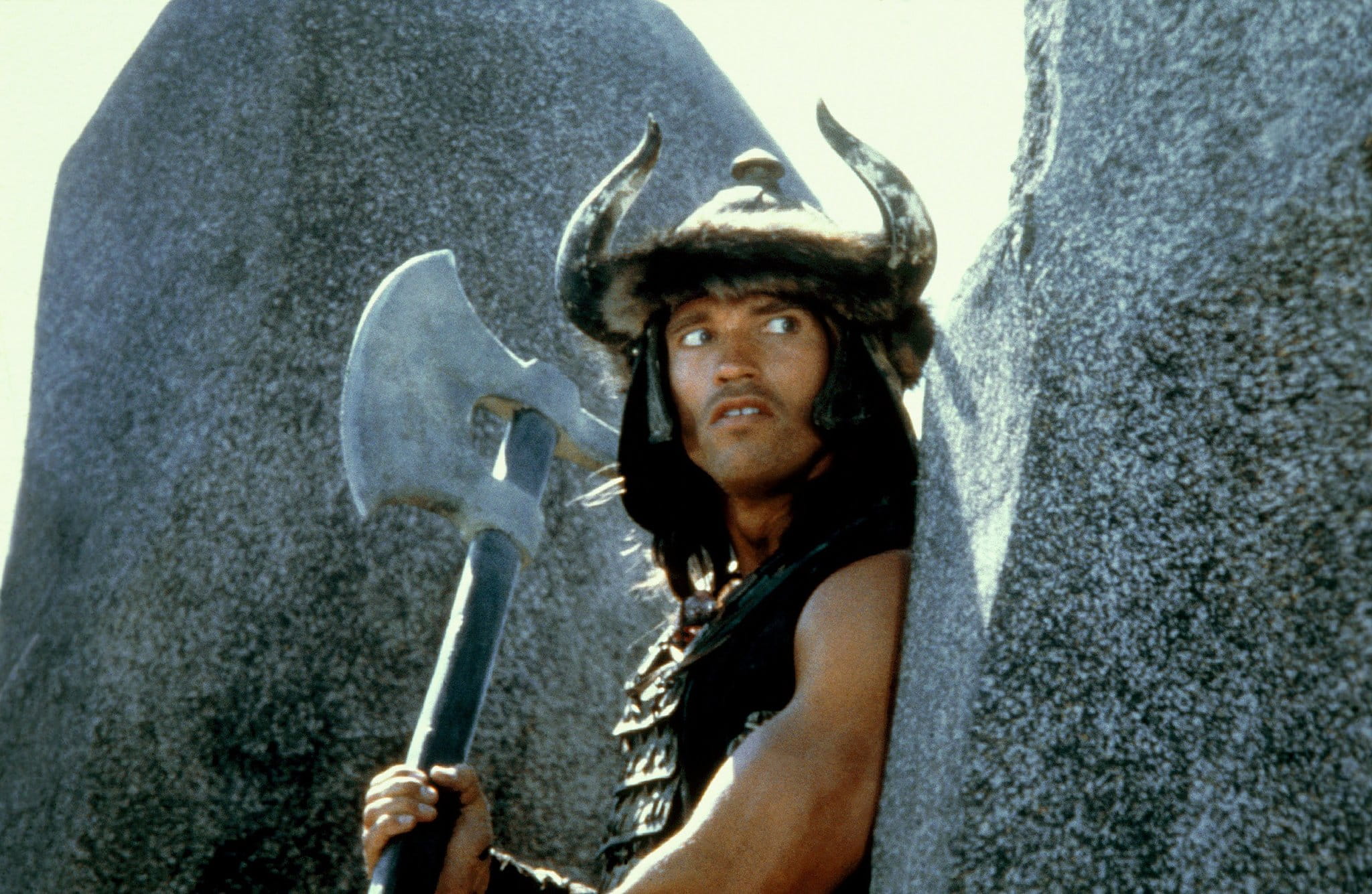
To paraphrase Conan’s prayer to his Cimmerian god: Valor pleases Crom, so perhaps he will grant me one request: That those of you who have not watched this movie will give it a shot.
And if you do not love it, then to hell with you!
Van Allen Plexico is a member of the Science Fiction and Fantasy Writers of America (SFWA), a Grand Master of Pulp Literature (2025 class) and a multiple-award-winning author of more than two dozen novels and anthologies, ranging from space opera to Kaiju to crime fiction to superheroes to military SF. He notably edited, co-created and co-wrote the Sword and Sorcery anthology GIDEON CAIN: DEMON HUNTER. Find all of his works on Amazon and at Plexico.net.