An Interview With Paizo publisher Erik Mona
By Howard Andrew Jones
Copyright 2007 by New Epoch Press. All rights reserved.
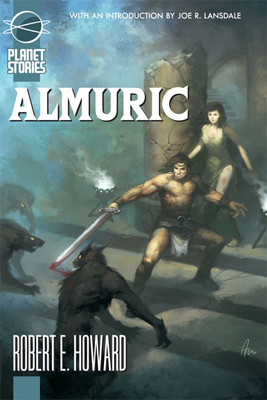
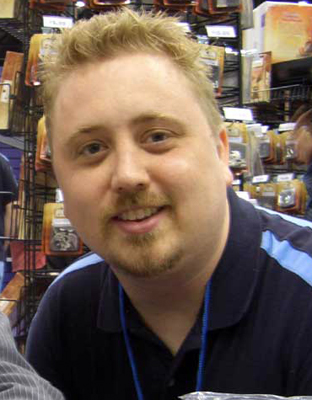 If you talk even briefly with Erik Mona it’s immediately apparent that he loves what he’s doing. I don’t necessarily mean publishing — though he clearly enjoys that as well — I mean ushering some talented and often overlooked fantasy and science fiction authors back into print. Even if the authors themselves aren’t neglected, some of their works have been, and Mona has ambitious plans for Paizo Publishing to correct these oversights in affordable paperback editions. Under his aegis, Robert E. Howard’s Almuric will appear again on bookstore shelves alongside Leigh Brackett’s Stark novels, and Paizo will shortly be printing Henry Kuttner’s sword-and-sorcery tales of Elak of Atlantis in a volume with his stories of Prince Raynor. Mona has other plans besides. He sat down with Black Gate just a few weeks ago to discuss some of them, and touch on some other topics of interest.
When did you first become interested in the work of these older authors?
I’ve always been interested in the origins of things. When I was a child I came across a battered oversized reprint of DC’s All-Star Comics #3, with the very first story of the Justice Society of America. Superman and Batman were there — I recognized them from TV and modern comics, but who was that blond guy who called himself Green Lantern? Is this Atom — the midget boxer — the same professor who can swim in your veins? As I read more and more comics growing up, I sought out stories featuring these older characters, in part because I felt like they represented a somewhat more pure distillation of the superhero concept. I read X-Men and all the mainstream stuff and liked it quite a lot, but I had a real fondness for the first generation of DC’s super-heroes, the so-called “Golden Age” of comics. It didn’t take much research as a little kid to discover that lots of those “classic” stories had been written by pulp writers, and that comics in many ways evolved from the pulp fiction tradition. I can’t remember where I got my first glimpse at a pulp cover, but it was a magical moment that forever changed my brain and demanded focus.
 At the same time, I became enthralled with Dungeons & Dragons and the growing nerd-kid subculture that arose from it. I learned to play D&D at an after-school class when I was in third grade, so the Sword-and-Sorcery brain-washing program took root very early. Gary Gygax’s Advanced Dungeon Master’s Guide, the bible of the game in its first popular incarnation, contained a mind-bomb called “Appendix N: Inspirational and Educational Reading.” In two paragraphs or so of text Gygax laid out a genre: Brackett, Burroughs, Carter, De Camp, Fox, Howard, Leiber, Lovecraft, Merritt, Moorcock, Pratt, Vance, Williamson, Zelazny. You don’t come away from an even cursory exploration of that list without changing somehow, and I reveled in it. I still revel in it.
So when I learned those great authors got their start in the pulps, boom. Worlds Collide.
There’s been no turning back since.
What do you like about Howard, Brackett, Moore, Kuttner, and Hamilton?
At the heart I appreciate their dedication to story-craft mixed with genuine application of wonder.
When an Edmond Hamilton story features a deeply inhaling character calling the atmosphere of Neptune “quite breathable” I smile widely and get ready for some atom-gun action against giant dragonflies and green titans in the radioactive swamp. I think someone, somewhere decided that science had proved Martian fantasies like those of Burroughs and Brackett impossible, relegating them to “fantasy” status. Whatever. If the stories are fun to read, if they conjure interesting vistas and strange possibilities, I’m in for the ride.
I enjoy fun, wonderful stories.
 What was it about the work of these older writers that makes their work still appealing today? Are they still relevant?
If I can enjoy a movie from the ’40s and music from the ’60s and live in the here and now, I think I can enjoy science fiction and fantasy written in other decades, too. The idea that there’s not a market for this stuff is preposterous to me. We’ll soon see. Planet Stories has acquired the rights to more than twenty fantasy, science fiction, and science fantasy classics and we’ve got a long list of follow-up volumes should the venture prove successful. I’m optimistic that we can find a large-enough market for these great, great stories to keep doing them long into the future.
I’m convinced that the stories speak for themselves. Readers unfamiliar with Brackett or Moore or Kuttner are in for quite a wonderful surprise.
In the magazine industry today we keep hearing dire warnings about the disappearance of the short fiction market; it boils down to the accusation that people today simply aren’t reading short stories. What’s your opinion on the subject? If there’s any truth to these fears, do you have any plans to pull in readers?
The Planet Stories line will feature full novels as well as collections of short stories, and I’m interested to see if there’s any difference whatsoever in sales. The skeptic in me says other factors (author, cover composition, series tie-in) will be more important.
We plan to market the books to our existing gaming customers and have attended some industry showcases, such as Book Expo America. The line is distributed by Diamond Book Distributors and should be very widely available. Ideally like-minded folks in the media and online will take note and spread the word.
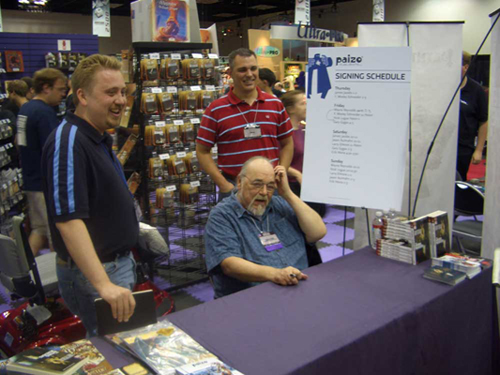 Erik Mona (left) with Gary Gygax (seated).
Gary Gygax, while justly famous for his gaming work, has something of a mixed reputation as a writer. Can you tell us about this work, and why you chose it to launch your imprint?
Gygax’s “Appendix N” was a guide-map to pulp fantasy I’ve been following for my whole life, and is a pretty good summary of the feel I’m shooting for with the Planet Stories line. Leading off with a Gygax book was a good way for me to pay homage to the man who introduced a generation to Sword-and-Sorcery and science fantasy while at the same time alerting tens of thousands of Paizo customers that “hey, look over here, we’re going to try this fiction thing!”
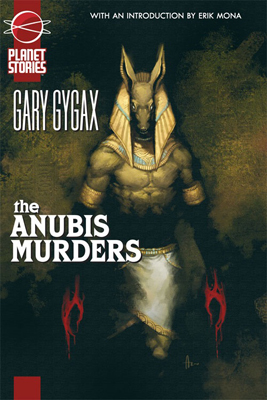
Gygax isn’t best known for his fiction, but I suspect that his fiction isn’t particularly well known. Those who speak sneeringly of his writing most likely haven’t read any of it, at least not in novel form. Our August release, The Anubis Murders, is Gygax’s seventh novel. And it’s damn fun.
Black Gate feels that there’s a definite connection between gaming and adventure fiction. For instance, it was gaming that helped introduce me to many of my favorite authors, particularly Leiber and Zelazny. Is that a connection you’re hoping to play upon with Planet Stories?
Absolutely. Gaming is all about adventure, and adventure is the one concept that ties together all of the books we’re publishing in the Planet Stories line. It’s what binds Jirel of Joiry to Eric John Stark to Elak of Atlantis to Setne Inhetep. A fierce swordswoman in Dark Ages France. A planetary outlaw raised feral on Mercury. The last prince of doomed Atlantis. Philosopher-wizard to Pharaoh. As a reader I can thrill to all four of those stories without worrying about which is fantasy and which is science fiction. In this sense I think traditional genre distinctions fail us, because the stories I listed fundamentally appeal to the same reader. They are part of the same meta-genre that might be called fantastic adventure. Planet Stories is a book line dedicated to fantastic adventure.
Gamers enjoy rollicking adventure and imaginative worlds. They’re going to love Planet Stories.
 Why don’t you tell us a little bit about yourself and how you got involved with Paizo and came to head up Planet Stories?
My background is in magazines, stepping from a regional business monthly to helm Polyhedron, Dungeon, and Dragon magazines for Dungeons & Dragons. When the Wizards of the Coast periodicals department spun off to form Paizo Publishing in 2002 I came along as an editor. I’ve been at the helm as publisher of Paizo Publishing for a little more than a year.
I live alone in a high-ceilinged apartment in Ballard, my favorite neighborhood in Seattle. My library is twice as big as my bedroom, and I live three blocks from a used bookstore. I need a bigger library.
Planet Stories has always been a dream job of mine, something I figured I’d start up from scratch one day should the whole Paizo thing not work out. But Paizo kept working out, and it suddenly made sense to expand our publishing efforts beyond role-playing magazines with books that appealed, fundamentally, to the same audience. It made sense to make my dream job my actual job, thus solving two problems at once.
Fundamental to the success of Planet Stories is our Senior Editor, Pierce Watters. Pierce has extensive knowledge of the book field and the history of science fiction and fantasy. He studied under Harlan Ellison, Gordon Dickson, and others at Clarion in 1974. He’s got the 1960s and ’70s paperback era covered, and I tend to focus on the pulps and some quirky modern stuff. Our twenty-three-year-old Editor James Sutter keeps us from disappearing too far up our own asses.
 If all goes well and Planet Stories is a rousing success, what would you see the imprint publishing in the next five years? In an ideal world do you have any dream plans for the imprint you could share with us?
I’d love to flesh out the catalogues of Leigh Brackett, C. L. Moore, and Henry Kuttner, of course. I’ve developed a strong habit for Edmond Hamilton of late, and would love to bring some of his stuff back to light. The World-Wrecker has been gone too long. And then there’s Otis Adelbert Kline. I’ve accumulated a large portion of his work and we’ll soon announce a new edition of his Swordsman of Mars. In his day Kline was considered the greatest writer in the tradition of Edgar Rice Burroughs, and he went on to be Robert E. Howard’s agent. He was on the editorial staff of Weird Tales, and wrote the essay “Why Weird Tales?”, which is another of my touchstones for the Planet Stories line. Kline has his faults, but I’m really intrigued by him and I’d love to put him out there for a modern audience to explore.
Some of the books in the Planet Stories line will surprise you. Late next year we plan to release a monster of a book called The Walrus and the Warwolf, by a writer from New Zealand named Hugh Cook. It’s a sprawling, baroque fantasy filled with pirates, swordplay, magic, and world-building that approaches Vance in its elegance. It’s the fourth in a ten-part non-linear series called The Chronicles of an Age of Darkness that only made it a handful of badly-cut books in America in the late ’80s. I loved the books then and tracked them down on family trips to the UK, finally assembling a complete set I’ve since read three times. Over here the first books were published as Wizard War, The Questing Hero, The Hero Returns, The Oracle, and Lords of the Sword. I’d love to be able to publish more installments of that great series, and strong sales of The Walrus and the Warwolf will virtually guarantee that happening.
There’s an unpublished “lost” Gary Gygax novel I’d like to publish.
And I’m constantly reading pulps. Last night I came across a great Robert Moore Williams story called “Return of Satan” in a 1939 issue of Amazing Stories. It was utterly wild, with flying black pyramids that murdered with lightning. Satan himself turns out to be a giant amalgamation of criminal brains from Ancient Mu encased in a dome of floating glass. The story had a laughable number of clichés (including “as easy as shooting fish in a barrel”), but it was one of the most enjoyably odd, delightful little explosions of a story I’ve read in months. I instantly started thinking about how to republish it, and am now on the hunt for other pulp-era stories featuring Satan for some anthology somewhere down the line.
 When I publish Robert Moore Williams’ “Return of Satan,” that’s when I’ll know that the line is a rousing success and I can do whatever I want.
Are there any plans for Planet Stories to publish original works?
Absolutely. The caliber of writers who have expressed interest in what we are doing is humbling and encouraging. Original Planet Stories fiction is inevitable.
Here’s a list of the next several Planet Stories releases:
2007
AUGUST: The Anubis Murders by Gary Gygax (Intro by Erik Mona)
SEPTEMBER: City of the Beast/Warriors of Mars by Michael Moorcock (Intro by Kim Mohan)
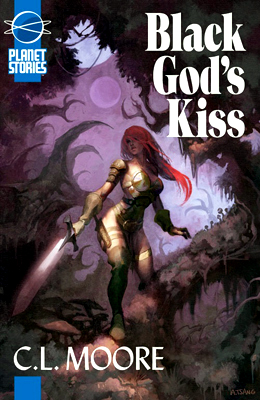
OCTOBER: Black God’s Kiss by C. L. Moore (Intro by Suzy McKee Charnas)
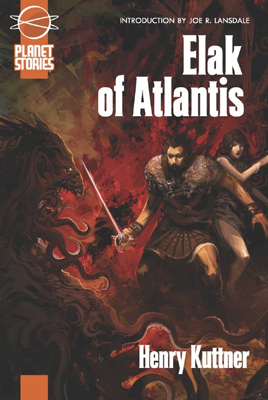
NOVEMBER: Elak of Atlantis by Henry Kuttner (Intro by Joe R. Lansdale)
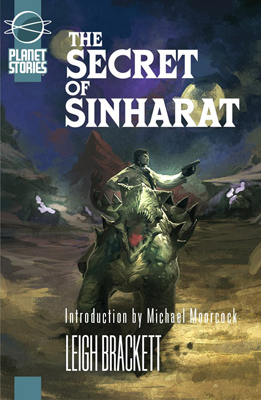
DECEMBER: The Secret of Sinharat by Leigh Brackett (Intro by Michael Moorcock)
2008
JANUARY: Northwest of Earth by C. L. Moore (Intro by C. J. Cherryh)
FEBRUARY: Lord of the Spiders/Blades of Mars by Michael Moorcock (Intro by Roy Thomas)
MARCH: The Samarkand Solution by Gary Gygax
APRIL: The Ginger Star by Leigh Brackett (Intro by Ben Bova)
3 thoughts on “An Interview With Paizo publisher Erik Mona”