Browsed by
Category: Blog Entry

What I’ve Been Listening To, February 2026

What I’ve Been Listening To, February 2026

I’ve read 24 books so far this year, and 17 were audiobooks (we’ve already established I’m not going to say ‘books consumed.’ Listening and physically reading are distinctive, but they’re interchangeable here).

Of the 17 audiobooks, 15 were new. I re-read more than I read new books, but I’ve been using audiobooks to tackle things for the first time. 7 books were Clive Cusslers.

CLIVE CUSSLER

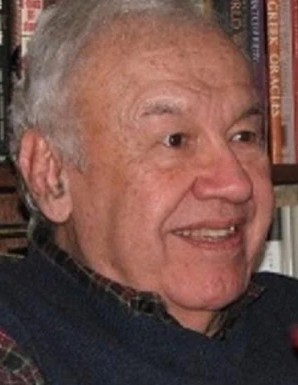
I first talked about Clive Cussler back in 2019. He would die a half-year later, at age 88. He had created an empire, with other authors carrying on his five sometimes-intertwined series’. I revisited his works last Summer. I’ve listened to 7 of his books so far this year, as I am well behind on my Cussler.

Isaac Bell is a turn-of-the 20th Century private eye for the Van Dorn Detective Agency. Justin Scott co-wrote the first 10. Jack Du Brul (who had been co-writing The Oregon Files), took over for the next 5. Though I liked it, for some reason the series hadn’t resonated with me in paperback. They were slow reads through the first 5. But Scott Brick reading them aloud worked for me, and I’ve listened to books 6 through 9: The Striker, The Bootlegger, The Assassin, and The Gangster. I like listening to Bell. So, audiobooks have me invested in a series that I wasn’t into in print. I will continue on. This series has run from 2007 through 2025.

Read More Read More

Half A Century of Reading Tolkien: Sir Gawain and the Green Knight, translated by JRR Tolkien

Half A Century of Reading Tolkien: Sir Gawain and the Green Knight, translated by JRR Tolkien

From beside the queen Gawain
to the king did then incline:
‘I implore with prayer plain
that this match should now be mine.’

Somehow, I’ve never read Prof. Tolkien’s, let alone anyone’s, translation of Sir Gawain and the Green Knight (late 14th cent.), an English poem written by an unknown poet. Thinking on it, I  know there’s a cheesy looking movie, Sword of the Valiant, from the eighties starring Miles O’Keeffe and Sean Connery, but it was only David Lowery’s 2021 The Green Knight and its critical acclaim that made me think it was maybe time to read the poem. Now I have. Additionally, and most valuable to me wrestling with my understanding of the poem, I’ve also read the professor’s 1953 WP Ker lecture on work.

The poem recounts the temptations of Sir Gawain, youngest member of King Arthur’s Round Table, as he attempts to meet the suicidal obligation he accepted when he entered a contest with a mysterious green knight. More precisely, as told, it’s about the conflict between chivalrous virtues  of honor and courtesy and, specifically religious, morality.

Gawain was written in Middle English, the evolution of the language used between the Conquest in 1066 and the late 15th century. Gawain, son of Morgause, one of King Arthur’s half-sisters, is a major figure in many of the assorted Arthur tales. His roots descend back into older Welsh tales, where he was known as Gwalchmei. Pre-Christian elements, including the Beheading Game and the Wild Hunt, are integral parts of the story, despite the tale’s overt Christianity. The Beheading Game is a recurrent motif that tracks back to at least the Irish tale Fled Bricrenn featuring the hero Cú Chulainn and the Wild Hunt occurs across various Northern European myth cycles.

The poem begins with a recounting of Britain’s founding by Brutus of Troy. Noble as he was, young King Arthur of Camelot was nobler still. One Christmas season, as Arthur’s knights were celebrating with a games and contests, a strange figure entered the hall.

Read More Read More

Forgotten Authors: Theodora Du Bois

Forgotten Authors: Theodora Du Bois

Theodora Du Bois

Theodora McCormick was born on September 14, 1890 in Brooklyn, New York. Her father died when she was a year old and she was raised by her mother and stepfather. She attended the Barnard School for Girls in Manhattan and the Halsted School in Yonkers. Although she wanted to attend Vassar College and was accepted in 1909, her parents did not support her attending the school. Her plans to go anyway were dashed when she was diagnosed with tuberculosis and she found herself in a TB sanitarium instead. Eventually, in 1916, she enrolled in the Dartmouth Summer School for Drama.

While in the sanitarium, McCormick began writing poetry, although most of her poetry was written during this time and after she was healthy she focused on various forms of prose writing. In 1918, she married Delafield Du Bois and took the name Theodora Du Bois. Theodora gave birth to a daughter, also named Theodora, in 1919 and in 1922 had a son, Eliot.

Read More Read More

Once We Were Spacemen

Once We Were Spacemen

Nathan Fillion and Alan Tudyk have become geek icons. A Knight’s Tale, Castle, Dr. Horrible’s Sing-Along Blog, Resident Alien, The Rookie: they’ve built successful careers over the years. Their real-life friendship, and their nerdy idol status, tracks back to Firefly.

Some day I’ll go in depth on this ill-fated cult classic. Fox aired the episodes out of order, switched nights, then canceled it with some episodes unaired. A ‘tie up some loose ends’ movie (Serenity) followed. Firefly developed a dedicated following and Fillion and the actors became popular at fan conventions around the country. Fillion’s profile skyrocketed when Castle ran for eight hit seasons on ABC. And as his mainstream popularity soared, he became one of the most recognizable figures in the geek world.

Tudyk and Fillion had worked together several years ago on Alan’s hilarious web series, Con Man (mentioned below). Three months ago, they started a podcast together, and it’s fantastic. Episodes of Once We Were Spacemen are 45 minutes to 1 hour long, and it’s two long-time buddies hanging out. They share stories from their friendship, acting careers, and geek experiences. And they are as likable and funny as you hoped. Even more so.

Read More Read More

The Translators Enriching SFF

The Translators Enriching SFF

The Witcher series by Andrzej Sapkowski, translated by Danusia Stok and David French (Gollancz editions)

If there is one group of people that deserve more praise in the literary community, it’s translators. Recent years have shown us just how vital they are to our bookshelves and TBR lists. Its them we have to thank for every Roadside Picnic and Eternaut that dares to tantalize English speakers the world over.

Make no mistake, theirs is a challenging, sometimes even thankless job. The difficulty of translating an entire novel into another language should not be underestimated. Finding the right expression, the correct syntax, ensuring the lyricism of a work is properly communicated are just a few of the challenges translators face. Calling it an art of its own would be no exaggeration. And as a result of that art, we as readers, have been gifted a Smaug’s hoard of titles. Think entire subgenres, fresh visions of tomorrow, and treasure troves of inspiration. Our beloved speculative genre is so much richer thanks to the riotous rogues and deadly dames translated works have introduced us to.

Here are seven translators who have had a massive impact on the SFF community over the past two decades.

Read More Read More

Forgotten Authors: S.P. Meek

Forgotten Authors: S.P. Meek

S.P. Meek

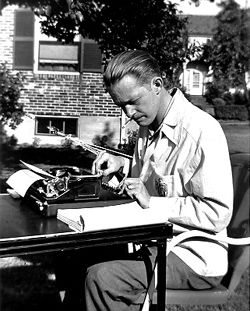
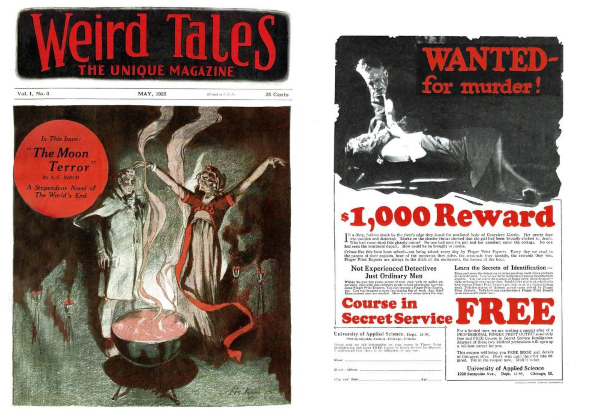
Sterner St. Paul Meek was born in Chicago, Illinois on April 8, 1894. He earned as associate of science degree from the University of Chicago in 1914 and continued his education at the University of Alabama, becoming a member of Phi Beta Kappa and earned a bachelor of science in metallurgical engineering. In 1916, he transferred to the University of Wisconsin, but joined the army in 1917. Although he attended the Massachusetts Institute of Technology between 1921 and 1923, he remained in the army for his entire career.

While attending college, he also served as a football coach at Kirkley Junior College in Texas, as a chemist for the Western Electric Company, and at Deuvitt Laboratories, all of which went by the wayside when he joined the military. Originally stationed in the Philippines, he would go on the direct small arms ammunition research from 1923 to 1926, serve as the chief publications officer for the Ordnance Department from 1941-1944. He retired from the military in 1947 due to disability. He holds patents for tracer ammunition.

Meek married Edna Burnadge Nobel in 1927 and the couple had one son.

Read More Read More

Dark Muse News: Sword & Sorcery Chain Story (#14-#18)

Dark Muse News: Sword & Sorcery Chain Story (#14-#18)

In August 2025, we hailed the emergence of a second Chain Story project championed by Michael A. Stackpole. This is a Sword & Sorcery-focused, contagious set of connected (“chained”) stories. Each is:

  • A standalone tale
  • Readable in any order
  • Free to read
  • Interconnected via a theme involving a Crown

Stories are being released every few weeks. We’ll round up groups, but check the Chain Story website. for the latest. In this post we highlight the latest set of five, Episodes 14-18:

Read More Read More

Is There Indeed a Change in the Air?

Is There Indeed a Change in the Air?

Image by Gerd Altmann from Pixabay

Good afterevenmorn, Readers!

Since the release of Iron Lung, the independent film adaptation of the equally independent video game of the same name, I have been awash in articles, interviews and reviews about the piece. The algorithm has decided that that’s all I’ll get for now until the end of time. Well, that and general tarot readings, for some reason. I must admit, I have been following the story for a while, so it’s partially my fault. And it has also let me down the wonderful warren that is upcoming video game adaptations. And I want to talk about it.

Read More Read More

Cape Fear: John D. MacDonald is BACK!!!!!

Cape Fear: John D. MacDonald is BACK!!!!!

I have not been active in the John D. MacDonald world for awhile. Time is limited, and interests are many. I recently jumped down the Columbo rabbit hole (I wrote about him back in 2016, and I’ve got a big project in the works for 2027). And I’ve been watching that seventies show, Emergency!. That holds up way better than you might expect!

Which is all to say, I actually exclaimed in joy last week when I discovered a new ten-episode streaming series of Cape Fear is coming!! (You can see I’m still excited!). It will air on Apple TV, every Friday from June 5 through July 26.

Hopefully you’ve read some of my John MacD writings here at Black Gate. I even have a landing page where I collected my writings on him. I was late to the Robert E. Howard party, and Two-Gun Bob has risen to number two on my all-time favorite writers list. But John D. MacDonald is the one author he hasn’t passed. And I don’t think he ever will.

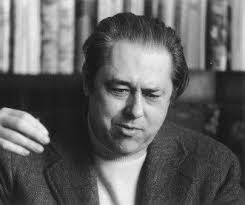
THE EXECUTIONERS

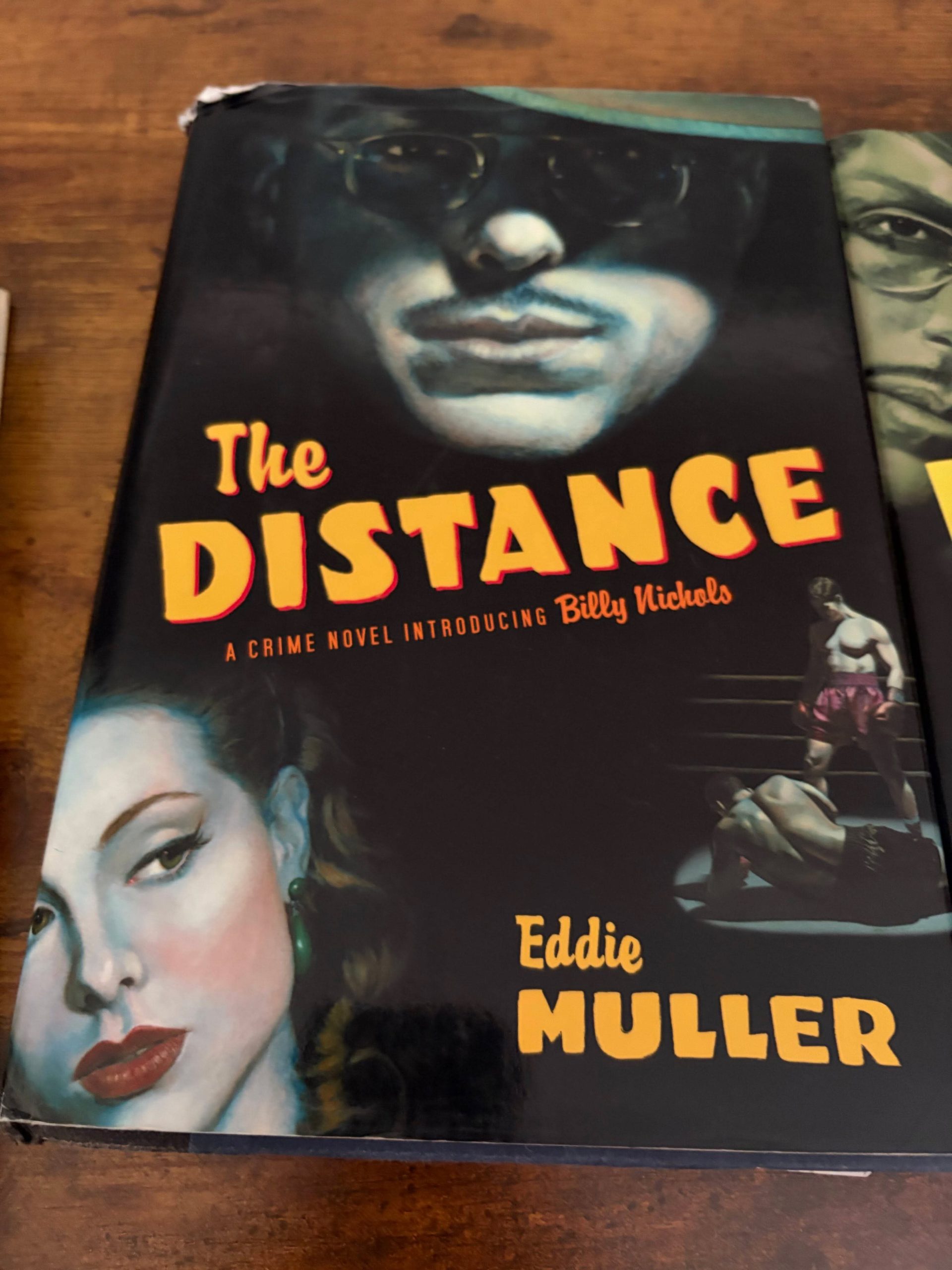
There was a writers community in Sarasota, Florida, in the fifties. MacDonald moved there in 1951, and the dean of the group was MacKinley Kantor, who wrote the Pulitzer Prize winner, Andersonville. He became JDM’s friend, and mentor. In 1957, at one of the gatherings, Kantor was needling MacDonald about the quality of his writing. All he wrote were mysteries and other paperback trash. Why didn’t he write a real book?

MacDonald got mad. He bet Kantor $50 that he would write a book within thirty days. A book that would be serialized in magazines, be a book club selection, and be turned into a movie. Kantor accepted.

MacDonald had written almost two dozen books, mostly paperback originals. MacDonald was popular, but the books were of a type. British critic and novelist Julian Symons later called his books “…production line efficient fast-moving American thrillers.” But he also said, “..there are interesting ideas about the nature of corruption and the increasingly mechanical form of life in America.”

Kantor saw that MacDonald had more in him. Something that would stand out from the good but similar book after book (I like what he was writing, but I’m also not a Pulitzer Prize winner, either).

Read More Read More

Forgotten Authors: Rosel George Brown

Forgotten Authors: Rosel George Brown

Rosel George Brown

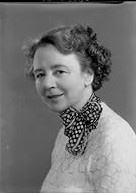
Rosel George was born in New Orleans, Louisiana on March 15, 1926. She attended Sophie Newcomb College and earned a Master of Arts degree in Greek at the University of Minnesota. In 1947, she married W. Burlie Brown, a lawyer who would go back to school in 1949 to earn a Ph.D. in history before joining the Tulane University faculty in 1951. Aside from the period when she was attending graduate school in Minnesota and Burlie was attending graduate school in North Carolina, Rosel George Brown lived in New Orleans. The Browns had two children. For about three years, Rosel worked as a welfare visitor.

Brown began publishing science fiction in 1958 when her story “From an Unseen Censor” appeared in the September issue of Galaxy Science Fiction alongside established authors Isaac Asimov, Damon Knight, Arthur C. Clarke, and Willy Ley. The following year, she published seven additional stories in If, Fantastic Universe, Star Science Fiction, F&SF, Galaxy, and Amazing, demonstrating the ability to sell to multiple editors. In 1959, she was also nominated for the Hugo Award for Best New Writer, alongside Kit Reed, Louis Charbonneau, Pauline Ashwell, and Brian W. Aldiss.

Read More Read More