Browsed by
Author: Steven H Silver

Birthday Reviews: Bruce Coville’s “The Passing of the Pack”

Birthday Reviews: Bruce Coville’s “The Passing of the Pack”

Cover by Gary Lippincott

Bruce Coville was born on May 16, 1950.

Best known as a YA author, Coville won the Golden Duck Award in 1992 for his novel My Teacher Glows in the Dark, won it again in 2000 for I Was a 6th Grade Alien, and in 2006 won a Golden Duck for an audio production of Robert Heinlein’s novel Rolling Stones. His novels have twice been nominated for Mythopoeic Awards and in 2000, he received a Skylark Award from NESFA. He received the Empire State Award for Excellence in Literature for Young People from the New York Library Association in 2012.

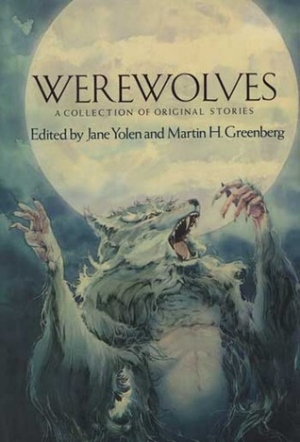
“The Passing of the Pack” was originally written for the young adult anthology Werewolves: A Collection of Original Stories, edited by Jane Yolen and Martin H. Greenberg in 1988. Coville included the story in his collection Oddly Enough in 1994 and when that volume and its successor were collected in the omnibus Odds Are Good: An Oddly Enough and Odder Than Ever Omnibus, the story saw print again. In 2011, Coville issued the story as an e-book.

Throughout most of history, wolves have been seen as an enemy. They threaten the livestock on small villages and, when particularly hungry can also threaten humans. Bruce Coville channels that fear of wolves in the opening of “The Passing of the Pack,” which describes a wolf attack on a sixteen year old boy and then flashes back to the first time wolves attacked his village when he was five years old.

The story looks at the character’s life as a fatherless boy in a small village, specifically how he was treated almost as an outsider by the rest of the villagers. When he came to the defense of a girl he had befriended, the accusation of witchcraft against her was applied to him as well. By this time, Coville has shown an affinity for him by the wolves and his rescue by the animals is not really a surprise.

Read More Read More

Birthday Reviews: Dave Wolverton’s “We Blazed”

Birthday Reviews: Dave Wolverton’s “We Blazed”

Cover by Michael Sabanosh

Dave Wolverton was born on May 15, 1957. He also writes using the pseudonym David Farland.

Wolverton won the Grand Prize from the Writers of the Future in 1987 to start off his career with his story “On My Way to Paradise,” which he expanded to book length. The novel version received a special citation from the Philip K. Dick Awards. His novelette “After a Lean Winter” was nominated for the Nebula Award in 1997. After his wins and nominations, Wolverton served as a judge for both the Philip K. Dick Award and the Writers and Illustrators of the Future. His historical novel In the Company of Angels received the Whitney Award and he won the International Book Award for Best Young Adult Novel for Nightingale.

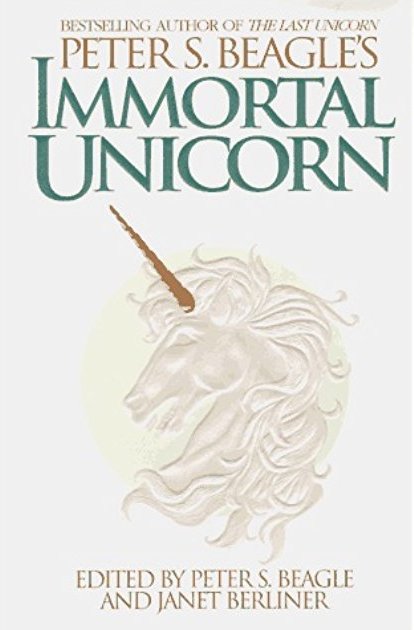
“We Blazed” was written for the anthology Peter S. Beagle’s Immortal Unicorn, edited by Beagle with Janet Berliner, and Martin H. Greenberg. It was reprinted in the June 2011 issue of Leading Edge, whole number 61, edited by Chris Baxter. Later that year Wolverton re-issued the story as an e-book under his David Farland pseudonym.

Wolverton’s “We Blazed” is a wonder of misdirection. Seemingly the story of an immortal man on a quest to find his equally immortal lover, Wolverton provides some wonderful twists. No reason is given for Alexander Dane’s longevity, nor that of Kaitlyn, whom he is trying to find, but he walks through an Earth impossibly in the future, almost completely amnesiac except knowing that he is looking for Kaitlyn.

Read More Read More

Birthday Reviews: Joyce Thompson’s “Boat People”

Birthday Reviews: Joyce Thompson’s “Boat People”

Cover by Allen Koszowski

Joyce Thompson was born on May 14, 1948.

Thompson has published several short stories, collected many of her early ones in East Is West of Here. She has published four novels, including the novelization of the film Harry and the Hendersons.

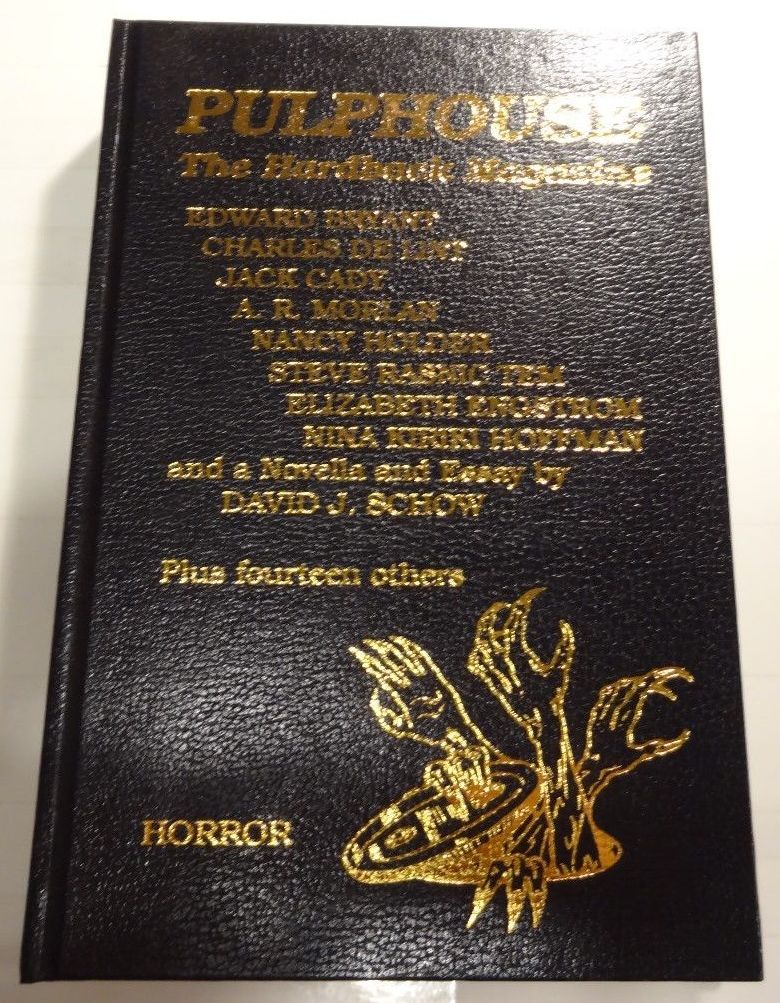
“Boat People” first appeared 1990 in Pulphouse: The Hardback Magazine: Horror, the seventh issue, edited by Kristine Kathryn Rusch. Rusch also included the story in the anthology The Best of Pulphouse: The Hardback Magazine, published by St. Martin’s Press in 1991.

Thompson has produced an oddly confessional story in “Boat People,” albeit one with little fantastic element. Her narrator lives in Montana and is dealing with a mother who was once liberal, but is now older and averse to all the change brought into her life by a more diverse population. A generation behind her mother, the narrator sees the influx of Asian people as part of the aftermath of the Vietnam War, a war she opposed, but which left an indelible mark not only on her friends who served in Vietnam, but also on those who remained behind.

The narrator has survivor guilt for not having served overseas, and to assuage her guilt, she has taken on the task of working with veterans who are trying to capture their experiences on paper, offering her services as a published author to former soldiers who need the catharsis of writing about their experiences, no matter how bad the experiences or their prose. As she reads more and more of their memoirs, she takes on more and more of their memories, expressing regret that she wasn’t able to take a more active role in the war or the protests, and never fully understanding what they went through, but taking on their traumas.

Read More Read More

Birthday Reviews: Gregory Frost’s “Farewell, My Rocketeer”

Birthday Reviews: Gregory Frost’s “Farewell, My Rocketeer”

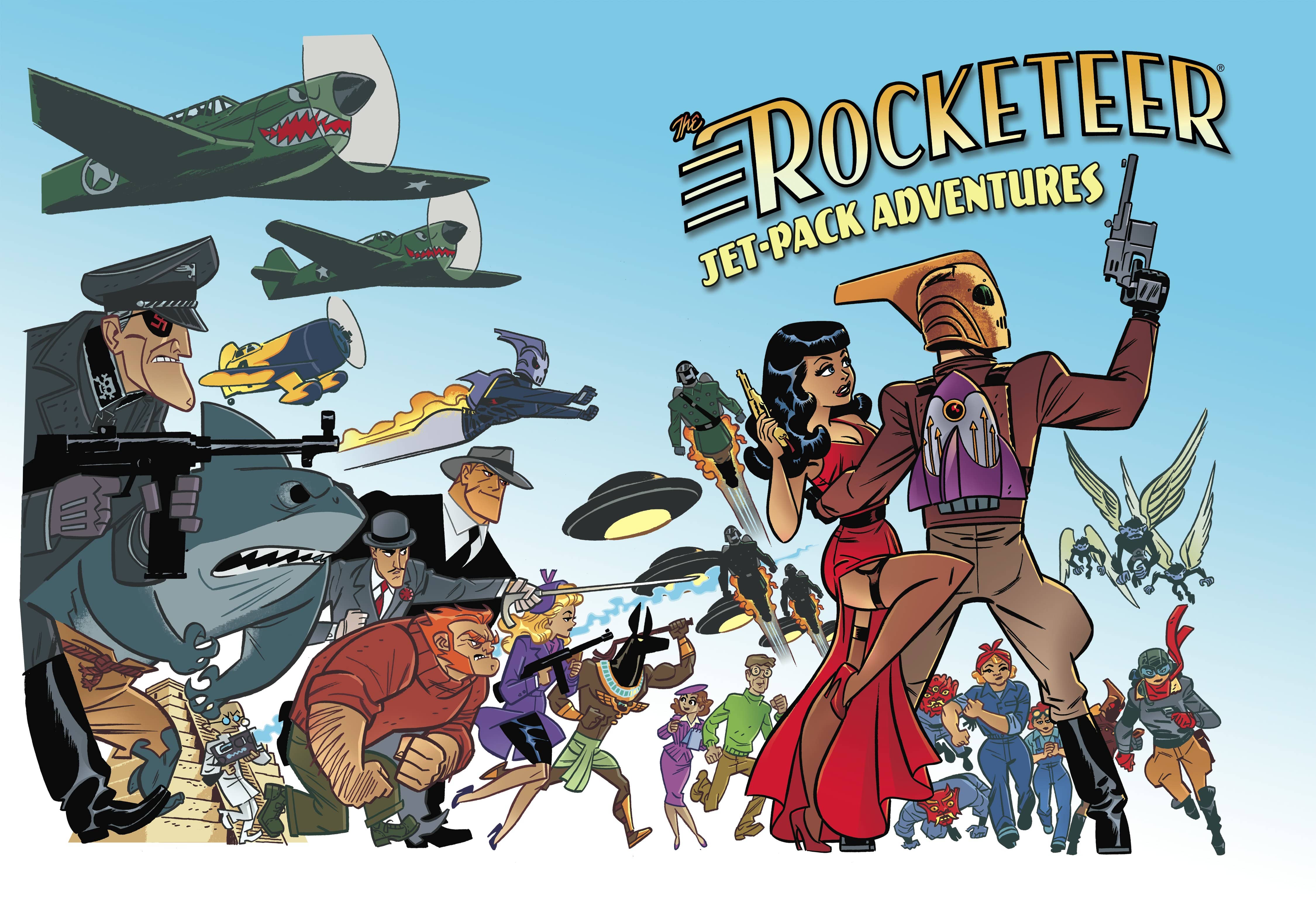
Cover by Jay Bone
Cover by Jay Bone

Gregory Frost was born on May 13, 1951.

Gregory Frost’s novelette “Madonna of the Maquiladora” was nominated for the Hugo Award, the Nebula Award, the James Tiptree, Jr. Memorial Award, and the Theodore Sturgeon Memorial Award. Frost has also been nominated for the International Horror Guild Award and World Fantasy Award for his novel Fitcher’s Brides. His Shadowbridge and Lord Tophet jointly were nominated for the Tiptree, and “How Meersh the Bedeviler Lost His Toes” was nominated for the Sturgeon. He also received a Bram Stoker nomination for the story “No Others Are Genuine.” Several of his stories have been collected in Attack of the Jazz Giants and Other Stories, published by Golden Gryphon in 2011.

Cliff Secord’s career as the Rocketeer, a 1930s style pulp hero who is a pilot in his daily life, but secretly has access to a jet pack, has been chronicled in a series of comics and one film. In 2014 several authors were invited to add to his legend with prose stories, one of whom, Gregory Frost, contributed “Farewell, My Rocketeer,” a lost treasure story set in the American Southwest. The shared world anthology The Rocketeer Jet-Pack Adventures was edited by Jeff Conner and Tom Waltz. “Farewell, My Rocketeer” story has not been reprinted.

Secord gets involved in the treasure hunt when he lands at a small airstrip and diner which has been taken over by a disparate group of villains who are seeking gold based on an old treasure map. To save himself and the staff of the diner, who have been taken hostage, Secord agrees to pilot the group’s plane to help them find the treasure after their pilot dies, even though he realizes his own usefulness to the villains will end as soon as he lands them back at the diner, theoretically with the gold.

Read More Read More

Birthday Reviews: Barry B. Longyear’s “Collector’s Item”

Birthday Reviews: Barry B. Longyear’s “Collector’s Item”

Analog April 1981-small2 Analog April 1981-back-small

Cover by George Angelini

Barry B. Longyear was born on May 12, 1942.

Longyear received the John W. Campbell Award for Best New Writer in 1980, the year he won the Hugo and Nebula Award for his novella “Enemy Mine,” which was turned into a film starring Dennis Quaid and Lou Gossett, Jr. That same year his novelette “Homecoming” also appeared on the Hugo ballot, as did his novelette “Savage Planet” the following year. His stories have twice topped the Analog Reader’s Poll and he has been nominated for the Prometheus Award three times and the Sidewise Award once.

“Collector’s Item” was first published by Stanley Schmidt in the April 27, 1981 issue of Analog Science Fiction/Science Fact. The following year it was translated into German to be reprinted in Analog 2, a German language version of the magazine. Longyear also included the story as the lead off to his collection It Came from Schenectady.

Longyear examines the unenviable task of cleaning out a parent’s belongings after their death. For Jay Hall, who barely knew his father and had little to discuss with him, the natural inclination is to just take everything and sweep it into the garbage. A call with his father’s attorney, however, causes him to look through some of the papers his father has collected over the years. Among those papers are essays written by five of his father’s students in 1955.

The essays were assigned on prosaic topics, “What I Did Last Summer,” “My Favorite Dream,” “Things I Think About.” As Jay begins to read them, however, he finds that these five students all had things in common… notable, references to someone known as the Major. Furthermore, their essays all seemed to indicate that they were being fed knowledge of America’s future involvement in Viet Nam.

Read More Read More

Birthday Reviews: Elizabeth Engstrom’s “Seasoned Enthusiast”

Birthday Reviews: Elizabeth Engstrom’s “Seasoned Enthusiast”

Cover by Allen Koszowski

Elizabeth Engstrom was born on May 11, 1951. She occasionally writes using the name Liz Cratty as well.

Engstrom’s collection Nightmare Flower was nominated for the Bram Stoker Award and she co-edited the anthology Imagination Fully Dilated with Alan M. Clark, which earned them an International Horror Guild Award nomination.

“Seasoned Enthusiast” first appeared 1990 in Pulphouse: The Hardback Magazine: Horror, the seventh issue, edited by Kristine Kathryn Rusch. Engstrom later reprinted the story in her 1992 collection Nightmare Flower.

The short work “Seasoned Enthusiast” tells two parallel tales, one about a dancer performing in front of an audience, the other the story of a divorced woman who is considering her own self-worth in light of her husband’s new life.

The more interesting story looks at Lillian, whose life has fallen apart after her divorce and she’s living in squalor while her husband and his new wife start their life together in an upscale house, a symbol of the success which eluded the couple while they were married. Unable to separate her life from his, and seeing herself as a failure because she lost him, Lillian drives over to her ex-husband’s house without a firm plan in mind, feeding her obsession with him without any plan of action.

In the other story, a crowd gathers around to watch a woman dance in an apparently primitive setting. As the dance sequences are interwoven with Lillian’s story, it becomes clear that things aren’t quite as they seem. There is an element of danger in the woman’s dance and she has suffered for her craft as she has perfected it.

Read More Read More

Birthday Reviews: John Scalzi’s “Utere Nihil Non Extra Quiritationem Suis”

Birthday Reviews: John Scalzi’s “Utere Nihil Non Extra Quiritationem Suis”

Cover by Edward Miller

John Scalzi was born on May 10, 1969.

John Scalzi won the John W. Campbell Award for Best New Writer in 2006. He won the Hugo Award for Best Fan Writer in 2008, breaking David Langford’s nineteen year winning streak. He won a second Hugo in 2009 for Best Related Work for Your Hate Mail Will Be Graded: A Decade of Whatever, 1998-2008. In 2013, he won a fiction Hugo Award for his novel Redshirts: A Novel with Three Codas. His novel The Collapsing Empire is currently a Hugo Finalist. Redshirts earned Scalzi his second Geffen Award, which he previously won for the novel Old Man’s War. His novel The Android’s Dream received the Kurd Lasswitz Preis and the Seiun Award. Scalzi served two terms as the President of the Science Fiction and Fantasy Writers of America.

Scalzi wrote “Utere Nihil Non Extra Quiritationem Suis” for an audio anthology he edited, METAtropolis, produced for Audible Frontiers in 2008. The following year, the anthology was published in print form for the first time by Subterranean Press. Brilliance Audio issued the original audio anthology on CD and as an mp3 in 2009. In 2010, Tor reprinted the anthology and in the same year, it was translated into German. The story has not appeared outside its original anthology, whether in audio or printed form.

Benjamin Washington is living in the fully self-sustaining city of New St. Louis. Despite, or perhaps because of, a high-powered mother, Benjy is something of a slacker, putting off tackling his required aptitude test until the last possible moment. His poor scores, and lack of time to retake before the deadline of this twentieth birthday, coupled with his mother’s refusal to expend her political capital on nepotism, mean that he must take a job as a pig farmer working with genetically modified swine.

Suffering through life as a pig farmer, Benjy’s realizes how much he has screwed up, especially when he sees the girl he cares about together with a boy who is constantly needling him. Even as Benjy deals with the repercussions of his laziness, his learning experiences are presented in a manner that is designed to get a laugh, although Scalzi uses those same lessons to great effect later in the story.

Read More Read More

Birthday Reviews: William Tenn’s “The Lemon-Green Spaghetti-Loud Dynamite-Dribble Day”

Birthday Reviews: William Tenn’s “The Lemon-Green Spaghetti-Loud Dynamite-Dribble Day”

Cavalier January 1967-small

William Tenn was born Philip Klass on May 9, 1920 and died on February 7, 2010. He was named an Author Emeritus by SFWA in 1999.

Tenn received a Nebula nomination in 1966 for the short story “The Masculinist Revolt” and his collection Dancing Naked: The Unexpurgated William Tenn was nominated for a Hugo Award for Best Related Work in 2005. In 2006, he received the Forry Award from the Los Angeles Science Fantasy Society (LASFS). He was one of the Pro Guests of Honor at Noreascon 4, the 62nd World Science Fiction Convention, held in Boston, MA.

“The Lemon-Green Spaghetti-Loud Dynamite-Dribble Day” was originally published as “Did Your Coffee Taste Funny This Morning?” in the January 1967 issue of Cavalier, a men’s magazine edited by Robert J. Shea. The same issue carried essays by Isaac Asimov and Theodore Sturgeon. The story gained its current title the following year when Tenn included it in his collection The Square Root of Man. In 1973, it was reprinted in German in Venus—Planet für Männer. Tenn included it, against his better judgement, in the NESFA Press collection Immodest Proposals: The Complete Science Fiction of William Tenn, Volume 1 and selected it for inclusion when Mike Resnick invited him to pick one of his stories for the anthology This Is My Funniest: Leading Science Fiction Writers Present Their Funniest Stories Ever. An audio version was produced for Drabblecast B-Sides #29 in 2013.

Tenn claims that “The Lemon-Green Spaghetti-Loud Dynamite-Dribble Day” “certainly isn’t science fiction,” however if you consider science fiction as a look at how technology changes lives, it can arguably be considered as such (and if you argue science fiction is what is written by science fiction authors, it definitely is).

Read More Read More

Birthday Reviews: Susan Casper’s “Mama”

Birthday Reviews: Susan Casper’s “Mama”

The Magazine of Fantasy and Science Fiction August 1984-small The Magazine of Fantasy and Science Fiction August 1984-back-small

Cover by Paul Chadwick

Susan Casper was born on May 8, 1947 and died on February 24, 2017. Casper was married to author and editor Gardner Dozois.

Casper’s first story was “Spring-Fingered Jack” in 1983 and in 1988, she co-edited the anthology Ripper! (also Jack the Ripper). Other stories included “Covenant with a Dragon,” “Nine Tenths of the Law” and “Up the Rainbow.” Her short fiction was collected posthumously in Up the Rainbow: The Complete Short Fiction of Susan Casper and she also had a novel, The Red Carnival, published posthumously.

“Mama” first appeared in The Magazine of Fantasy and Science Fiction, edited by Edward L. Ferman, in the August 1984 issue. It would be reprinted in 2017 in Up the Rainbow.

Gloria’s mother is over-bearing and somewhat typical of a Jewish mother in “Mama,” although she could have been just as stereotypical had she been a mother of numerous other ethnicities. The key is that she disapproves of Gloria’s life choices and while Gloria is just trying to live her own life, suffering from a sudden breakup with the boyfriend she didn’t seem to have much invested it, her mother is trying to “fix” her life, making it better in the only way she knows how.

Read More Read More

Birthday Reviews: Gene Wolfe’s “The Cat”

Birthday Reviews: Gene Wolfe’s “The Cat”

Cover by Rowena
Cover by Rowena

Gene Wolfe was born on May 7, 1931.

Wolfe received the Nebula Award for his novella “The Death of Doctor Island” in 1974 and in 1982, he received the Nebula again for the novel The Claw of the Conciliator, the second volume in his Book of the New Sun. He has a total of twenty Nebula nominations and in 20013 was recognized by SFWA as a Grand Master.

He has received the World Fantasy Award for his novels The Shadow of the Torturer and Soldier of Sidon as well as for his collections Storeys from the Old Hotel and The Very Best of Gene Wolfe. The Shadow of the Torturer also won a British SF Association Awards. The Sword of the Lictor received the August Derleth Award from the British Fantasy Society and the final volume of the Book of the New Sun, The Citadel of the Autarch, received the John W. Campbell Memorial Award and the Prix Apollo. The later, fifth volume, The Urth of the New Sun was recognized with the Italia Award.

Wolfe has also received a Rhysling Award for his poem “The Computer Iterates the Greater Trumps.” In 1985, he was the Guest of Honor at Aussiecon Two, the Worldcon in Melbourne and a GoH at the World Fantasy Con in 1983. He received a Skylark Award in 1989 and a Lifetime Achievement Award from World Fantasy Con in 1996. In 2007, Wolfe was inducted into the Science Fiction Hall of Fame.

“The Cat” was first published in the Souvenir book for the 1983 World Fantasy Convention. Gardner Dozois picked the story up for the inaugural volume of his long-running The Year’s Best Science Fiction: First Annual Collection and also reprinted the story in Magicats!, co-edited with Jack Dann. Wolfe included the story in his collection Endangered Species and later in the collection The Castle of the Otter, published by Centipede Press and which included the earlier Zeising Brothers book The Castle of the Otter along with additional material published in the intervening 23 years. In 1990, the story was translated into French as “Le Chat,” and has been published in France at least three times.

Read More Read More